
Pisang Goreng: Start with Fruit That Holds Its Shape
Pisang goreng
A crisp coating surrounds a soft banana center. The first decision happens at the fruit bowl, before any flour meets water.
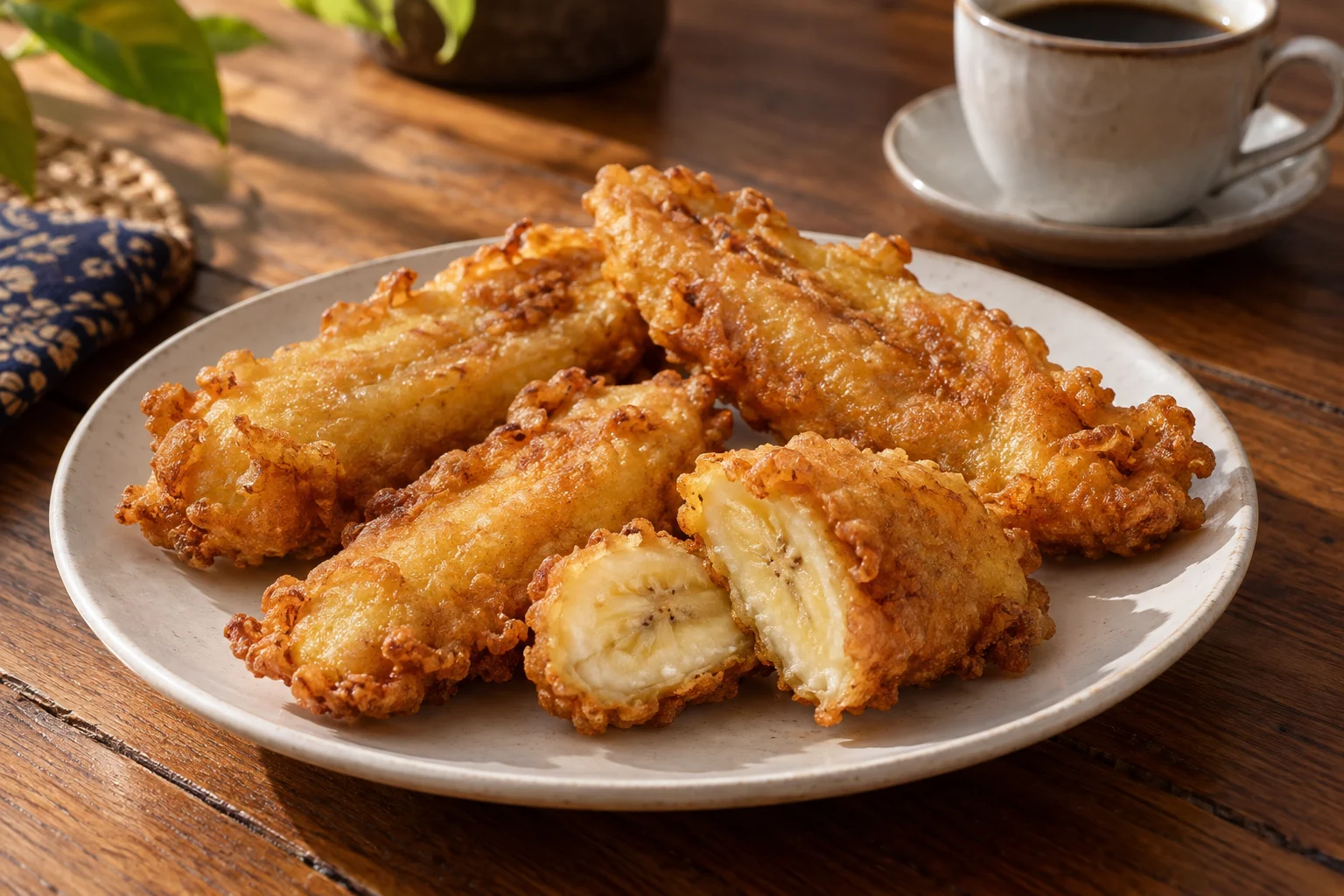
Ripeness needs a second question
For pisang goreng, ripe fruit must do two jobs: taste sweet and remain intact while it is cut, coated and lowered into oil. A banana that collapses under the knife makes the second job difficult. Begin with a piece you can lift without it bending into a mash. The soft center belongs inside the finished fritter, surrounded by its crisp shell.
Indonesian cooks document several suitable varieties and different preferences. Anita Jacobson and Marvellina favor raja and kepok or saba bananas, with plantains as an accessible alternative in their American kitchens. Their advice leads to a useful shopping plan: look for a cooking banana first, then assess its ripeness and firmness rather than buying the softest fruit available.
Match the fruit to the handling
- Raja or kepok
- Start here when available
- Plantain
- Wait for ripeness
- Cavendish
- Treat softness carefully
These are preferred choices in the two Indonesian home cooks’ recipes. Buy ripe fruit and check that peeled pieces remain easy to handle.
Jacobson lists ripe plantain as a substitute. Green fruit is not the ripe, sweet ingredient intended for this fritter.
The cooks disagree about this common dessert banana. Marvellina finds very ripe examples too mushy for her shaped fritters; Claudia Syanny uses them. Shape and firmness matter.
Choose a batter, then follow its own proportions
Pisang goreng recipes do not converge on one flour mixture. In his childhood cookbook, Balinese chef Wayan Sutariawan gives a simple thick batter made with rice flour or plain flour, water, sugar and salt. Jacobson uses rice flour with leavening, while Marvellina combines rice flour with a little cornstarch and baking powder.
Claudia Syanny’s Butter Joy Kitchen recipe takes another route, combining several flours and starches with butter or margarine; sesame is optional. These examples are separate formulations. Combining every listed ingredient would lose the proportions that make each recipe workable. Choose one complete recipe according to the coating you want and the ingredients you have.
The fruit and the batch
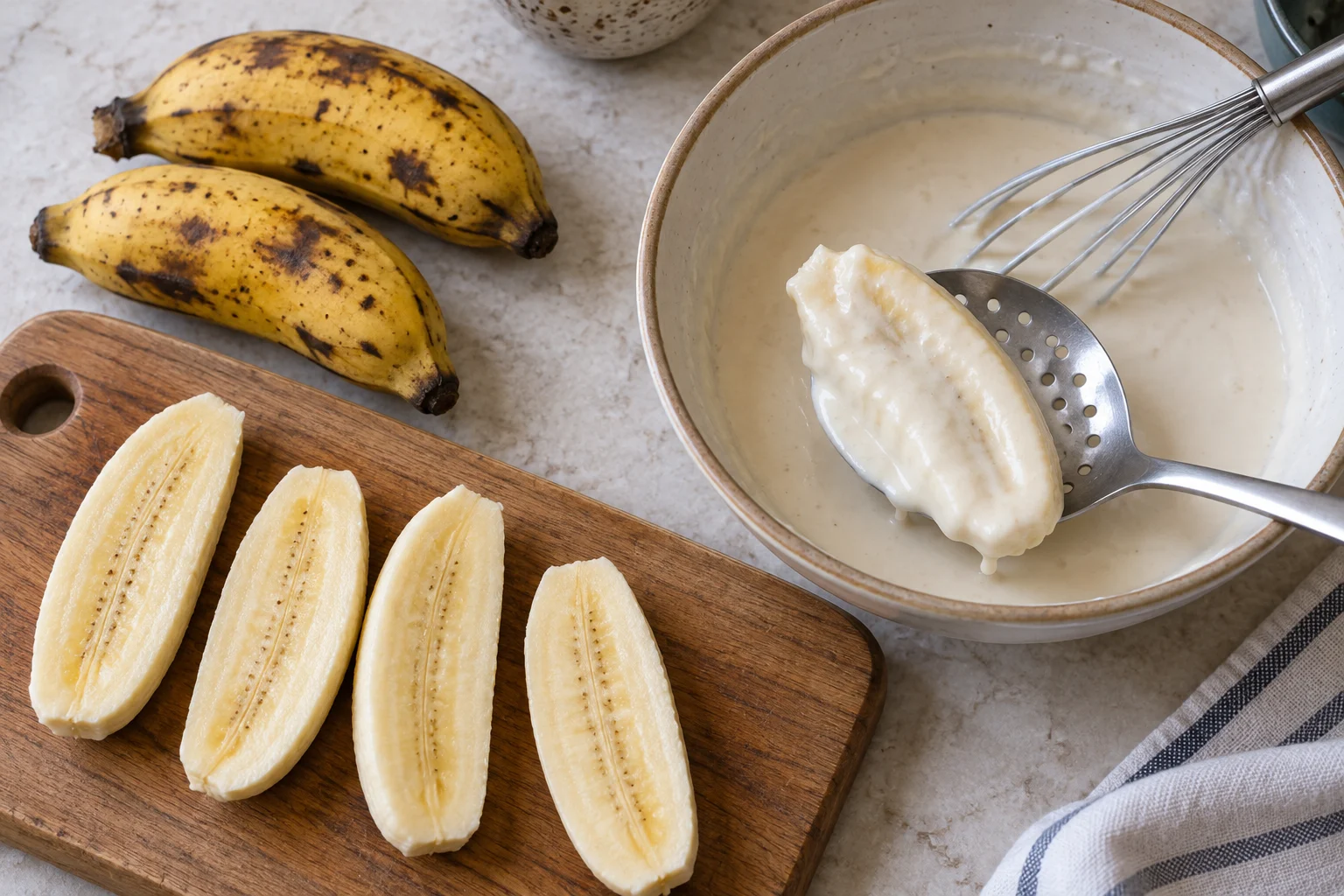
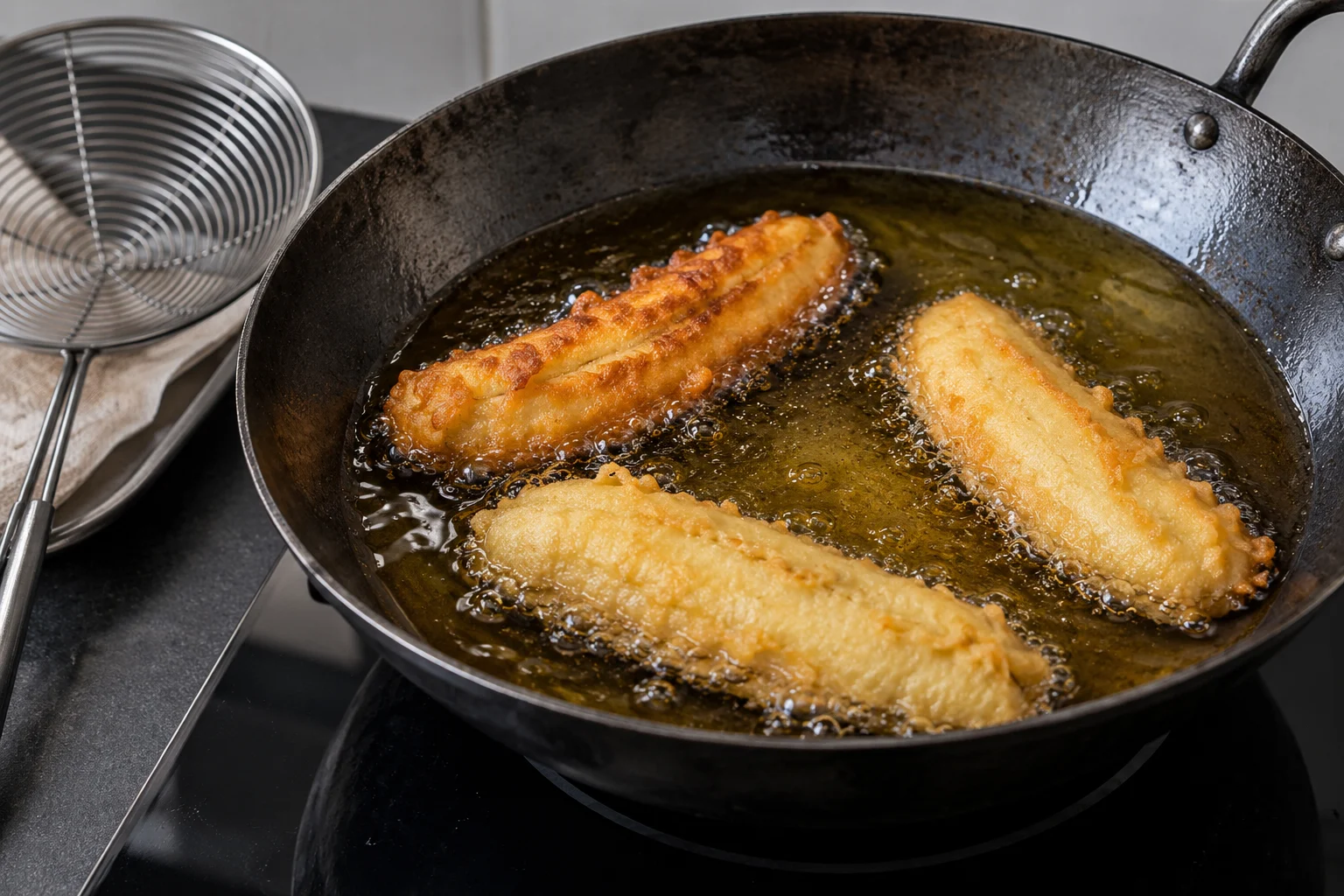
Lengthwise halves give a straightforward piece to coat and lift. The frying illustration keeps the same shape, with space around each fritter.
Keep the cut simple when the fruit is delicate
Sutariawan cuts bananas into halves and slices lengthwise. Jacobson and Marvellina also describe a fan: make lengthwise cuts but leave the base attached, so the slices open while staying together. The fan gives a wider outline; it also asks the fruit to survive more knife work. Halves are an easier choice when a banana feels fragile.
Keep pieces within a batch similar in thickness. A very thick piece and a thin strip will not offer the same balance of coating and center. When mixing batter, follow the chosen formula, then assess the coating: it should cling to the fruit without leaving bare patches or a huge trailing lump. Both Sutariawan and Syanny allow consistency adjustments in their methods.
Let the first piece guide the next batch
Follow the selected recipe’s oil and cooking instructions, and inspect the first finished fritter. Cut it open after draining: the coating should be golden and the banana center soft. If a piece falls apart before frying, simplify the cut or choose firmer fruit. If the batter slides off before it reaches the oil, revisit its consistency before coating the rest.
Serving can stay as simple as warm fritters and a drink. Marvellina remembers an Indonesian market pairing with sticky rice and grated coconut; Sutariawan likes ice cream and palm-sugar syrup. Those are documented personal serving choices. Decide on accompaniments beforehand, and bring the fritters over while the contrast between their coating and banana center is still the main attraction.
Research notes
Original preparations consulted
Four independently published original recipes establish the fruit choices, different batters and serving options. This is a selection and technique guide; use one complete recipe for quantities and frying instructions. Check its flour, dairy and optional sesame ingredients for allergens.
- Anita Jacobson — Pisang goreng Original Indonesian recipe discusses ripe raja, saba and plantains, an attached-base fan, rice-flour batter and wire-rack draining.
- Marvellina — Pisang goreng ketan kelapa Original recipe and market memory supply fruit-handling cautions, a distinct rice-flour batter, small batches and sticky-rice accompaniment.
- Wayan Sutariawan — Cherished Recipes from My Childhood Chef’s own cookbook, printed page 66, documents a simple coating, lengthwise banana preparation and his preferred serving.
- Claudia Syanny — Crispy pisang goreng Original recipe documents a different flour-and-starch blend, butter or margarine, optional sesame and flexible banana cuts.
Keep exploring
More stories for your table
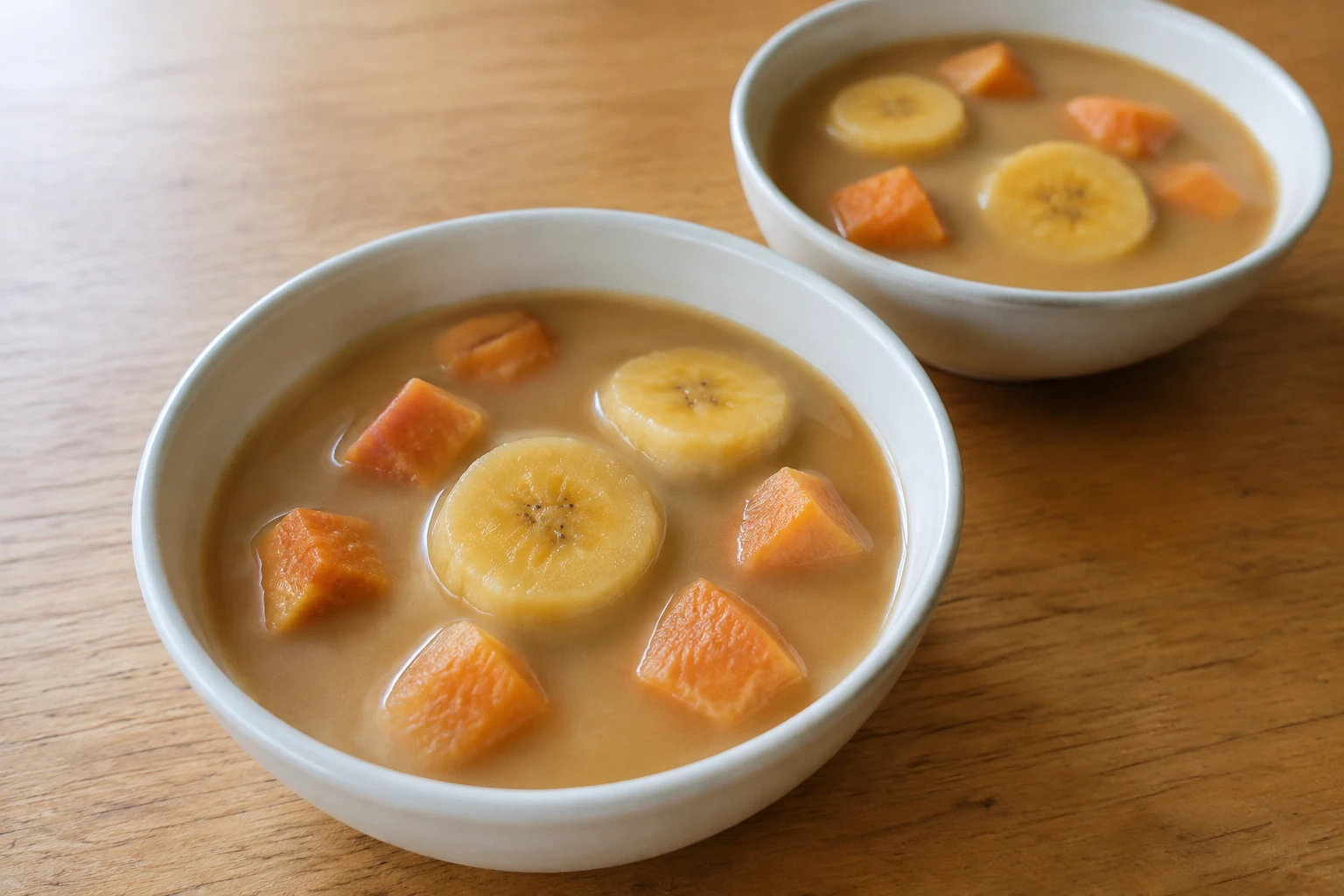
Indonesian cuisine Coconut-milk dessert
Kolak Pisang Ubi: A Sweet Bowl, Cooked in Stages
Make Indonesian kolak with banana, sweet potato, palm sugar and coconut milk. Learn its Ramadan context and a gentle cooking sequence that keeps each piece intact.
Indonesian cuisine Iced dessert drink
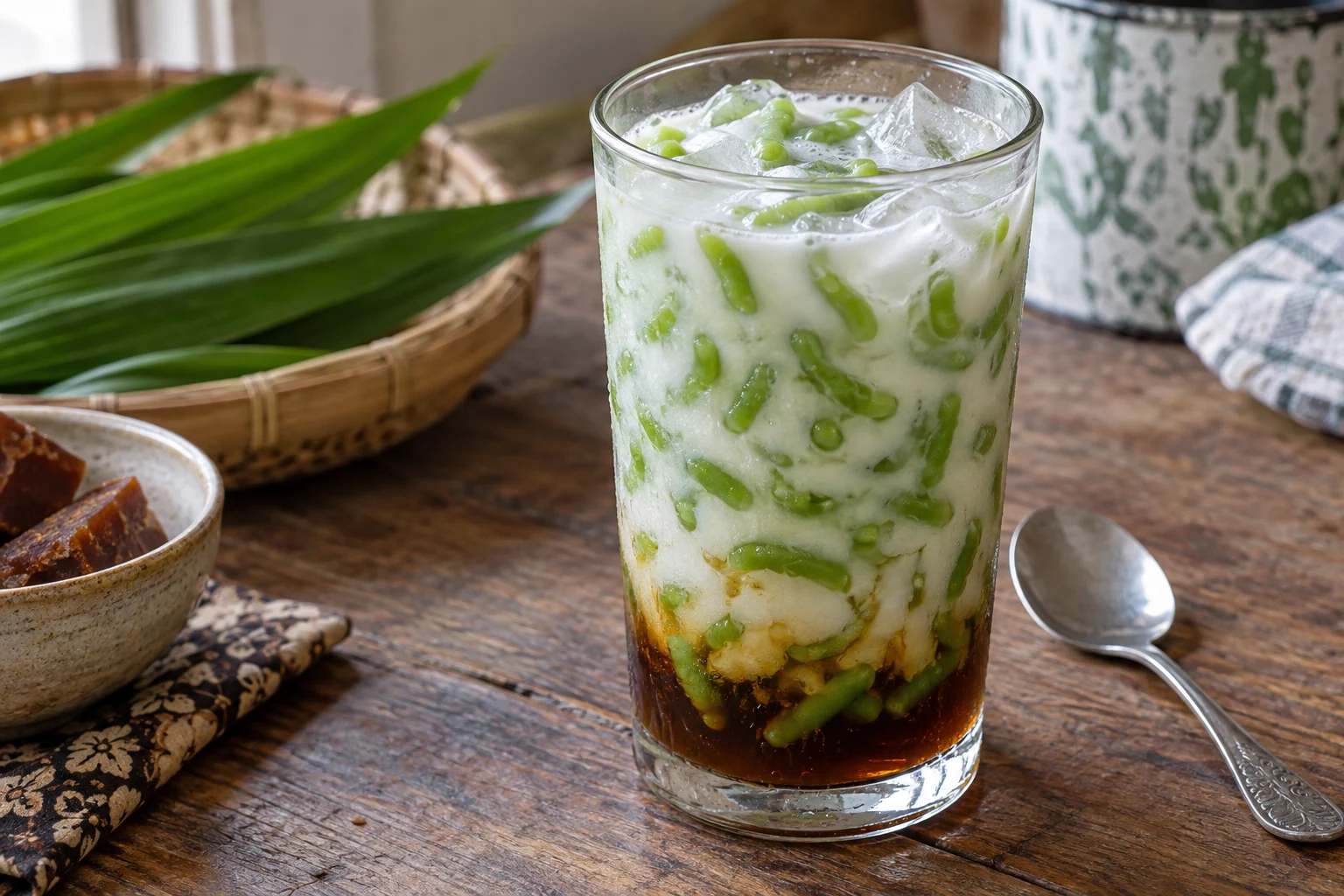
Es cendol: choose the jelly texture, then build the glass
A guide to the soft or chewy green jellies in Indonesian es cendol, their starch mixtures, and the balance of coconut milk, palm sugar syrup and ice.
Brazilian cuisine Pastry
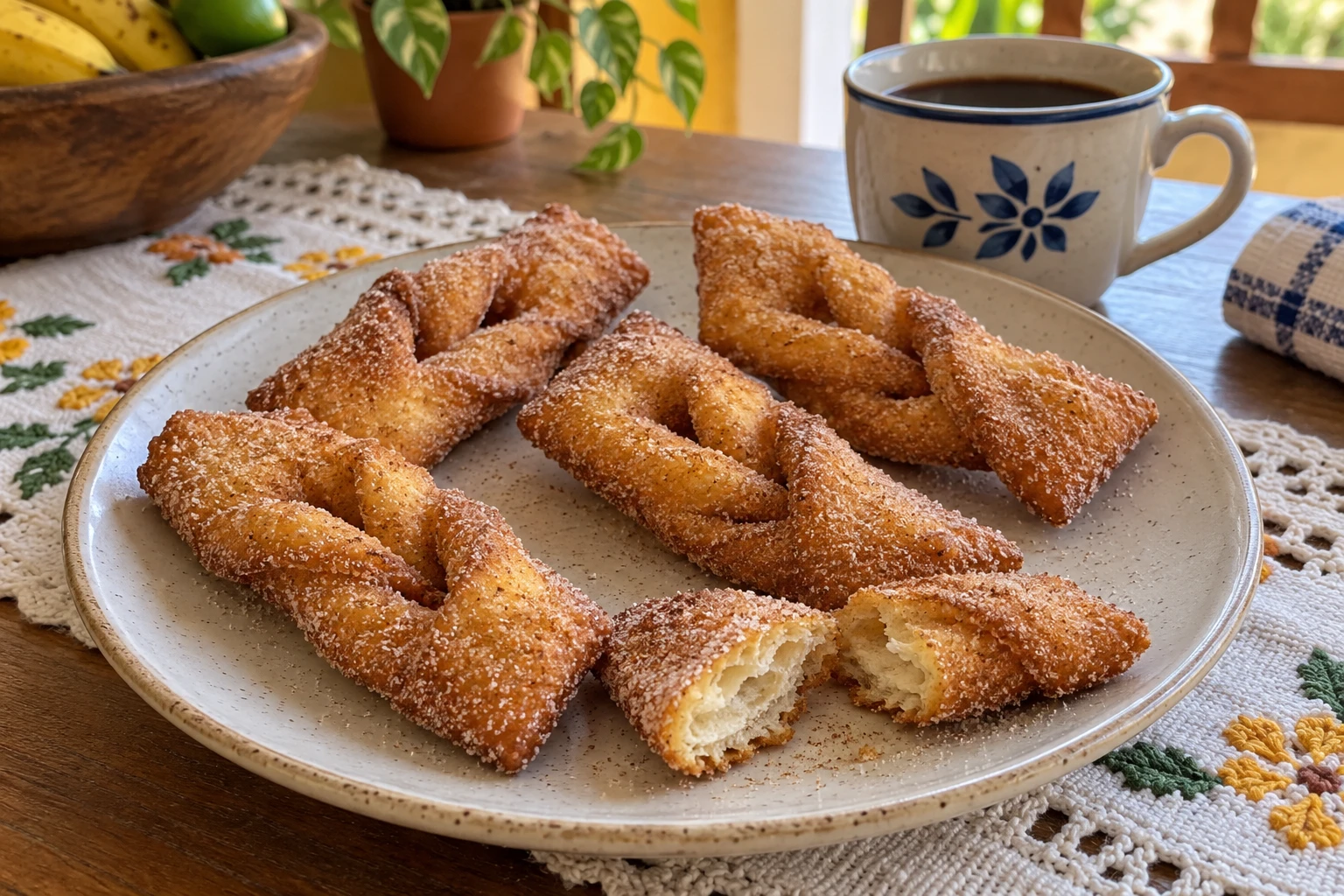
Cueca Virada: A Strip Turned Through Itself
A central slit gives this Brazilian fried pastry its distinctive turn. The shape is shared by recipes whose doughs, rests and frying instructions differ.