
Masala Chai: Choose the Tea, Then the Simmer
मसाला चाय
Black tea, spice preparation and the timing of milk shape masala chai. Three published methods show why a reliable cup begins with one coherent sequence.
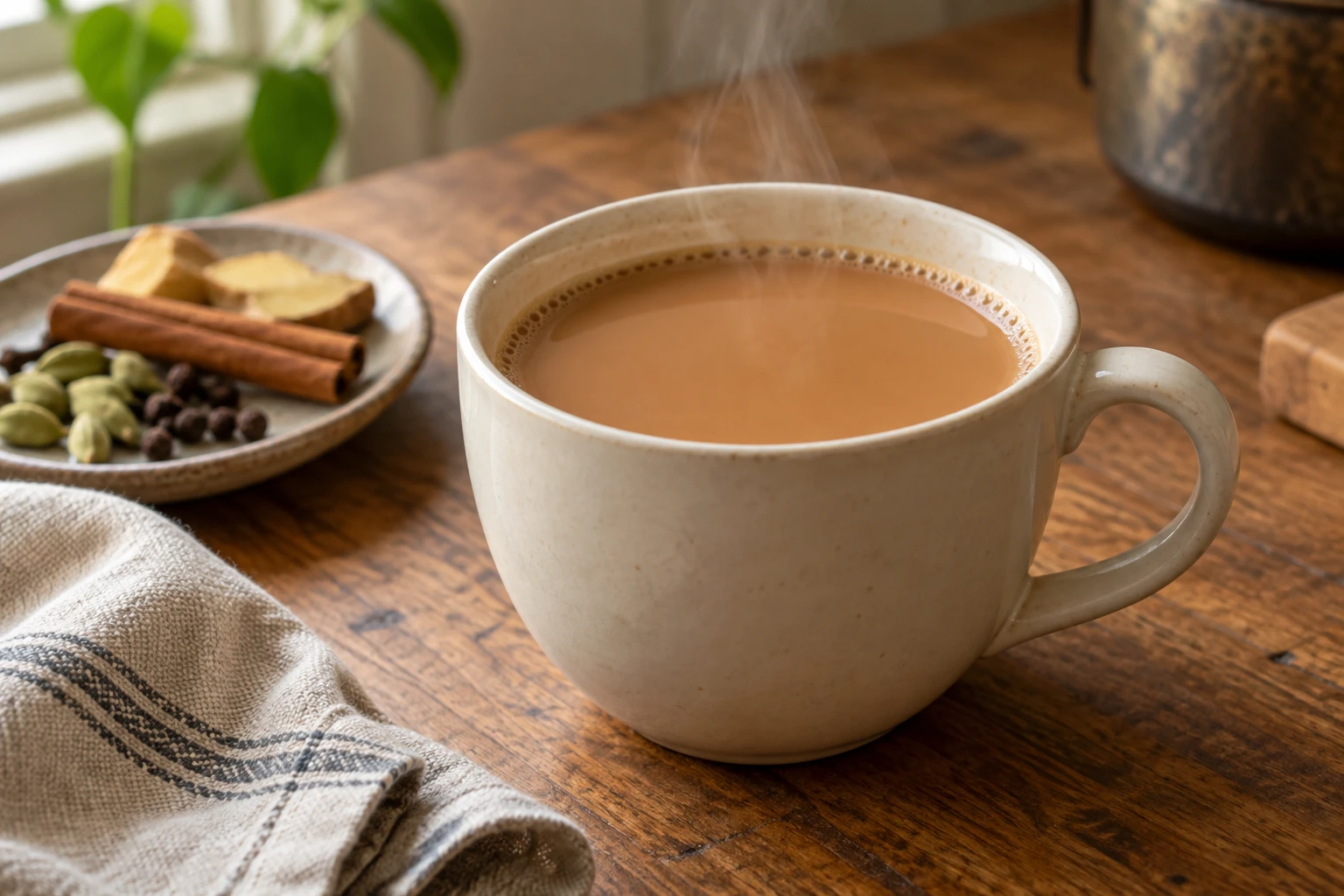
A cup built around black tea
Masala chai makes several decisions look like one drink. The finished cup is smooth and brown, yet the tea may be granular or leafy, the spices freshly crushed or already ground, and the milk added early or late. Those choices matter when following a recipe: switching one while keeping all the other timings can produce a different cup.
Tea Board India describes masala tea through Indian black tea and additions such as cardamom, ginger and cinnamon. That gives a useful starting point without defining a single compulsory spice mixture. The recipes below share that family resemblance, but their instructions are deliberately different. Their differences explain more than a supposedly universal list of ingredients.
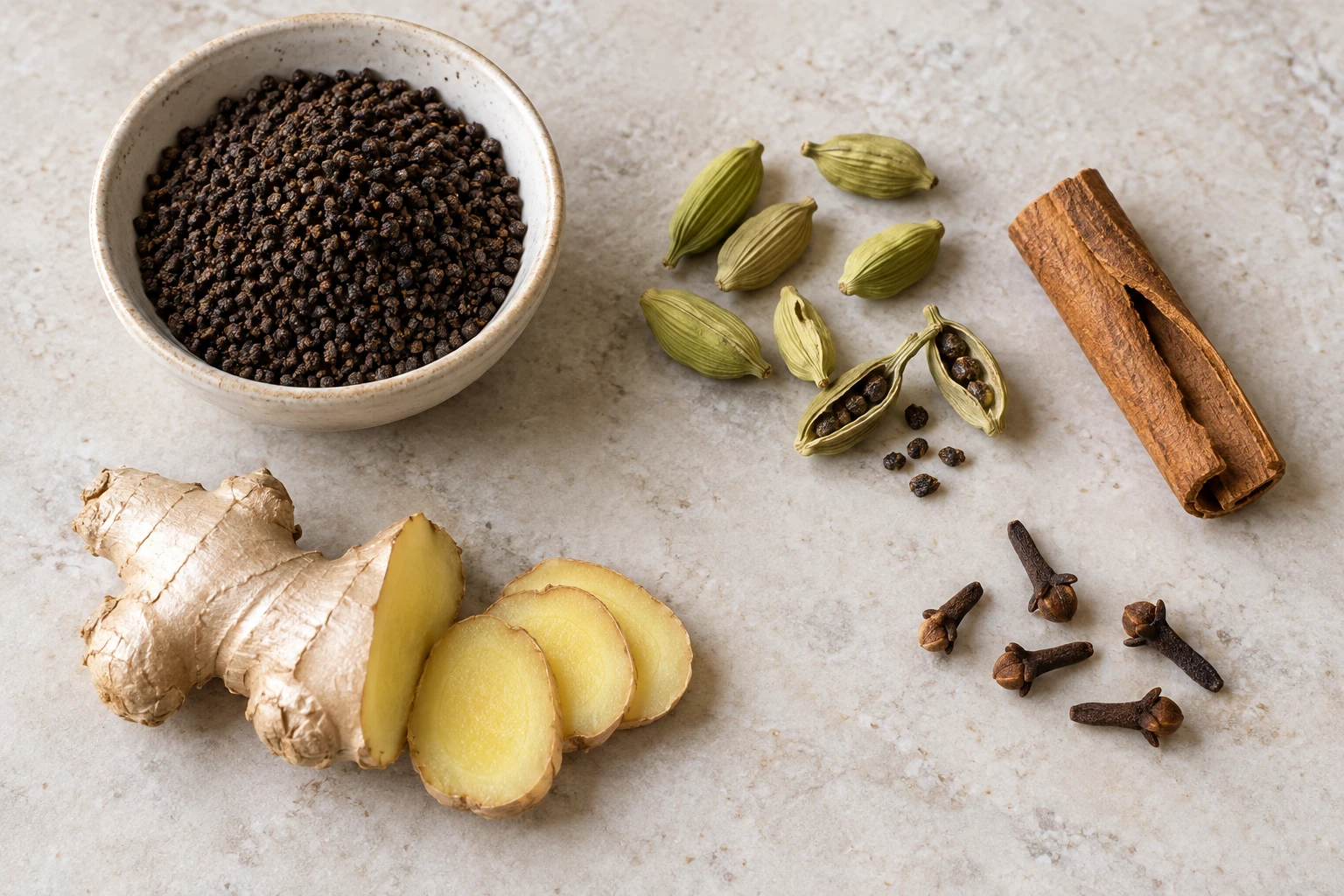
Three ways to prepare the spice
These are named approaches, each attached to its own complete recipe.
Coarsely crush
Anna Glover's Indian-inspired Good Food recipe crushes cardamom seeds, cinnamon, cloves and peppercorns in a mortar. The target is coarse pieces. Ground ginger joins that mixture in the pan.
Use a household combination
Hetal of Milk & Cardamom uses fresh minced ginger alongside cloves, cinnamon and ground cardamom in her grandmother's method. This is a specific family preparation, rather than a rule about how every household makes chai.
Roast and grind
NDTV Food presents a version that roasts a mixture of whole spices, including star anise, before grinding it. That extra preparation belongs to that recipe; adding its spice powder to a different formula would be an adaptation.
Match the tea to the method
Hetal prefers CTC black tea: the small granular tea shown here. Her recipe also gives a black tea bag alternative. Glover instead suggests loose leaf black tea such as Assam. These choices do not establish a quality ranking. They establish what each writer expects to put in the pan.
Read the tea quantity and liquid quantity together. A spoonful of one tea cannot safely be treated as a promise that another tea will behave identically in the same time. If choosing a different leaf, regard the first cup as an adjustment and taste it. The useful question is whether the tea remains perceptible through the milk and sweetening you have chosen.
Milk enters at different moments
Infuse, then add milk
Glover gently simmers spices, tea and water, adds milk and sweetener, then takes the pan off the heat for a short steep before straining. The tea and spice stage happens before the milk stage.
Bring milk into the boil
Hetal first boils tea, water and sugar, then adds milk and spices. With dairy milk, her method removes the pan from the heat when the milk rises, stirs it, and repeats that controlled rise. It requires attention at the stove.
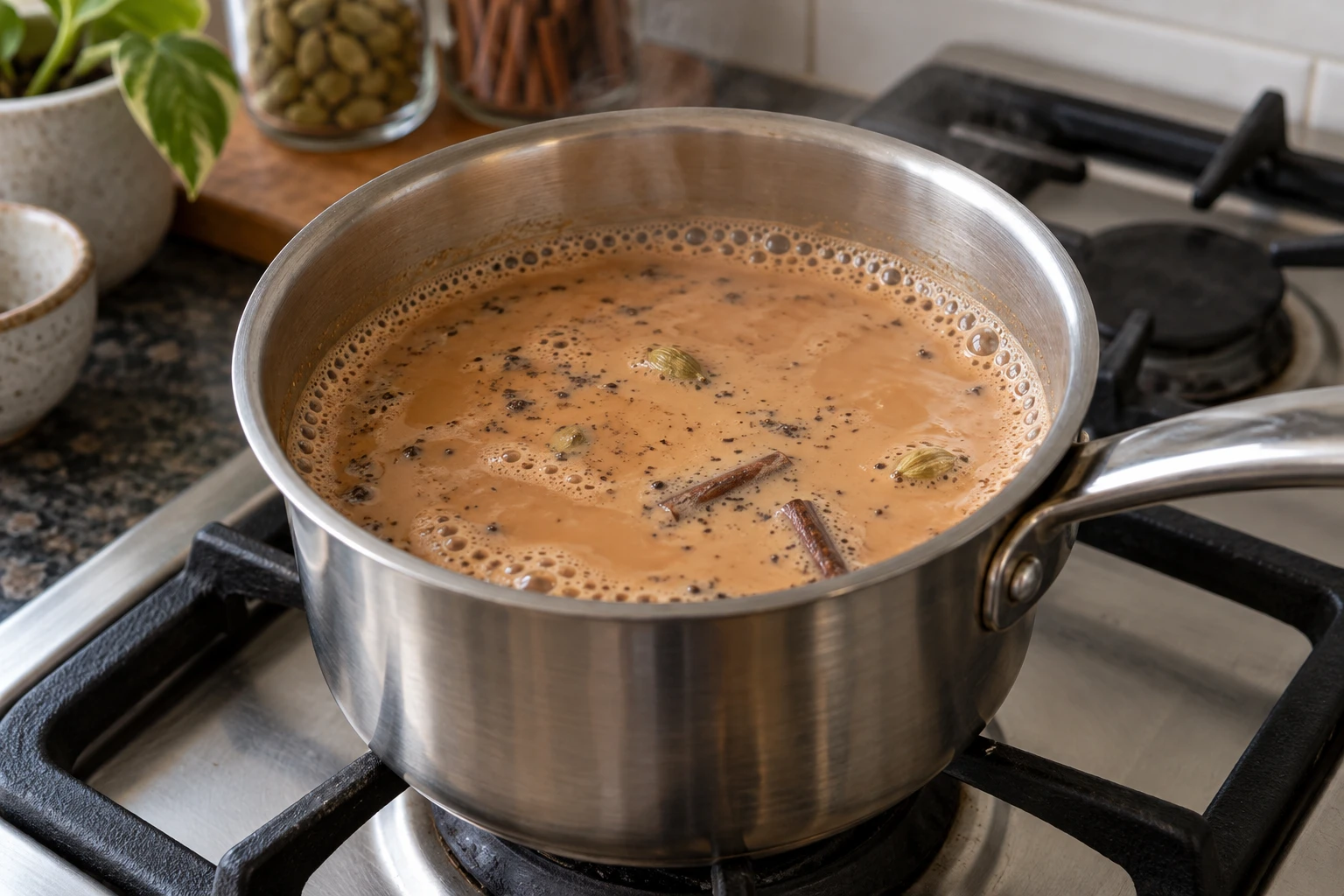
Choose one sequence before changing it
The comparison is a reason to follow a complete method. Combining one writer's leaf quantity, another's spice powder and a third's milk timing loses the relationships each recipe establishes. Start with the version closest to the ingredients and stove routine you want, then change one feature after tasting the result.
Whole dairy milk is pictured in the pan. Glover and Hetal both allow other milk choices, but Hetal's rising-milk instruction specifically describes dairy. Do not assume a plant drink will give the same visual signal. Dairy milk is also an allergen consideration when serving the cup to someone else.
Straining gives the finished drink its clean surface. Serve it while hot, with enough time to enjoy the aroma before the first sip. NDTV suggests samosas or pakoras alongside chai; a snack can accompany the cup without becoming a requirement. The drink's useful constant is the relationship between tea, milk and spices, while the linked recipes preserve the details needed to reproduce their individual results.
Research notes
Sources and complete methods
An Indian institutional description and three named recipe approaches; each recipe keeps its own ingredient proportions and sequence.
- Tea Board India — Masala Tea Indian black tea identity and examples of spices; no single fixed blend.
- Good Food — Anna Glover's masala chai Explicitly Indian-inspired; coarsely crushed spices, Assam suggestion and milk added after infusion.
- Milk & Cardamom — Hetal's masala chai A grandmother's household method with CTC tea preference and supervised dairy-milk rises.
- NDTV Food — Masala Chai Roasted and ground spice approach, hot service and snack suggestions.
Keep exploring
More stories for your table
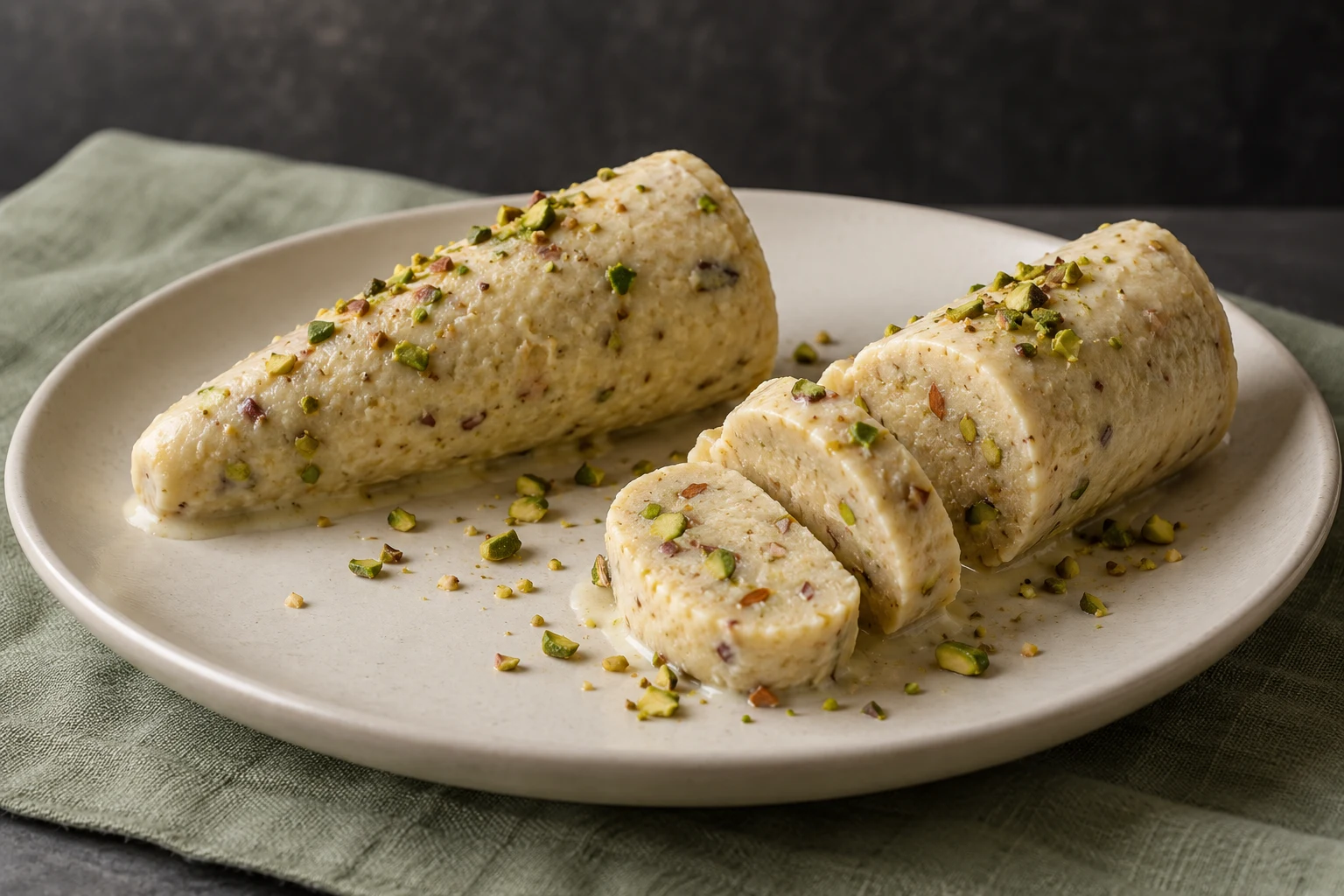
Pakistani cuisine Frozen milk dessert
Kulfi: choose the milk base, then the finish
Read reduced milk, khoya and condensed-milk kulfi methods, then discover how falooda noodles and syrup change the Pakistani serving.
Nepalese cuisine Egg curry
Nepali Egg Curry: A Surface Worth Frying
Explore Nepali egg curry through the difference between a fried whole egg, a carefully sauced half and the tomato-based gravy around them.
Chinese cuisine Cantonese rice congee
Century Egg and Pork Congee: Finish the Rice Base
Century egg and pork enter congee after the rice develops its texture. Compare three published rice methods, then coordinate meat, egg pieces and the final bowl.