
Székelykáposzta: balancing pork, sauerkraut and sour cream
Székelykáposzta
A practical guide to Hungarian pork and sauerkraut stew, with cabbage tasting, contrasting cooking sequences and a complete four-serving adaptation.
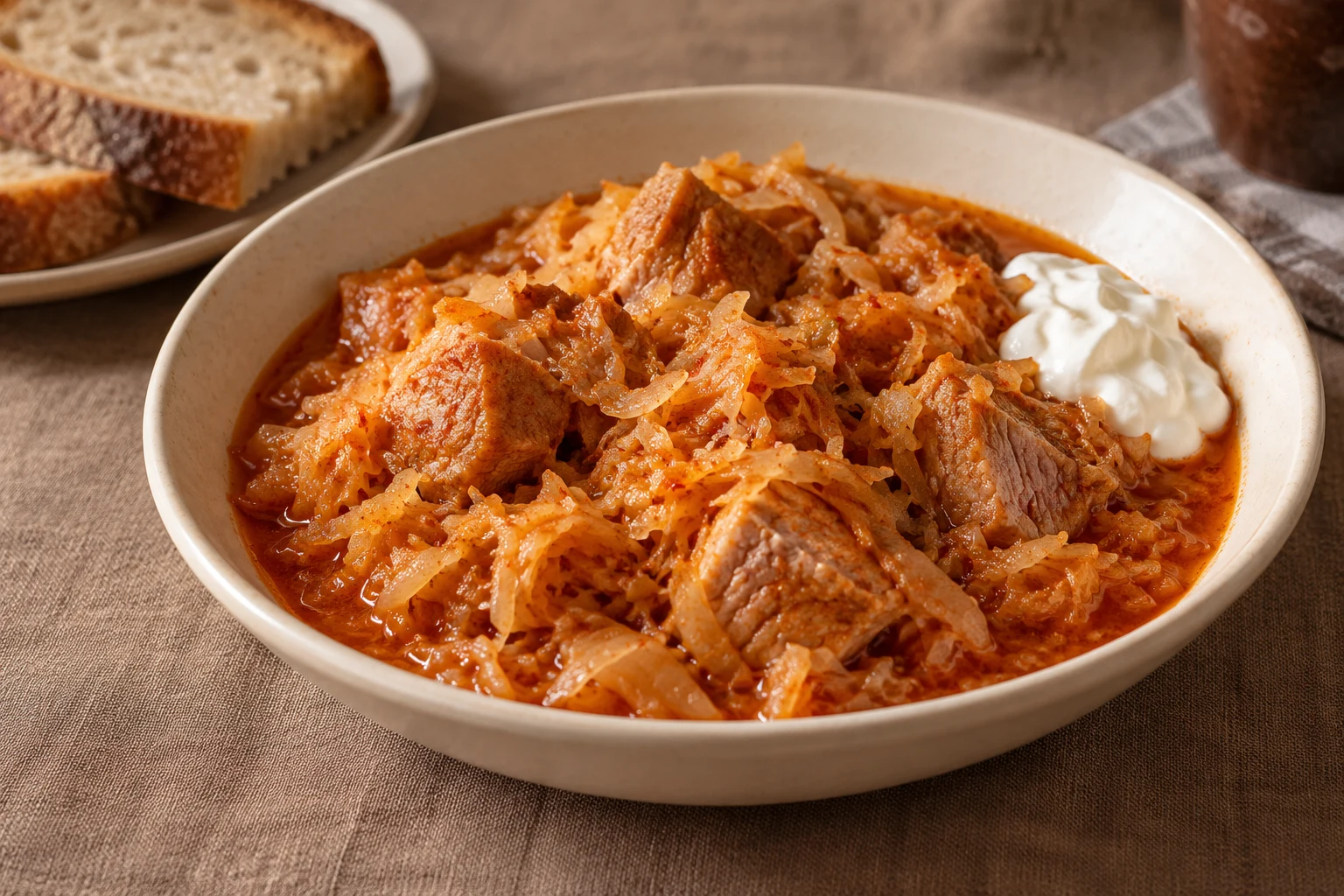
Székelykáposzta puts fermented cabbage in the center of a pork stew. Soft strands wind around the meat, while paprika colors the cooking liquid and sour cream changes the finish. The dish also appears under the name Székelygulyás. Its useful question is not how red the bowl looks, but whether the cabbage, meat and sauce have reached the balance you want.
The four cooks cited here agree on that central combination but take different routes through the pot. That matters when choosing a recipe: a short late addition of cabbage and a long shared simmer do not promise the same texture. The adaptation below chooses drained cabbage, pork shoulder and a separate sour cream topping, making those choices explicit rather than hiding them behind a single cooking time.
Start with the cabbage you actually have
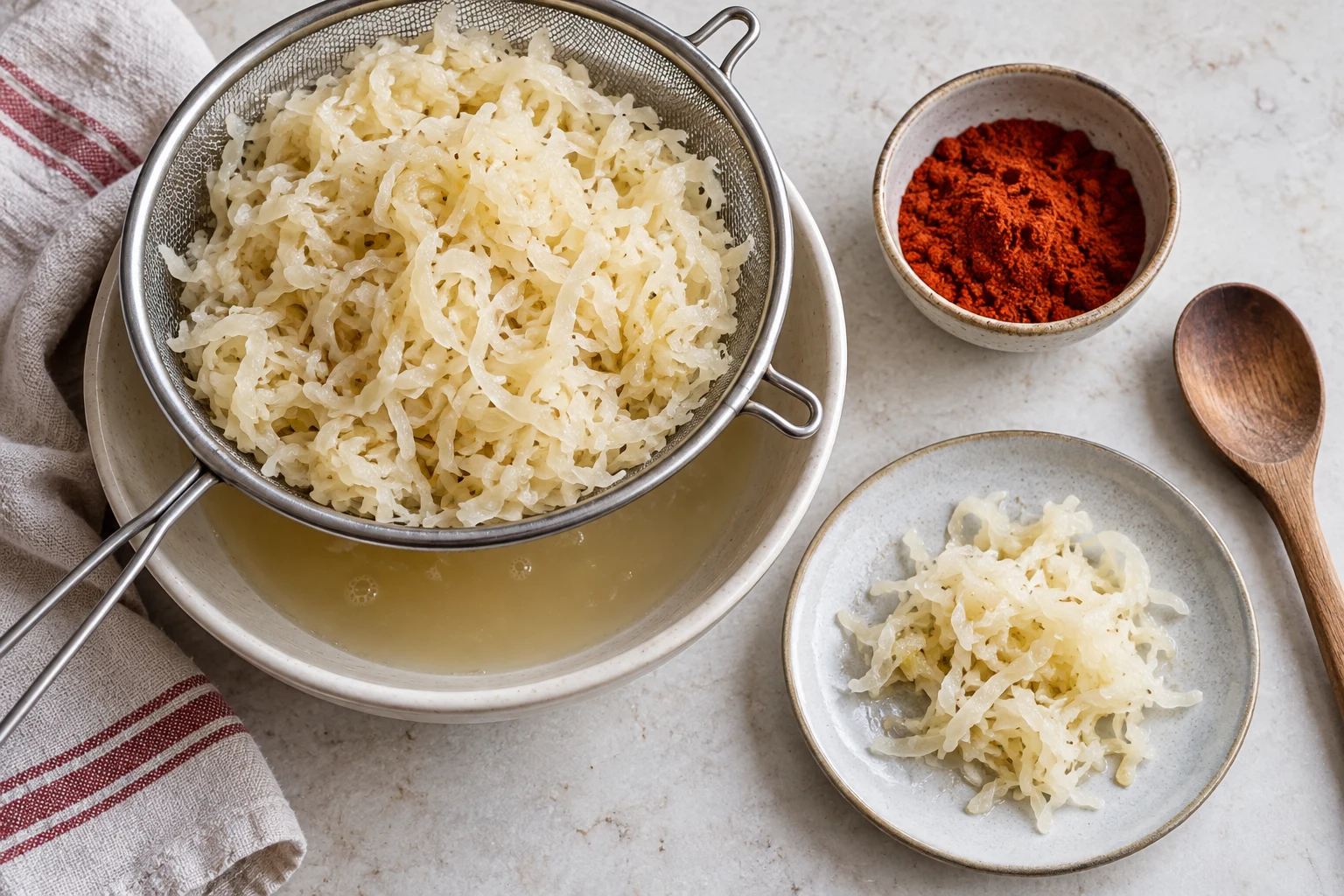
Taste a little sauerkraut before cooking. Jarred cabbage brings its own salt and acidity; adding a fixed spoonful of salt before that check makes the final seasoning harder to control. Timea recommends judging its flavor first, with rinsing or a brief soak for particularly sharp or salty cabbage.
Rinsing is a choice, not a universal requirement. Amanda at Crafty Cooking Mama prefers retaining the brine in her longer-cooked version because she wants a stronger tang. For the recipe here, drain the cabbage; rinse briefly only if the taste needs softening, then drain again. Keep extra salt for the end. This leaves the sauce adjustment in your hands without assuming every jar behaves alike.
Two routes through the braise
Meat first, cabbage later
Christian Ruß at Kitchen Stories braises the browned pork before adding sauerkraut. Tas Tóbiás also adds cabbage after an initial meat-cooking stage. The two ingredients get separate stretches of cooking rather than entering together.
Cabbage starts the pot
Amanda simmers sauerkraut while she browns pork and prepares vegetables, then brings everything together for a substantially longer cook. Use her timing with her method; it is not a stopwatch for every shoulder-and-cabbage stew.
Cook it at home
Pork shoulder and sauerkraut: an editorial adaptation
Four main-course portions. This original adaptation is not kitchen-tested; allow extra braising time if the shoulder remains firm. Sour cream is served separately.
Ingredients
Stew
- 800 g boneless pork shoulder, cut into 2.5 cm pieces
- 700 g drained sauerkraut, rinsed briefly only if needed
- 200 g onion, chopped
- 2 tbsp neutral cooking oil
- 2 cloves garlic, finely chopped
- 1 tbsp Hungarian sweet paprika
- ½ tsp caraway seeds
- 400 ml water, plus more as needed
- Salt, only as needed after tasting
To serve
- 150 g sour cream
- Bread, optional
Method
- 1
Brown, then soften
Heat oil in a heavy lidded pot. Brown pork in batches over medium-high heat and transfer to a plate. Lower the heat; soften onion in the same pot for 6–8 minutes.
- 2
Start the braise
Add garlic and stir for 30 seconds. Remove the pot briefly from the heat, stir in paprika, then add pork, caraway and water. Return to a gentle simmer, cover and cook for 45 minutes.
- 3
Add the cabbage
Stir in sauerkraut. Cover and simmer for another 45–75 minutes, stirring occasionally. Add small amounts of water if the base threatens to catch. Check a large pork piece with a thermometer: for this adaptation, cook to at least 74°C/165°F and until fork-tender.
- 4
Finish the bowl
If very soupy, simmer uncovered briefly; if dry, add a little water. Taste before adding salt. Spoon into bowls and offer sour cream separately, with bread if wanted.

Judge the meat and sauce separately
Shoulder should yield easily to a fork; a clock alone cannot establish that. The thermometer check in the adaptation is a deliberately conservative endpoint, and tenderness may require cooking longer. Add water in small amounts as needed so a long braise does not become a dry fry.
Tas finishes his version with sour cream stirred in after turning off the heat, while Christian serves it on the bowl. A separate topping gives each diner a direct way to soften the cabbage's tang and keeps the paprika-colored sauce visible. Bread can collect that sauce; it does not need to disappear into the pot.
Research notes
Sources behind this article
- Christian Ruß · Kitchen Stories Original recipe with refrigerated shoulder preparation, an initial pork braise, later sauerkraut and a sour cream topping.
- Tas Tóbiás · Offbeat Budapest Local writer's adapted recipe, Hungarian dish names, final salt adjustment and off-heat sour cream.
- Timea · Timea's Kitchen Family preparation with practical advice to taste and, if necessary, rinse salty or strongly sour cabbage.
- Amanda · Crafty Cooking Mama A contrasting cabbage-first, long-simmered preparation; the author explains her preference for keeping the brine.
- FoodSafety.gov · Temperature chart Official meat and casserole temperature guidance; the adaptation uses a conservative 74°C check rather than color alone.
Keep exploring
More stories for your table
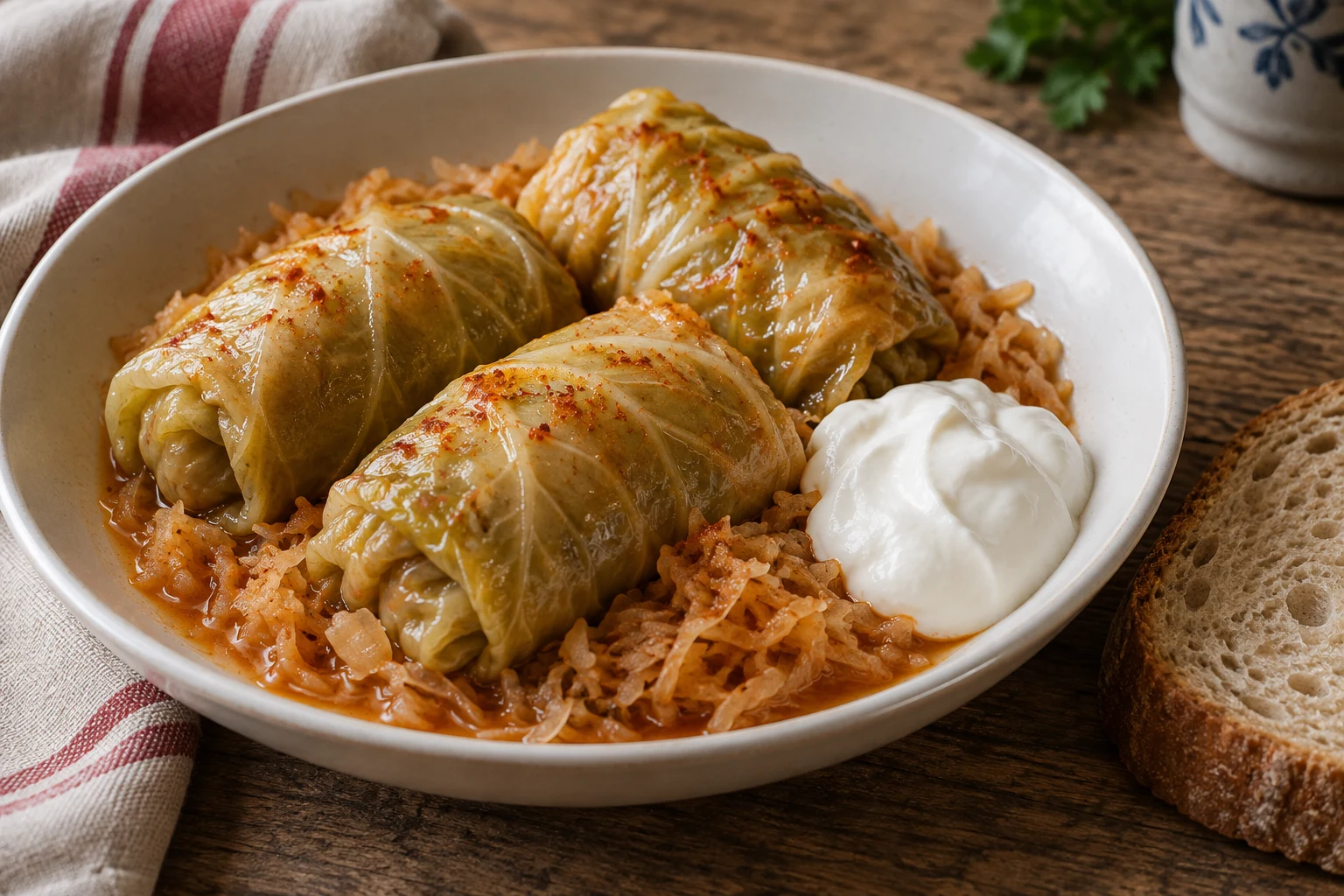
Hungarian cuisine Stuffed cabbage
Töltött Káposzta: Cabbage in Two Roles
Hungarian stuffed cabbage combines a leaf-wrapped filling with cabbage in the cooking pot. Explore sour and fresh leaves, a Szabolcs tomato variation, and the dish’s place at festive tables.
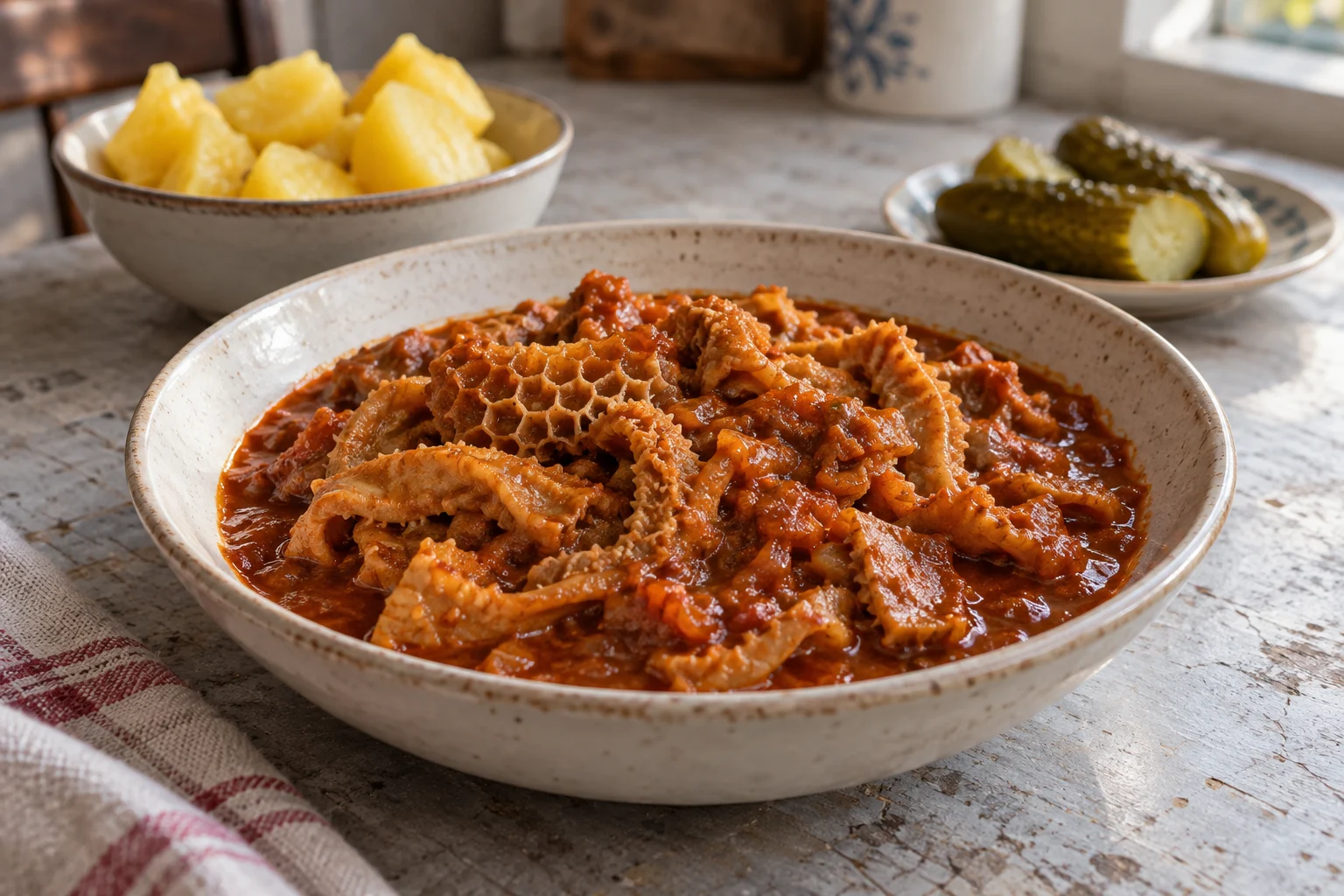
Hungarian cuisine Tripe stew
Pacalpörkölt: tripe, paprika and a patient simmer
A practical guide to Hungarian paprika tripe stew: choosing prepared tripe, judging tenderness, concentrating the sauce and serving it well.

Hungarian cuisine Savory pancakes
Hortobágyi Palacsinta: One Stew, Two Textures
Thin Hungarian pancakes turn paprika chicken stew into two distinct pleasures: a moist, compact filling and a sauce that flows around it.