
Töltött Káposzta: Cabbage in Two Roles
Töltött káposzta
Hungarian stuffed cabbage combines a leaf-wrapped filling with cabbage in the cooking pot. Explore sour and fresh leaves, a Szabolcs tomato variation, and the dish’s place at festive tables.
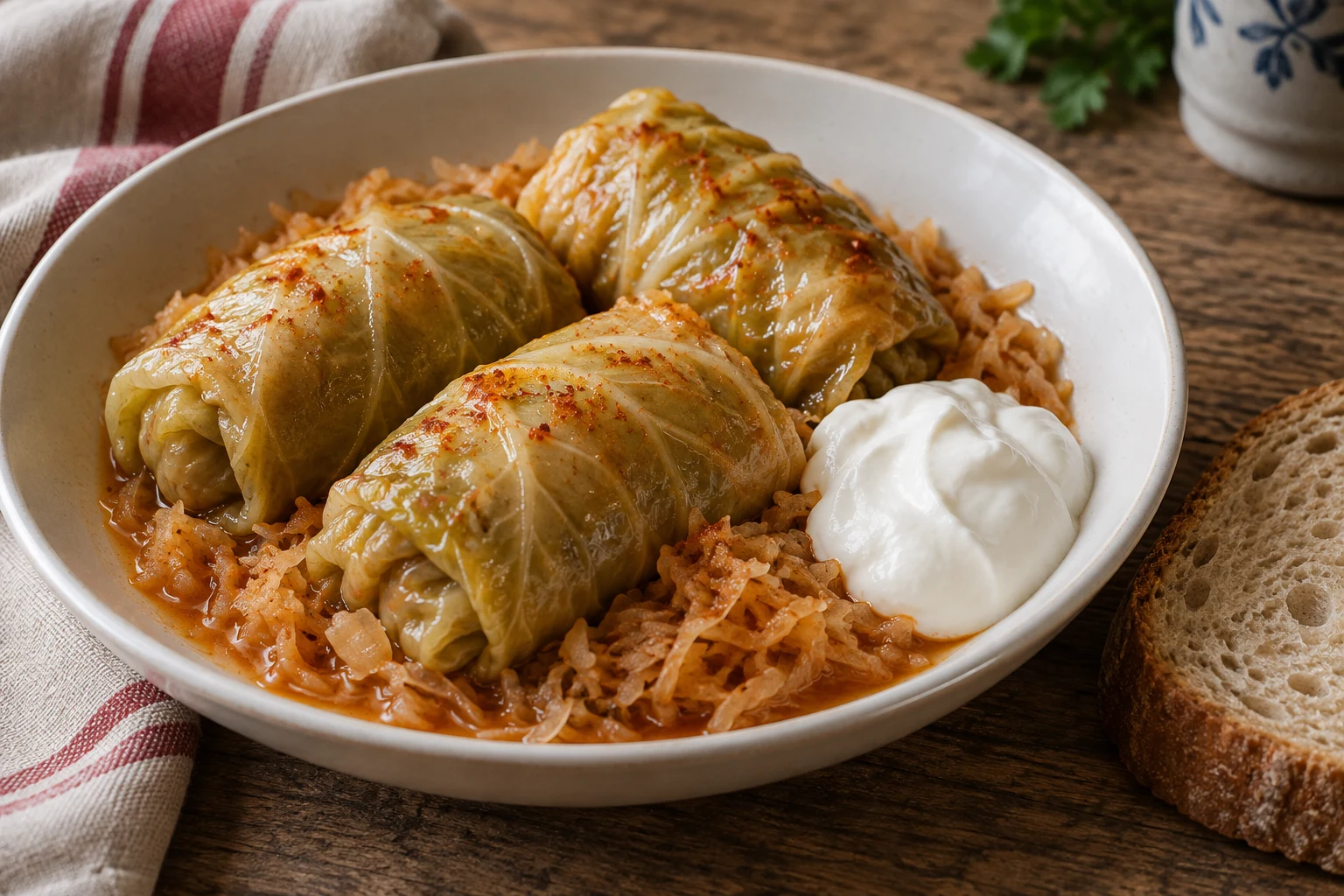
The cabbage is more than packaging
Töltött káposzta is Hungarian stuffed cabbage: a filling enclosed in leaves, cooked into a meal that can also contain plenty of loose cabbage. The parcel is the obvious feature on the plate. The shredded cabbage around it deserves attention too, especially in a sauerkraut-based preparation, where it helps shape the sour character of the whole bowl.
Ágnes Baráth, the instructor behind Culinary Hungary, documents a version using minced pork or a pork-and-beef mixture with rice and seasonings. She layers the rolls between shredded sauerkraut before cooking them in a covered pot in the oven. That gives cabbage two jobs at once: it holds the filling together and surrounds it during cooking.
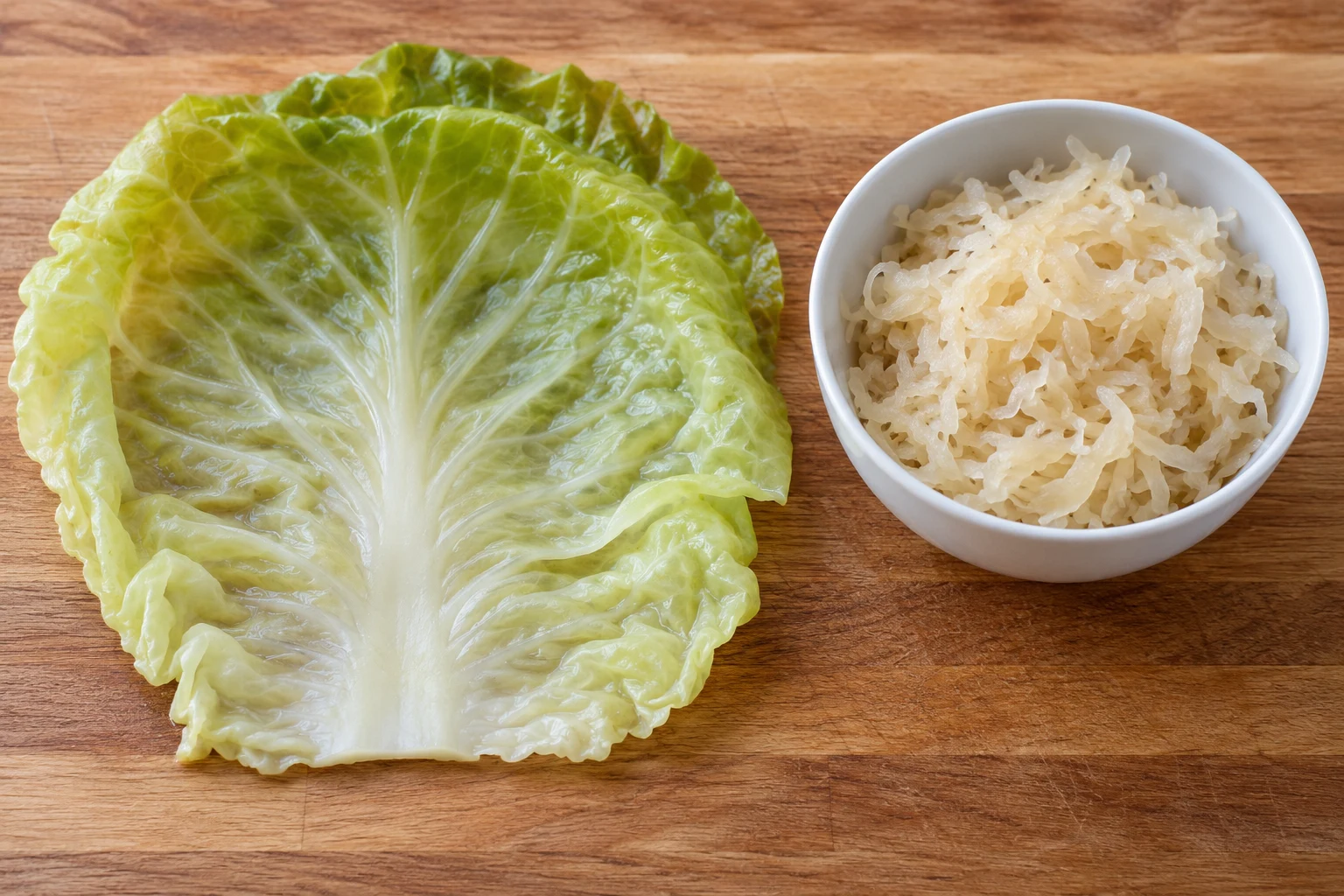
Two forms to recognise when shopping
- Wrapping leaves
- Whole and pliable
- Cabbage in the pot
- Shredded or chopped
Baráth describes fermented whole-head cabbage as one starting point, with softened fresh cabbage leaves as another. The choice belongs to the preparation you plan to cook.
Her sauerkraut version uses fine shreds around the parcels. A different family recipe can use chopped fresh cabbage instead, changing the starting flavour.
Sourness is a choice within the recipe
Eisler Zsolti’s Street Kitchen Christmas preparation starts with soured cabbage leaves and shredded sauerkraut. He discusses rinsing the shreds as a matter of preferred sourness and chooses not to rinse them himself. His pot also includes smoked meats. The acid, smoke and seasoned filling are separate layers of flavour, rather than one ingredient doing all the work.
When buying cabbage for a recipe, distinguish the whole leaves from the fine shreds and check whether each is fresh or soured. A tub of shredded sauerkraut cannot supply an intact wrapper; a fresh head does not bring the same starting acidity as a fermented one. The ingredient form is a practical decision before the filling is mixed.
A Szabolcs family bowl takes a tomato direction
Tomato is a useful reminder that the dish does not have one fixed sauce. In Sóbors, writer Claudia Botos describes her father’s Szabolcs family and their version of stuffed cabbage. Her recipe softens fresh cabbage leaves, places chopped cabbage under the parcels and adds tomato passata over the assembled pot. The sour-cabbage preparation is one path; this tomato-rich one is another.
Botos also records differences within the family: some cooks use cornmeal in place of rice, while an aunt made particularly small parcels with a cone-like fold. Her household likes a hotter seasoning, but she explicitly allows the hot pepper additions to be left out. These are named family practices, rather than a rule for every cook in Szabolcs.
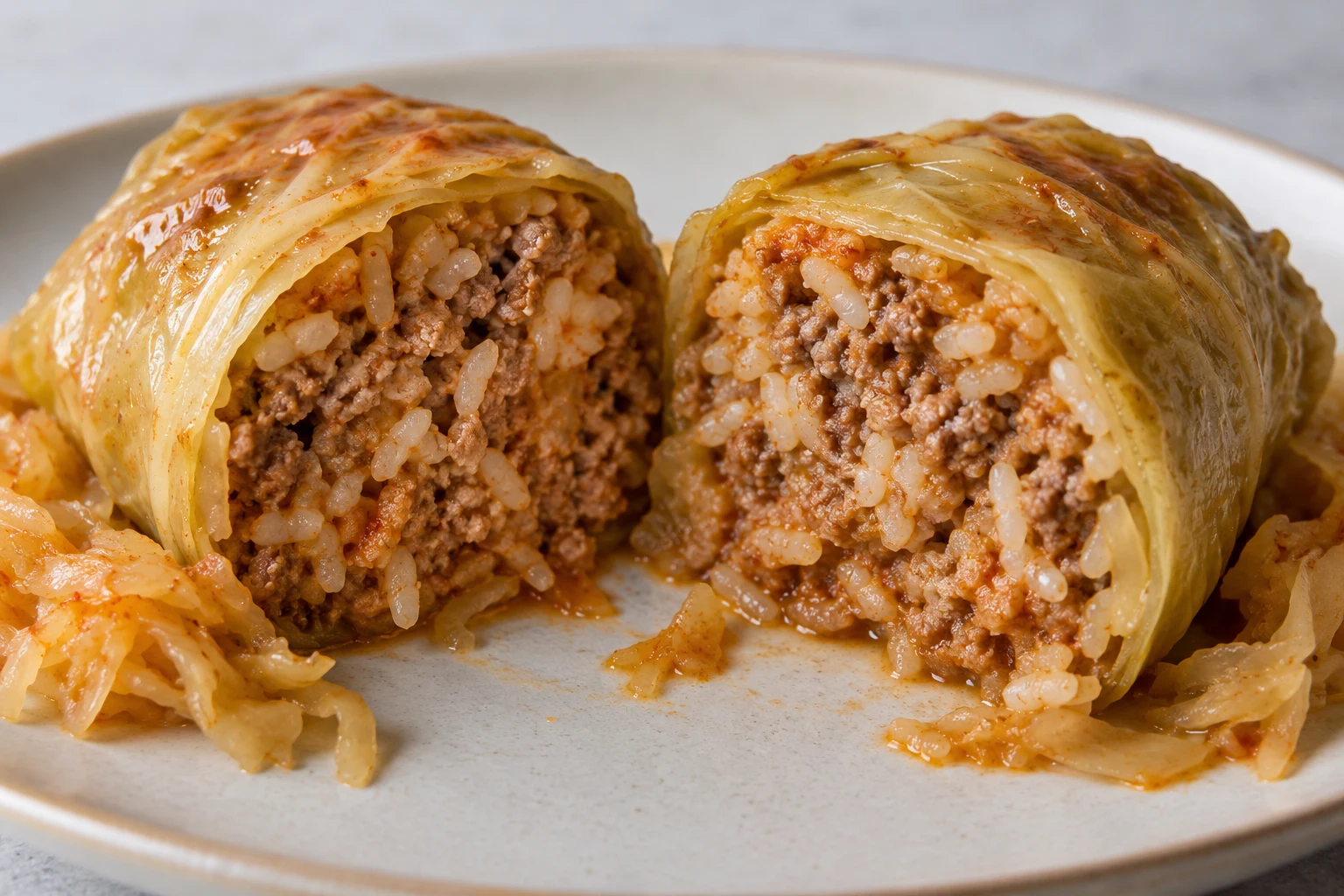
A familiar festive dish with room for family differences
Visit Hungary places stuffed cabbage among popular Christmas dishes and opens its holiday-food account by emphasising differences between regions and households. Baráth likewise associates the dish with Christmas and New Year’s Eve, while documenting both stovetop and oven approaches. The shared occasion does not require every table to reproduce the same pot.
That context helps when encountering competing claims about the authentic version. Ask which family or preparation is being described, then look at its leaves, cabbage base and filling. One household’s small tomato-cooked parcels and another’s sauerkraut layers can each be specific and meaningful without being the only acceptable form.
A pot can mark the next stage of a gathering
In a Taste Hungary essay, Budapest food writer Lester Kramer recalls waiting for stuffed cabbage after midnight at a wedding. He describes bringing out the pot at that hour as a Hungarian wedding tradition, with sour cream and bread alongside. His account gives the dish a purpose beyond its ingredient list: feeding the gathering when the celebration continues late.
Keep that as an attributed foodways account, rather than a schedule for every wedding. It explains why a meal assembled in parcels can still belong to a communal pot. At service, the leaf, filling, cabbage and broth arrive together, while sour cream and bread let the diner finish the bowl at the table.
Research notes
Sources for cabbage forms and festive tables
A Budapest instructor and two Hungarian recipe writers document different ingredient choices. Official tourism supplies Christmas context, while a named food writer records a wedding meal from personal experience.
- Culinary Hungary — Ágnes Baráth’s stuffed cabbage Documents fresh or fermented wrapping leaves, sauerkraut layers, filling and oven method.
- Street Kitchen — Eisler Zsolti’s Christmas cabbage Named cook explains soured cabbage, personal rinsing choice and layered smoked-meat variation.
- Sóbors — Claudia Botos’s Szabolcs family recipe Original family account documents fresh cabbage, tomato passata, small parcels and variable grain or heat.
- Visit Hungary — Christmas-table traditions Official tourism account places stuffed cabbage at Christmas while emphasising regional and household differences.
- Taste Hungary — Lester Kramer’s midnight wedding meal Budapest writer’s personal essay describes a wedding pot of stuffed cabbage with sour cream and bread.
Keep exploring
More stories for your table
Hungarian cuisine Soup
Baja Fish Soup: Move the Pot, Keep the Fish
Baja fisherman’s soup pairs paprika-red carp broth with matchstick noodles. Its vigorous boil and careful handling explain why stirring is the wrong habit to borrow.
Hungarian cuisine Curd-cheese pasta
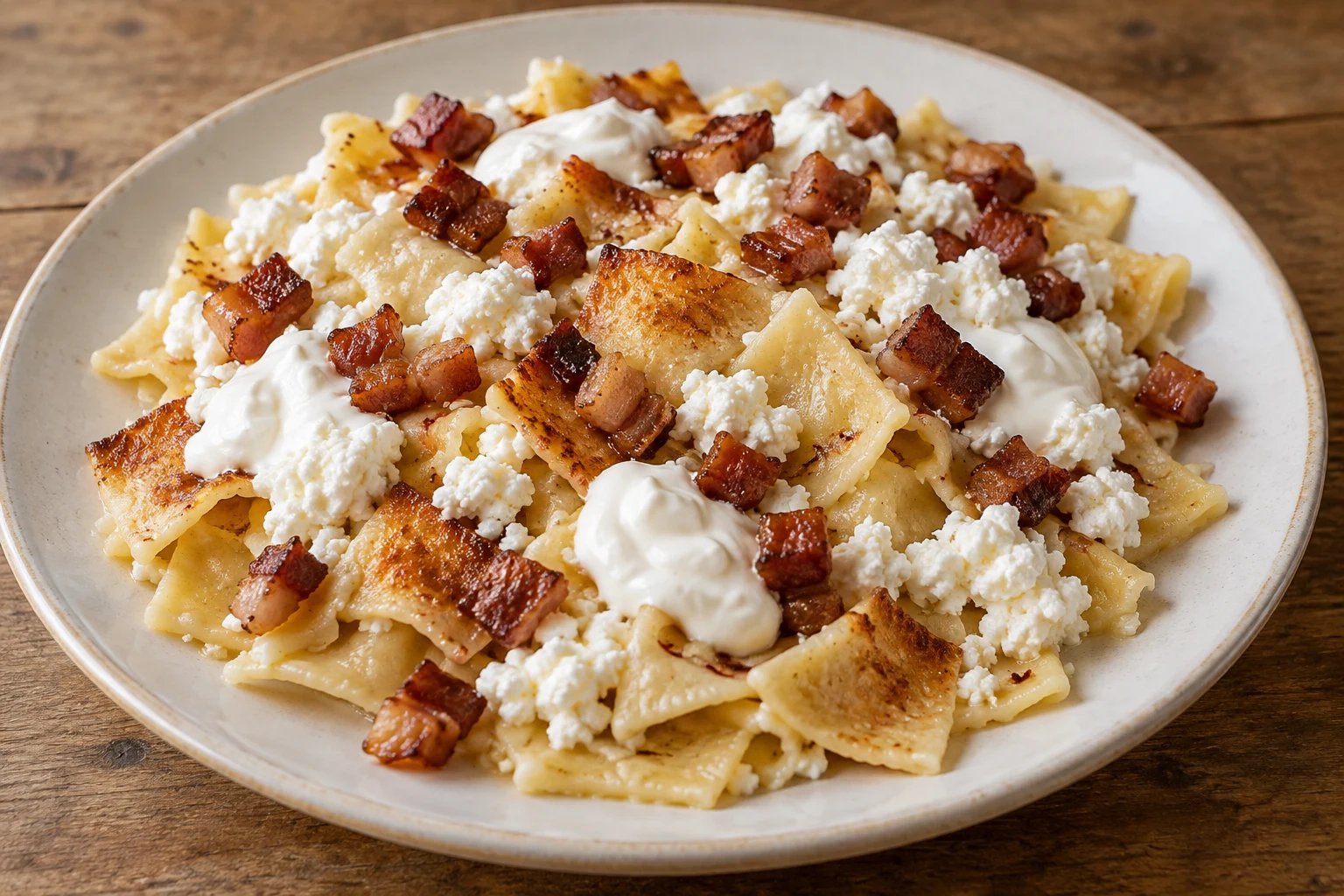
Túrós Csusza: Crisp Pasta, Soft Curds
How broad pasta, loose curd cheese, sour cream and crisp bacon work together in Hungarian túrós csusza, with two documented ways to finish the dish.
Chilean cuisine Seafood and meat
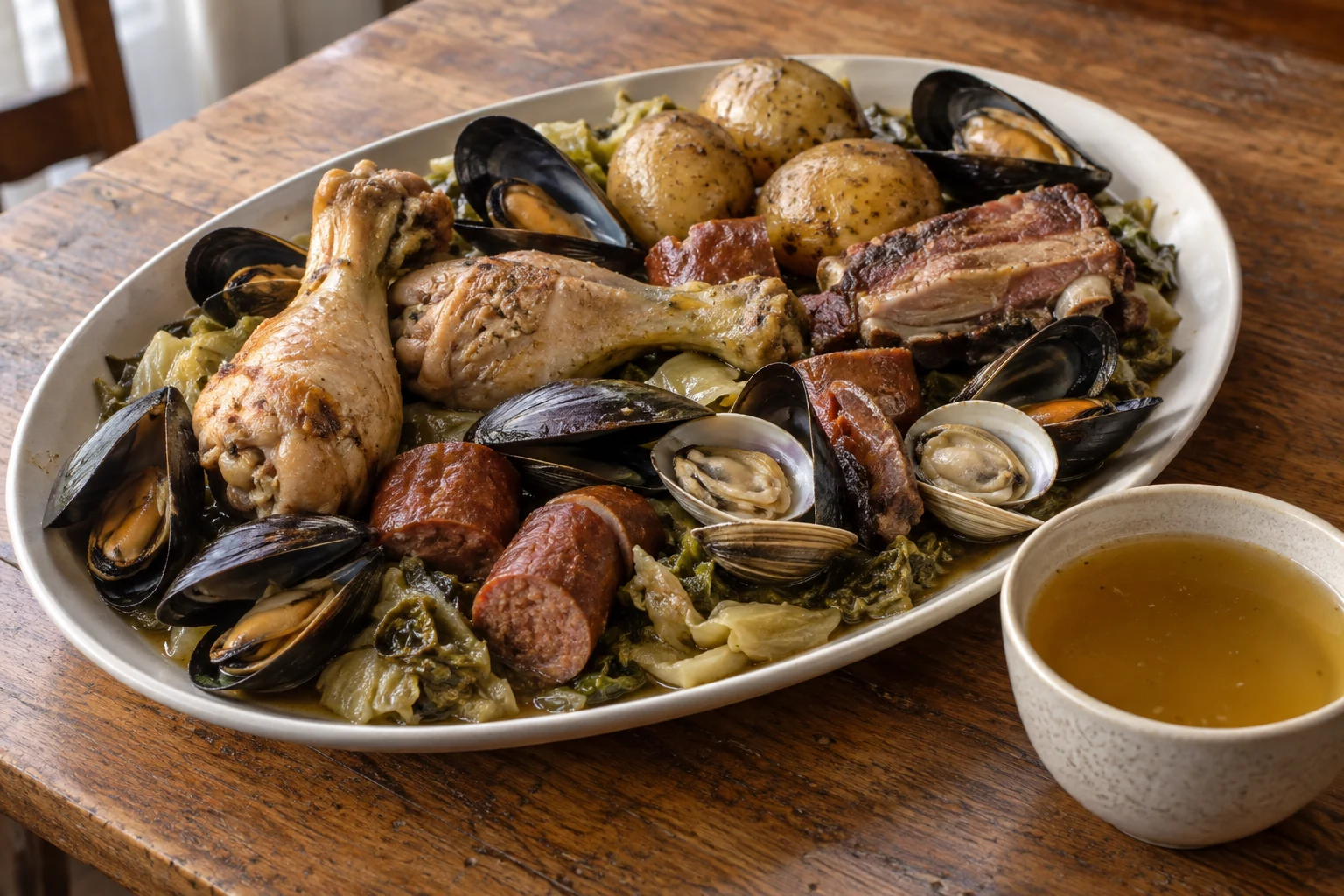
Pulmay: A Feast with Its Own Cup of Broth
Why Chilean pulmay comes with a separate cup of broth, how its cabbage layers vary, and where milcaos fit into the meal.