
Libasült: The Covered Roast and the Crisp Finish
Márton-napi libasült
Hungarian goose-leg recipes separate the slow covered cook from the uncovered finish. Read the pan, the cut and the November feast together.
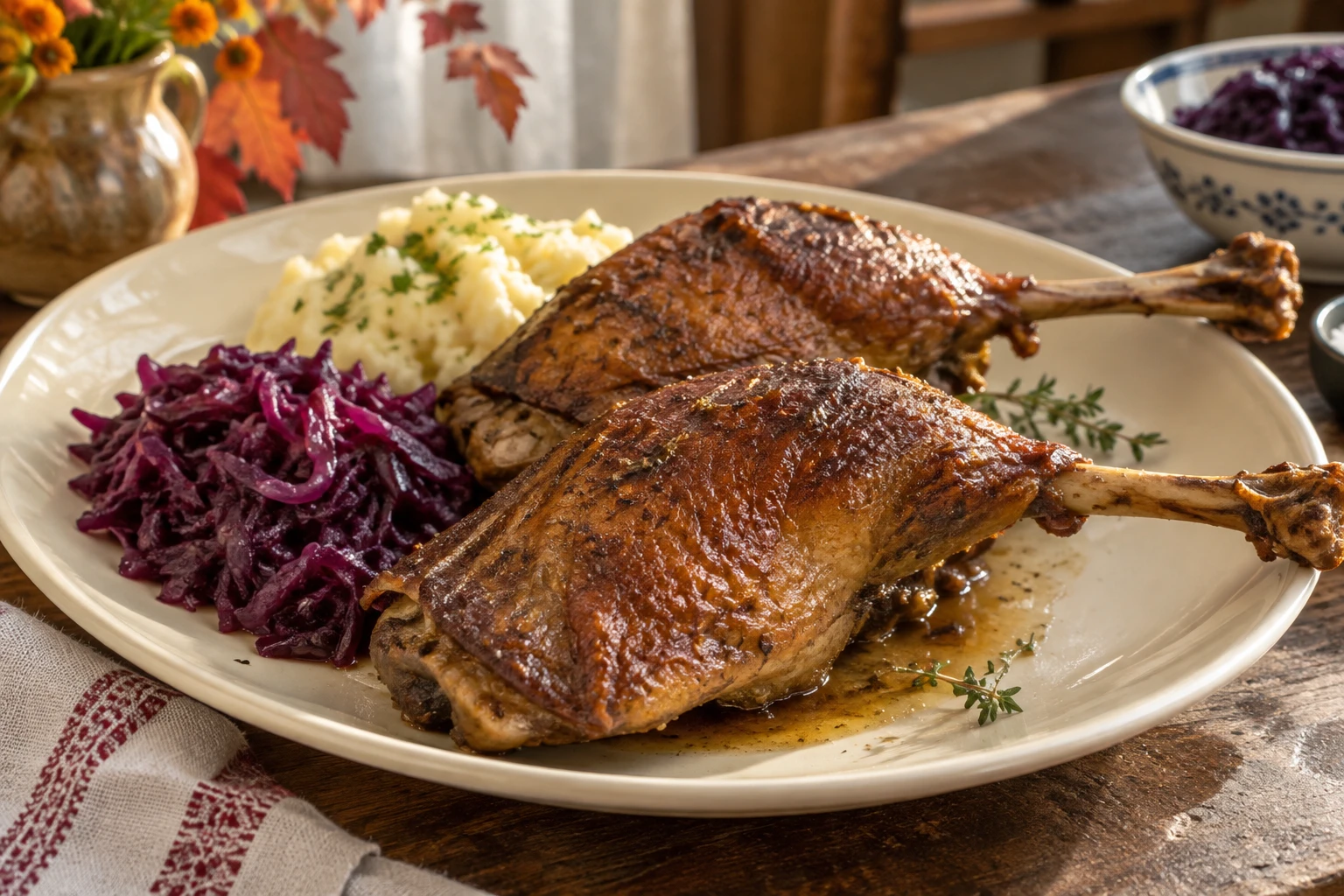
Two stages in one roasting pan
A plate of Hungarian libasült can arrive as goose legs with braised red cabbage and potatoes. The skin is brown; the meat underneath is tender. Two Hungarian preparations make those results easier to understand by separating the covered cook from the final uncovered browning.
This is a feature about roast pieces, especially legs. A whole bird brings a different arrangement of breast, thigh and wing, so a leg recipe’s timing should stay with its cut. The most useful starting question is simple: which part of the goose is in the pan, and what is the current stage trying to achieve?
The November table
November 11 is St. Martin’s Day. Visit Hungary connects the celebration with goose and new wine, but its list reaches well beyond a single roast: soup, garlic goose legs, liver preparations and dishes with goose giblets all appear. Libasült is one expression of a larger feast.
There is a familiar story behind the goose association: Martin hides among geese to avoid being made bishop, and their noise reveals him. Budapest Zoo presents this as a traditional account. It belongs to the celebration’s storytelling, rather than serving as proof of who first devised a roasting method.
For a diner, that distinction is useful. A Martin’s Day menu may follow the seasonal theme while offering several preparations. The date gives the meal its occasion; the cut, sauce and side dishes explain the particular plate. New wine is part of the documented pairing, not an ingredient every goose recipe must contain.
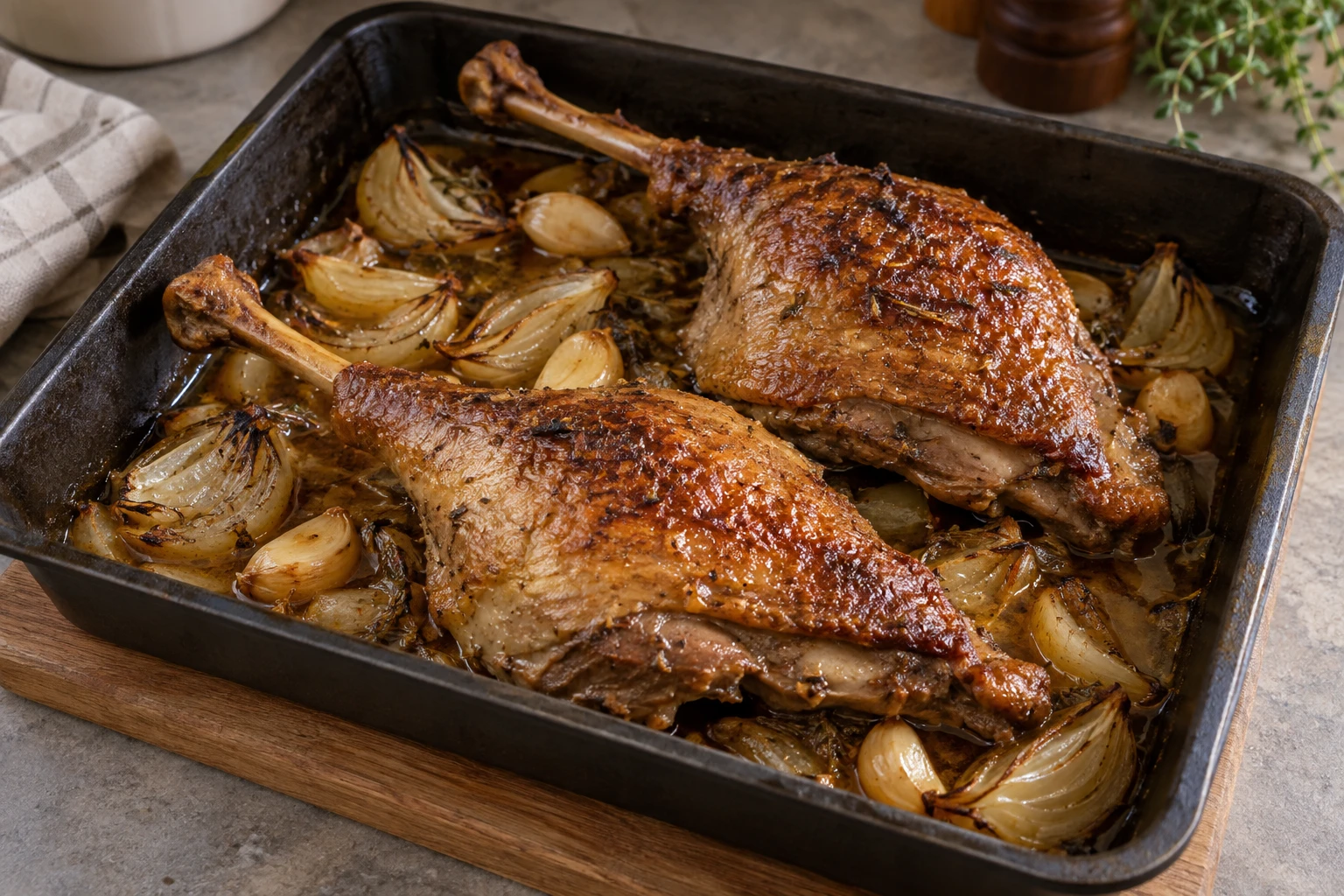
Compare methods without mixing their clocks
Nosalty’s goose legs
This contributor’s preparation dries and carefully scores the legs, seasons them with salt and pepper in oil, and surrounds them with onion and garlic. Wine or water supplies the liquid. The covered oven stage is 170°C, followed by a short uncovered finish at 200°C.
Street Kitchen’s legs and wings
Eisler Zsolti places the legs skin upward with wings, onion, garlic, wine and goose fat. The recipe begins covered and checks tenderness before removing the foil and raising the heat for browning. It explicitly says the bird’s age and meat affect the time needed.
Read the roast in order
- 01
Identify the covered phase
Both Hungarian examples begin with foil over the pan. The longer stage is directed toward tender meat. Removing the cover early changes the method rather than simply speeding up the finish.
- 02
Expose the skin for the finish
Once the specified tenderness is reached, both methods remove the foil and use a hotter oven. Keep that transition visible in the plan; the brown exterior is the final stage, not the sole measure of the meat underneath.
- 03
Measure the interior
FoodSafety.gov gives poultry a minimum internal temperature of 165°F/74°C. For a whole goose, check the innermost thigh and wing and the thickest breast. Its whole-bird and cut-up-goose entries have different planning times; use the thermometer rather than colour or a clock alone.
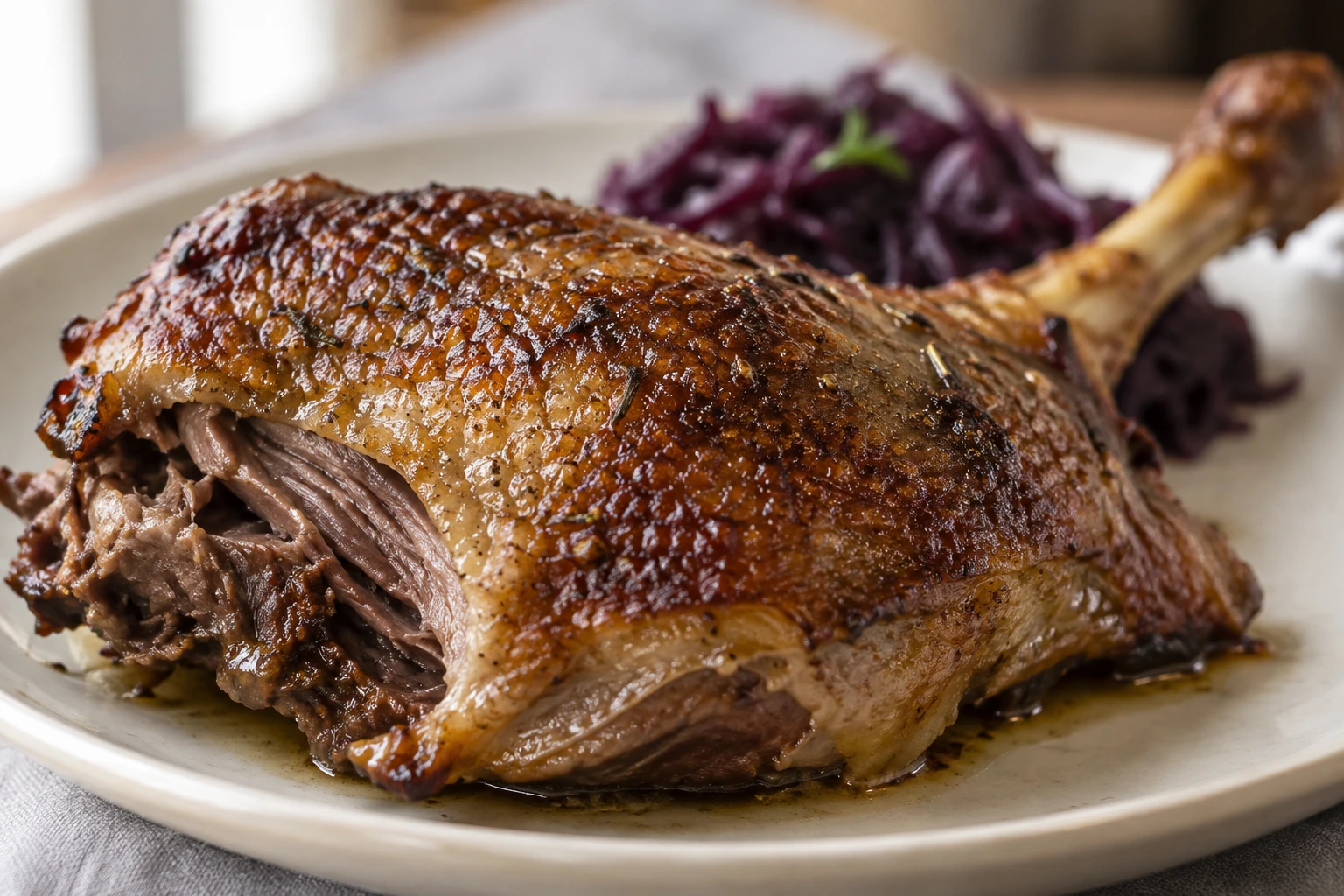
Look at the sides as part of the plate
The Nosalty cook describes serving the roast with caramelised braised red cabbage. Street Kitchen recommends mashed potatoes and braised purple cabbage. These examples share a recognisable arrangement without requiring identical seasoning or the same potato preparation.
When choosing a recipe, keep its pan liquid, cover, cut and finishing instructions together. When choosing from a menu, read the accompaniment as carefully as the word goose. The plate’s character comes from the whole arrangement: roast meat, its juices, a soft potato side and the cabbage beside it.
Research notes
Sources and preparations
Hungarian recipes support the roast-piece comparison; cultural sources explain the occasion. The government chart supplies the temperature guidance.
- Visit Hungary: St. Martin’s Day November 11 goose dishes, new wine and the wider seasonal feast.
- Nosalty: Márton-napi libasült A contributor’s covered goose-leg roast with onion and garlic, followed by uncovered browning.
- Street Kitchen: Eisler Zsolti’s Márton-napi libasült Legs and wings, skin upward, variable tenderness timing, hot uncovered finish and side dishes.
- FoodSafety.gov: Meat and Poultry Roasting Charts Goose-specific planning chart and thermometer locations; minimum internal temperature 165°F/74°C.
- Budapest Zoo: Why geese are linked with Martin’s Day The hiding-place story is presented as tradition rather than verified culinary origin.
Keep exploring
More stories for your table
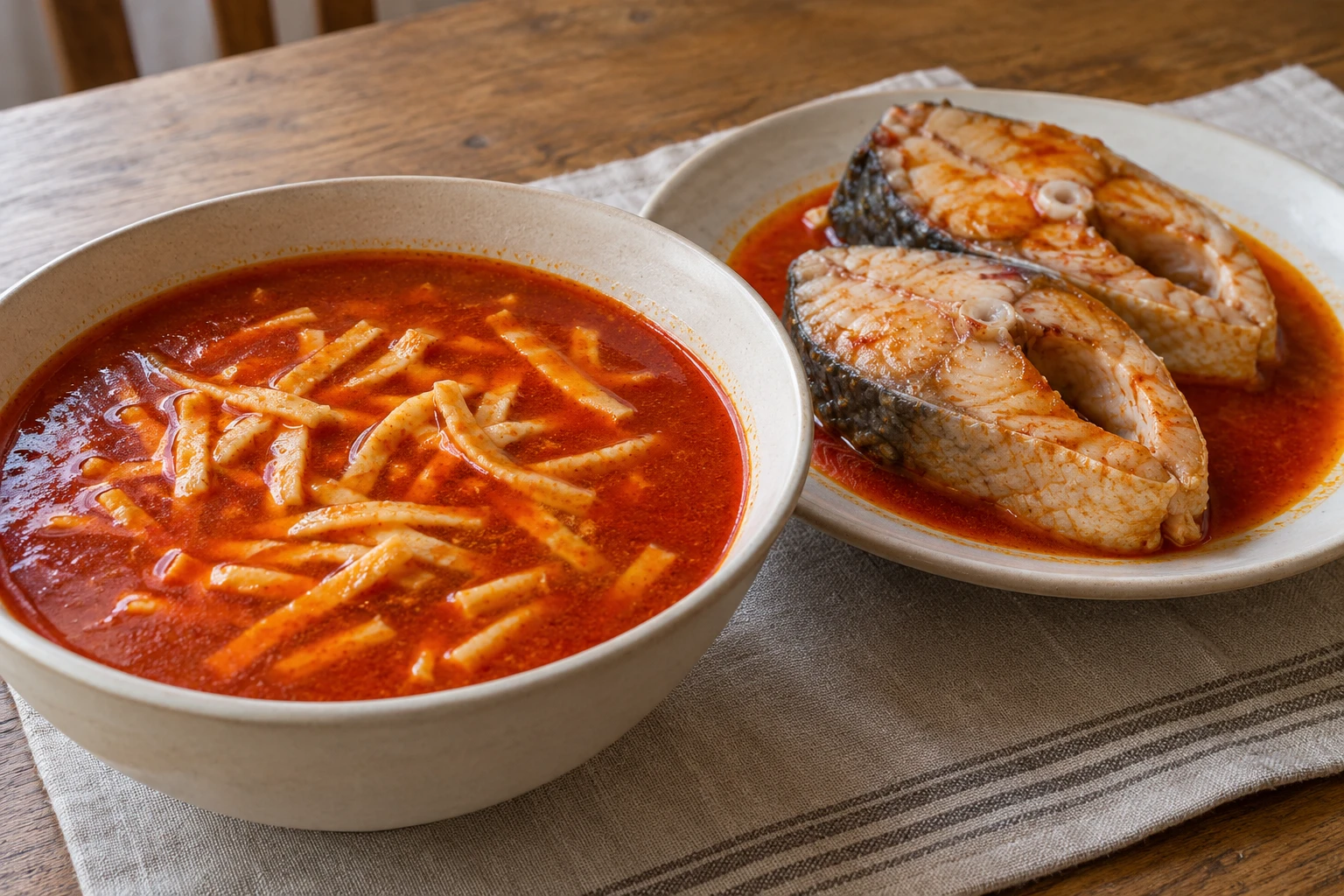
Hungarian cuisine Soup
Baja Fish Soup: Move the Pot, Keep the Fish
Baja fisherman’s soup pairs paprika-red carp broth with matchstick noodles. Its vigorous boil and careful handling explain why stirring is the wrong habit to borrow.
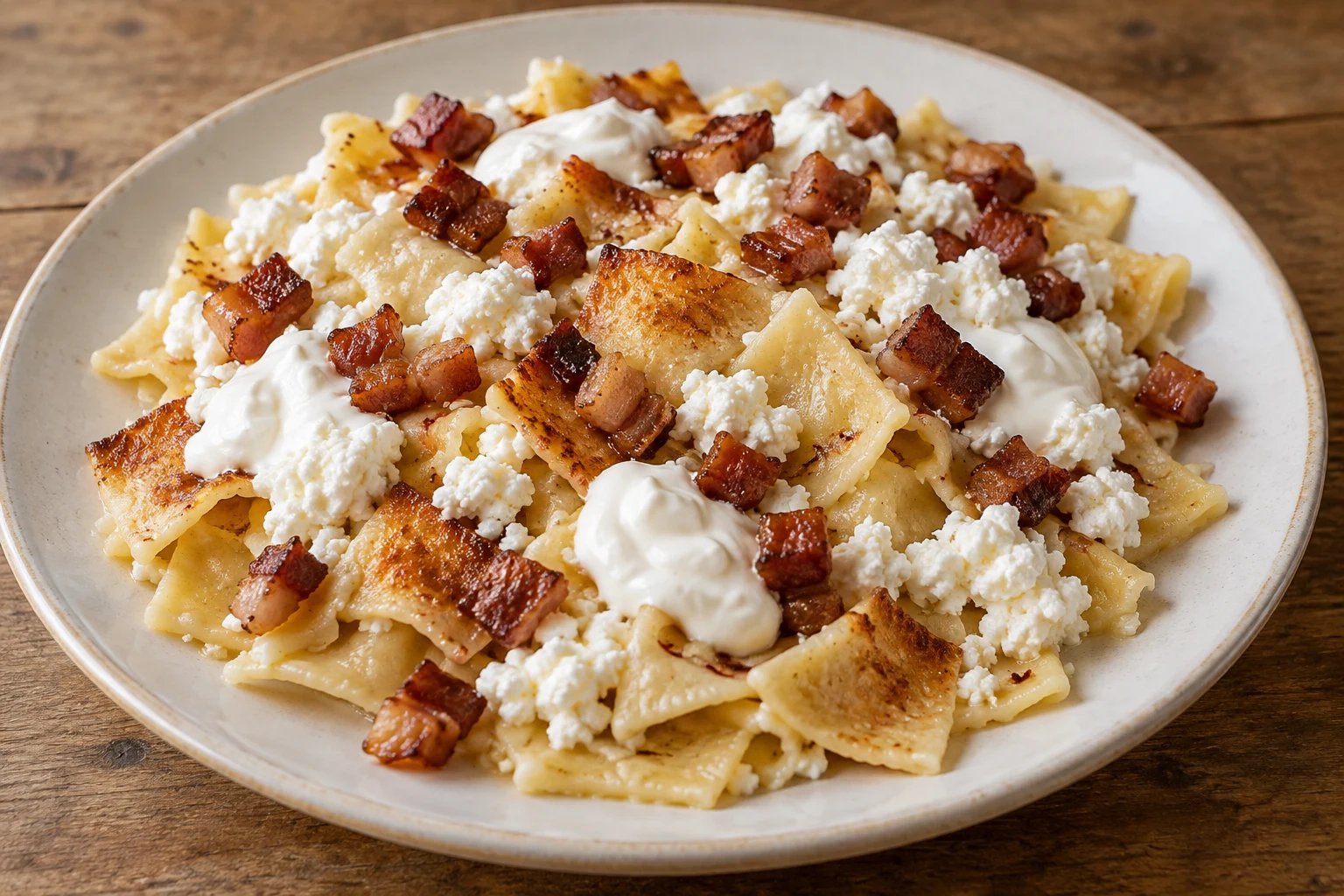
Hungarian cuisine Curd-cheese pasta
Túrós Csusza: Crisp Pasta, Soft Curds
How broad pasta, loose curd cheese, sour cream and crisp bacon work together in Hungarian túrós csusza, with two documented ways to finish the dish.
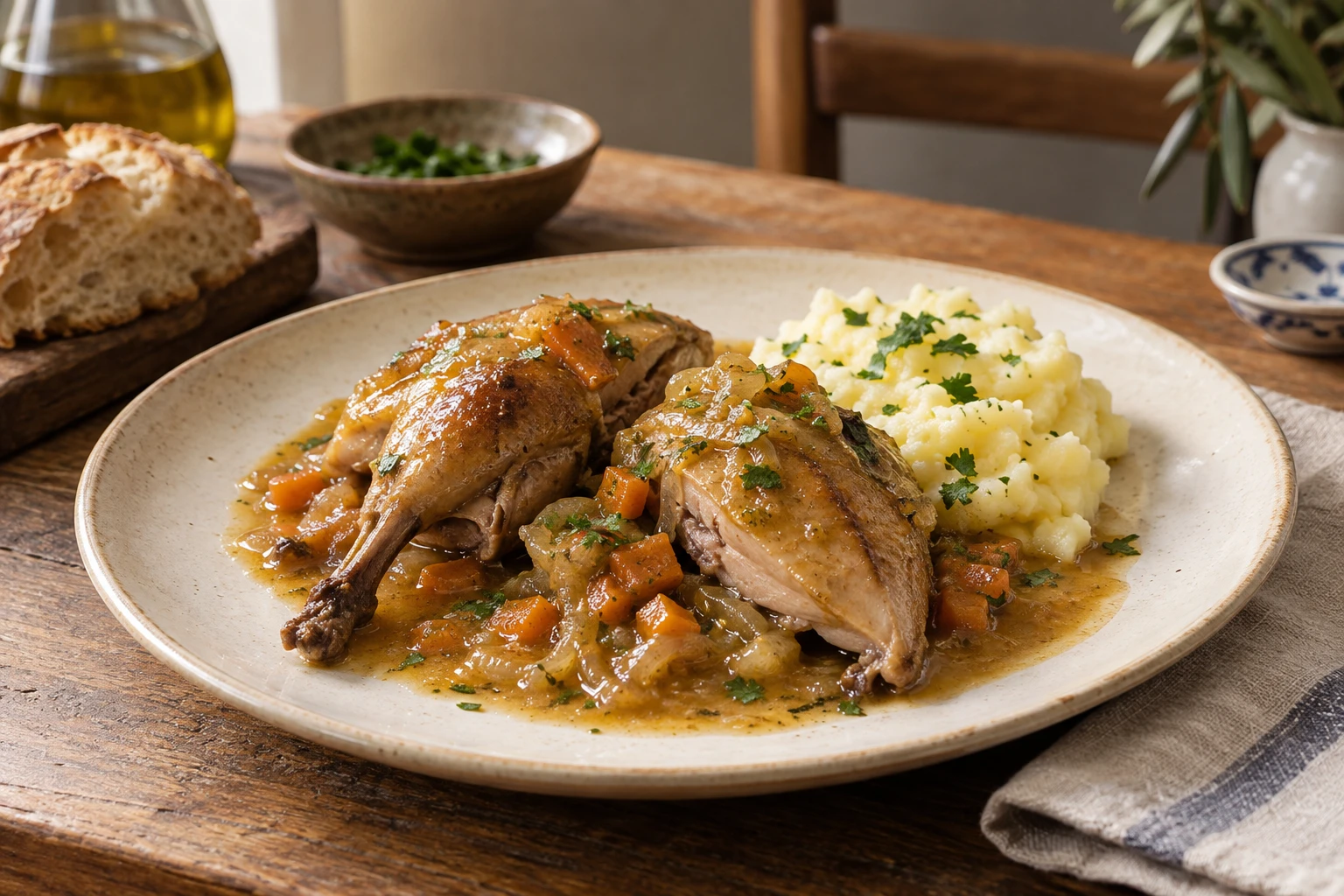
Spanish cuisine Braised game bird
Perdiz Estofada: Finish the Bird, Then the Sauce
Toledo-style partridge stew gives the bird and its vegetable sauce separate stages. Compare the wine, vinegar and finishing choices before cooking.