
Palócleves: The Beans Have Their Own Timing
Palócleves
Meat, beans and potatoes reach the same bowl by different routes. Read Hungarian palócleves through its vegetable timing and sour-cream finish.
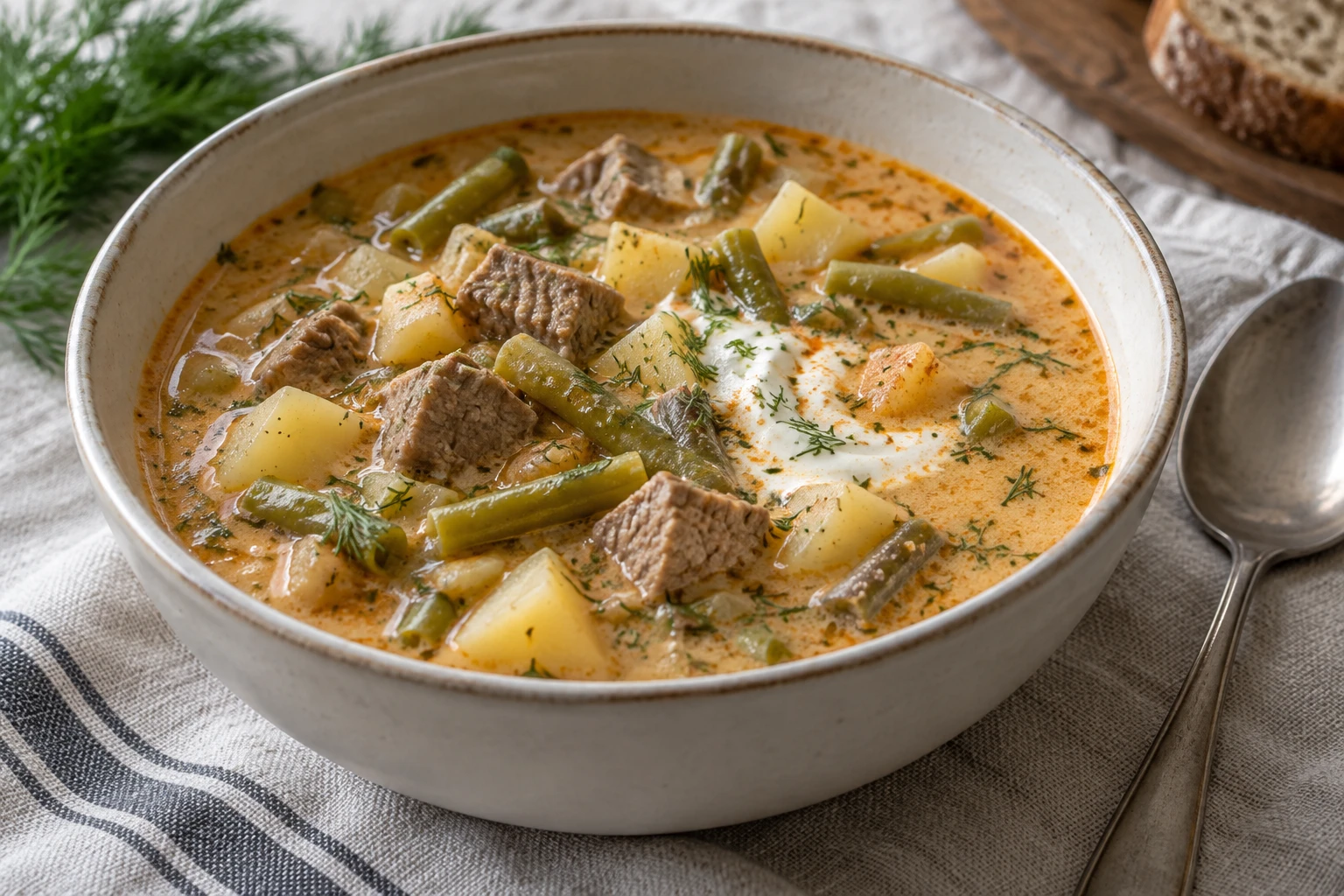
A shared bowl does not mean a shared starting time
Palócleves brings meat, beans, potatoes and a creamy finish into a Hungarian soup. A good look into the bowl shows the pieces individually: short bean segments, cubes of potato and meat, all surrounded by broth. The ingredients have come together, but that does not mean the cook put them into water at the same moment.
The most useful difference among published recipes is how they manage those parts. Some cook the vegetables separately, some add them to the meat pot in stages, and a restaurant account describes a stock-based construction. Each route gives the cook a different way to reach the finished bowl.
Read the meat in the particular recipe
Hunya Katalin's dill palócleves at Mindmegette starts with cubed lamb, onion, paprika and seasonings. The meat cooks until nearly tender before the beans and potatoes are added. Hidegh András's Street Kitchen version uses pork shoulder. The name therefore does not tell a diner everything about the chosen meat.
Gundel's own description identifies its soup as a lamb version and explains that the older meat choice was mutton. That is the restaurant's account of its tradition, rather than a reason to erase published pork versions. When ordering, the practical question is which meat the kitchen uses today. When cooking, the selected cut belongs with the method written for it.
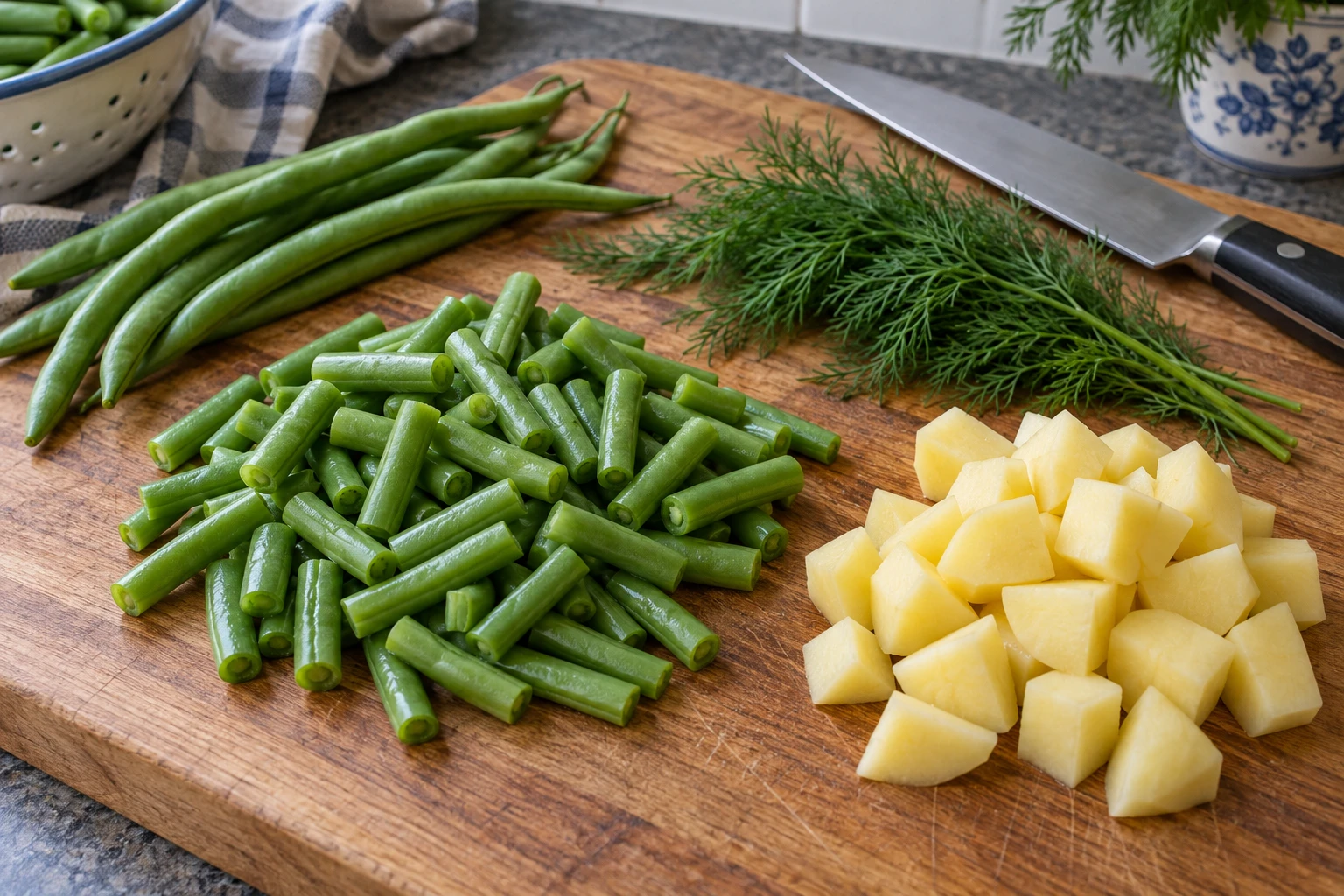
Different ways to bring in the vegetables
Together, after the lamb
Katalin's method adds the green beans and diced potatoes after the lamb has almost softened. They finish in the same pot before the soup is thickened.
In successive additions
Hidegh's pork method introduces the beans before the potatoes. Its instructions give the vegetables their own stages rather than leaving both in the pot for the entire meat cooking.
Cooked separately, then combined
The Nosalty recipe credited to ÍZcsiklandozó cooks beans and root vegetables in one pot, and potatoes in another. They join the meat base with their cooking liquid once nearly tender.
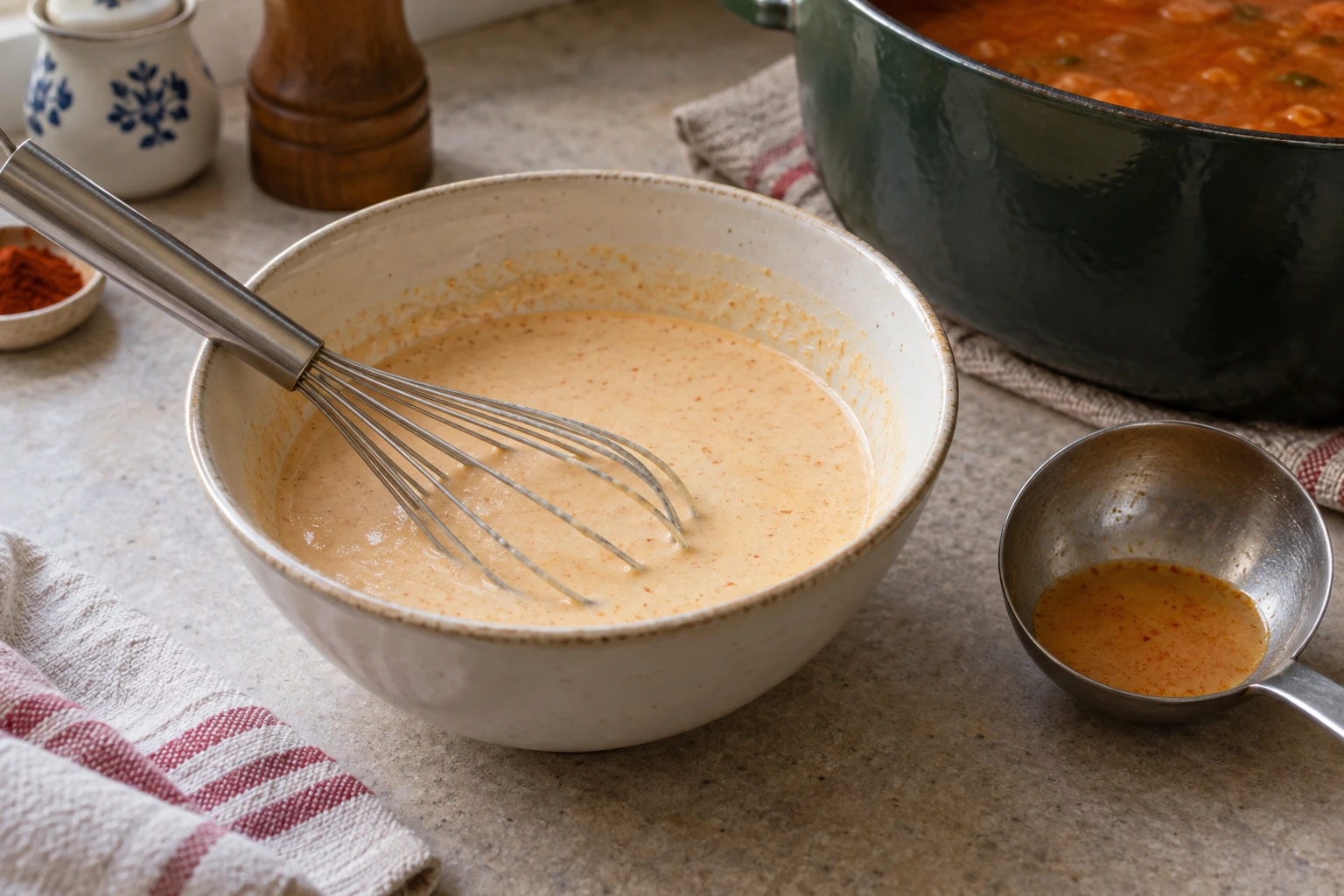
The dairy mixture is another stage
Both Hidegh and ÍZcsiklandozó mix flour with sour cream for the finish. Hot liquid from the soup is gradually stirred into that mixture before it is returned to the main pot. This warming step is the detail to notice when a recipe calls for a habarás, the flour-and-dairy mixture used here to thicken the soup.
Hidegh adds chopped dill with the warmed mixture and cooks the soup further. ÍZcsiklandozó also heats the soup after adding the mixture. A small bowl of sour cream placed on the table has a different role from that cooked thickening stage. The picture of a white swirl alone cannot tell you how the broth was made.
A restaurant construction has its own details
Gundel describes an intense stock made with lamb bones, meat and vegetables, strained and enriched with sour cream. Its account then cooks yellow beans and diced potatoes in that liquid, followed by carrots and parsley root. It also names vinegar-marinated purple potato and fresh herbs among its finishing details.
That is a specific restaurant presentation, not a substitute instruction for the home recipes above. A green-bean photograph and a yellow-bean description can both belong in the discussion without pretending they depict an identical preparation. The bean's colour, the chosen meat and the way the dairy enters are details worth reading beyond the dish name.
Sourness and herbs also have choices behind them
ÍZcsiklandozó allows a little vinegar or lemon to adjust the soup's sourness and uses thyme in the vegetable pot. Katalin's recipe offers fresh dill at the finish. The point is to follow the flavour direction of the chosen version, rather than collecting every herb and acid mentioned by every cook.
Gundel connects the soup's name with János Gundel's tribute to writer Kálmán Mikszáth. That association gives the dish a cultural story, while the recipes give it a living range of forms. At the table, the useful test remains a spoonful in which the meat and vegetables can be distinguished and the creamy broth brings them together.
Research notes
Sources and published preparations
These four references preserve the differences between a restaurant account and named Hungarian recipe authors.
- Hunya Katalin — Mindmegette Credited lamb recipe, with beans and potatoes added after the meat stage and dill offered at the finish.
- Hidegh András — Street Kitchen Pork shoulder, successive bean and potato additions, and warmed sour-cream thickening mixture.
- ÍZcsiklandozó — Nosalty Separate vegetable pots, sour cream with flour, and optional vinegar or lemon.
- Gundel — its lamb palócleves The restaurant's own stock-based description, yellow beans, finishing details and Mikszáth association.
Keep exploring
More stories for your table
Hungarian cuisine Curd-cheese pasta
Túrós Csusza: Crisp Pasta, Soft Curds
How broad pasta, loose curd cheese, sour cream and crisp bacon work together in Hungarian túrós csusza, with two documented ways to finish the dish.
Hungarian cuisine Filled dumplings
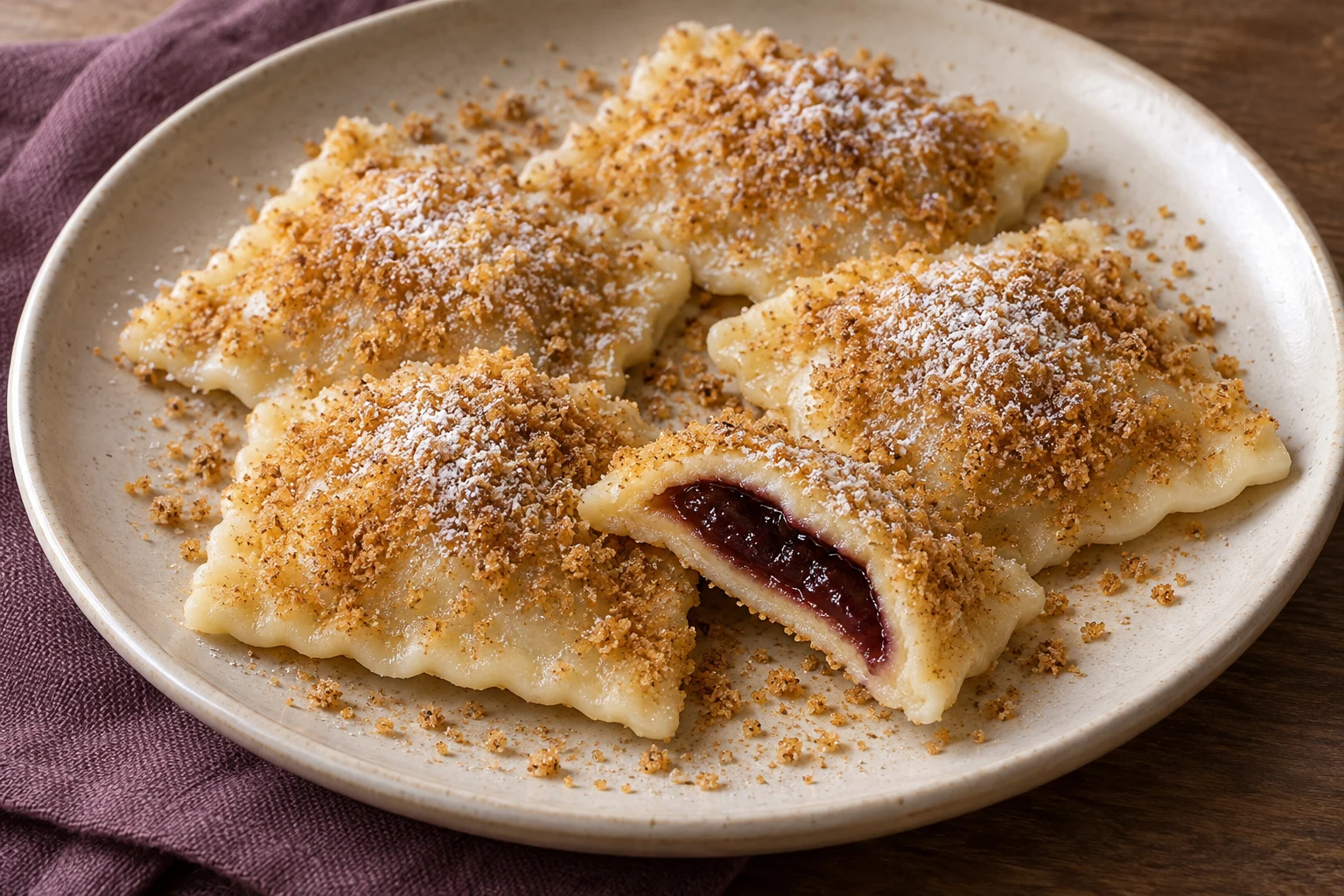
Derelye: Two Doughs Around Plum Jam
Compare Hungarian derelye made with thin egg dough or thicker potato dough, and see how firm plum jam, sealed edges and separate coatings shape the dish.
Polish cuisine Soup
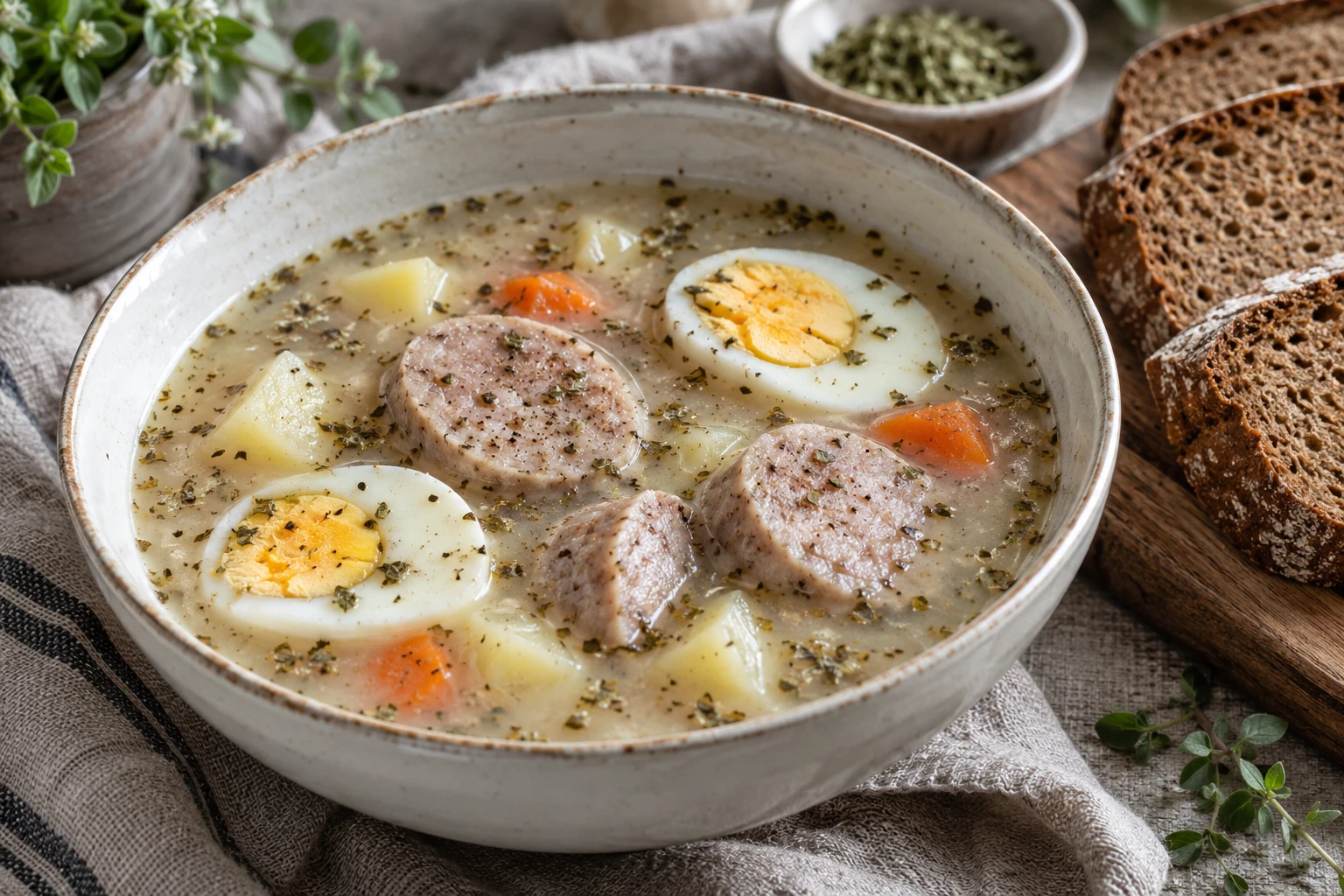
White Borscht: Read the Starter First
Polish white borscht brings sour starter, savory broth and substantial garnishes together. Its name varies, while the flour sediment and cream finish need deliberate handling.