
Pacalpörkölt: tripe, paprika and a patient simmer
Pacalpörkölt
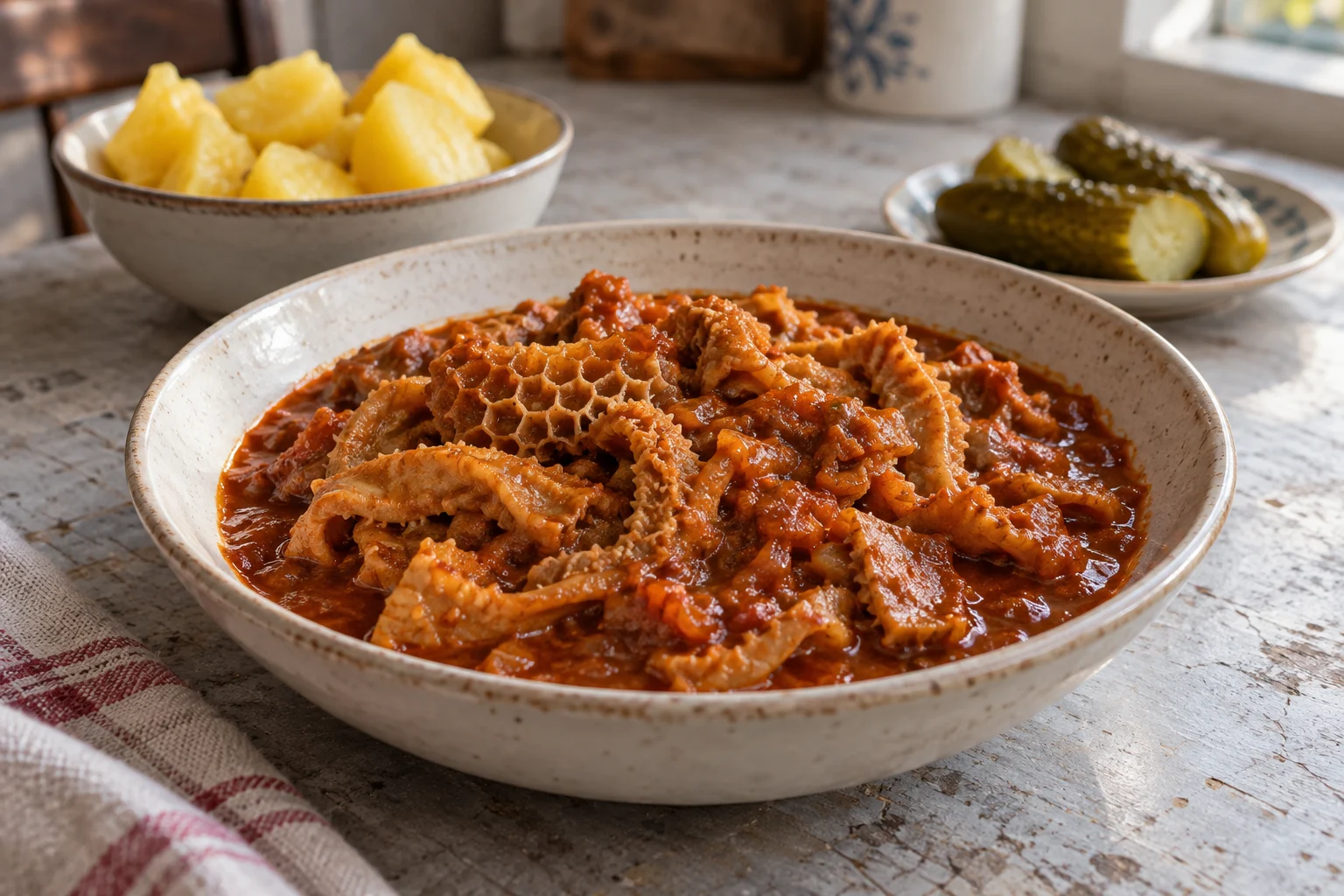
Honeycomb tripe brings its own texture to the paprika-and-onion sauce. Buying the right starting ingredient matters as much as the time on the stove.
Start at the butcher’s counter
Pacalpörkölt is Hungarian tripe stew with a paprika-and-onion base. Its appeal lies in the meeting of two textures: the folded, sometimes honeycomb-patterned tripe and the thick sauce caught between those folds. A good bowl gives each piece enough gravy to carry the seasoning without turning the meal into a pot of thin red broth.
Before buying, ask whether the tripe is cleaned, whether it has been preboiled, and whether it has already been cooked until tender. Those are separate questions. Follow the supplier’s preparation and storage instructions, and choose commercially prepared tripe if you are unfamiliar with handling it. Prepared tripe lets you focus on the cooking and the sauce.
Give the paprika a moist base
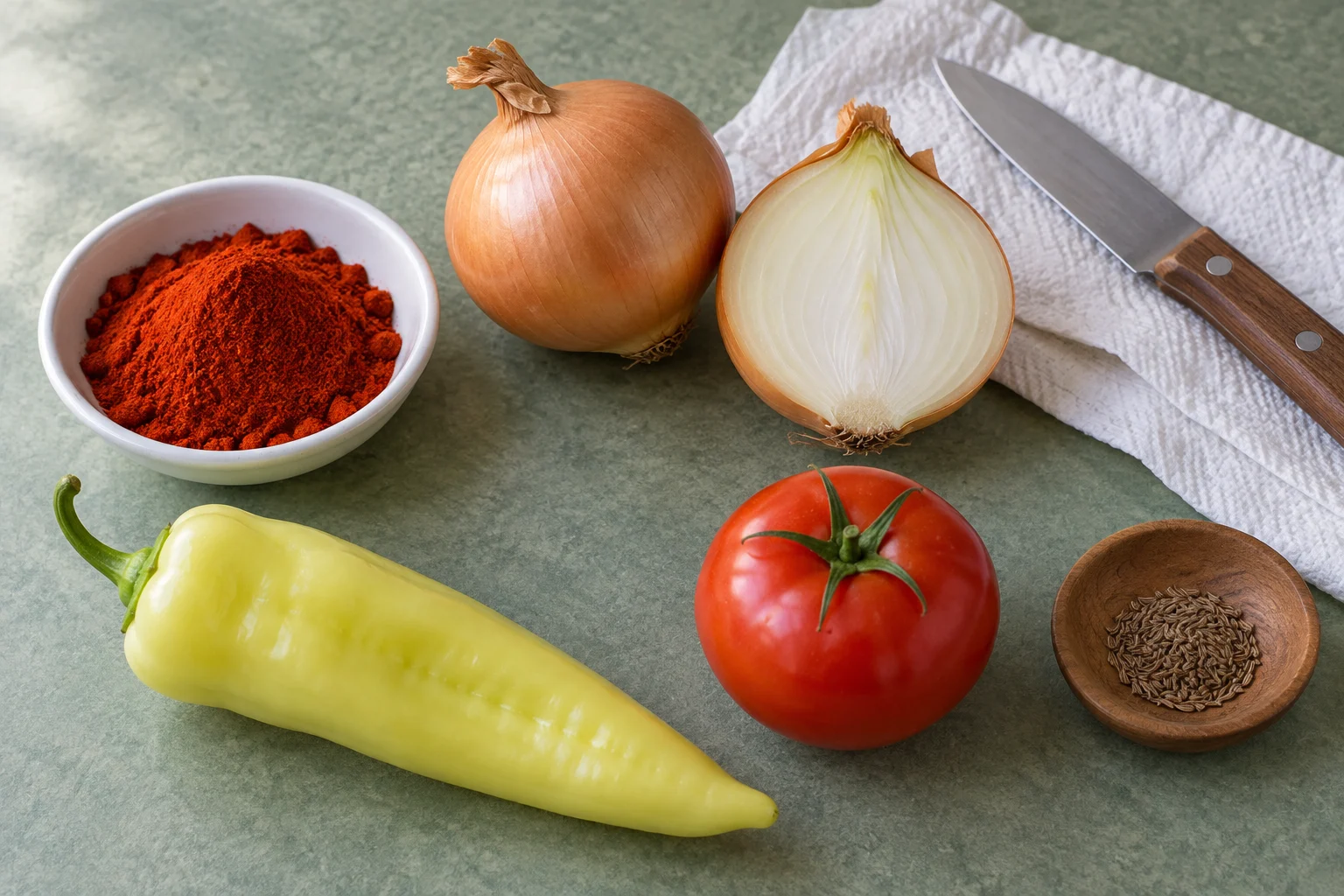
Street Kitchen softens onion and garlic in rendered smoked bacon and lard, then adds pepper, tomato and a little water before the ground paprika. Cooking the vegetables down gives the paprika a moist setting instead of leaving dry powder against the hot pan.
Choose the paprika specified by the recipe you are following. Sweet paprika supplies the broad red-pepper flavour; add heat through the particular hot pepper or seasoning that recipe calls for. A pale Hungarian sweet pepper and a hot chilli serve different purposes, even when an English ingredient list calls both of them “pepper.”
Caraway appears in both the Street Kitchen and Mindmegette versions. In a Hungarian ingredient list, kömény refers here to caraway; do not automatically translate it into the cumin used in many other cuisines. Keep each recipe’s seasoning choices together rather than combining every addition from several versions.
Three authors, different routes to the pot
The shared paprika-and-onion identity allows differences in preparation and richness. These are examples from the named cooks, not rules for every Hungarian kitchen.
A direct simmer
Rakonczai Timi simmers sliced, preboiled tripe in a cooked vegetable base until tender. Smoked bacon adds another layer of flavour.
Another preliminary boil
Rozsnyai Gabriella’s Mindmegette version gives prepared tripe a further preliminary boil. Her stew also uses a lecsó base and finishes with red wine.
A pork-knuckle version
Borbás Marcsi’s csülkös pacalpörkölt includes pork knuckle alongside tripe. She layers the ingredients and adds paprika once the liquid has boiled.
Finish the tripe before finishing the sauce
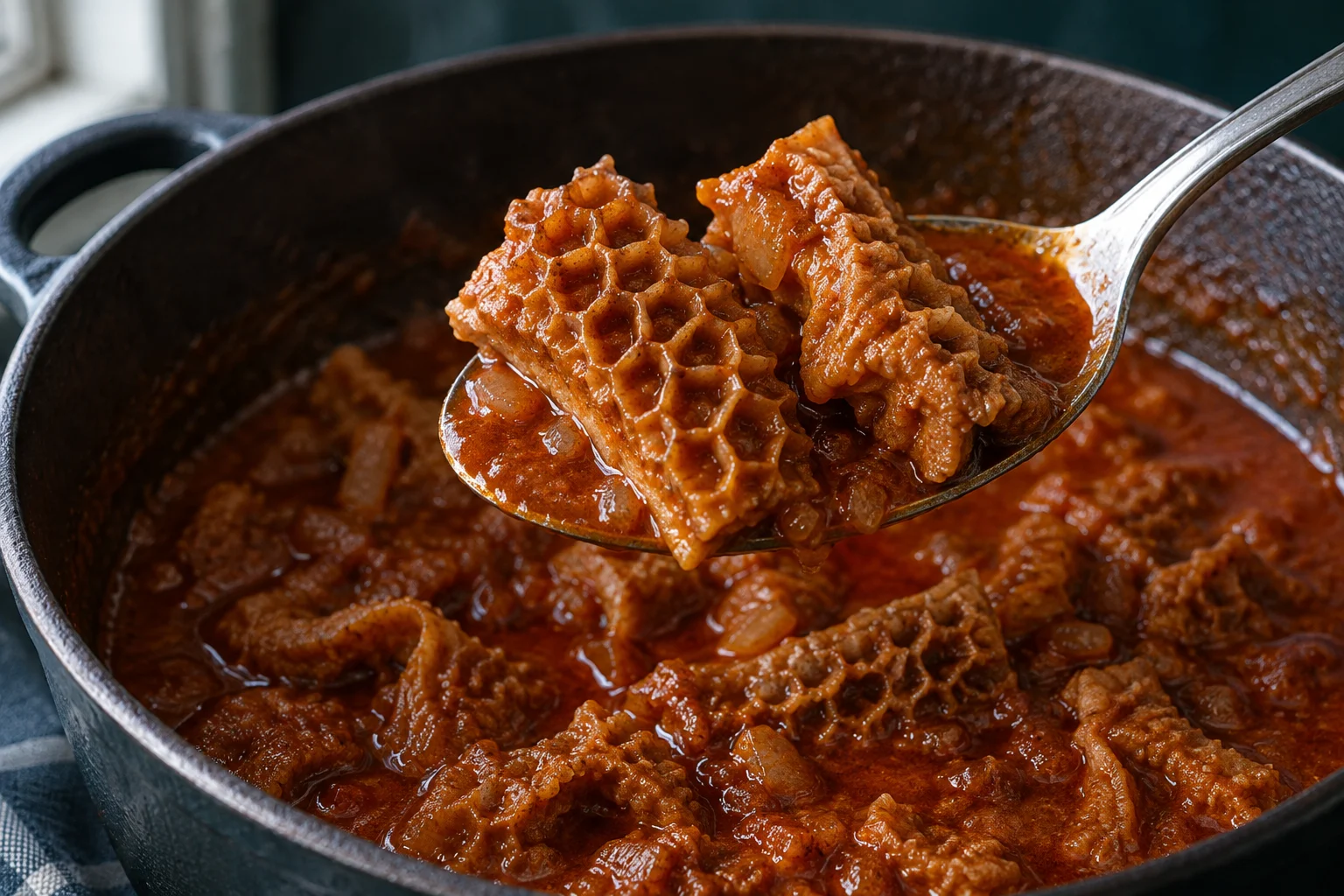
Use the full recipe that matches your starting ingredient, then judge progress by the food as well as the clock. Stir occasionally so the bottom does not catch, and check a representative strip. It should be tender enough to eat comfortably while retaining its characteristic texture. A strip that still feels stubbornly rubbery needs more cooking; reducing the sauce harder will not solve that problem.
Keep enough liquid for the simmer and replenish it gradually. Both Street Kitchen and Borbás Marcsi pay attention to topping up the pot; Marcsi specifically cautions against diluting the sauce excessively. Once the tripe is tender, assess the gravy separately. It should coat the folds, with onion and paprika integrated into the liquid.
If the tripe is ready but the sauce is loose, a short, attentive uncovered reduction can concentrate it. If the pot becomes dry while the tripe remains firm, add a little liquid and continue the simmer. Taste for salt after the final concentration, especially when the recipe includes smoked bacon.
Let the accompaniments do their work
Plain boiled potatoes offer a gentle base for the sauce. Street Kitchen serves them with its stew, while Mindmegette pairs potato sticks with pickles. Keep the pickles alongside so their acidity can punctuate a mouthful without thinning the pot. For a bread-based meal, Marcsi serves her pork-knuckle version with fresh sourdough.
Refrigerate leftover stew in shallow containers within two hours, or within one hour above 32°C/90°F. FoodSafety.gov gives soups and stews three to four days at 4°C/40°F or below, and two to three months in the freezer for quality. Portioning the stew before storage makes it easier to bring out only the amount needed for the next meal.
Research notes
Sources and further cooking
Three Hungarian recipe authors show the dish’s preparation and serving choices; the official storage chart supports the guidance for leftovers.
- Rakonczai Timi — Street Kitchen: Pacalpörkölt Preboiled sliced tripe, the moist paprika base, a long final simmer and boiled-potato serving.
- Rozsnyai Gabriella — Mindmegette: Magyaros pacalpörkölt Further preliminary boiling, lecsó and red-wine variation, boiled potatoes and pickles.
- Borbás Marcsi — Egy.hu: Csülkös pacalpörkölt The pork-knuckle version, layered preparation, concentrated sauce and sourdough serving.
- FoodSafety.gov — Cold Food Storage Chart Refrigerator temperature and storage periods for leftover soups and stews.
- FoodSafety.gov — Four Steps to Food Safety Prompt cooling in shallow containers and the two-hour refrigeration limit, shortened to one hour in hot conditions.
Keep exploring
More stories for your table
Hungarian cuisine Pork and sauerkraut stew
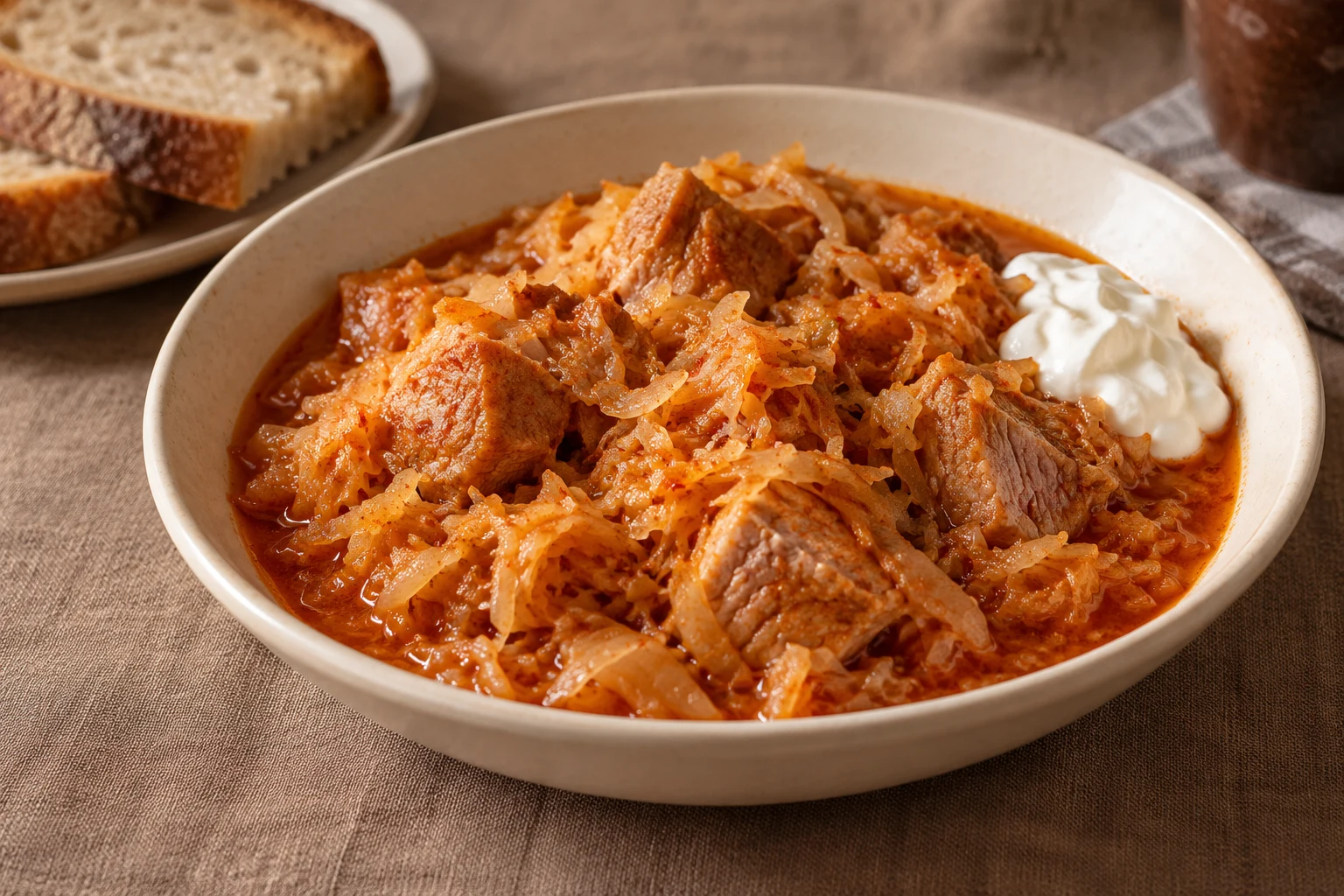
Székelykáposzta: balancing pork, sauerkraut and sour cream
A practical guide to Hungarian pork and sauerkraut stew, with cabbage tasting, contrasting cooking sequences and a complete four-serving adaptation.
Hungarian cuisine Soup
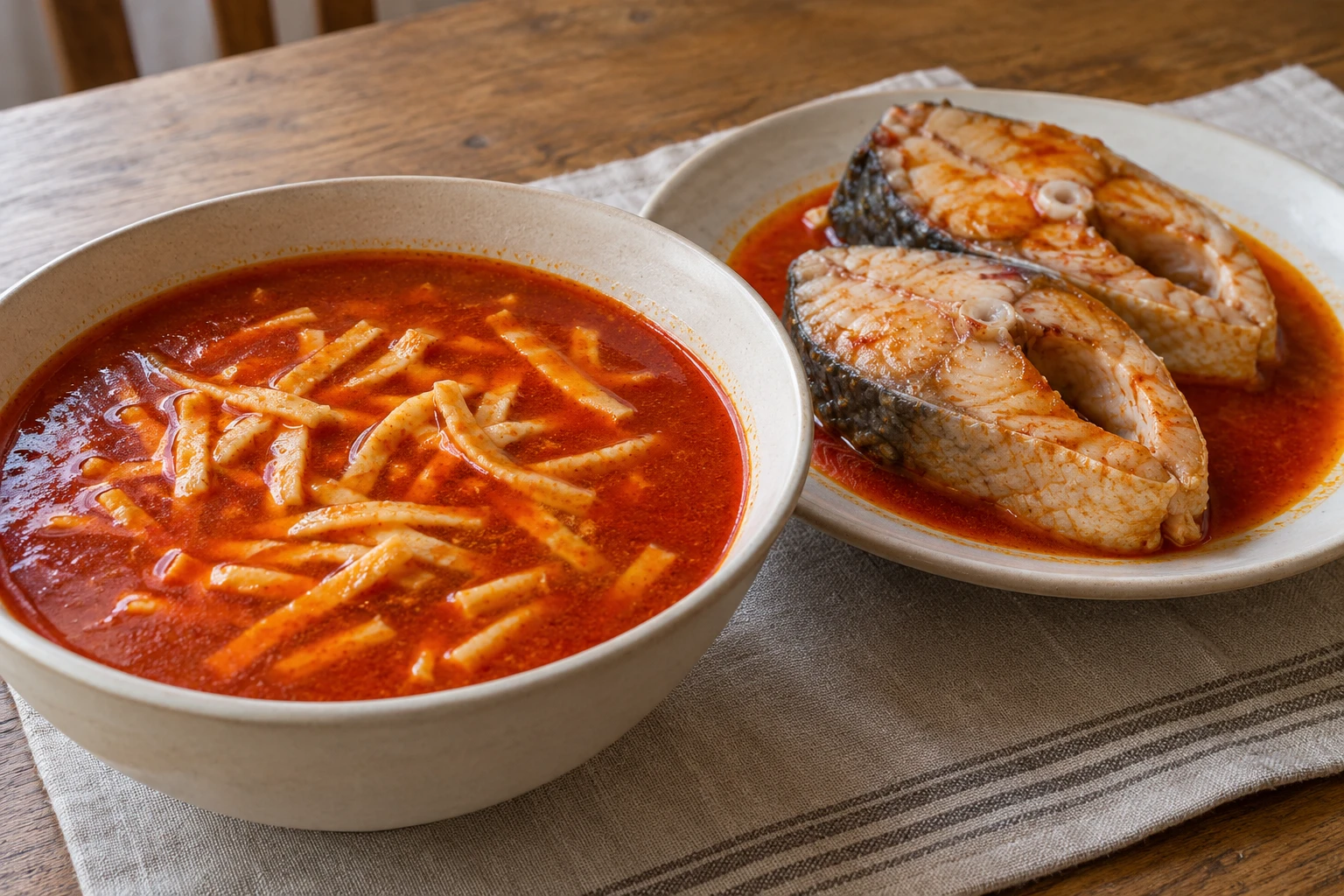
Baja Fish Soup: Move the Pot, Keep the Fish
Baja fisherman’s soup pairs paprika-red carp broth with matchstick noodles. Its vigorous boil and careful handling explain why stirring is the wrong habit to borrow.
Czech cuisine Cold pub cheese
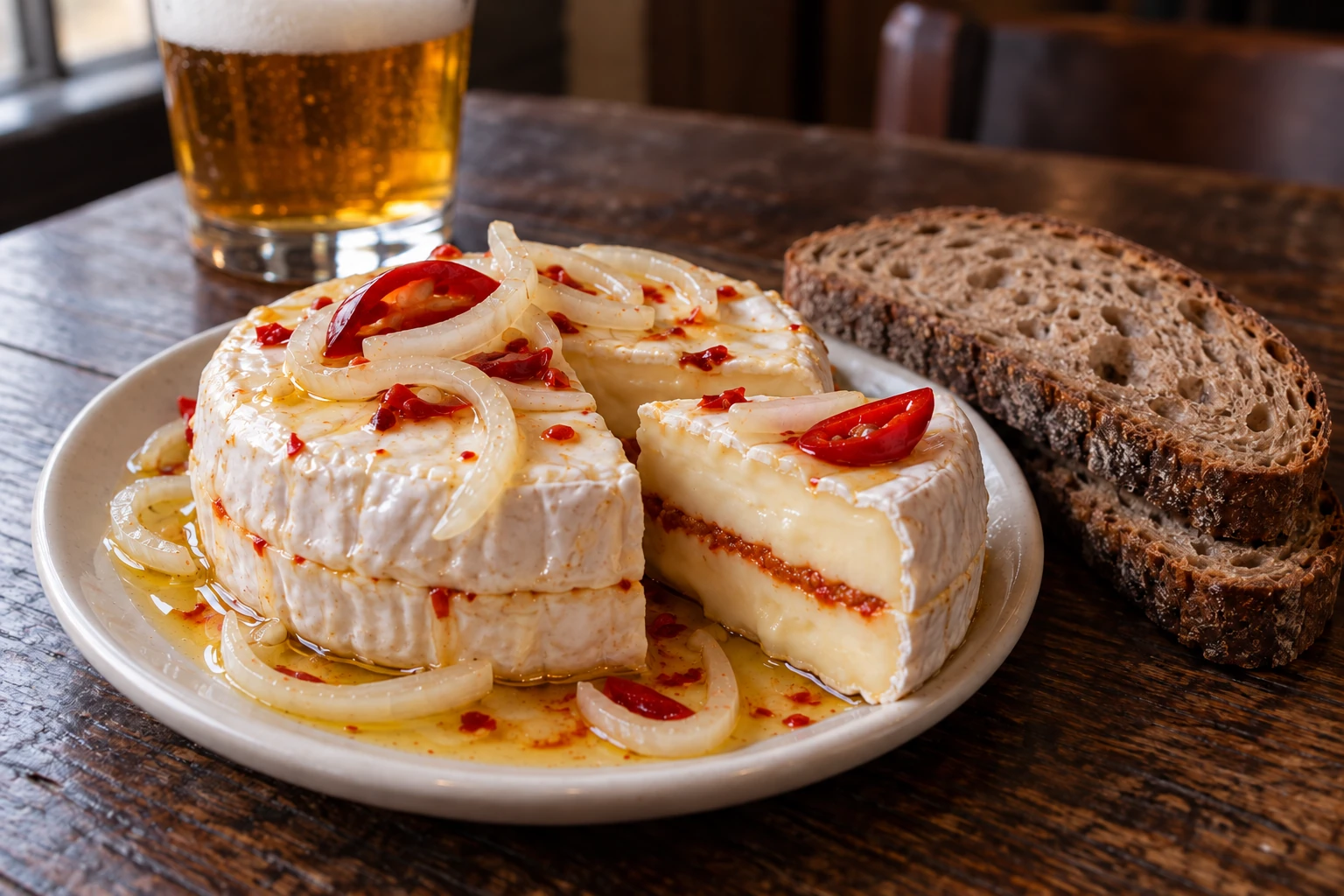
Nakládaný Hermelín: Inside the Czech Pub Cheese
Look inside Czech oil-marinated Hermelín: garlic and paprika can fill the middle, herbs and chilli season the rind, and a documented walnut version changes the center itself.