
Derelye: Two Doughs Around Plum Jam
Derelye
Thin pasta or a thicker potato wrapper? Hungarian recipes take both routes to these plum-filled pockets. Comparing them makes the dough, the seal and the finishing coat easier to understand.
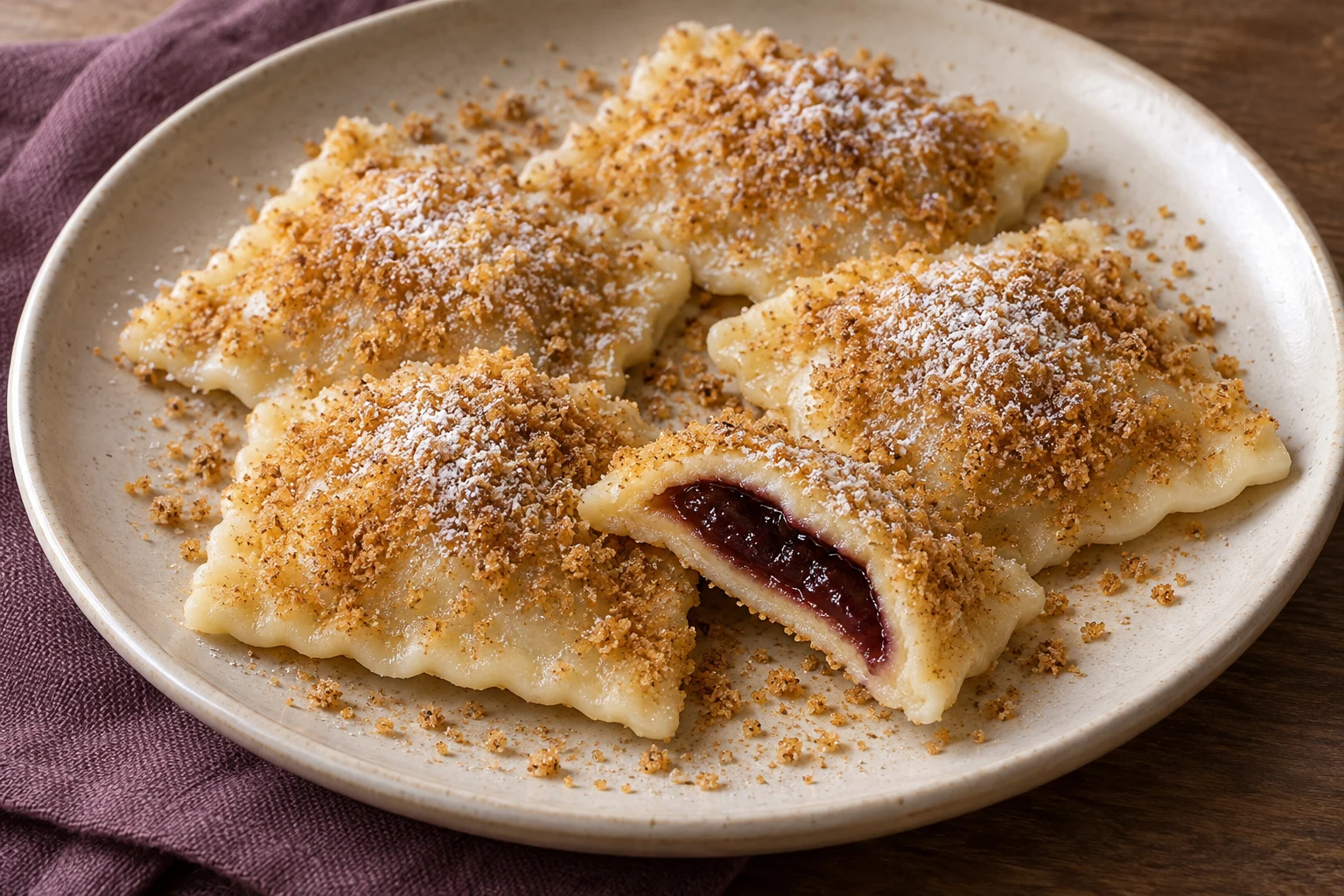
The common shape
Start with the filled sheet
Derelye brings filling between layers of dough, seals it into individual pockets and cooks them in water. For plum-jam versions, Hungarian sources document both a thin noodle-style wrapper and a thicker dough containing cooked potato. The name alone does not tell you which method a recipe uses.
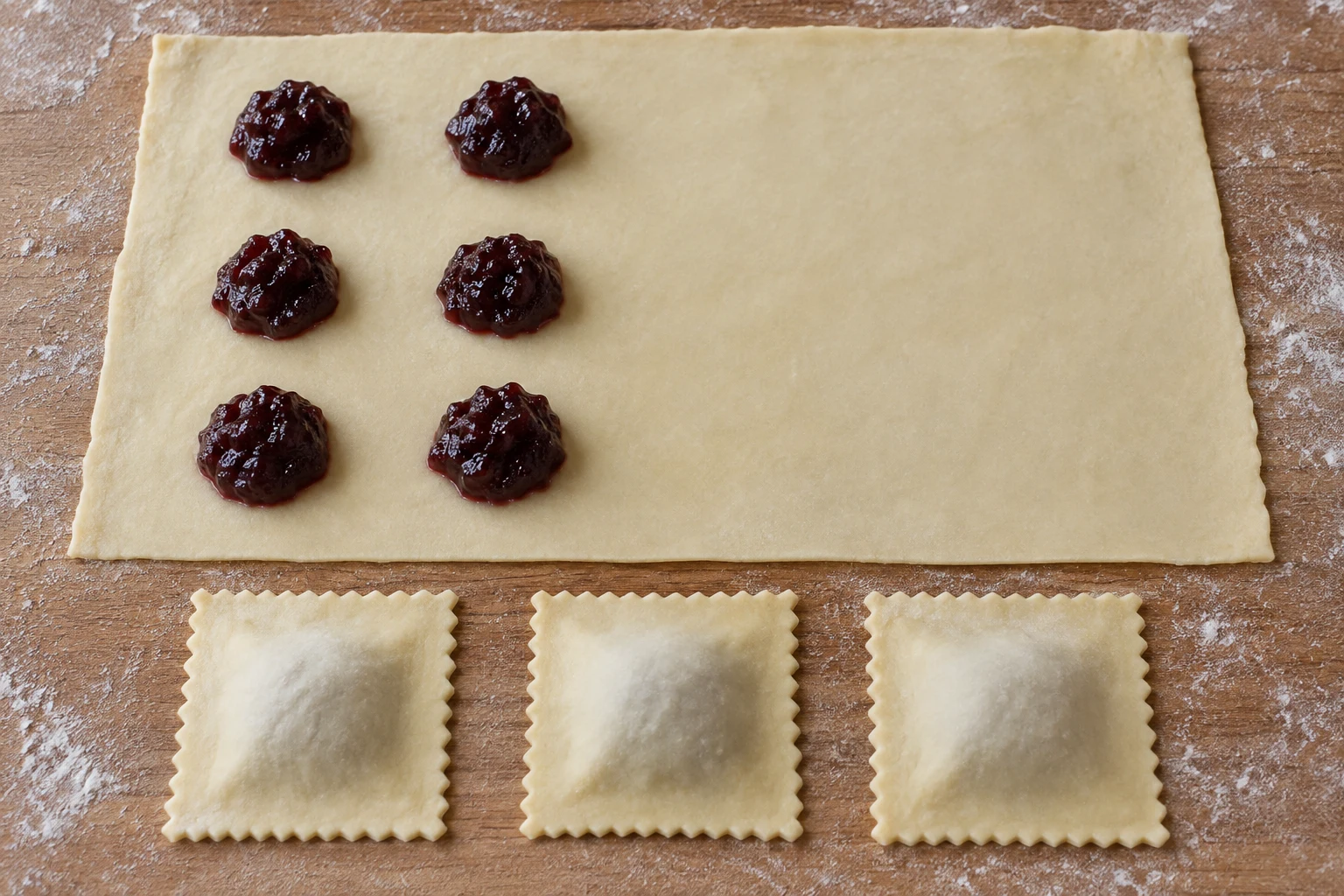
In the 1892 second, expanded edition of Zilahy Ágnes’s Valódi magyar szakácskönyv, plum-jam derelye begins with dough rolled as thin as soup noodles. Jam goes on half the sheet; the other half folds over it, and a cutter divides the sealed pockets into squares. That is a documented preparation, rather than a date for the dish’s invention.
Read the recipe first
Rest the egg dough; cool the potatoes
These two contemporary recipes show the difference. Their measurements describe their own methods, not a universal derelye standard.
Flour, egg and water
Borbás Marcsi’s recipe on egy.hu rests its kneaded dough before rolling it to 1–2 mm. There is no potato in this wrapper.
- The rest makes the dough easier to roll.
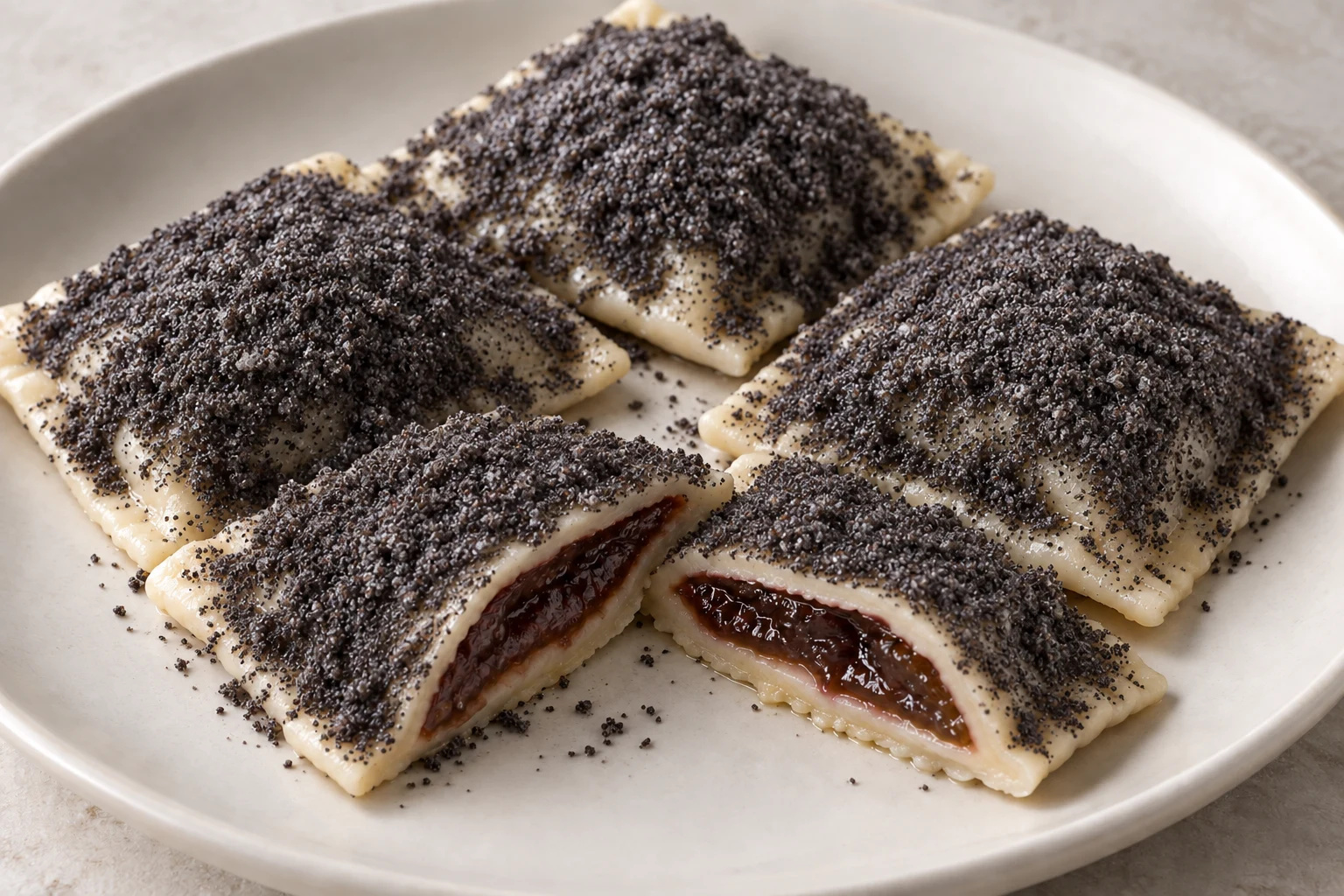
- The filling is thick plum jam; the finish is ground poppy seed and sugar.
Cooked potato, flour and egg
The sütniJó recipe uses floury potatoes, pressed while hot and cooled completely before mixing. It adds flour gradually, stopping at a soft dough that no longer sticks, then rolls it to 3–4 mm.
- Potato is part of the wrapper, not the filling.
- The flour amount is a range; follow the dough’s consistency.
Across the methods
The filling, the border and the boil
- 01
Keep the jam compact
Both contemporary recipes call for thick plum jam. Small, distinct mounds leave space for the dough layers to meet around each filling.
- 02
Seal while the sheet is fresh
Zilahy explicitly warns against letting the rolled dough dry out. Her folded-sheet method presses around the jam before cutting; the seal belongs around the filling, not through it.
- 03
Treat floating as a stage
Zilahy, Borbás Marcsi and sütniJó all continue cooking after the pockets rise. Their timings differ. Use the instructions for the dough you actually made rather than lifting every dumpling as soon as it floats.
Bereg’s pantry
A filling with its own kitchen history
The Beregi Museum’s regional food study places plum jam within the cooking of Bereg in northeastern Hungary. It describes relatives and friends working together at jam-making, reducing plums in large kettles until the paste would stay on a wooden spoon. This is a useful texture to picture when a derelye recipe asks for thick jam.
The same publication includes a flour, egg and water derelye, with jam folded into a thin sheet. Read alongside the jam-making account, the dish connects a shared seasonal task with the region’s flour-based cooking.
At the table
The coating is another choice
Golden crumbs are prepared separately. In Fördős Lajos’s Street Kitchen recipe, breadcrumbs toast in a dry pan before butter is added; the cooked dumplings then receive their coating. The crisp-looking surface comes from those toasted crumbs, not from deep-frying the filled pockets.
That recipe also mixes chopped, toasted walnuts into the plum jam. Borbás Marcsi instead finishes her dumplings with poppy seeds ground with sugar and melted butter. Those are distinct choices about the filling and the outside of the dumpling, not interchangeable names for one mixture.
The butter-finished versions contain wheat, egg and milk; the walnut filling adds another allergen. The vegetarian description here applies to the butter or oil versions pictured, while the museum also records a bacon finish in some places. The linked recipes supply complete quantities and cooking directions for their individual versions.
Research notes
Sources & complete recipes
Hungarian sources for the dough comparison, the plum-jam context and the separate finishes.
- Zilahy Ágnes — Valódi magyar szakácskönyv (1892) Second expanded edition, digitized by the Hungarian Electronic Library. “A szilva izes derelye” appears on PDF page 78.
- Borbás Marcsi — Mákos derelye Complete thin-dough recipe: plum-jam filling and a ground-poppy finish.
- sütniJó — Szilvalekváros derelye Complete potato-dough recipe, including cooling, flour adjustment and toasted breadcrumbs.
- Beregi Museum — regional food study and recipes Printed pages 26–29: plum-jam making and derelye; the dumpling entry cites Horváth Ilona’s 1963 cookbook.
- Fördős Lajos — Szilvalekváros derelye, Street Kitchen Complete potato-dough version with walnuts in the jam and separately toasted breadcrumbs.
Keep exploring
More stories for your table
RussiaDumplings
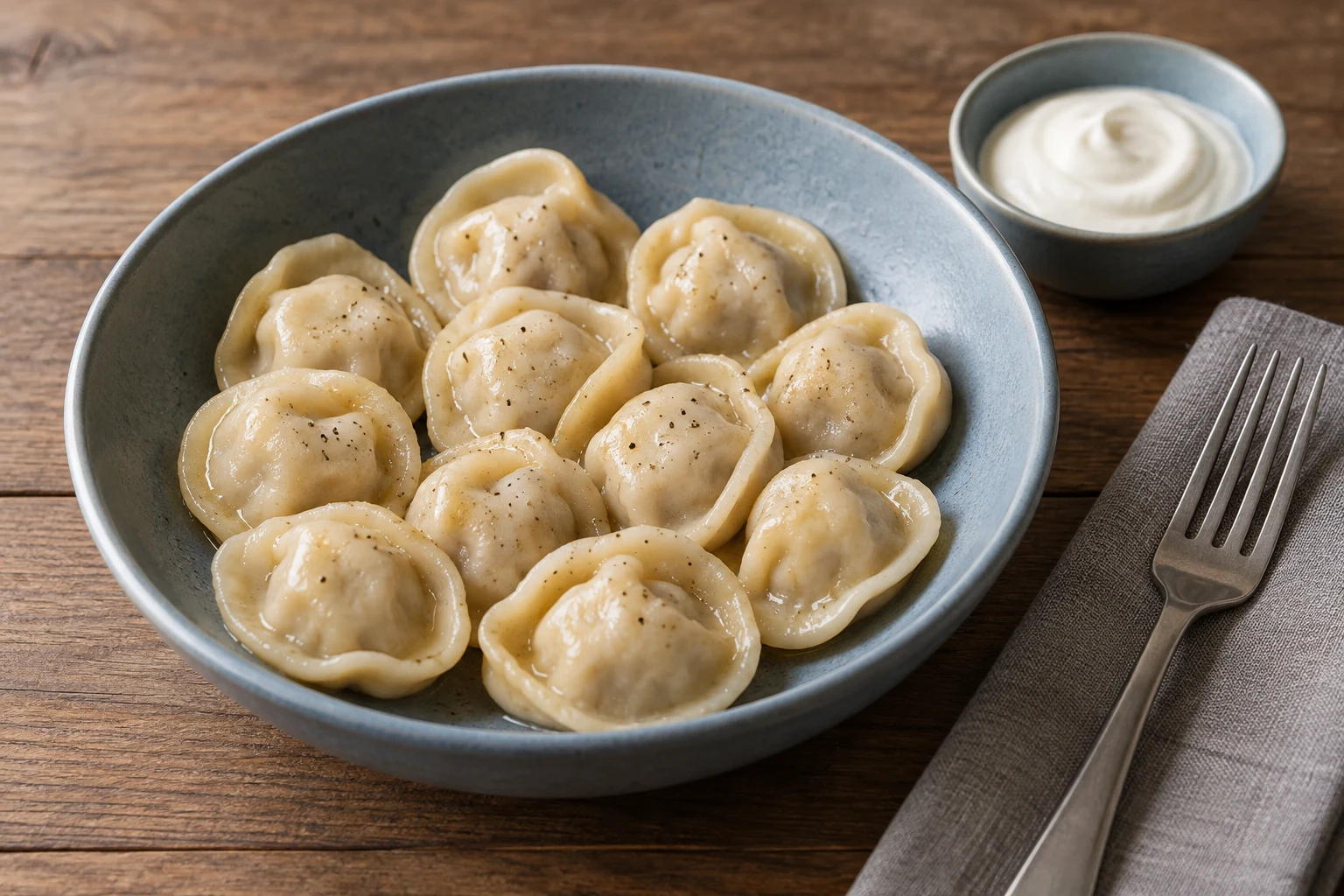
Pelmeni: The Shared Work Behind a Quick Meal
Pelmeni turn a session of rolling, filling and folding into meals for later. Explore their regional context, how to freeze a batch, and two ways to serve it.
PolandDumplings
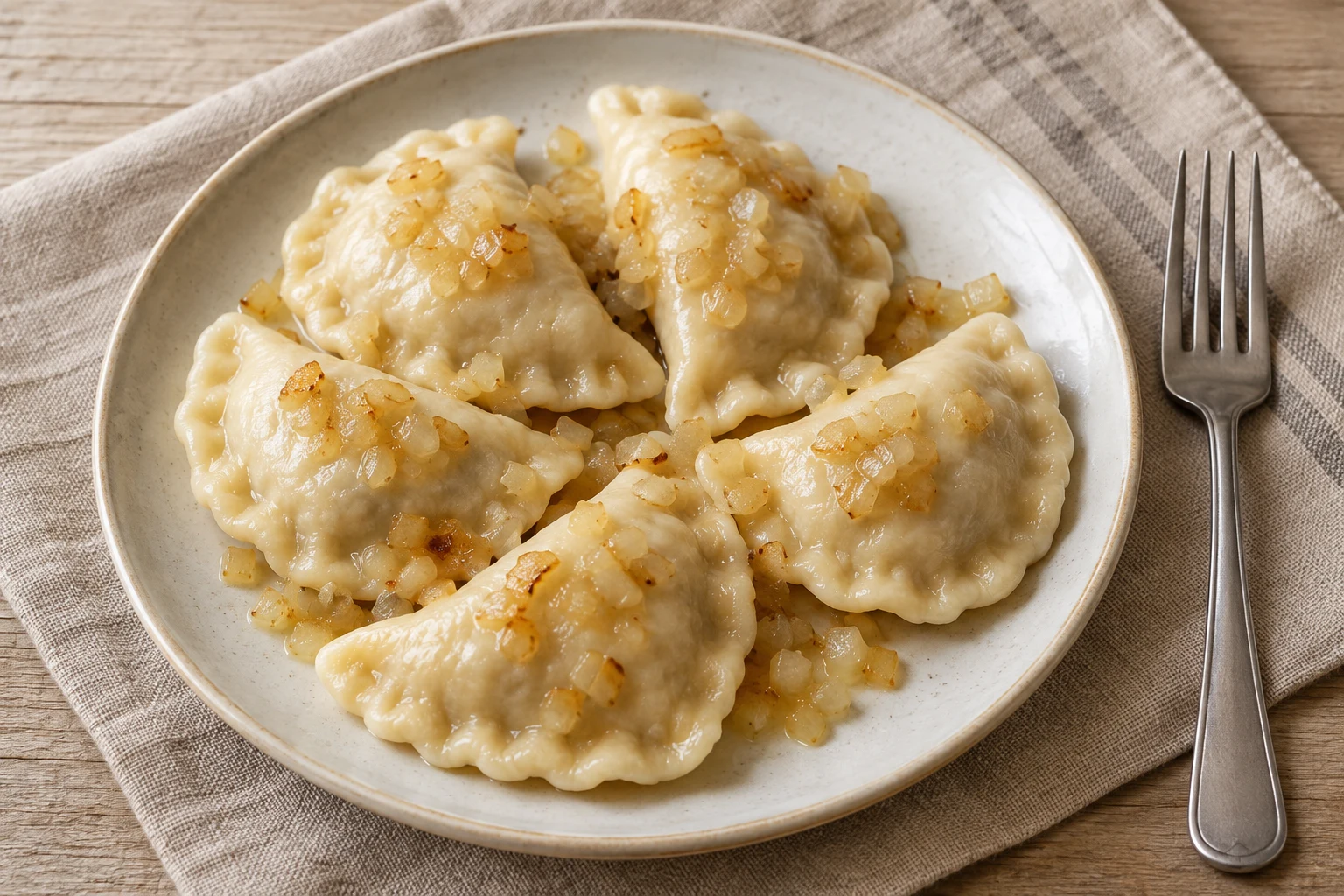
Meat Pierogi: Make the Filling Moist Before You Fold
Turn cooked soup beef into Polish meat pierogi. Learn how onion, carrot and a little broth soften the filling, then make a complete home adaptation.
AfghanistanKebab techniques
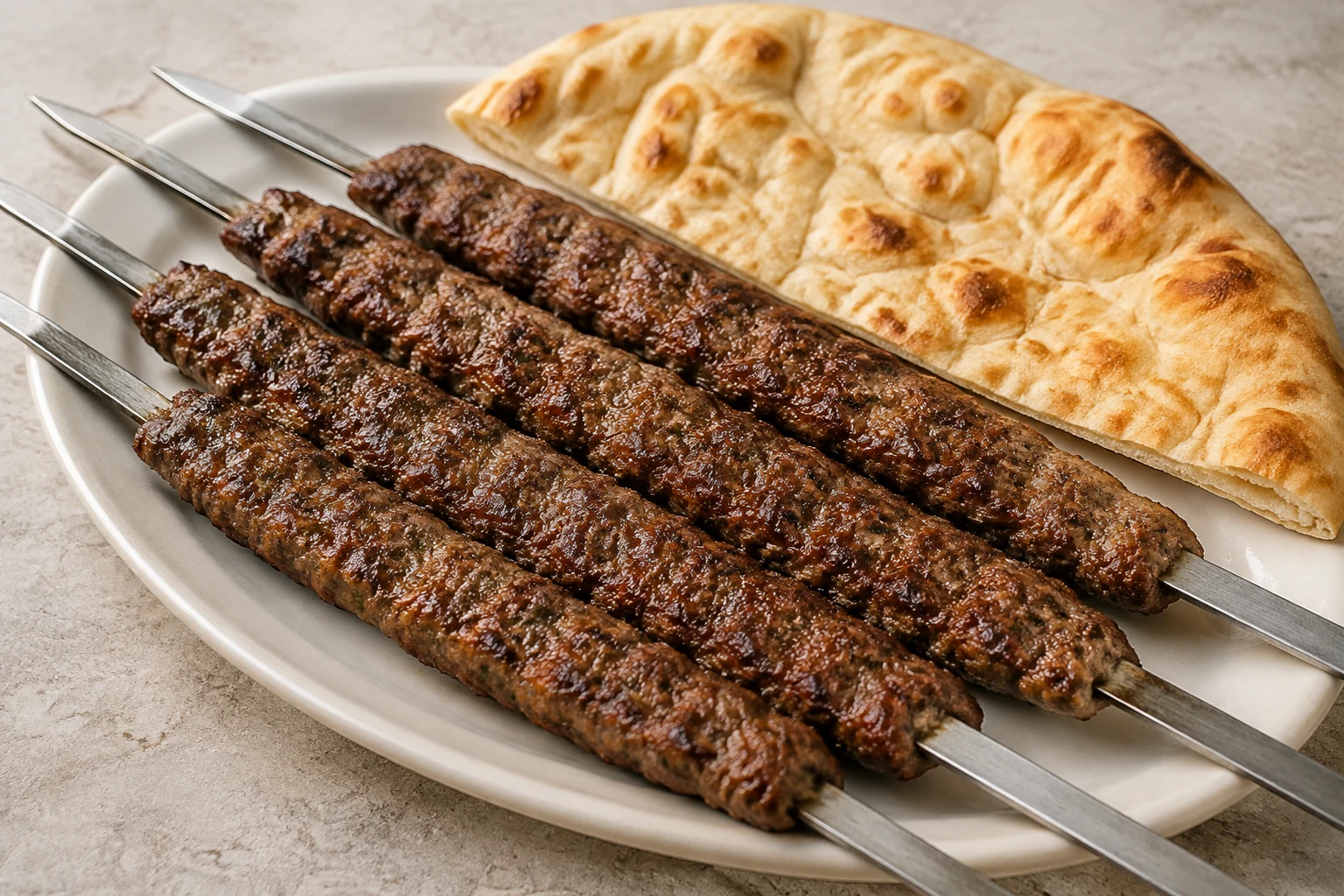
Afghan Lula Kebab: Grilled Skewers, Fried Rolls
Afghan lula and lola kebab recipes take two distinct paths. Compare grilled mince with fried meat-and-potato rolls, their ingredients, texture and cooking order.