
Kacsasült: tender duck, crisp skin and a balanced plate
Kacsasült
A whole bird makes a generous centerpiece; duck legs make tidy portions. Both ask for care with the fat beneath the skin and the accompaniments beside the roast.
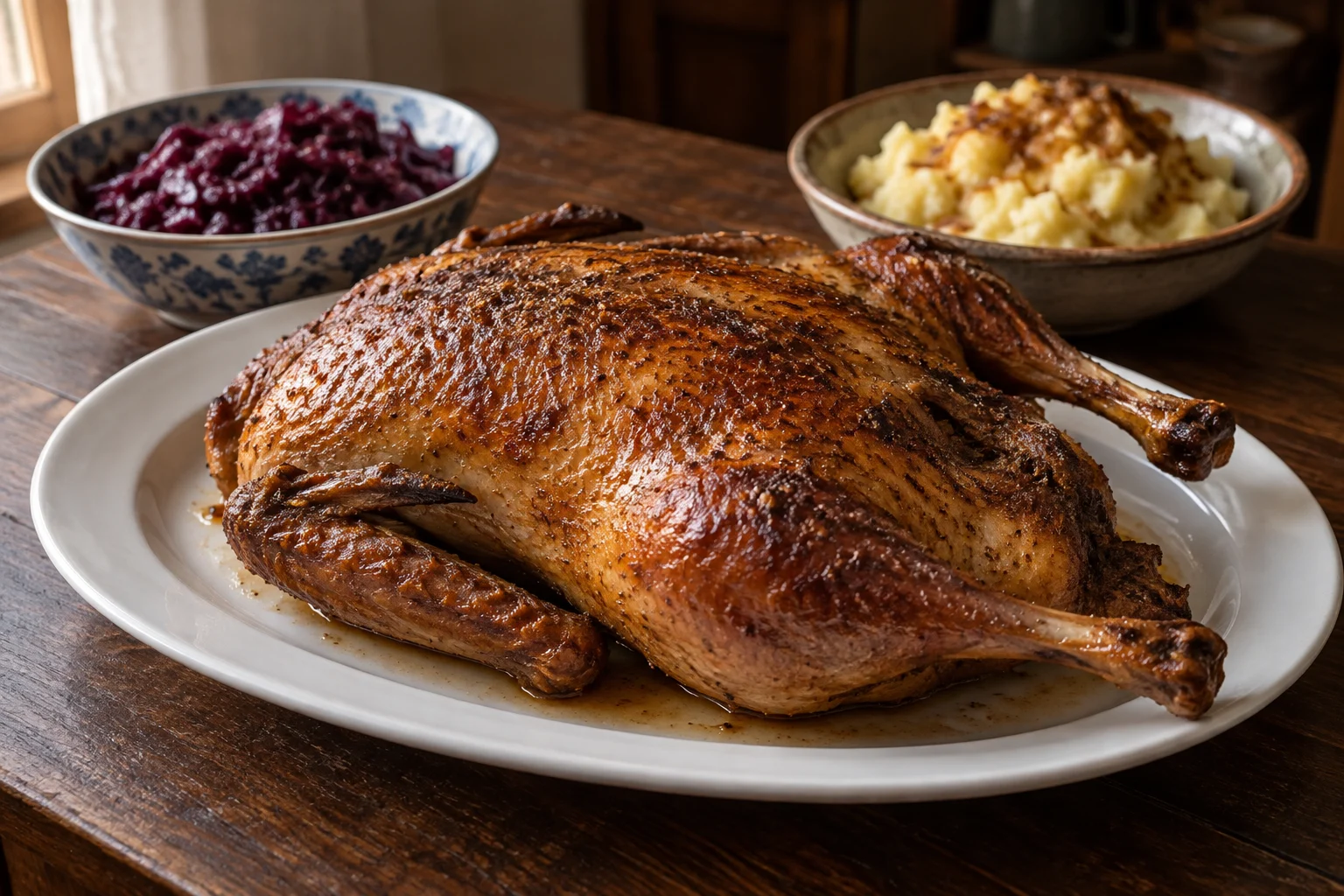
The Hungarian roast table
A name for a family of roasts
Kacsasült is Hungarian roast duck. It can arrive as a whole bird to carve or as pieces that have spent a long time in the roasting dish. The name gives you a cooking direction, rather than a single seasoning list: the recipes here range from a plain salted duck to versions with apple, onion, garlic or rosemary.
Borbás Marcsi’s roast-and-soup recipe starts with one bird, separates the roasting pieces, and uses the remaining parts for a soup. Morzsálós Mirza’s recipe at Mindmegette gives duck legs a pressure-cooking stage before the oven, then serves them with cabbage and potatoes. At Street Kitchen, Eisler Zsolti remembers his mother’s Sunday duck legs and offers a more elaborate plate with cabbage purée and croquettes. These are useful windows into several Hungarian kitchens; their different methods deserve to stay distinct.
Choose the cut before the cooking method
A whole bird
Choose this for a shared centerpiece and a mix of breast and leg meat. Allow space around the bird and use a roasting dish deep enough to collect the fat. Carving and checking several parts of the bird are part of the job; one temperature reading in the breast does not check the whole roast.
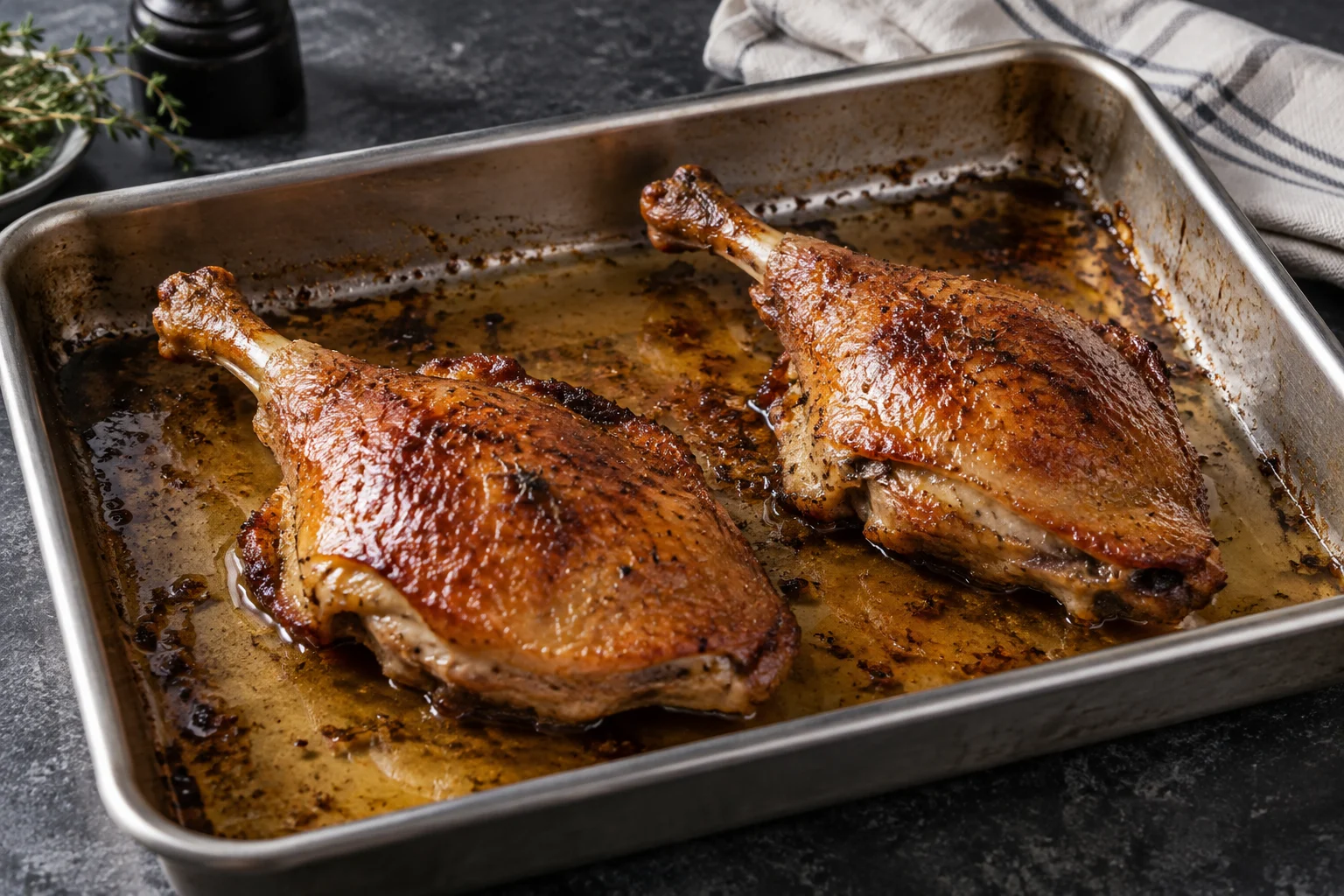
Bone-in legs
Choose these for easy portions and a smaller roasting setup. Similar-size legs make the tray easier to manage. Keep them in a single layer so the skins can brown, and check each piece rather than assuming the first tender leg speaks for all of them.
The meat and the skin have different jobs
A tender leg and a crisp skin are two separate results. Covered cooking can help the meat soften while the roasting dish collects juices and rendered fat. Browning then needs the skin exposed to heat, clear of that liquid. Jáki Tamás’s whole-duck guide and Eisler Zsolti’s leg recipe both make that change of stage explicit.
Before cooking, blot the prepared duck dry with disposable paper towels. If your chosen recipe calls for scoring, make shallow cuts through the skin, keeping the blade out of the meat. Borbás Marcsi stresses that distinction in her recipe. Deep cuts are unnecessary openings in the flesh; shallow cuts address the fatty skin.
During the final stage, look at the surface rather than adding more liquid by habit. Skin sitting in a puddle stays wet. When a recipe requires removing excess fat, set the hot dish on a stable heatproof surface and use a ladle or baster into a heatproof container. Avoid lifting and tipping a heavy pan full of hot fat. Keep any sauce for the side of the plate so it does not cover the freshly browned skin.
Three checks before serving
Use the complete method for your chosen cut. These checks help interpret what happens in the roasting dish.
- 01
Tenderness
Leg meat should give easily when checked near the joint. If it remains firm, continue the tendering stage of your recipe. Browning the outside harder will not make a resistant joint tender.
- 02
Skin
For the final browning stage, expose the skin and watch it closely. A grill or broiler can change golden patches into burnt ones quickly; keep the tray at a sensible distance and check frequently.
- 03
Temperature
Use a food thermometer as well as the texture checks. FoodSafety.gov specifies at least 74°C/165°F for poultry. Check each leg in its thickest flesh; for a whole bird, check the thickest breast and innermost thigh and wing areas, avoiding bone.
Build the plate around the richness
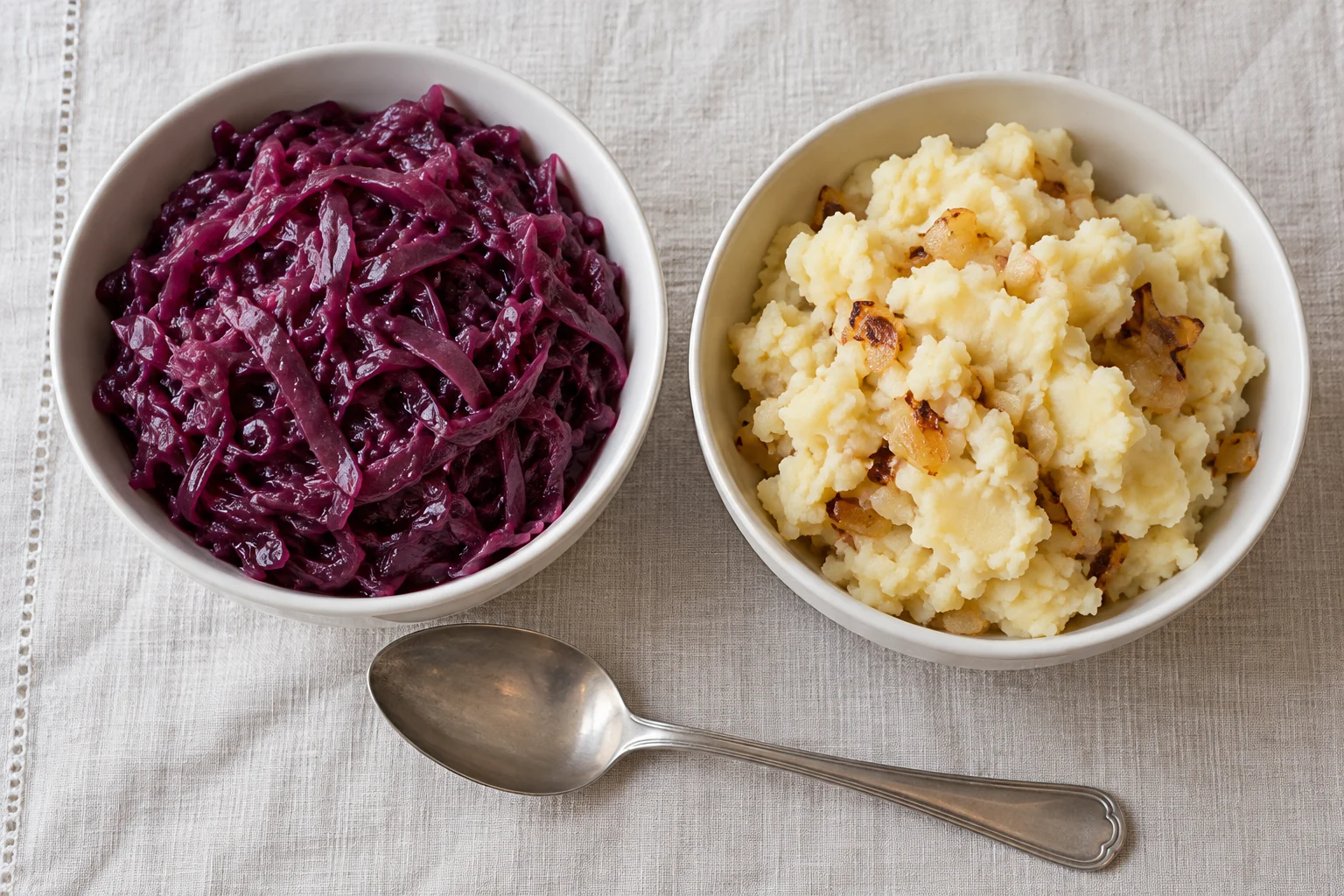
Braised red cabbage and potatoes recur beside the duck, but their forms vary. Mindmegette suggests roasted potatoes or onion mash. Eisler Zsolti turns the cabbage into a purée with wine and dried plums, and pairs it with croquettes. For a simpler plate, shredded cabbage and roughly mashed onion potatoes provide distinct textures without hiding the roast.
Apple and orange also have a place in the recipes. Borbás Marcsi’s apple-duck dish uses orange juice in the cabbage, with an apple-and-chestnut accompaniment and laska noodles. Treat those as a particular complete menu, rather than ingredients that every kacsasült must contain.
For your own meal, choose one starch and one vegetable accompaniment. Taste the cabbage before plating: it should offer a clear contrast to the duck, without being so sweet that the whole meal feels heavy. Warm the plates and have the sides ready as the roast finishes, then add a small amount of pan juice beside the meat. Leave the crispest skin uncovered.
Research notes
Hungarian recipes and roasting guidance
The original recipes show distinct approaches to duck and its accompaniments. The government chart supplies the measured cooking endpoints used in this guide.
- Borbás Marcsi: roast duck and duck soup, Egy.hu Hungarian recipe dividing a bird into roasting pieces and soup parts, with skin-only scoring.
- Morzsálós Mirza: kacsasült, Mindmegette Duck legs cooked before roasting with apple, onion and garlic; cabbage and potato serving options.
- Jáki Tamás: roasting a whole duck, Street Kitchen A whole-bird guide distinguishing the tendering and browning stages.
- Eisler Zsolti: duck legs with cabbage purée and croquettes An original Sunday-meal account and a detailed leg-and-accompaniments recipe.
- Borbás Marcsi: apple duck with chestnuts and cabbage A separate menu featuring apple, orange-braised cabbage, chestnuts and laska noodles.
- FoodSafety.gov: meat and poultry roasting charts Minimum roasting oven setting, thermometer locations and poultry temperature guidance.
Keep exploring
More stories for your table
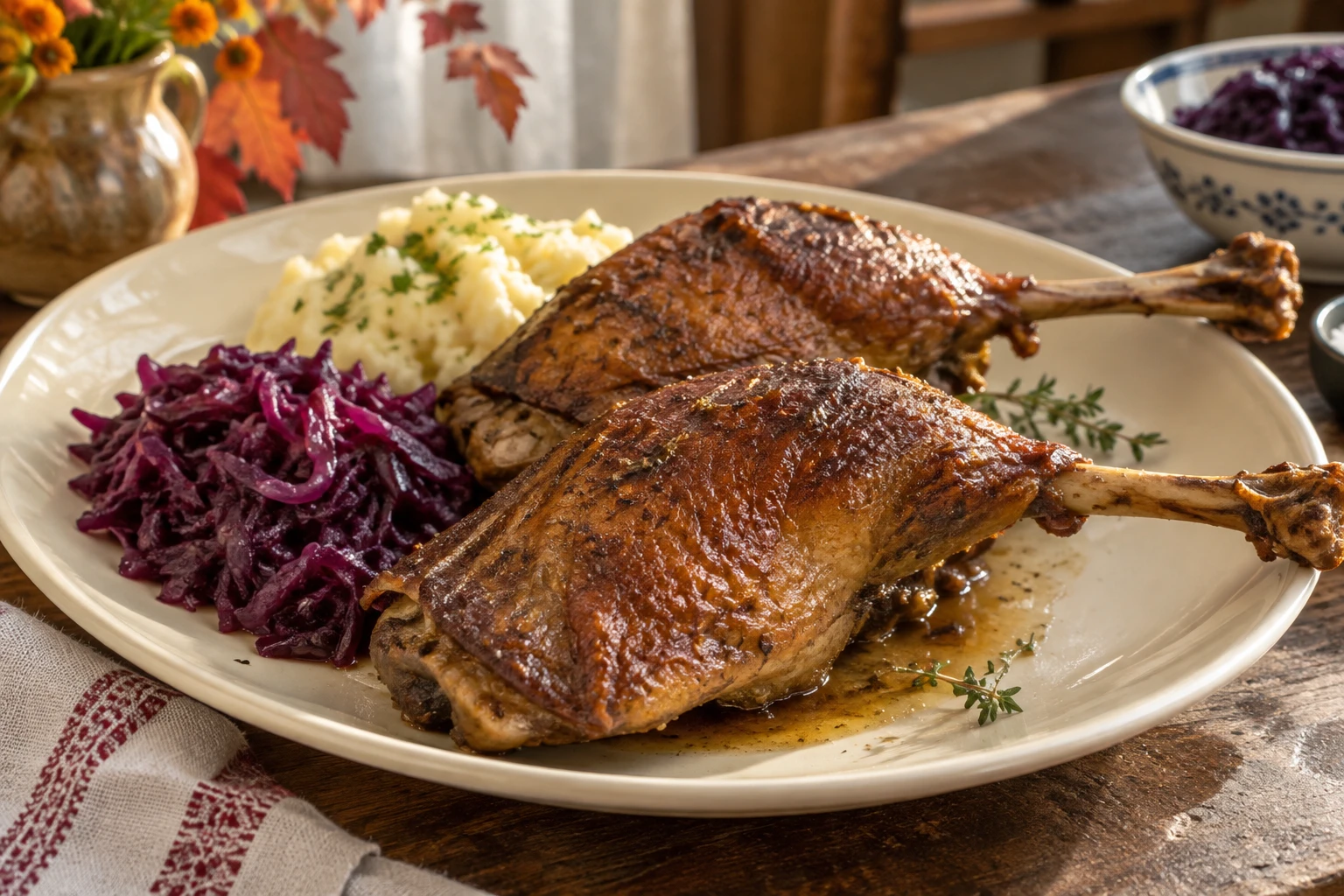
Hungarian cuisine Roasted poultry
Libasült: The Covered Roast and the Crisp Finish
Hungarian goose-leg recipes separate the slow covered cook from the uncovered finish. Read the pan, the cut and the November feast together.
Hungarian cuisine Soups
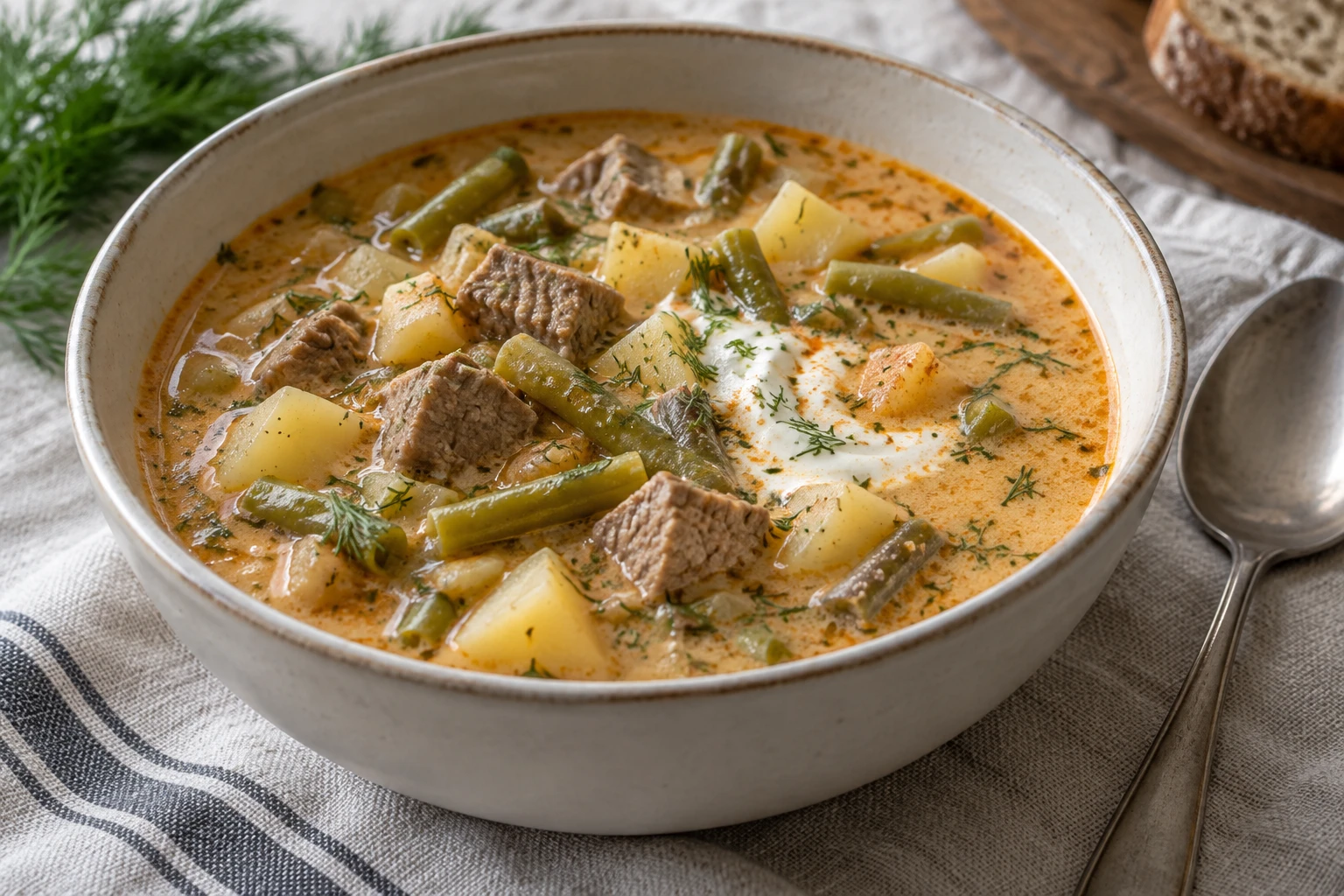
Palócleves: The Beans Have Their Own Timing
Meat, beans and potatoes reach the same bowl by different routes. Read Hungarian palócleves through its vegetable timing and sour-cream finish.
Vietnamese cuisine Roast duck
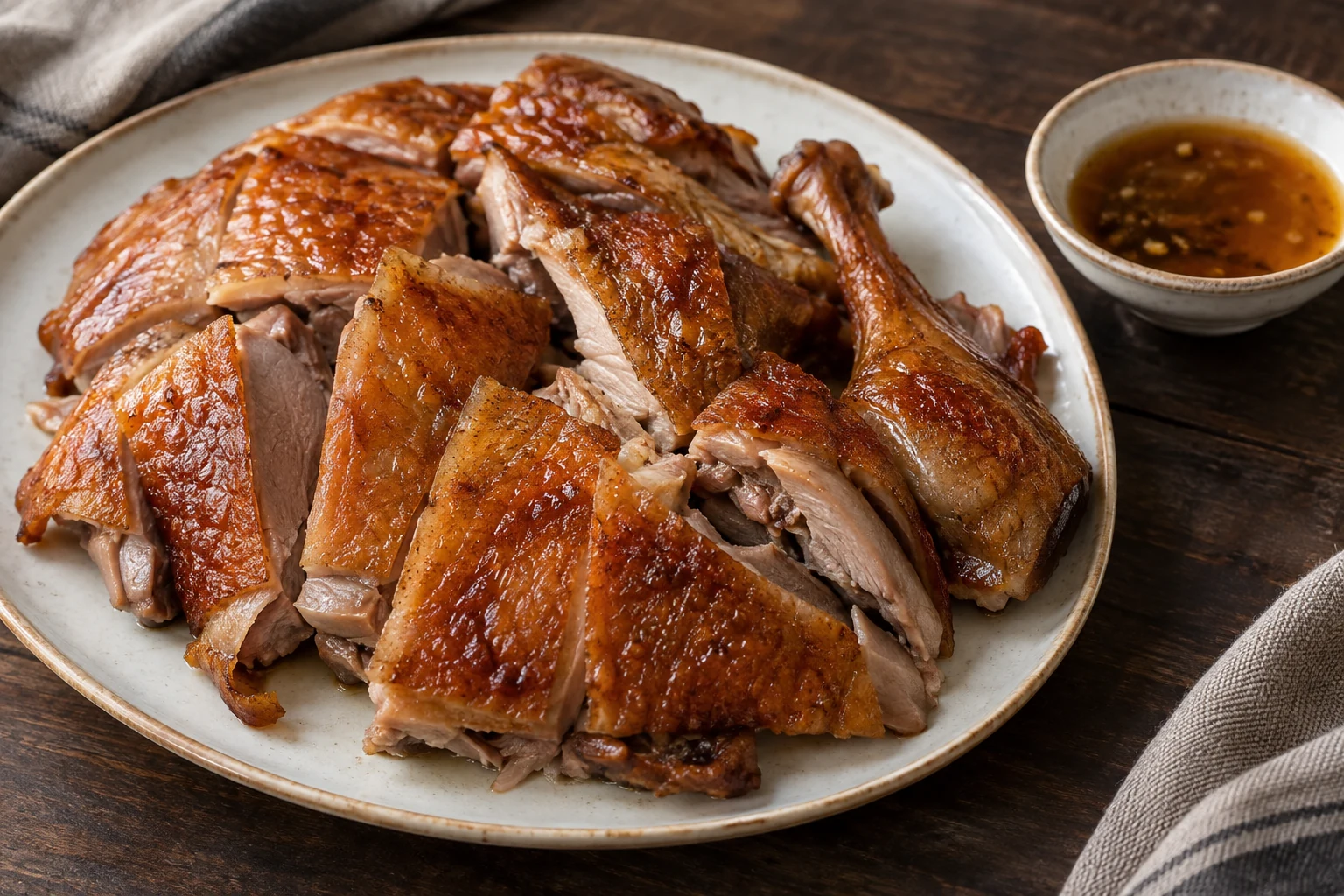
Vịt Quay Lạng Sơn: The Leaf, the Skin, the Sauce
How Lạng Sơn's mắc mật roast duck builds flavor inside the bird, browns its skin, and reaches the table as chopped duck or phở vịt quay.