
Hortobágyi Palacsinta: One Stew, Two Textures
Hortobágyi húsos palacsinta
Thin Hungarian pancakes turn paprika chicken stew into two distinct pleasures: a moist, compact filling and a sauce that flows around it.
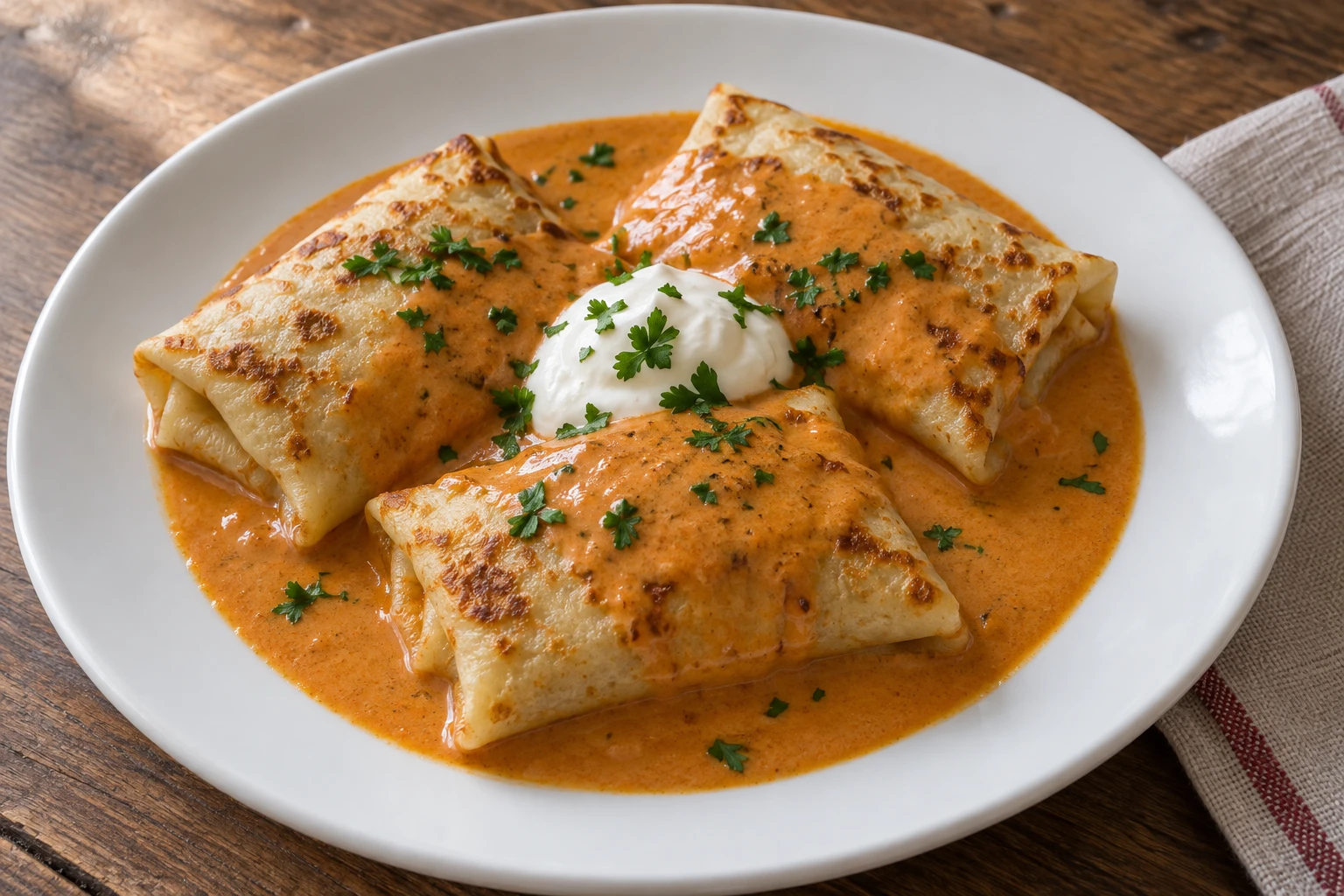
The important moment happens before filling
A plate of Hortobágyi húsos palacsinta can look luxuriously simple: a few folded pancakes, orange paprika sauce and a bright spoonful of sour cream. Cut into one and the structure becomes clearer. The pancake surrounds a moist chicken filling, while another part of the same stew has become the sauce outside it.
That division gives the dish its practical logic. A stew needs enough liquid to cook its meat; a filled pancake needs meat that stays together. The sauce must be generous without making the wrapper carry a bowlful of gravy. Four Hungarian preparations show how cooks solve that problem with different cuts, folds and finishes. They are useful to compare before choosing a full recipe.
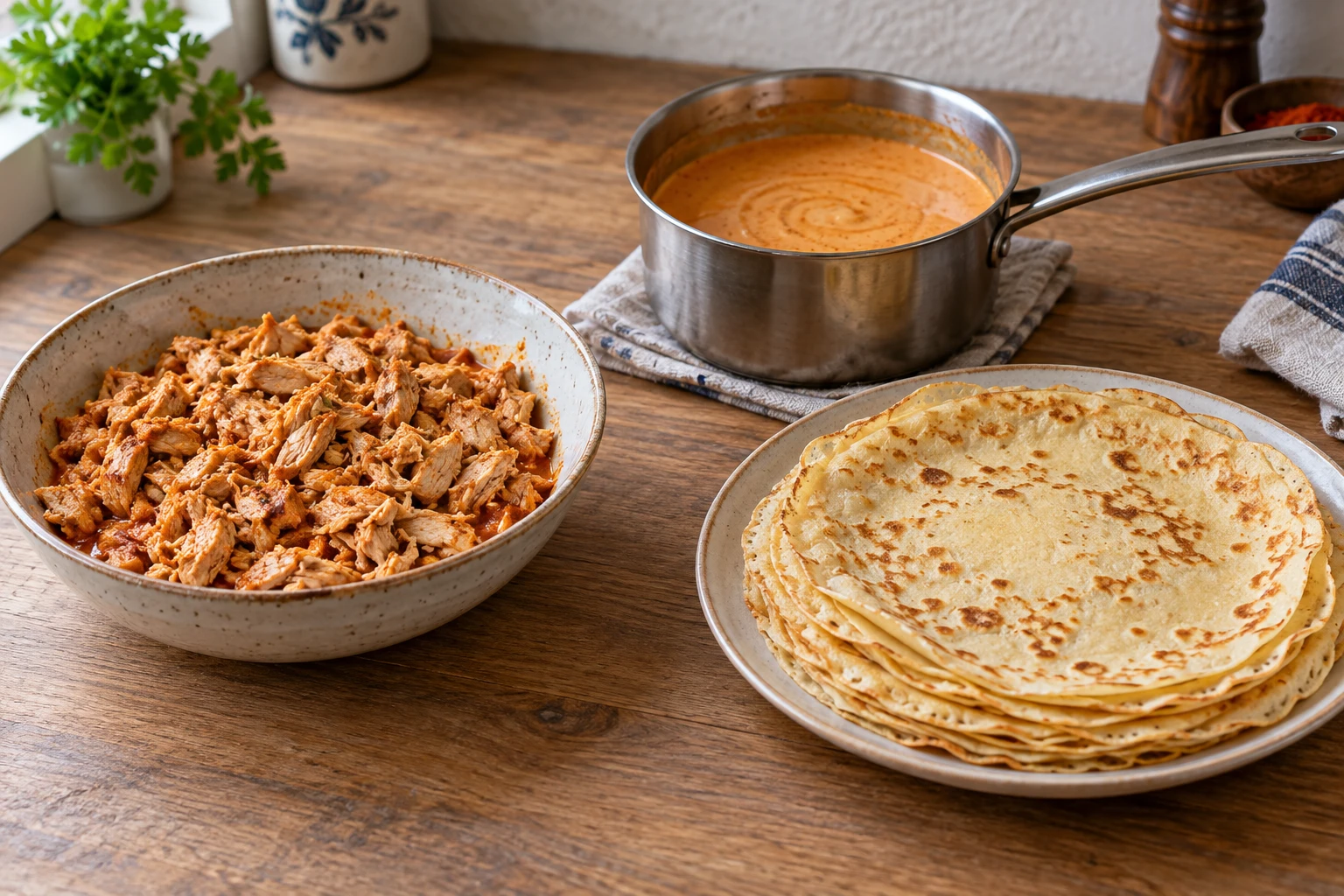
A knife does a different job from a blender
In the public television programme Főmenü’s version, cooked chicken is lifted out of its paprika stew and taken off the bone. The skin is cut finely, but the meat is chopped more coarsely; the recipe specifically rejects grinding it. A little sauce then moistens the filling. Blending and straining are options for the gravy, not a reason to erase the meat’s texture.
This distinction is easy to overlook because both components share a colour and flavour. A smooth sauce can move around recognizable pieces of chicken. Chopping the filling more finely changes the bite; pureeing the sauce changes what coats it. Those are separate decisions, rather than one general instruction to make everything smooth.
Reserve the sauce before the parcels disappear
Eisler Zsolti’s Street Kitchen preparation thickens the chicken’s cooking liquid with sour cream and flour, then reserves a ladleful for serving. The deboned chicken is chopped with a knife and warmed in the remaining sauce before it goes into the pancakes. Opposite sides fold inward, followed by the other two sides, producing compact parcels.
The reserved ladle explains something a photograph cannot: sauce inside and sauce outside need not be mixed in identical proportions. The first binds and moistens the chicken; the second can spread across the plate. Keeping some aside also prevents the filling from claiming every drop before the parcels are ready.
Two ways a roll can finish
A sauced oven finish
Főmenü arranges its filled pancakes in an ovenproof dish with sauce and uses the oven’s grill setting to finish them. Extra sauce and sour cream remain part of serving. The wrapper and sauce share the final heating.
A brief pan sear
The Bori Mami version published by Magyar Konyha reduces the stew liquid, adds some to diced cooked chicken and rolls the filled pancakes tightly. The rolls meet a hot pan just before serving, giving the outside a browned finish.
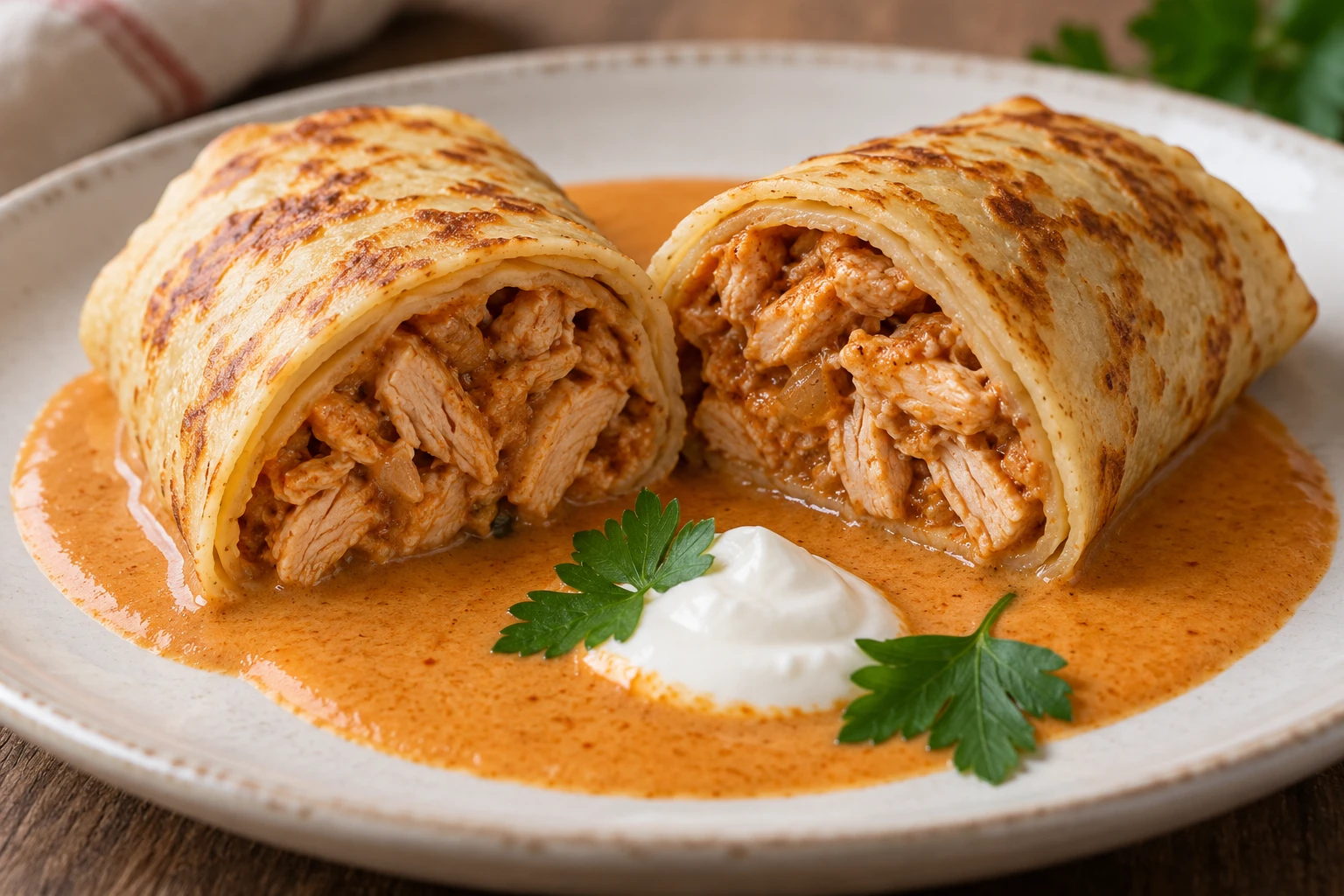
A home cook’s route keeps the strands
Hajni pöttyös konyhája, writing on Nosalty, tears the cooked chicken into small pieces rather than specifying a knife cut. The remaining stew liquid becomes a sour-cream sauce, with blending offered as an optional preference. Some of it goes back onto the chicken to keep the filling moist. The pancake’s sides fold inward before it is rolled, and more sauce goes over the finished roll.
The result follows the same division of labour while leaving a different texture inside. Small torn strands, diced meat and coarsely chopped pieces can all fit this family of preparations. The useful question is whether the filling stays enclosed and remains pleasant to cut, rather than whether every cook produces an identical interior.
Read the plate from the inside out
Look first at the cut surface: a thin wrapper should leave room for the chicken, while the filling should show the texture its cook chose. Then consider the exterior. A soft folded parcel under sauce and a seared roll offer different edges, even when both begin with paprika chicken. Finally, follow the gravy. Its relationship to the filling is the thread that connects these variations.
Research notes
Sources behind this article
- Street Kitchen — Eisler Zsolti’s Hortobágyi húsos palacsinta A chicken version with knife-cut meat returned to the sour-cream gravy, a reserved ladle of sauce and four-sided parcels.
- MédiaKlikk — Főmenü’s Hortobágyi húsos palacsinta Separates chicken from its gravy, distinguishes finely cut skin from coarsely chopped meat and finishes filled pancakes in the oven.
- Magyar Konyha — Bori Mami in Gyöngyös Zirig Árpád’s interview with Sándor Béla includes a version using reduced stew liquid and tightly rolled pancakes seared before serving.
- Nosalty — Hajni pöttyös konyhája’s chicken pancakes A named home cook’s method tears the cooked chicken into small pieces, moistens it with stew sauce and folds the sides before rolling.
Keep exploring
More stories for your table
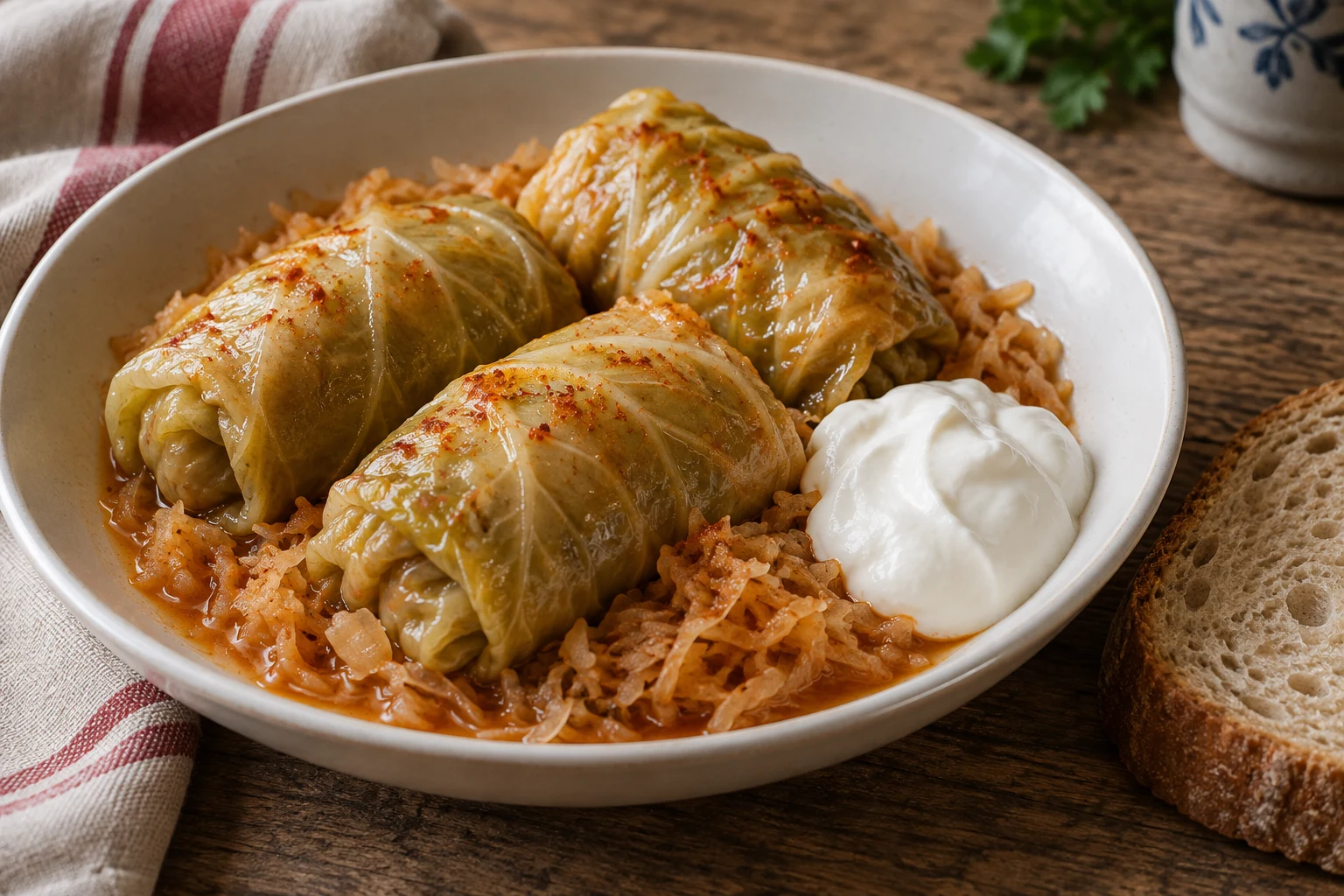
Hungarian cuisine Stuffed cabbage
Töltött Káposzta: Cabbage in Two Roles
Hungarian stuffed cabbage combines a leaf-wrapped filling with cabbage in the cooking pot. Explore sour and fresh leaves, a Szabolcs tomato variation, and the dish’s place at festive tables.
Hungarian cuisine Soup
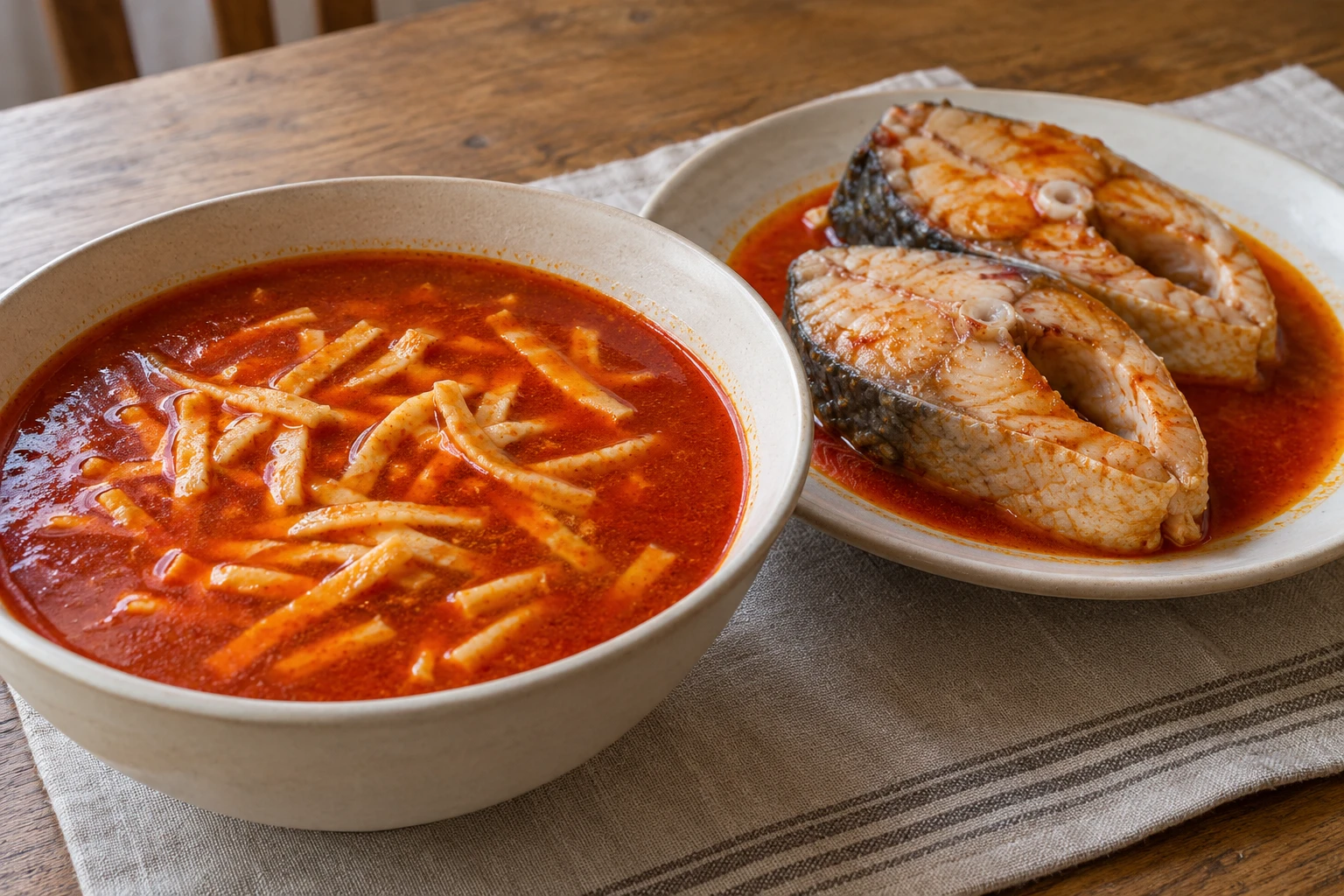
Baja Fish Soup: Move the Pot, Keep the Fish
Baja fisherman’s soup pairs paprika-red carp broth with matchstick noodles. Its vigorous boil and careful handling explain why stirring is the wrong habit to borrow.
Hungarian cuisine Pork and sauerkraut stew
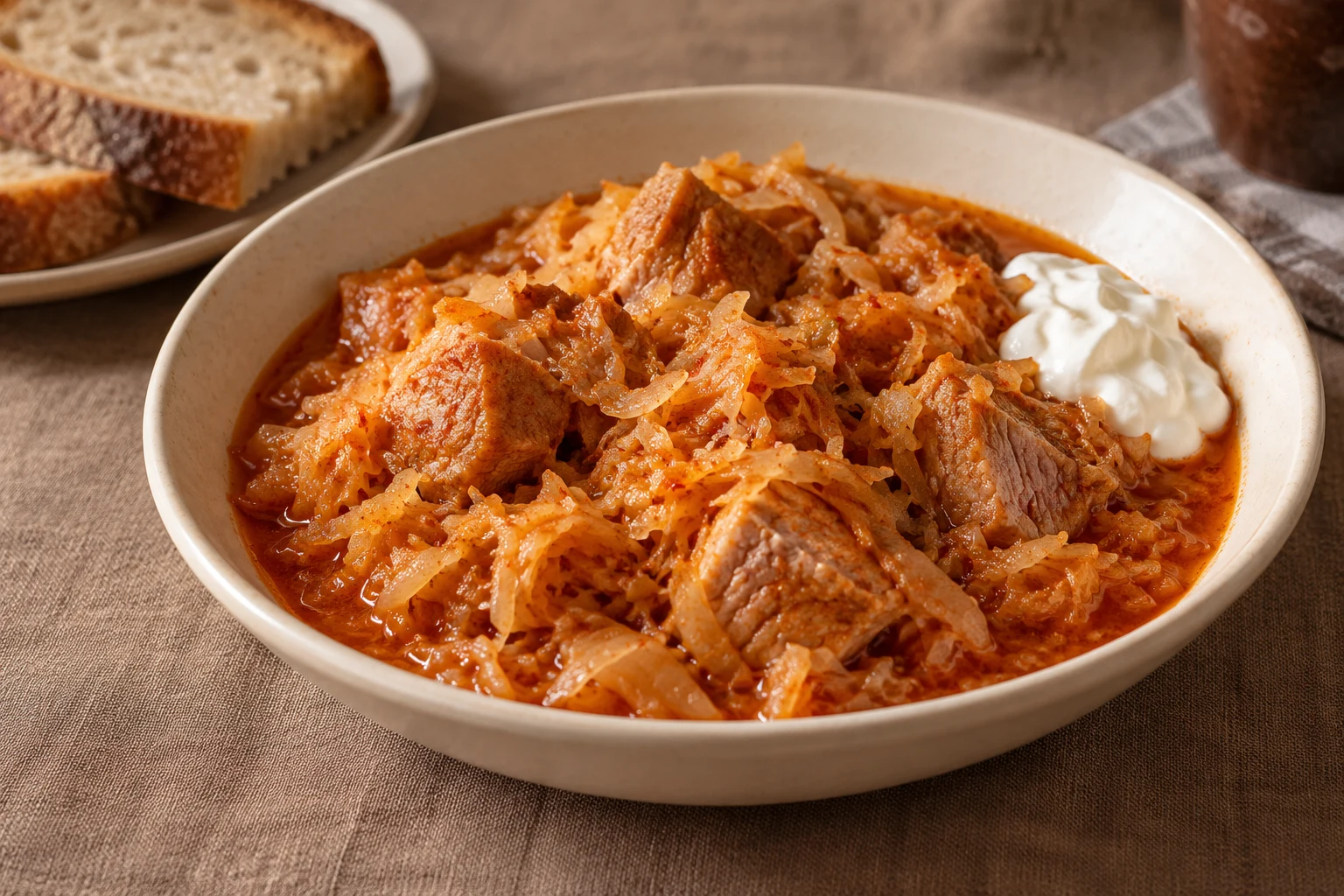
Székelykáposzta: balancing pork, sauerkraut and sour cream
A practical guide to Hungarian pork and sauerkraut stew, with cabbage tasting, contrasting cooking sequences and a complete four-serving adaptation.