
Madártej: A Soft Cloud Needs a Pourable Custard
Madártej
Hungary's madártej pairs cooked egg-white dumplings with vanilla custard. Follow the two textures, the poaching liquid and the choice of thickener.
Two parts of the same egg
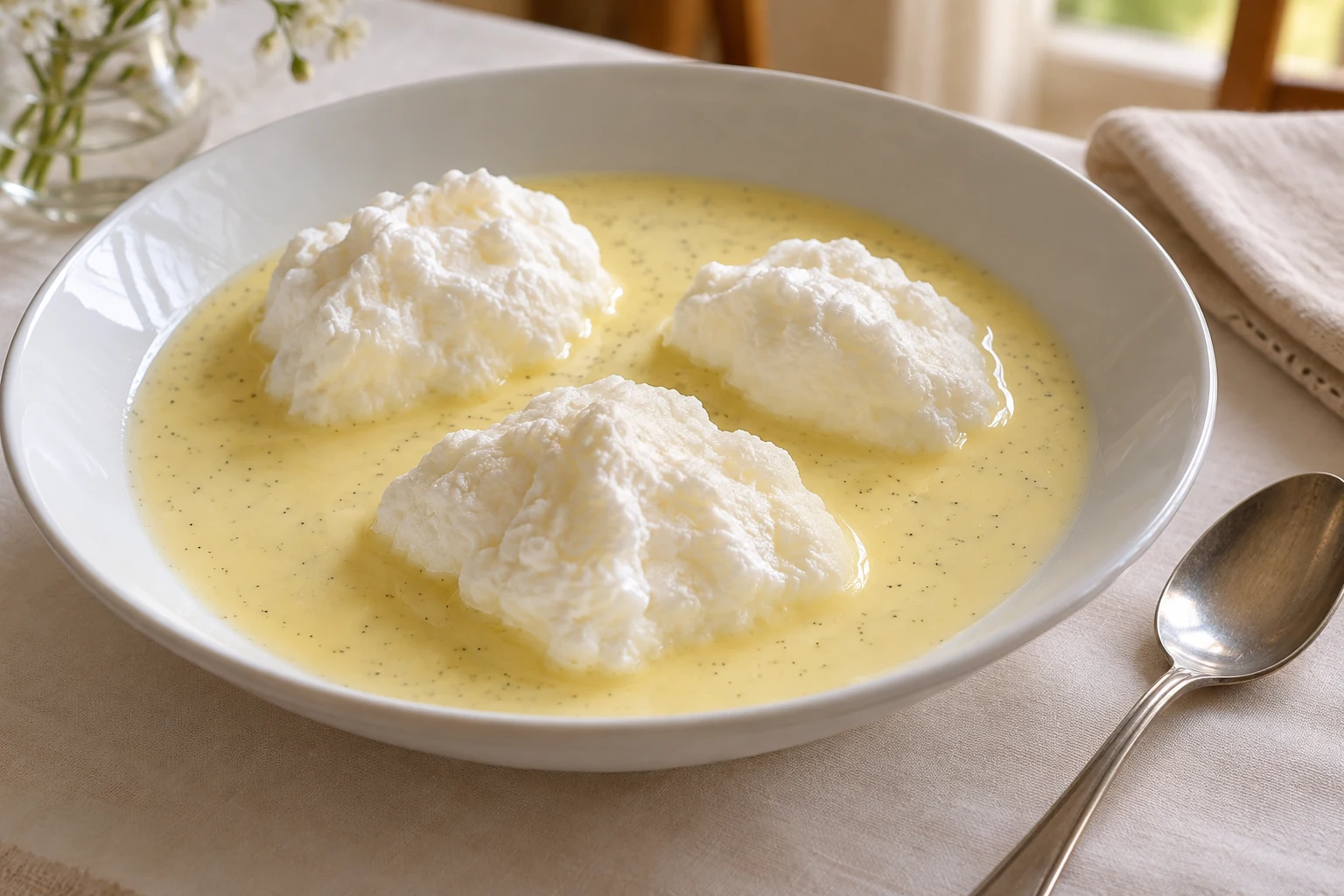
Madártej, literally bird's milk, is a Hungarian name for a dessert whose shape comes from separating an egg. The whites become cooked foam dumplings; the yolks enrich the vanilla custard underneath. Adrienn Vass's Hungarian recipe for Hungary Today places them together in the refrigerator before serving. The point of the pairing is easy to see in a shallow bowl: white islands remain distinct above the yellow sauce.
Cooking instructor Ágnes Baráth describes the desired combination as a light, firm island over a cream-like milk base. That is a useful target before choosing a recipe. A custard that sets into a sliceable pudding and a dry, crisp meringue would give a different spoonful.
Give the whites room
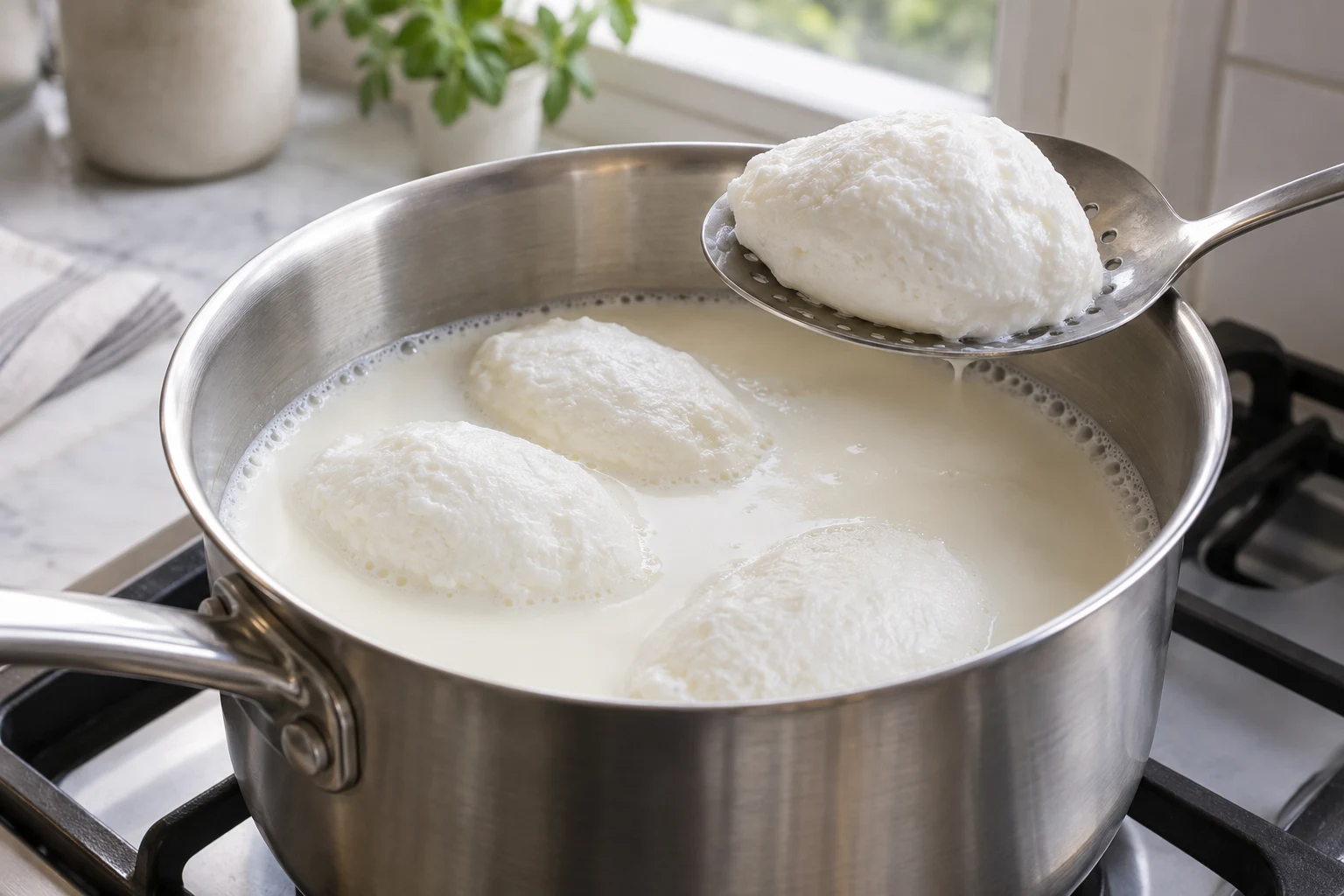
Baráth's method spoons whipped whites into hot milk in small batches. The dumplings expand, so space in the saucepan belongs to the cooking method, not just tidy presentation. She also cautions against making the milk too hot: the cooked foam can shrink and flatten.
The liquid is a choice, however. Pap Zsuzsa at Háztartás Ma cooks her dumplings in water, separately from a custard prepared first. Her finished bowl adds raisins. The milk-poached route and the water-poached route share the two-part dessert, but they do not send the whites through the same pan.
Read the thickener before the method
Cornstarch
Baráth uses a small addition of cornstarch with the yolks. Hungary Today's version also uses starch, and filters the poaching milk before it returns to the custard.
Vanilla pudding powder
Mindmegette's madártej recipe includes vanilla pudding powder in the yolk mixture. It calls for thickening the custard with stirring and avoiding a boil.
Flour
Petra's Madártej 1. on Nosalty adds flour to the yolks. She combines reserved cold milk with the strained poaching milk, then cooks the custard over low heat.
The saucepan matters more than a garnish
These recipes do not all specify the same amount of egg for the same amount of milk. Choose one complete formula and follow its thickener and sequence together. Adding more pudding powder to another author's custard changes the base; it is not simply a flavor substitution.
Baráth introduces some hot milk to the yolk mixture before returning it to the saucepan, then keeps stirring while it thickens. Nosalty's flour version takes a different route through cold and strained hot milk. In either case, the finished sauce needs to move around the dumplings. Look for that relationship rather than making the custard as thick as possible.
A bowl built around a spoonful
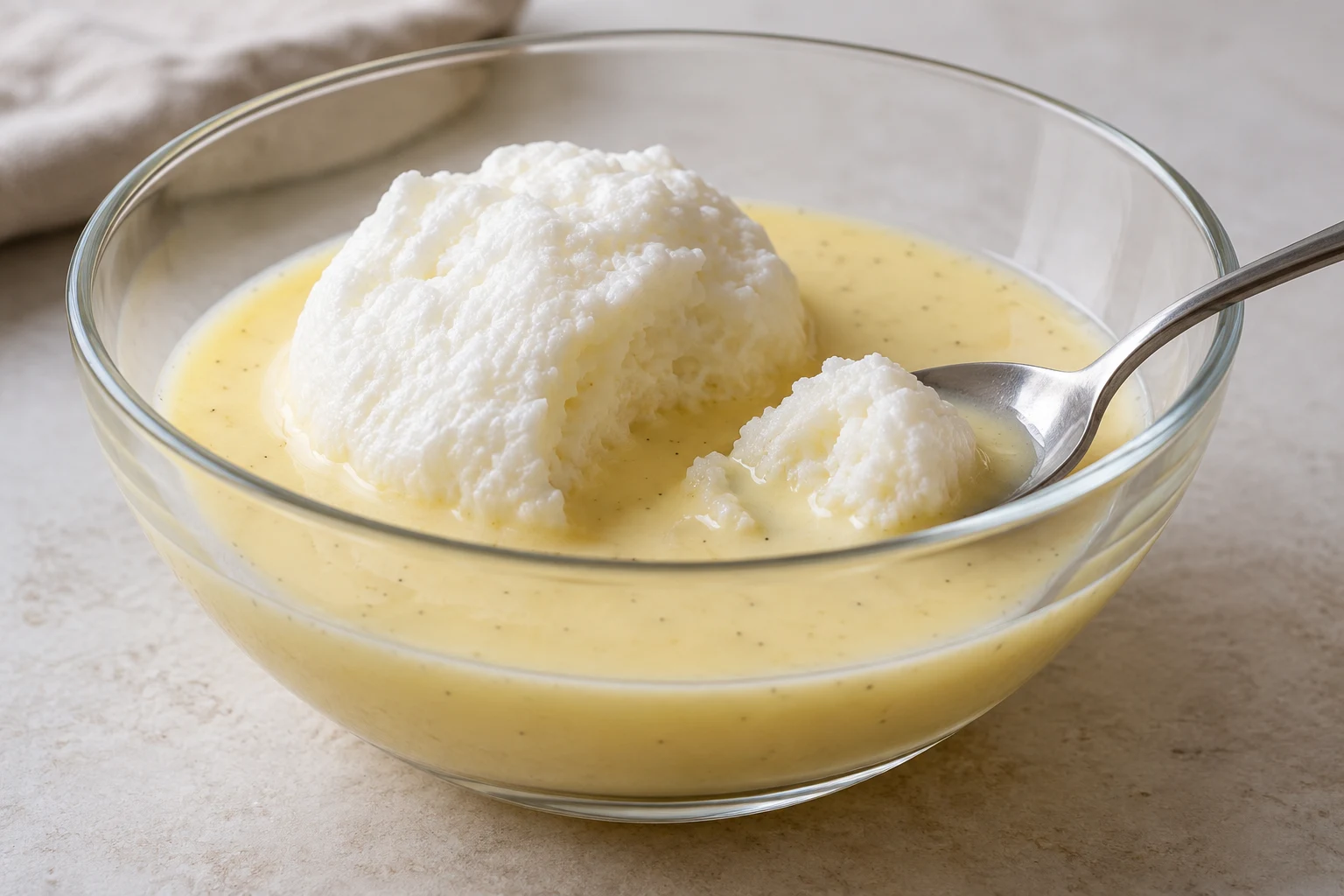
Hungary Today serves the dessert after chilling, while Mindmegette also portions the custard into glasses. A broad bowl gives the islands more room; a glass makes each portion compact. Either format should let a spoon take custard and a piece of the white dumpling together.
Finishes differ as well. Baráth adds lemon zest at serving; Háztartás Ma uses raisins. Start with the plain vanilla-and-egg pairing, then choose the finish that suits the formula you have made. Neither garnish has to become a rule for every bowl called madártej.
Research notes
The Hungarian recipes behind the comparison
Five complete recipes show differences in poaching liquid, thickener and serving. The article compares those methods without claiming a single universal formula or a tested recipe of its own.
- Culinary Hungary — Ágnes Baráth's madártej Milk poaching, expansion space, cornstarch custard, tempering and lemon-zest finish.
- Hungary Today — Adrienn Vass's classic madártej Name translation, strained poaching milk, starch and chilled service. Historical origin claims are not used.
- Mindmegette — Madártej Vanilla pudding powder in the custard and chilled glass portions.
- Háztartás Ma — Pap Zsuzsa's madártej Separate water-poached dumplings and a raisin finish.
- Nosalty — Petra's Madártej 1. Flour-thickened custard with reserved cold milk and strained poaching milk.
- FoodSafety.gov — Safe minimum internal temperatures Egg-dish cooking guidance of 71°C / 160°F.
- FoodSafety.gov — Four steps to food safety Prompt refrigeration of perishables and shallow-container cooling.
Keep exploring
More stories for your table
Hungarian cuisine Stuffed cabbage
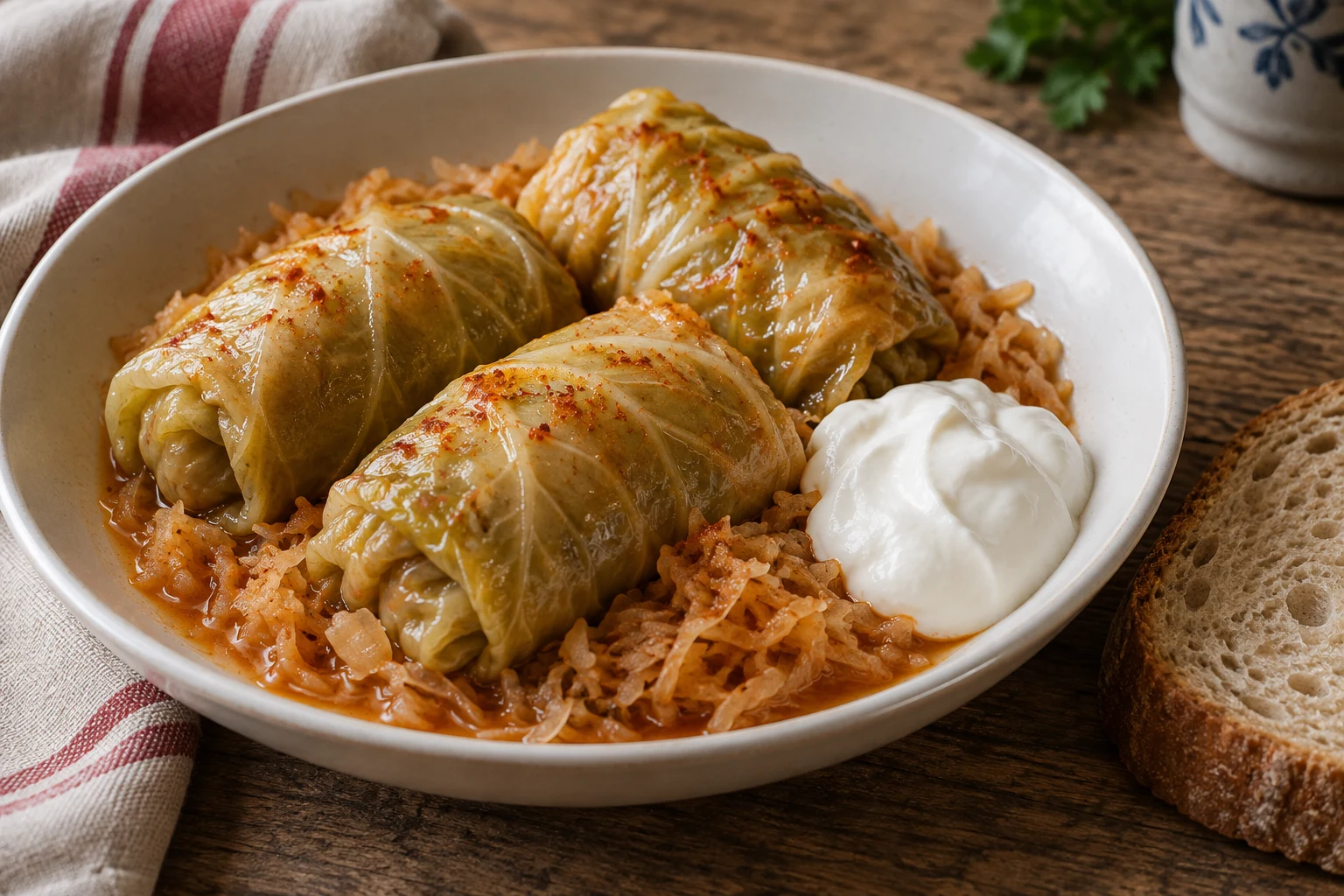
Töltött Káposzta: Cabbage in Two Roles
Hungarian stuffed cabbage combines a leaf-wrapped filling with cabbage in the cooking pot. Explore sour and fresh leaves, a Szabolcs tomato variation, and the dish’s place at festive tables.
Hungarian cuisine Soup
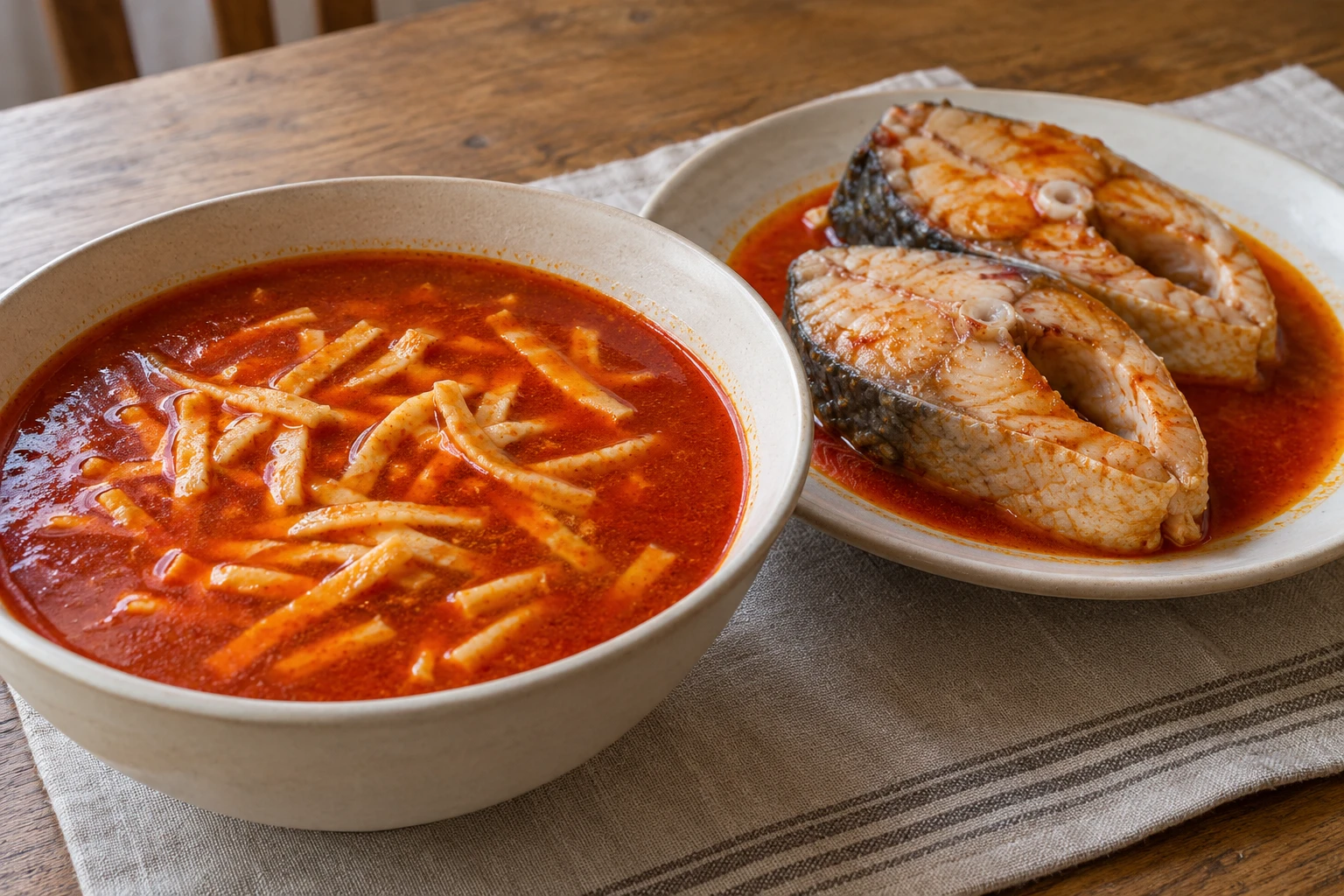
Baja Fish Soup: Move the Pot, Keep the Fish
Baja fisherman’s soup pairs paprika-red carp broth with matchstick noodles. Its vigorous boil and careful handling explain why stirring is the wrong habit to borrow.
Hungarian cuisine Egg-barley pasta
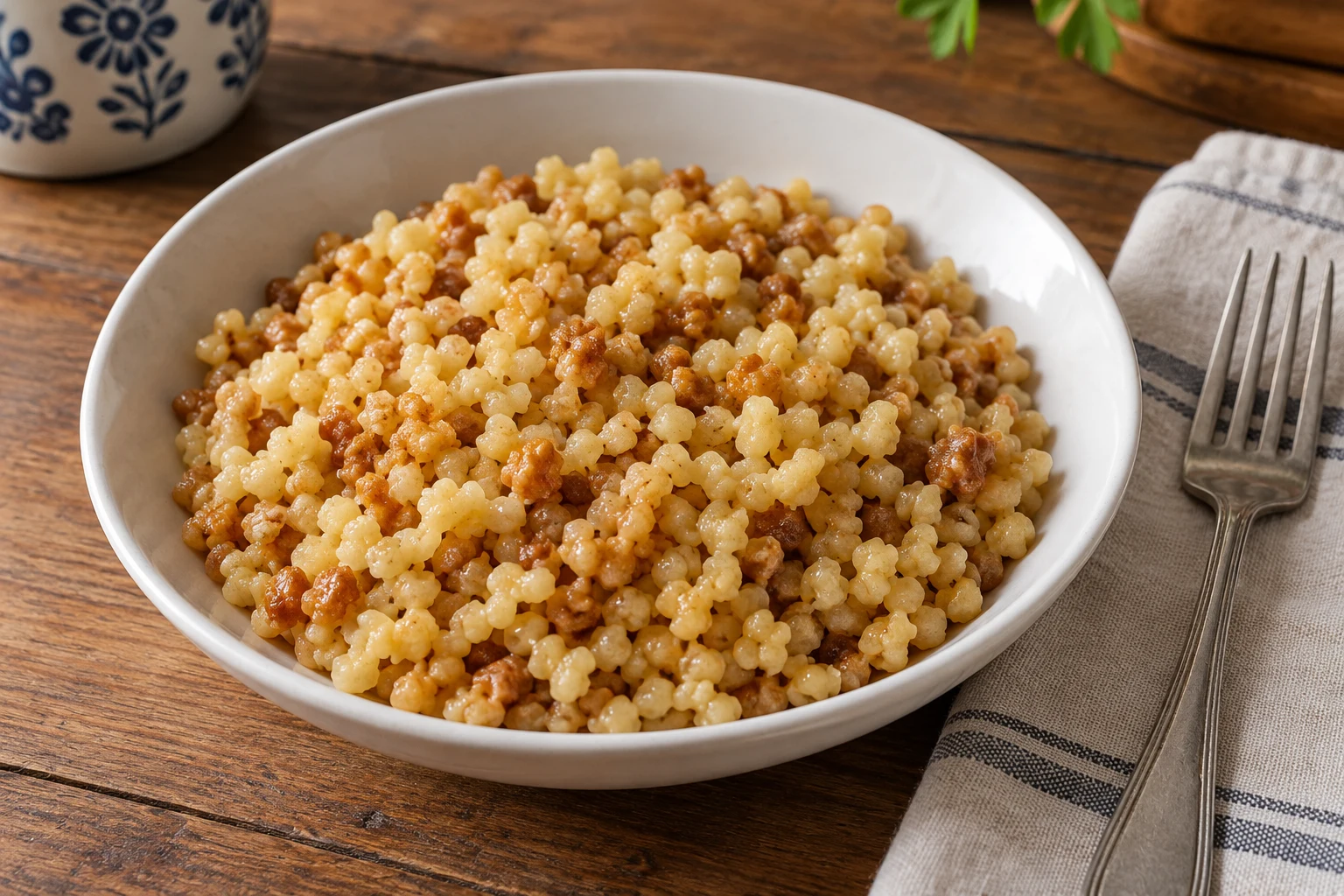
Tarhonya: The Toasted Pasta Behind the Small Grains
Hungarian egg barley is pasta. Follow its change from pale crumbs to a toasted side dish, then decide when potatoes and sausage belong in the pot.