
Baja Fish Soup: Move the Pot, Keep the Fish
Bajai halászlé
The pot can boil hard while the cook handles the fish gently. In Baja-style halászlé, heat, movement and noodle service each have a separate job.
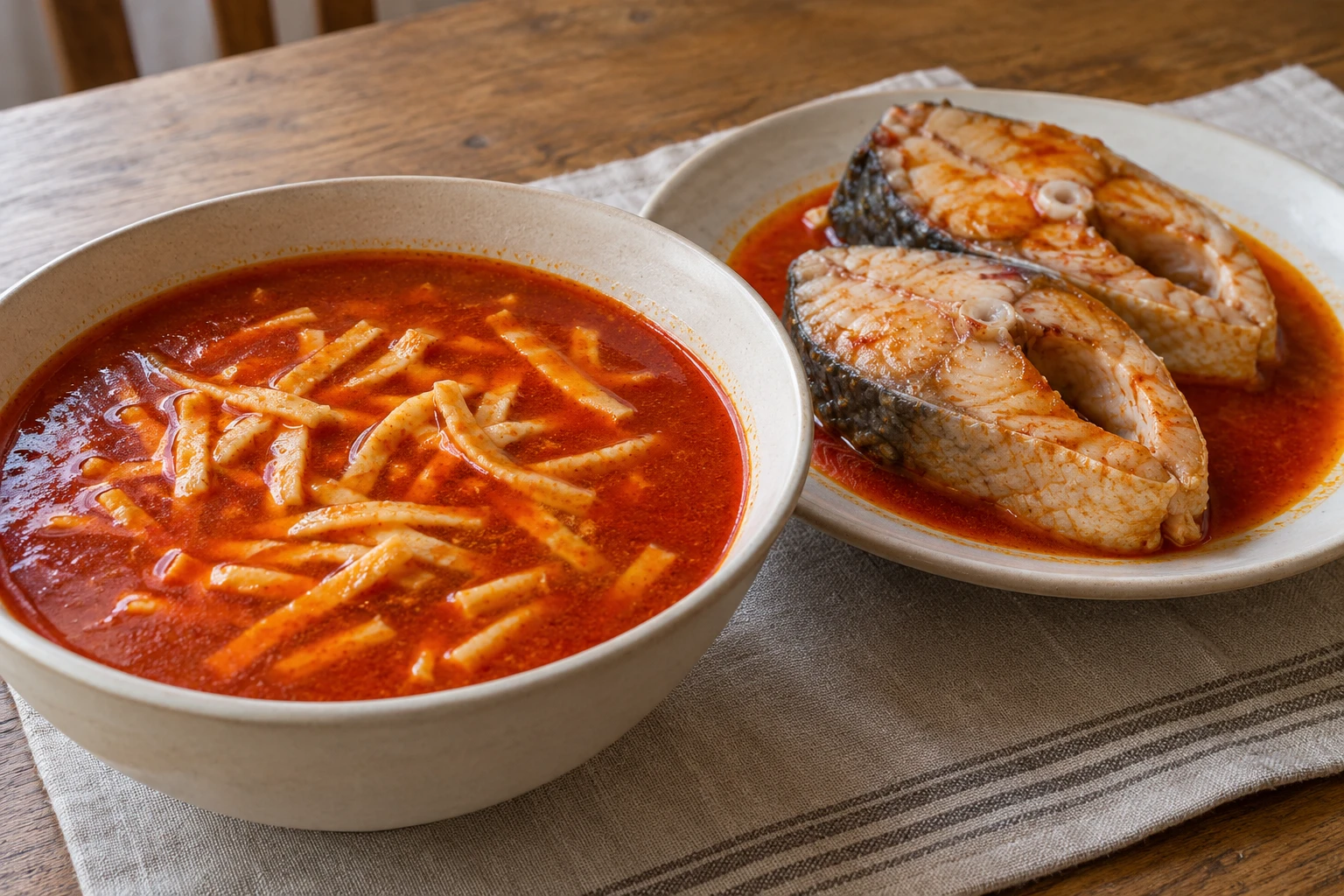
Begin with the bowl, then the pot
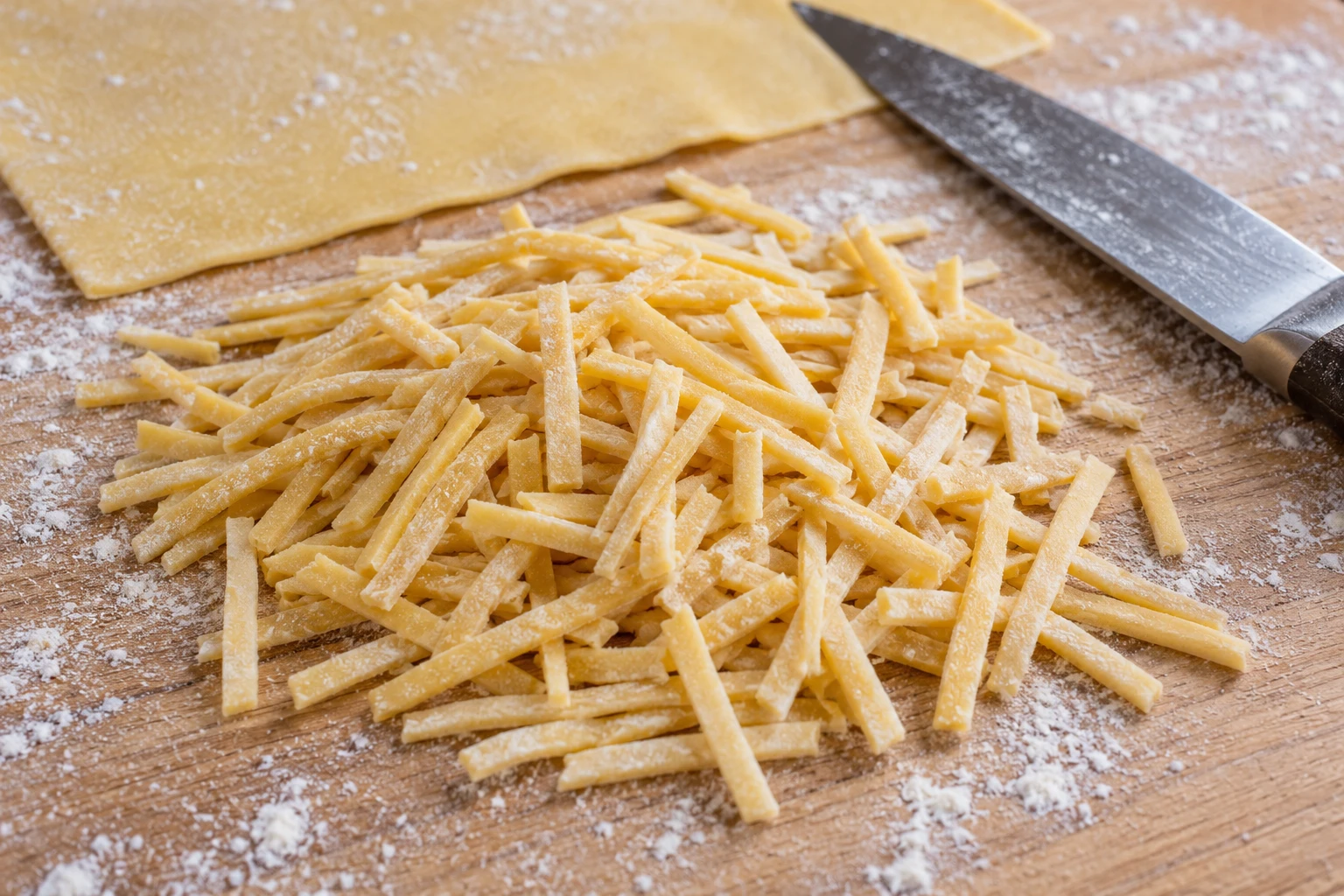
Baja-style halászlé has a distinctive companion: gyufatészta, or matchstick pasta. Visit Hungary's regional guide identifies the soup as unstrained, made with carp and served with those noodles. This gives the dish a useful starting point beyond the red color shared by many Hungarian fish soups.
The Bács-Kiskun county tourism page lists fish, onion, paprika, water, salt and pasta as its principal ingredients. A short list makes the technique conspicuous. The flavor of the fish and the quality of the ground paprika have few places to hide, while the noodles add a separate texture at the table.
Strong boiling, restrained handling
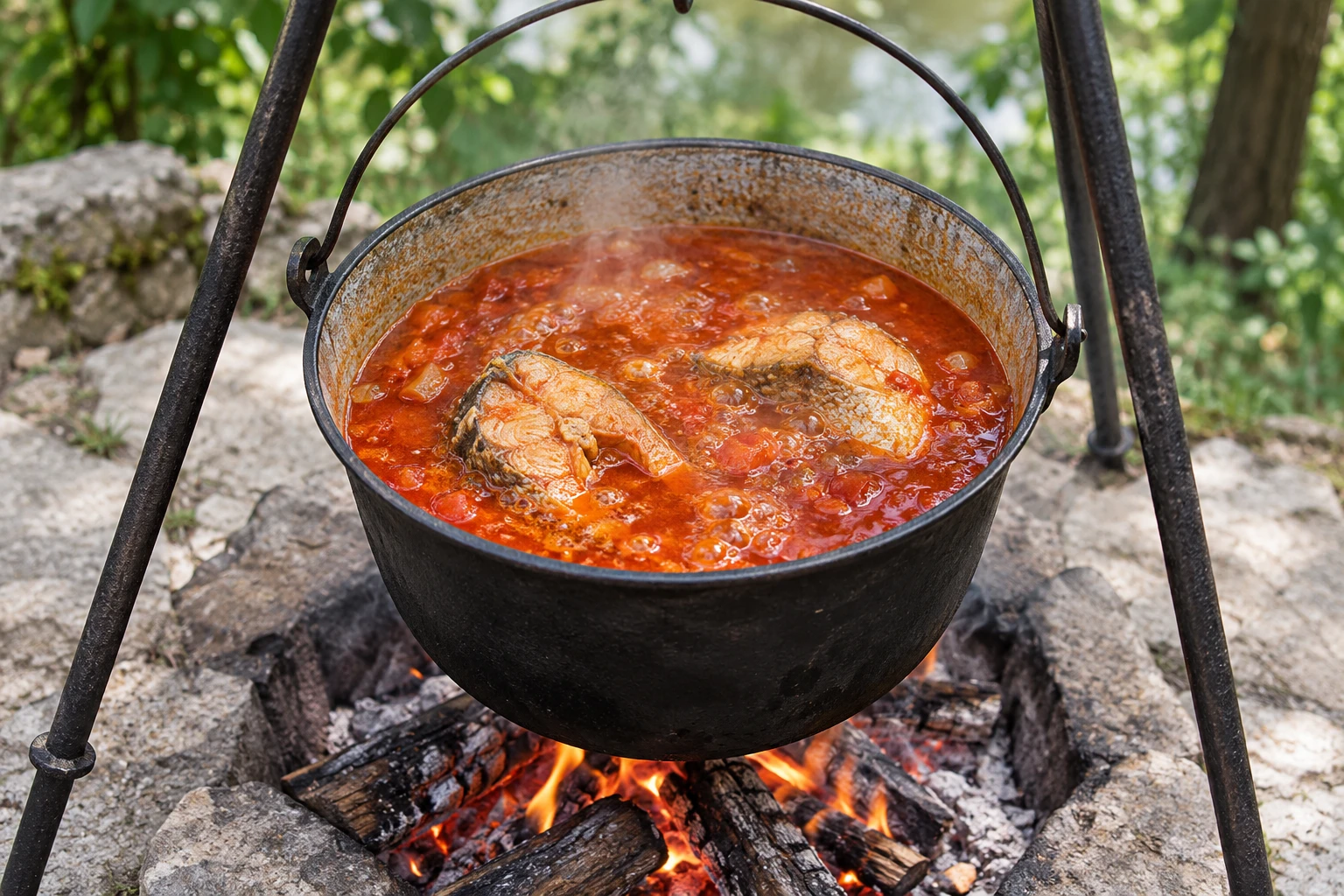
The MÁV group's published Baja recipe places chopped onion beneath fish pieces in the pot, adds the measured water, and introduces ground paprika when boiling begins. It calls for a vigorous boil. At the same time, it explicitly tells the cook to avoid stirring and instead move the cauldron carefully so the slices stay together.
A vigorous boil and careful handling are compatible. A spoon dragged repeatedly through cooked fish risks breaking the portions that will later be lifted out. The published instruction protects those portions.
That lesson concerns the recipe's handling, not a suggestion to pick up an unstable pot. Follow a complete method suited to your equipment. A hanging cauldron and a kitchen saucepan need different practical arrangements, even when they share the same concern for intact fish.
Two published starting sequences
Fish assembled from the start
MÁV's recipe layers the fish pieces and head over onion before cooking. Its instruction to cook the noodles separately keeps that task outside the fish pot.
Main slices added later
Borbás Marcsi's version begins with onion, head, tail and belly pieces. It adds part of the paprika, then the salted main slices and remaining water, followed by the rest of the paprika when boiling resumes. A staged start remains possible within a Baja recipe.
Read the heat as part of the method
Marcsi describes the finished broth as cohesive and creamy in the spoon, with paprika and water no longer visibly separating. Her method ties that texture to maintained boiling. It is not a cream-enriched soup: the word describes the resulting consistency, while the ingredient list supplies the explanation.
Her staging also shows why it is unhelpful to reduce Baja cooking to an absolute claim that every ingredient must enter at once. Published cooks make choices within the regional style. Keep one method's fish cuts, starting sequence and water allowance together rather than borrowing a time from another pot.
MÁV cooks the noodles separately in salted water. This separates their doneness from fish cooking. Have bowls ready before lifting fragile pieces, with cooked noodles available when the broth is served.
A local dish with living methods
The official Hungarikum entry treats Baja fish soup as inherited cultural practice and emphasizes cooking in company. That recognition concerns a community's relationship with its food; it need not erase differences between working cooks.
For the eater, the most revealing combination is straightforward: paprika-red broth, intact cooked fish and short noodles. For the cook, the revealing decisions happen earlier—what enters first, how the boil is maintained, and how the fish is moved. Reading those decisions together is more useful than arguing from color alone.
Research notes
Sources
Regional institutions and attributed cooking methods explain the service and the differences between recipes.
- Visit Hungary: Treasures of Szeged region The page 18–19 spread identifies unstrained Baja soup and matchstick pasta.
- Bács-Kiskun county: Baja fish soup Official regional description of the principal ingredients.
- MÁV magazine: Bajai halászlé Vigorous boil, careful pot movement and separately cooked noodles.
- Borbás Marcsi: Baja fish soup A staged fish-and-paprika method with a cohesive broth endpoint.
- Richárd Farkas and István Kapitány: Developed family halászlé An explicitly described restaurant variation with a separate roasted-bone stock.
- Hungarikum collection: Bajai halászlé Official recognition and community cooking context.
Keep exploring
More stories for your table
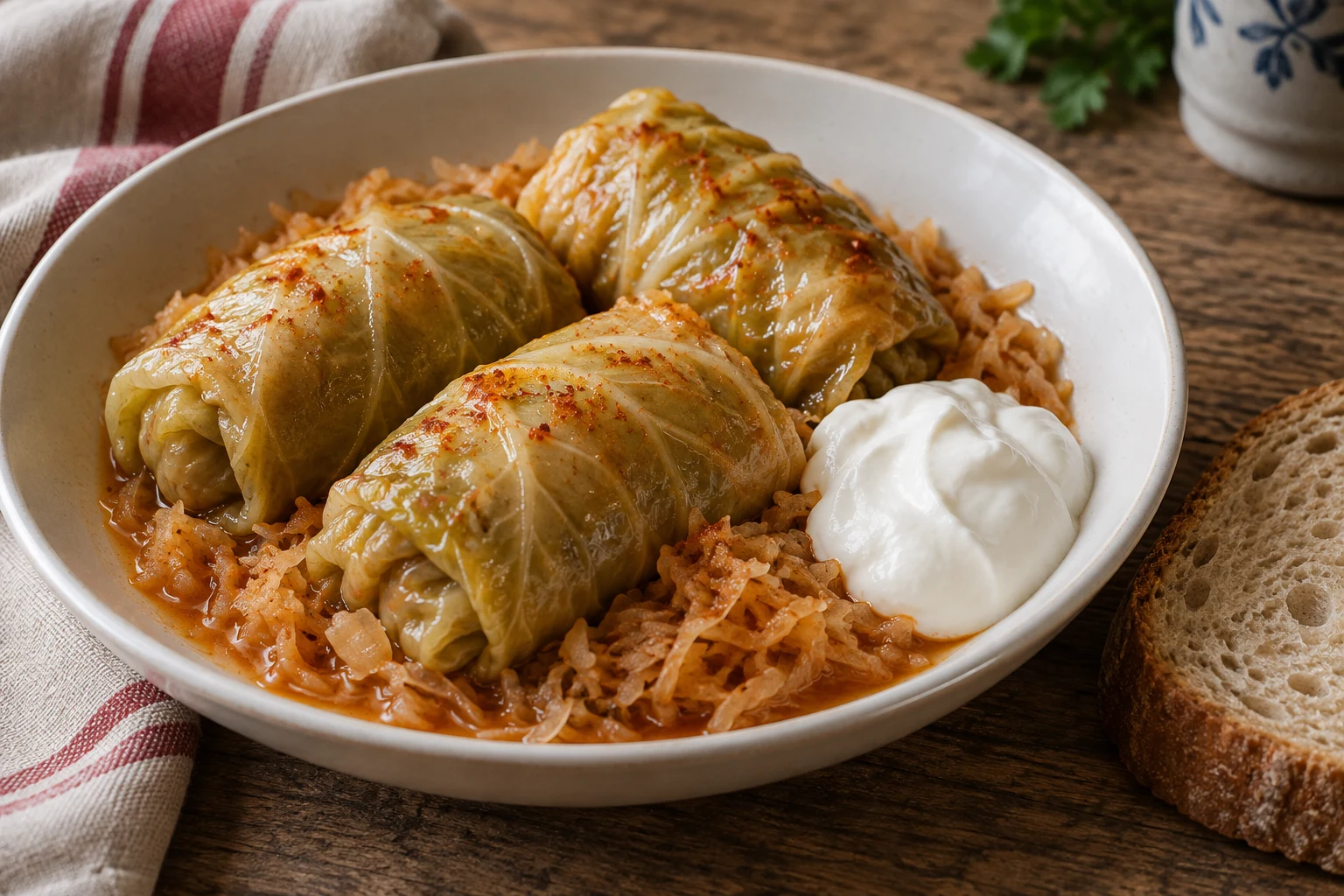
Hungarian cuisine Stuffed cabbage
Töltött Káposzta: Cabbage in Two Roles
Hungarian stuffed cabbage combines a leaf-wrapped filling with cabbage in the cooking pot. Explore sour and fresh leaves, a Szabolcs tomato variation, and the dish’s place at festive tables.
Hungarian cuisine Vanilla dessert
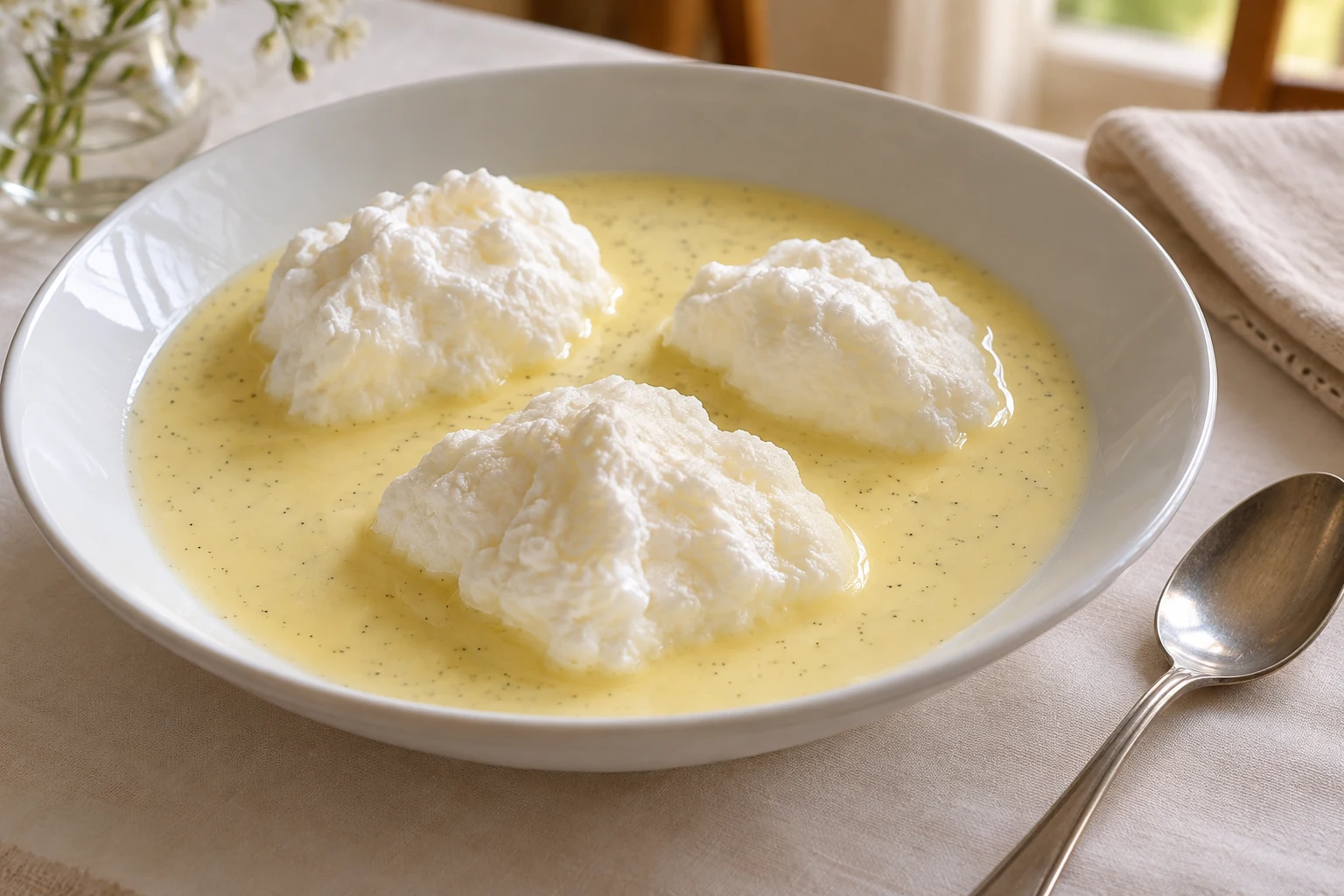
Madártej: A Soft Cloud Needs a Pourable Custard
Hungary's madártej pairs cooked egg-white dumplings with vanilla custard. Follow the two textures, the poaching liquid and the choice of thickener.
Polish cuisine Soup
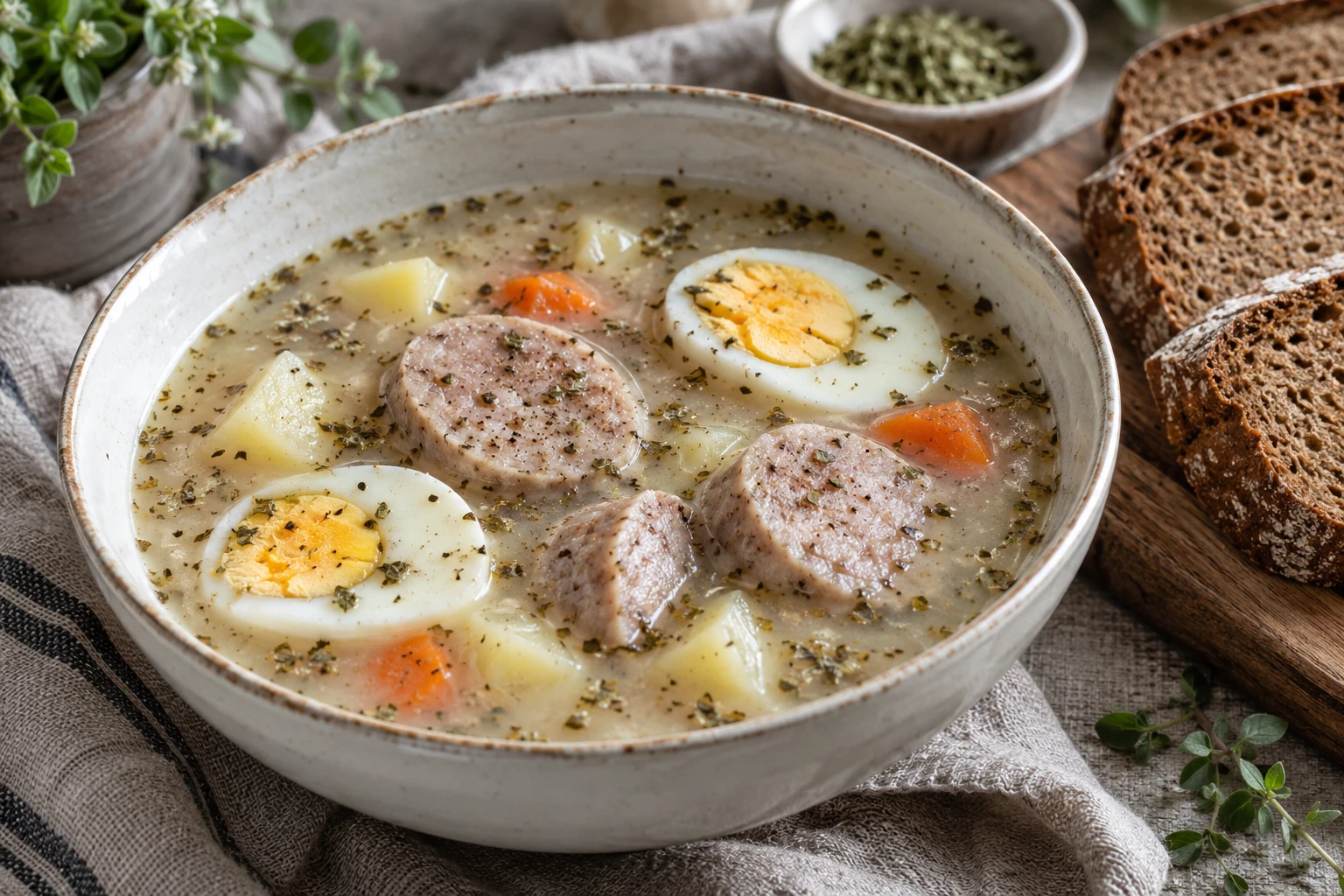
White Borscht: Read the Starter First
Polish white borscht brings sour starter, savory broth and substantial garnishes together. Its name varies, while the flour sediment and cream finish need deliberate handling.