
Stifado: The Small Onions That Shape a Greek Stew
Στιφάδο
Whole small onions give stifado its sweetness and texture. Explore beef, rabbit and mushroom versions, and see why the onion timing and sauce belong to the recipe you choose.
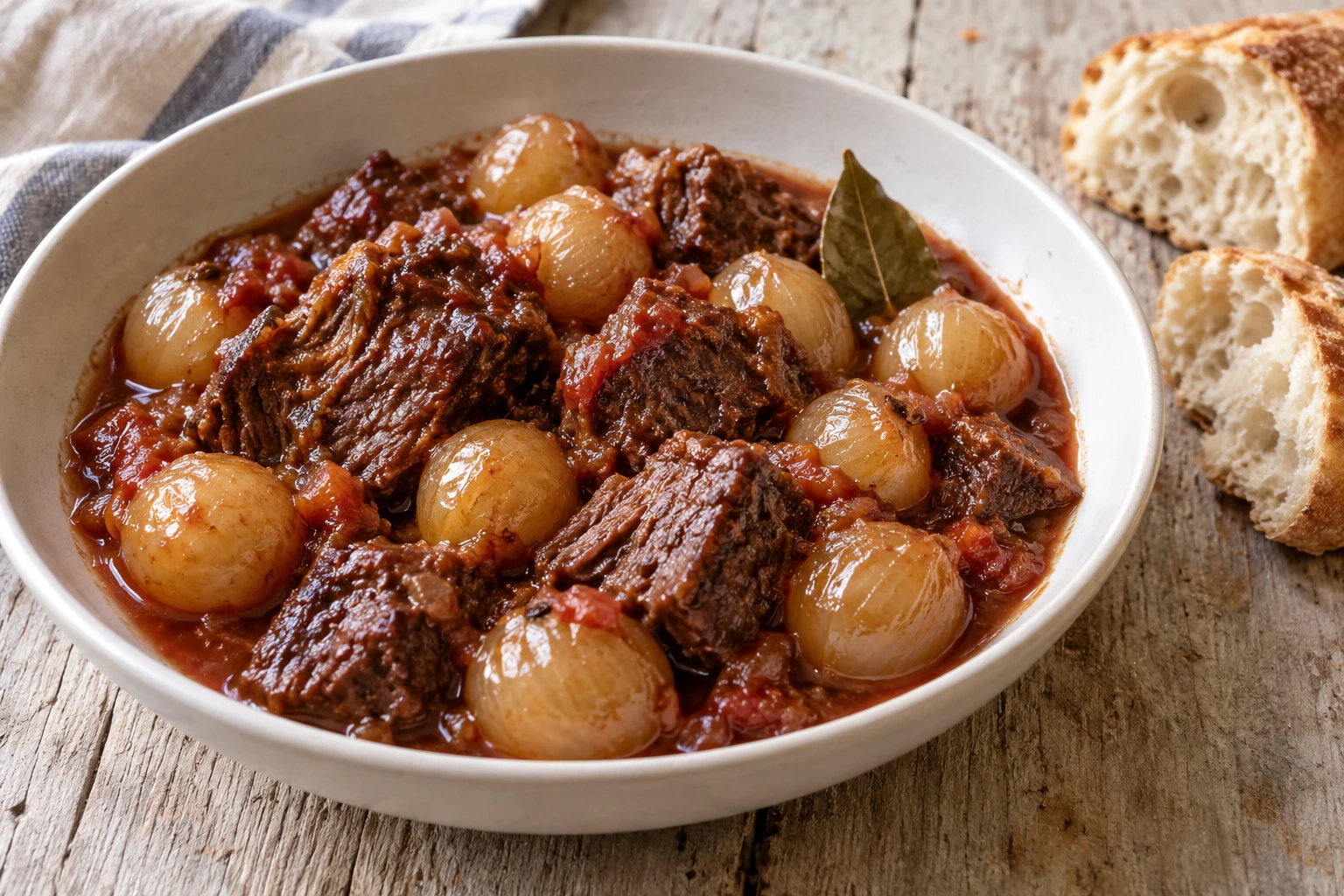
Look for the onions as well as the meat
Stifado is often introduced as a Greek beef stew, yet the small onions deserve equal attention. In the preparations gathered here, they remain recognisable bulbs in the bowl, softened through cooking rather than chopped into an invisible base. Their sweetness and soft bite help distinguish the dish from a generic pot of meat in tomato sauce.
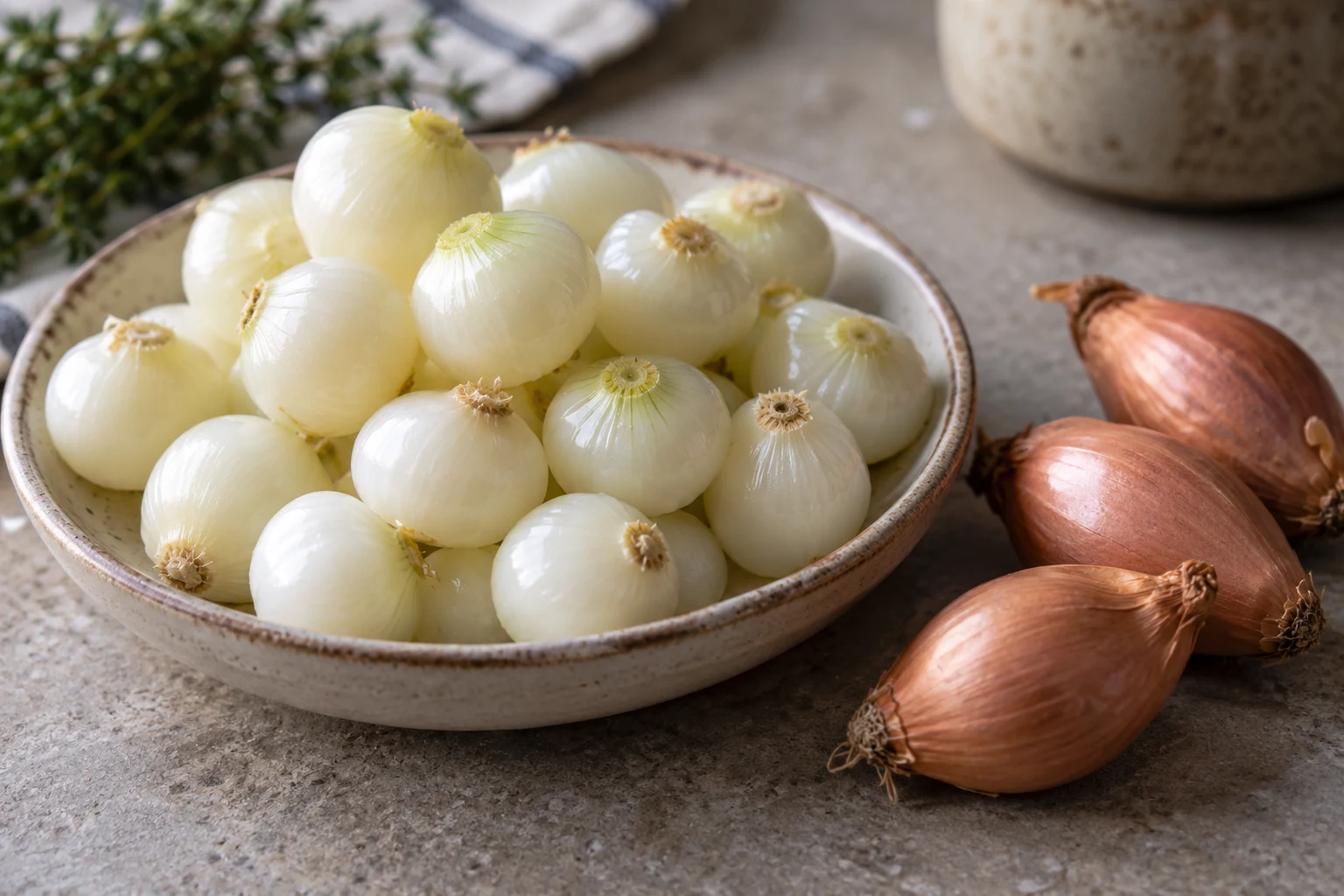
Fotini’s Real Greek Recipes account calls for pearl onions and treats shallots as a close alternative. Sliced larger onions can provide flavour, she notes, but lose the particular bite of whole small bulbs. That is a useful shopping distinction: changing the onion’s form affects how the stew eats, even when the broad flavour direction remains familiar.
For beef, choose a cut meant to become tender slowly
Eli K. Giannopoulos’s My Greek Dish preparation recommends stewing beef, particularly chuck, and a long, gentle cook. The intended result is meat tender enough to yield to a fork. The sauce and the onions need that time to work with the cut; a quick-cooking steak is a different starting point from the beef his method specifies.
The recipe browns the meat in batches, softens the small onions separately, then brings them together in a tomato-based sauce with wine, vinegar and aromatics. Those steps explain the shape of this version without making its precise seasoning universal. The ingredient list and the cooking order should travel together when you choose a recipe.
Two cooks protect the onion texture differently
The timing differs between these beef preparations. Follow the complete method you choose rather than swapping one stage in isolation.
Onions join the long simmer
Giannopoulos softens the onions after browning the meat, then combines both with the sauce for the covered simmer. His instructions also check the liquid so the pot does not dry out.
- Meat and onions finish together
- Liquid is monitored during cooking
Onions return later
Fotini cooks the small onions separately and sets them aside. They return after the beef has become tender, specifically to avoid overcooking them into mush.
- The bulbs get a shorter final simmer
- Their separate texture is part of the aim
The same idea reaches beyond beef
Ivy Liacopoulou’s Kopiaste account covers kouneli stifado, made with rabbit, as well as moschari stifado with veal or beef. She emphasises abundant onions, preferably baby shallots, and pairs wine and vinegar with warm spices. A menu that says stifado therefore leaves an important question open: which main ingredient is being stewed?
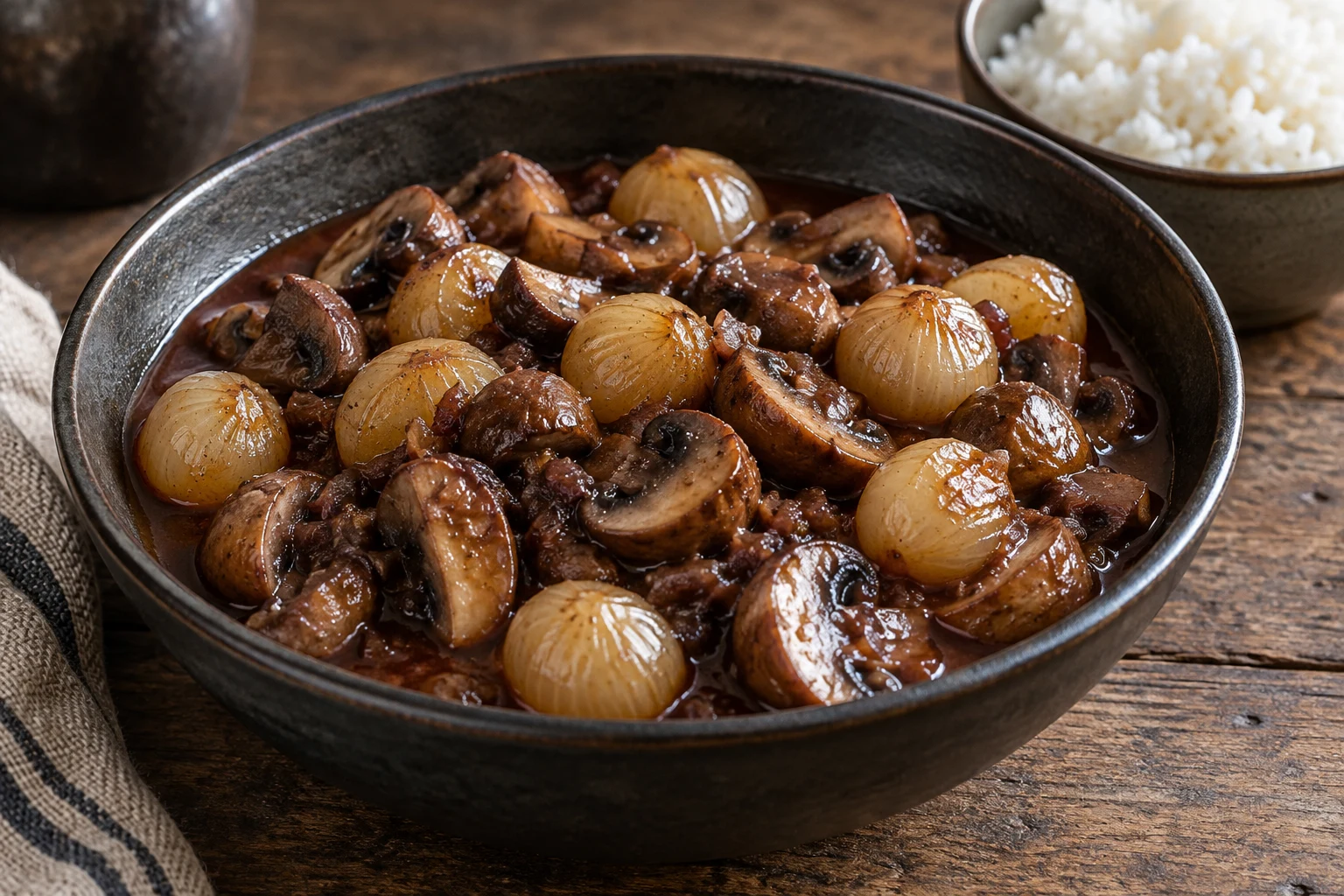
Diane Kochilas offers manitaria stifado with mushrooms. Her preparation uses fresh and dried mushrooms, whole small onions, wine and mushroom-soaking liquid. The onions cook slowly first; mushrooms then join them. This is a documented vegetable version with its own method, rather than a beef recipe from which the meat has simply been removed.
One ingredient, another kind of bowl
The small whole bulbs provide a visible thread between a shopping choice and a mushroom variation.
Read the sauce as a balance
The sauce brings together the onions’ sweetness, wine, acidity and aromatics in different proportions. Fotini uses a sweet or semi-sweet red wine with cinnamon, allspice and cloves. Liacopoulou’s ingredient list instead specifies dry red wine and includes petimezi, grape molasses, or honey. These are choices within named preparations, rather than evidence for one compulsory wine or seasoning.
If you are cooking it for the first time, select a complete method before buying the wine and spices. Replacing a sweet wine with a dry one while retaining every other decision changes the starting balance. The sources are most useful when treated as coherent recipes, with onion timing and the main ingredient considered alongside the sauce.
Make room for the sauce at the table
Liacopoulou records rice pilaf, mashed or fried potatoes, or Greek pasta such as orzo and hilopites as accompaniments. Kochilas pairs her mushroom version with rice or noodles. There is room to choose a side that suits the particular pot, rather than expecting one starch to identify the dish.
Keep the whole onions visible when serving, alongside the meat or mushrooms. Their presence tells the reader what the stew is trying to preserve: a soft ingredient with its own shape, sharing a sauce with another main component. The most useful question is how those parts were cooked together, followed by which accompaniment will carry the sauce.
Research notes
Four cooks, distinct methods
These original preparations supply evidence for onion forms and timing, slow-cooked beef, rabbit and mushroom variations, and different sauce choices. Giannopoulos’s linked Greek-language version verifies the native name without counting as an independent fifth kitchen.
- Real Greek Recipes — Fotini’s beef stifado Explains whole pearl onions and shallot substitutions, later onion addition and sweet-wine seasoning.
- My Greek Dish — Eli K. Giannopoulos’s beef stifado Documents stewing cuts, separately softened onions and a shared simmer with liquid checks.
- Kopiaste — Ivy Liacopoulou’s rabbit and beef stifado Cookbook author covers abundant shallots, rabbit variation, dry-wine sauce, Cypriot tomato distinction and accompaniments.
- Diane Kochilas — Mushroom stifado Chef and cookbook author’s original vegetable preparation retains whole onions and uses fresh and dried mushrooms.
- Tasty Cooking — Giannopoulos’s Greek-language version Linked original Greek text verifies Μοσχάρι Στιφάδο terminology; not counted as a separate independent cook.
Keep exploring
More stories for your table
Greek cuisine Meat and orzo
Youvetsi: The Orzo Has a Shorter Job
Greek cooks show why tender meat and moist orzo need different schedules in youvetsi, and how the final pasta stage changes the dish.
Greek cuisine Vegetable and rice dish
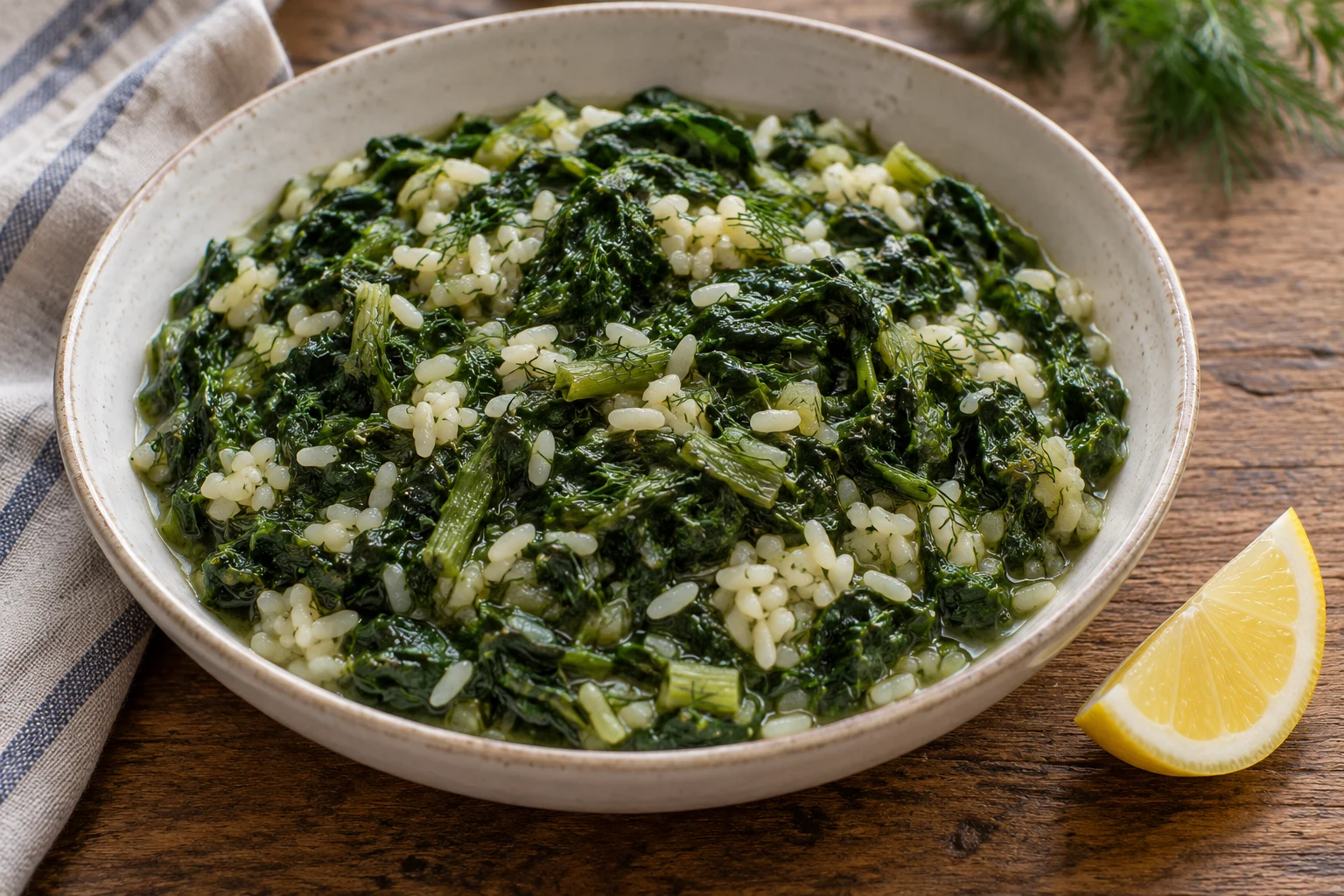
Spanakorizo: Let the Spinach Lead
Greek spinach rice depends on the water in its leaves, the choice of grain and a lemony finish. Compare the decisions behind its soft, vegetable-forward texture.
Portuguese cuisine Seafood stew
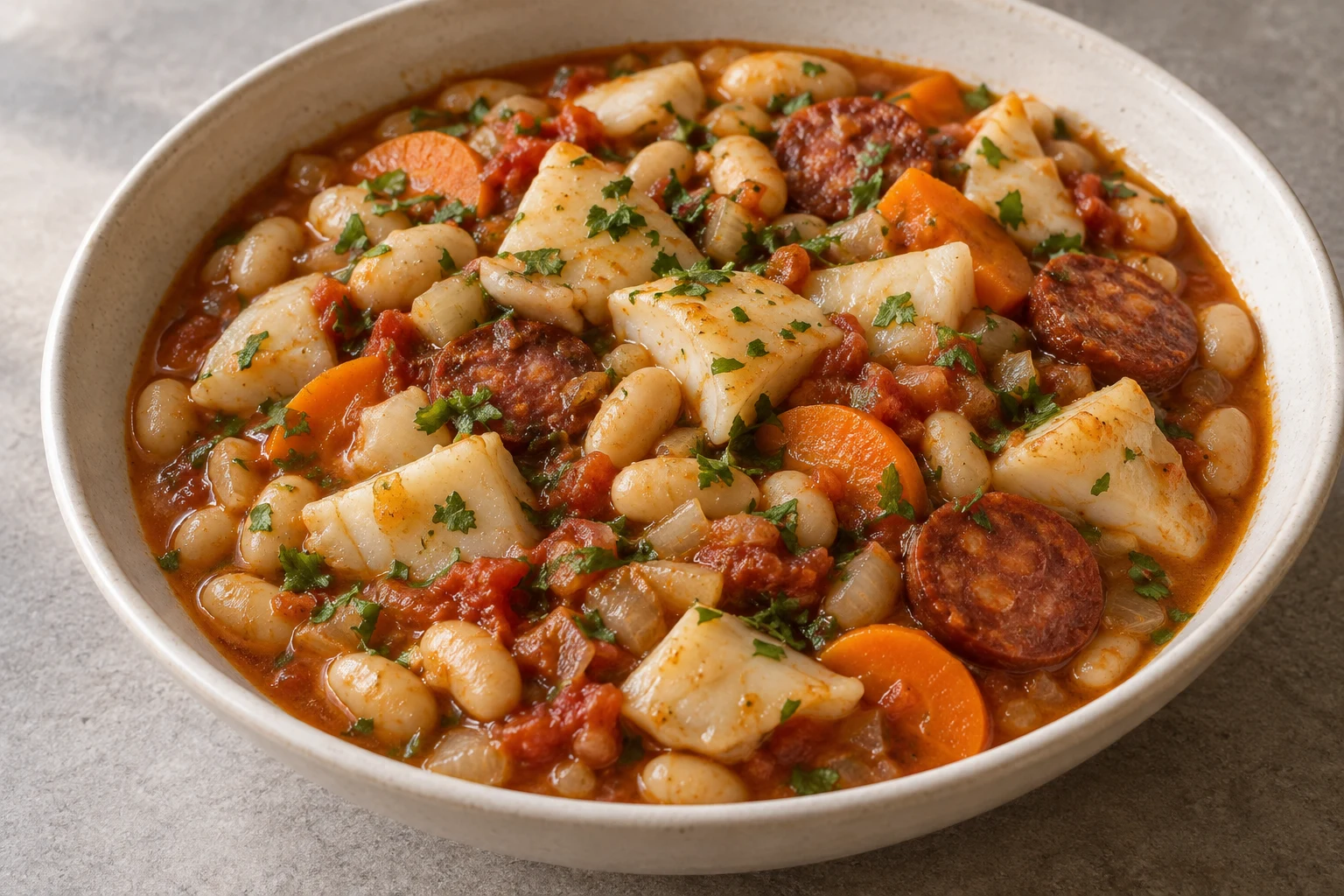
Cuttlefish Feijoada: Tender Seafood, Intact Beans
A Portuguese cuttlefish-and-bean stew explained through its cooking sequence: tenderize the seafood, add cooked beans, and use a little bean mash to bring the sauce together.