
Cheese Saganaki: The Slice Must Hold
Σαγανάκι
A thin golden crust and a warm cheese centre depend on the slice beneath them. Saganaki recipes show why cheese choice, coating and immediate service belong together.
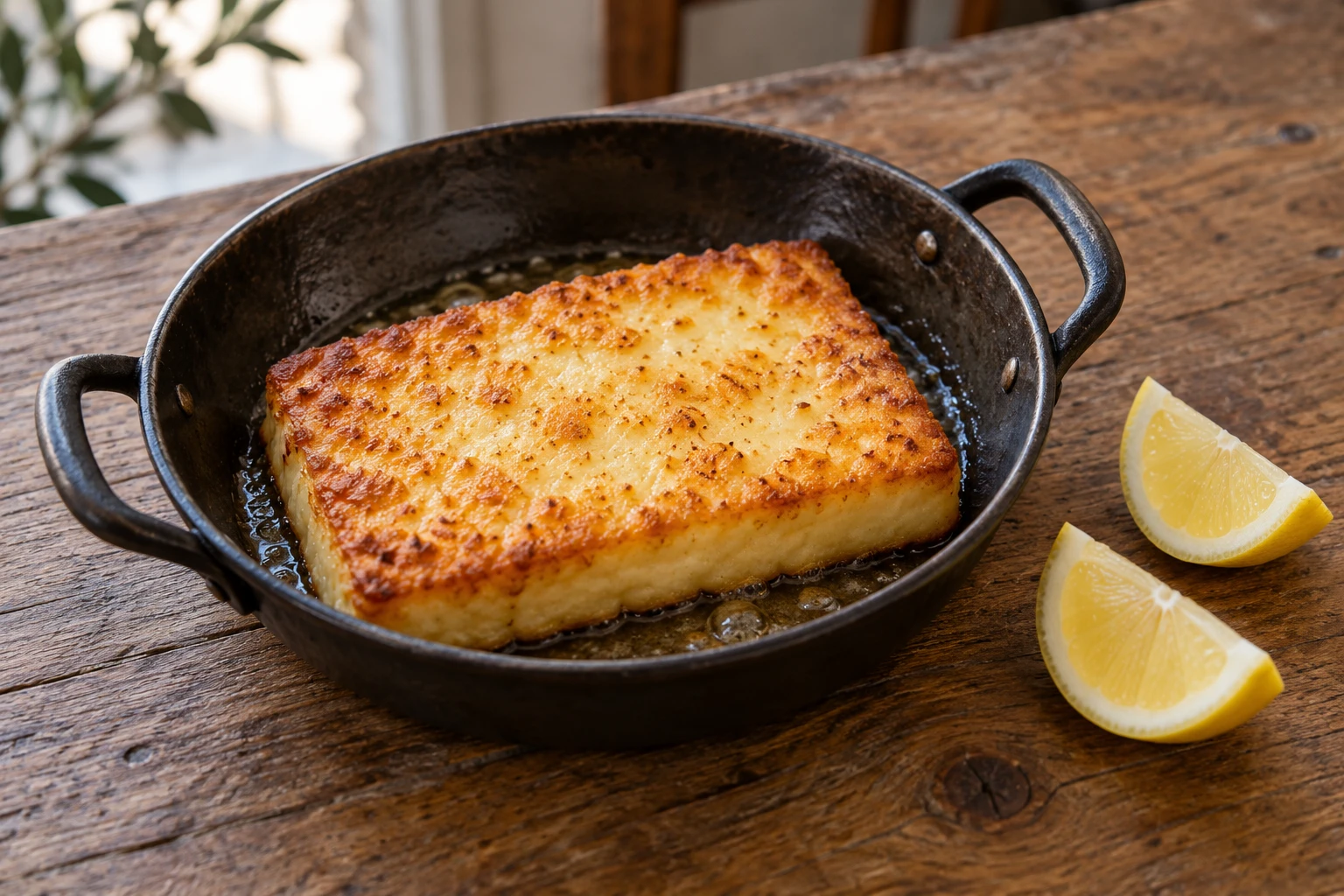
The cheese has two jobs
Cheese saganaki asks for a small balancing act. The slice needs to survive the pan long enough to acquire a golden surface, while its centre becomes pleasant to eat hot. If the cheese simply runs away, there is little intact crust to lift; if it stays cold and rigid inside, the attractive exterior tells only half the story.
The name is broader than this one appetizer. Diane Kochilas explains that saganaki refers to a small two-handled frying pan, and that other dishes share the name. Here the subject is the fried cheese version: a piece brought to the table with lemon, ready to divide and eat.
Start with the cheese named in the method
Eli Giannopoulos of My Greek Dish names graviera, kefalograviera and kefalotyri among the Greek choices for his recipe. His practical requirement is a cheese that can withstand frying while softening inside. Elena Paravantes of Olive Tomato likewise begins with kefalotyri and offers several alternatives.
Those lists are useful shopping directions, rather than a guarantee that every cheese will perform identically. Paravantes notes that halloumi and formaela soften differently from the other examples. If choosing a substitute, choose the texture you want as well as an available name. A firm slice that becomes warm and supple need not produce a long cheese pull.
Thickness also belongs to the chosen method. My Greek Dish specifies a substantial slice and warns about cutting it too thin. Marilena Leavitt's Mediterranean Dish recipe also specifies thick slices. Keep the recipe's dimensions alongside its cheese choice; a much thinner piece changes what the pan is trying to achieve.
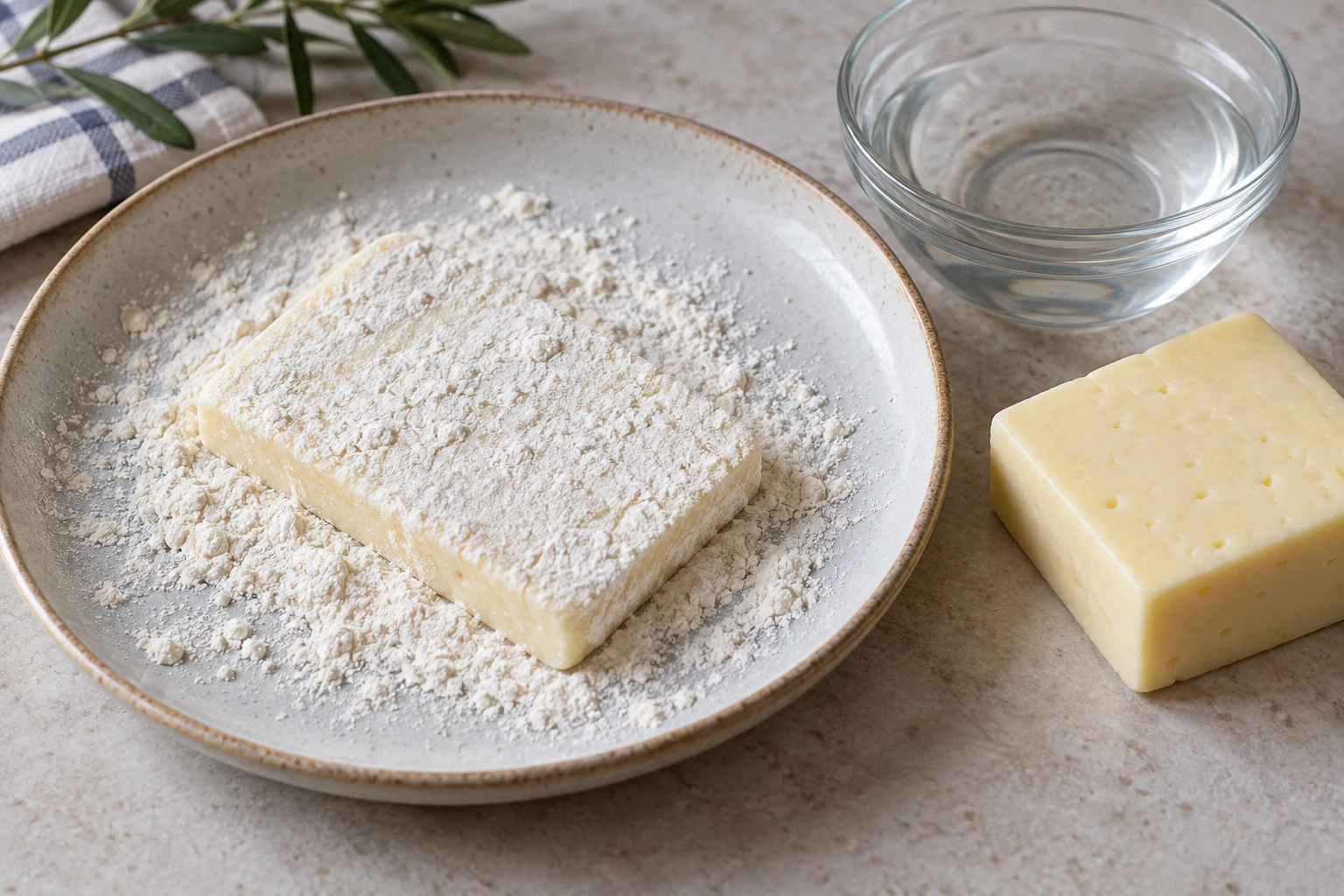
The coatings are not all the same
Water, then flour
My Greek Dish and Olive Tomato moisten the slice, coat it with flour and remove the excess. The intended result is a relatively light surface around the cheese.
Flour, egg, then flour again
Kochilas's recipe adds beaten egg between two flour coatings and fries in olive oil with butter. That is a separate method with an additional ingredient, rather than a missing step in the simpler versions.
Seasoned flour
Leavitt seasons the flour with black pepper, moistens the cheese and dries it slightly before dredging. Her instructions connect that preparation to medium-heat frying and watching the colour.
Watch the surface, not only the clock
The cited recipes pan-fry both sides. Olive Tomato calls for medium heat and a careful turn that keeps the crust attached. Leavitt also uses medium heat, then reduces it if browning becomes too fast. The decision is observable: the surface should become golden while the piece remains manageable.
That is why preparing the plate and lemon before frying is useful. It leaves the cook free to watch the cheese and turn it carefully instead of arranging the table during the brief pan stage. Use the full recipe for its amount of oil and complete instructions; borrowing another writer's coating while retaining the first recipe's details creates a new method.
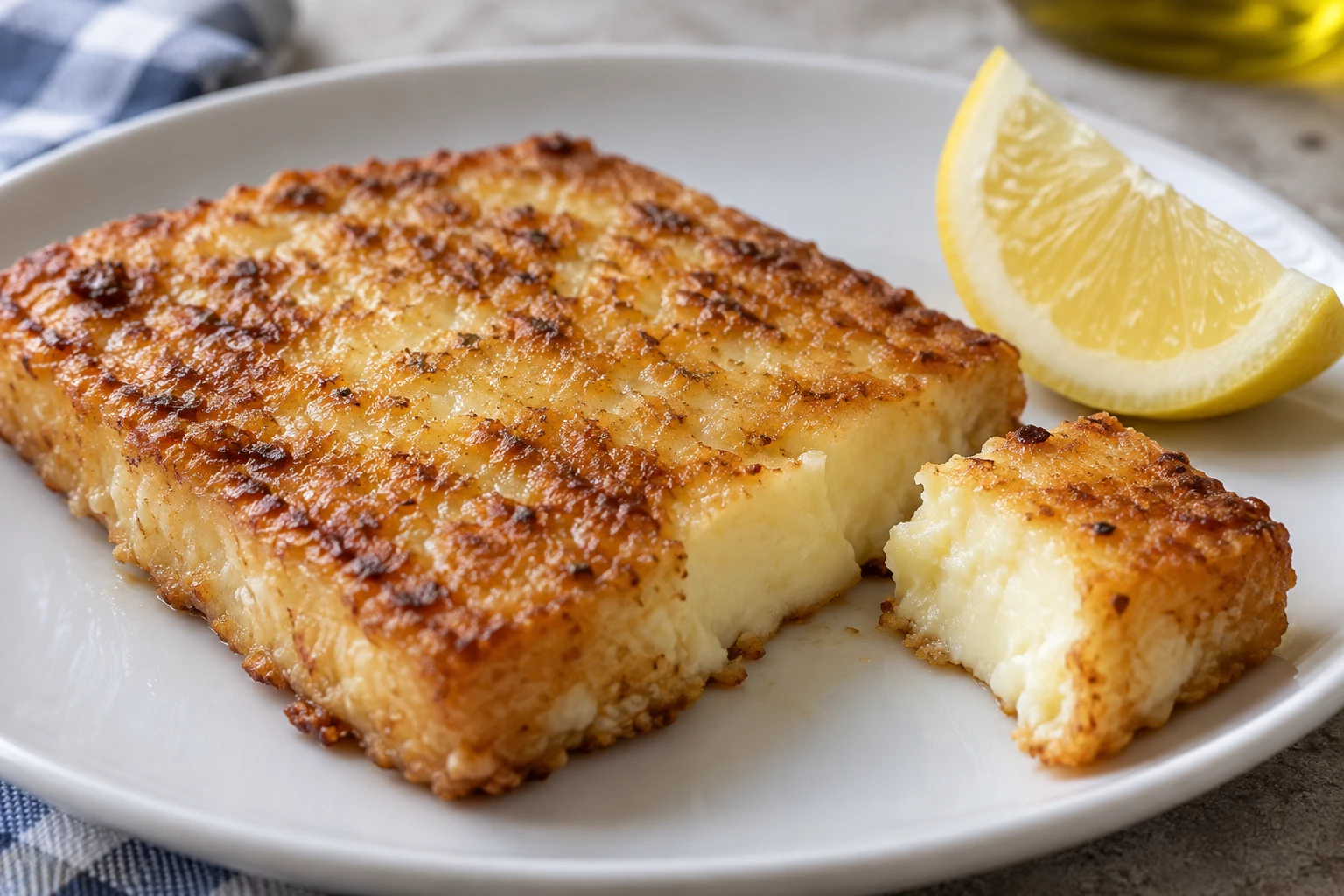
The serving moment finishes the work
Serve the cheese promptly. Paravantes explains that it firms as it cools, so the dish rewards a table already ready to share it. Lemon can be added at the end, with more offered alongside. The finish is simple enough that the contrast between crust and centre remains apparent.
The recipes also disagree gently about accompaniments. My Greek Dish suggests crusty bread among its options; Olive Tomato favours a simple salad. Treat those as serving choices. A tomato or green salad, bread or another small dish can sit alongside according to the meal you are making.
Dairy and wheat are present in the simple version pictured here. Kochilas's egg coating introduces egg too, so the shared name does not establish the same ingredients across recipes. Choose one complete preparation, keep its cheese and coating together, and bring it to the table while the texture you worked for is still there.
Research notes
Sources and full recipes
Four named recipe writers provide cheese choices, distinct coatings and practical serving guidance.
- My Greek Dish — Eli Giannopoulos's saganaki Cheese selection, substantial slice, simple flour dredge and bread option.
- Olive Tomato — Elena Paravantes's saganaki Cheese texture differences, careful turning, hot service and salad option.
- Diane Kochilas — Saganaki Pan-name context and a distinct flour, egg and flour coating.
- The Mediterranean Dish — Marilena Leavitt's saganaki Seasoned flour, medium heat and adjustment when browning runs too fast.
Keep exploring
More stories for your table
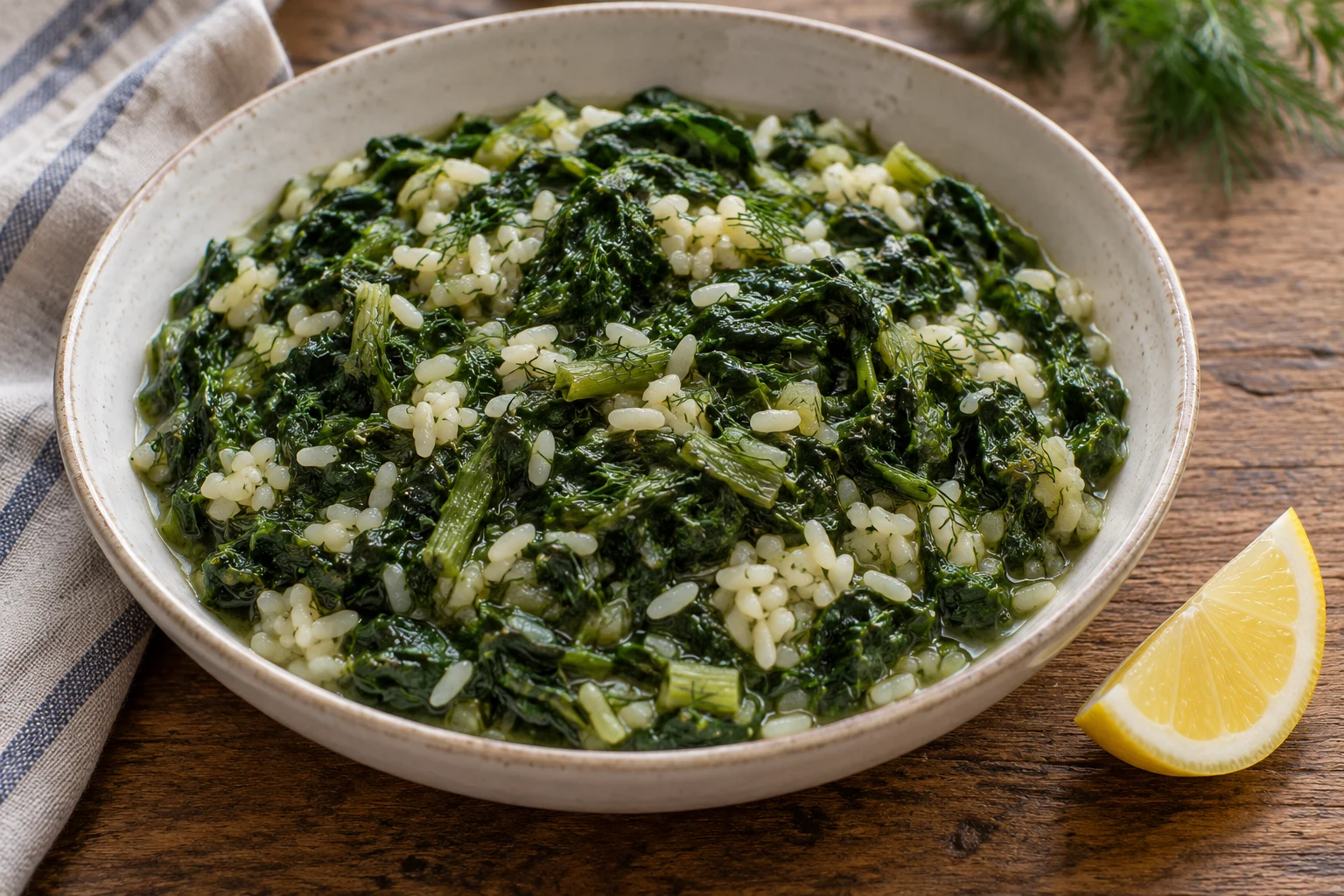
Greek cuisine Vegetable and rice dish
Spanakorizo: Let the Spinach Lead
Greek spinach rice depends on the water in its leaves, the choice of grain and a lemony finish. Compare the decisions behind its soft, vegetable-forward texture.
Greek cuisine Sausage guide
Loukaniko: Choose the Seasoning Before the Dish
Greek loukaniko can lean toward orange, leek or herbs. Named regional and producer examples show what to check before choosing a serving or cooking method.
Cuban cuisine Appetizer
Fish Croquetas: Choose the Binder First
Cuban fish croquetas can be bound with fish-stock paste, milk-based paste or potato. Read the filling before choosing the shape and coating.