
Pastourma Pie: A Crisp Base Beneath the Cheese
Παστουρμαδόπιτα
Pastourmadopita layers aromatic cured beef, melting cheese and tomato inside pastry. Its crisp base begins with the way you prepare the tomato.
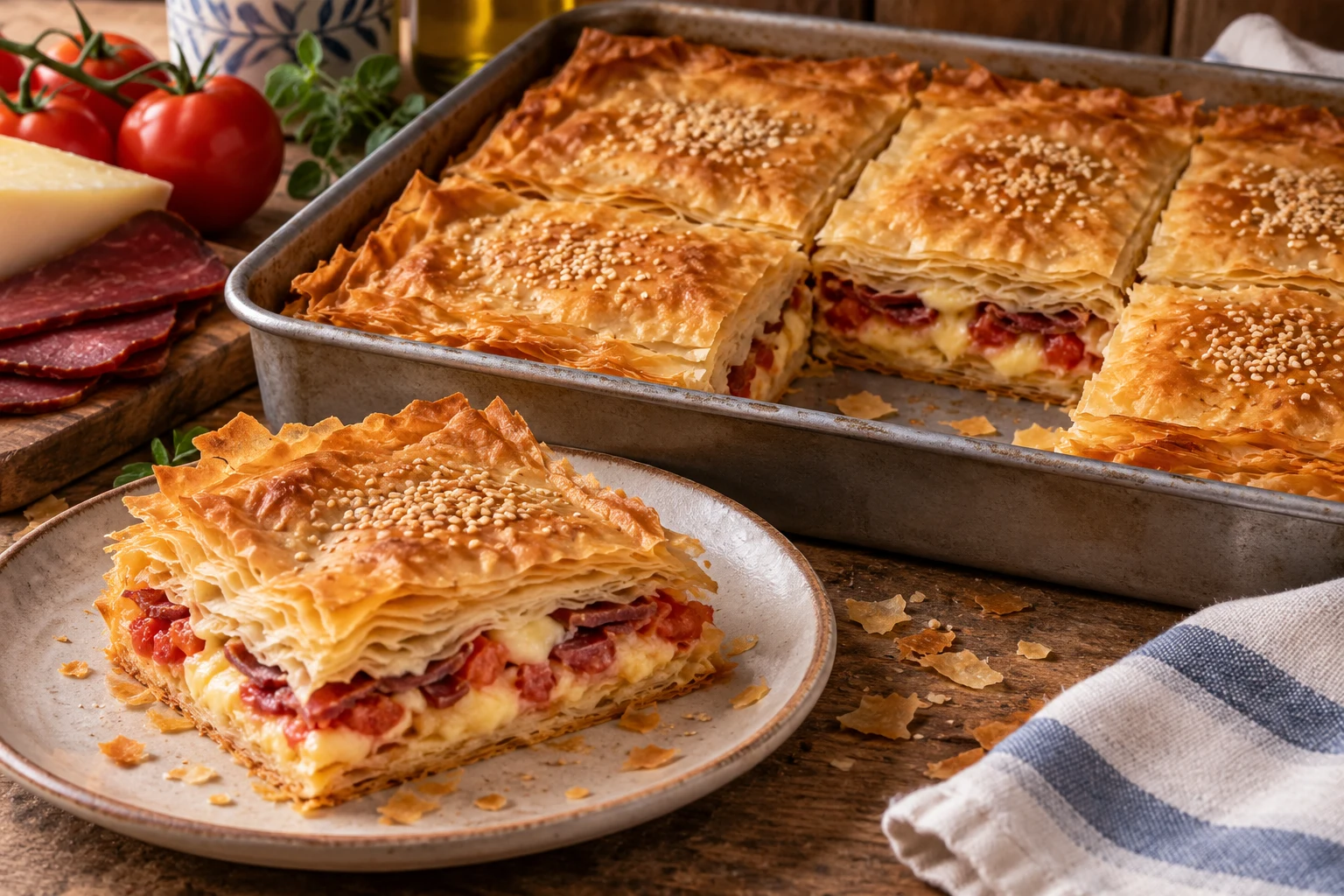
A small slice carries plenty of flavor
Pastourmadopita is a Greek savory pie built around pastourma, the strongly aromatic cured meat, with cheese and tomato inside pastry. Thin slices spread that flavor through the filling. Kasseri appears across the Greek recipes, sometimes joined by another cheese; it melts around the meat and tomato as the pie bakes.
The crisp shell gives the filling its contrast. Pastourma and cheese already bring intensity, while tomato contributes a softer, juicy note. Handling that juice before the pie goes into the oven helps preserve the pastry underneath.
Prepare the tomato before the filo
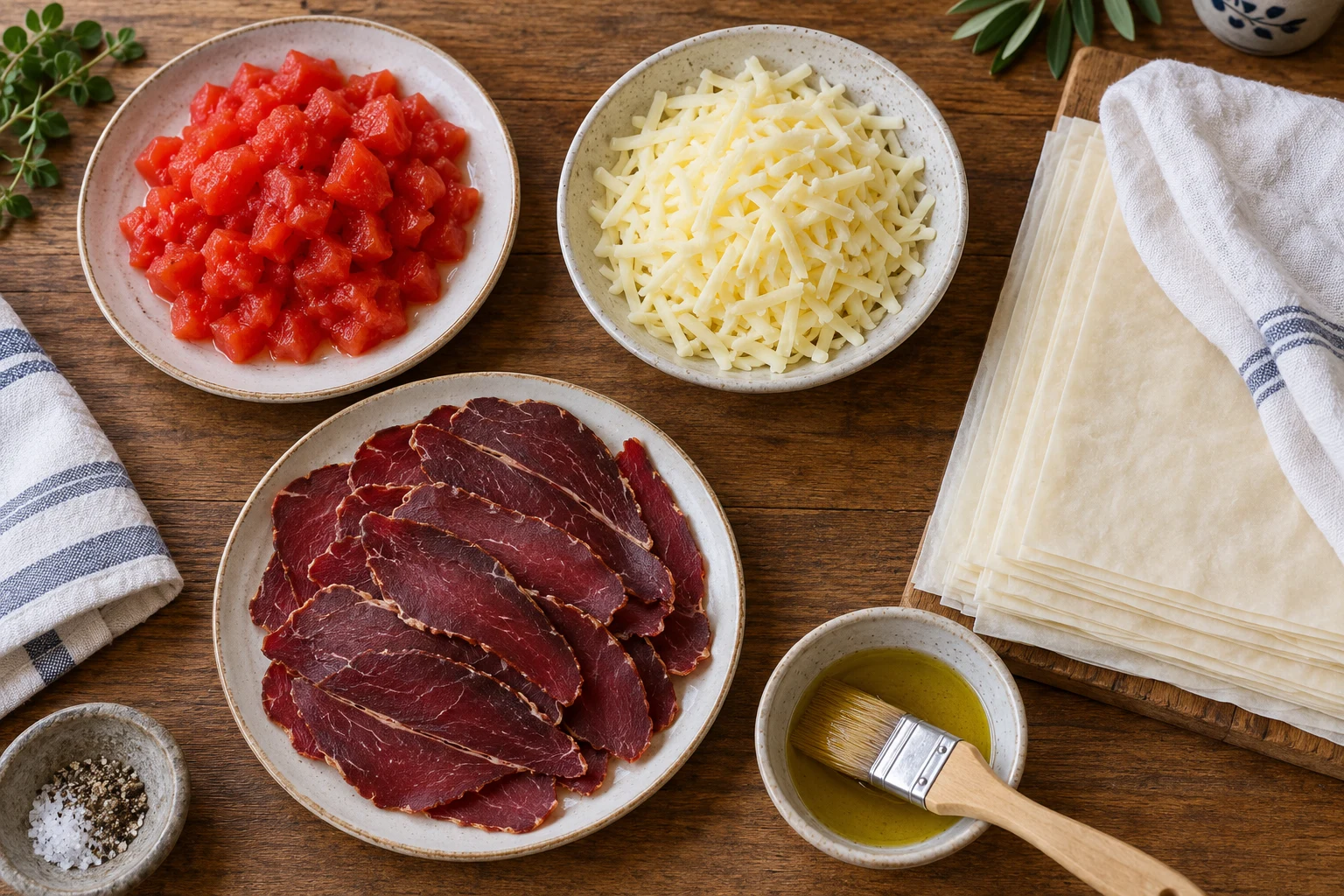
Cut out the wet seed cavities and drain the tomato flesh. Argiro Barbarigou goes further in her version, peeling it and drying the flesh thoroughly. Athinorama's recipe also specifies chopped, drained tomatoes. The practical target is tomato pieces that add flavor without carrying a bowlful of loose liquid into the pie.
Set the prepared tomato, cheese and meat within reach before starting the pastry. Keep unused filo covered while you work, and brush the layers with the fat specified by your recipe. A dry sheet becomes brittle before you can fold it neatly into the pan.
Choose a pastry method first
Thin or rustic filo
Filo recipes build several sheets around the filling, brushing between layers with oil or butter. Dimitris Skarmoutsos uses thin filo with olive oil in his Kanaki recipe; Argiro offers a rustic-sheet version. Sheet thickness changes how much pastry you need, so follow the count for the type you bought.
Puff pastry
iCookGreek offers puff pastry as an alternative to rustic filo. Two puff sheets enclose the filling differently from a stack of brushed filo. Follow that version's assembly and baking directions instead of treating every pastry sheet as equivalent.
Season the filling with restraint
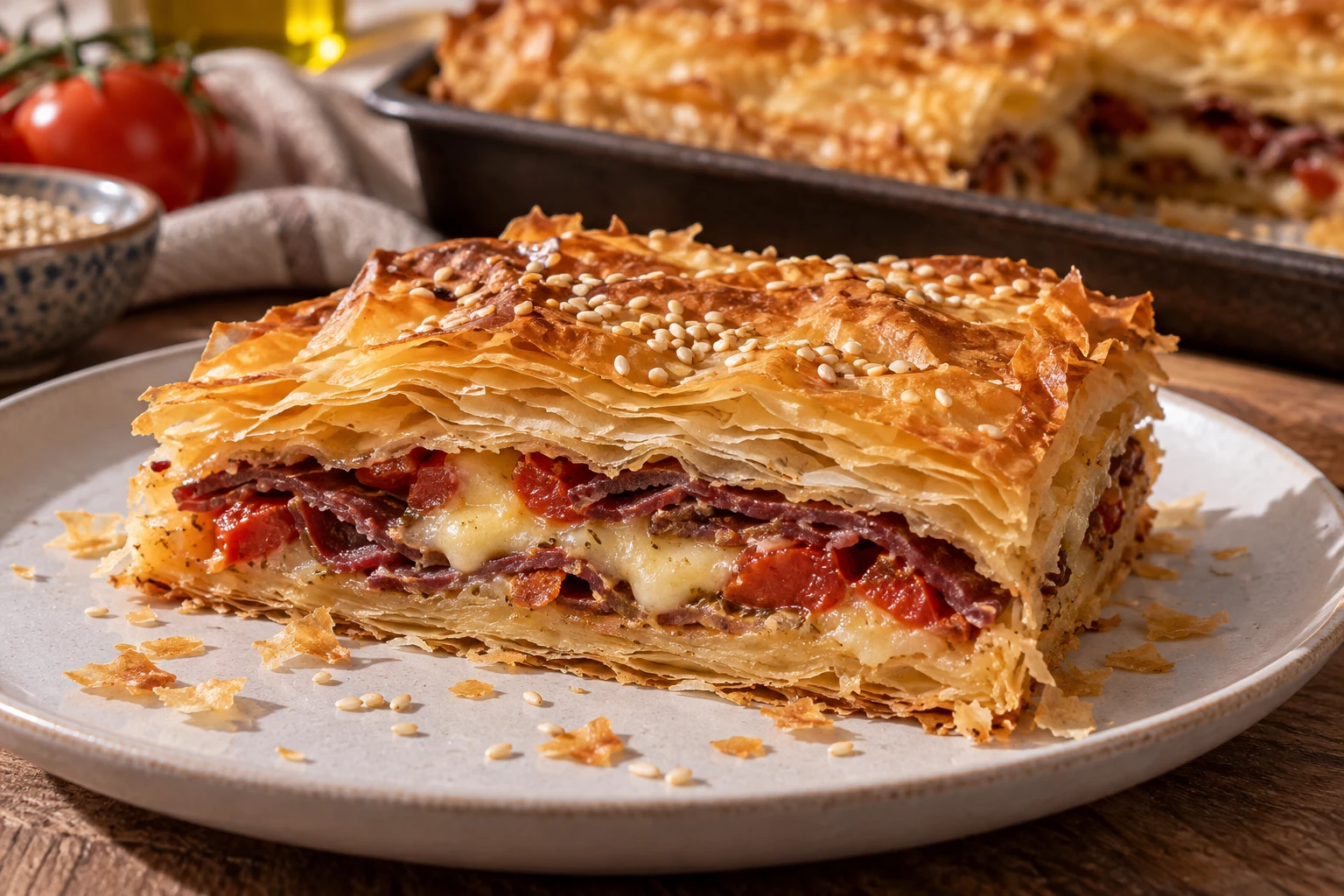
Pastourma's exterior spice coating can make its aroma especially forceful. Skarmoutsos removes it; Athinorama suggests removing it for a milder result. Decide how much of that flavor you want before adding more spices. Salt also needs care because both cured meat and cheese contribute their own.
Distribute the meat and tomato in a reasonably even layer, surrounded by cheese, and close the pastry edges. Extra filling concentrated in one corner makes a thick wet pocket. The sources vary in oregano, cumin, seeds and surface washes, so those additions belong to particular versions rather than a mandatory checklist.
Golden above and below
Use a well-preheated oven and the baking position recommended for your chosen pastry. The published methods often use 180°C, but their times differ with the pan, sheets and filling. Check for a thoroughly baked underside as well as a golden top; surface color alone cannot tell you that the base is ready.
Let the hot pie stand briefly before cutting and lifting portions. The cheese is easier to keep inside once it has settled slightly. A plain seasonal salad gives a fresh accompaniment to the salty, rich filling, and a modest square lets the cured meat's aroma stay enjoyable.
Research notes
Greek cooking sources
Four independent recipes show the shared filling and different choices of pastry, fat, tomato preparation and seasoning.
- Dimitris Skarmoutsos: pastourma pie, Kanaki The chef's original thin-filo recipe with kasseri, graviera, oregano and olive oil.
- Argiro Barbarigou: pastourmadopita Greek recipe and detailed advice for removing excess tomato moisture.
- iCookGreek: pastourmadopita Original editorial recipe offering rustic filo or puff pastry, with kasseri and tomato.
- Athinorama Tasty: pastourmadopita Thin-filo method with butter, drained chopped tomatoes and optional coating removal.
Keep exploring
More stories for your table
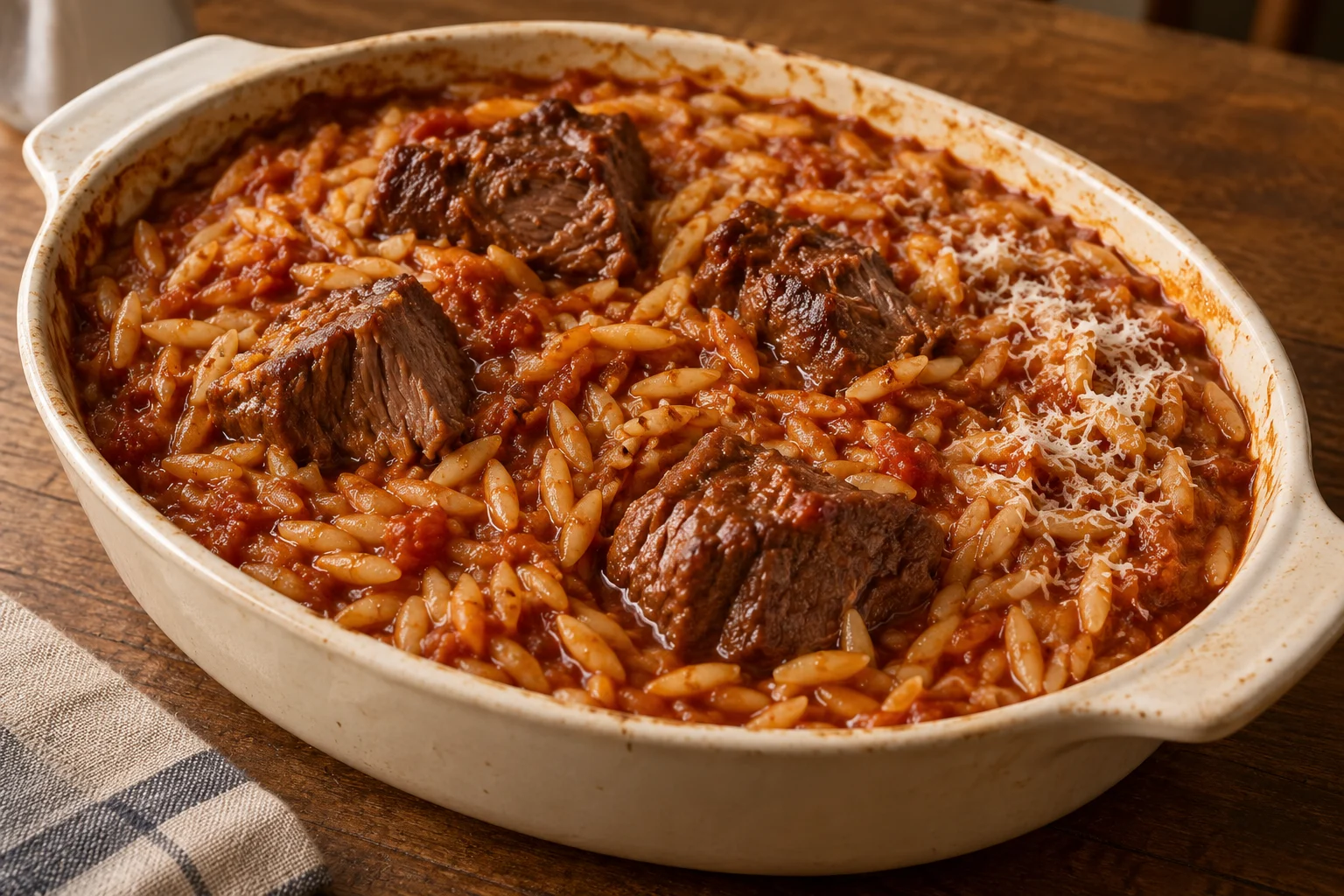
Greek cuisine Meat and orzo
Youvetsi: The Orzo Has a Shorter Job
Greek cooks show why tender meat and moist orzo need different schedules in youvetsi, and how the final pasta stage changes the dish.
Greek cuisine Onion stew
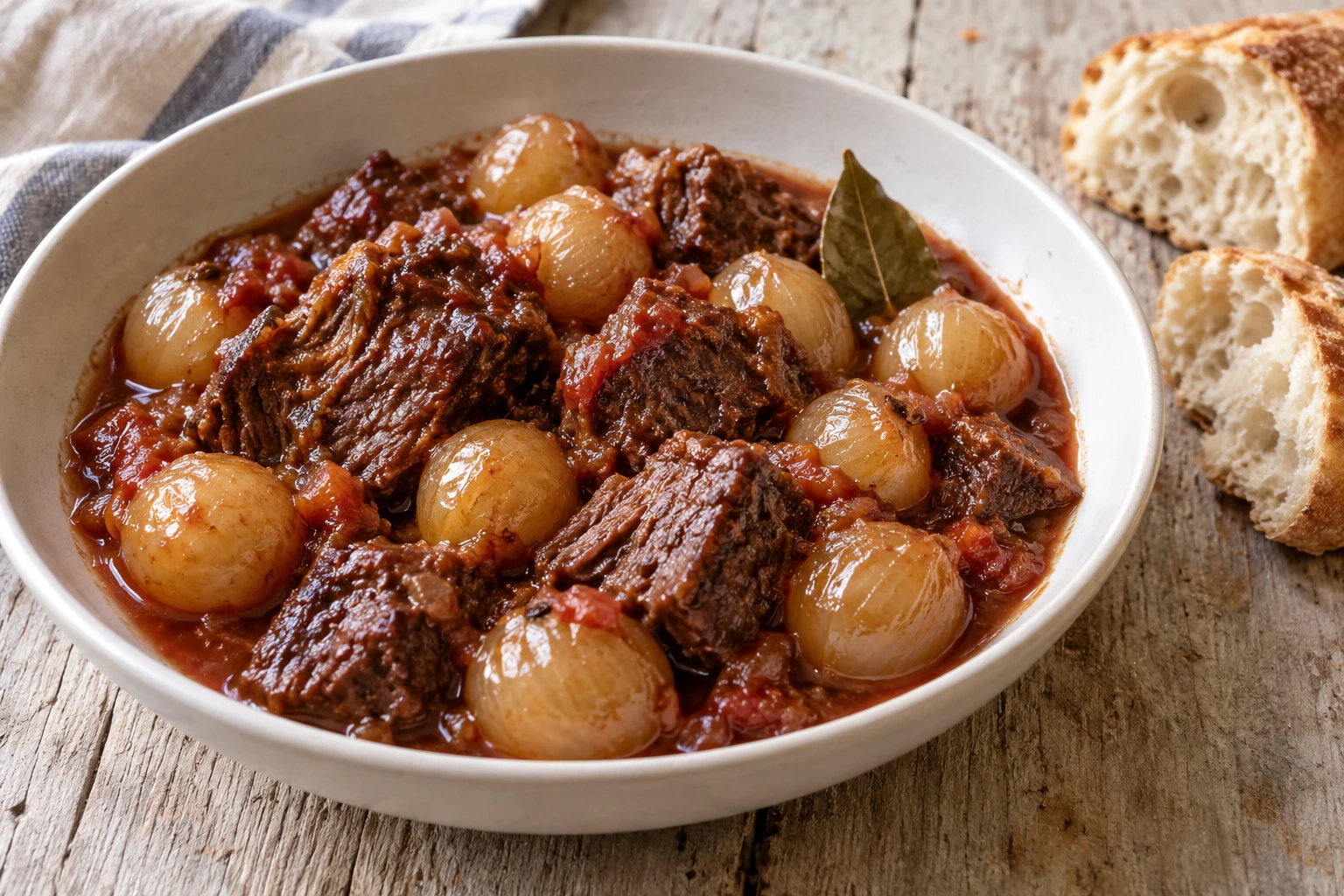
Stifado: The Small Onions That Shape a Greek Stew
Whole small onions give stifado its sweetness and texture. Explore beef, rabbit and mushroom versions, and see why the onion timing and sauce belong to the recipe you choose.
Russian cuisine Savory pie
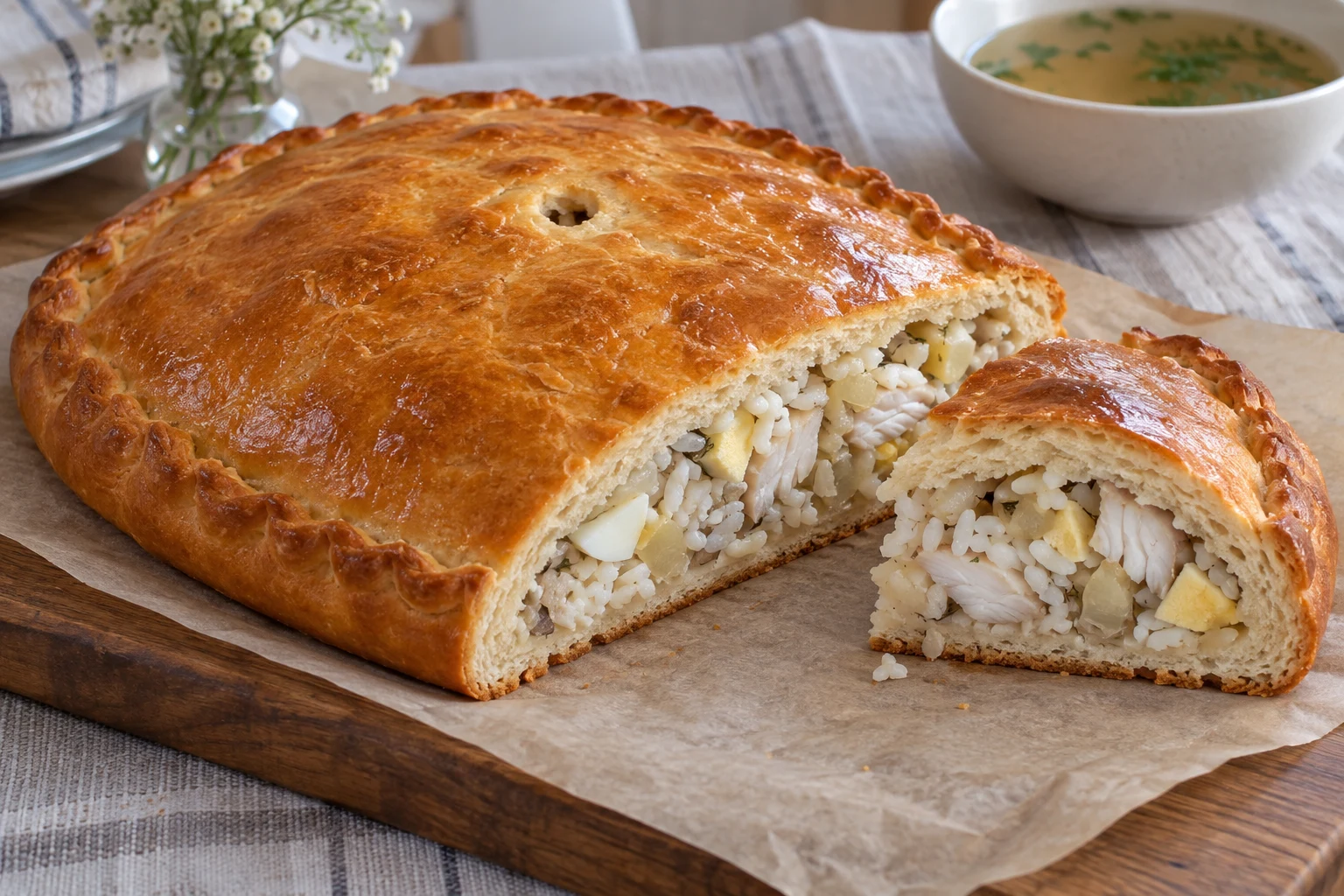
Fish Pirog: Decide What Goes Under the Lid
A closed yeast-dough fish pirog can begin with fillet, poached fish or a tin. Compare its filling, rice and steam vent before choosing a recipe.