
Paidakia: Choose the Chop Before the Marinade
Παϊδάκια αρνίσια
Olive oil, herbs, lemon, and browned lamb make an inviting platter. Choosing similar chops and controlling the heat do more for an even result than collecting every marinade ingredient.
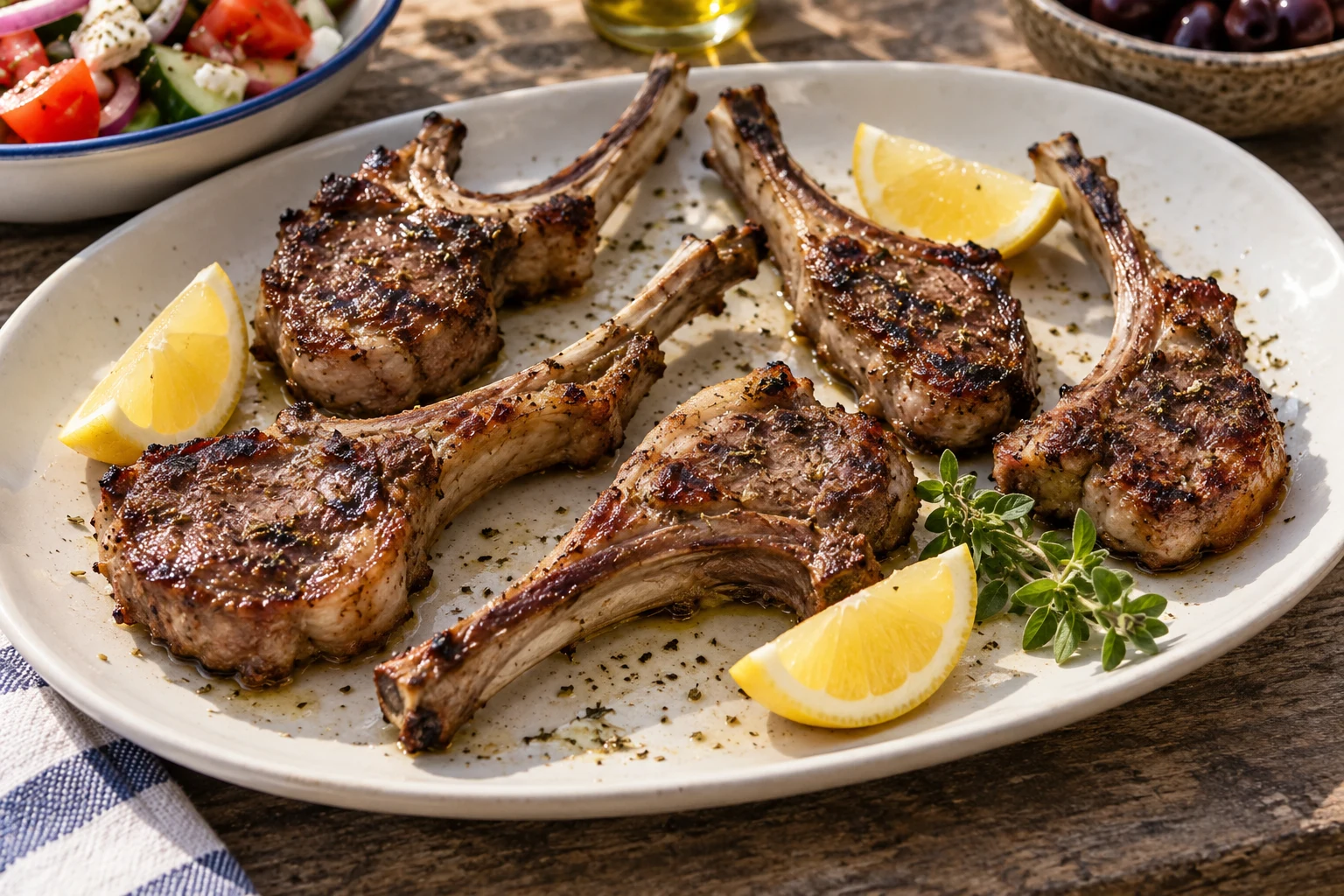
Start at the butcher's counter
Paidakia arnisia refers here to Greek-style lamb chops. The familiar plate of small curved bones usually starts with individual rib chops from a rack. A loin chop is a different shape: meat sits around a small T-shaped bone, often in a thicker portion.
Jenny Skrapaliori-Graves at The Greek Foodie emphasizes thin individual ribs. Mia Kouppa also prefers rib chops, while Diane Kochilas's grilled recipe starts with substantial loin chops. These are documented choices, rather than reasons to give every piece the same number of minutes.
Ask for a consistent cut and thickness within the batch. A thin rib beside a thick loin chop creates two cooking tasks on one grate. If substituting, choose a method suited to the piece you bought instead of transferring a thin-chop schedule unchanged.
Seasoning can take more than one route
Wine and woody herbs
Kochilas coats loin chops with garlic and herbs, then marinates them with red wine and olive oil in the refrigerator. Lemon is offered at serving. This is a distinct route, not a missing ingredient in every lemon marinade.
A marinade, then a clean dressing
Mia Kouppa uses garlic, thyme, mustard, oil, and lemon before cooking, and a separate oregano ladolemono afterward. The sauce for cooked meat is prepared separately from the liquid that touched raw lamb.
An oregano base with herb basting
Maria Koutsogiannis begins with oil, oregano, salt, and pepper, then uses a separate oil-and-lemon mixture while cooking in a skillet. Her fresh herb bundle is one technique for applying it, rather than an essential tool.
Keep flavor and surface moisture in balance
Lemon can appear in the marinade, in a finishing dressing, or as wedges at the table. Mustard appears in some recipes, but the wine-based and simpler oregano routes show that it is not required to recognize the dish.
Marinate in the refrigerator and keep raw-meat liquid away from the serving bowl. Make a fresh finishing dressing in a clean vessel. If using a brush or herb bundle during cooking, reserve a separate clean portion of sauce for the finished platter.
Before the chops reach the heat, let excess marinade drain away. A thin coating can carry seasoning; a large amount of dripping oil is harder to manage over charcoal. Trim excessive loose edge fat if necessary, while keeping enough attached fat for the character of the chop.
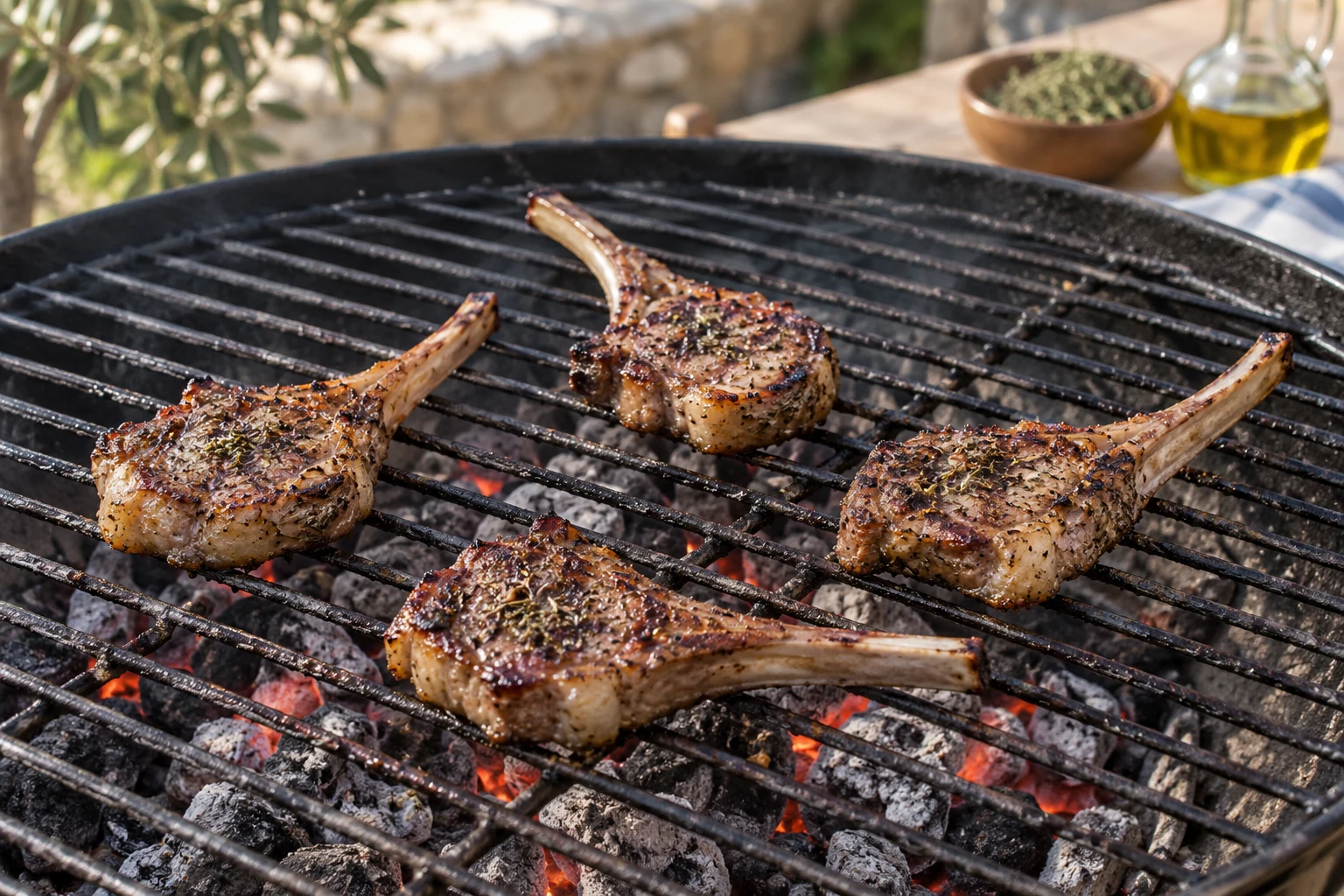
Brown the outside while watching the center
A hot, prepared cooking surface helps the chops brown. Give each piece enough space to turn it without dragging its neighbor. In a skillet, cooking in batches is more useful than squeezing all the chops into a pan that loses heat.
Fat dripping onto charcoal can produce flare-ups. Keep a cooler area available so a chop can move away from direct flame while its center finishes. A browned crust and rendered edges are inviting; a blackened surface does not prove that the middle is cooked.
The writers differ on their preferred doneness. Skrapaliori-Graves favors fully cooked thin chops; Mia Kouppa describes a pinker center. For this guide, use the official minimum for whole lamb chops: reach 145°F/63°C before removing them from the heat, then rest at least three minutes. Do not assume a particular rise during resting will rescue a lower reading.
A rest gives you time to finish the table
Transfer cooked chops to a clean platter and let them rest. Never return them to the plate that held the raw meat. During the pause, whisk the reserved oil-and-lemon dressing and bring out the accompaniments.
Ladolemono adds a bright finish to rich lamb. Its proportions differ across recipes, so choose one sauce rather than treating a single oil-to-lemon ratio as a rule. Pour a little over the rested chops or let diners spoon it on.
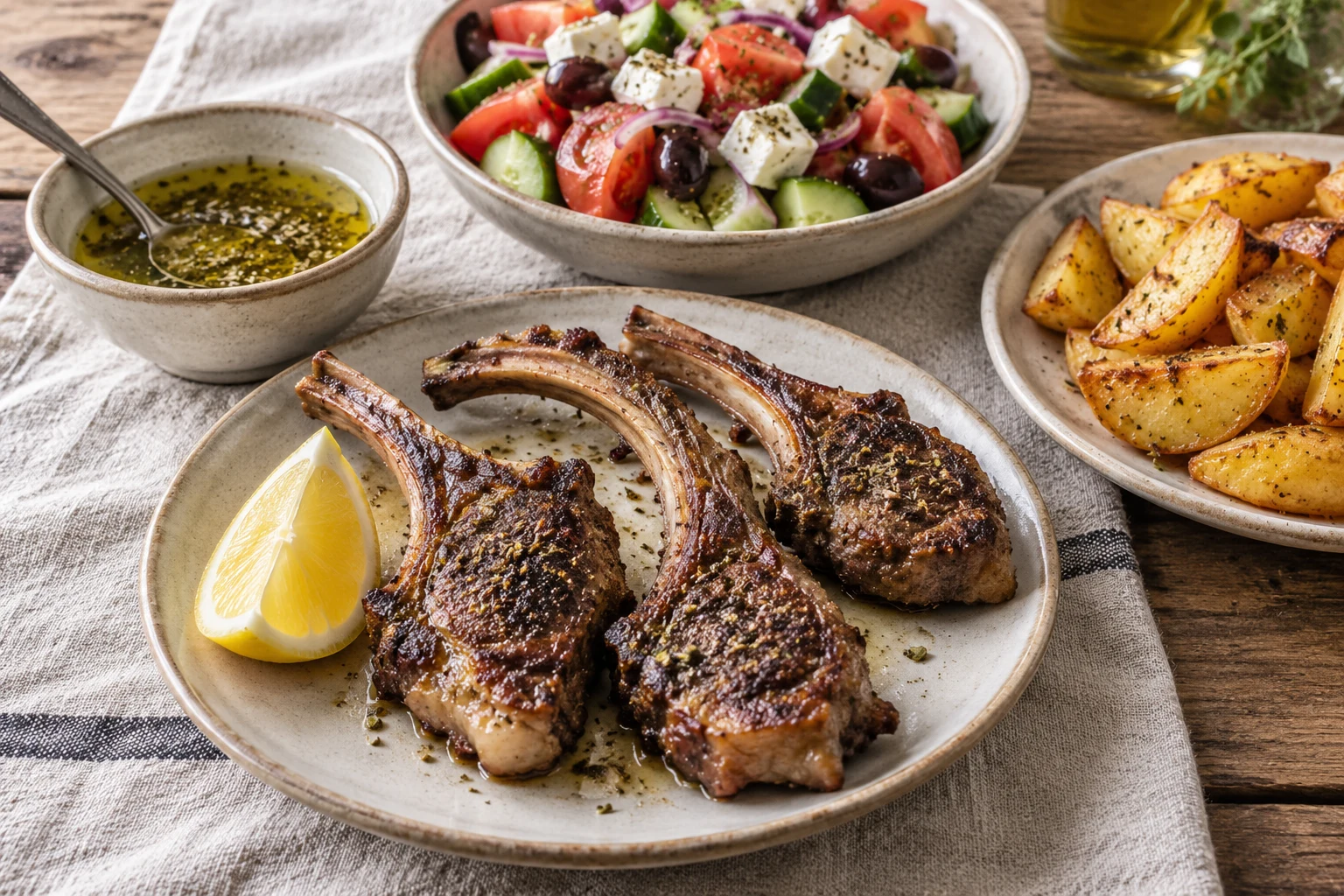
Leave room for the lamb
A tomato-and-cucumber salad, cooked greens, potatoes, or bread can make the platter a meal. Yogurt-based dips are another option, with dairy clearly identified; bread brings wheat, and mustard marinades need their own ingredient check.
Keep the lamb, dressing, and sides easy to reach rather than burying the chops under everything. Lemon at the table lets each person adjust a bite without soaking the browned surface in advance.
Refrigerate leftovers promptly in shallow containers within two hours, or within one hour above 90°F/32°C. Reheat leftovers to 165°F/74°C. Thin chops may lose some tenderness on reheating, which is a good reason to cook a batch sized for the meal.
Research notes
Original recipes and cooking guidance
These cooks document different cuts and seasoning choices. Use one complete recipe for measured quantities, and the official temperature guidance for the cooking endpoint.
- The Greek Foodie: Jenny Skrapaliori-Graves's paidakia Original thin-rib-chop method, draining excess marinade, grill management, and accompaniments.
- Mia Kouppa: Greek grilled lamb chops Original rib-chop recipe with a refrigerated marinade, a separate ladolemono, and a resting stage.
- Diane Kochilas: Classic Greek grilled lamb chops Chef's loin-chop version with a wine, olive oil, garlic, and herb marinade.
- Food By Maria: Maria Koutsogiannis's lamb chops Original skillet preparation with an oregano marinade and separately prepared oil-and-lemon herb basting.
- FoodSafety.gov: Safe minimum internal temperatures Official minimum of 145°F/63°C plus a three-minute rest for whole lamb chops; 165°F/74°C for leftovers.
- FoodSafety.gov: Four steps to food safety Official guidance on refrigeration, separate raw and cooked utensils, and thermometer placement.
Keep exploring
More stories for your table
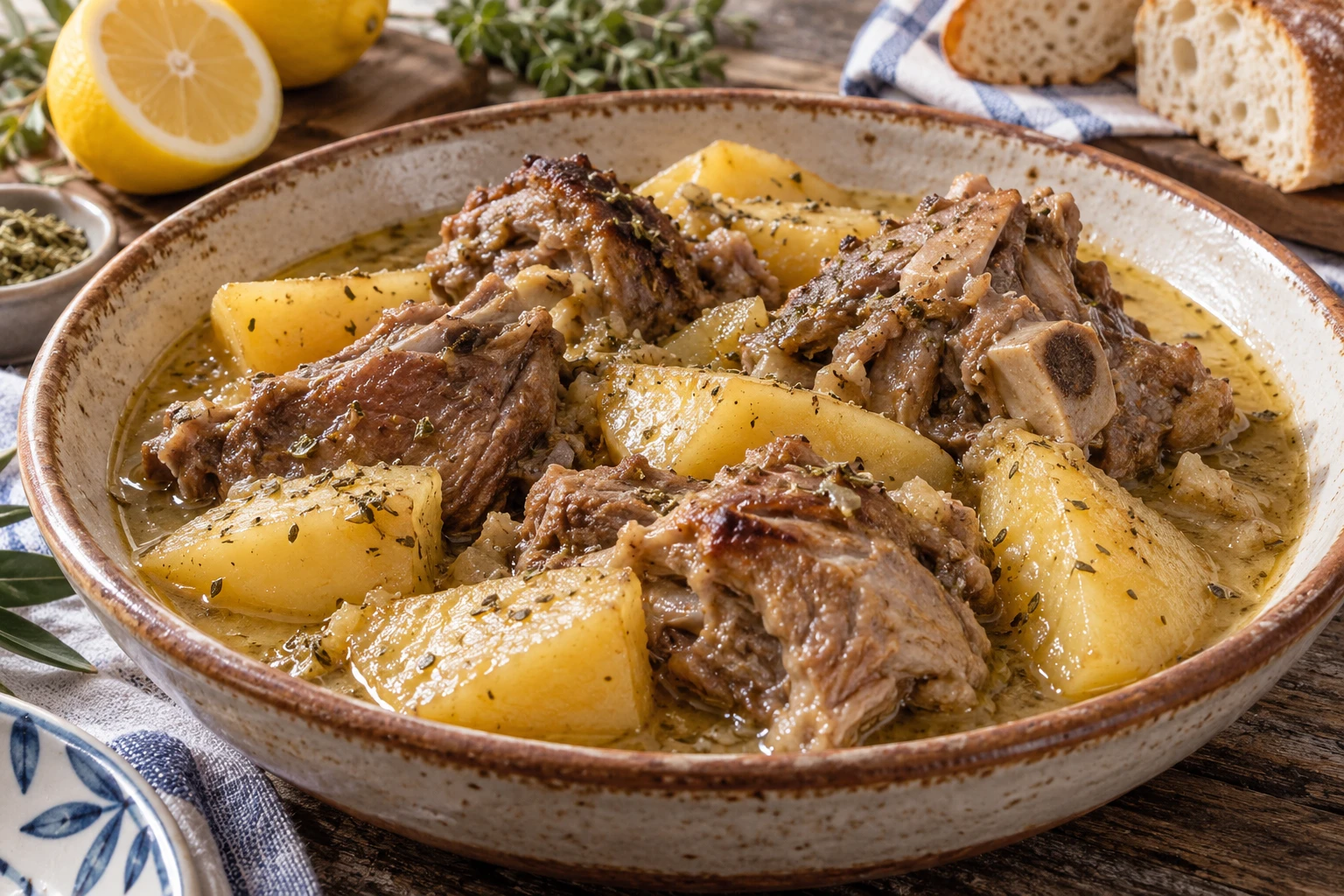
Greek cuisine Lamb
Lamb Lemonato: When the Lemon Enters
Greek lamb with lemon can finish in the pot, cook with potatoes, or take a separate herb sauce. Comparing four cooks reveals why the sequence matters.
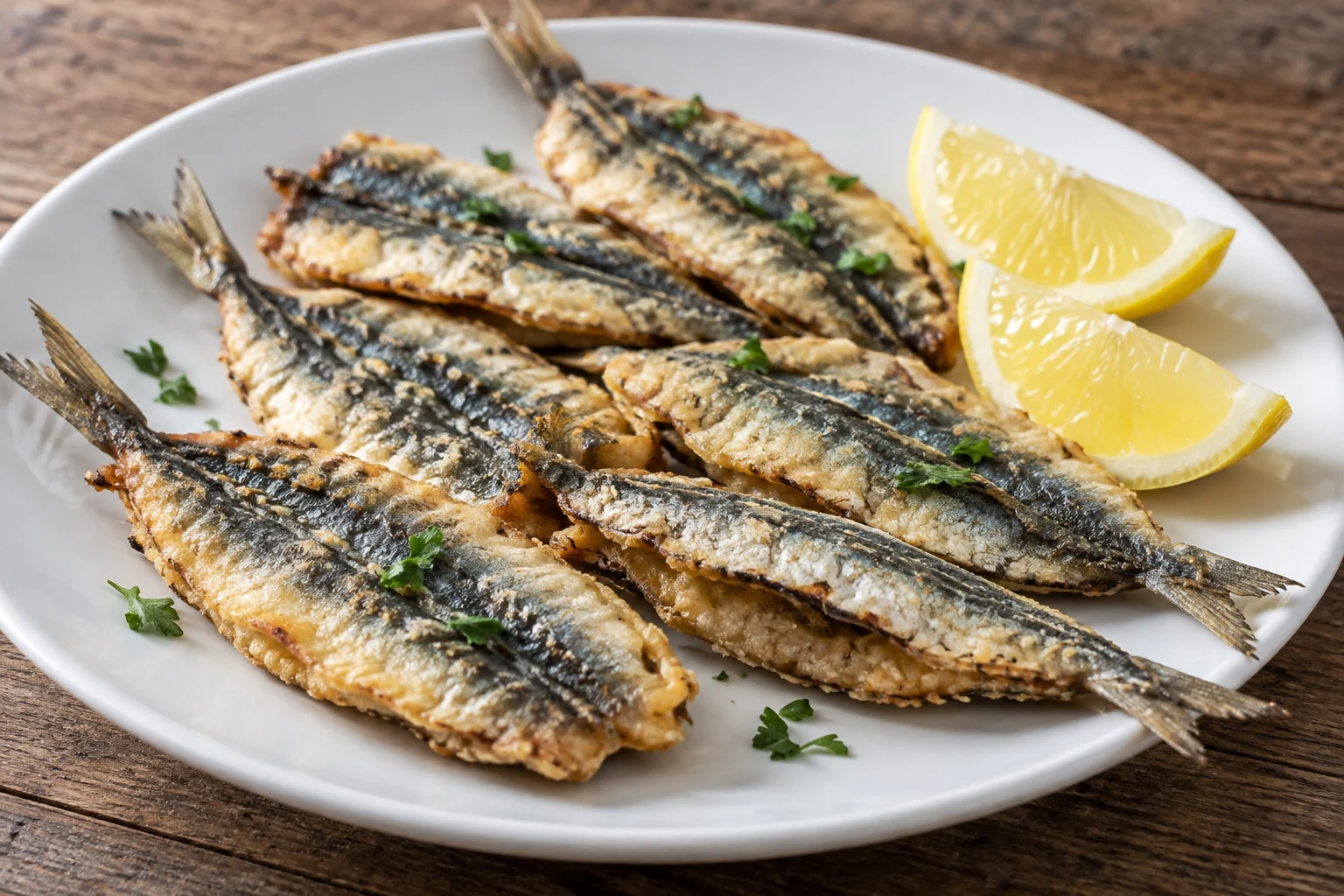
Greek cuisine Fried fish
Greek Fried Sardines: Set the Table Before the Pan
Fresh fried sardines need a dry surface, a light coating and room in the pan. Choose the fish preparation first, and have the plate ready for each batch.
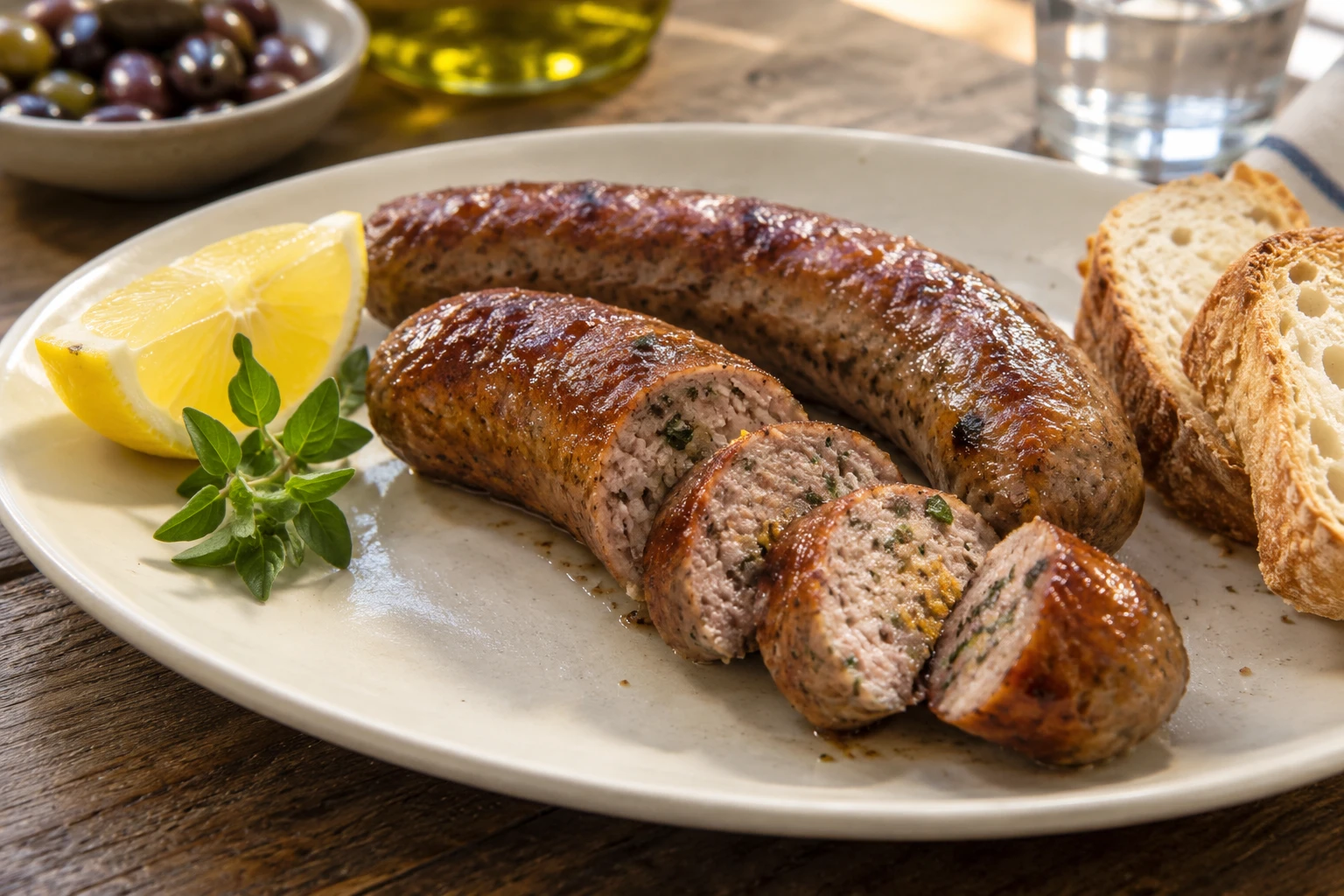
Greek cuisine Sausage guide
Loukaniko: Choose the Seasoning Before the Dish
Greek loukaniko can lean toward orange, leek or herbs. Named regional and producer examples show what to check before choosing a serving or cooking method.