
Magiritsa: Greens, Dill and the Egg-Lemon Finish
Μαγειρίτσα
Greek Easter magiritsa brings finely chopped lamb offal, spring greens and dill into a broth finished with avgolemono. Learn what changes in shank and mushroom versions.
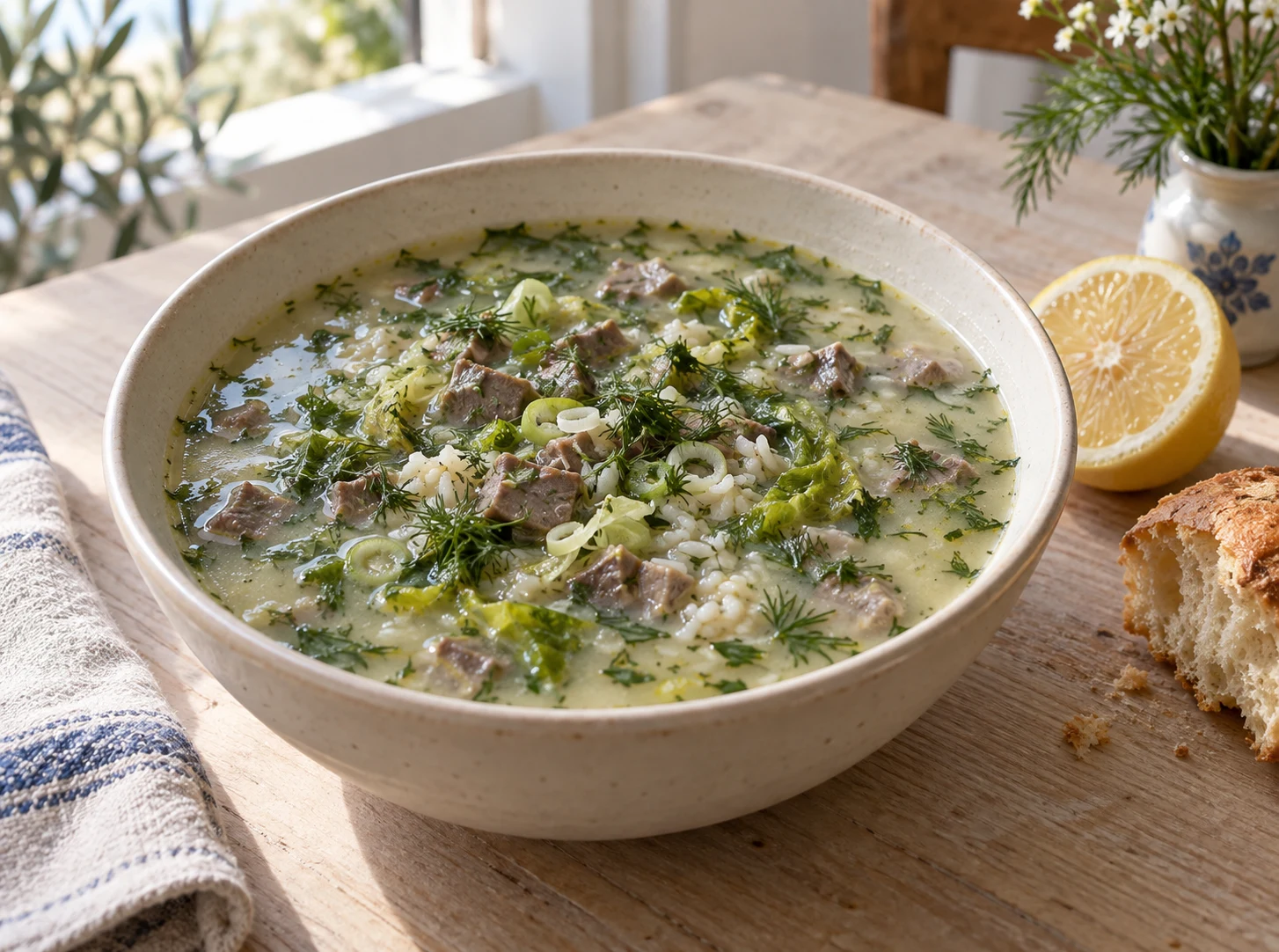
At the Easter table
A rich base with a green, lemony finish
Magiritsa is associated with the meal after the Greek Orthodox Easter night service, when families break the Lenten fast. Its traditional lamb-offal base has a strong savory character, but the bowl is also full of spring onions, dill and tender greens. The egg-lemon finish, avgolemono, gives the broth its pale color and rounded texture.
The useful way to understand it is through that balance: small pieces of cooked meat, soft vegetables, fresh herb aroma and lemon. Argiro Barbarigou’s offal version includes romaine lettuce and makes rice optional. Other cooks choose a different lamb cut or mushrooms while preserving much of the green, tangy character.
What each part contributes
- Finely chopped offal
- A savory base
- Lettuce and spring onions
- Tender greens
- Dill
- Fresh aroma
- Avgolemono
- Body and acidity
Small pieces distribute through the broth instead of becoming a large roast portion.
Lettuce softens during cooking; scallions connect the broth to the herbs.
Chopped dill is prominent in the documented offal, shank and mushroom methods.
Egg and lemon finish the broth without requiring a cream sauce.
Rice is a choice with consequences
Rice can turn a thin broth into a more substantial soup. It also keeps absorbing liquid as the pot stands. Decide whether you want a brothy bowl or a thicker one before adding more, and keep a little hot broth available for adjustment. Lettuce should become tender, while the small pieces remain easy to find with a spoon.
Choose a complete method for the base rather than combining cooking times from different versions. Offal preparation differs from slowly cooking a lamb shank until its meat can be removed from the bone. Buy food-grade offal from a reputable supplier and follow safe handling and thorough cooking guidance. Lemon is a flavoring, not a way to make raw meat safe.
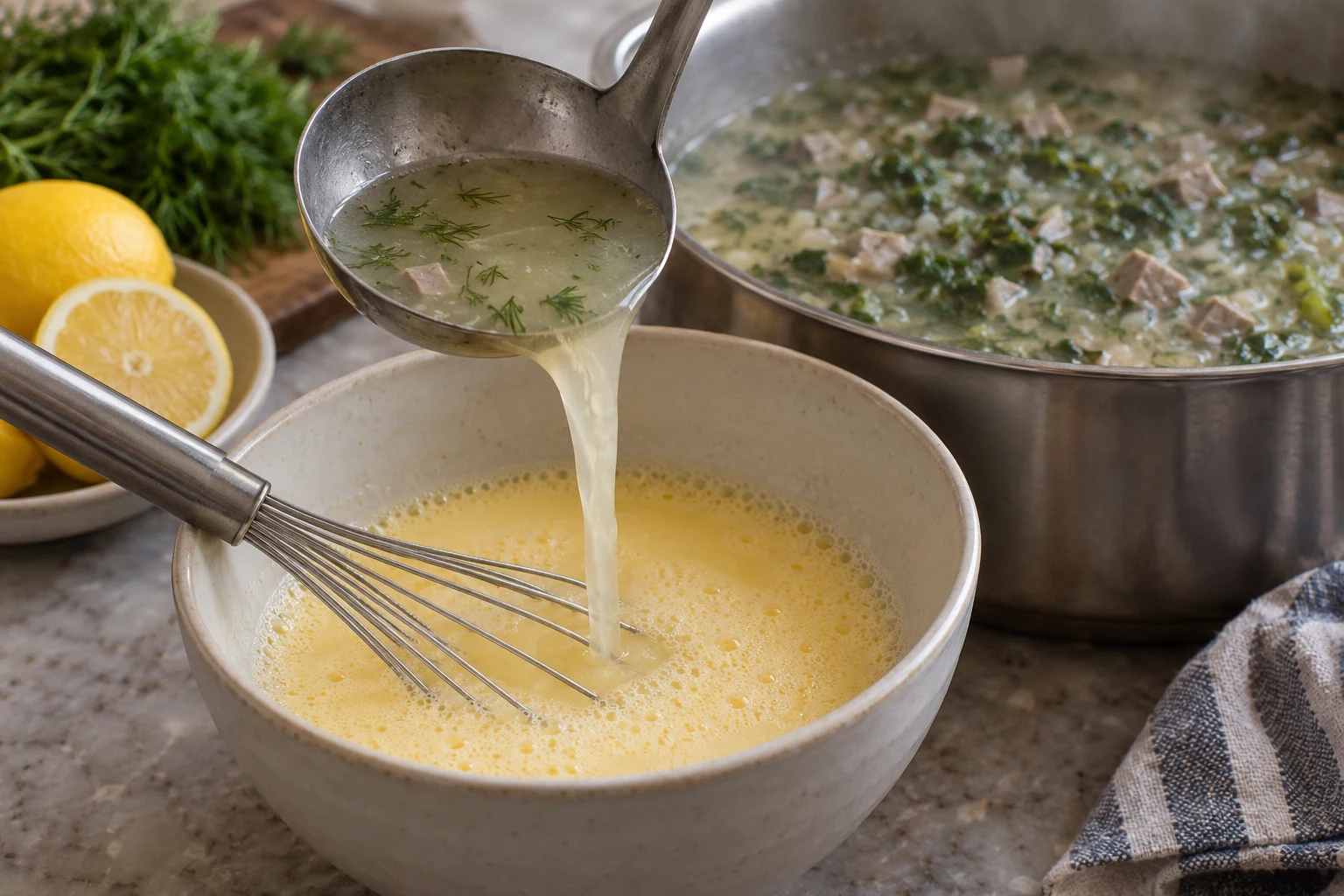
Finish the soup in the right order
The base should be fully cooked and the rice tender before the eggs enter. Tempering protects texture; it does not replace a safe final cooking temperature.
- 01
Complete the base
Check that the meat and vegetables are cooked and adjust the broth’s thickness. Do this before avgolemono, when the soup can still tolerate a normal simmer.
- 02
Warm the egg mixture gradually
Whisk eggs and lemon together, then whisk in hot broth little by little. A sudden flood of very hot liquid can turn the eggs into visible curds.
- 03
Use gentle heat and a thermometer
Stir the warmed mixture back into the soup and heat gently, stirring, until the egg-containing soup reaches 71°C/160°F. Avoid a rolling boil. A silky appearance or steam alone does not show that the eggs are safely cooked.
Three documented approaches
Offal and lettuce
Barbarigou builds the traditional version around finely chopped lamb offal, romaine and dill, with optional rice.
Lamb shanks
Christina Xenos describes her family’s shank-based version with fennel and rice; Saveur uses shanks and shoulder, with lettuce.
Mushrooms
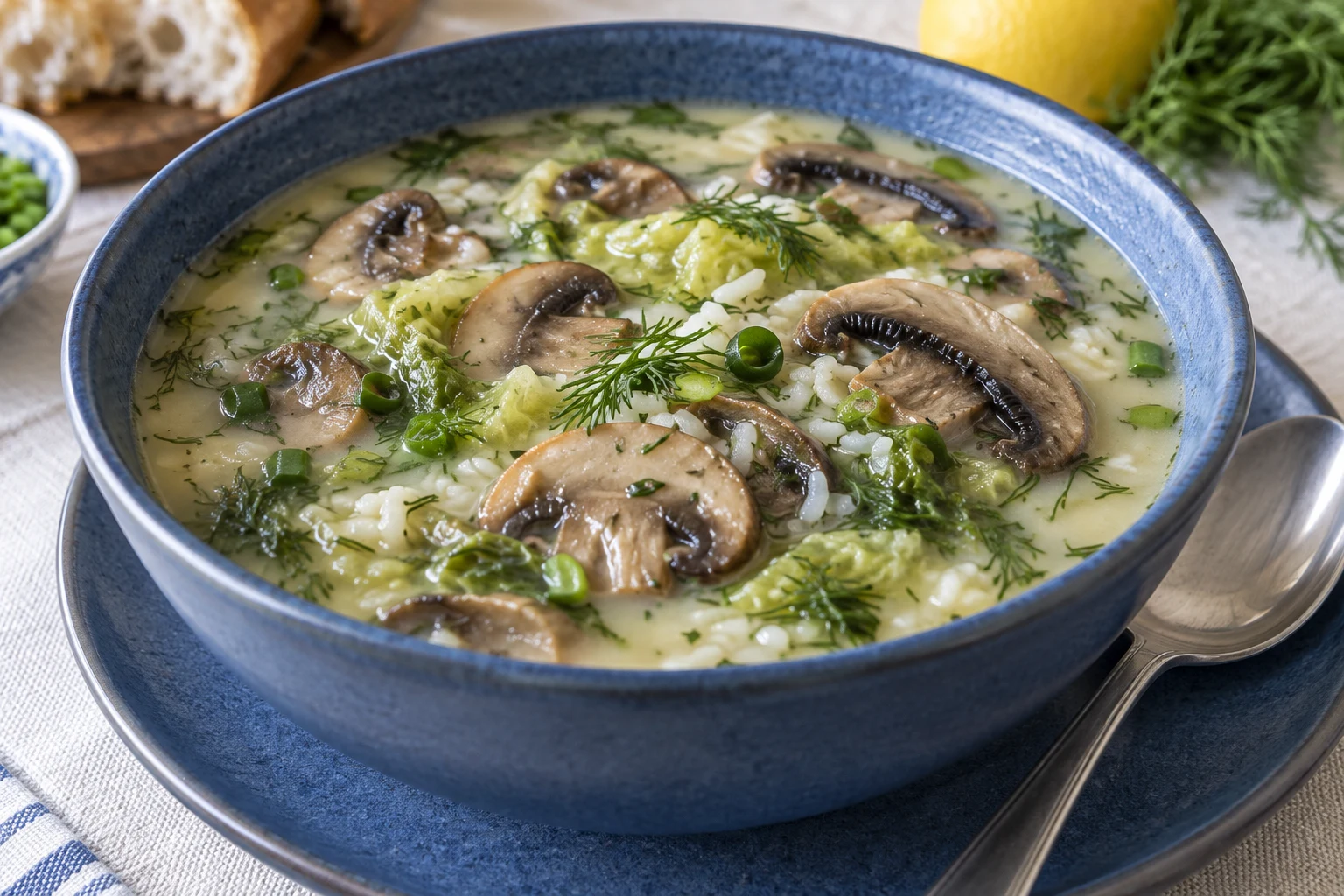
Diane Kochilas replaces the meat with mushrooms while retaining lettuce, dill, rice and avgolemono. Eggs mean this version is vegetarian, not vegan.
Research notes
Recipes and food handling
These cooks document distinct versions of magiritsa. Use the full linked recipe that matches your chosen base; the temperature and cooling guidance comes from FoodSafety.gov.
- Argiro Barbarigou: traditional magiritsa Offal, romaine, dill, optional rice and the egg-lemon finishing sequence.
- Saveur: Greek Easter soup A published shank-and-shoulder adaptation with lettuce, rice and avgolemono.
- Christina Xenos: her family’s lamb-shank soup First-person family account and a complete shank, fennel and rice method.
- Diane Kochilas: mushroom mageiritsa A named vegetarian adaptation with mushrooms, lettuce, dill and eggs.
- FoodSafety.gov: cooking temperatures 71°C/160°F for egg dishes and 74°C/165°F for reheated leftovers.
- FoodSafety.gov: clean, separate, cook and chill Prompt cooling in shallow containers and the two-hour or hot-weather one-hour limit.
Keep exploring
More stories for your table
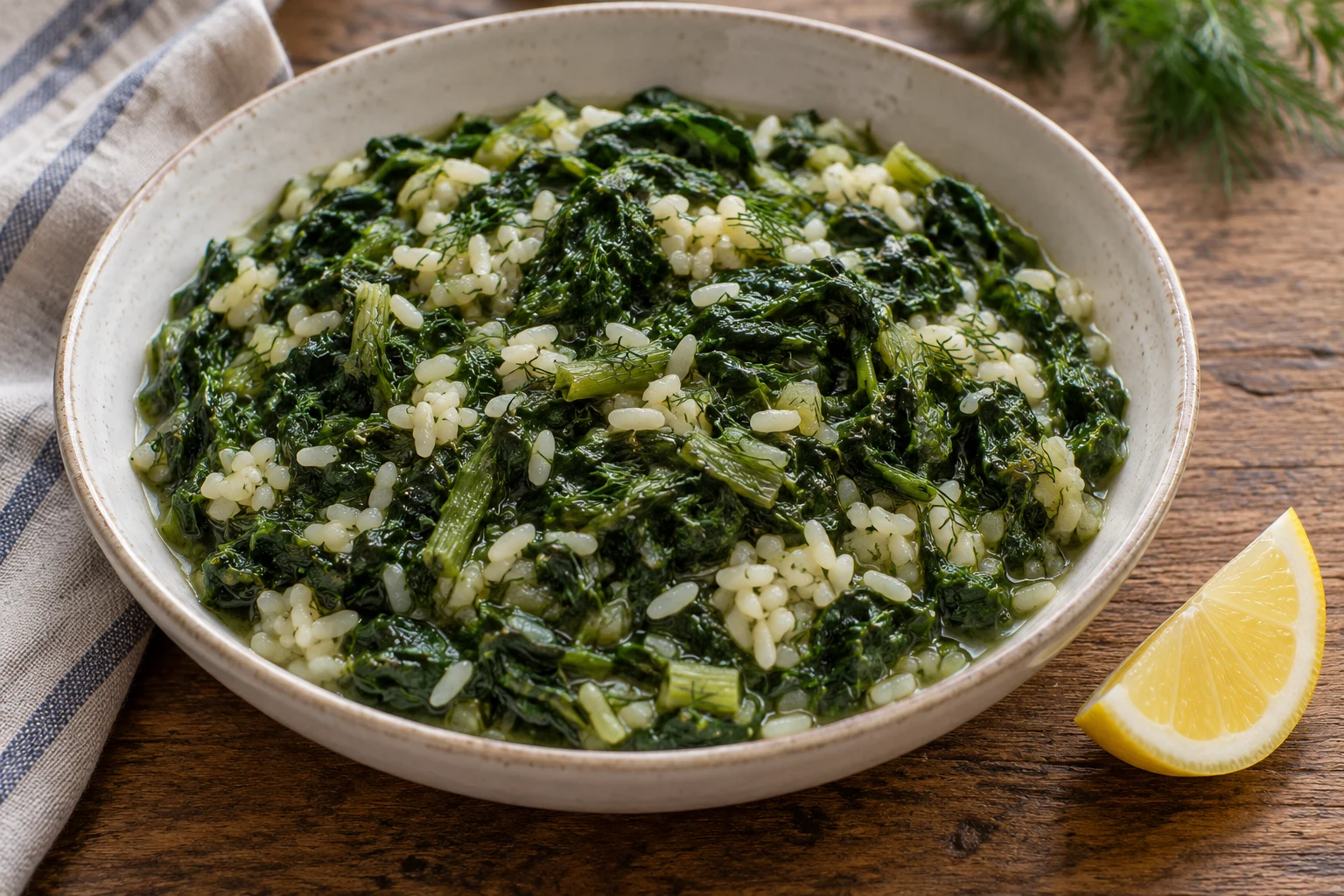
Greek cuisine Vegetable and rice dish
Spanakorizo: Let the Spinach Lead
Greek spinach rice depends on the water in its leaves, the choice of grain and a lemony finish. Compare the decisions behind its soft, vegetable-forward texture.
Greek cuisine Onion stew
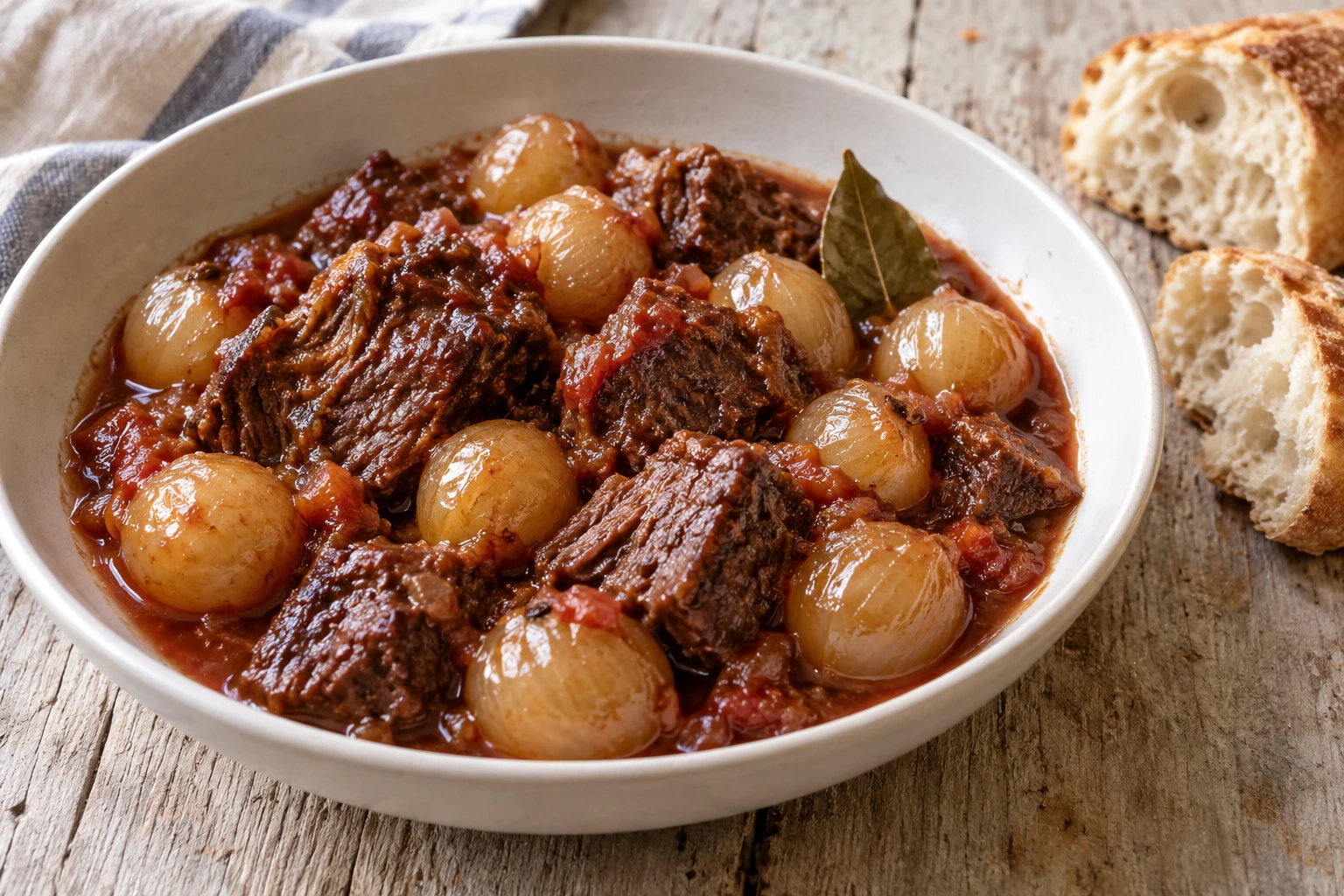
Stifado: The Small Onions That Shape a Greek Stew
Whole small onions give stifado its sweetness and texture. Explore beef, rabbit and mushroom versions, and see why the onion timing and sauce belong to the recipe you choose.
Polish cuisine Soup
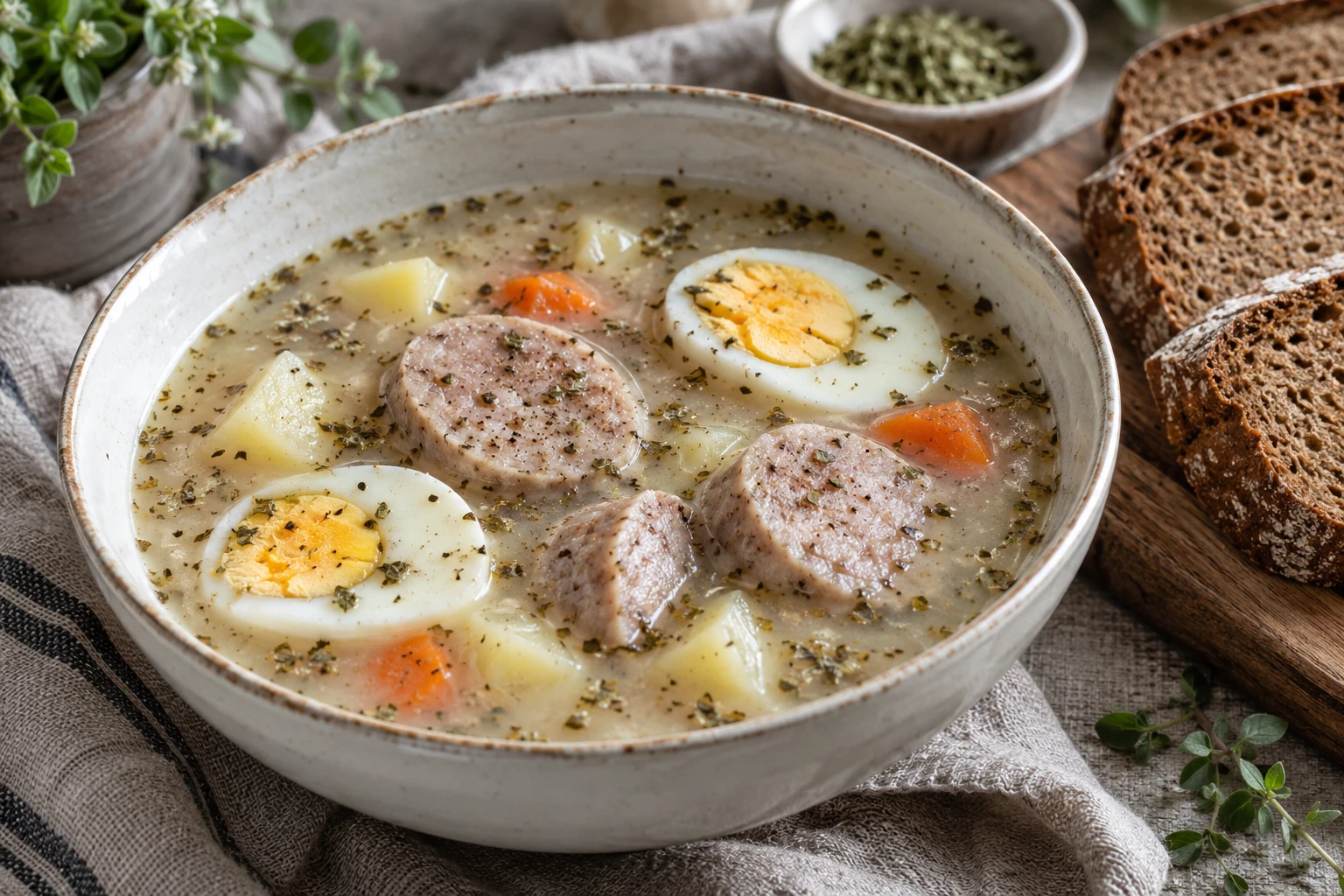
White Borscht: Read the Starter First
Polish white borscht brings sour starter, savory broth and substantial garnishes together. Its name varies, while the flour sediment and cream finish need deliberate handling.