
Kataifi: Open the Strands Before the Syrup
Κανταΐφι
Greek kataifi rolls begin with fine pastry strands, chopped nuts and careful buttering. Compare filling and syrup choices without losing each cook’s method.
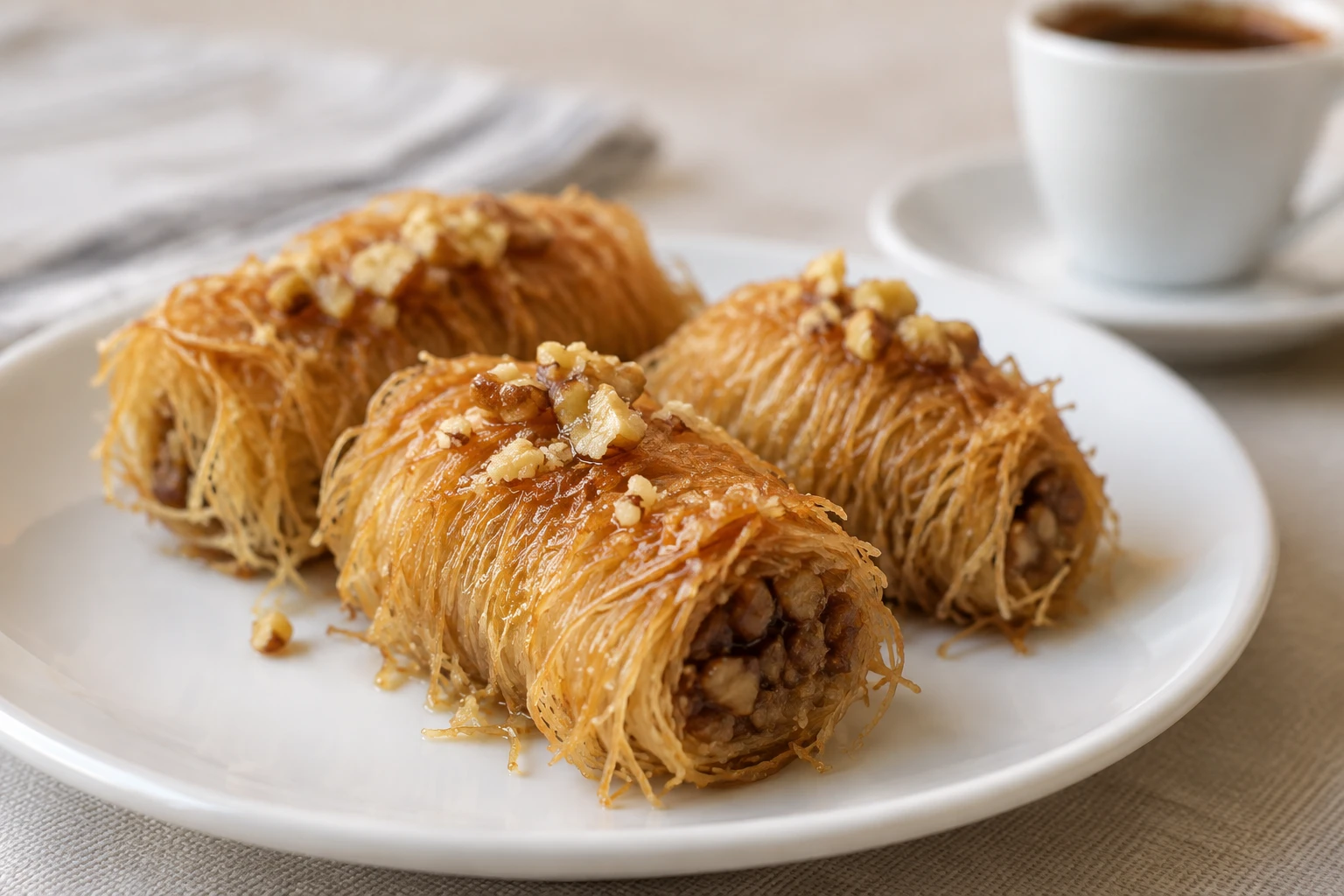
The strands come first
A walnut-filled kataifi roll brings several textures into one small pastry: a nut centre, a web of baked threads and syrup worked through the roll. The pastry’s appearance is striking, but the useful preparation detail comes before shaping. Those fine strands need to be gently opened out rather than left as a compact tangle.
Kataifi also names the pastry ingredient. Manufacturer Antoniou explains that it makes the strands by passing a thin batter through fine spouts onto a heated metal plate. They are not produced by slicing ordinary filo sheets. Buying the string pastry called for by the recipe gives you the material these rolls are designed to use.
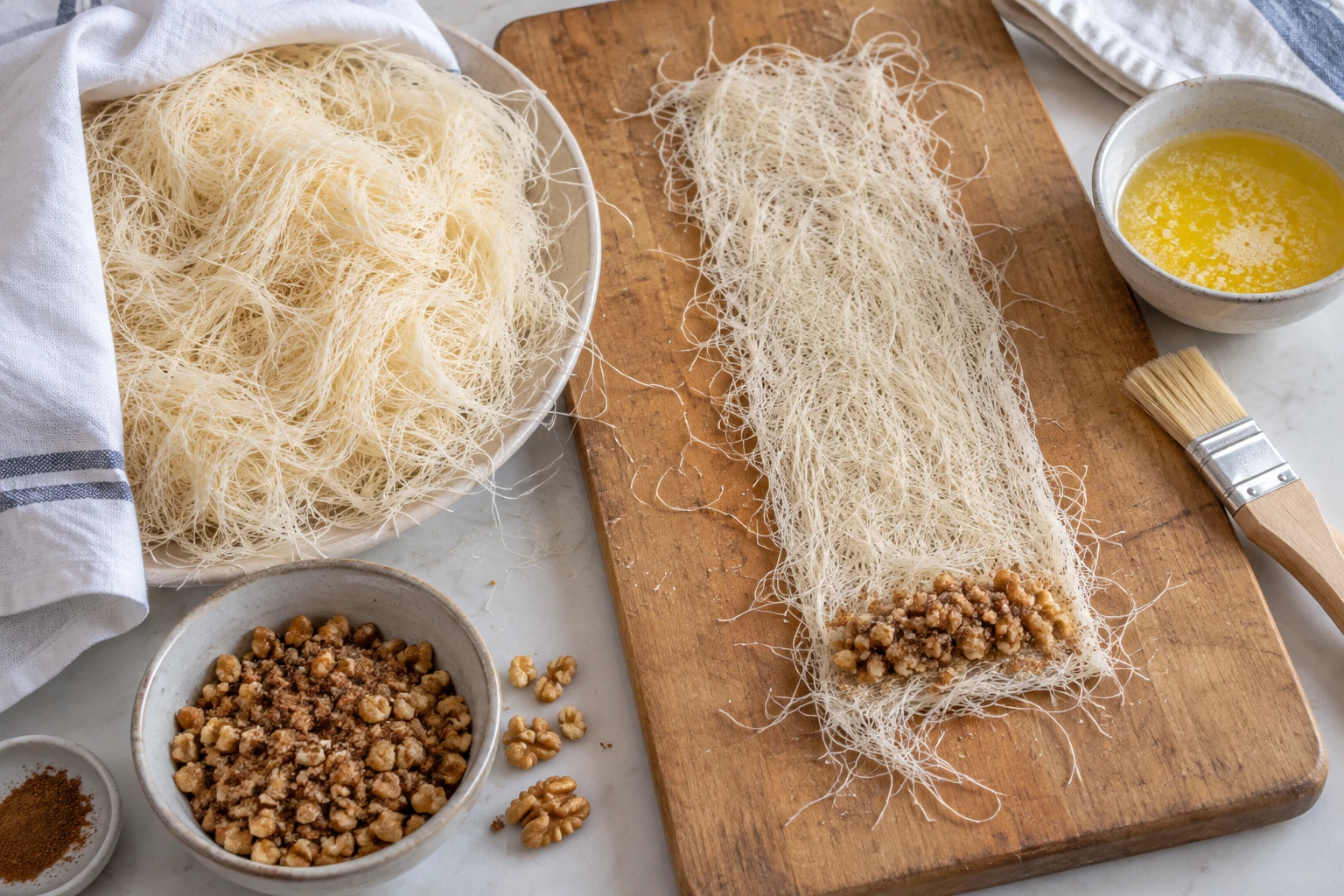
Give the pastry room to wrap
- 01
Loosen the clumps gently
Argiro Barbarigou describes separating the strands with the fingers until the pastry becomes a fluffy mound. Her portions are then spread into small rectangles for filling. Begin with that open structure rather than trying to roll an untouched bundle.
- 02
Protect the unused portion
The Women’s Weekly preparation keeps its pastry beneath baking paper and a damp tea towel while working. Set out the filling and butter first, so each uncovered portion can be shaped promptly and the rest remains protected.
- 03
Close the roll around its filling
Eli Giannopoulos’s My Greek Dish method places chopped nuts at one end, rolls the pastry into a cylinder and folds the sides inward. Buttering accompanies the shaping and arrangement in the baking dish; it is part of the pastry’s preparation, rather than only a finishing garnish.
Choose a named filling
The nut mixture and butter differ between published versions. Their quantities and baking instructions belong together.
Walnuts and warm spices
Giannopoulos uses roughly chopped walnuts with cinnamon and a little clove, keeping the nuts in pieces rather than grinding them to powder. His recipe uses cow’s-milk butter. The filling stays recognisably nutty inside the fine pastry.
Walnuts or Aegina pistachios
Barbarigou offers walnuts or raw Aegina pistachios and specifies sheep-and-goat butter. This is a different stated ingredient choice, so a claim that all Greek kataifi must use the same butter would obscure the actual recipes.
An almond-and-walnut adaptation
The Australian Women’s Weekly combines almonds and walnuts with breadcrumbs, cinnamon, sugar and egg. Its lemon syrup includes honey. That filling is an attributed test-kitchen version, rather than a substitute silently inserted into either Greek cook’s formula.
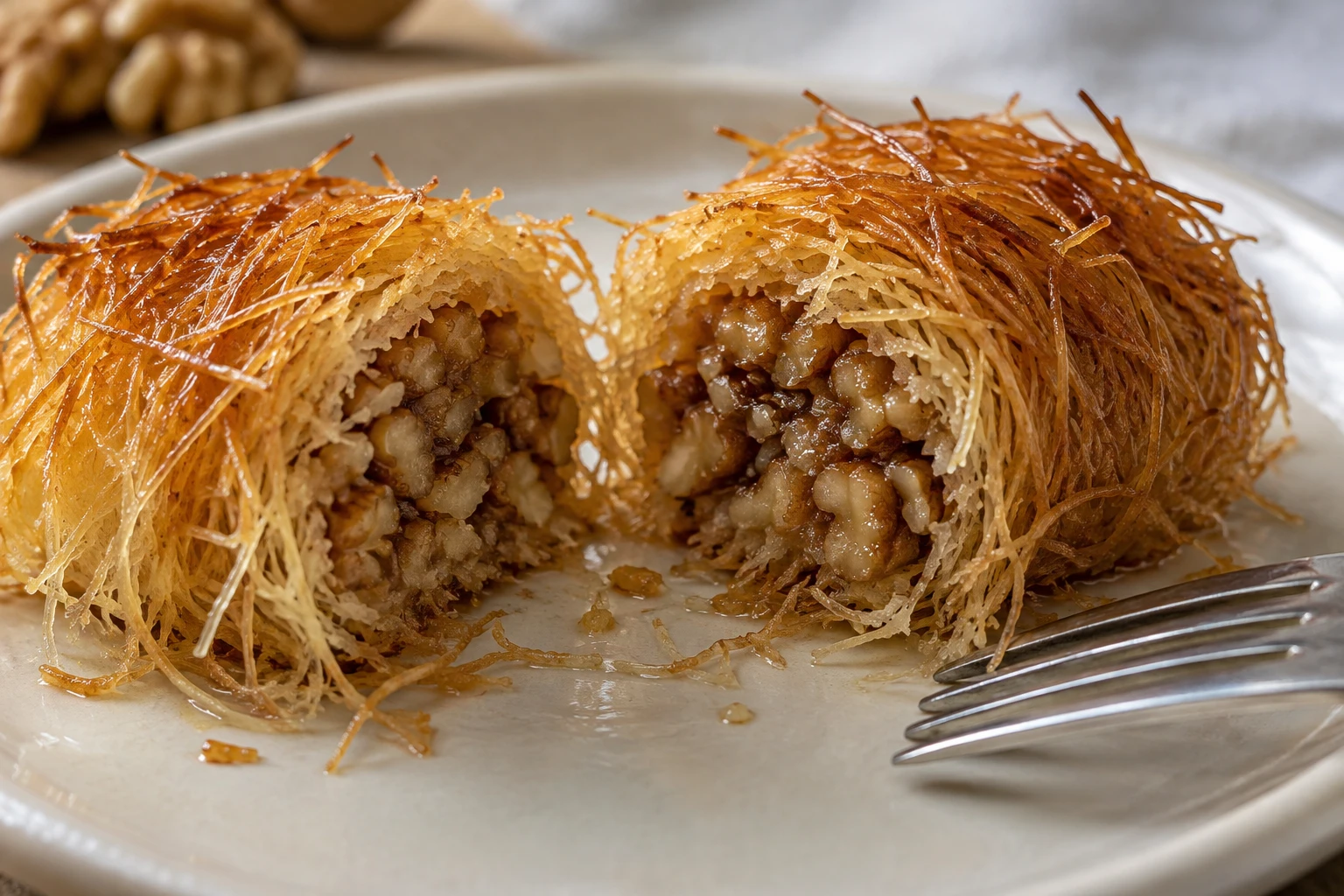
Read the syrup instructions before baking
My Greek Dish prepares the syrup first and allows it to cool completely. The cooked kataifi receives the cooled syrup gradually while the pastry is hot, giving each addition time to be absorbed. Barbarigou expressly gives a hot-syrup-over-hot-pastry method. Both describe their temperature choices clearly.
The Women’s Weekly version also pours hot syrup over hot pastries, then lets them cool. These are reasons to follow one complete preparation rather than turning a single temperature pairing into an absolute rule. The amount of syrup, the pastry arrangement and the bake also belong to the chosen recipe.
Research notes
Sources and pastry choices
Three nut-roll preparations, a manufacturer’s explanation of the ingredient and a related Ioannina baklava establish the handling details and the differences described here.
- My Greek Dish: Eli Giannopoulos’s homemade kataifi Chopped walnut filling, cow’s-milk butter, cylindrical rolls and cooled syrup over hot pastry.
- Argiro Barbarigou: Kataifi Loosened strands, walnut or Aegina pistachio choice, sheep-and-goat butter and hot syrup method.
- Women’s Weekly Food: Almond and walnut kataifi Named Australian test-kitchen variation; protective paper and towel, almond-walnut filling and honey-lemon syrup.
- Antoniou: How kataifi pastry is made Manufacturer explains string pastry formed from batter through fine spouts onto heated metal.
- Diane Kochilas: Ioannina-style baklava Related sheet-filo rolls containing kataifi, nuts and breadcrumbs; kept distinct from exposed kataifi rolls.
Keep exploring
More stories for your table
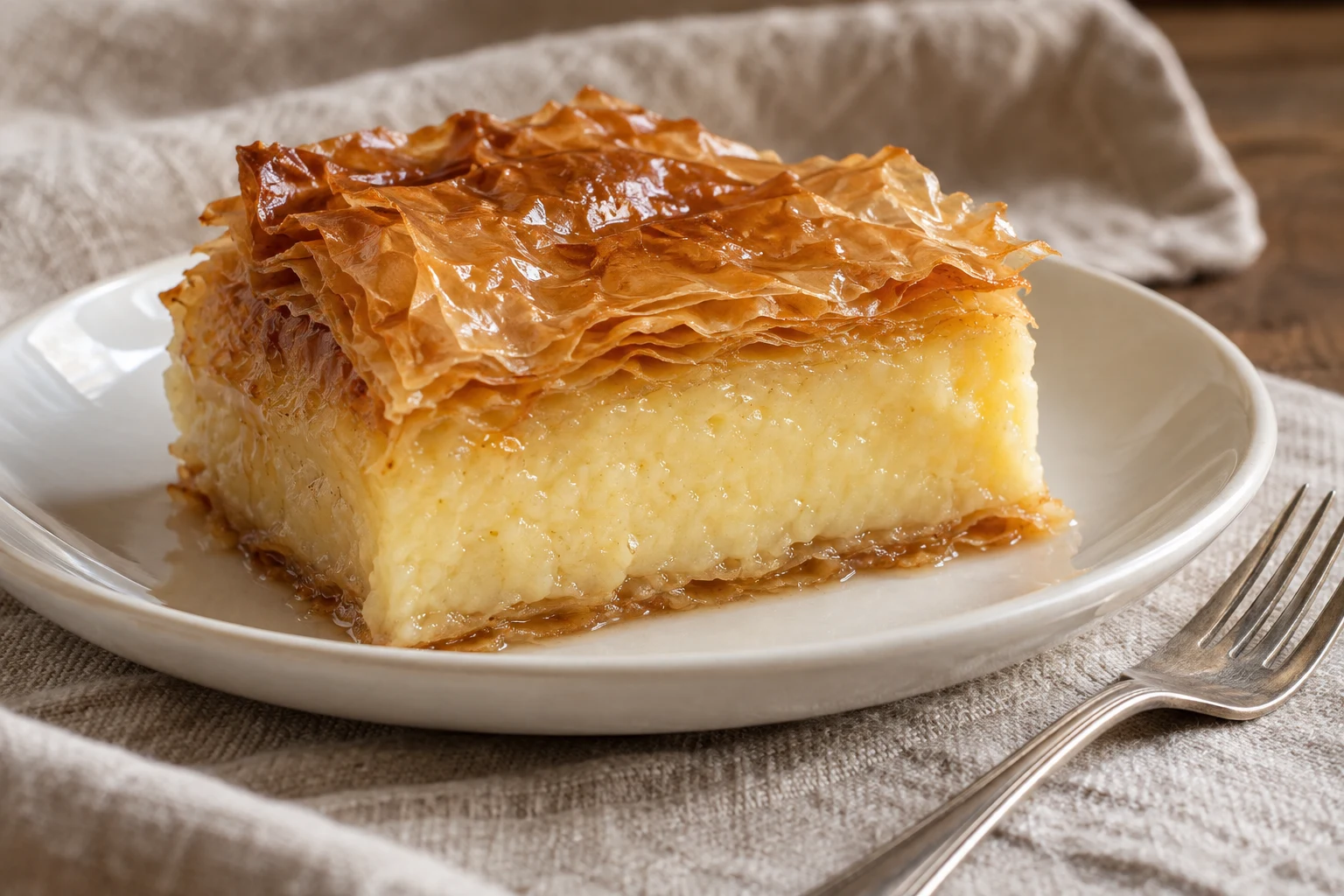
Greek cuisine Semolina custard pastry
Galaktoboureko: custard, phyllo and the syrup between them
Read galaktoboureko through its semolina custard, fragile phyllo and syrup, with a comparison of published Greek recipes and practical serving cues.
Greek cuisine Semolina dessert
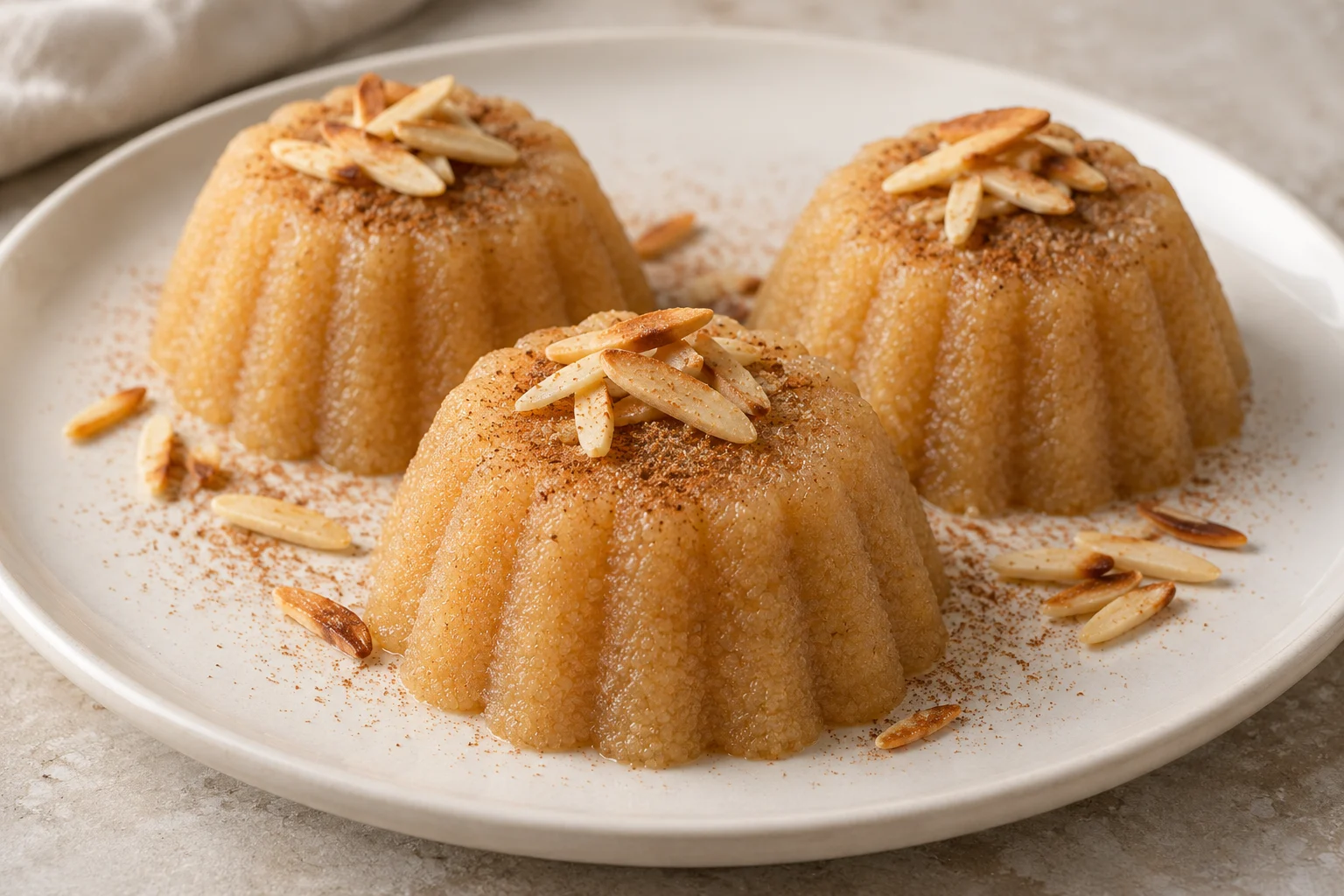
Semolina Halvas: Toast First, Set Later
Greek semolina halvas depends on golden toasted grain and a thickened pot before it sets. A six-portion recipe explains both checkpoints and allows cooling time.
Moroccan cuisine Pastry
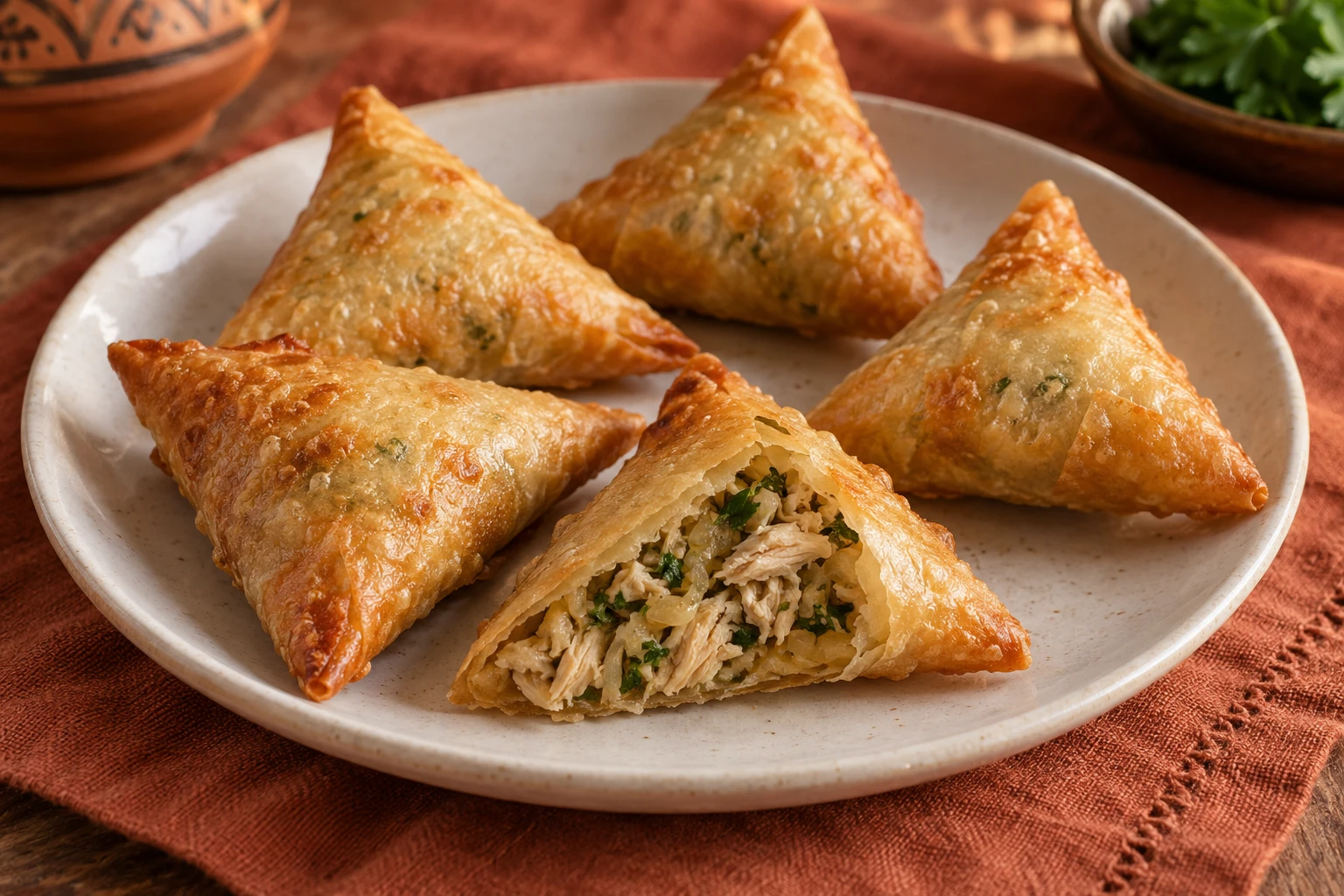
Briouats: A Small Filling, a Closed Fold
Savory Moroccan briouats depend on a compact cooked filling and a closed triangular fold. Read the wrapper and finishing method together before adapting a batch.