
Youvetsi: The Orzo Has a Shorter Job
Γιουβέτσι
The meat can wait in a long braise. The small pasta cannot. Read the point where one job ends and the other begins.
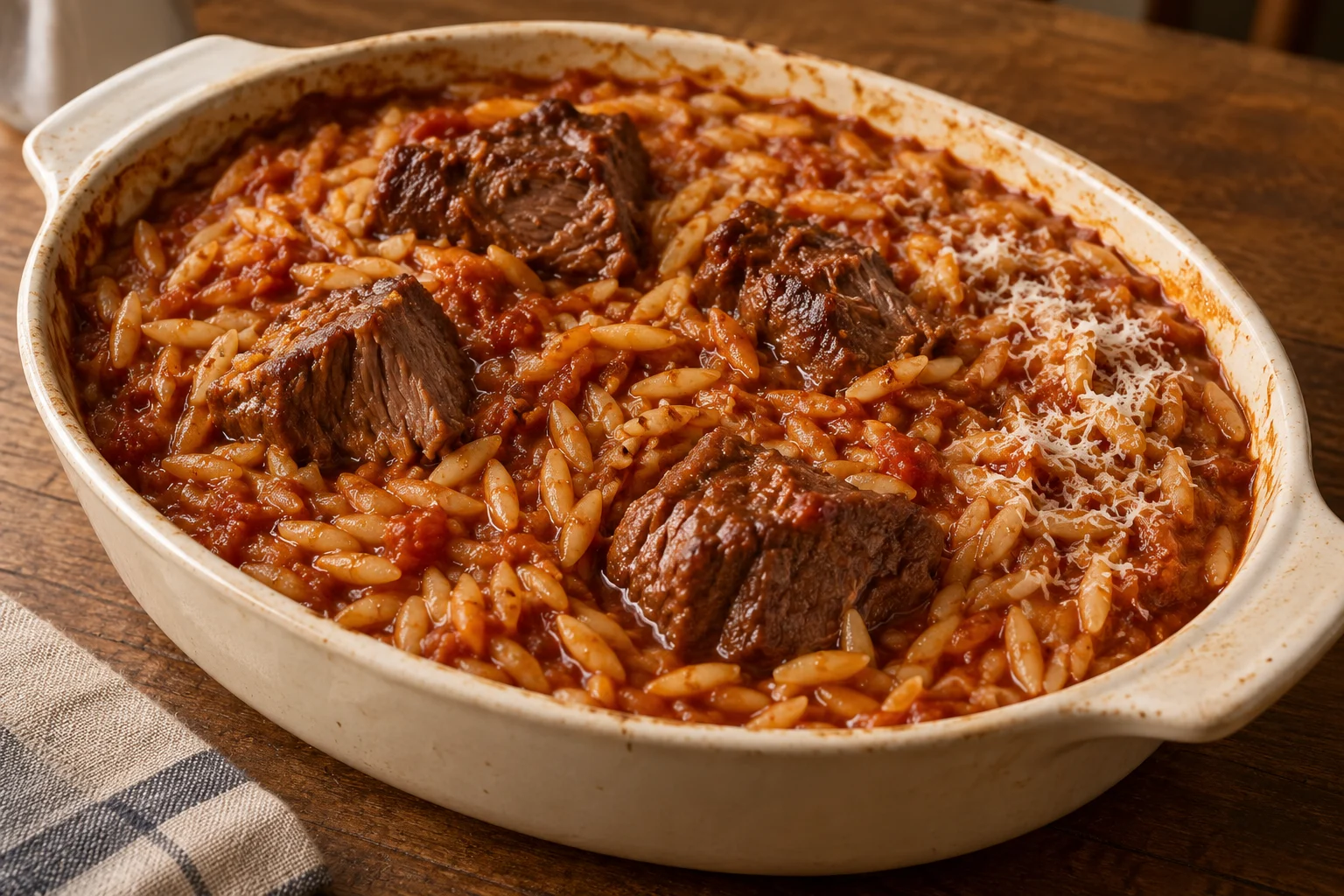
Two cooking clocks
Start with the ingredient that needs the time
Youvetsi brings meat, tomato and small pasta into the same finished dish, but that does not mean they should start cooking together. A beef piece needs time to soften. Orzo needs enough liquid to become tender, then keeps absorbing moisture as the dish sits. Treating those as separate jobs gives the cook a clearer decision than simply waiting for a casserole timer.
The Greek Farms portal, run through Greece’s agricultural tourism initiative, places orzo within a varied pasta tradition. Its examples range from a simple tomato-and-garlic preparation to veal giouvetsi. The rice-like shape is a useful visual description; it is still pasta. That distinction matters when deciding whether a long meat braise can accommodate it from the start.
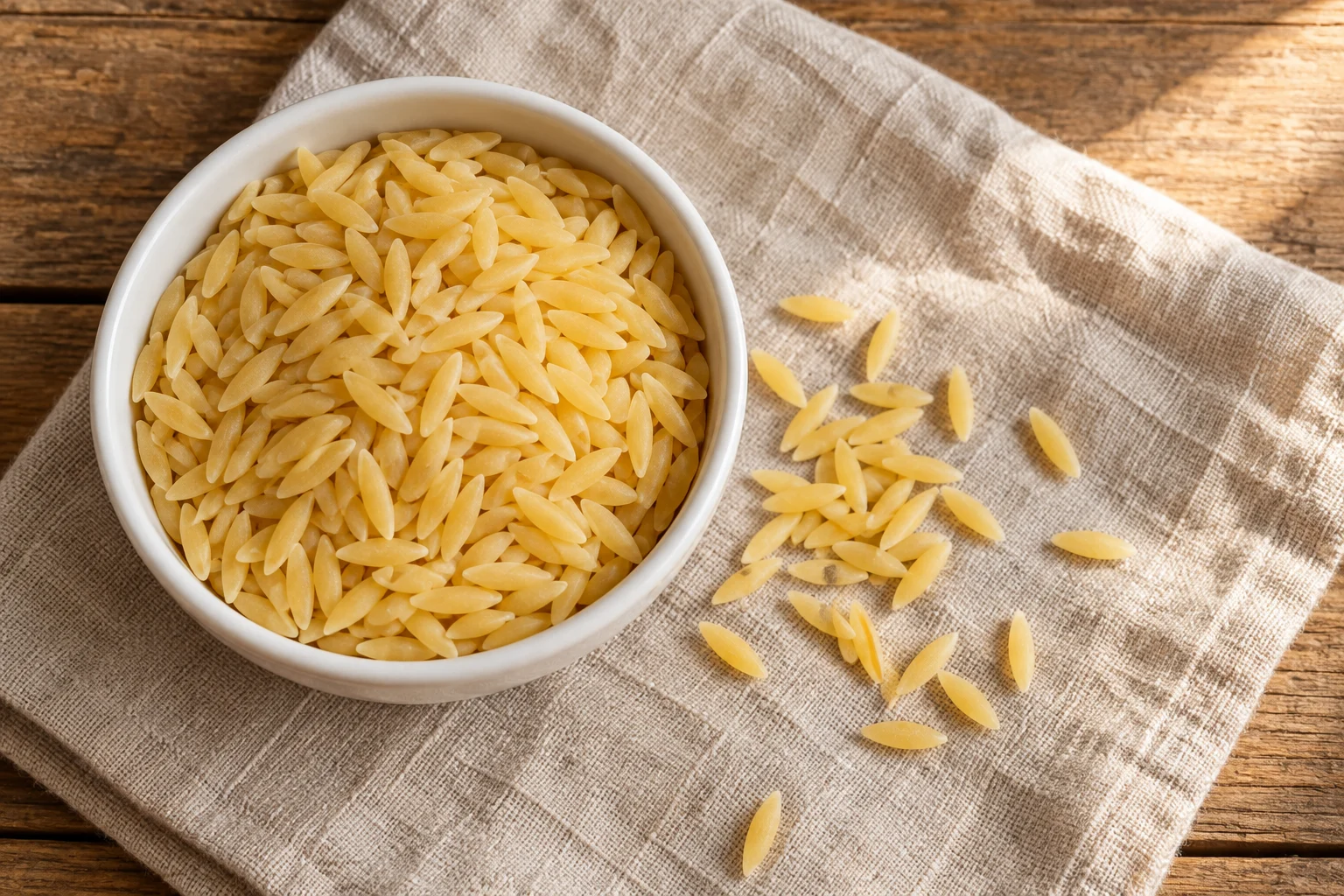
Tender meat is the handoff signal
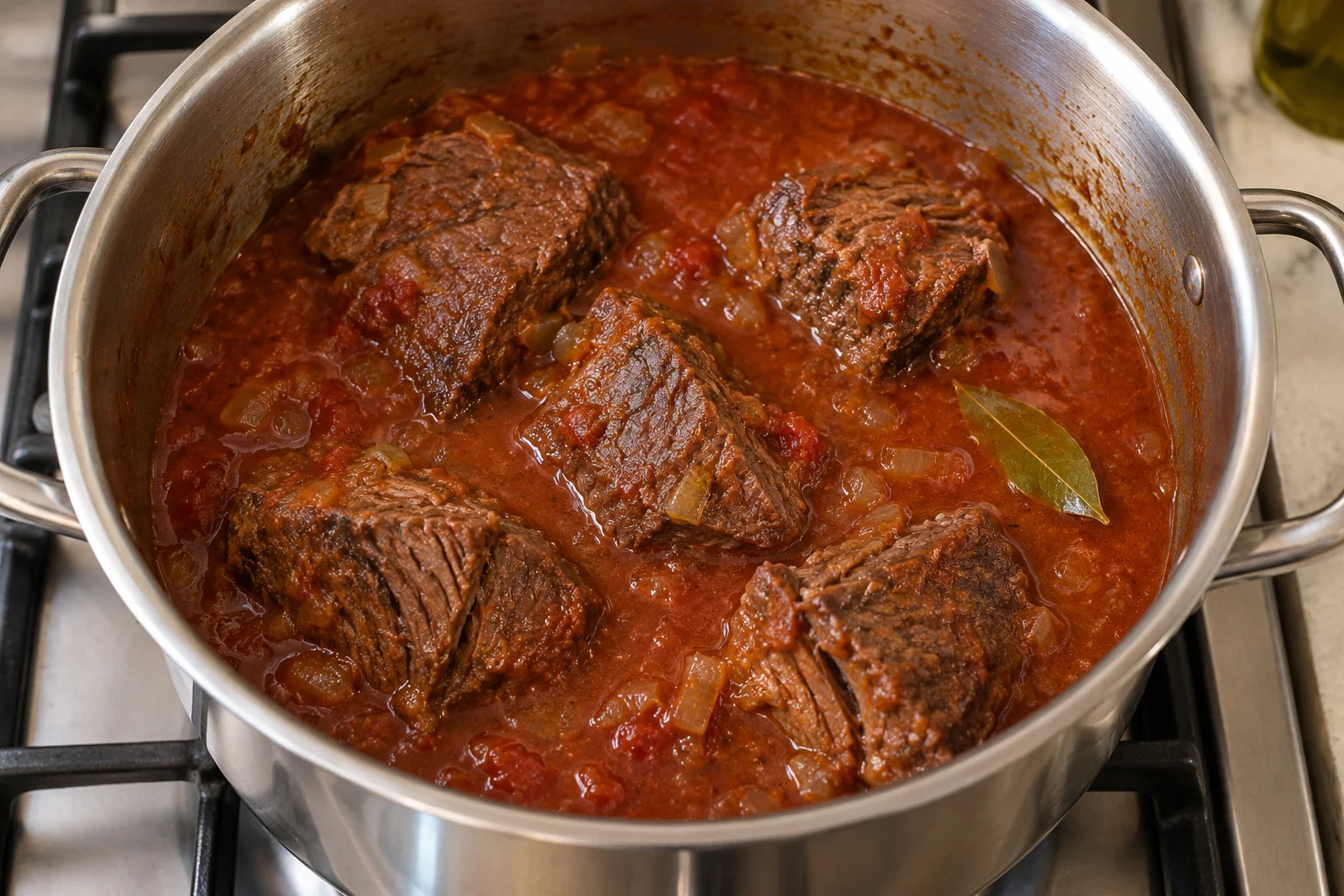
In Argiro Barbarigou’s beef casserole, the browned meat cooks with vegetables, tomato, wine and water for roughly an hour and a half before the orzo stage. Whole aromatic vegetables are removed, and the pasta and meat move into a baking dish with the sauce. Her instructions explicitly allow extra boiling water if that sauce has reduced too much.
Thessaloniki Tourism’s shorter beef-and-orzo recipe follows the same broad order: cook the beef until tender, prepare the pasta separately with tomato and nutmeg, then use the oven for the final stage. These are distinct recipes, but both make meat tenderness a condition to reach before the pasta’s finishing interval.
At home, the practical question at that transition is whether the piece yields easily when checked. If it still needs a substantial braise, hold the pasta back. Adding more liquid later can loosen sauce; it cannot restore the texture of pasta that has already spent too long cooking.
Chicken changes the starting point
The dish name does not tell you whether a chicken component begins raw or arrives already cooked.
Raw chicken, then pasta
Costa Navarino’s chicken giouvetsi uses an oven-cooked chicken stage before the orzo enters. Its later instructions call for regular stirring, followed by a ten-minute rest. The separate stages are the useful lesson here; the resort recipe’s quantities and timing belong to its own preparation.
Cooked chicken, added late
Diane Kochilas’s vegetable chicken youvetsi starts with onions, peppers, zucchini, tomato and orzo in a stovetop braising pan. Her chicken is already cooked souvlaki. It joins after the pasta has had about twenty minutes, with parsley near the finish. Applying a raw-meat braising schedule to that chicken would miss the method entirely.
Three observations are more useful than one timer
Use the recipe you choose for quantities. During the final stage, watch what the pasta and sauce are actually doing.
- 01
Keep liquid available
Kochilas calls for additional water if needed while the orzo cooks, so the mixture does not stick. A pan that has become dry needs attention before the pasta turns tender. Check the base as well as the surface; a glossy top can conceal a catching bottom.
- 02
Judge the pasta directly
Barbarigou advises taking the dish out while the orzo is still al dente and the sauce remains juicy. Thickness of orzo and the baking vessel affect the schedule. Taste a piece instead of assigning every brand and dish the same finishing minute.
- 03
Account for the pause
A rest changes the serving texture. Costa Navarino specifies ten minutes; Barbarigou describes further absorption from the hot sauce and encourages prompt serving. Plan the table before the pasta finishes, so an unplanned long wait does not become another cooking stage.
Leave room for the sauce to move
The appealing plate is not only tender meat beside a mound of pasta. It is pasta carrying the braise, with enough moisture left to connect the two. If the dish is already compact and dry when it leaves the heat, the serving pause will not make it looser. Conversely, liquid around the orzo at the finish need not mean the cook has failed; some of it is still on its way into the pasta.
Cheese is a finishing choice in these sources, not a remedy for the wrong cooking schedule. Barbarigou suggests kefalotyri or dry myzithra, Costa Navarino serves grated Greek cheese, and Kochilas offers feta with her vegetable version. Choose the version as a whole, including its meat, vessel and finishing sequence. Youvetsi becomes easier to read when the orzo gets its own short, attentive turn.
Research notes
Recipes read for this article
These five sources were opened and read. The photographs are generated illustrations of the beef version; the article compares published methods and does not claim kitchen testing.
- Argiro Barbarigou — Orzo beef casserole Full recipe and tips: meat-first braise, liquid adjustment, pasta doneness and prompt serving.
- Diane Kochilas — Vegetable chicken youvetsi Full stovetop method with medium orzo and already cooked chicken souvlaki added late.
- Costa Navarino — Chicken giouvetsi with kritharaki One-page recipe with separate chicken and orzo stages, stirring and a ten-minute rest.
- Greek Farms — Pasta Government agricultural tourism context for Greek pasta and veal giouvetsi.
- Thessaloniki Tourism — Beef stew with orzo and nutmeg Official local recipe supporting tender beef before the final pasta and oven stage.
Keep exploring
More stories for your table
Greek cuisine Onion stew
Stifado: The Small Onions That Shape a Greek Stew
Whole small onions give stifado its sweetness and texture. Explore beef, rabbit and mushroom versions, and see why the onion timing and sauce belong to the recipe you choose.
Afghan cuisine Meat stews
Afghan Qorma: One Braise, Several Pots
Afghan cooks make meat qorma with potatoes, tomato, pulses or fruit. Their recipes show how to choose a whole preparation and read beyond a familiar curry name.
Portuguese cuisine Fish and pasta
Massada de Peixe: Give the Pasta the Broth
In Portuguese massada de peixe, short pasta cooks in a tomato-rich broth. Separate the fish stages to keep both the pasta and the flakes distinct.