
Greek Olive Oil Cake: Keep the Citrus Measured
Κέικ με ελαιόλαδο
Orange zest, a measured amount of juice and a mild olive oil meet in a simple cake. The flour goes in last, and the center decides when baking is finished.
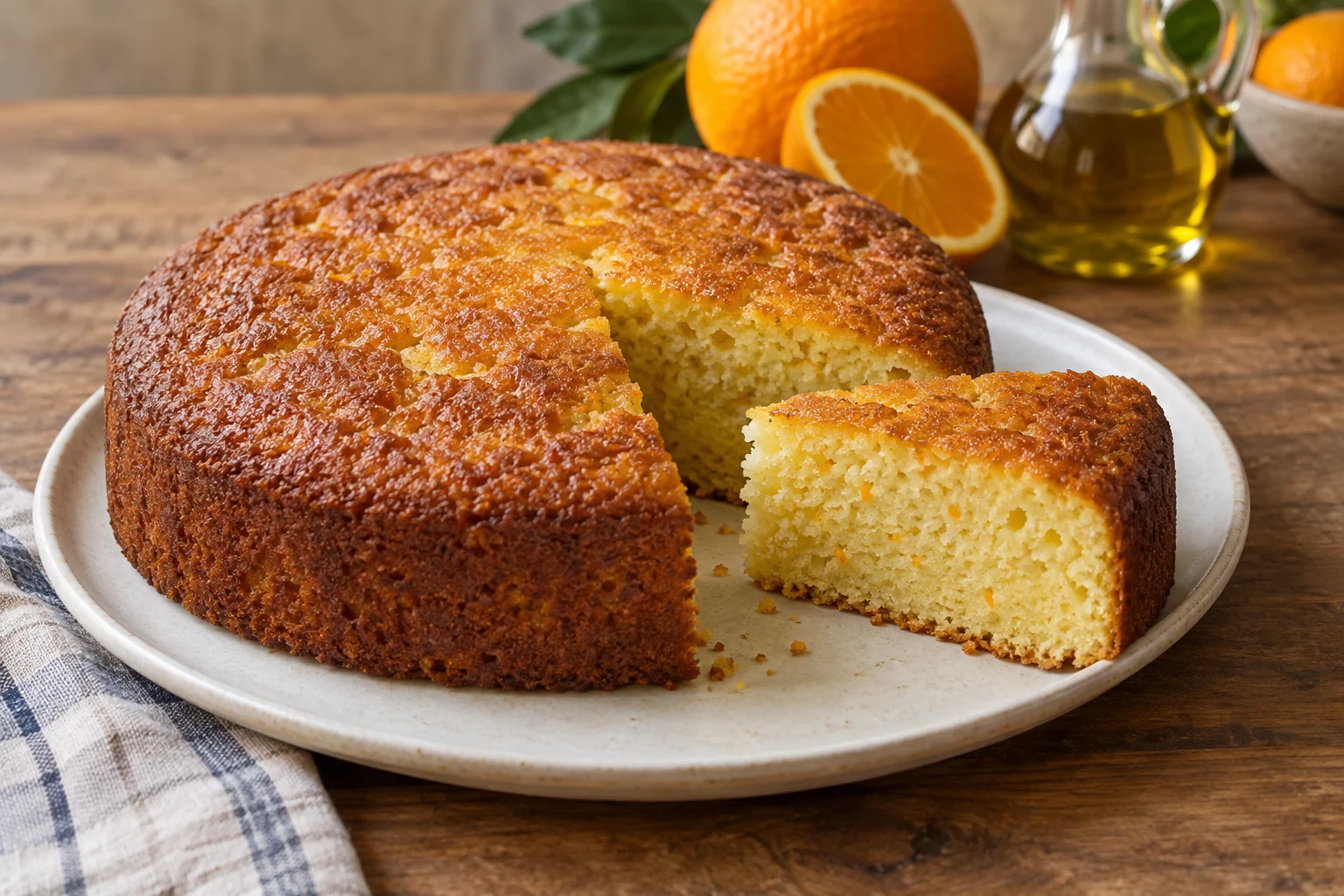
The oil has a flavor before the cake does
Olive oil is part of this cake’s taste as well as its batter. Taste a small amount before measuring it: an oil you find sharply bitter will bring that character to the cake. Dimitra Alexandrakis recommends a mild oil for her citrus loaf, and Kevin of Silk Road Recipes favors a milder, fruity extra virgin oil in his Greek orange cake.
Greek olive oil cakes appear in several forms. Argiro Barbarigou makes a yogurt version with raisins; Cretan Mill Almpantakis publishes an orange cake using its citrus-flavored oil. The recipe below is our orange and yogurt adaptation with ordinary mild olive oil. It uses wheat flour and eggs, with a plain finish that leaves the cake’s own flavor easy to assess.
Zest first, then measure the juice
Wash and dry the orange, then grate the colored outer skin before squeezing it. Stop before the white pith. A whole fruit is easier to hold against the grater than a squeezed half, and the fine zest spreads through the batter without large pieces of peel.
Keep the juice quantity fixed even when an orange gives you more than expected. Alexandrakis makes the same distinction in her lemon loaf: extra juice changes the batter, while zest supplies citrus aroma. For this orange version, measure the juice separately and save the surplus for another use. The cake does not need an additional pour because the fruit happens to be generous.
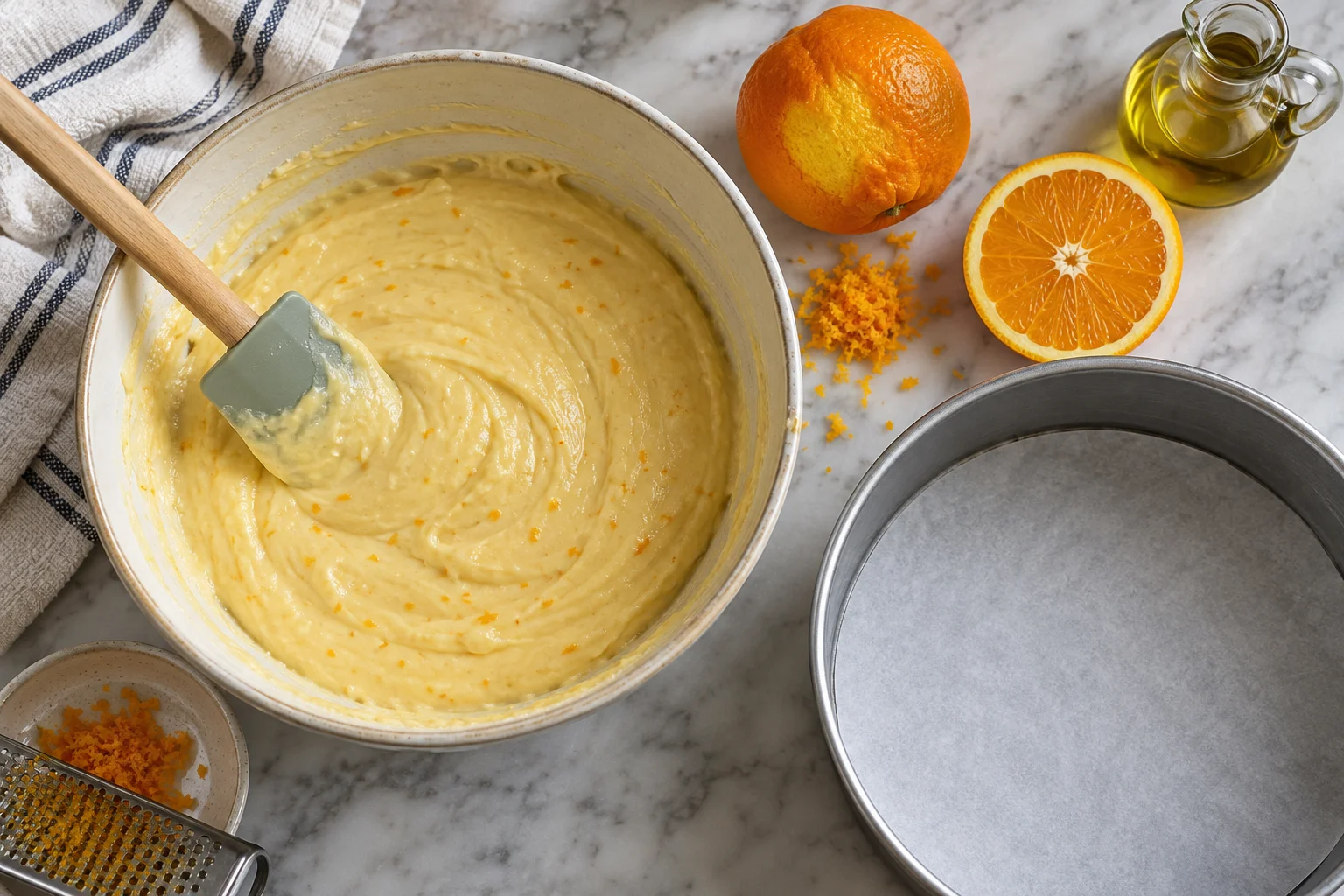
Our orange and yogurt adaptation
A round orange olive oil cake
Makes eight slices in a 23 cm/9-inch round metal cake pan at least 5 cm deep. Allow about 15 minutes to prepare, 40–45 minutes to bake and an hour to cool. This is an editorial adaptation of the documented methods, without a claim of kitchen testing.
Ingredients
Batter
- 230 g all-purpose wheat flour
- 2 tsp baking powder
- ¼ tsp fine salt
- 3 large eggs
- 160 g granulated sugar
- 120 g mild olive oil, plus a little for the pan
- 150 g plain full-fat Greek yogurt
- 60 ml fresh orange juice
- 1 tbsp finely grated orange zest
- 1 tsp vanilla extract
Method
- 1
Prepare the oven and pan
Heat a conventional oven to 180°C/350°F. Lightly oil the pan and line its base with baking parchment. Prepare the orange zest and measured juice.
- 2
Distribute the leavening
Whisk the flour, baking powder and salt together in a bowl. Break up any visible lumps so the leavening is distributed before it enters the wet batter.
- 3
Build the wet mixture
In a larger bowl, whisk the eggs and sugar until combined and slightly foamy. Gradually whisk in the measured oil, then the yogurt, juice, zest and vanilla. The mixture should look even, without separate oily streaks.
- 4
Fold in the flour
Add the dry mixture in two portions. Use a spatula to fold through the base and sides, stopping when no dry flour remains. Transfer immediately to the pan and level the top.
- 5
Bake and check the center
Bake on the middle rack for 40–45 minutes, checking from 40 minutes. The top should be golden and a skewer inserted into the center should emerge without wet batter. If needed, continue in short intervals; tent loosely with foil if the top browns too quickly.
- 6
Cool before slicing
Leave in the pan for 10 minutes, then loosen the sides and carefully turn onto a rack. Remove the parchment and turn upright. Cool for roughly another 50 minutes, or until the center is no longer warm, before cutting eight wedges.
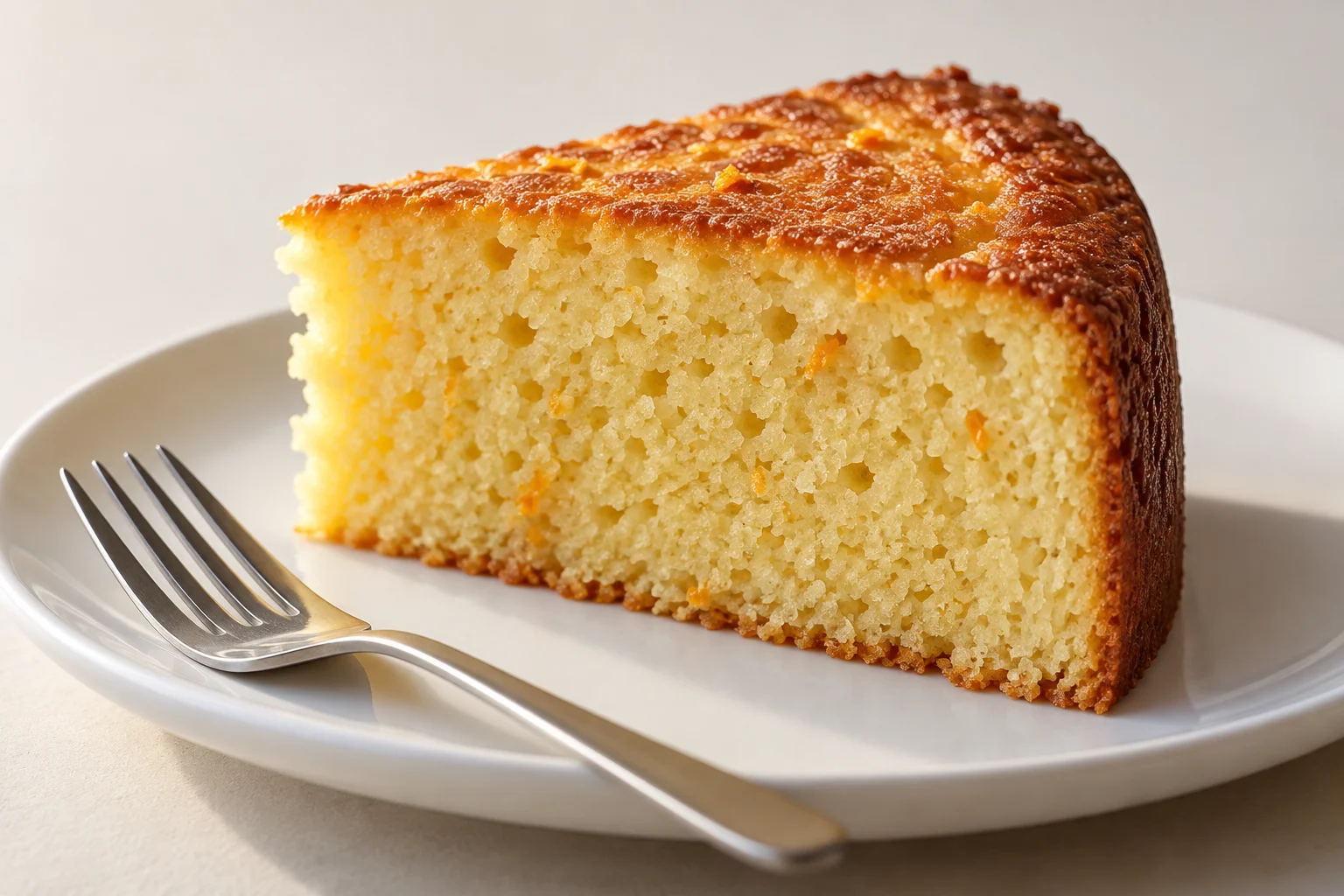
Read the center before decorating the surface
A golden top tells you that the surface has baked; it cannot show whether the center still contains wet batter. Barbarigou explicitly checks the interior of her oil cake before removing it, and both citrus recipes use a center test. Keep that checkpoint even if the cake looks ready at the suggested time.
Serve the first slice plain. You can see the crumb and taste how the chosen oil and orange work together. If you later want a glaze, add it only after the cake has cooled, as Alexandrakis does for her lemon loaf. A finish can be a serving choice after the cake is baked, cooled and ready to cut.
Research notes
Original recipes and methods consulted
These four original recipes document different oil cakes. Their ingredient choices and mixing guidance inform our separate orange and yogurt adaptation; the raisin, lemon and Cretan orange recipes retain their own formulas.
- Argiro Barbarigou — Cake with oil Original yogurt and raisin cake supports premixing dry ingredients, gentle flour incorporation, a center check and rack cooling.
- Cretan Mill Almpantakis — Orange cake Producer’s original recipe documents orange-flavored olive oil, orange juice and zest, gradual liquid incorporation and baking.
- Dimitra Alexandrakis — Lemony olive oil loaf cake Original citrus loaf supports mild oil, separating zest from measured juice, minimal final mixing and glazing only after cooling.
- Kevin — Greek olive oil cake Original orange and yogurt round cake supports mild oil choice, gentle batter mixing, a center test and cooling before slicing.
Keep exploring
More stories for your table
Greek cuisine Semolina custard pastry
Galaktoboureko: custard, phyllo and the syrup between them
Read galaktoboureko through its semolina custard, fragile phyllo and syrup, with a comparison of published Greek recipes and practical serving cues.
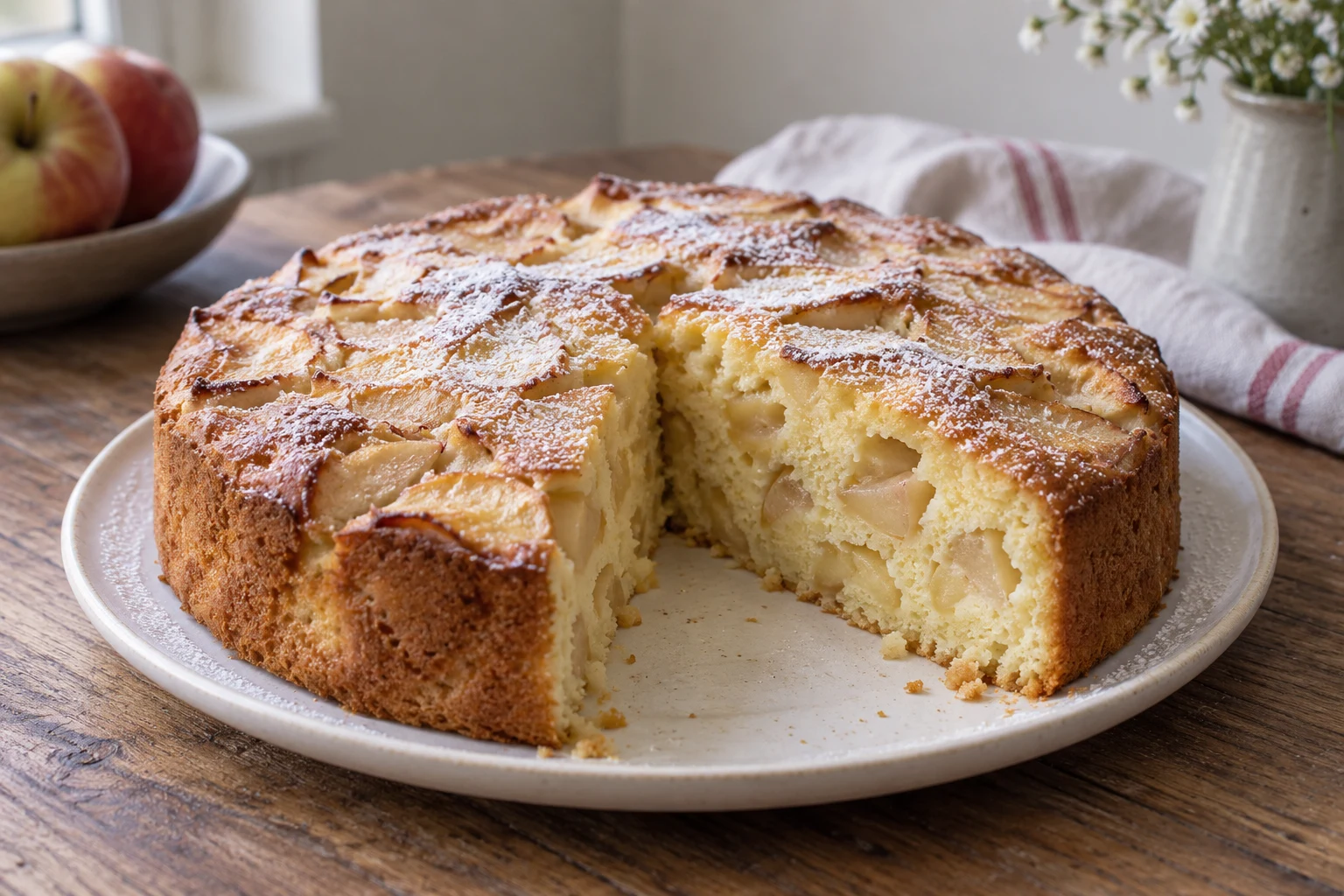
Russian cuisine Apple sponge cake
Sharlotka: apples held in a light egg sponge
Sharlotka brings apples and whipped-egg sponge together. Compare fruit placement, batter cues and a sour-cream variation before choosing a recipe.
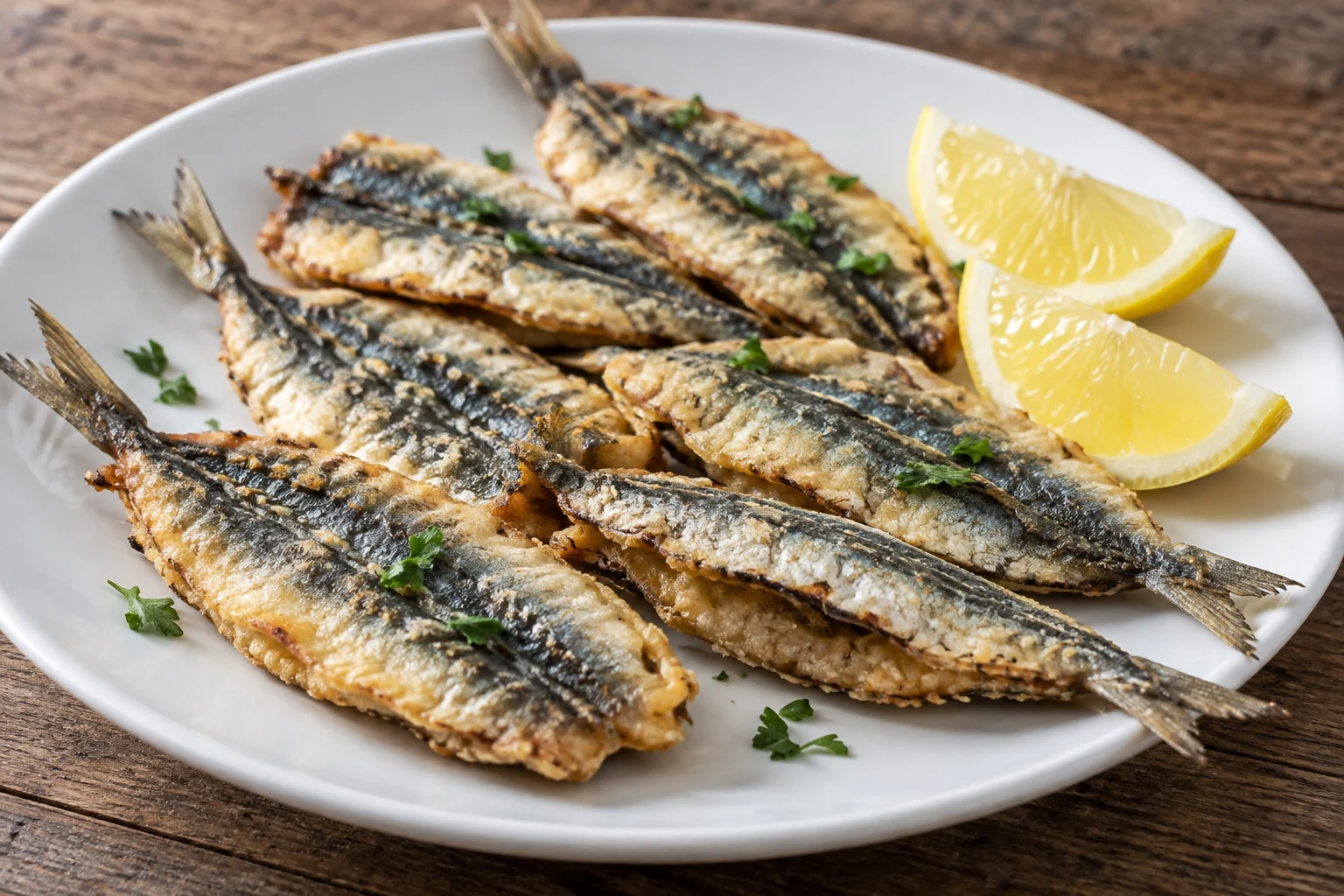
Greek cuisine Fried fish
Greek Fried Sardines: Set the Table Before the Pan
Fresh fried sardines need a dry surface, a light coating and room in the pan. Choose the fish preparation first, and have the plate ready for each batch.