
Semolina Halvas: Toast First, Set Later
Halvas simigdalenios
A toasted grain becomes a molded sweet in two stages. Color develops before the syrup enters; the body develops before the pudding cools.
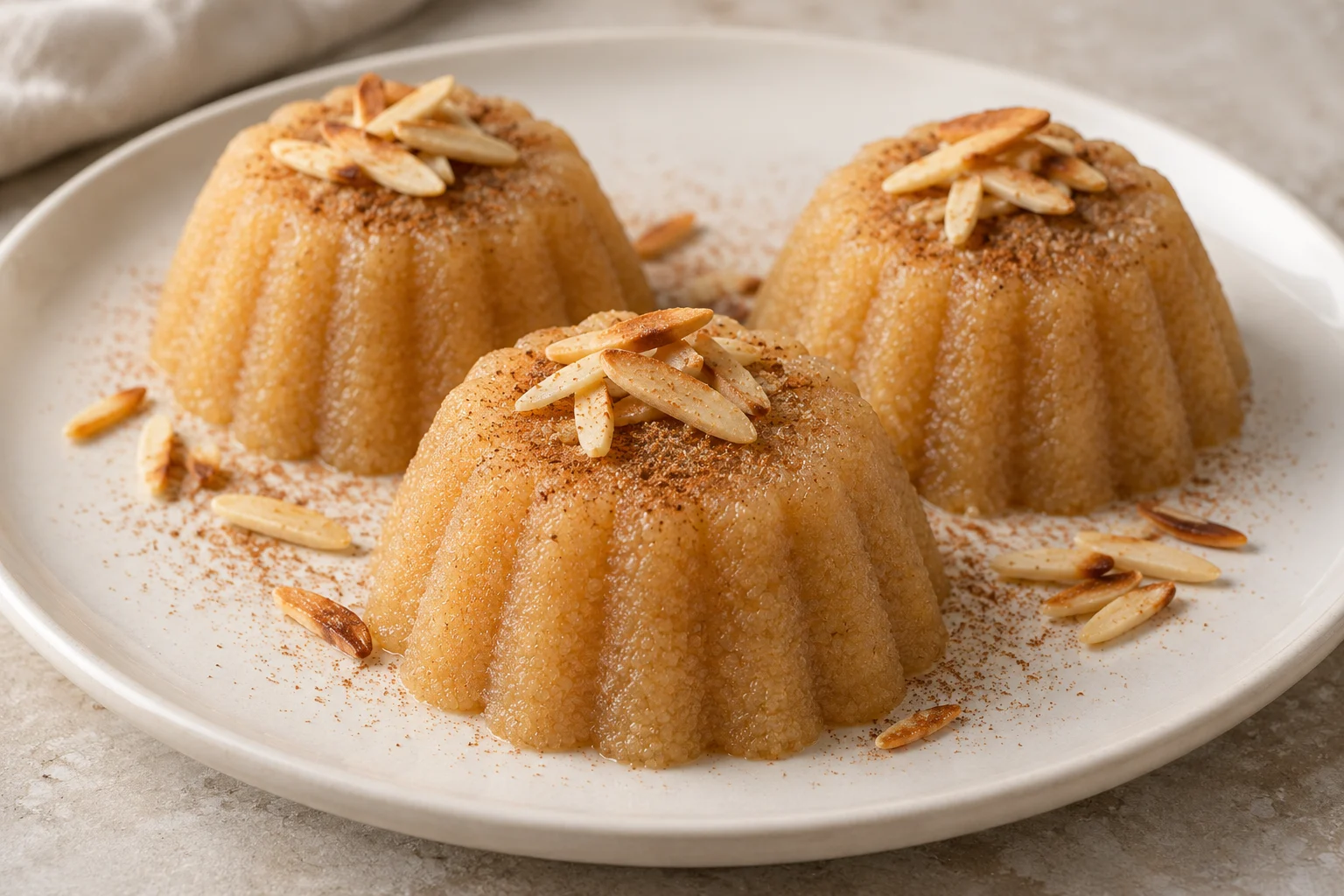
Choose the semolina version
Halva names several different sweets in Greece. The Greek National Tourism Organisation lists tahini halva, the gelatinous Farsala variety and semolina halva separately in its account of the Lenten table. This article follows the semolina version: wheat grain toasted in oil, cooked with sweet liquid and set into a serving shape.
The stove does the main work. A mold makes the finished dessert tidy, but it cannot compensate for grain that has barely toasted or a mixture that is still loose. Think of the process as two checkpoints, then give the pudding time to cool.
A remembered ratio still needs a method
Eli Giannopoulos at My Greek Dish describes the familiar one-two-three-four pattern: oil, semolina, sugar and water measured in the same volume unit. It is a useful memory aid, rather than a ratio by weight. Argiro Barbarigou’s recipe uses two and a half parts sugar, showing that published versions also make specific sweetness choices.
Grain size changes the texture. Jenny Skrapaliori-Graves at The Greek Foodie explains that coarse semolina gives a more noticeable grain, while fine semolina produces a smoother result. The home version below combines the two. It chooses a separate lemon-and-cinnamon syrup, so prepare that before the grain reaches its toasted endpoint.
Editorial home version
Six small semolina halvas
A small metric batch drawing on the shared toasted-grain method, with the lower sugar proportion shown by Barbarigou. Allow 10 minutes to prepare, about 25 minutes on the stove and at least 90 minutes to cool. This synthesis has not been kitchen-tested.
Ingredients
Syrup
- 480 ml water
- 250 g granulated sugar
- 1 cinnamon stick
- 2 wide strips lemon peel, with little white pith
Toasted grain and finish
- 120 ml mild olive oil, plus a little for the molds
- 90 g coarse wheat semolina
- 90 g fine wheat semolina
- 1/2 teaspoon ground cinnamon, plus a little for dusting
- 30 g toasted almond slivers, optional
Method
- 1
Prepare the syrup and molds
Lightly oil six heatproof molds or ramekins of about 150–200 ml. Bring the water, sugar, cinnamon stick and lemon peel to a boil in a saucepan. Once the sugar has dissolved, simmer gently for 2–3 minutes. Remove from the heat, lift out the stick and peel, and keep the syrup warm.
- 2
Toast the grain
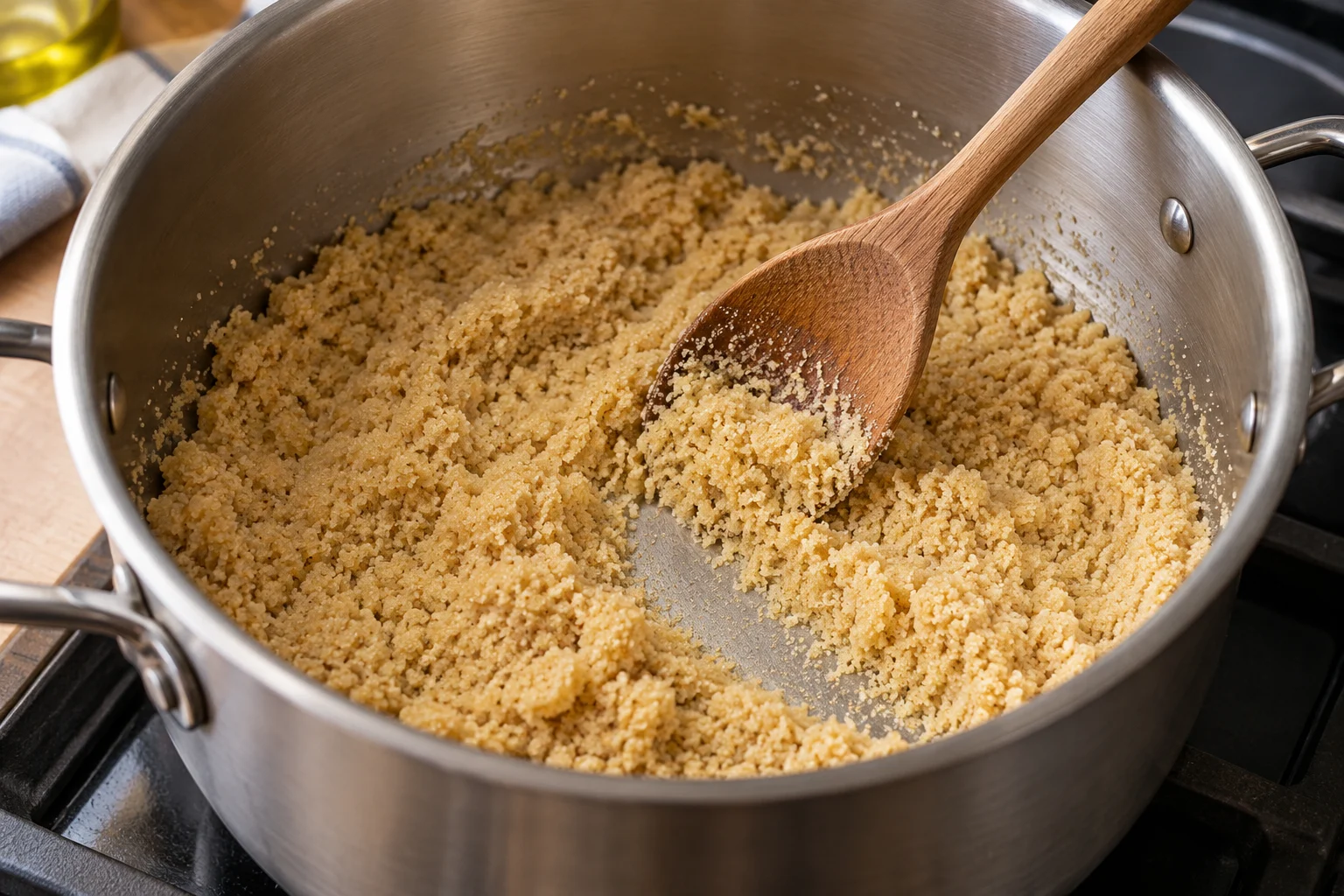
Warm the oil over medium-low heat in a deep heavy pot. Add both semolinas and stir with a long wooden spoon, reaching the bottom and edges. Toast for about 6–8 minutes, until evenly golden and aromatic. Reduce the heat if any patches darken quickly; stop before the grain scorches.
- 3
Add liquid with care
Take the grain pot off the heat. Add the warm syrup gradually with a ladle held close to the pot, keeping your face and hands clear of the steam and vigorous bubbling. Stir carefully as the additions settle. When all the syrup is incorporated, stir in the ground cinnamon.
- 4
Thicken before molding
Return to low heat and stir until the mixture becomes a thick mass that gathers around the spoon and pulls from the pot’s sides, about 5–10 minutes. Remove from the heat and fold in the optional almonds. Let the fiercest steam subside, then spoon into the prepared molds and press gently to remove gaps.
- 5
Cool and serve
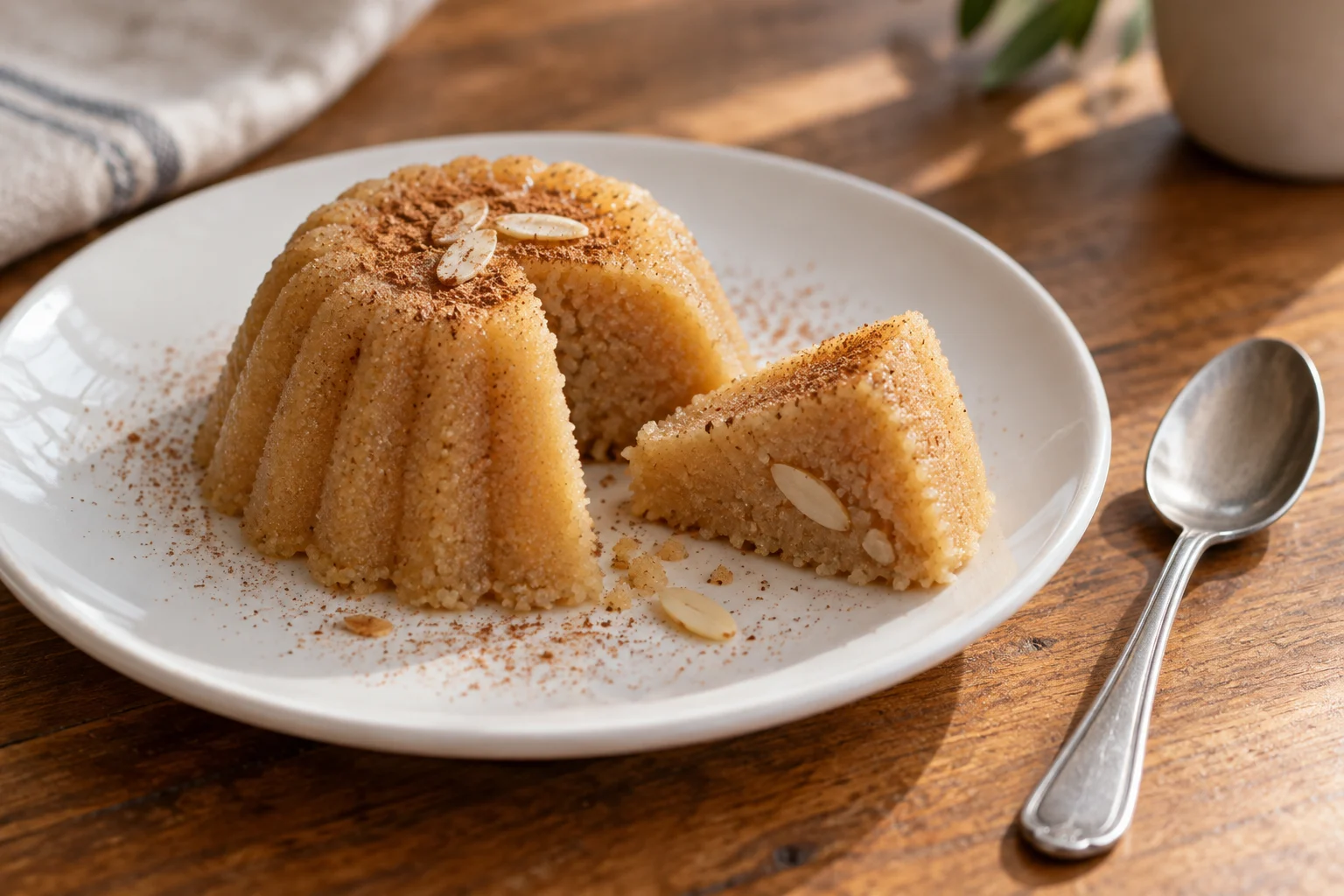
Allow at least 90 minutes to cool and firm; leave longer if the centers remain warm or the shapes feel soft. Loosen gently at the edges and turn onto plates when they release readily. Dust lightly with cinnamon. If a portion resists unmolding, serve it from its ramekin rather than tearing it apart.
Cooling finishes a prepared texture
Giannopoulos stresses cooking the mixture to a very thick paste before cooling. Barbarigou also uses the point where it gathers around the spoon and leaves the sides of the pot. Those descriptions make a better final check than assuming a timer alone will produce the right consistency.
Skrapaliori-Graves advises settling the mixture into its mold without packing it hard. For the small servings here, aim to close obvious gaps with a few gentle spoon presses. A compact shape should still yield easily when eaten. Once it cools, a cut or spoonful can show the fine grain that distinguishes this pudding from an airy cake.
Research notes
Sources and the chosen method
Four independent primary sources were opened and read. Recipe quantities and timing are an editorial home synthesis; published versions differ in sugar, grain mix and setting time. Images are generated illustrations.
- Visit Greece — culinary traditions of Lent Greek National Tourism Organisation distinguishes tahini, Farsala and semolina halva, supporting the specific scope of this article.
- My Greek Dish — Eli Giannopoulos’s semolina halva Original cook’s recipe explains the volumetric ratio, golden toasting, thick-paste endpoint and a 90-minute cooling period.
- Argiro Barbarigou — Greek semolina halva Chef’s own recipe uses a lower sugar proportion, mixed semolina and careful off-heat syrup additions before thickening and molding.
- The Greek Foodie — Jenny Skrapaliori-Graves’s halvas Cook’s own recipe explains grain-size differences and gentle molding; its direct-water and longer-setting approach is distinct from the syrup version chosen here.
Keep exploring
More stories for your table
Greek cuisine Semolina custard pastry
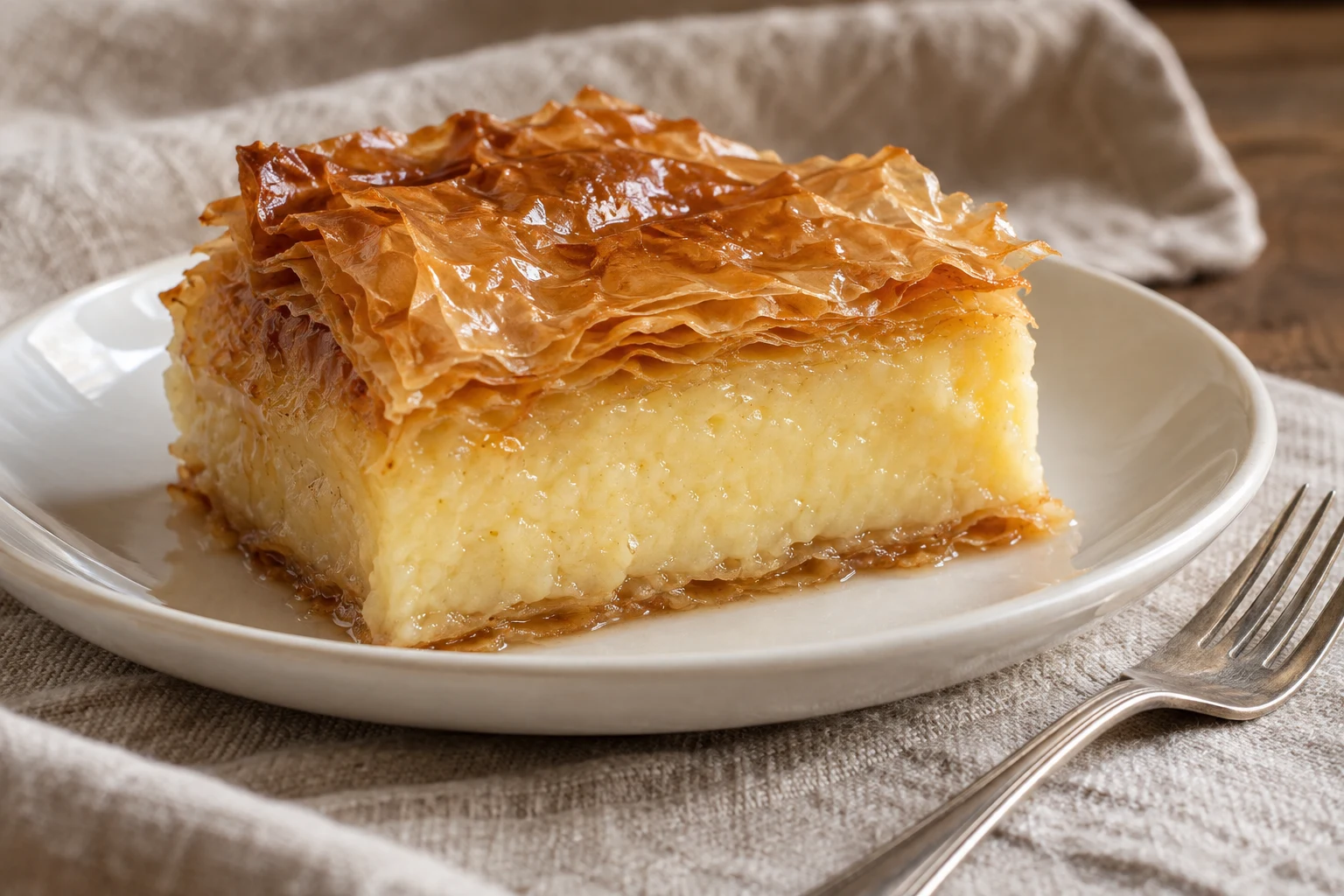
Galaktoboureko: custard, phyllo and the syrup between them
Read galaktoboureko through its semolina custard, fragile phyllo and syrup, with a comparison of published Greek recipes and practical serving cues.
Greek cuisine Vegetable and rice dish
Spanakorizo: Let the Spinach Lead
Greek spinach rice depends on the water in its leaves, the choice of grain and a lemony finish. Compare the decisions behind its soft, vegetable-forward texture.
Peruvian cuisine Fruit and purple corn pudding
Mazamorra morada: from purple corn liquid to pudding
Purple-corn liquid, cooked fruit and starch form mazamorra morada. Explore the method and its separate arroz con leche pairing, el clásico.