
Greek Fried Sardines: Set the Table Before the Pan
Σαρδέλες τηγανητές
A small fish can spend only a short time in the pan. Prepare the plate and lemon first, then give the coating and the cooking your full attention.
Fresh fish, a light crust
The serving plan is part of the frying
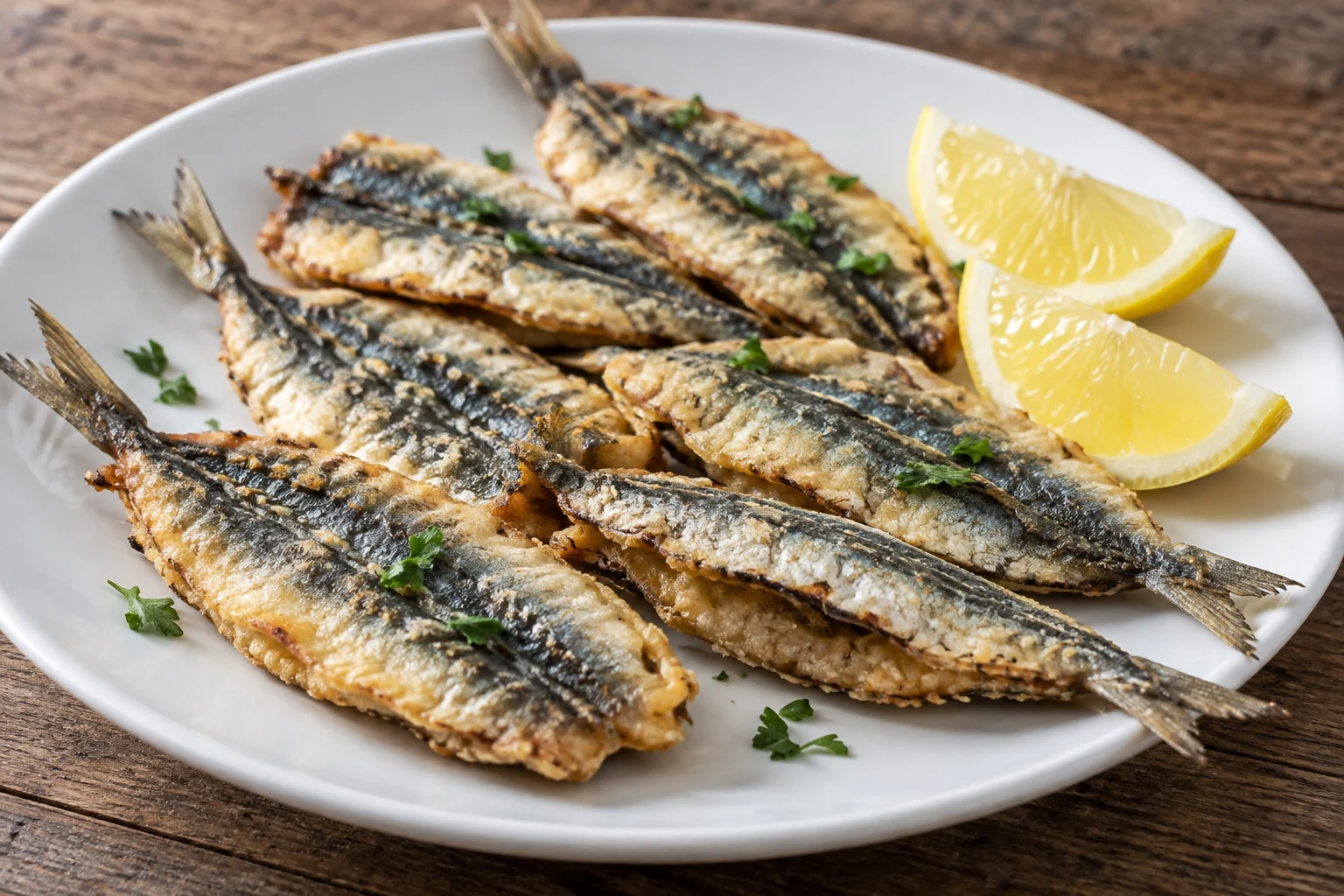
Greek fried sardines can arrive with little more than flour, olive oil and lemon. Their appeal depends on the meeting of tender fish and a lightly golden surface. Have the serving plate, draining paper and lemon ready before the first batch goes in. Searching for them after cooking creates an unnecessary wait at the point when the fish is ready to eat.
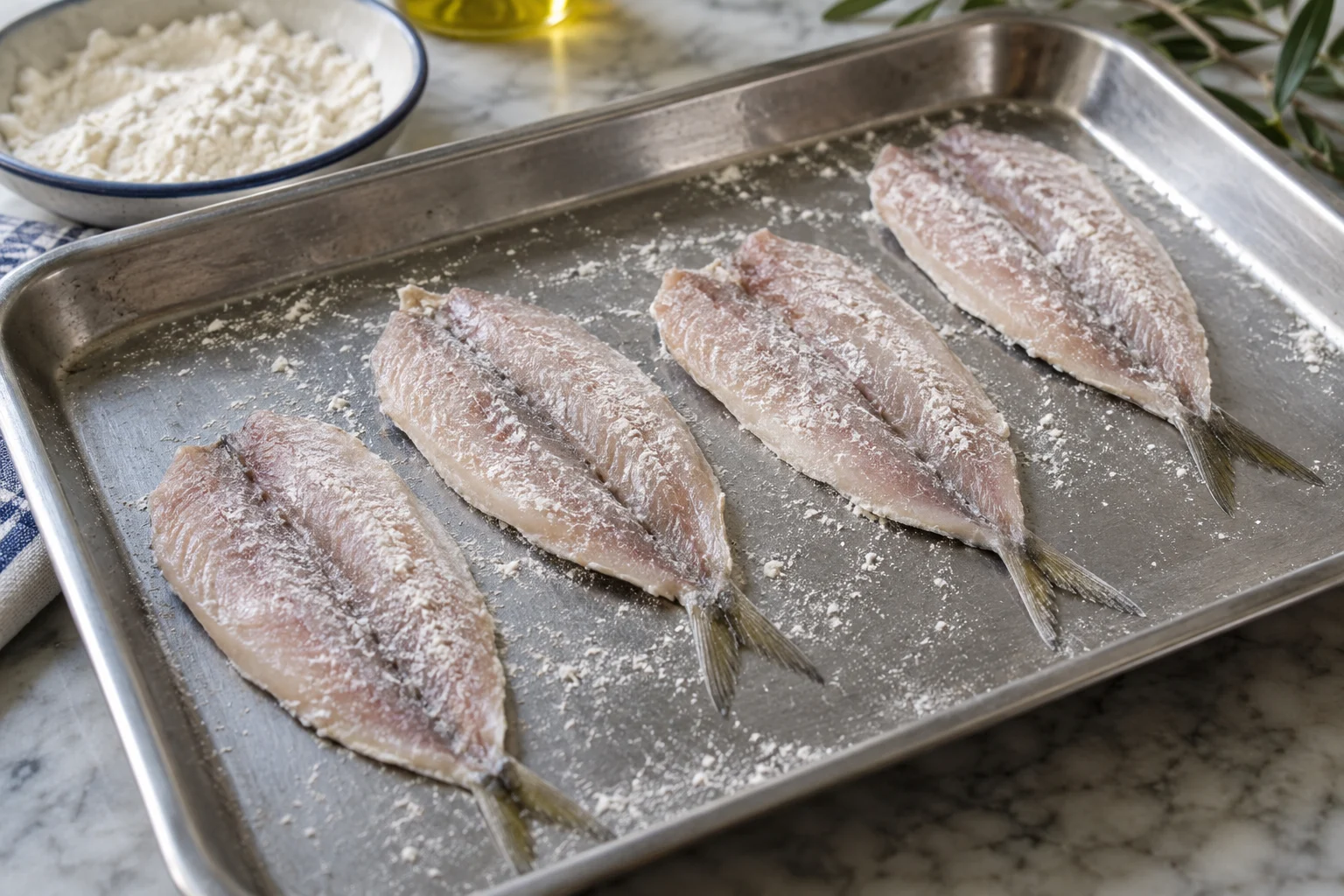
The preparations shown here use headless, butterflied fresh sardines. A fishmonger can prepare that form for you. Other recipes use cleaned fish kept whole, so choose a complete method that matches what you bought. The shape affects how you handle the fish and judge its cooking; a timing written for a different preparation is only a rough reference.
The flour placement is a choice within the method
Greek Boston’s sardine recipe dries whole cleaned fish, coats them in seasoned flour and fries in batches. A recipe supplied by Thessaloniki’s Karabourno restaurant to Athinorama instead uses sardine fillets, flouring only the skin side before pan cooking. Its finish includes parsley, spring onion and lemon. These are two documented approaches, each with its own preparation.
The useful question is how much coating the chosen fish needs. A thin layer lets the skin and outline remain visible. Before frying, look across the tray: pieces buried in flour will behave differently from lightly dusted ones. Shake away loose excess and keep the coating consistent within the batch.
Give each batch a clear path to the plate
Use these principles with the quantities, oil depth and fish preparation of the complete recipe you select.
- 01
Dry the surface first
Blot the cleaned fish before coating. Chef Argiro Barbarigou emphasizes careful drying and removing excess flour in her small-fish savoro method. That recipe uses other fish species; its frying principles are the relevant reference here, rather than its sauce or preservation tradition.
- 02
Leave room for the fish
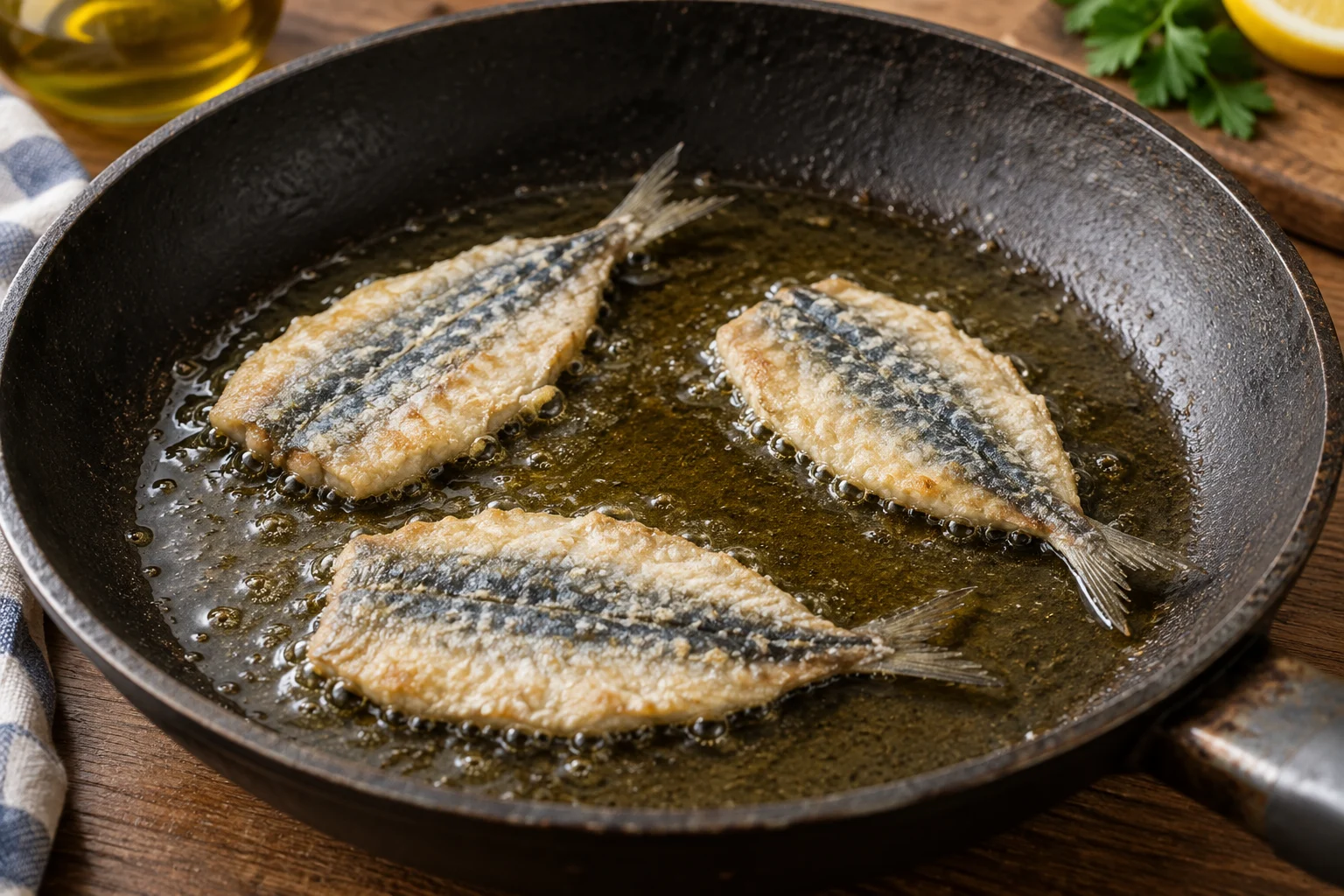
Add a small batch without packing pieces against one another. Greek Boston and Barbarigou both warn against crowding. Space makes it easier to see the edges, turn pieces gently and lift each out when ready. A larger pile also makes it harder to distinguish a fish that has just entered from one almost done.
- 03
Judge fish and coating separately
A golden surface is a crust cue. Check the fish’s doneness as well: FoodSafety.gov specifies 145°F/63°C for fish, or flesh that is opaque and separates easily with a fork. Follow the selected method and the actual thickness; color alone should not decide when the batch is ready.
- 04
Drain briefly, finish and serve
Lift the fish gently to the prepared draining paper, then move it to the plate. Bring the lemon to the table or add it immediately before serving, as the sardine recipes direct. The short path keeps the last stage simple: cooked fish, a little finishing acidity and an available plate.
Plan the quantity around the pan you have
A plate of small fish can be served in successive batches. If everyone waits for a large quantity to be cooked before eating, the earliest pieces wait the longest. Decide in advance whether the meal will begin with the first batch or whether a smaller quantity better suits the table. That choice is more useful than trying to fit every fish into the skillet.
Put any accompaniments in place before frying and leave the fish easy to lift rather than stacking it into a tall mound. For whole fish or fillets, check for remaining bones as you eat. A simple serving gives each person room to handle the fish carefully and enjoy the contrast between its lightly crisp surface and tender flesh.
Research notes
Preparation and cooking guidance consulted
Two original sardine preparations establish the variants; an original chef’s small-fish recipe supports shared frying technique. The official chart supplies the fish-doneness endpoint. This is a technique guide, not a complete kitchen-tested recipe.
- Greek Boston — Greek-style fried sardines Original sardine recipe uses dried whole cleaned fish, seasoned flour, uncrowded frying batches and lemon just before serving.
- Athinorama — Karabourno’s fried sardines with lemon Restaurant-supplied original recipe uses filleted sardines with flour on the skin side and a parsley, spring-onion and lemon finish.
- Argiro Barbarigou — Psari savoro Original chef recipe for other small fish supports drying, shaking off flour and batch frying; its sauce and preservation claims are not applied to sardines.
- FoodSafety.gov — Safe minimum internal temperatures Official chart provides the 145°F/63°C fish endpoint and opaque, easily separating flesh cue.
Keep exploring
More stories for your table
Greek cuisine Lamb chops
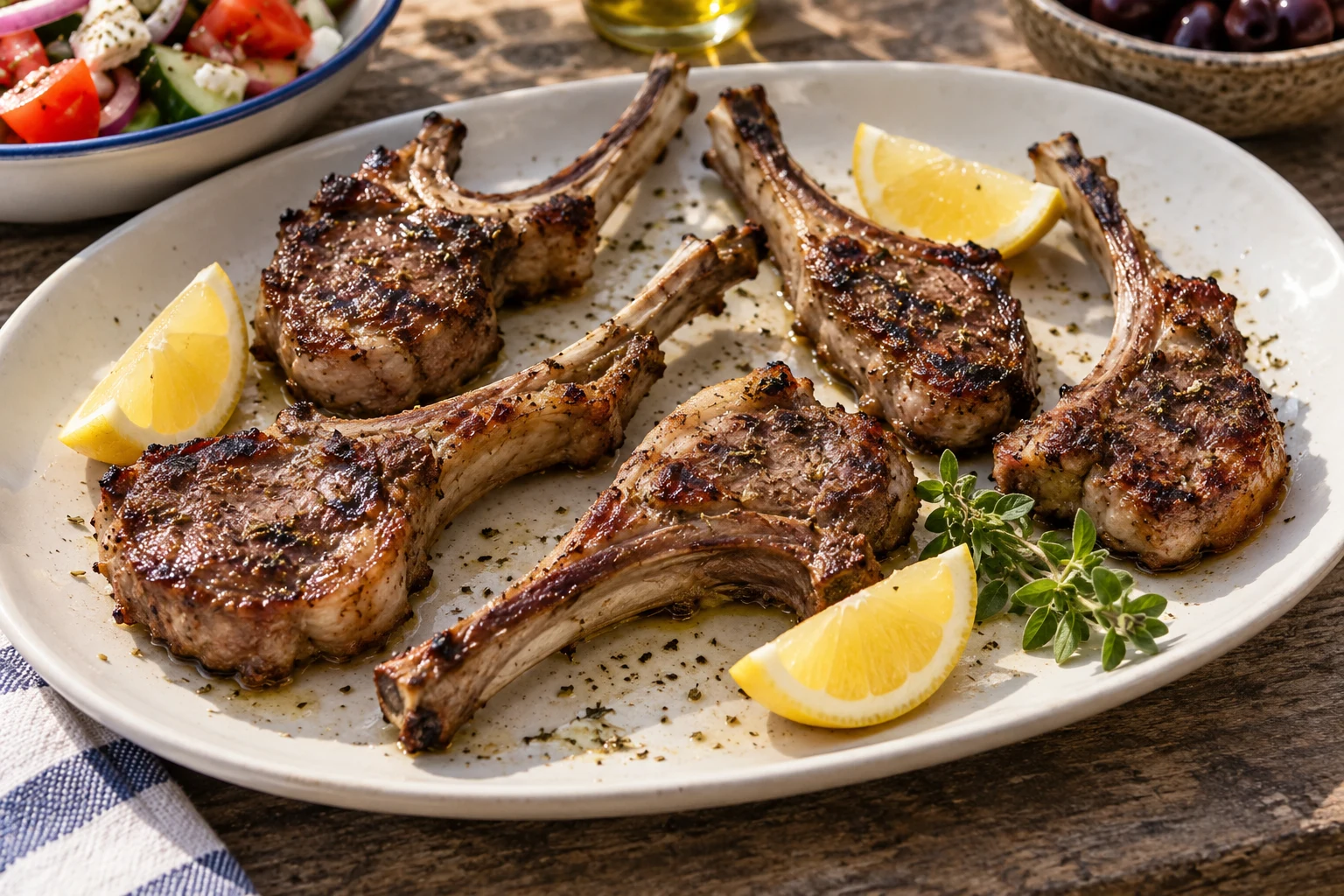
Paidakia: Choose the Chop Before the Marinade
Greek-style lamb chops start with the cut and thickness. Compare rib and loin chops, keep marinade separate from finishing sauce, and judge the center as well as the crust.
Greek cuisine Citrus cake
Greek Olive Oil Cake: Keep the Citrus Measured
An orange and yogurt olive oil cake with a gentle mixing method, a specified round pan and a center check. Measure the juice and let the zest carry the aroma.
Greek cuisine Cheese appetizer
Cheese Saganaki: The Slice Must Hold
A thin golden crust and a warm cheese centre depend on the slice beneath them. Saganaki recipes show why cheese choice, coating and immediate service belong together.