
Kalamarakia tiganita: fry last, add lemon at the table
Καλαμαράκια τηγανητά
A practical guide to Greek fried calamari: match the rings to a coating method, keep the pan manageable, and prepare the table before frying.
The meal can be ready before the calamari
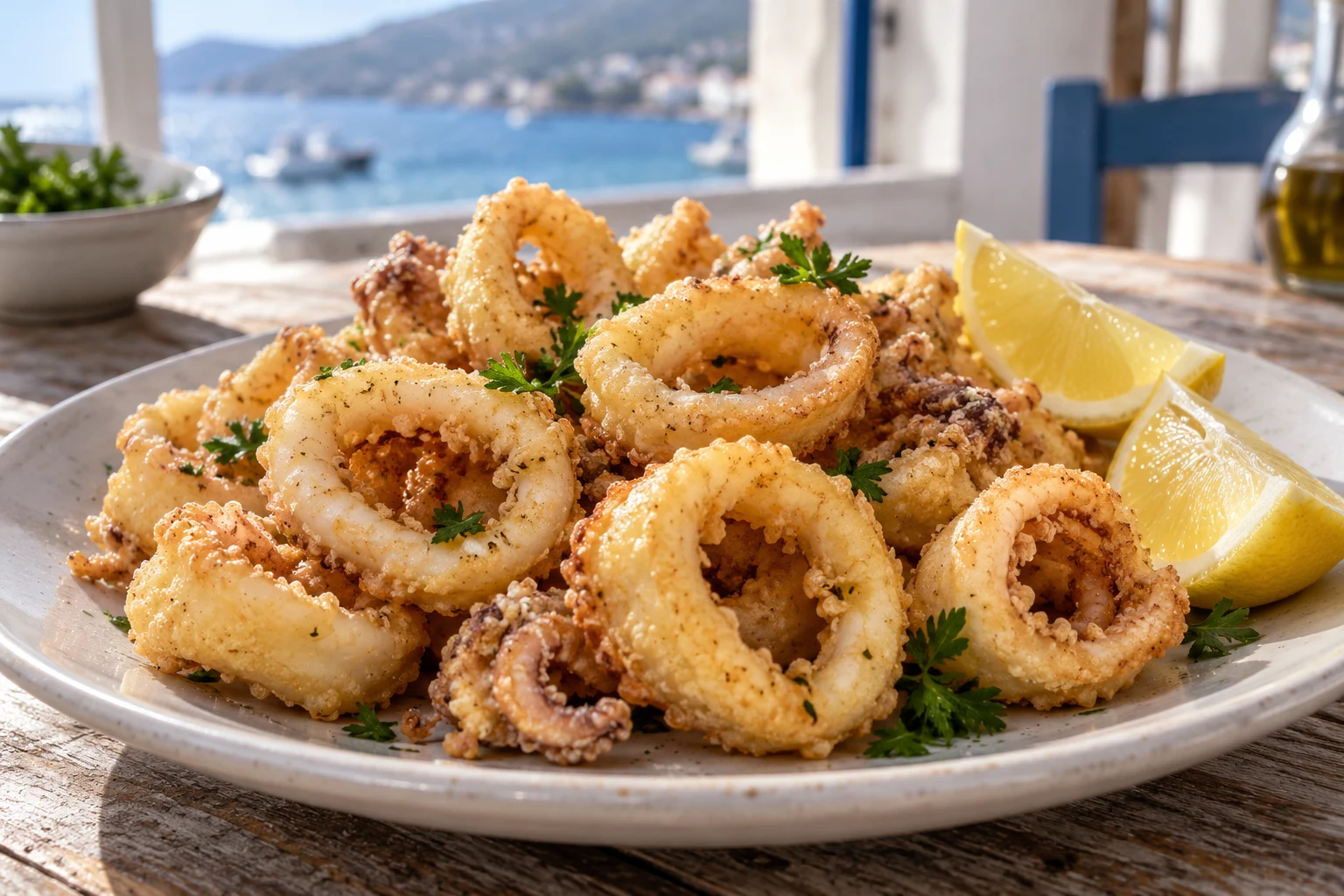
Kalamarakia tiganita asks for a useful reversal of the usual dinner sequence. Prepare the salad, set out the lemon and arrange the serving dishes first. The squid is the part to fry near the end, so its coating reaches the table while it still has a crisp bite.
That timing suits the flour-coated rings in the Greek recipes considered here. They offer different flour combinations and preparation instructions, but each gives the final frying stage a clear place in the method. Understanding the sequence is more useful than treating a larger batch as something that can simply stay in the pan longer.
Know what is being cut into rings
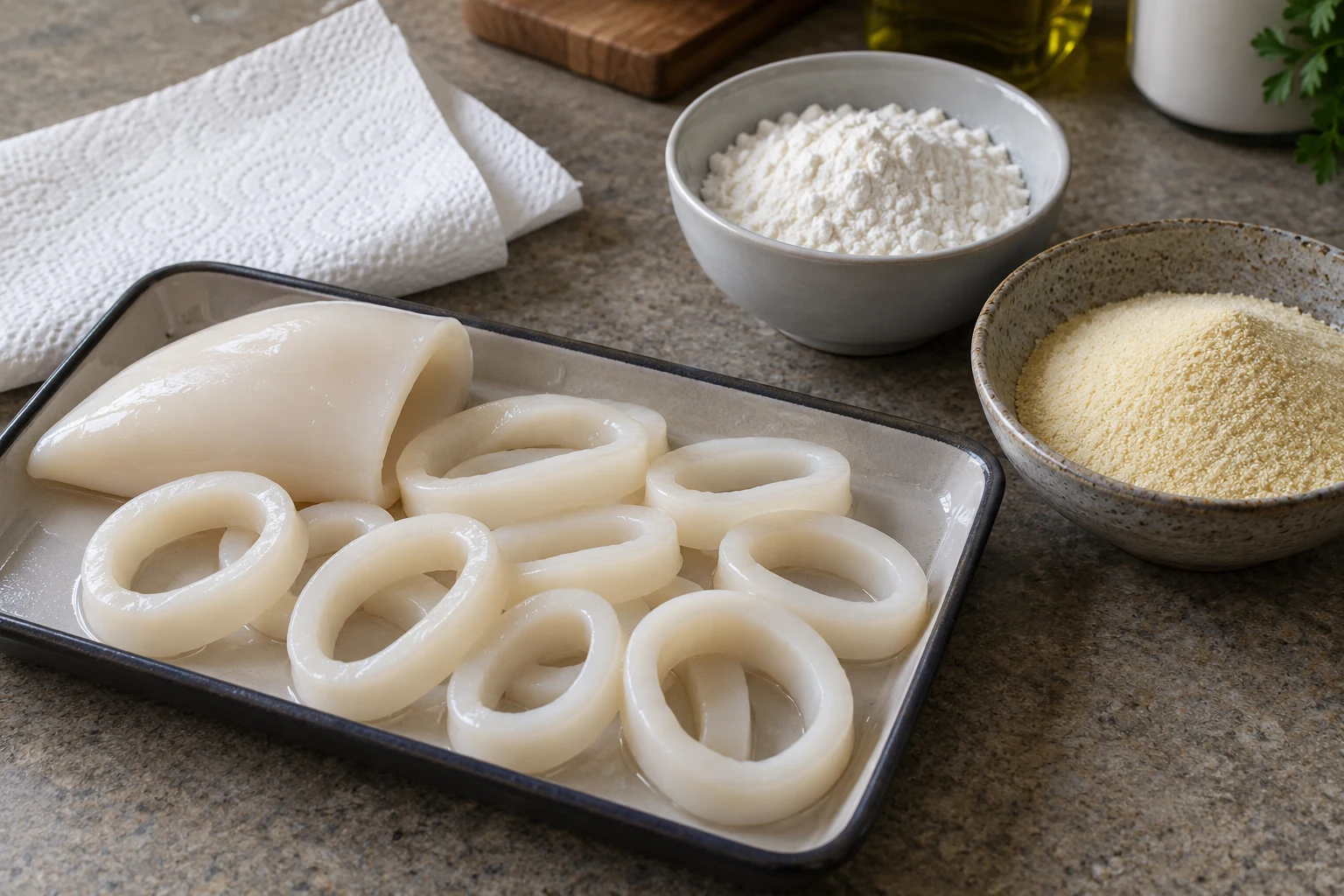
Calamari is squid. Suzy Karadsheh's recipe begins with cleaned tubes, which she slices into rings; prepared rings are another starting option in that method. Check whether your purchase is a whole animal, cleaned tubes or already sliced pieces before planning the work. Those descriptions tell you how much preparation remains.
Eli K. Giannopoulos, writing for My Greek Dish, cuts rings about a centimeter thick. Argiro Barbarigou specifies roughly one to one-and-a-half centimeters. Their guidance makes thickness a deliberate choice rather than an accidental result of the knife. Within a batch, aim for comparable pieces and follow a recipe that describes the size you have chosen.
Two Greek flour mixtures
Bread flour and semolina
Giannopoulos combines bread flour and semolina, with seasoning in the dry mixture. Paprika and oregano are optional in his ingredient list. The method coats in batches and shakes off excess flour before frying.
- Measure the selected recipe's mixture.
- Keep the excess coating out of the frying pan.
Three flours and more seasoning
Jenny Skrapaliori-Graves uses all-purpose flour, corn flour and semolina, adding mustard powder, smoked paprika and lemon zest. Her Greek Foodie version has its own preparation sequence and a more specifically seasoned surface.
- Choose it for that complete flavor combination.
- Keep its flour names and proportions together.
Moisture instructions belong to the whole method
Barbarigou emphasizes thoroughly drying the squid before dredging and avoiding marinades. Giannopoulos removes excess water on paper but advises against patting the rings completely dry. These instructions differ, so read them together with the coating and frying steps in their respective recipes.
Karadsheh offers another approach: a refrigerated salted-milk soak followed by flour, cornstarch and baking powder. It is a useful comparison, not a step to insert automatically into one of the Greek dry-coating methods. Decide which complete preparation to follow before the squid, flour and oil are all competing for attention.
Give the frying stage fewer distractions
- 01
Finish the table setup
Choose the salad or dip, cut the lemon wedges and prepare the serving plate. Put the cold components in their own bowls so they can wait while the hot component is cooked.
- 02
Prepare a place to drain
Barbarigou uses a slotted spoon and paper towels. Have that equipment ready before adding the squid, so lifting a finished batch does not become a search for a plate.
- 03
Manage the oil heat
Karadsheh recommends an oil thermometer and explains the problem at either extreme: a low temperature gives a poor coating, while excessive heat can burn the outside before the inside is ready. Follow the chosen method's temperature guidance.
- 04
Leave room for each batch
Barbarigou fries in batches to maintain the oil temperature. Her brief frying instructions are attached to her preparation and cut; they are not a universal time for every thickness or coating.
Let each diner choose the sharp finish
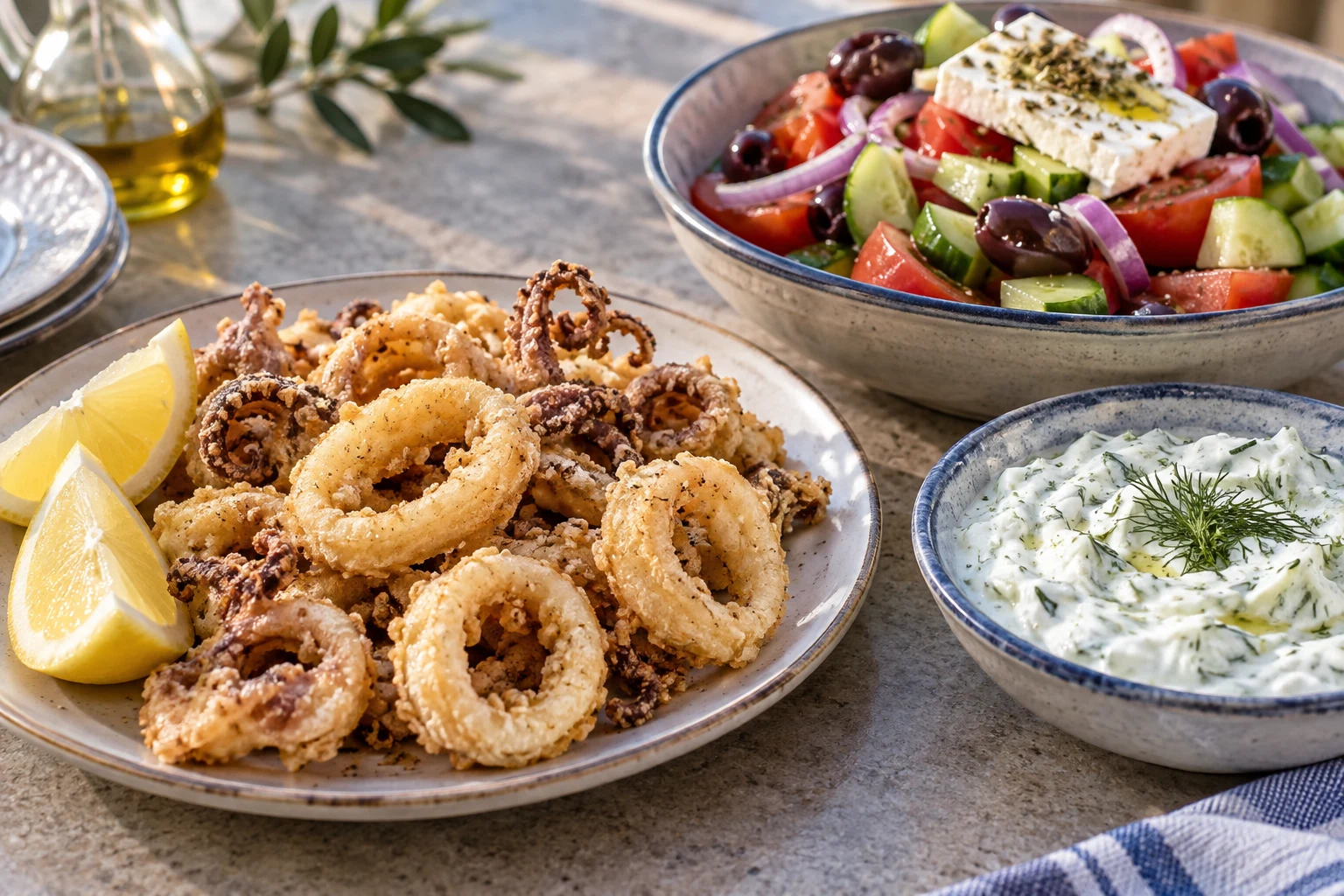
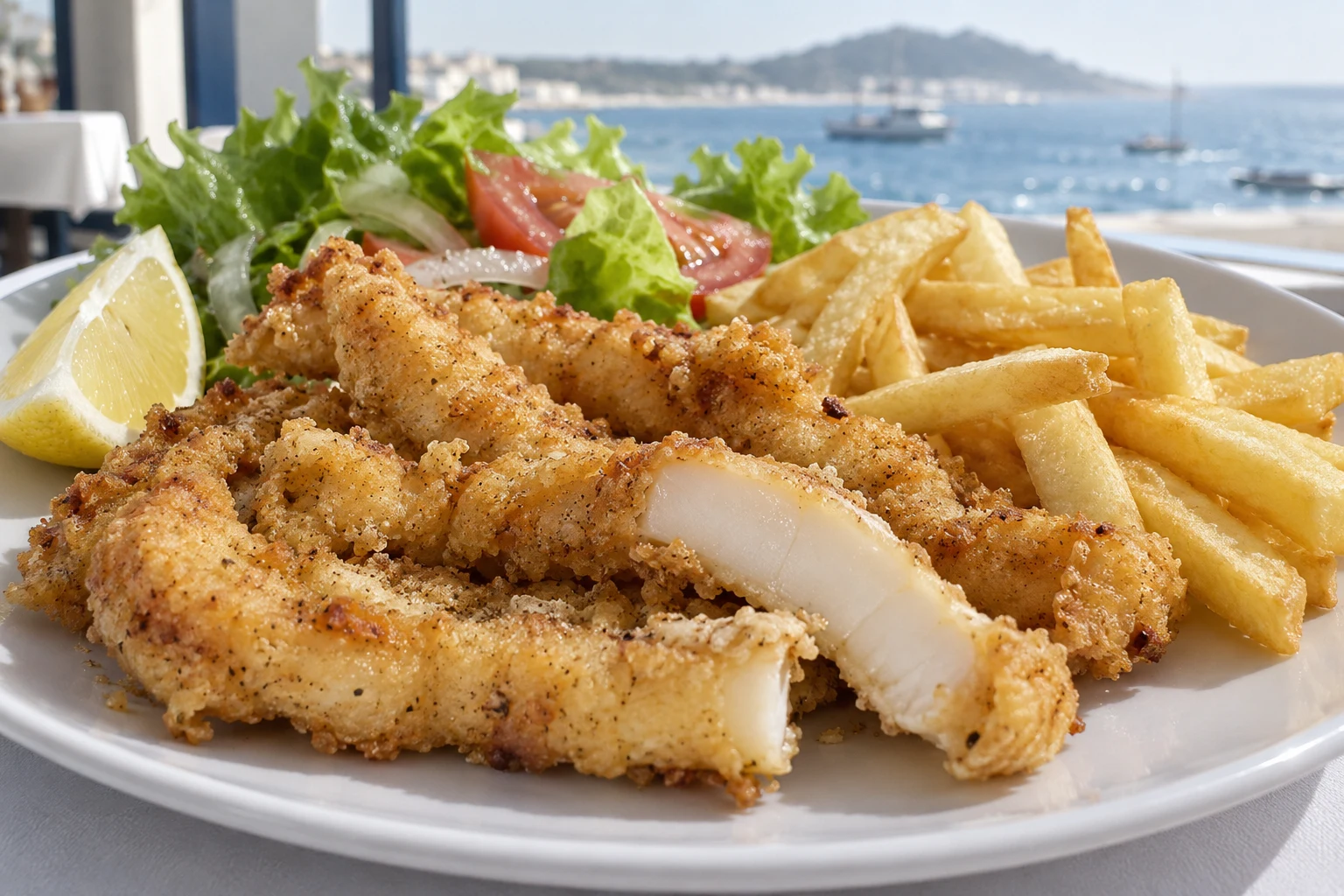
Skrapaliori-Graves keeps lemon wedges on the side because pouring juice across the shared platter softens the coating. Diners can squeeze it over their own portion. That small serving decision preserves a choice: a crisp ring first, a sharper citrus bite next, or both together.
Giannopoulos suggests Greek salad and fries alongside his calamari. A shared plate can therefore work as part of a larger meal without requiring the seafood itself to carry every flavor. Keep the accompaniments ready, follow one coherent frying method and bring the finished rings to the table promptly. Much of the dish's appeal sits in that short journey from pan to plate.
Research notes
Sources and method choices
Three Greek cooking sources and a separate Mediterranean milk-soak method inform this comparison. The quantities and procedures are not combined into a new tested recipe. Generated images illustrate the described rings and serving arrangement.
- Eli K. Giannopoulos: Kalamarakia Tiganita Ring size, bread-flour and semolina coating, excess-flour removal and serving suggestions.
- Argiro Barbarigou: How to fry calamari Drying, ring thickness, batch frying, draining and prompt serving.
- Jenny Skrapaliori-Graves: Crispy Fried Calamari Three-flour seasoned coating and lemon served separately from the shared platter.
- Suzy Karadsheh: Crispy Fried Calamari A distinct milk-soak method and useful oil-temperature guidance for comparison.
Keep exploring
More stories for your table
Greek cuisine Cheese appetizer
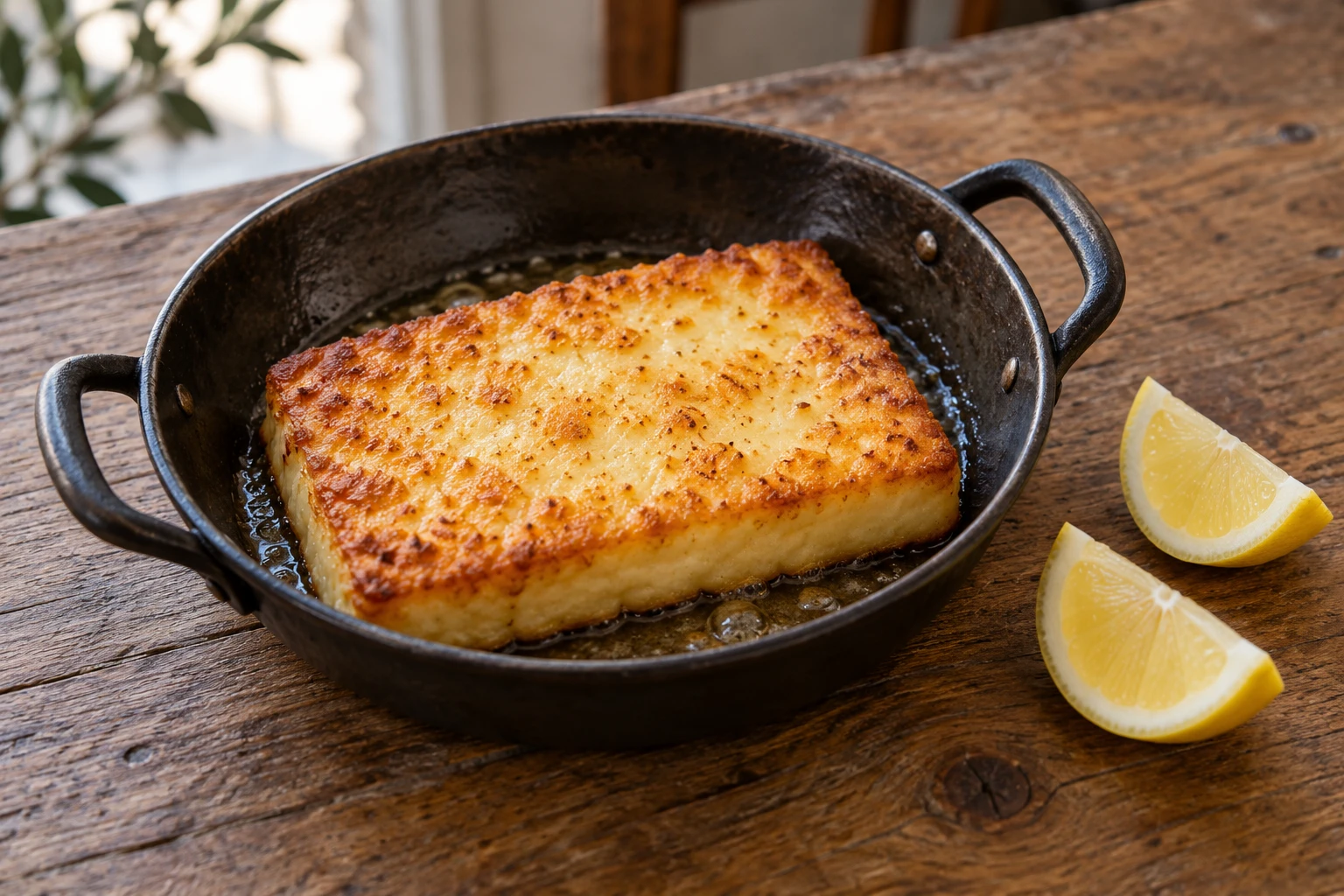
Cheese Saganaki: The Slice Must Hold
A thin golden crust and a warm cheese centre depend on the slice beneath them. Saganaki recipes show why cheese choice, coating and immediate service belong together.
Portuguese cuisine Fried seafood
Choco frito: a thin coating and a meal around it
Setúbal's fried cuttlefish comes into focus through its strips, flour coating and accompaniments—from lemon and chips to tomato rice.
Greek cuisine Lamb chops
Paidakia: Choose the Chop Before the Marinade
Greek-style lamb chops start with the cut and thickness. Compare rib and loin chops, keep marinade separate from finishing sauce, and judge the center as well as the crust.