
Maultaschen: One Swabian Pocket, Three Ways to Serve It
Maultaschen
Thin pasta and a savory filling make Maultaschen recognizable, but broth, browned onions and pan service change the meal. Explore the Swabian dish’s family variations and the limits of its monastery legend.
The pocket is only the beginning
Maultaschen belong to Swabian cooking in southwestern Germany: filled pasta pockets that can become a soup meal, an onion-topped plate or a pan preparation with egg. Those are not simply different garnishes on an unchanged experience. Broth keeps the pasta in liquid, while onions or pan cooking bring another kind of warmth, fat and texture to the outside.
Stuttgart’s official tourism account names them among the region’s signature dishes and identifies the protected geographical indication for Swabian Maultaschen. The useful way into the dish, though, is not a claim that every family makes one identical filling. AOK’s Stuttgart nutrition educator Andrea Scholpp explicitly describes family recipes as part of their character.
Three documented serving directions
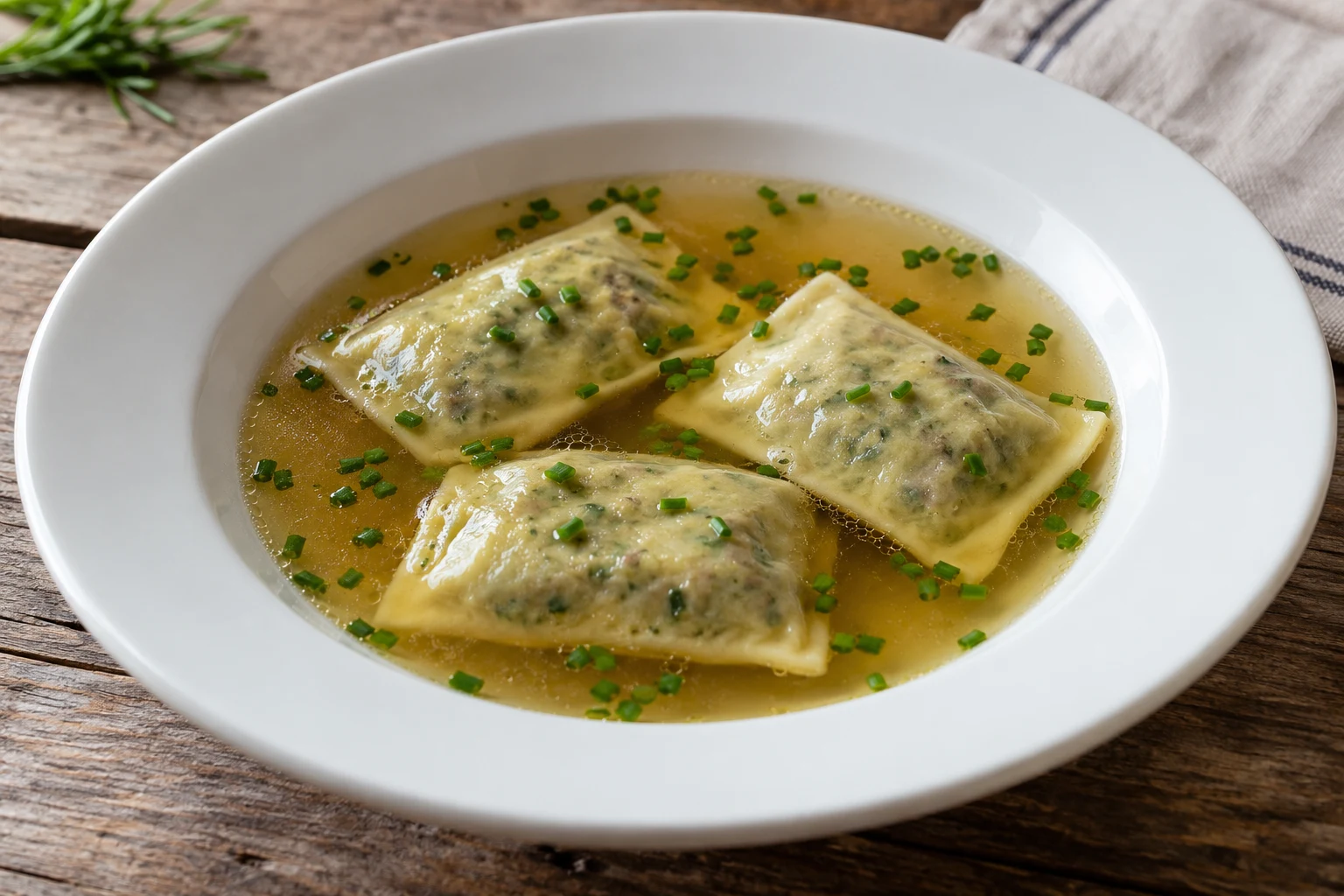
In broth
WDR cooking authors Martina Meuth and Bernd Neuner-Duttenhofer serve the pockets in hot meat broth with chives. Potato salad appears alongside in their account, so soup service can still be part of a substantial meal.
- A supple wrapper in clear liquid
- Chives finish the bowl
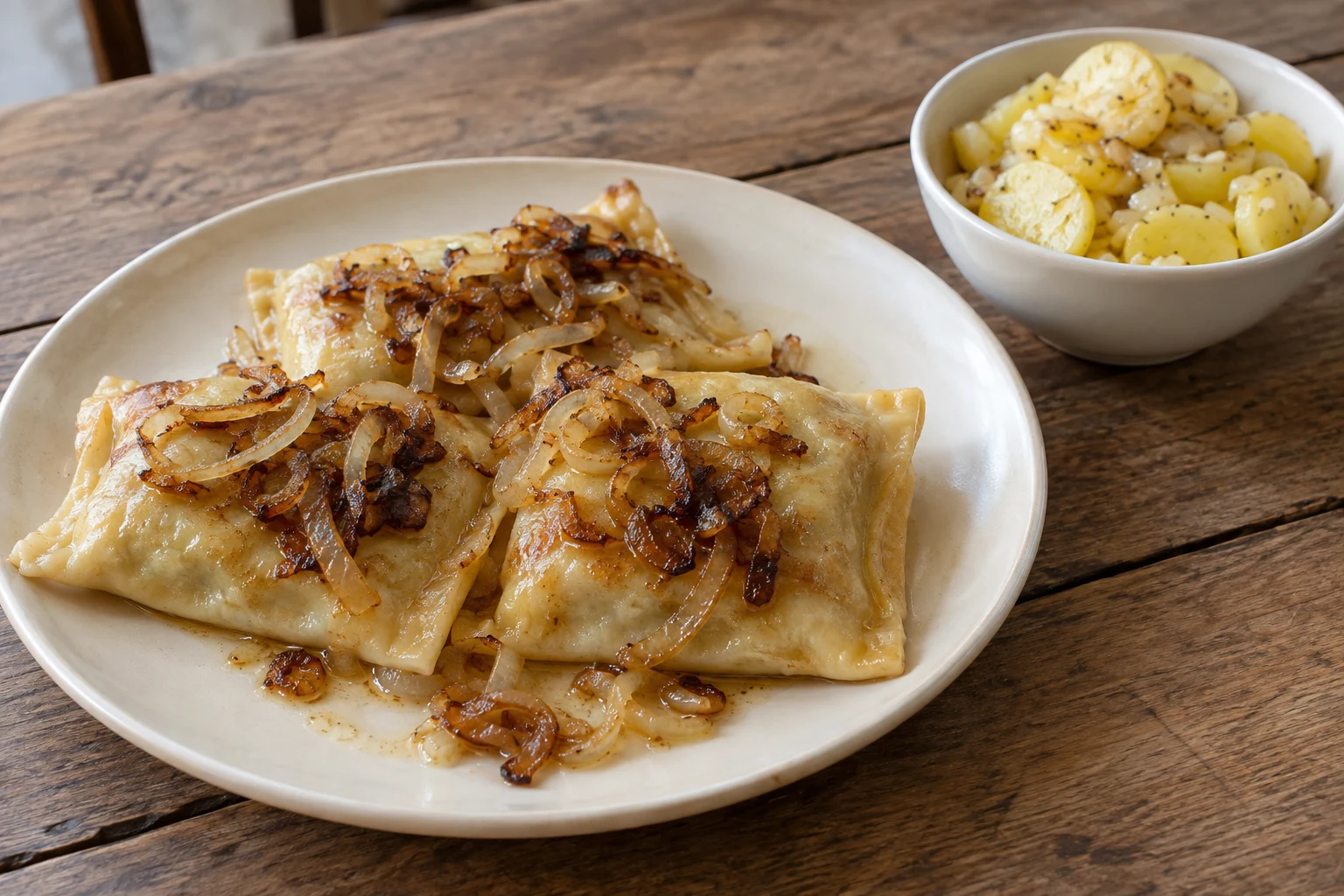
Geschmälzt
Andrea Scholpp’s preferred AOK example is geschmälzt with potato salad: a browned-onion finish that moves attention from the broth to the outside of the pasta.
- Onions provide the finish
- Potato salad is served alongside
From the pan with egg
The same AOK account records pan service with egg as another familiar choice. It changes the presentation and the surrounding texture without requiring the reader to invent a different regional dish.
- A separate way to finish cooked pockets
- Egg becomes part of the meal
A fine filling, a thin wrapper
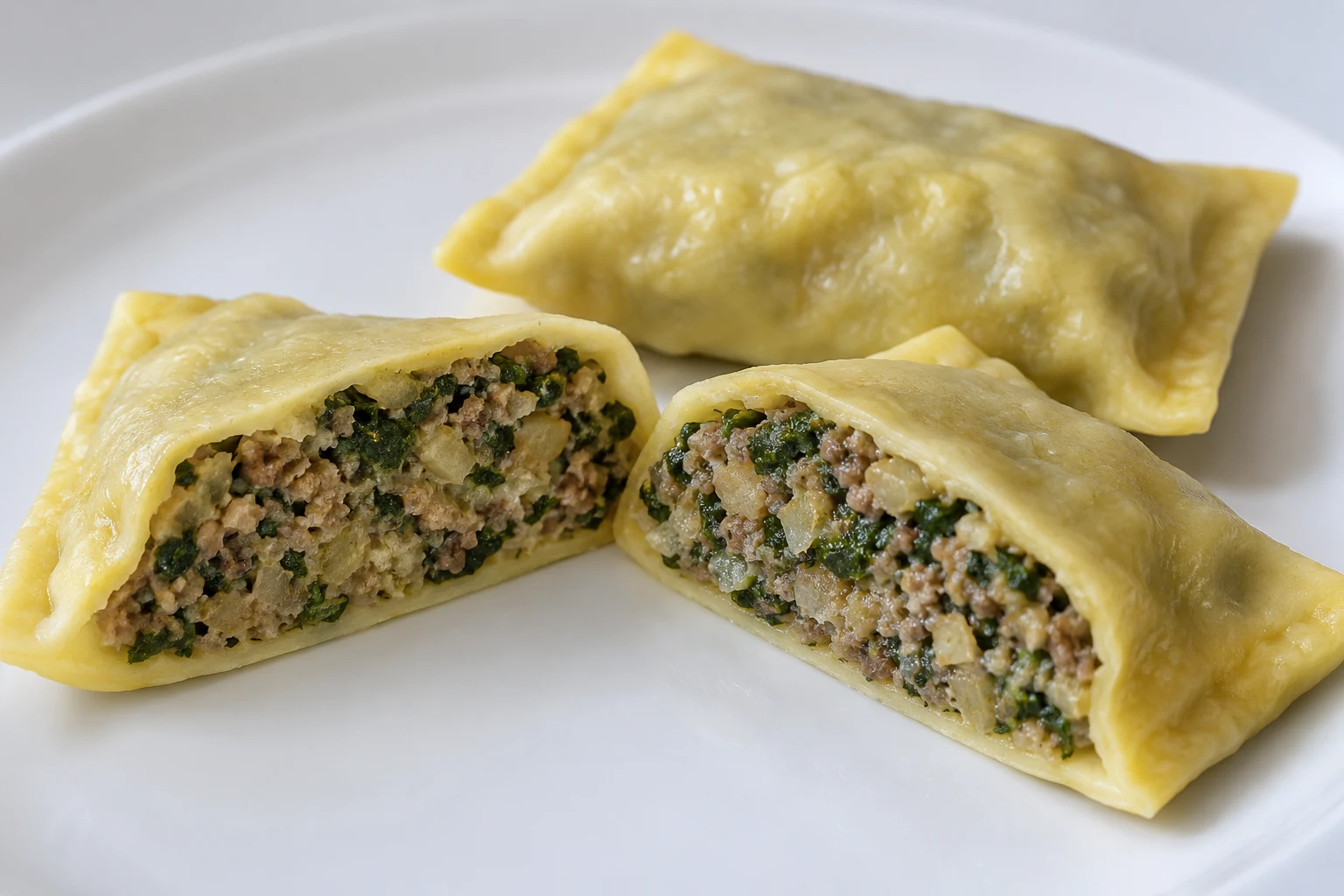
In the WDR version, minced meat is mixed with finely chopped spinach and parsley, softened bread, onion, egg and seasoning. It is a farce: a mixed filling, rather than a piece of meat enclosed by a leaf. The dough is rolled thin, then folded over small portions of filling.
The authors press around the filling and avoid trapped air before cutting the pockets apart. This gives a practical principle even if you follow another family recipe: wrapper thickness, filling consistency and the seal need to work together. Large loose lumps or a thick seam would create a different balance from the fine wrapper their method describes.
The cooking is a gentle simmer. That is a method description rather than a doneness guarantee for every size and filling. When cooking at home, follow a complete recipe appropriate to its meat and pocket dimensions instead of assuming that floating proves a raw-meat filling is cooked.
Tradition includes practical choices
Scholpp’s family preparation makes a useful distinction between keeping a tradition and repeating every household task. She makes the filling herself but orders fresh pasta dough from a local baker. That detail belongs to a named cook’s practice; it is not a claim that prepared dough is universally preferred. It shows that the skill and identity of a dish can survive a sensible division of work.
A filling recipe and a serving choice also answer different questions. A family can keep its preferred meat-and-green mixture while choosing broth for one meal and another finish for the next. Comparing those choices is more revealing than calling every pocket simply German ravioli: the wrapper matters, but so do what surrounds it and how the meal is put together.
Research notes
Sources for the pocket and its table
The local expert and broadcaster accounts document filling and service; Stuttgart tourism establishes regional context. The monastery’s custodians explicitly separate the origin tale from documentary evidence. No complete recipe is included.
- AOK Stuttgart-Böblingen — Andrea Scholpp’s Maultaschen Named nutrition educator’s family variation, fresh dough from a baker and broth, geschmälzt or pan-and-egg service.
- WDR — Martina Meuth and Bernd Neuner-Duttenhofer Thin egg-pasta wrapper, fine meat/spinach/bread filling, sealing, gentle simmer and broth with chives and potato salad.
- State Castles and Gardens — Maulbronn legend and evidence Custodians’ account of monk Jakob, lack of documentary proof and monastic restrictions that complicate the invention tale.
- Stuttgart tourism — Regional culinary context Places Maultaschen in Swabian cuisine, notes their protected geographical indication and attributes the monastery origin as a legend.
Keep exploring
More stories for your table

German cuisine Lentil stew
German Eintopf: Let the Lentils Set the Pace
Cook a German lentil Eintopf with soft brown lentils and distinct vegetable pieces. Learn which lentils to buy, when to add the roots, and why vinegar waits.
Russian cuisine Dumplings
Pelmeni: The Shared Work Behind a Quick Meal
Pelmeni turn a session of rolling, filling and folding into meals for later. Explore their regional context, how to freeze a batch, and two ways to serve it.
Chilean cuisine Baked savory pastries
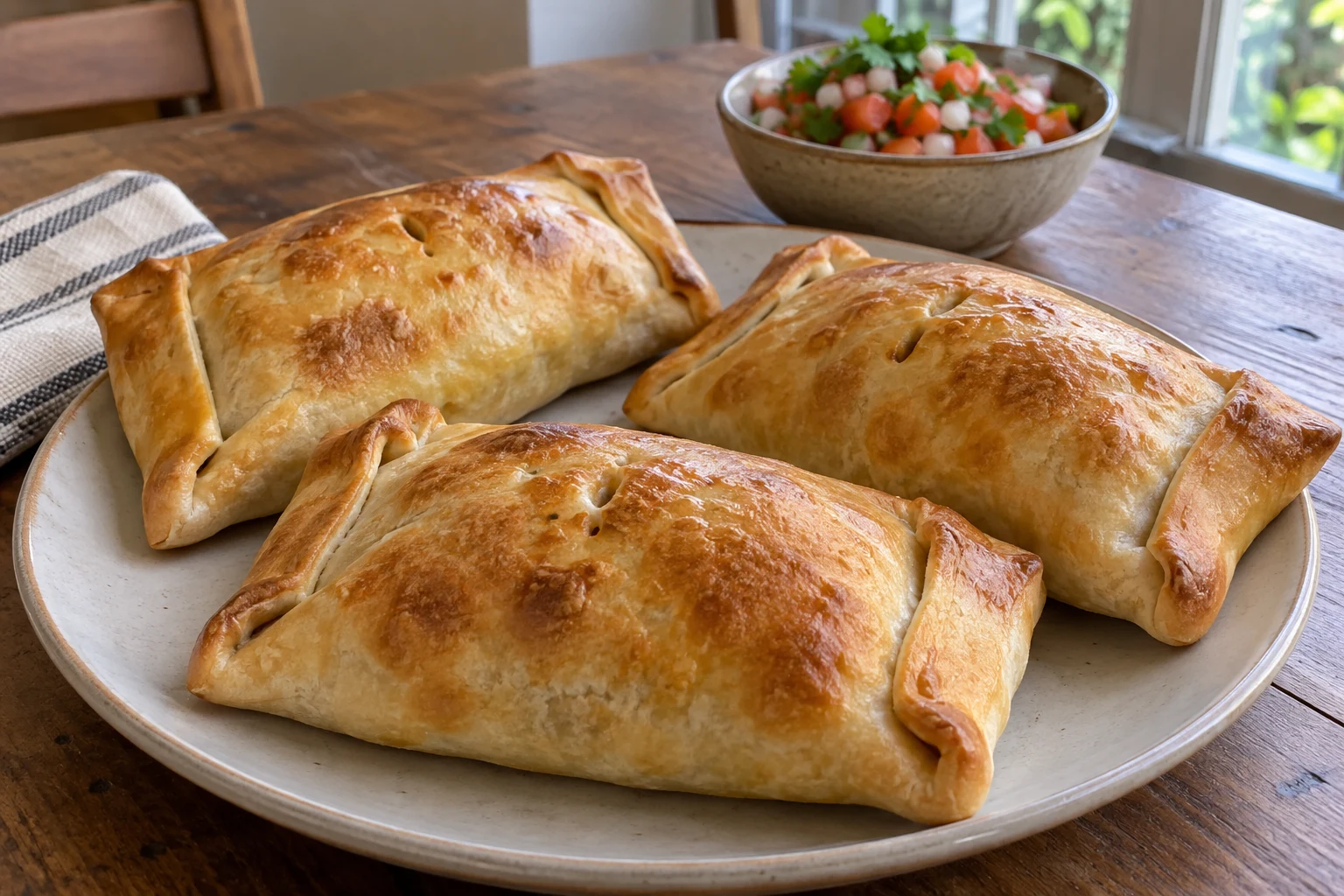
Empanadas de Pino: The Filling Comes Before the Fold
A Chilean oven empanada begins with cooked beef-and-onion pino. Compare filling methods, chilled assembly, folded edges and the separate egg-and-olive pieces.