
Kaiserschmarrn: Bake First, Tear Later
Kaiserschmarrn
The appealing disorder of Kaiserschmarrn comes late. Bavarian and Austrian methods first build a substantial pancake, then break it into pieces that can brown again without losing their soft centers.
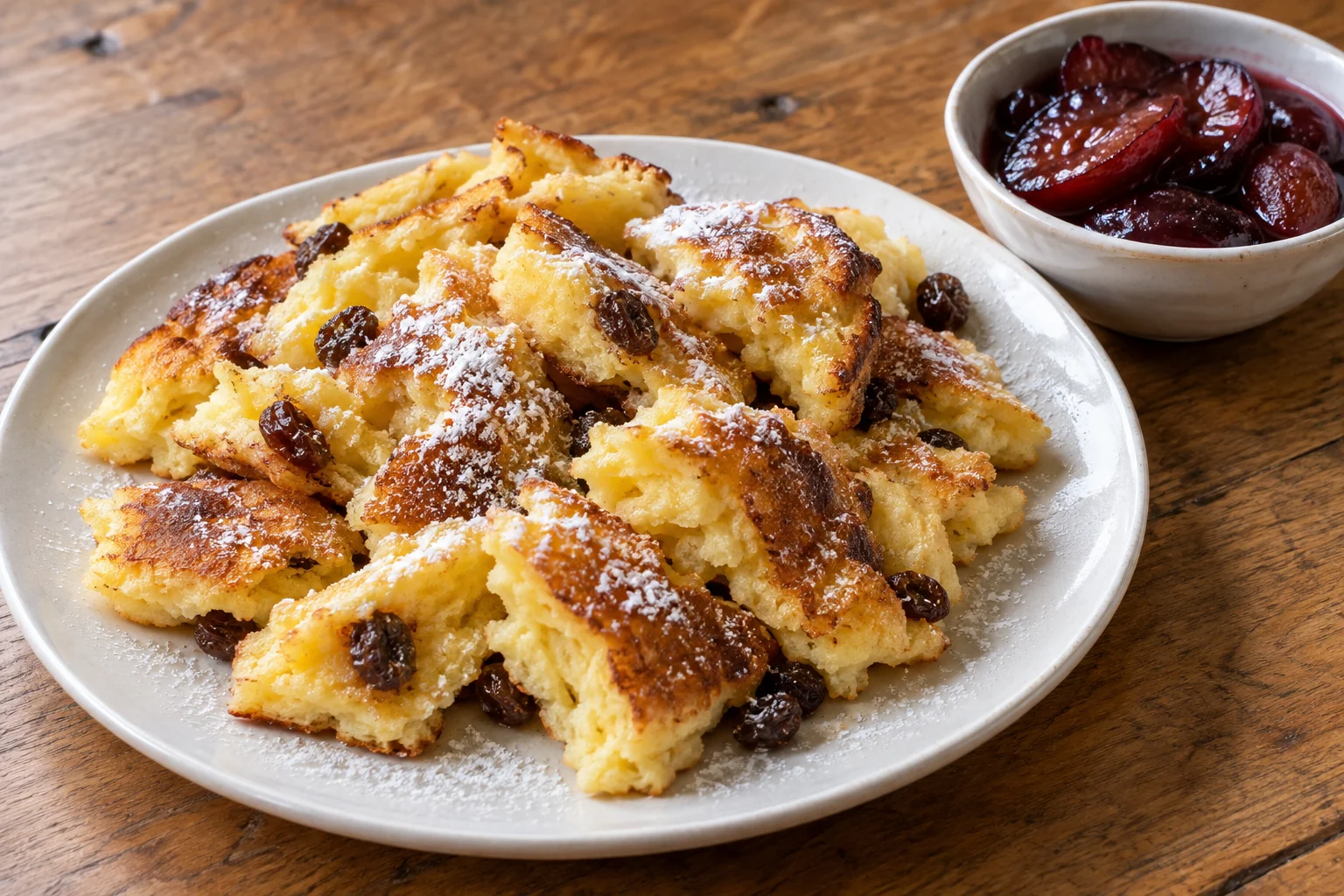
The mess has a sequence
A plate of Kaiserschmarrn looks as though the cook abandoned the pancake halfway through. Its irregular golden pieces, raisins and pale sugar dusting conceal a much more deliberate progression. The batter becomes a cohesive pancake before it is torn; the pieces then return to heat for their finishing stage. Understanding that order is more useful than trying to make every bite the same shape.
This is familiar food on both sides of the Bavarian–Austrian border. Munich’s official visitor guide places Kaiserschmarrn among Alpine sweets that can make a full meal when the portion is generous. Austrian tourism presents it as a long-established favorite, while the Bavarian state’s Waldbauernschule publishes a practical household method. These sources support a shared regional table, rather than a claim that a single modern country owns every version.
Read the texture
Three changes to look for
- Before the pan
- Lightened batter
- Before tearing
- A set pancake
- Before serving
- Tender pieces, colored edges
Separately beaten egg whites are folded into the milk, flour and yolk mixture.
Both sides have cooked and the pancake has enough structure to turn or divide.
Butter and sugar join the exposed pieces during a brief finish.
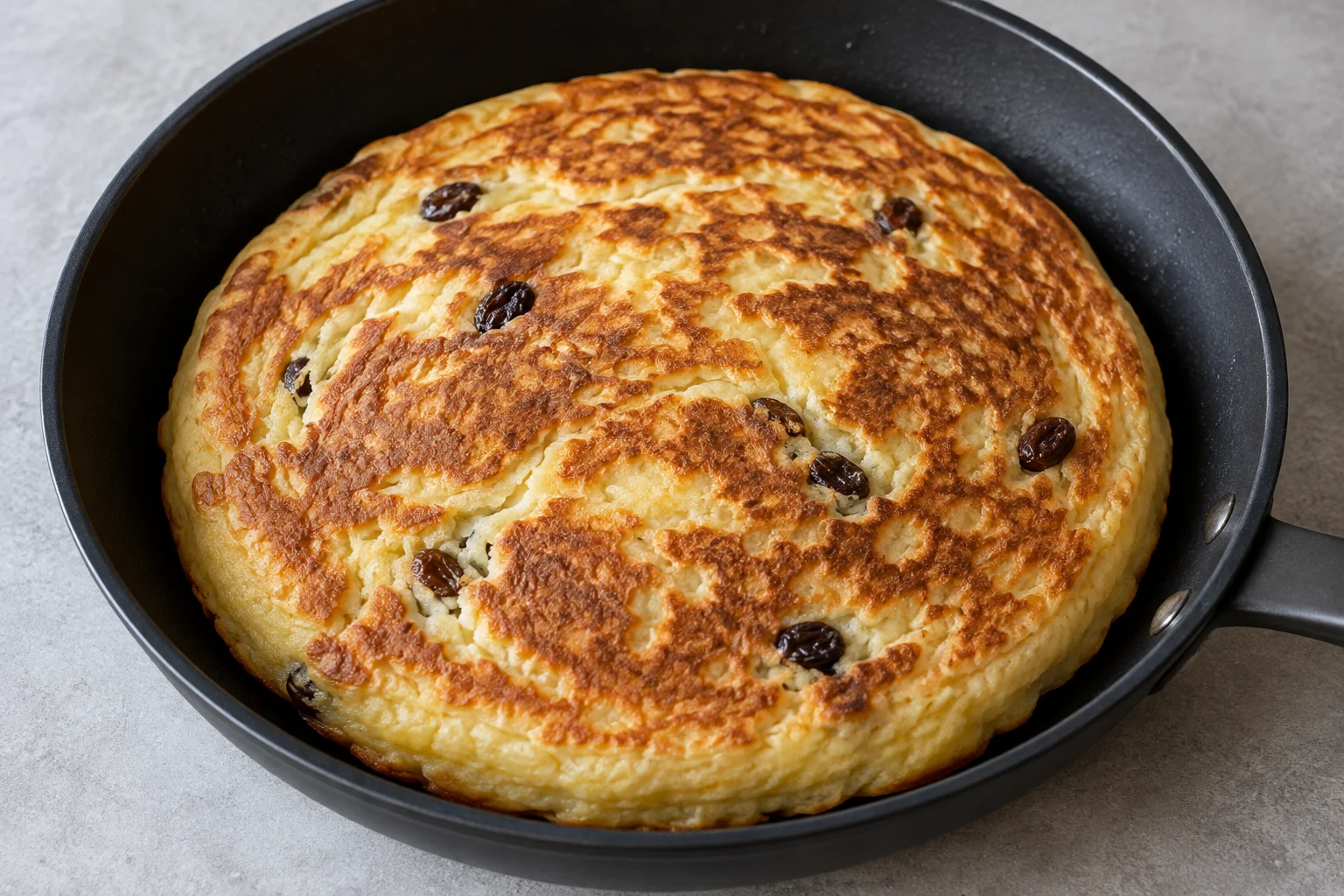
Build it, then break it
The published recipes use different proportions and heating arrangements. Their common order gives a useful way to read the pan.
- 01
Keep the whites separate until the batter is ready
The Bavarian school and Austrian tourism both combine the yolks with the liquid and flour, then fold in whipped whites. The foam is an ingredient of the texture, not decoration on top. Folding comes late in the mixing sequence.
- 02
Give the pancake substance
The Waldbauernschule specifies batter at least about one centimeter deep and warns that very thin pancakes make a tough Schmarrn. It cooks the batter in several portions. Its advice is a reason to use batches rather than spread a household quantity into an oversized, thin sheet.
- 03
Let the mass set before tearing
GU’s Bavarian method browns the pancake, divides it for turning and finishes it in the oven before tearing. Austrian tourism likewise turns and bakes before breaking it apart. Tearing earlier would interrupt the stage these methods use to establish the soft, cohesive interior.
- 04
Treat the final browning as a finish
The Bavarian school asks for a rapid finish that keeps the pieces delicate. Austrian tourism caramelizes after adding butter and sugar. The editorial lesson from both is to stop when the pieces have gained color while the interior remains tender, rather than prolong cooking until every surface feels dry.
One dish, different routes through the heat
Choose one source recipe when cooking. Its batter proportions and heating method belong together.
Bavarian school: batches on the stove
The Waldbauernschule uses clarified butter, a substantial layer of batter and several pan batches. It turns each pancake, tears it and briefly finishes the pieces while turning them.
GU: an oven stage
Küchengötter’s Bavarian recipe quarters the pancake for easier turning, then gives it an oven stage. After tearing, the pieces return to the stove with butter and powdered sugar.
Austrian tourism: caramelize at the end
The Austrian tourism recipe cooks and turns the pancake before an oven finish. Butter and sugar are added to the torn pieces for caramelizing under the grill; its guidance also allows a stove-based route.
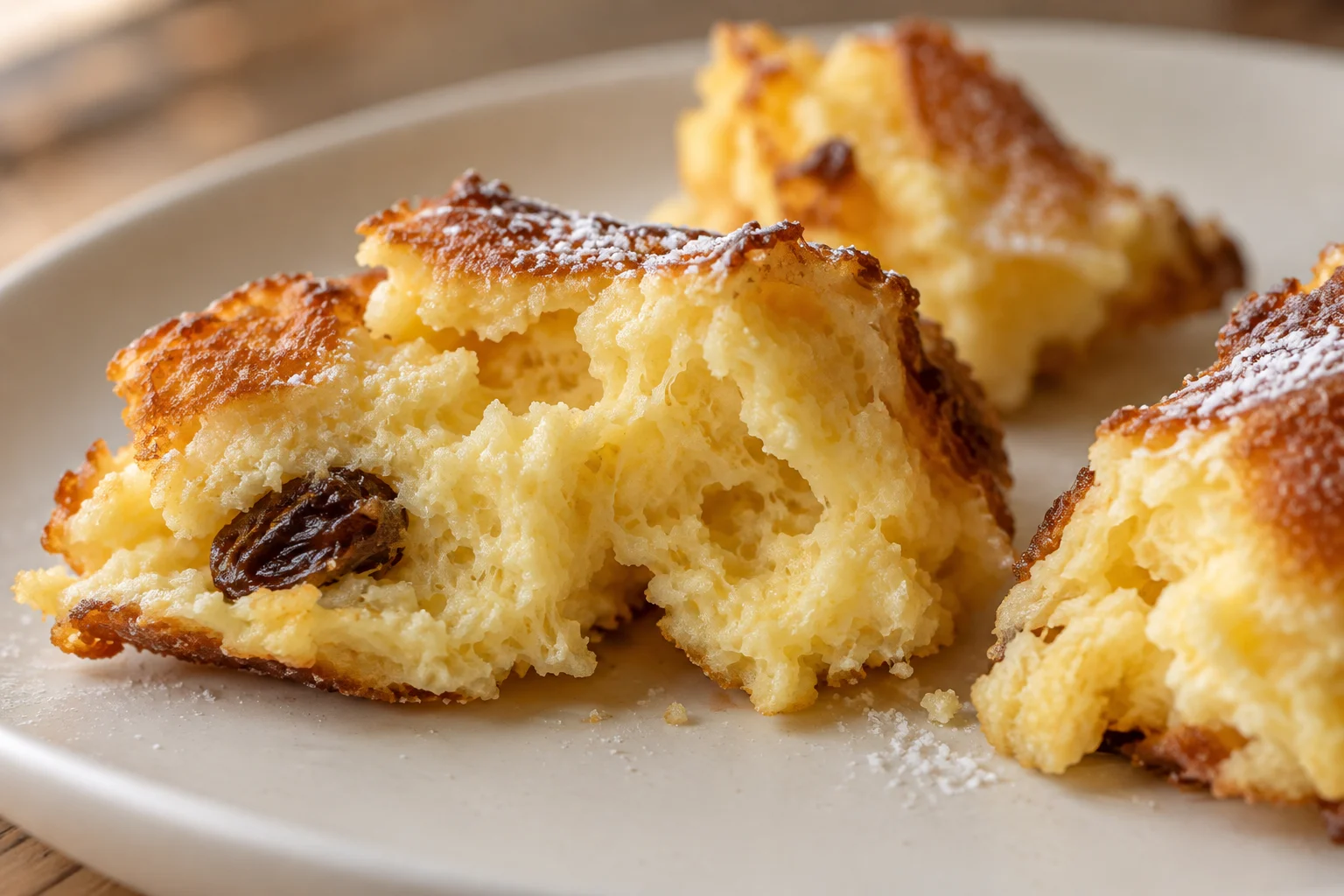
Fruit beside it, folklore around it
Fruit accompanies the pancake in the sources, but the companion is not identical everywhere. GU suggests apple compote. The Bavarian school serves a plum preparation, Zwetschgenröster, and Austrian tourism offers plum or berry ragout or stewed fruit. Keeping that accompaniment beside the pancake lets the two textures remain legible: torn, browned pieces and a soft fruit spoonful.
The imperial name carries stories, too. Vienna tourism describes its account of Franz Joseph and imperfect pancakes as one of several legends, and Austria’s tourism recipe explicitly treats an accidental shredded omelet as rumor. The familiar association with the Austrian emperor is part of the dish’s cultural appeal; it does not supply a securely documented invention scene. At the stove, the better-established story is the one the recipes agree on: make the pancake first, and the appealing disorder afterward.
Research notes
Sources and documented methods
Local tourism establishes the serving context. The cooking sources make it possible to compare the sequence without combining their different formulations.
- Munich tourism: Bavarian food Places Kaiserschmarrn among Alpine sweet dishes that can be served as full meals in Munich.
- Bayerische Waldbauernschule: Kaiserschmarrn Bavarian state education source specifying substantial batter depth, batches, clarified butter and a tender finish.
- Küchengötter / GU: Bavarian Kaiserschmarrn Documents a quartered pancake, oven stage and final stove caramelizing; suggests apple compote.
- Austria tourism: Kaiserschmarren Documents whipped whites, oven and stove options, a caramelizing finish and fruit accompaniments; labels an origin account as rumor.
- Vienna tourism: Kaiserschmarren Provides Viennese context and explicitly presents the imperial pancake account as a legend.
Keep exploring
More stories for your table
SpainSweet fritters
Buñuelos de Viento: How Spain’s Airy Fritters Rise
Why buñuelos de viento puff, when to serve them plain or filled, and how to make a small batch of Spain’s airy lemon fritters at home.
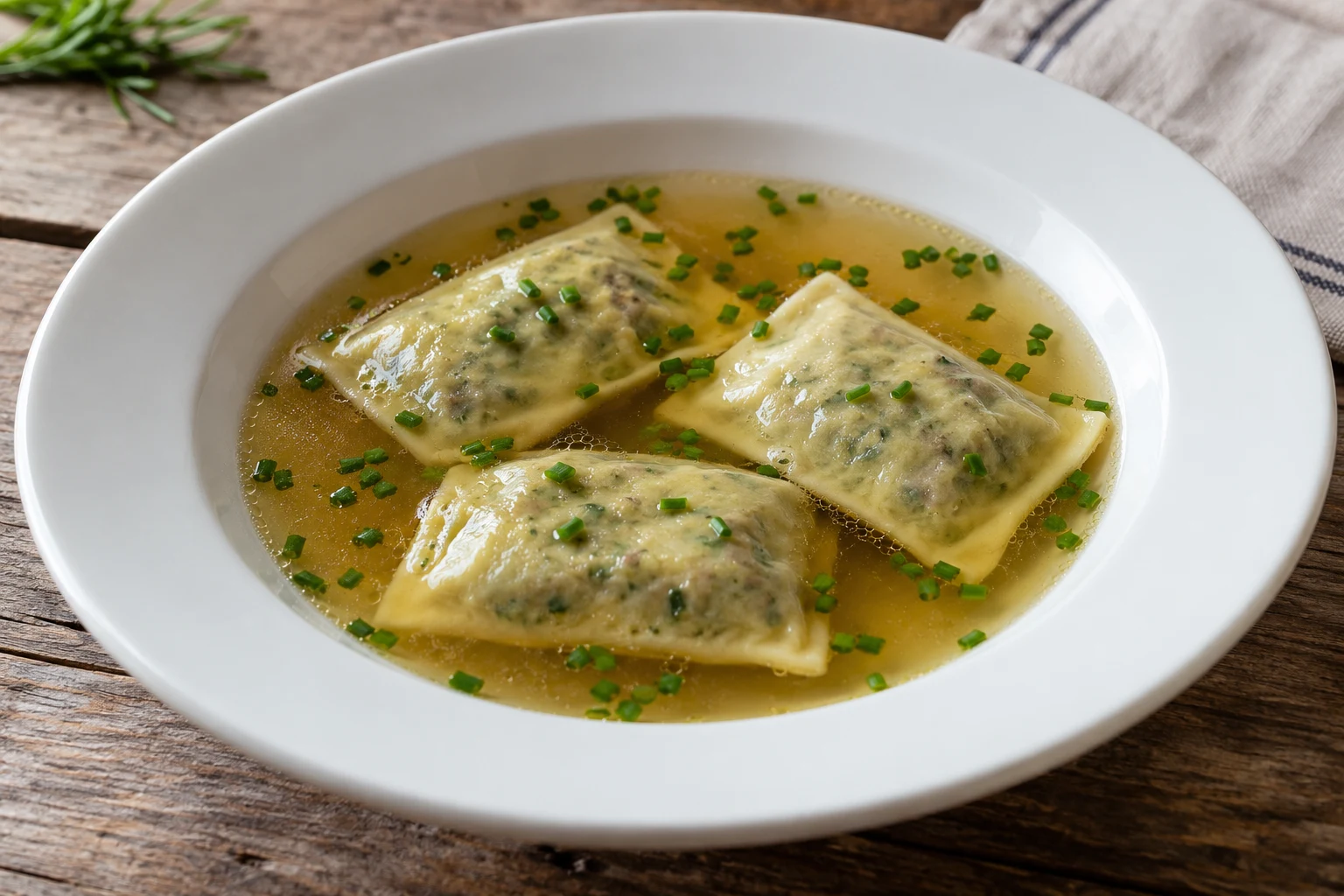
GermanySwabian stuffed pasta
Maultaschen: One Swabian Pocket, Three Ways to Serve It
Thin pasta and a savory filling make Maultaschen recognizable, but broth, browned onions and pan service change the meal. Explore the Swabian dish’s family variations and the limits of its monastery legend.
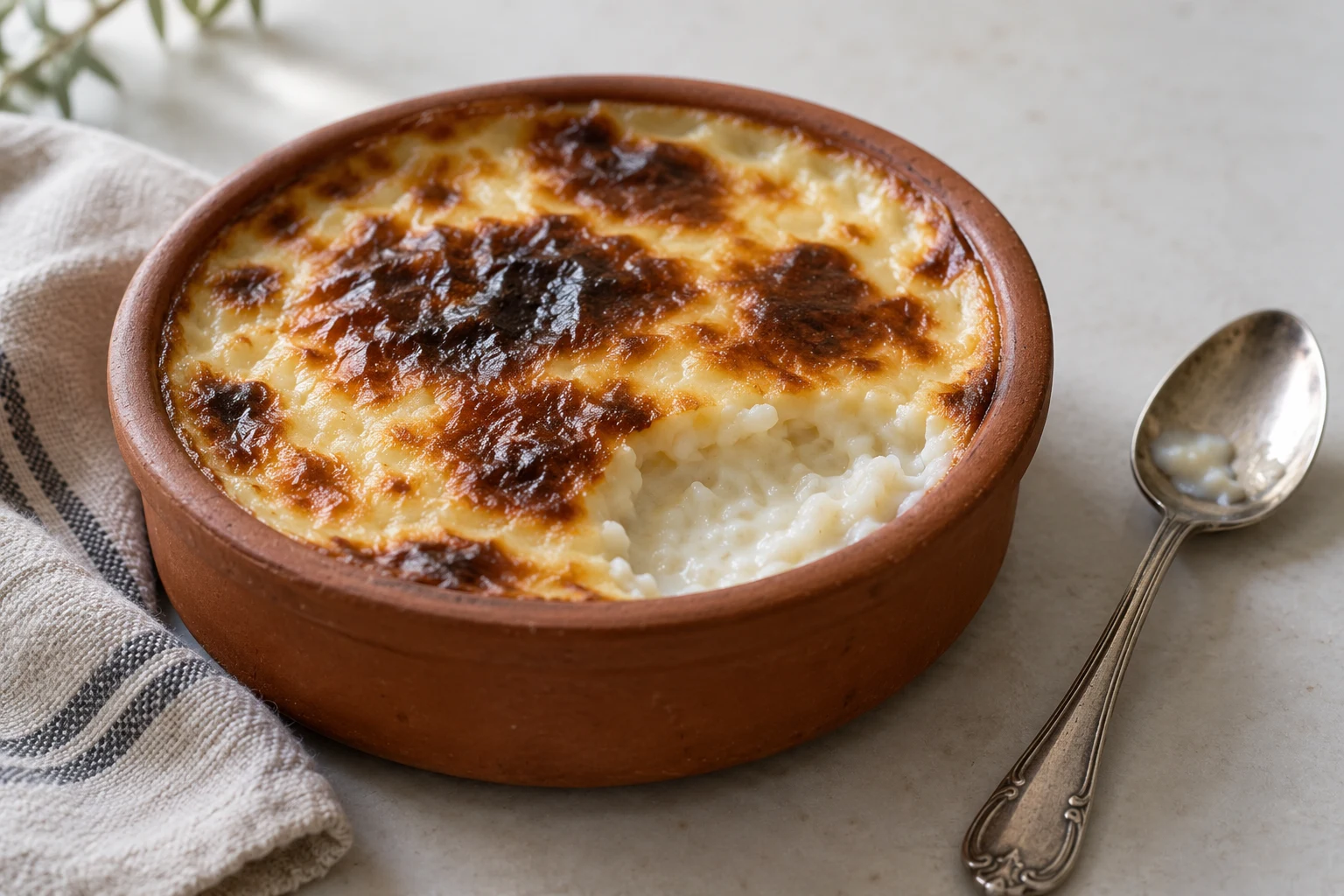
TürkiyeRice pudding
Sütlaç: Soft Rice, Milk and a Browned Finish
Sütlaç can be a plain chilled rice pudding or fırın sütlaç with a browned oven finish. Understand the tender grains, different thickening methods and the pudding-shop setting.