
Berliner: a filled doughnut with a regional name
Berliner Pfannkuchen
Meet the closed, filled yeast doughnut called Berliner, Krapfen or Pfannkuchen, and follow the separate rise, fry and filling stages.
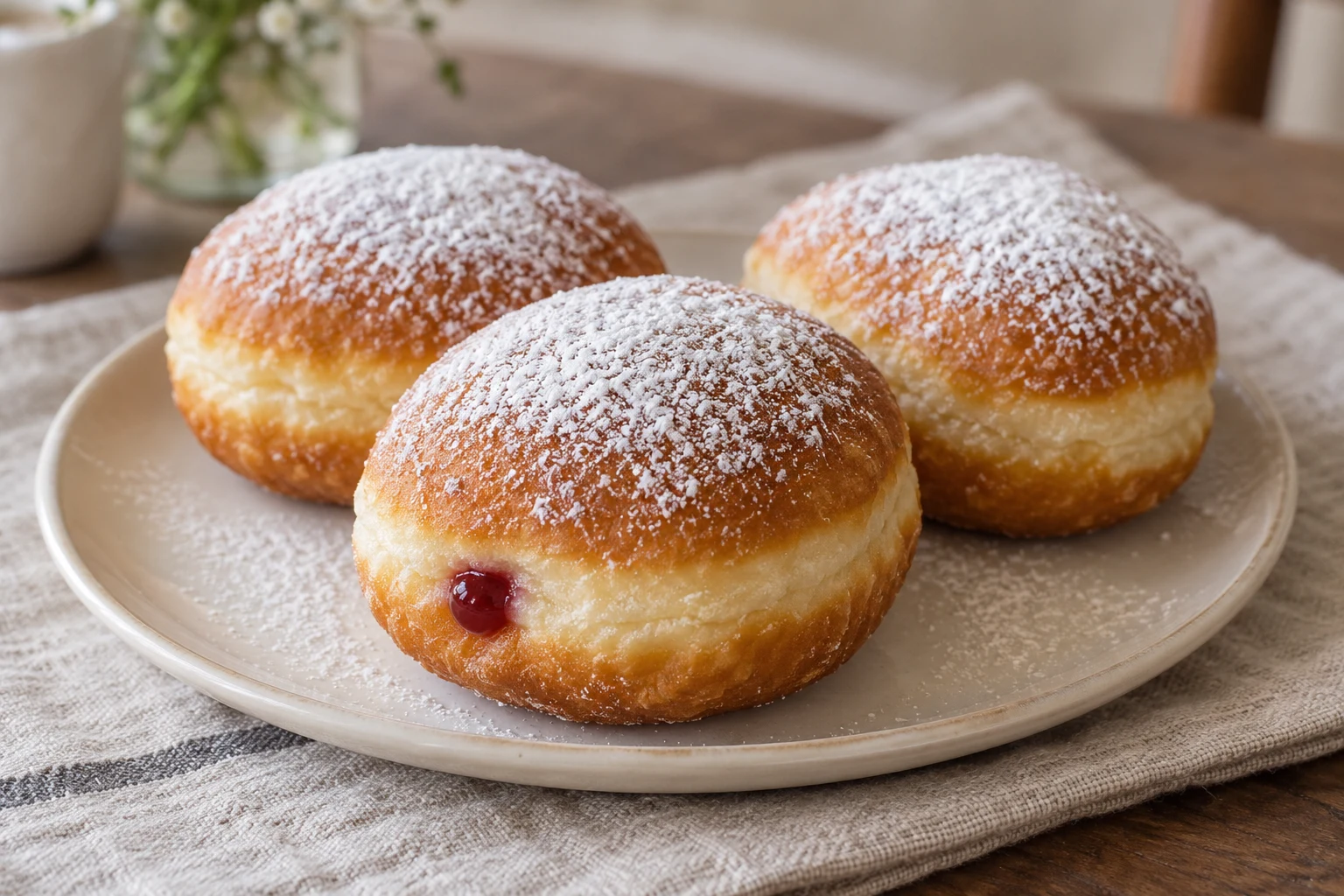
The surprise is inside
A Berliner encloses its filling within fried yeast crumb. Berlin’s official glossary describes roughly fist-sized, filled pastries cooked in fat. With no central hole revealing the interior, the filling is worth asking about at the counter.
The glossary lists fruit preserves, plum preserve, pudding cream and egg liqueur. Those choices change the experience: the pastry’s name identifies a family of treats more reliably than the exact flavour inside the one you are buying.
Listen for the local name
- Berlin
- Pfannkuchen
- Bavaria and Austria
- Krapfen
- Hessen
- Kräppel
- Western Germany
- Berliner
The city glossary uses this for the filled yeast pastry and calls the flat egg dish Eierkuchen.
This is a broad pattern reported in the Atlas zur deutschen Alltagssprache survey.
The same survey reports this regional form.
The survey also records Berliner in Switzerland, and Pfannkuchen widely in eastern Germany.
A word can point to a different food
The language atlas explains the practical source of confusion: Pfannkuchen elsewhere can refer to a flat cake cooked in a pan. In Berlin, the bakery context and the city glossary point instead to the filled pastry. Looking at the food and its filling label is more useful than treating a familiar translation as a complete description.
The atlas account comes from a published regional survey, not a rule that every speaker or bakery must obey. Its pattern helps you recognise names on signs and in conversation. It does not require you to correct someone whose local usage differs, or assume that all pastries sold under those names have an identical formula.
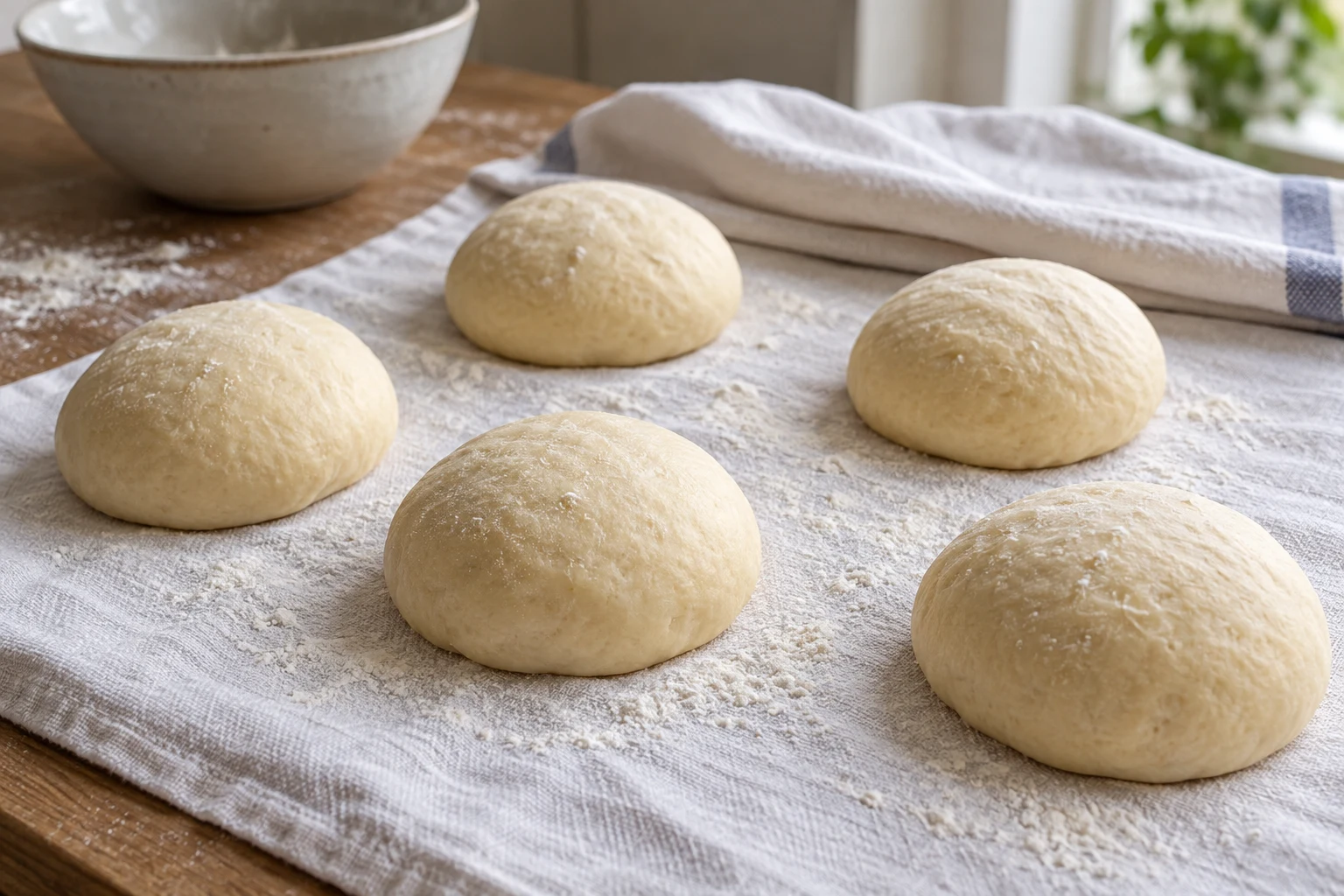
Dough, then frying, then filling
Dr Oetker's complete Berliner recipe keeps these stages distinct.
- Rise
Let the dough grow
Its enriched yeast dough rises in the bowl and again after shaping. The method asks for visible enlargement.
- Fry
Cook the shaped rounds
The unfilled pieces fry on both sides, then drain. This recipe coats them in sugar while hot and lets them cool.
- Fill
Use the side opening
Smooth fruit filling is piped through the pale side band after cooling. The filling does not supply the pastry's rise.
Round shape is a method choice
Dr Oetker forms smooth balls without cracks. Susan Reid's King Arthur yeast-doughnut recipe instead rolls dough and cuts rounds. Both methods allow shaped pieces to rise before frying, but their ingredient amounts and handling belong to separate recipes. Choose one complete method rather than borrowing a dough thickness from one and a proofing schedule from the other.
Reid's recipe is a general yeast-doughnut formula, offering several finishes. It supports the technique comparison here; it is not evidence that every finish has the Berliner name. The closed fruit-filled version illustrated in this article keeps the focus on the pastry described by the German sources.
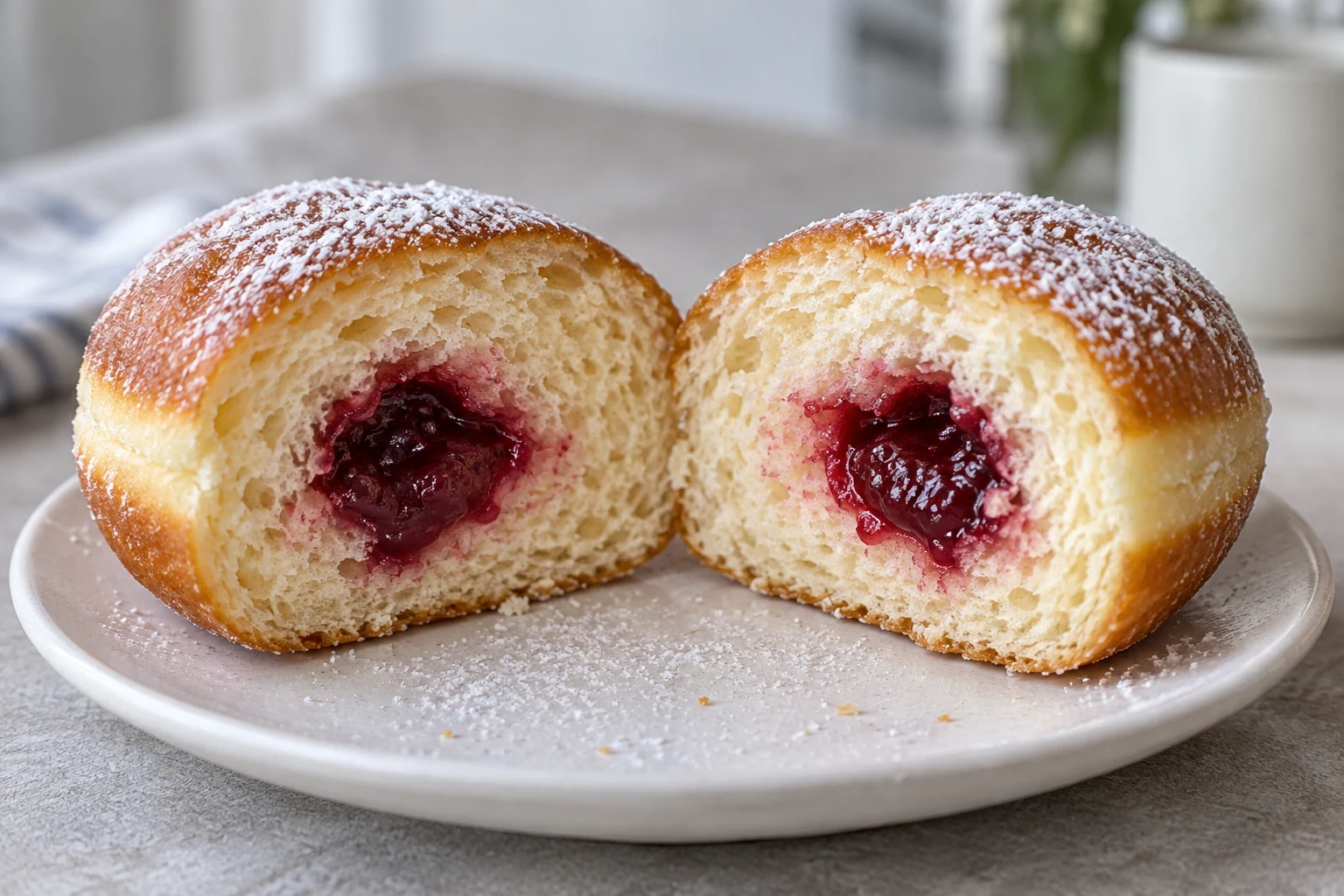
Two choices to keep explicit
Which filling?
Berlin.de lists several fillings. Ask which is inside and read the ingredients if they matter to your diet.
- The exterior does not disclose every ingredient.
- A sugar dusting is a finish, not a filling label.
Fried or baked?
King Arthur supplies a separate oven option and explicitly describes a different crust and flavour. That is a documented adaptation of its recipe, rather than a promise of the same fried result.
- Keep the oven option with that complete recipe.
- Decide which texture you actually want.
A celebration pastry can be an everyday choice
Dr Oetker presents its Berliner for New Year’s Eve and Carnival, while also describing year-round enjoyment. The association gives an occasion to the recipe rather than limiting when the pastry can be eaten.
If you are sharing a plate, keep different fillings identifiable. Arrange fruit-filled pieces together and distinguish cream or liqueur versions when you serve them. A cut piece can show one filling and the crumb, but it does not establish what is inside every other pastry. For your own first comparison, two named fillings in the same style of pastry are easier to understand than several unnamed versions.
Research notes
Language and pastry methods
An official city glossary, an original regional language survey and two independently developed baking recipes support the guide.
- Berlin.de: Pfannkuchen Local pastry meaning, Eierkuchen distinction and filling alternatives.
- Atlas zur deutschen Alltagssprache: Berliner/Krapfen Original regional survey commentary on the pastry's names.
- Dr Oetker: Berliner An enriched yeast method with separate rising, frying and side-filling stages.
- Susan Reid: yeast-raised doughnuts A general rolled-round method and an explicitly different oven option.
Keep exploring
More stories for your table
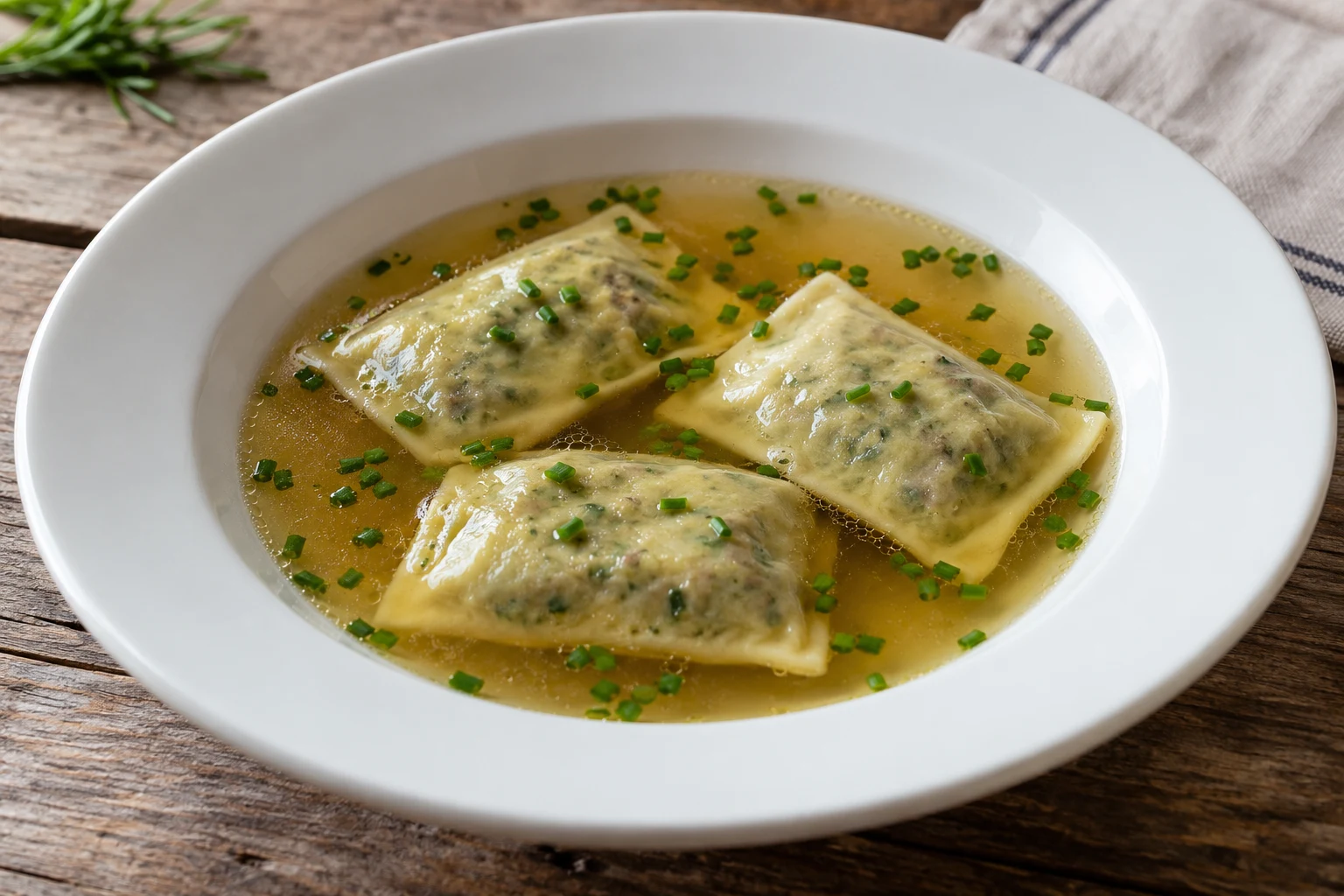
German cuisine Swabian stuffed pasta
Maultaschen: One Swabian Pocket, Three Ways to Serve It
Thin pasta and a savory filling make Maultaschen recognizable, but broth, browned onions and pan service change the meal. Explore the Swabian dish’s family variations and the limits of its monastery legend.
German cuisineAustrian cuisine Sweet pancake
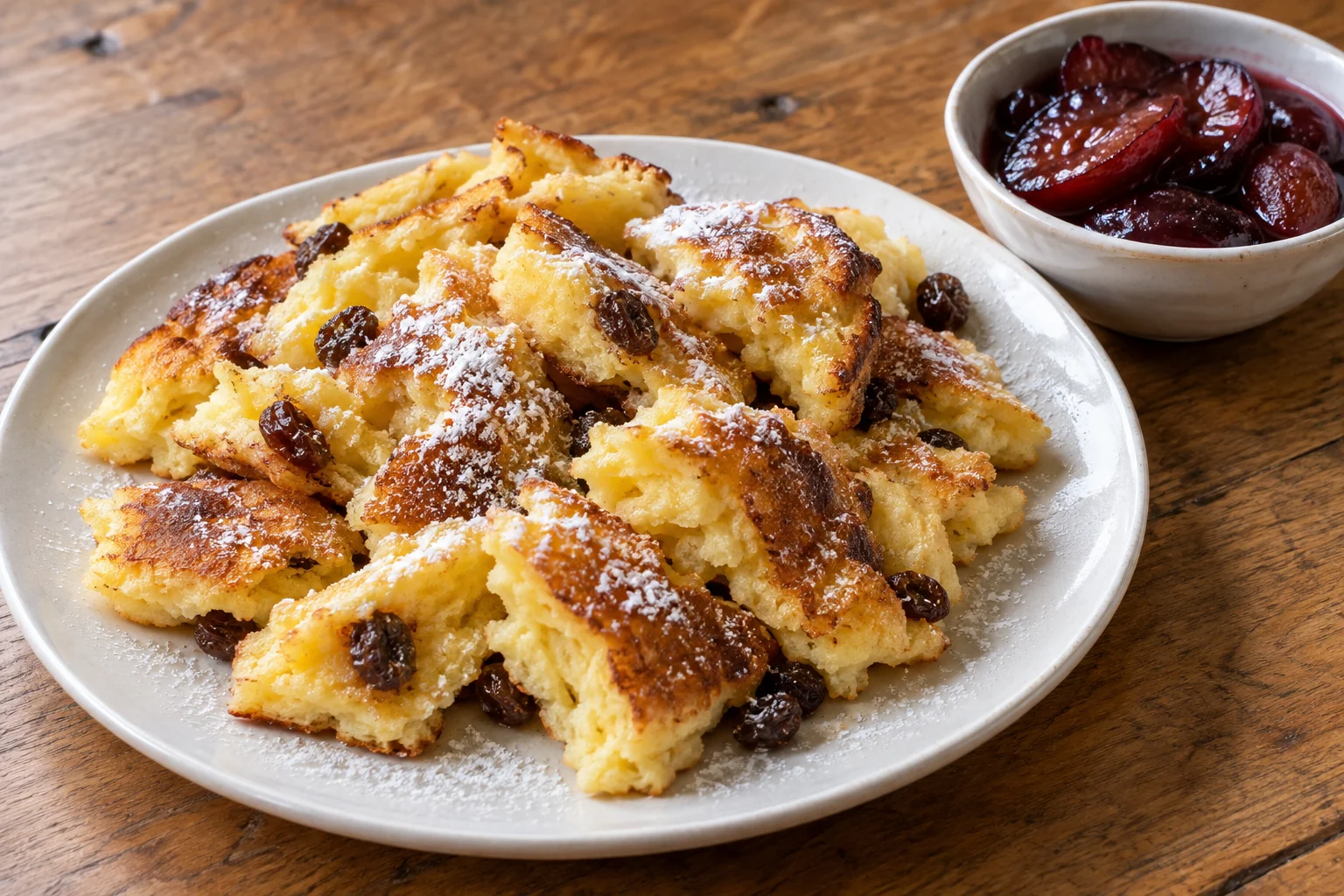
Kaiserschmarrn: Bake First, Tear Later
Understand Kaiserschmarrn through its three transformations: a lofty batter, a set pancake, and tender torn pieces finished with butter and sugar.
Hungarian cuisine Vanilla dessert
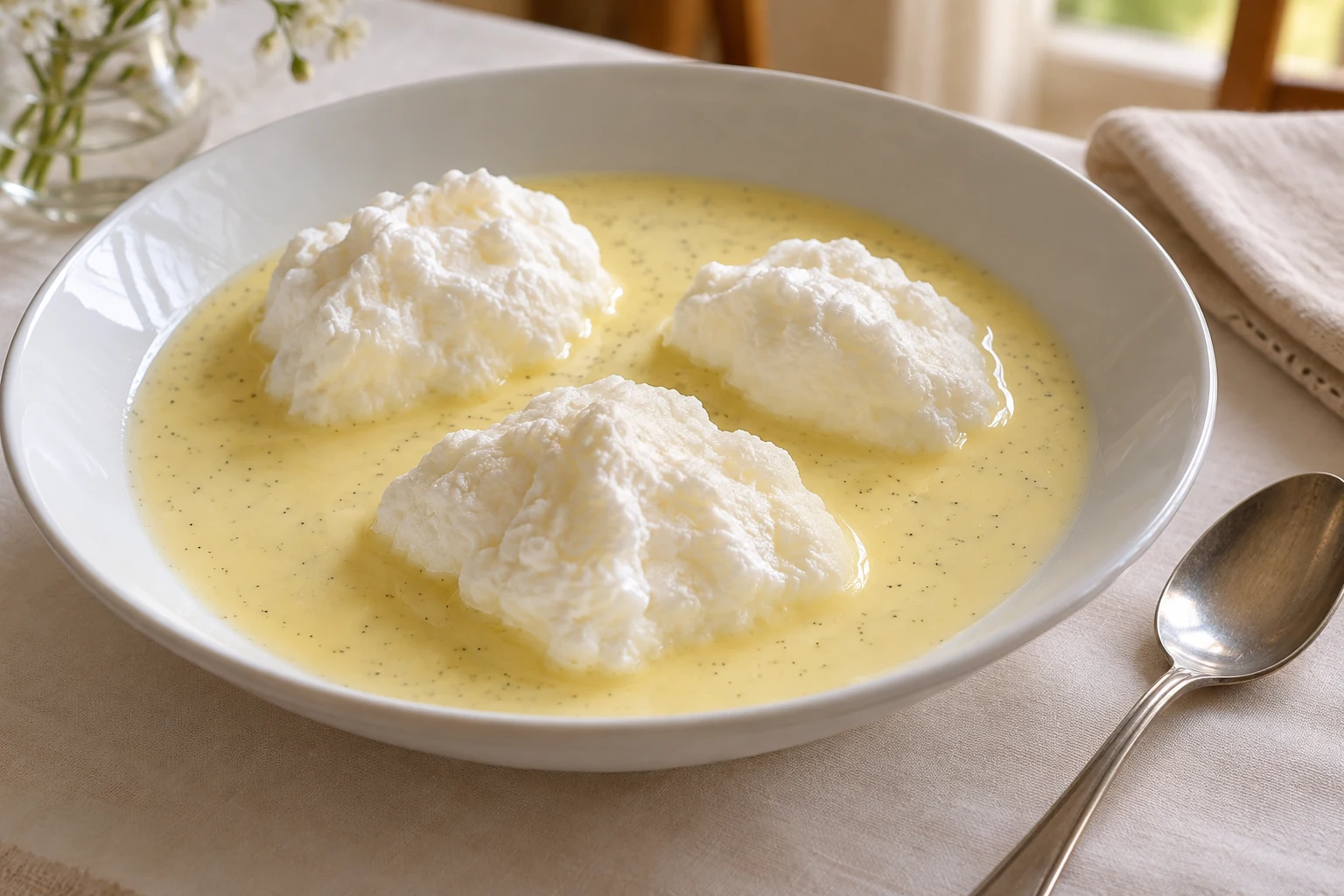
Madártej: A Soft Cloud Needs a Pourable Custard
Hungary's madártej pairs cooked egg-white dumplings with vanilla custard. Follow the two textures, the poaching liquid and the choice of thickener.