
Khachapuri: Choose the Shape Before the Dough
ხაჭაპური
Khachapuri is a family of Georgian cheese breads. The closed round is made to slice; the open boat gives you an exposed filling and a rim to tear.
Begin with the bread you want to eat
A photograph of an egg-topped bread boat can stand in for khachapuri abroad, but it does not show the whole Georgian dish. In Jennifer Hattam’s reporting, republished by Georgia Travel, cooks and restaurateurs describe many regional forms: closed breads, open breads, soft doughs and flaky parcels.
The practical choice comes before shopping. Do you want wedges with cheese held between bread layers, or an open center surrounded by a substantial rim? Both belong to the khachapuri family. They need different shaping, filling management and finishing, so select a specific version before borrowing instructions from another.
Two forms, two structures
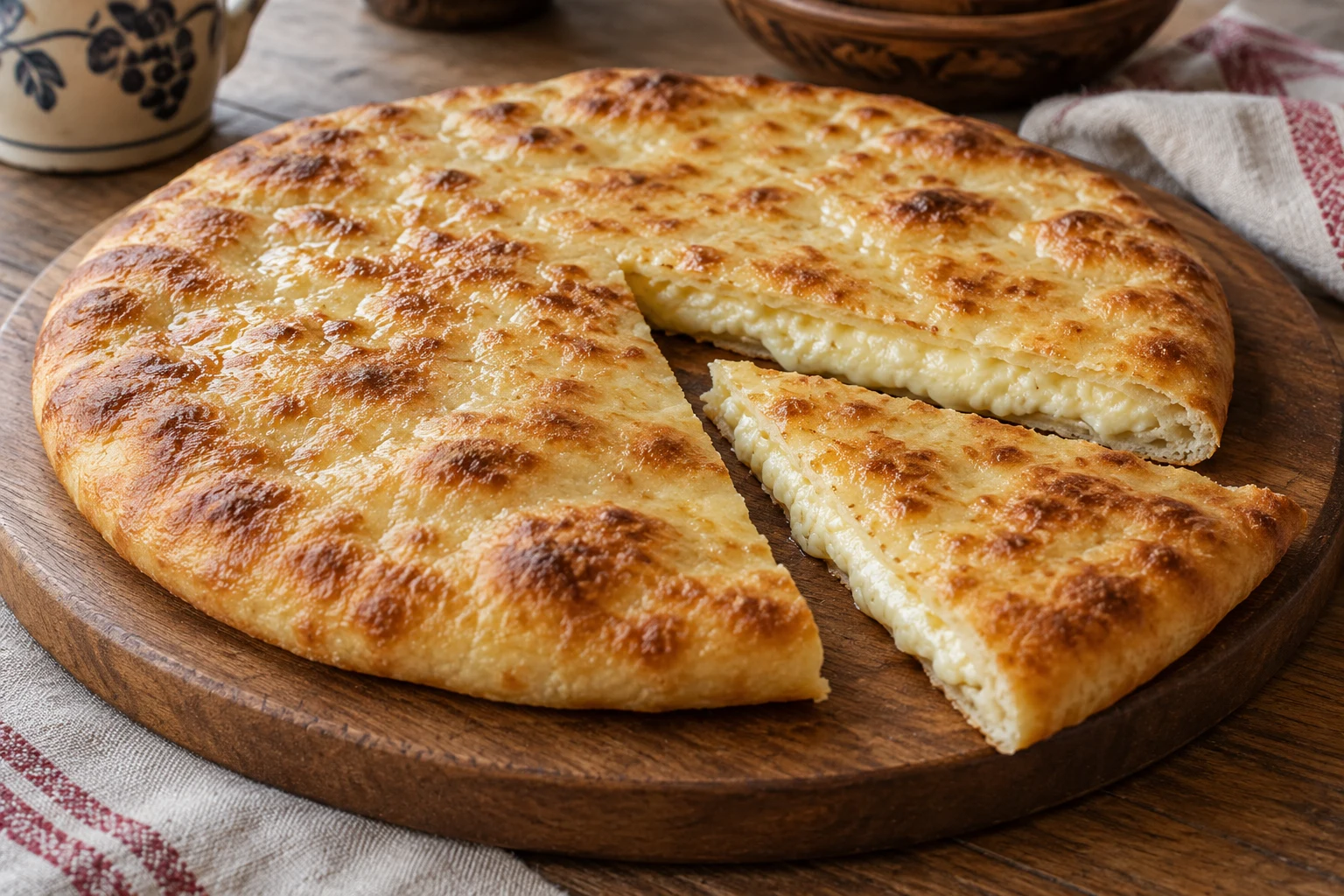
Imeruli: closed and round
The Imeretian form gathers dough around cheese, seals the parcel and flattens it into a round. The filling stays enclosed until the bread is sliced. Georgian Recipes documents this shape with a step-by-step photo method.
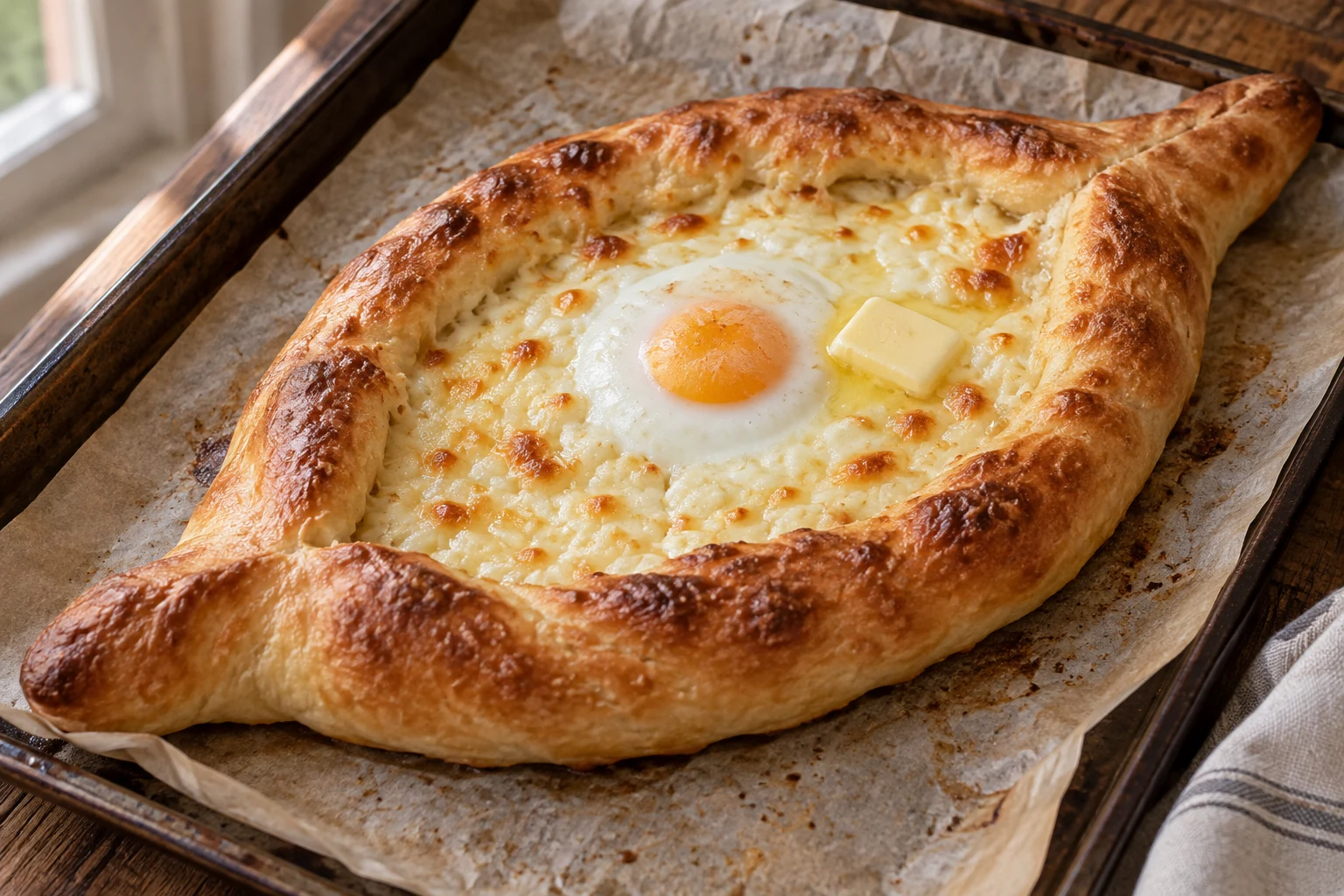
Adjaruli: open and boat-shaped
The Adjarian form has raised sides and pinched ends surrounding visible cheese. An egg and butter are common finishing additions. The rim becomes bread to tear off and eat with the filling.
For the round, protect the seam
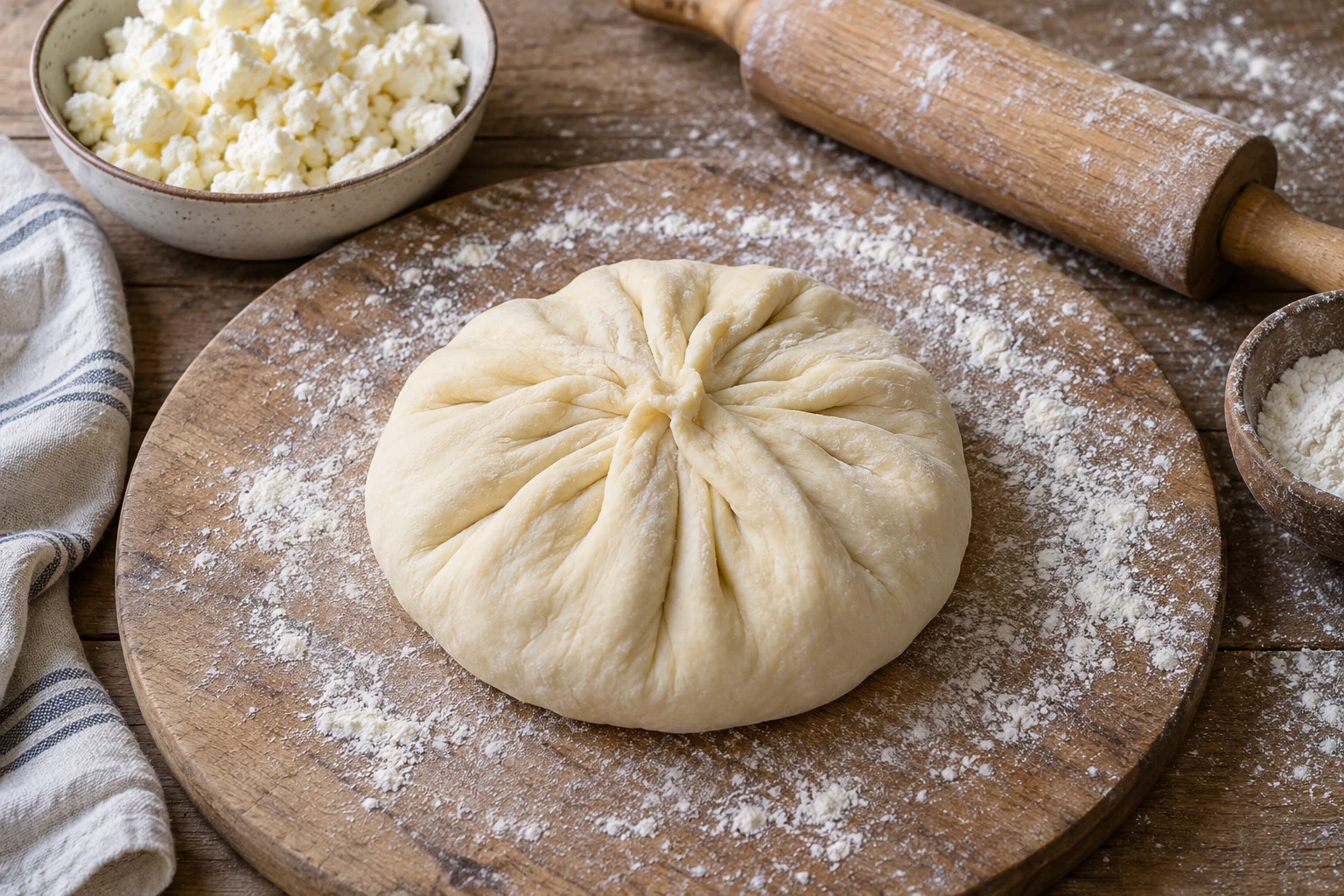
Spread or place the cheese in the middle of the dough, leaving an edge you can gather. Bring that edge together over the filling and pinch it closed. A loose opening lets cheese escape when the parcel is flattened.
Turn the sealed parcel over and work gently toward an even circle. Georgian Recipes emphasizes spreading the filling without tearing the dough. If you force a thick center outward in one stroke, the thin edge takes the strain. Several lighter passes give you more control.
A closed round is not restricted to one cooking appliance. The Gunda recipe reported by Hattam uses a frying pan, while Georgian Recipes describes an oven-baked version. Their doughs and thicknesses belong to their methods; pan timings cannot be transferred directly to a larger, thicker oven bread.
For the boat, secure the border
Bake from Scratch’s baking-school guide rolls the sides inward, presses them to the base, and pinches the ends. That attachment helps the wet filling stay inside instead of pushing the rim open. Keep the center broad enough to hold the cheese without piling it above the border.
A yeast dough also needs time to relax and rise as its recipe specifies. The same guide stresses watching how much the dough has risen, because a cool kitchen changes the timetable. Cover portions waiting their turn so their surfaces remain pliable.
The egg joins after the bread has begun baking, rather than replacing the cheese from the start. Susan Reid’s King Arthur recipe includes separate finishing times for softer and firmer eggs. At home, use doneness rather than a borrowed minute count: government guidance calls for egg whites and yolks to be firm.
Choose a cheese blend with a purpose
Imeruli and sulguni are Georgian cheeses named in the sources, but access to them varies. King Arthur offers mozzarella or Muenster with feta and ricotta in its adapted filling; Bake from Scratch uses mozzarella, feta and crème fraîche. These are published substitutions, not a claim that the cheeses are identical.
Think about melt, salt and moisture together. A melting cheese supplies a softer stretch, while a brined cheese can add tang and considerable salt. Drain wet cheeses as the selected recipe requires and keep an egg-containing mixture refrigerated until needed. Adding more filling to compensate for a different cheese can make the bread harder to seal.
Avoid mixing the dough from one recipe, the filling weight from a second and the baking time from a third without adjusting the whole system. A sturdy bread-flour boat and a thin pan-cooked round solve different problems. Follow one complete formula when you want exact quantities.
Serve according to the shape
Cut the closed round into manageable wedges and serve it while the filling is still warm. For the open form, the bread rim and cheese center are parts of the same meal; tear and scoop carefully, allowing very hot cheese to cool enough to eat.
The choice is more useful than a competition over which form is the real khachapuri. A well-sealed round gives you a cheese-filled slice. A well-shaped boat gives you a contained center and a crust that can carry it. Begin with that eating experience and let it guide the dough.
Research notes
Shapes and methods consulted
A Georgian recipe account and firsthand reporting establish the closed form and regional variety. Two independent baking publishers explain adapted Adjarian formulas and shaping.
- Georgian Recipes: Imeruli khachapuri Georgian spelling, closed-round shaping and the warning against tearing the dough.
- Jennifer Hattam: rediscovering khachapuri Firsthand reporting republished by Georgia Travel, including Gunda’s pan-cooked Imeretian version.
- Susan Reid: Georgian cheese bread An explicitly adapted Adjarian recipe, substitute cheeses and softer-versus-firmer egg finishing.
- Bake from Scratch: khachapuri baking school The publisher’s original 2024 baking module explains boat shaping, rim sealing and dough-rise cues.
- FoodSafety.gov: egg doneness Firm white and yolk guidance for whole eggs.
Keep exploring
More stories for your table
Georgian cuisine Open cheese bread
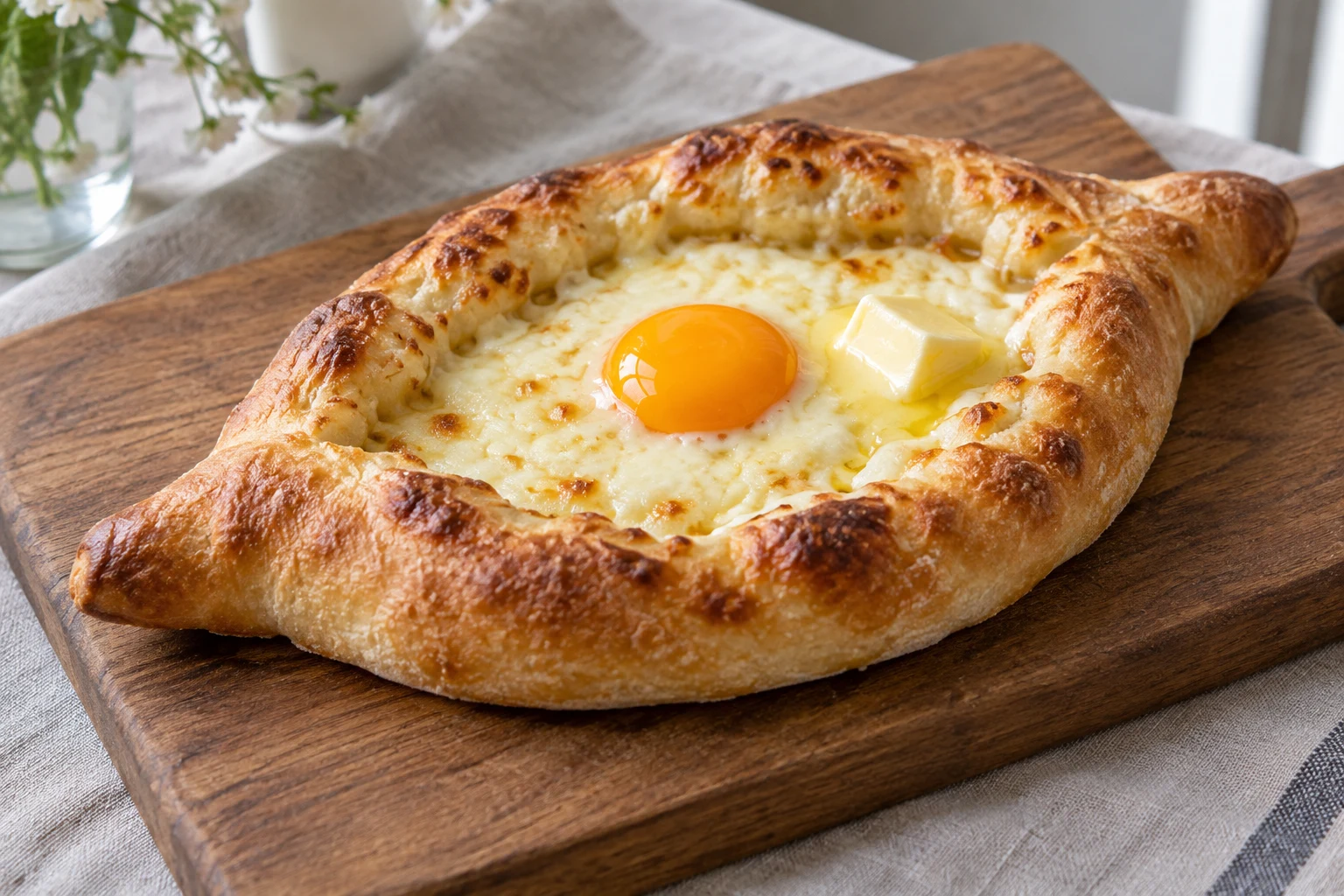
Adjarian khachapuri: read the boat before the first bite
Understand the open boat of Adjarian khachapuri, its late egg finish and regional identity, with clear distinctions between Georgian and adapted cheese recipes.
Georgian cuisine Beet salad
Charkhlis Chogi: When Tart Fruit Dresses Beets
Roasted beets, tart fruit and fresh herbs make Georgian charkhlis chogi. Explore two sauce textures, then cook a complete dried-sour-cherry adaptation.
Polish cuisine Cheese dumplings
Leniwe: The Cheese Is Already in the Dough
Polish leniwe mix twaróg into the dough before shaping. Firm cheese, careful flour choices and named sweet or savoury finishes explain these simple dumplings.