
Adjarian khachapuri: read the boat before the first bite
აჭარული ხაჭაპური
Understand the open boat of Adjarian khachapuri, its late egg finish and regional identity, with clear distinctions between Georgian and adapted cheese recipes.
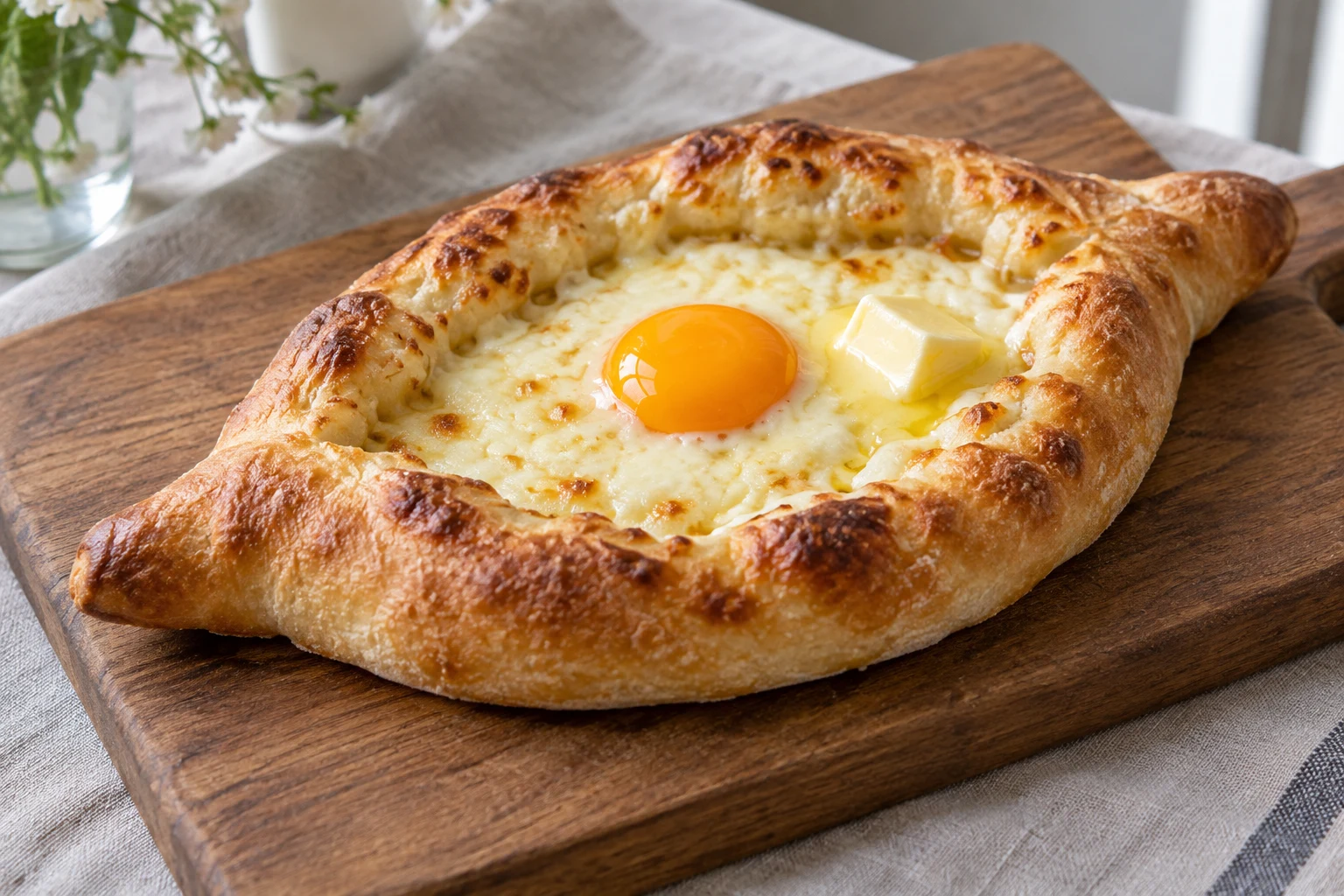
The rim and the centre do different work
Adjarian khachapuri is an open Georgian cheese bread with a boat-shaped rim, egg and butter. In food journalist Irma Iantbelidze's published recipe, the cheese-filled boat is baked first, the yolk is added near the end, and butter follows before serving. The familiar photograph therefore captures several stages of preparation in one frame.
Look beyond the bright yolk. The raised bread sides contain the filling, while the pointed ends give the oval a clear outline. A useful first question is how much bread accompanies the centre: the dish is a bread construction as well as a cheese serving. The relationship becomes clearer when you taste a little rim with the filling.
Adjara includes mountains as well as the coast
Georgia's national tourism administration calls this khachapuri a signature of Ajarian cuisine and connects it with Batumi. Its regional account also describes highland families moving with cattle to summer pastures and preparing dairy products for winter. Cheese and butter sit within a wider regional food story; the coastline alone does not explain the whole table.
The same account lists achma, with thin cooked layers, cheese and butter, among the region's khachapuri forms. That comparison is useful when browsing a menu. An Adjarian boat and layered achma can share ingredients while offering very different structures. Ask which form is served rather than treating the broad name as a promise of one shape.
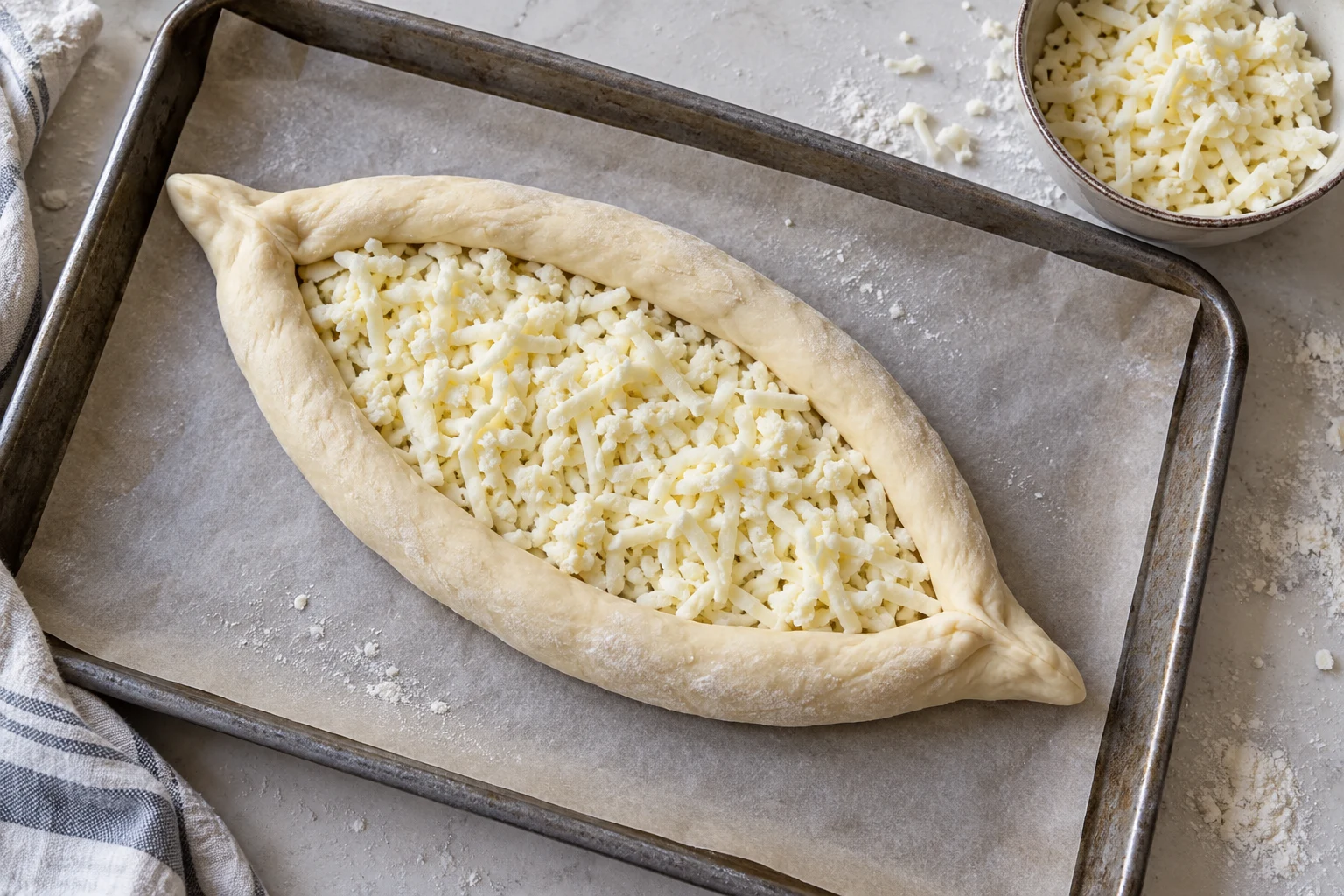
Shape is an instruction, not a decoration
Iantbelidze begins with a yeast dough, divides it and rolls each portion into an oval before forming the boat and adding grated cheese. Her method keeps the cheese exposed during baking. This order helps a reader distinguish an open boat from a sealed cheese bread even without following the recipe's quantities.
Before attempting a version at home, read its entire assembly sequence. Check how the sides rise, where the ends meet and when the filling enters the dough. Use the author's own dough and baking conditions alongside that sequence. Borrowing only the photograph can miss the construction that holds the middle in place.
The last egg stage varies by recipe
Iantbelidze's yolk finish
The Georgian Recipes version adds an egg yolk after the bread has turned golden, returns it to the oven briefly, then adds butter before serving.
Susan Reid's adapted version
King Arthur Baking's recipe adds a whole egg and butter during a second bake. It gives separate instructions for a softer or firmer egg finish. Its timings belong to that formula.
An adapted cheese blend should be named
King Arthur Baking identifies imeruli and sulguni as cheeses used in Georgian Adjaruli khachapuri. Its own recipe substitutes mozzarella or Muenster, ricotta and feta, and includes herbs. The page explicitly describes the formula as adapted for readily available ingredients. That disclosure helps explain why two recipes carrying the same dish name may taste and look different.
If a recipe uses a substitute, read the whole blend rather than replacing one ingredient by appearance alone. For a restaurant serving, asking which cheeses are used tells you more than the amount of cheese visible in a photo. This article's generated images do not identify a particular cheese variety.
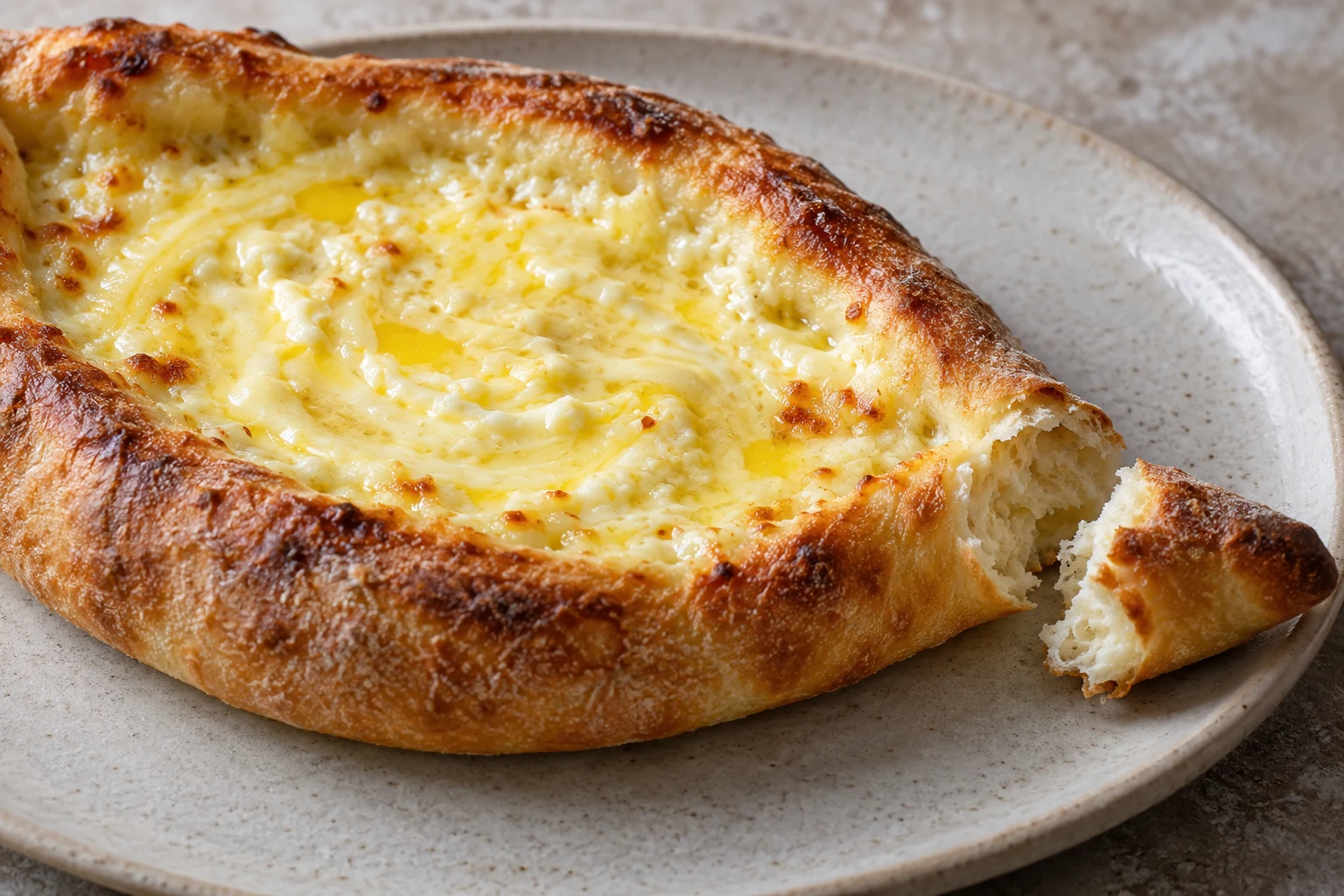
A regional name changes the construction
Adjarian
The open oval boat exposes its cheese and late egg finish. Its raised rim remains visible around the centre.
Imeretian
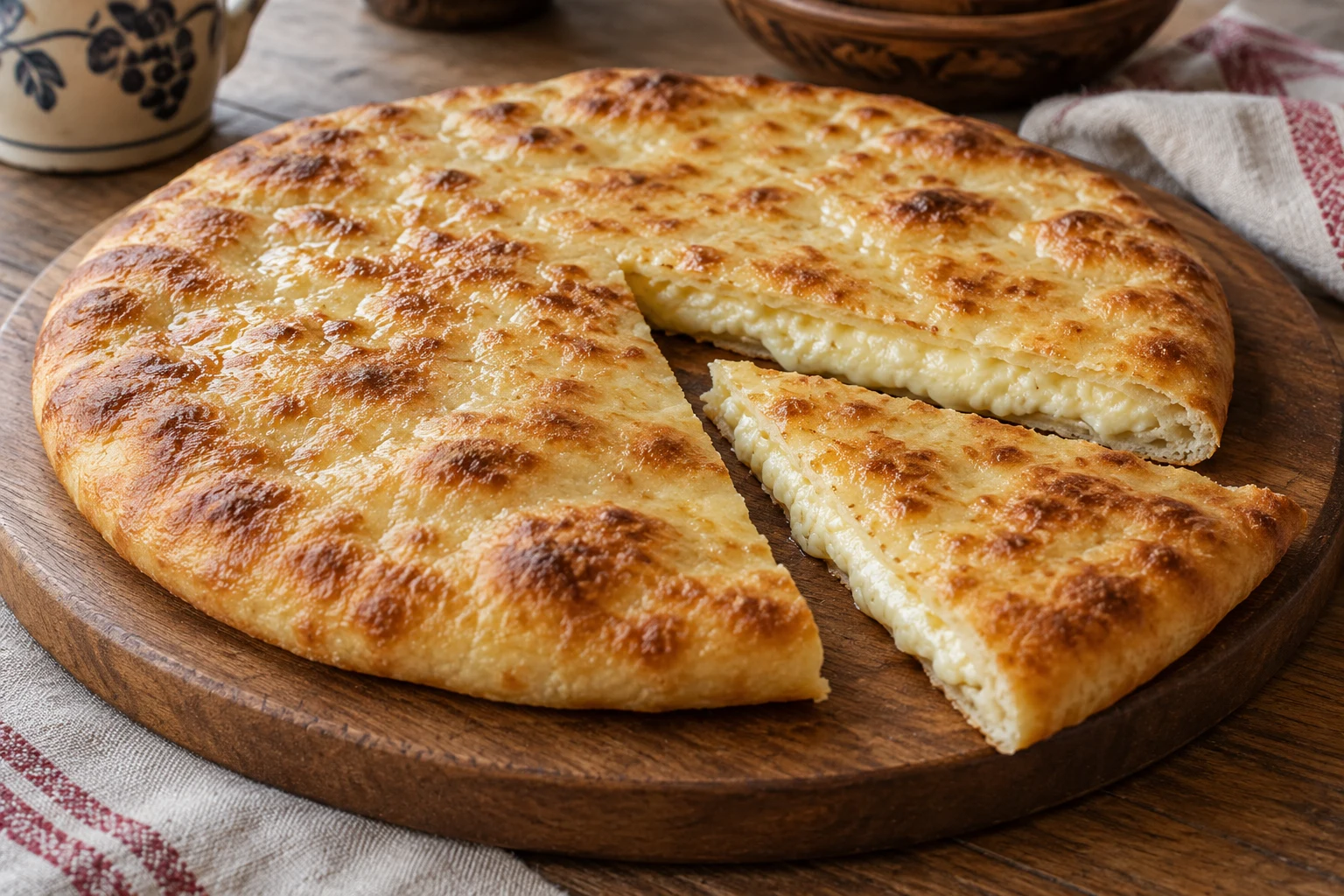
Georgia Travel's separate Imeretian recipe wraps dough around a ball of cheese, closes it and flattens it into a thin round. Butter goes over the baked bread.
Use the bread to explore the centre
For a first serving, examine the rim before moving the egg and butter. Then, if the centre is soft enough, mix a little of those toppings into the cheese and taste it with a small bread piece. This is a suggested way to notice the changes, not a claim that every table follows one formal ritual.
Compare the bread's crumb with the crust and the unmixed filling with the mixed centre. You need no fixed verdict about which version is correct to find those observations useful. At a restaurant, the regional form, cheese blend and egg finish are three concrete questions that can help you choose the serving you want.
Research notes
Sources for the shape and regional differences
Four opened documents provide an original Georgian recipe, two distinct regional accounts and a clearly identified American adaptation. The photographs are generated illustrations.
- Irma Iantbelidze — Adjarian Khachapuri Food journalist and cookbook author's yeast dough, open-boat assembly and late yolk-and-butter finish.
- Georgia Travel — Ajarian Dishes National tourism administration's dairy and regional context, including the comparison with layered achma.
- Georgia Travel — Imeretian Khachapuri A separate regional article and recipe showing a closed, flattened round cheese bread.
- Susan Reid for King Arthur Baking — Khachapuri The author's disclosed cheese adaptation and whole-egg finish provide a useful recipe contrast.
Keep exploring
More stories for your table
Georgian cuisine Cheese bread
Khachapuri: Choose the Shape Before the Dough
A closed Imeretian round and an open Adjarian boat ask different things of their dough. Start with the shape, then choose the cheese and method.
Georgian cuisine Beet salad
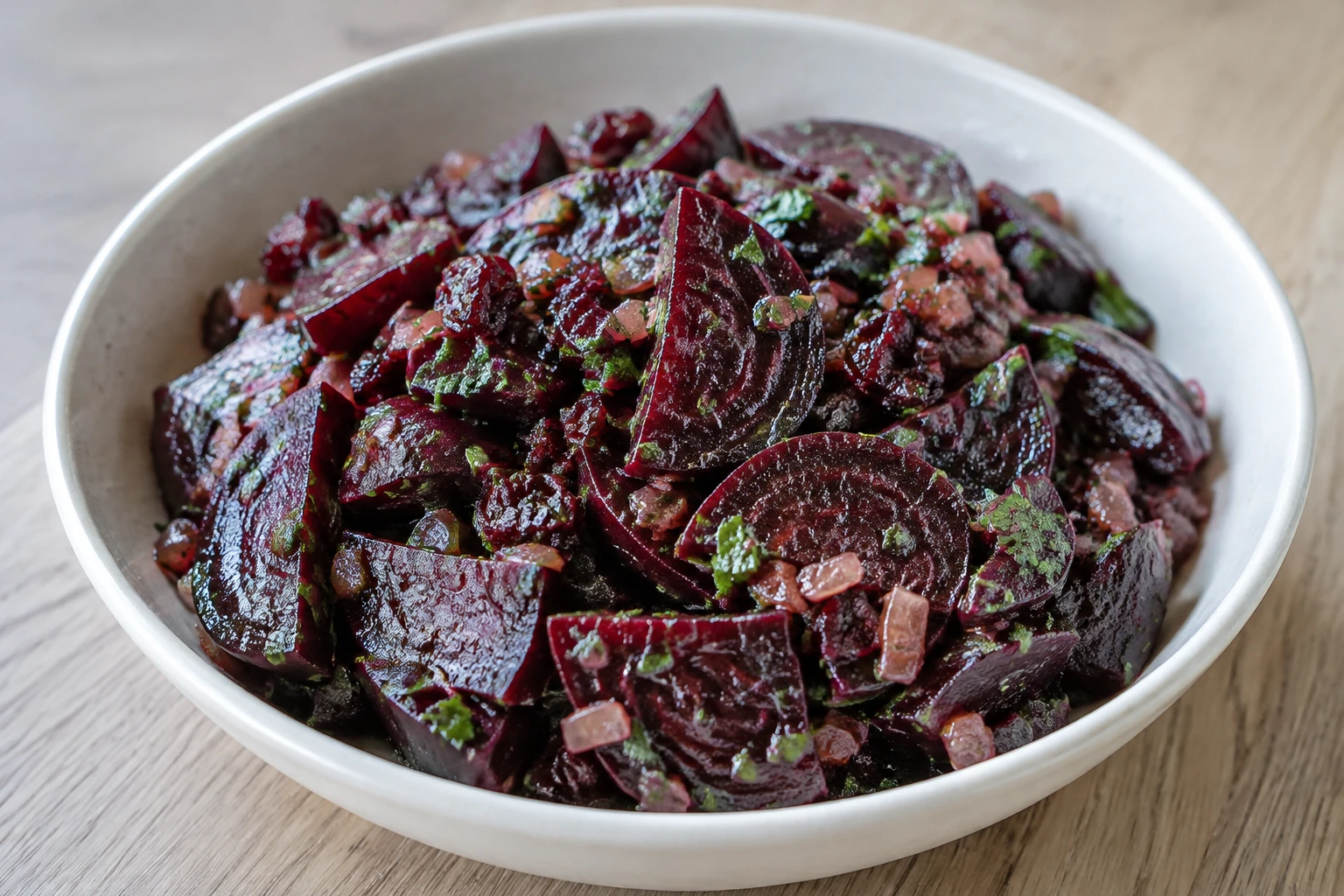
Charkhlis Chogi: When Tart Fruit Dresses Beets
Roasted beets, tart fruit and fresh herbs make Georgian charkhlis chogi. Explore two sauce textures, then cook a complete dried-sour-cherry adaptation.
Polish cuisine Cheese dumplings
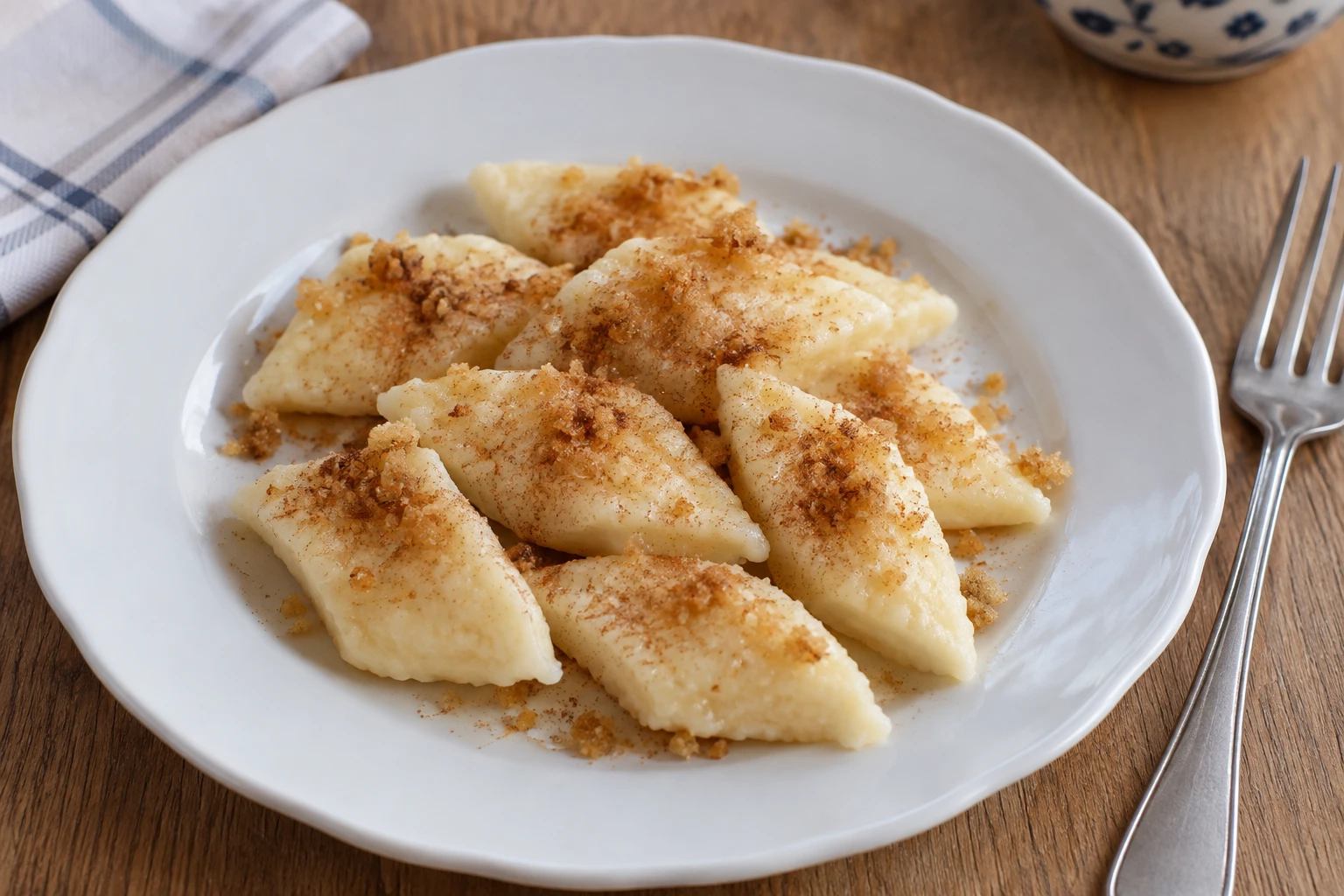
Leniwe: The Cheese Is Already in the Dough
Polish leniwe mix twaróg into the dough before shaping. Firm cheese, careful flour choices and named sweet or savoury finishes explain these simple dumplings.