
Brandade de Morue: Read the Fish, Oil and Potato
Brandade de morue
Nîmes is known for creamy salt-cod brandade, but jars and chef recipes make different choices about oil, milk and potatoes. Learn the preparation stages and read the version in front of you.
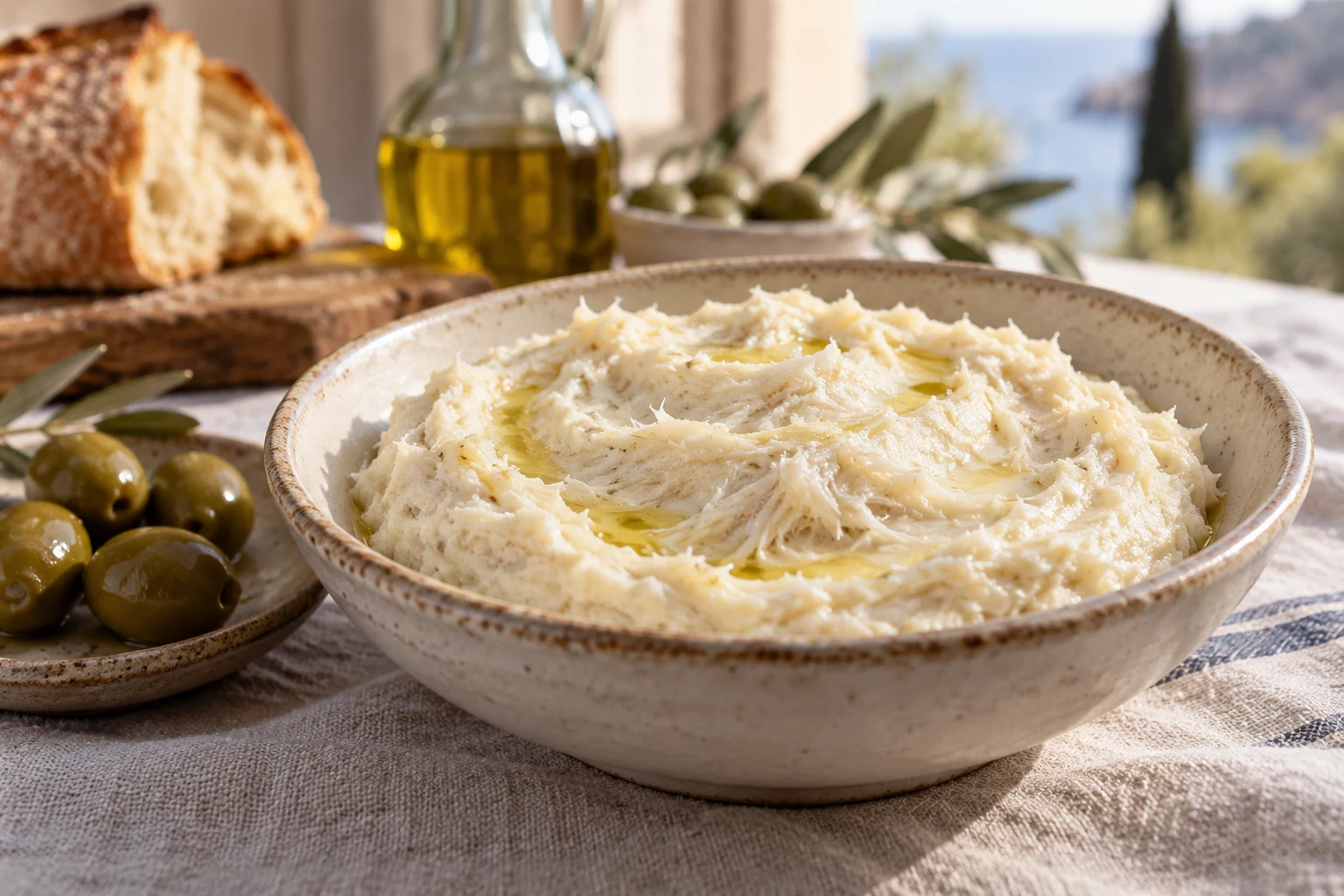
A white mixture with several possible balances
Brandade de morue turns salt cod into a pale, creamy preparation associated with Nîmes in the Gard. It may arrive as a soft spread on toast or as part of a warmer dish. The colour alone tells you little about its balance: the fish, oil, dairy and possible potato deserve a closer look.
Gard Tourism places the dish among the area’s culinary specialties and connects it with cod, salt, olive oil, milk and a little garlic. Its account also places the local olive and olive oil beside brandade in the regional food landscape. That establishes a useful connection to Nîmes without requiring every present-day jar or chef recipe to contain the same ingredients.
The potato question needs a named version
A fish-led Nîmes description
Cuisine à la française’s regional product account describes a white mixture of cod, olive oil and milk, explicitly without potato in the base. It treats garlic as a subject of variation and debate.
- Cod and fat form the central mixture
- The regional account defines its own base
A named chef’s potato version
Alain Ducasse and Damien Leroux’s recipe, also titled à la nîmoise, includes potatoes alongside desalted cod, olive oil, milk and cream. Its visible method cooks the potatoes separately before proceeding with the fish.
- Potato is a documented recipe choice
- The title alone cannot settle the ingredients
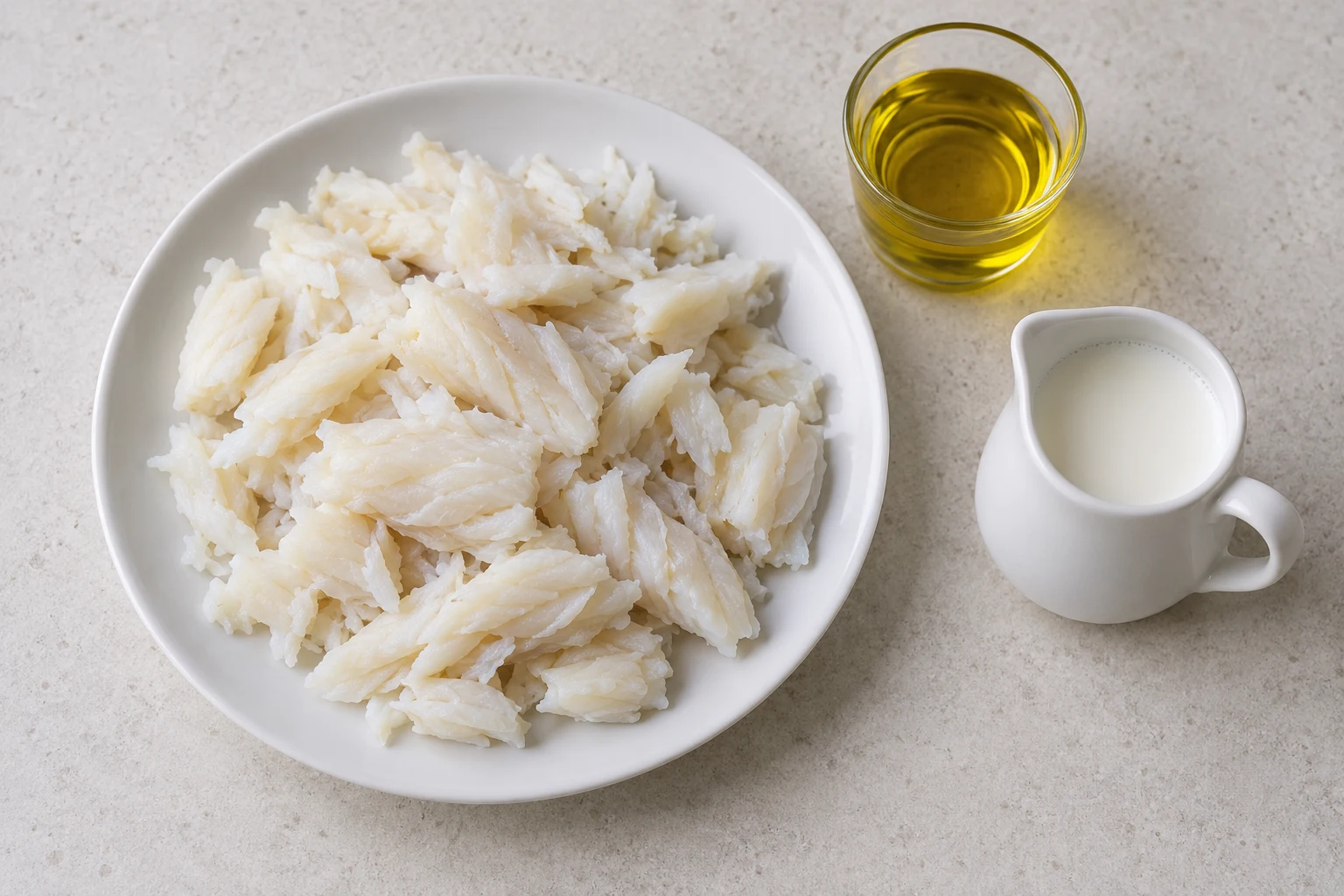
Read the recipe before declaring a rule
The contrast is more useful than a contest over one universal definition. The product account describes a regional base; the named chefs give a particular interpretation under a similar title. When choosing a recipe or buying a prepared brandade, ask what actually supplies the body of that version.
The chefs’ fish step also gives a clear preparation target: their desalted cod should separate delicately into flakes after poaching. Some flakes are reserved for presentation. This is a fish-texture detail, rather than an instruction to treat the finished mixture as ordinary mashed potato. Their accessible ingredient list includes milk and cream, so that version also brings dairy into the meal.
Four stages before the finished bowl
- 01
Desalt before cooking
France Olive’s Nîmes-style method begins by soaking salt-cod fillets and changing the water. A complete recipe and the fish supplier’s directions should govern the actual soaking time; the preparation does not begin with untreated salted fish.
- 02
Poach, drain and flake
The same method poaches gently, drains the fish, then separates it and removes the bones. This establishes a prepared fish base before the mixing stage.
- 03
Incorporate the liquids with work
France Olive warms the milk and oil and adds them alternately while working the fish energetically. The gradual addition and repeated mixing explain how separate ingredients become one supple preparation.
- 04
Choose the serving role
Its suggested tables include toast for an apéritif, salad for a starter and steamed potatoes alongside for a main dish. Potatoes beside the brandade are a different choice from potatoes within its mixture.
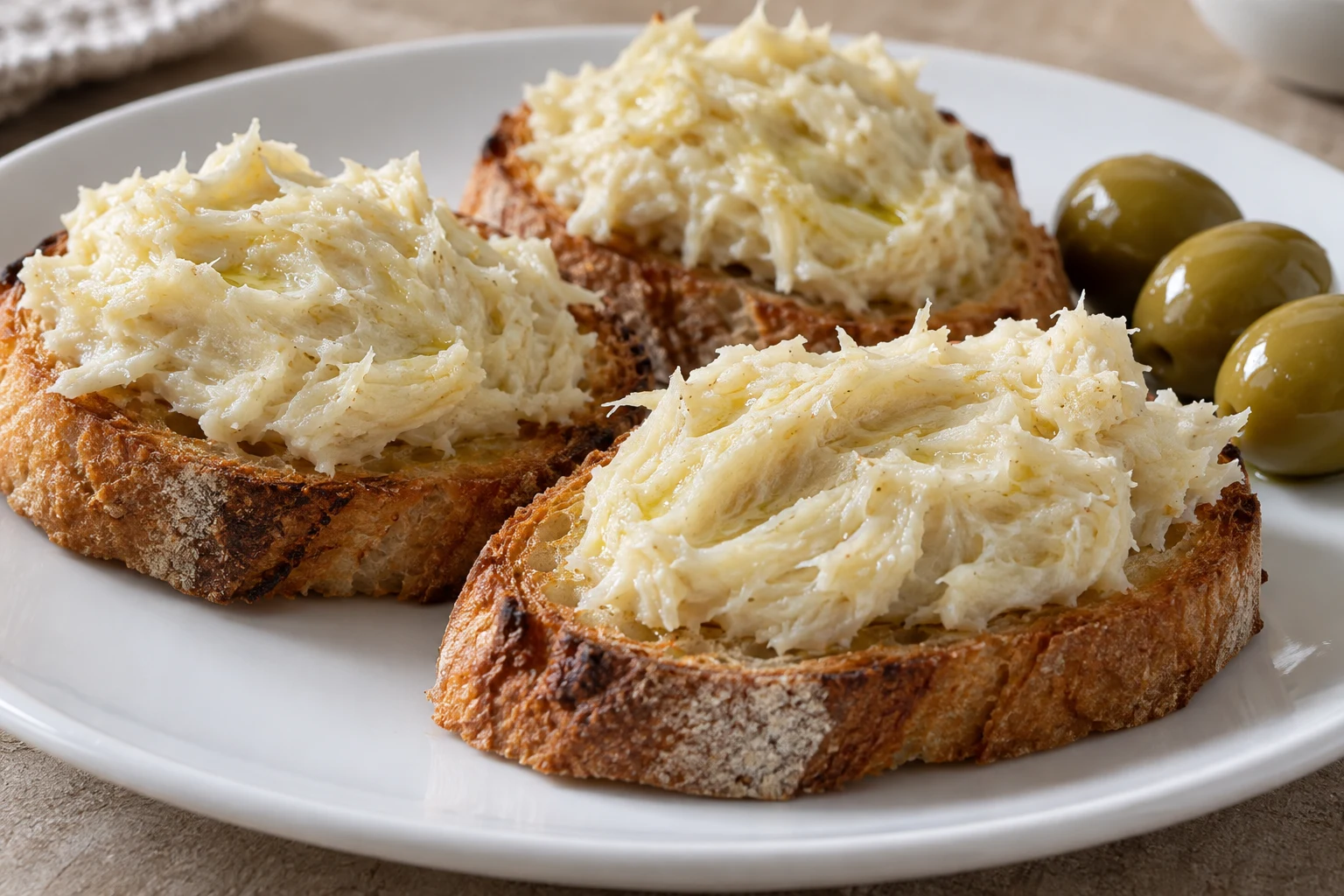
Oil and service are choices you can identify
France Olive recommends Nîmes AOP olive oil for the herbaceous character it brings to its recipe. That is a flavor direction for an olive-oil preparation, rather than an assertion that a rapeseed-oil jar is the same product with a different label. Comparing the named oil is one concrete way to understand the version in front of you.
La Nîmoise describes its own brandade served cold on toasted bread and also lists warm uses such as gratin parmentier, spinach lasagne and pastry. The finished spread can therefore be an ingredient in another preparation as well as something served directly. Bread, pastry, milk or other additions change the full plate’s ingredients.
A useful first encounter is to read three things together: the fish preparation, the ingredient list and the way it is served. That gives more information than the white surface or the word nîmoise alone. The dish’s appeal rests in how the prepared fish is worked and balanced, and the documented variations make those choices visible.
Research notes
Sources for the preparation and variations
Regional tourism and product accounts establish the Nîmes connection. A named chef recipe documents potato and dairy choices; France Olive shows the preparation sequence. La Nîmoise supplies direct evidence of its own current ingredient lists and serving suggestions.
- Gard Tourism — Nîmes and its food Regional context for brandade, cod, olive oil, milk and garlic; neighboring olive traditions.
- Cuisine à la française — Brandade de Nîmes Defines its fish/oil/milk base without potatoes and records debate over garlic.
- Alain Ducasse and Damien Leroux — Brandade à la nîmoise Publicly visible ingredients and initial steps document potato, milk, cream and delicate poached-cod flakes; later premium steps were not used.
- France Olive — Brandade with Nîmes olive oil Page 11 documents desalting, poaching, removing bones, alternating warm milk/oil and three serving roles.
- La Nîmoise — Producer’s methods and ingredients Direct lists of its rapeseed-oil, milk and lactose-free versions, plus cold toast and warm serving examples.
Keep exploring
More stories for your table
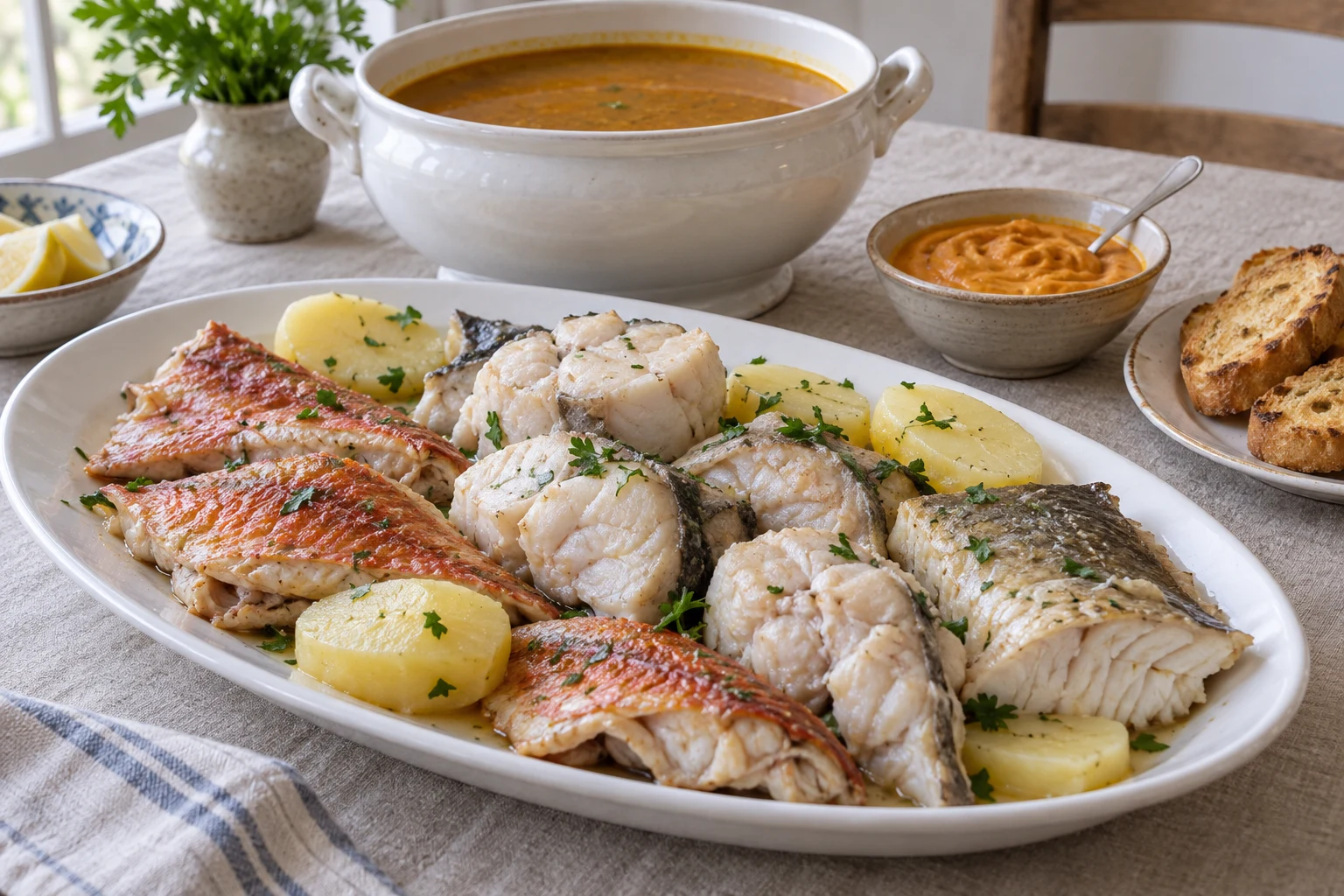
French cuisine Fish soups and stews
Bouillabaisse: a fish feast served in parts
Read bouillabaisse through its fish, saffron broth and rouille, then understand why separate service and staged cooking matter.
French cuisine Jura cheese
Comté: A Wheel’s Age Is Only Part of Its Story
Comté connects Jura milk producers, village fruitières and specialist affineurs. Learn why season, dairy and cellar matter alongside age, and how to make a more useful comparison at the cheese counter.
Portuguese cuisine Salt cod and potatoes
Bacalhau à Lagareiro: Open the Potato for the Oil
Read Portuguese bacalhau à lagareiro through its cracked potatoes and garlic oil. Compare documented roasting and grilling methods and plan the salt-cod preparation.