
Raclette: The Cheese Sets the Table
Raclette
Start a raclette meal with a clear cheese choice, cooked potatoes and a melting method. Savoie and Swiss sources explain what belongs to the product and the table.
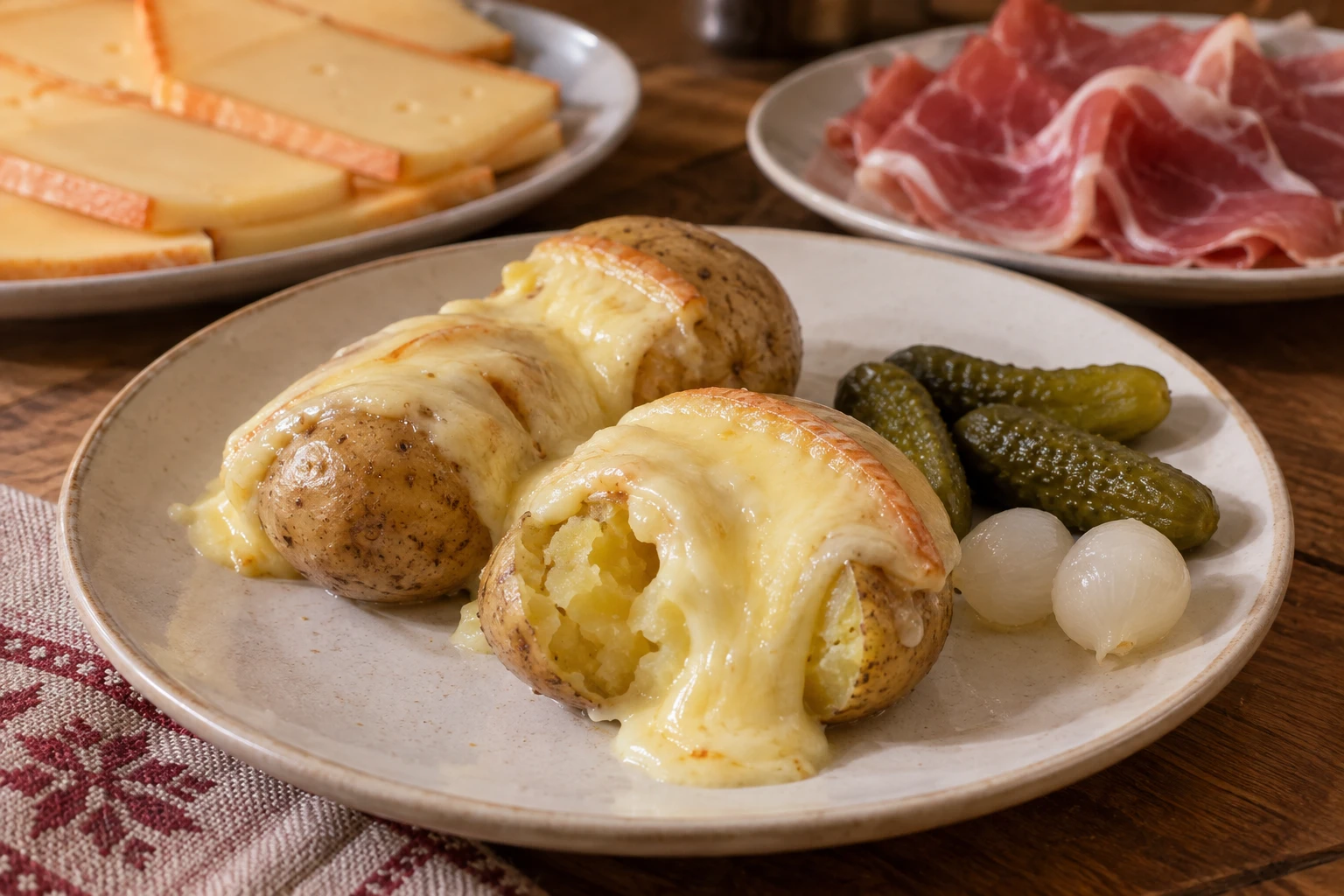
Begin with the cheese you intend to serve
Raclette turns cheese melting into a meal. On a French table, Raclette de Savoie is one particular cheese choice, with its own production description. The wider meal also has a Swiss setting: Switzerland’s federal information site describes raclette as a typical Valais dish. The useful distinction is between the cheese you buy and the way you serve it.
Decide those two things before filling the table with accompaniments. A wheel presented to a heat source, slices for individual pans and cheese laid over potatoes in an oven dish do not require the same setup. Each brings melted cheese to the plate, but they organise the serving differently.
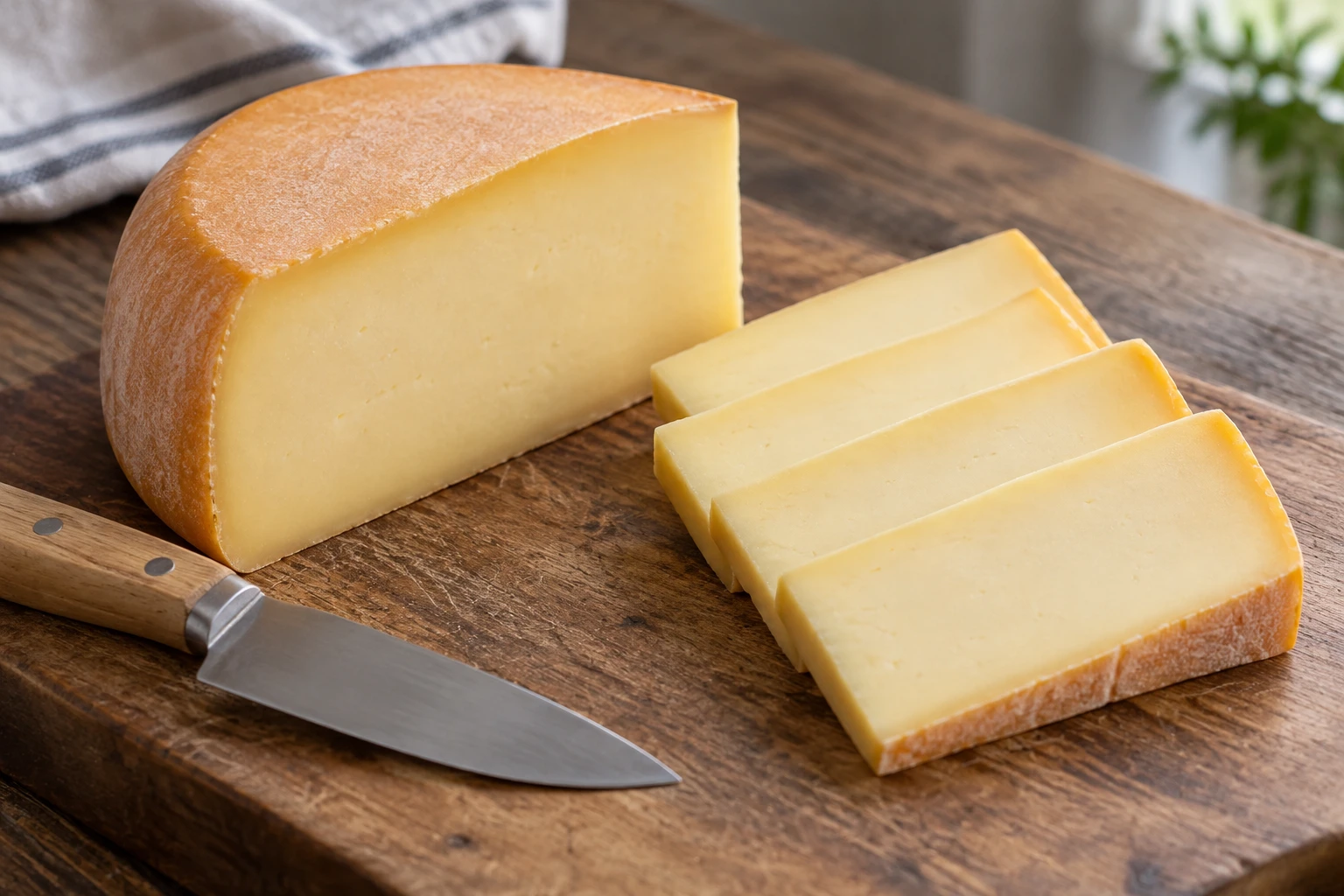
Raclette de Savoie is a specific product
The Fromages de Savoie organisation describes its IGP Raclette de Savoie as an uncooked pressed cheese made from raw or thermised cow’s milk. It is matured for at least eight weeks on wooden boards. Its pale interior is supple, enclosed by a smooth rind ranging from yellow-orange to brown.
The same product description specifies plain cheese without added flavourings. Smoked or spiced raclette elsewhere on a cheese counter therefore should not be assumed to be that particular Savoie product. Read the complete name. The organisation also distinguishes farm-produced and dairy-produced versions through green and red casein identification plaques respectively.
Choose how the portions will reach the plate
The Swiss federal guide describes three practical serving formats.
A heated wheel
Heat the exposed surface and scrape its melted layer onto the plate, serving from a larger piece.
Individual pans
Each guest melts a slice in a small pan, then transfers the cheese to cooked potatoes.
An oven dish
Cover already cooked potatoes with cheese and heat them in a conventional oven for a shared serving.
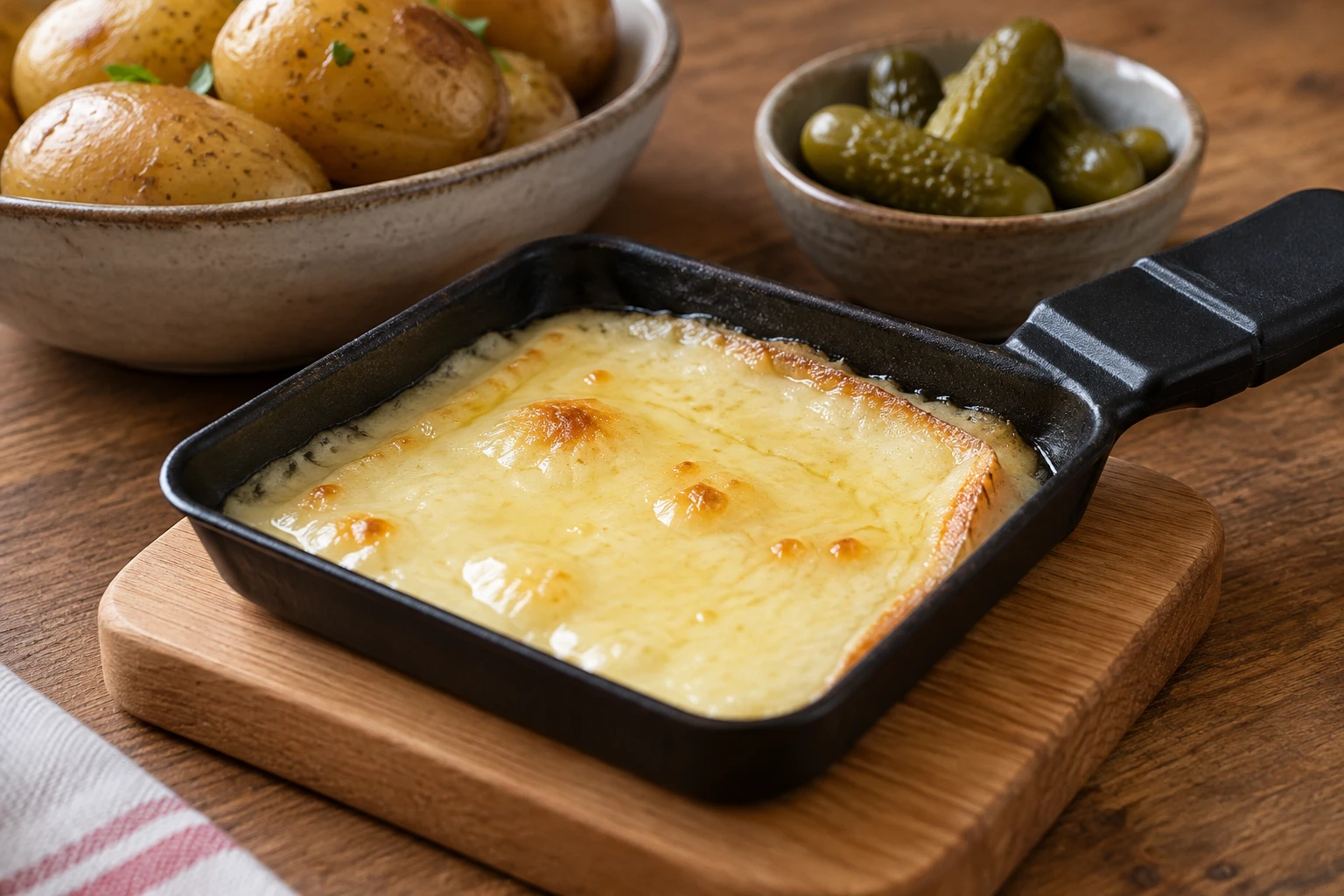
Arrange the meal around the melted portion
- 01
Have the potatoes cooked
The federal guide cooks small potatoes in their skins and keeps them warm in a covered vessel. The cheese-melting stage then supplies a topping rather than being expected to cook raw potatoes underneath.
- 02
Serve when the cheese has melted
Andreas Neubauer’s classic preparation for Raclette Suisse cautions against leaving cheese melting too long in the small pans, because the fat can separate. Watch the portion, then serve it while it is ready; an appliance setting alone does not describe its condition.
- 03
Keep the pickles within reach
Neubauer lists cornichons, small onions and mixed pickles as classic accompaniments. Put them out before melting begins. This lets each plate take a little of the accompaniments without delaying its freshly melted cheese.
A rind instruction belongs to its cheese
Raclette Suisse encourages keeping the rind on its producers’ cheese when melting. Its explanation describes the washing of the wheels before sale and suggests gently scraping away excess surface smear if desired. That advice is attached to the cheeses it represents.
Use the maker’s directions for the product in front of you rather than treating every cheese coating as identical. The named Swiss example shows why a rind can be part of the serving; it does not identify an unknown wrapped or coated cheese by appearance alone.
Extras are choices around the cheese
Entremont’s description of its raclette places mountain charcuterie beside potatoes and melted cheese. Swissmilk’s collection also offers small-pan variations with bacon, Vienna sausages, sauerkraut or truffle. Those are named serving suggestions, with their own preparations, rather than requirements for every plate.
Keeping the cheese choice clear makes the rest easier to plan. You can present a simple potato-and-pickle meal or use a published variation for additional ingredients. Either way, arrange the table so the cooked potatoes, accompaniments and plates are ready when the next portion of cheese is melted.
Research notes
Sources and product distinctions
The Savoie cheese description is kept separate from the Swiss serving examples. Producer advice about rind and melting applies to the products those sources represent.
- Fromages de Savoie: IGP Raclette de Savoie Cow’s milk, plain product, pressed interior, rind, minimum maturation and farm/dairy identification.
- Swiss federal information: Raclette Valais context, wheel and small-pan formats, cooked skin-on potatoes and an oven alternative.
- Raclette Suisse: Andreas Neubauer’s classic raclette Pickle accompaniments and avoiding prolonged melting that separates fat.
- Raclette Suisse: The rind of its producers’ cheese Product-specific rind and surface-smear explanation, not a universal coating rule.
- Entremont: Raclette product and serving description Potatoes and mountain charcuterie as the maker’s Alpine serving example.
- Swissmilk: Raclette variations Optional small-pan additions including bacon, sausages, sauerkraut and truffle.
Keep exploring
More stories for your table
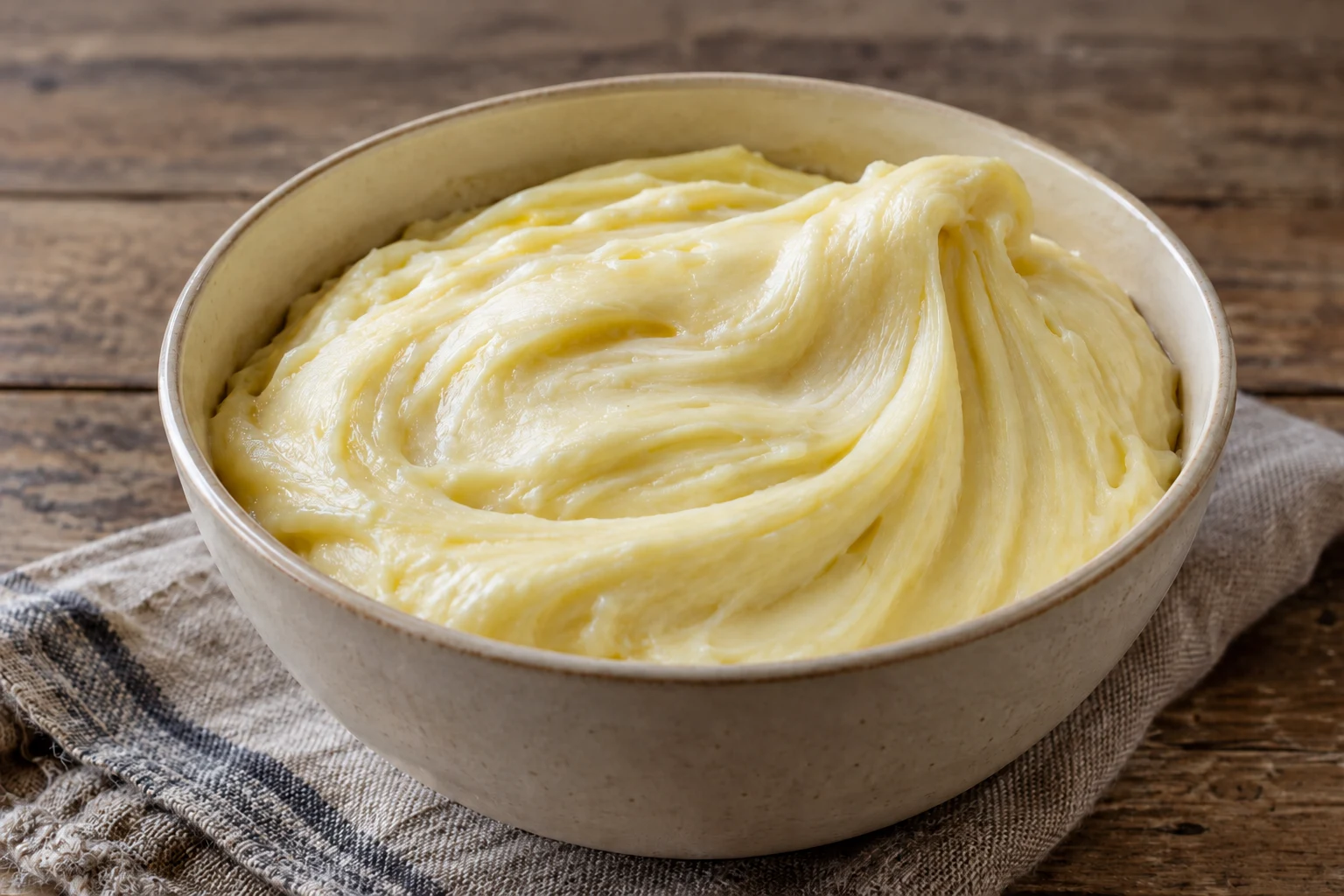
French cuisine Potato and cheese dish
Aligot: The Fresh Cheese Behind the Famous Stretch
Aligot turns potato purée and fresh Aubrac tome into a flowing ribbon. Understand the cheese, compare regional proportions, and follow a home adaptation built around gentle heat and decisive folding.
Swiss cuisine Potato dish
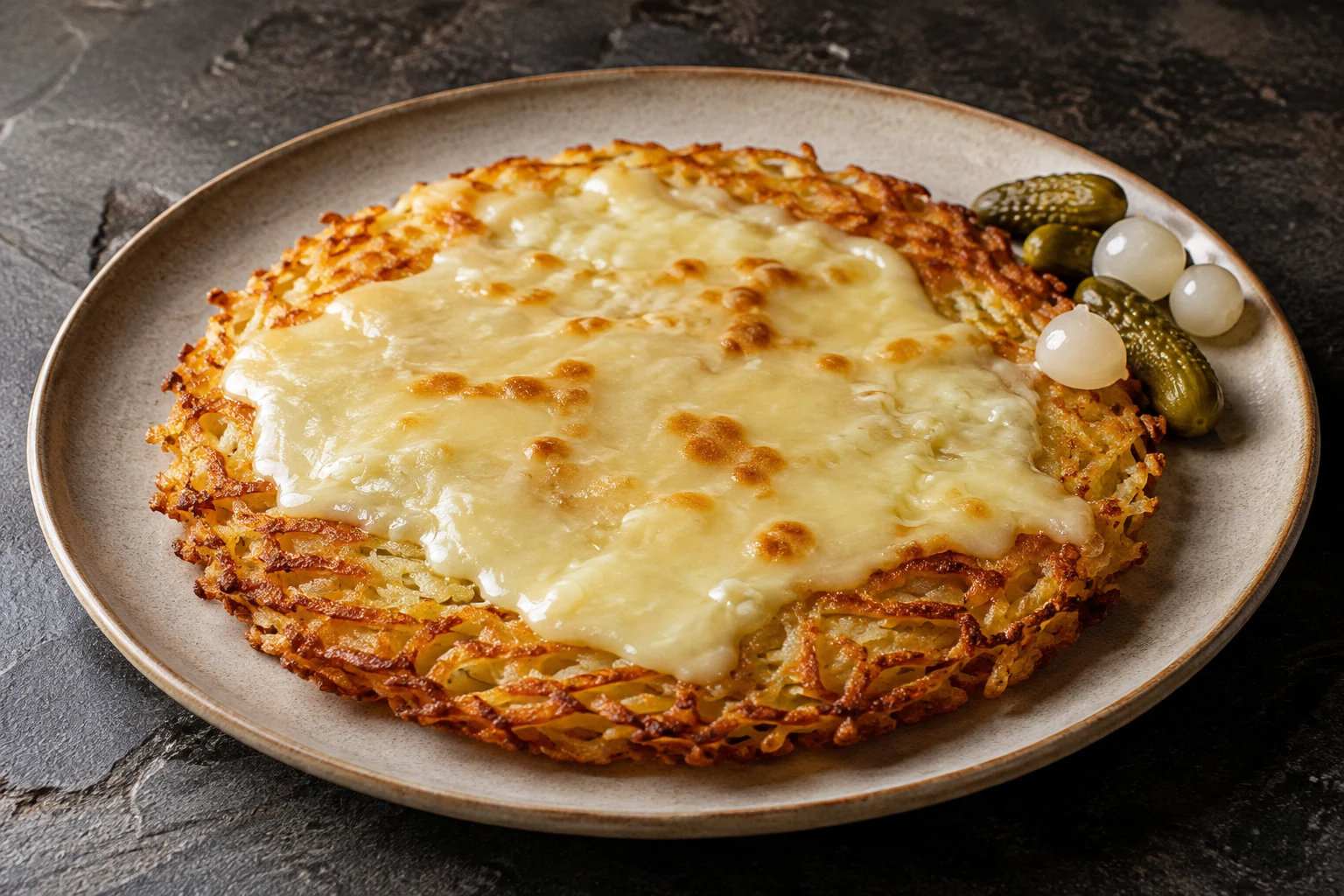
Rösti with Raclette Cheese
A crisp Swiss potato cake meets molten raclette in a cross-regional pairing that separates documented tradition from a practical home adaptation.
French cuisine Jura cheese
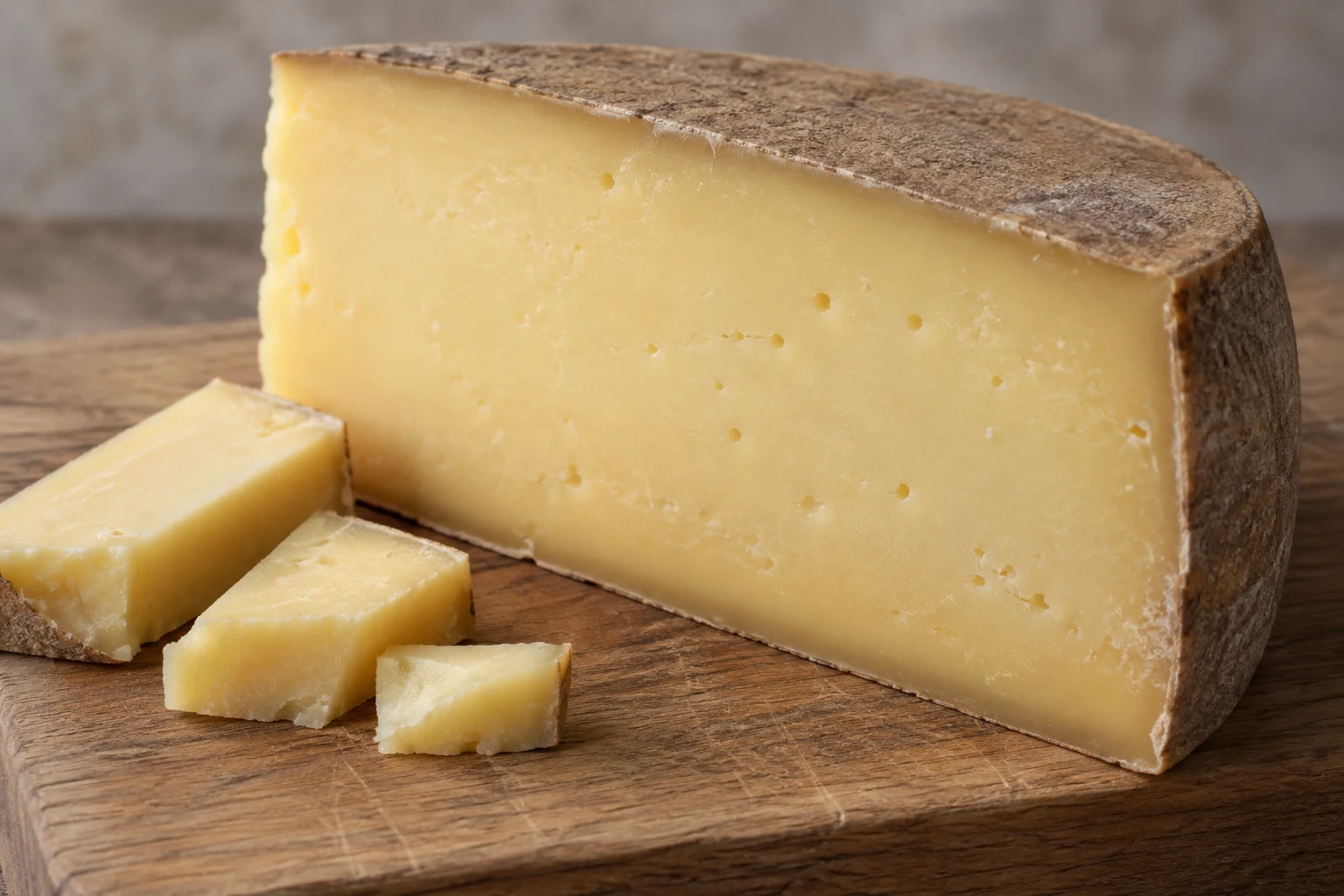
Comté: A Wheel’s Age Is Only Part of Its Story
Comté connects Jura milk producers, village fruitières and specialist affineurs. Learn why season, dairy and cellar matter alongside age, and how to make a more useful comparison at the cheese counter.