
French Pâté: What the Slice Reveals
Pâté
At a French charcuterie counter, the cut surface answers two useful questions: how finely was the filling worked, and what surrounds it? Those clues help you choose between a rustic slice, a smooth spread and pastry-enclosed pâté.
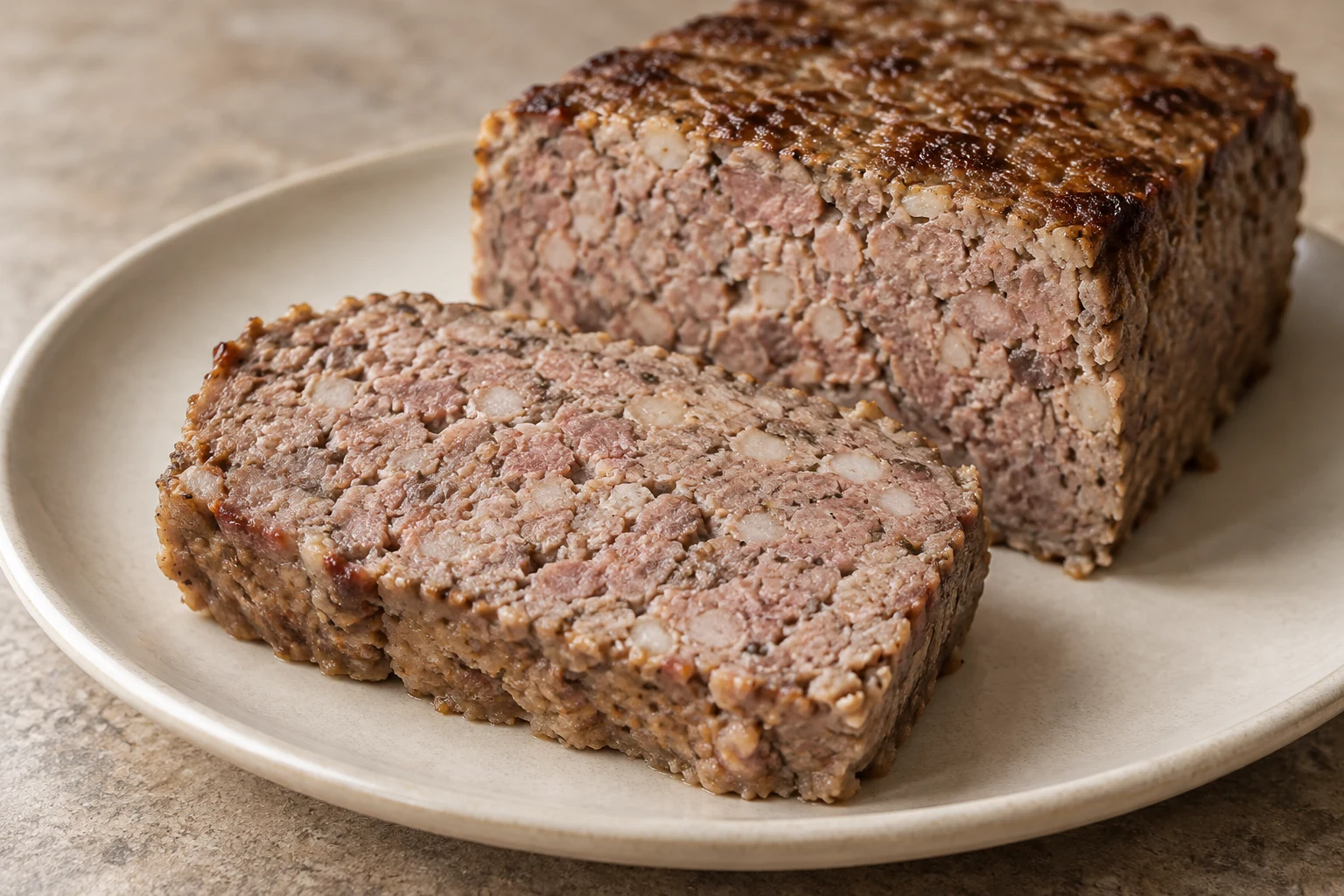
At the charcuterie counter
Look at the filling, then its surroundings
A slice with visible meat grains, a ramekin of liver mousse and a neat pastry rectangle can all belong to the French pâté family. Comparing them becomes easier when you separate the texture of the filling from the way it is enclosed. A pastry shell tells you about construction; it does not tell you how finely the meat inside was chopped.
The words pâté and terrine overlap. The Académie française’s dictionary gives pâté both a pastry-enclosed sense and an extended sense for seasoned minced meat or fish cooked in a terrine and served cold. For that second meaning, it explicitly accepts terrine as another name. The label alone therefore cannot promise a coarse slice or a smooth paste.
For a bread-and-charcuterie plate, start with the eating texture you want. The French charcuterie federation FICT distinguishes fine, coarse and mixed grinds. Its examples offer a more useful guide than treating every pâté as the same liver spread.
Two textures—and room between them
Coarse: visible grains
Country pâtés can show separate grains of meat and liver. FICT’s example is pâté breton, whose cut surface exposes that coarse mixture. Choose this direction when you want a slice with a visibly varied interior; country bread is the federation’s suggested partner.
Fine: an even spread
Fine liver pâtés and mousses offer a more uniform texture that spreads across bread or toast. This is a useful choice when you want an even coating. Mixed-grind pâtés combine the approaches: FICT describes forestier styles with pieces of liver and mushrooms set into a fine base.
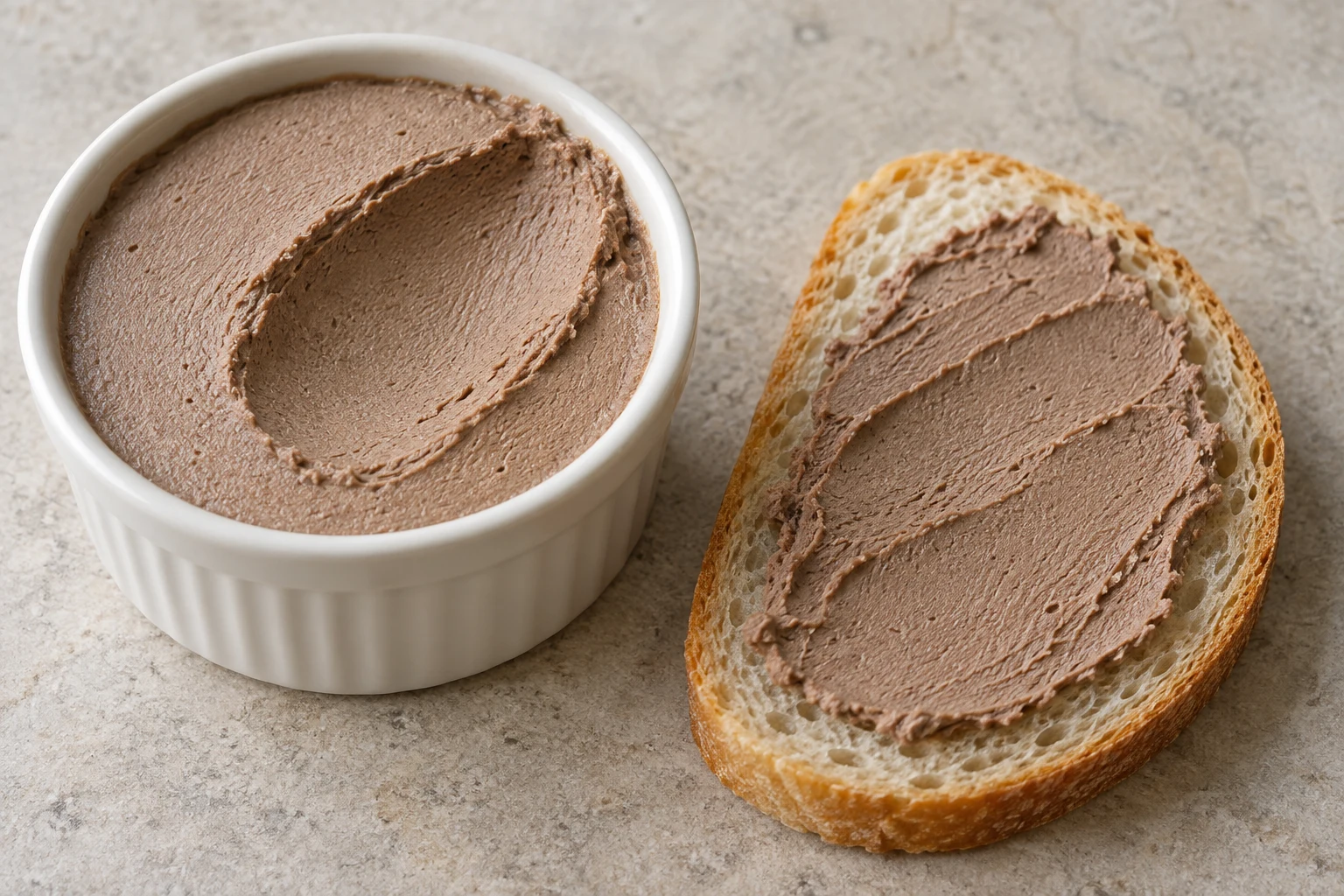
Liver is an ingredient, not a texture
Maison Verot’s pâté de campagne combines pork liver with other pork cuts, onion and herbs. Its pâté de foie also uses pork liver, along with pork fat, milk, egg and seasonings. The contrast is useful: liver is present in both products, even though their names emphasize different things. A preference for a coarse pâté does not automatically mean choosing a liver-free one.
Nor does a crust-free surface disclose the whole ingredient list. Verot lists milk and egg in both of those pâtés. Madrange’s pork-liver mousse with cream includes wheat flour as well as milk products. These are specific formulas, not requirements for every pâté. If ingredients matter to your choice, ask about the particular preparation: the word mousse and the absence of visible pastry cannot answer that question.
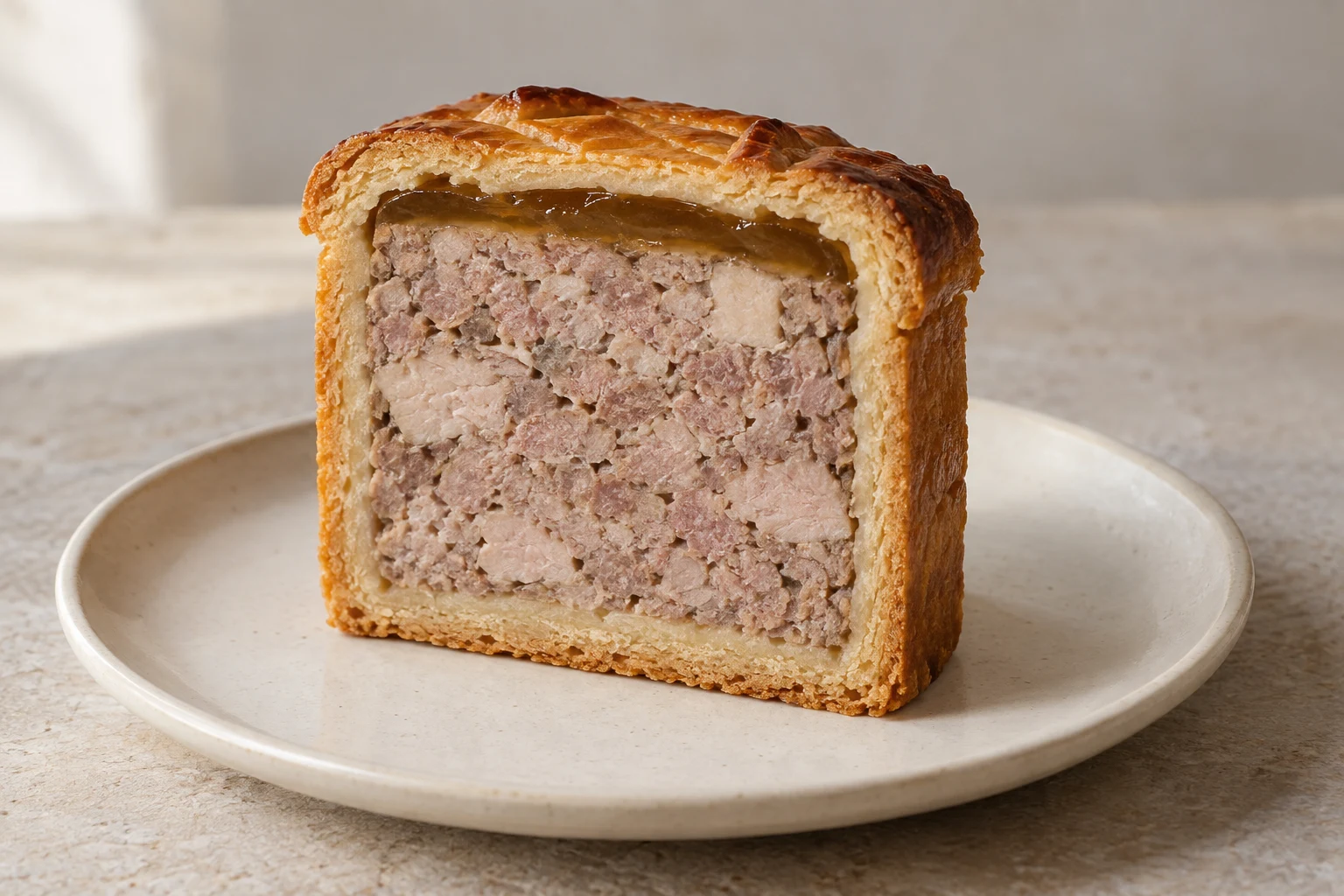
Read pâté en croûte from the outside in
Chef Philippe’s illustrated preparation at Meilleur du Chef shows how a crusted pâté is assembled. Use these three features to understand a finished slice.
- 01
The pastry casing
His version uses shortcrust pastry around the filling. This baked outer layer is a separate component from the minced meat it contains.
- 02
The filling and larger pieces
A ground pork mixture surrounds pieces such as veal strips, cooked ham and foie gras in his recipe. Larger shapes within a slice can therefore reflect deliberate layers or inserts, rather than the grind of the whole filling.
- 03
The gelée between meat and crust
The filling can contract during baking. Chef Philippe fills the resulting space with Madeira gelée, which sets around the meat and helps the cold pâté cut into complete slices. That translucent band has a structural job as well as a place in the finished bite.
Research notes
Sources and further reading
French reference and trade sources explain the vocabulary and textures. The producer ingredient lists describe their own pâtés; Chef Philippe documents the construction of a pastry-enclosed version.
- Académie française — Pâté The dictionary includes pastry-enclosed pâté and the overlapping use of pâté and terrine.
- FICT, Les Charcuteries — Pâtés et terrines Fine, coarse and mixed grinding, with examples of the resulting textures.
- Maison Verot — Pâté de campagne The producer’s country pâté contains pork liver, other pork cuts, herbs, milk and egg.
- Maison Verot — Pâté de foie The producer’s liver pâté lists pork liver and fat, milk, egg and seasonings.
- Madrange — Mousse de foie et sa pointe de crème A concrete example of a crust-free pork-liver mousse whose ingredients include wheat flour and milk.
- Chef Philippe, Meilleur du Chef — Pâté en croûte Shortcrust, ground filling, separate inserts and gelée filling the spaces after baking.
Keep exploring
More stories for your table
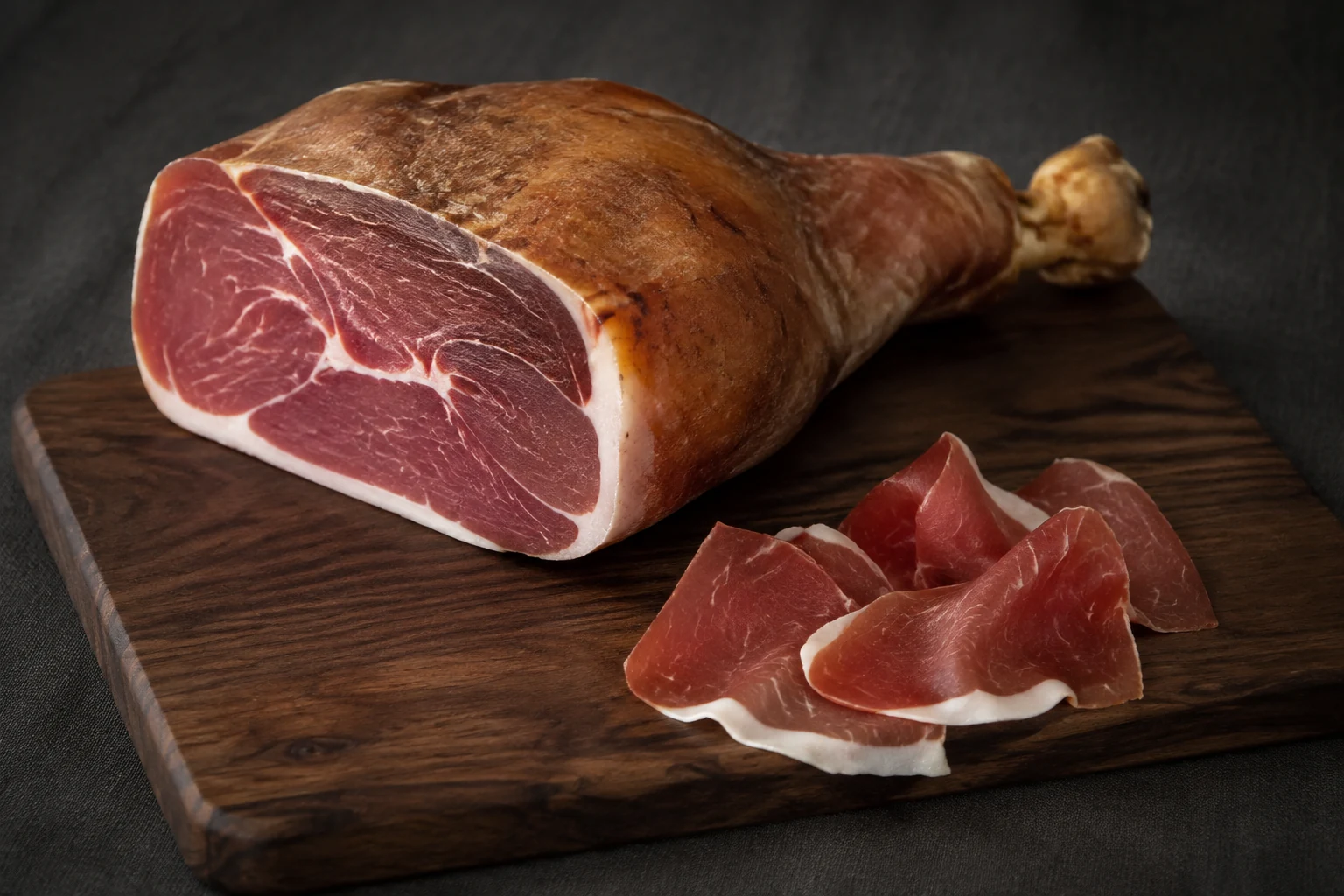
BelgiumDry-cured ham
Jambon d’Ardenne: A Name Made by Place
Belgium’s protected Ardennes ham is defined less by where the pig was raised than by where salt, cold air, optional smoke, and patient maturation turn pork into charcuterie.
CzechiaCold pub cheese
Nakládaný Hermelín: Inside the Czech Pub Cheese
Look inside Czech oil-marinated Hermelín: garlic and paprika can fill the middle, herbs and chilli season the rind, and a documented walnut version changes the center itself.
PortugalRice dish
Arroz de Perdiz: A Golden Crust or a Brothy Finish
Follow Portuguese partridge rice from Fialho de Almeida’s oven finish to a broth-rich pot, and learn what the cooking sequence reveals.