
Duck confit: tender meat first, crisp skin second
Confit de canard
Duck confit makes more sense as two cooking goals: gentle fat cooking for the leg, then a separate finish that crisps the skin.
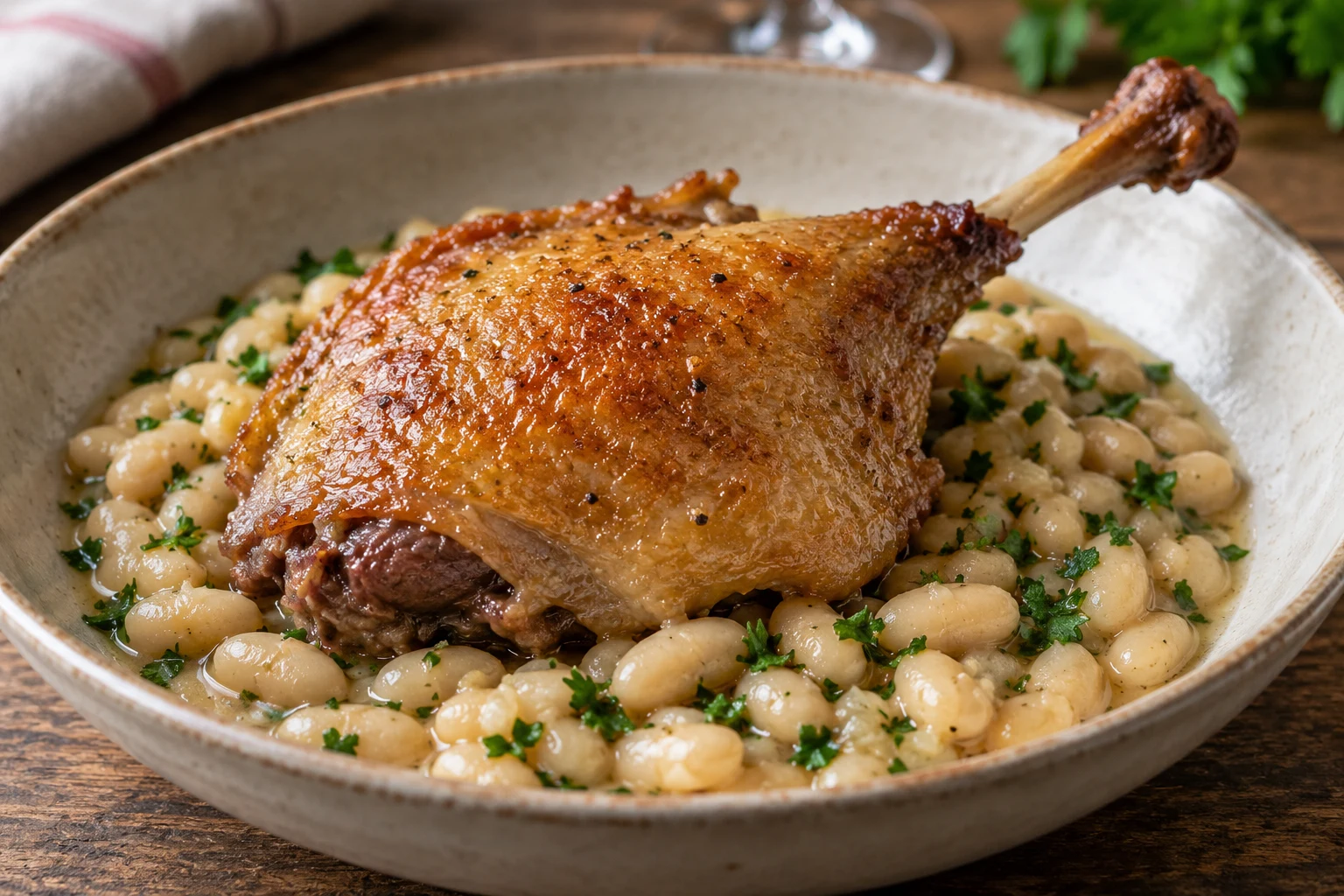
The golden skin is the final stage
A finished duck confit leg can suggest one long roast: golden skin above tender dark meat. Its method is easier to understand as two goals. First, the seasoned leg cooks gently in fat until the flesh is tender. Then a separate finishing stage gives the skin its crisp surface. Expecting the gentle fat bath to do both jobs makes the process needlessly confusing.
The recipes examined here agree on that broad distinction while differing in their equipment and detailed schedules. The useful starting point is a complete method you can follow, with time and space set aside for its finish. A leg lifted from the fat is an intermediate result, even when the meat is ready for the next stage.
Start with the cut and the cure
The RecipeTin Eats method uses duck legs with the thighs attached. Skin, meat and bone remain together through the cooking process. Match that cut to your chosen recipe rather than treating a breast or a whole bird as an equivalent portion.
The Culinary Institute of America's teaching guide seasons its legs with a dry mixture of salt, garlic, thyme, bay and peppercorns, then refrigerates them overnight. Its method also includes trimming and rendering reserved duck skin. That preparation belongs to the particular lesson; it is not a reason to guess at extra salt or remove bones from a different author's recipe.
Three stages to keep distinct
- Season
- Before the fat
- Tenderize
- Gentle cooking
- Crisp
- The final surface
Use the cure and preparation instructions belonging to the selected method.
Monitor the cooking medium and follow that recipe's schedule and checks.
Plan the pan or oven finish before the meal is ready to serve.
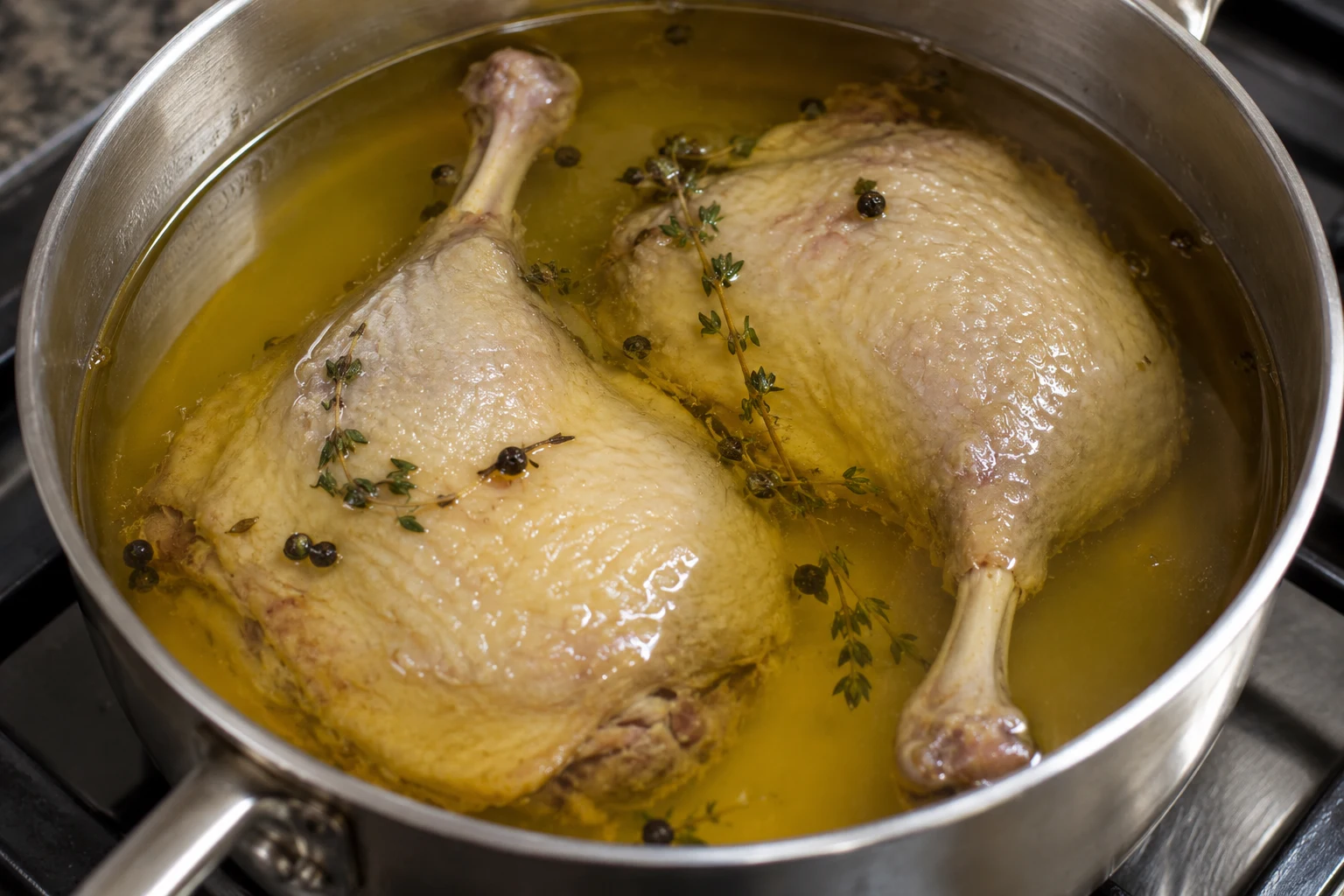
The vessel is part of the method
Davis calls for a heavy pot just large enough to hold the legs, with fat covering them. Nagi Maehashi and chef Jean-Baptiste Alexandre likewise use a snug pan in their RecipeTin Eats version. The amount of fat needed therefore relates to both the meat and the vessel, rather than being a universal volume for any pan in the cupboard.
Raymond Blanc makes the temperature distinction especially clear. His oven is set to 100°C, while his instructions ask the cook to check that the duck fat stays below 90°C. Those figures describe two different things: the oven setting and the cooking medium. Keep the probe instruction attached to his complete method instead of treating the oven dial as a measurement of the fat itself.
The CIA guide takes the cook through rendering fat from reserved skin before using it for the legs. Account for that cooking medium before starting the confit stage. Choose a method whose equipment and fat preparation you can supply.
Two ways to finish the surface
Skin against a hot pan
Davis removes excess fat and places the leg skin side down in a dry frying pan. Blanc also uses a dry pan to color and crisp the skin. The skin's contact with the pan is the key arrangement to notice.
- Lift the tender leg carefully.
- Follow the chosen pan method rather than flipping constantly.
Skin exposed on a rack
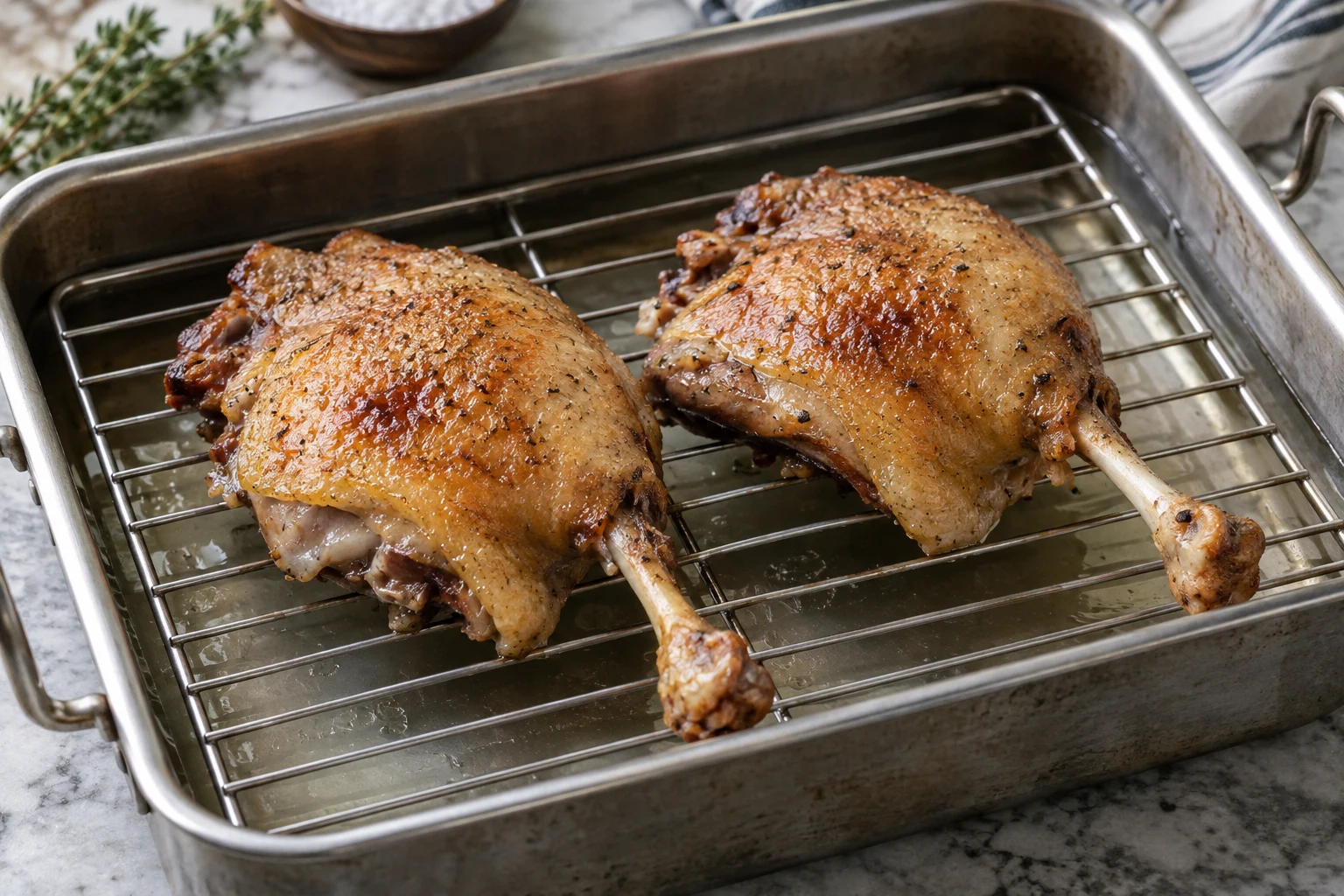
Maehashi and Alexandre finish their legs skin side up on a rack over a pan containing water. It is a different setup with its own oven instructions, so select that complete finish rather than borrowing only its final temperature.
- Prepare the rack and receiving pan in advance.
- Leave the skin exposed as the method directs.
Give the finished leg a clear place on the plate
Davis cautions that lifting a tender leg carelessly can leave the bone behind. Handle the cooked portion as a delicate piece, supporting it while excess fat drains, then move it into the selected finishing setup. The goal is to preserve the portion that will reach the plate, rather than tearing it apart just before crisping.
Blanc serves his crisp leg over flageolet beans with a little cooking liquid. Put the leg on top so the skin remains visible and available for the first cut. The beans make a complete spoonable base without requiring another sauce to cover the surface you have just finished.
Confit also has a different role in the CIA's cassoulet lesson: cooked duck meat is removed from its bones and incorporated into the bean-and-meat casserole. That is a separate serving destination. Decide whether you want an intact crisp-skinned leg or meat for another preparation, and let that decision guide the final work.
Research notes
Sources and cooking approaches
Four substantive methods inform this guide. Their quantities, schedules and equipment remain separate; this is not a new tested recipe or a preservation procedure. Images are generated illustrations of the described cooking stages.
- Raymond Blanc: confit duck leg cassoulet Separate oven and fat temperatures, a dry-pan finish and flageolet-bean serving.
- Mitchell Davis, James Beard Foundation: Duck Confit Covered fat cooking, careful lifting of the tender leg and a skin-down pan finish.
- Nagi Maehashi and Jean-Baptiste Alexandre: Duck Confit Snug cooking vessel and a distinct skin-up rack-and-oven finishing method.
- Culinary Institute of America: A Taste of France Duck confit on printed page 56; rendering and cure preparation, plus its later cassoulet use on page 82.
Keep exploring
More stories for your table
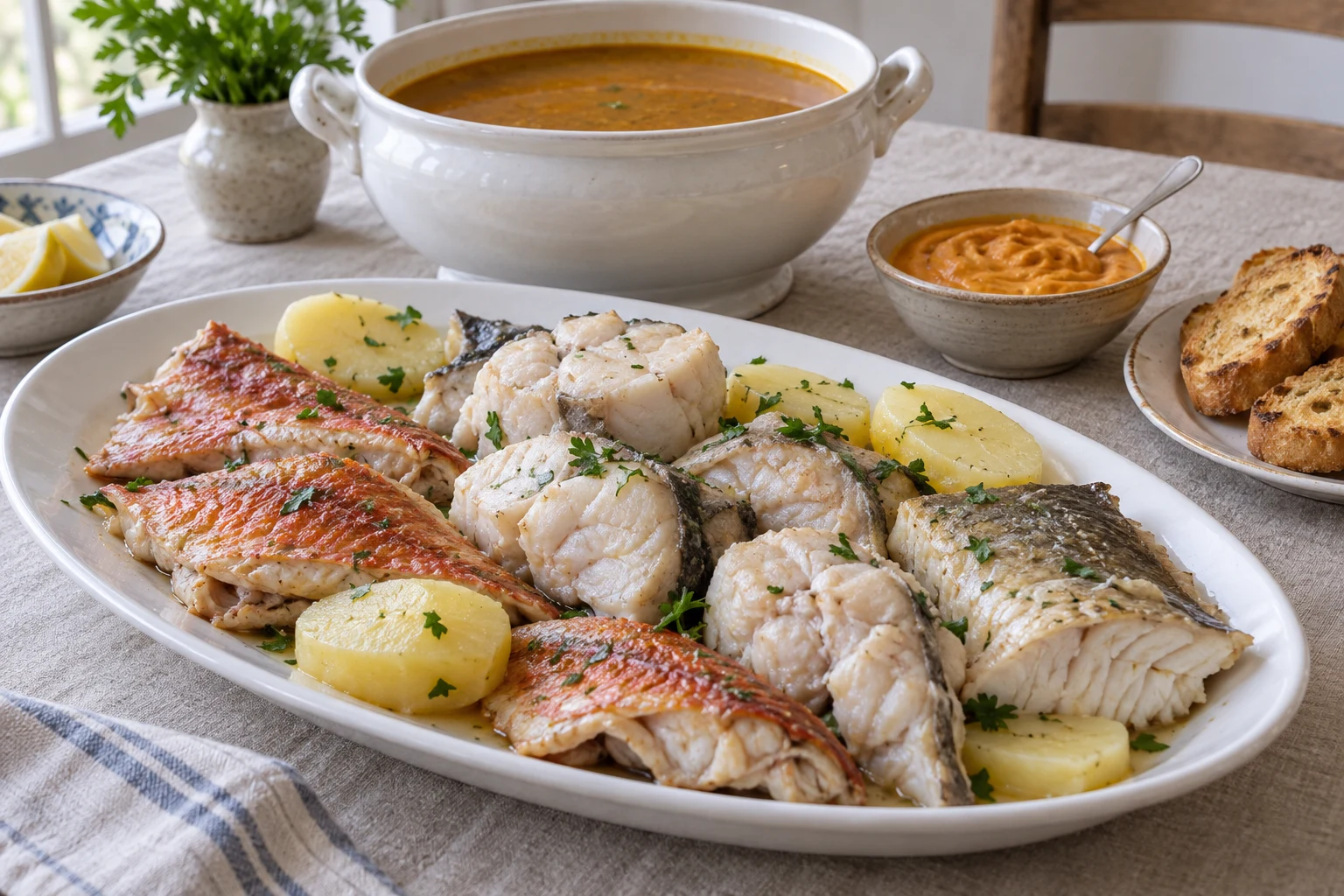
French cuisine Fish soups and stews
Bouillabaisse: a fish feast served in parts
Read bouillabaisse through its fish, saffron broth and rouille, then understand why separate service and staged cooking matter.
French cuisine Charcuterie
Andouillette: Read the Filling, Then the Finish
Understand the pork or veal filling, the visible strips in a Troyes example and the sauce around this French charcuterie before choosing a preparation.
Portuguese cuisine Seafood stew
Cuttlefish Feijoada: Tender Seafood, Intact Beans
A Portuguese cuttlefish-and-bean stew explained through its cooking sequence: tenderize the seafood, add cooked beans, and use a little bean mash to bring the sauce together.