
Comté: A Wheel’s Age Is Only Part of Its Story
Comté
Comté connects Jura milk producers, village fruitières and specialist affineurs. Learn why season, dairy and cellar matter alongside age, and how to make a more useful comparison at the cheese counter.
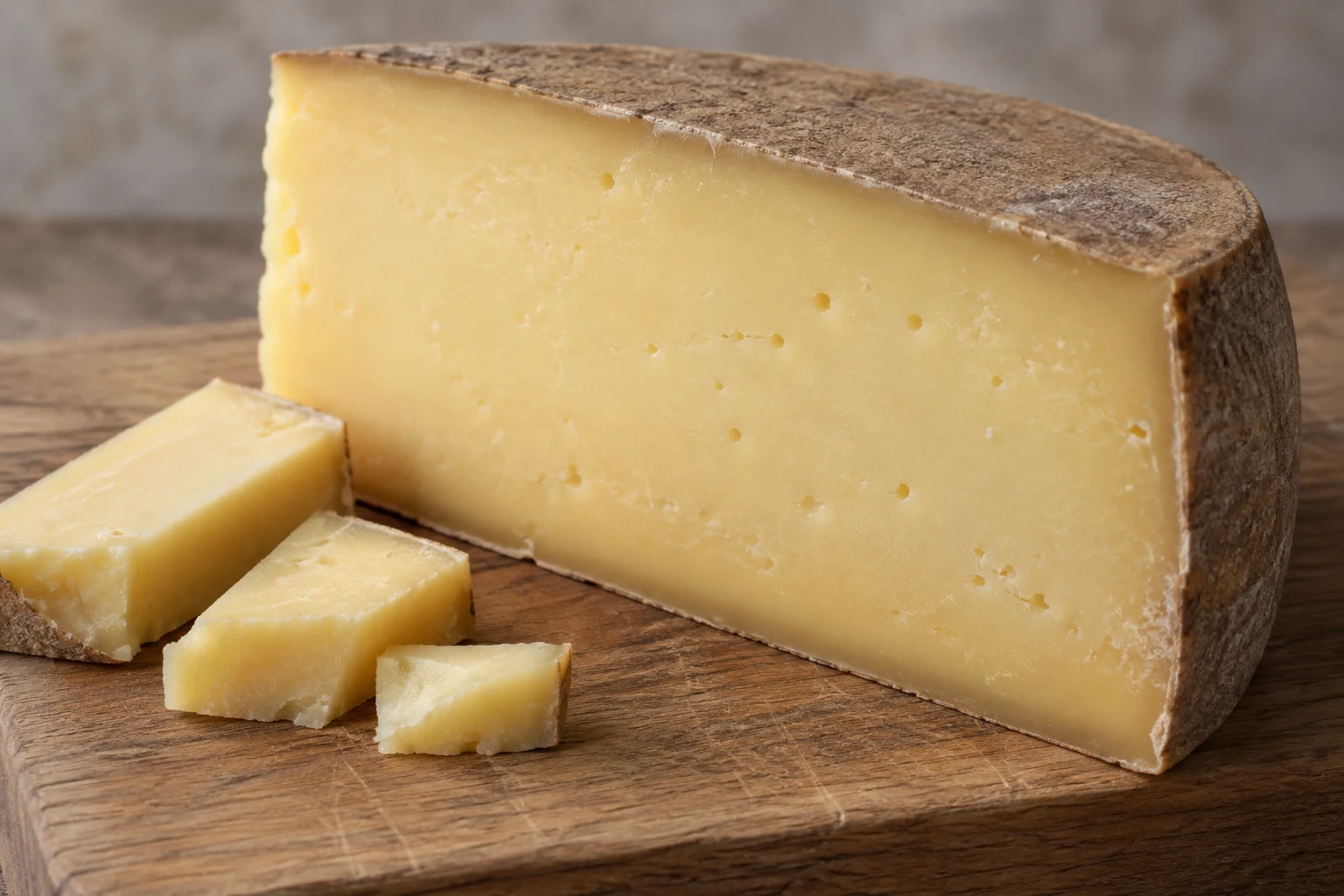
What does “18 months” leave out?
At a cheese counter, an age label gives Comté an easy shorthand. A longer-matured wedge can seem like the obvious upgrade. But Comté’s own institutions describe a more complicated picture: place, season, cheesemaking and the maturing cellar all contribute to the result. Age is useful information, not a complete tasting note.
The cheese is a raw cow’s-milk, cooked-and-pressed cheese from the French Jura massif. INAO describes production as a collaboration among milk producers, cheesemakers and affineurs, the specialists who manage maturation. Following those three roles makes the wedge more understandable than arranging cheeses on a simple youngest-to-oldest ladder.
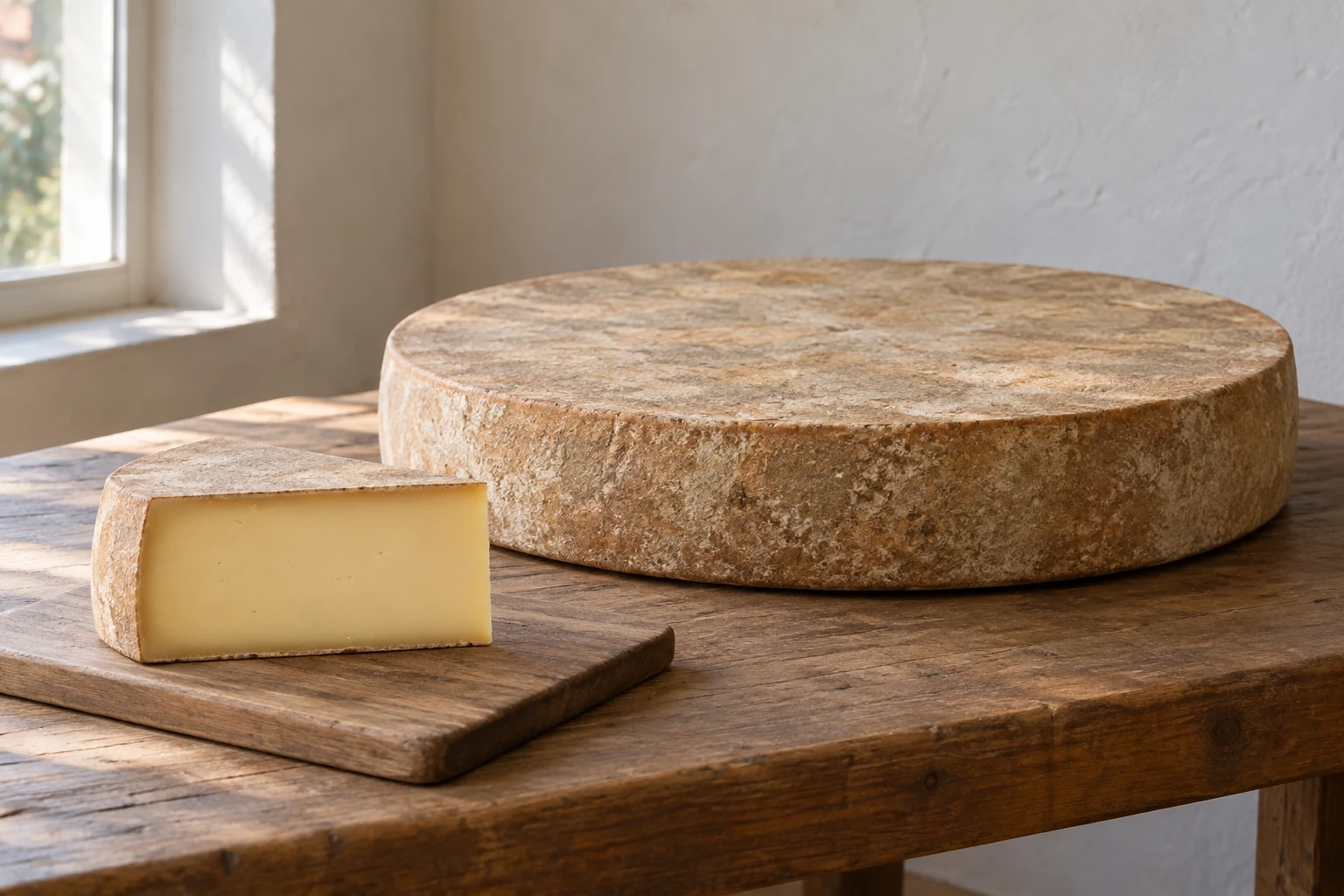
Three kinds of work in one cheese
- The farms
- Milk tied to the Jura
- The fruitière
- A village cheesemaking centre
- The affineur
- A manager of maturation
INAO identifies Montbéliarde and French Simmental cows in the production territory. Milk carries a season and a place into the dairy.
The fruitière pools local milk for cheesemaking. The collective structure links farms to the large wheels rather than assigning the cheese to one cow or one household.
The specialist cellar adds another stage of work. Turning, salting and rubbing the wheels are part of the official industry account of their care.
Cooked curd does not mean pasteurized milk
The words raw milk and cooked paste can describe the same cheese. Raw refers to the milk used for production; cooked-and-pressed describes later handling of the curd. The official Comté industry account follows milk warmed in copper vessels, curd formation and pressing to remove liquid before the wheels move through pre-ripening and maturation.
The scale is part of the history. INAO explains the large wheel through the need for a cheese that could keep and travel, and gives an average weight of about 40 kilograms. The village fruitière brought milk together in a form suited to that work. Today, its importance remains practical: the cheesemaker adjusts the day’s work to the milk received, so a protected identity does not require every wheel to have an identical flavour.
Maturation is measured in months. INAO gives a minimum of four, with the potential for substantially longer aging. During this stage, the specialist looks after the rind and the developing cheese. Saying only that a wheel was left in a cellar misses the care that the industry account describes.
The production season and the aging clock are different
When the milk was produced
The European Commission’s Comté account describes summer cheese as more intensely yellow and winter cheese as paler. The industry account connects summer pasture and winter hay with seasonal milk. This is a seasonal tendency, not an age test.
- Production season begins before the cellar
- Color should prompt a question, not prove a date
How the wheel matured
Jura tourism describes differences linked to the original micro-region, cheesemaker and cellar as well as time. Two cheeses with the same age can therefore offer different profiles; two differently colored wedges may also differ for reasons other than age.
- Age gives duration
- The dairy and cellar add context
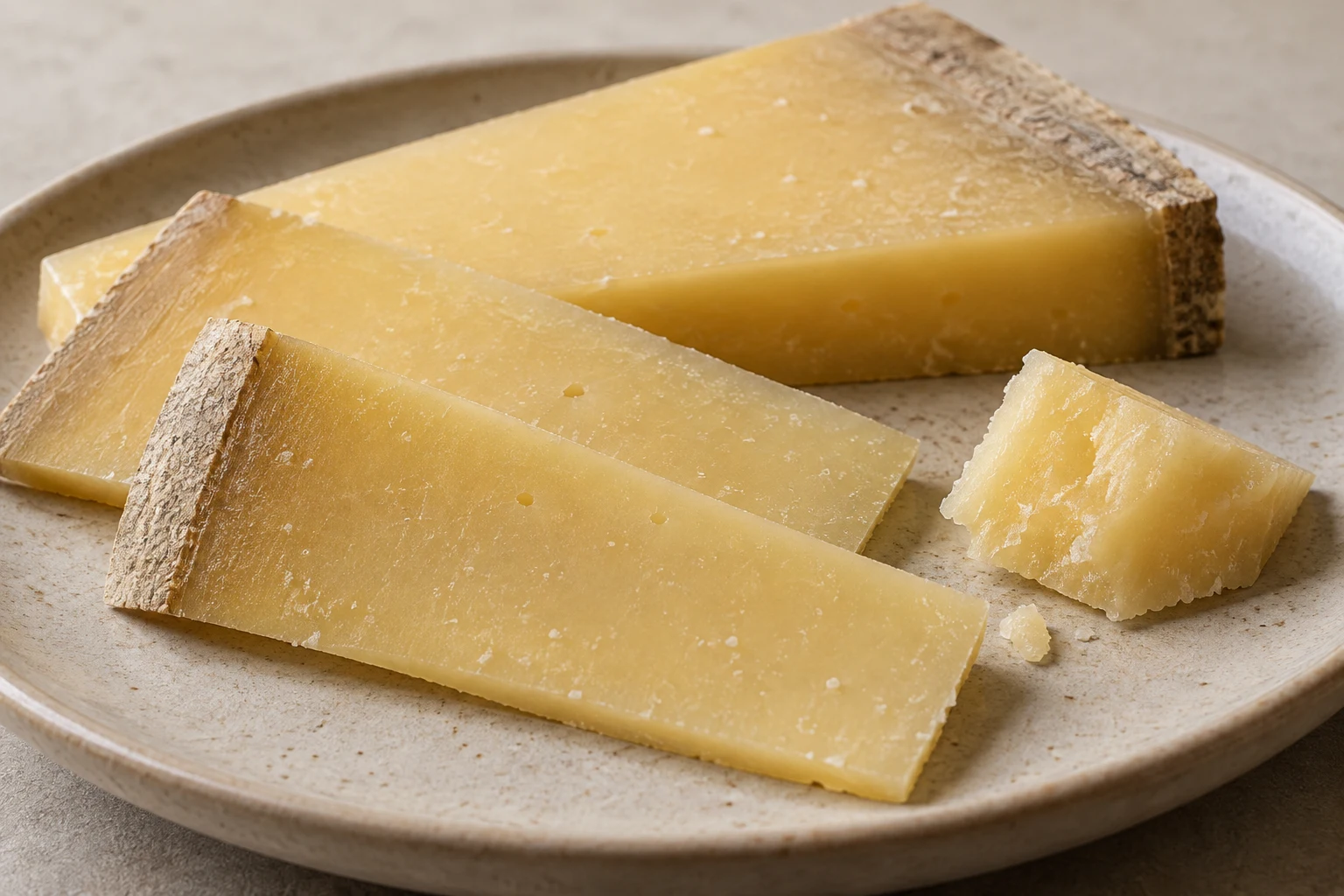
Make a useful comparison at the counter
These are tasting questions to use with a cheesemonger, rather than promises about what every wheel will taste like.
- 01
Ask for the dairy and the maturer
Add the fruitière and affineur to the age information when they are available. Those names connect a wedge to the collective production chain and help explain why another cheese of the same age may differ.
- 02
Try two wedges for a stated reason
Compare ages from a similar source, or similarly aged cheeses from different sources. This editorial approach cannot isolate every variable, but it makes the comparison more informative than asking only for the oldest cheese.
- 03
Choose a use after considering the texture
In Jura tourism’s interview, cheesemonger Marc Janin describes younger Comté as more melting and older examples as increasingly expressive tasting cheeses. Treat that as an expert’s useful direction, then ask about the actual wheel in front of you rather than using an age threshold as a guarantee.
One protected name, room for different characters
Comté’s protected designation establishes a production identity. Its flavour diversity is not a failure to meet that identity: the local sources present variation as part of the cheese’s character. A preference for a supple younger wedge or an older tasting cheese is a preference for a particular experience, rather than a verdict that one age is always superior.
The cheese contains milk. Its raw-milk identity should be clear to the buyer, and anyone choosing cheese for a vegetarian diet should check the producer’s rennet information. Knowing the milk, fruitière and maturer turns a single number on an age label into a more informative conversation.
Research notes
Sources for the production chain and tasting questions
Official quality and industry accounts establish the cheese’s identity. Jura sources explain variation and preserve a named cheesemonger’s judgement. The side-by-side tasting approach is an editorial suggestion based on those distinctions.
- INAO — Comté product profile Raw cow’s milk, cooked-and-pressed identity, large wheels, the three-part production chain and minimum maturation.
- European Commission — Comté PDO Protected cheese context, production stages and the seasonal tendency for deeper-yellow summer and lighter winter paste.
- Jura tourism — Le Comté Fruitières and flavour variation according to micro-region, season, cheesemaker and maturation cellar.
- Official Comté UK — History and production Milk, copper vessels, curd, pressing, cellar care and the roles of regular turning, salting and brine rubbing.
- Jura tourism — Interview with Marc Janin The named Meilleur Ouvrier de France cheesemonger’s view of younger melting texture and older tasting character.
Keep exploring
More stories for your table
Polish cuisine Smoked cheese
Oscypek: Reading Poland’s Smoked Mountain Cheese
The spindle shape catches the eye, but milk, season and producer matter more. Learn how oscypek differs from other Podhale cheeses and how shaping, brine and smoke build its character.
French cuisine Salt-cod emulsion
Brandade de Morue: Read the Fish, Oil and Potato
Nîmes is known for creamy salt-cod brandade, but jars and chef recipes make different choices about oil, milk and potatoes. Learn the preparation stages and read the version in front of you.
French cuisine Potato and cheese dish
Aligot: The Fresh Cheese Behind the Famous Stretch
Aligot turns potato purée and fresh Aubrac tome into a flowing ribbon. Understand the cheese, compare regional proportions, and follow a home adaptation built around gentle heat and decisive folding.