
Bouillabaisse: a fish feast served in parts
Bouillabaisse
Read bouillabaisse through its fish, saffron broth and rouille, then understand why separate service and staged cooking matter.
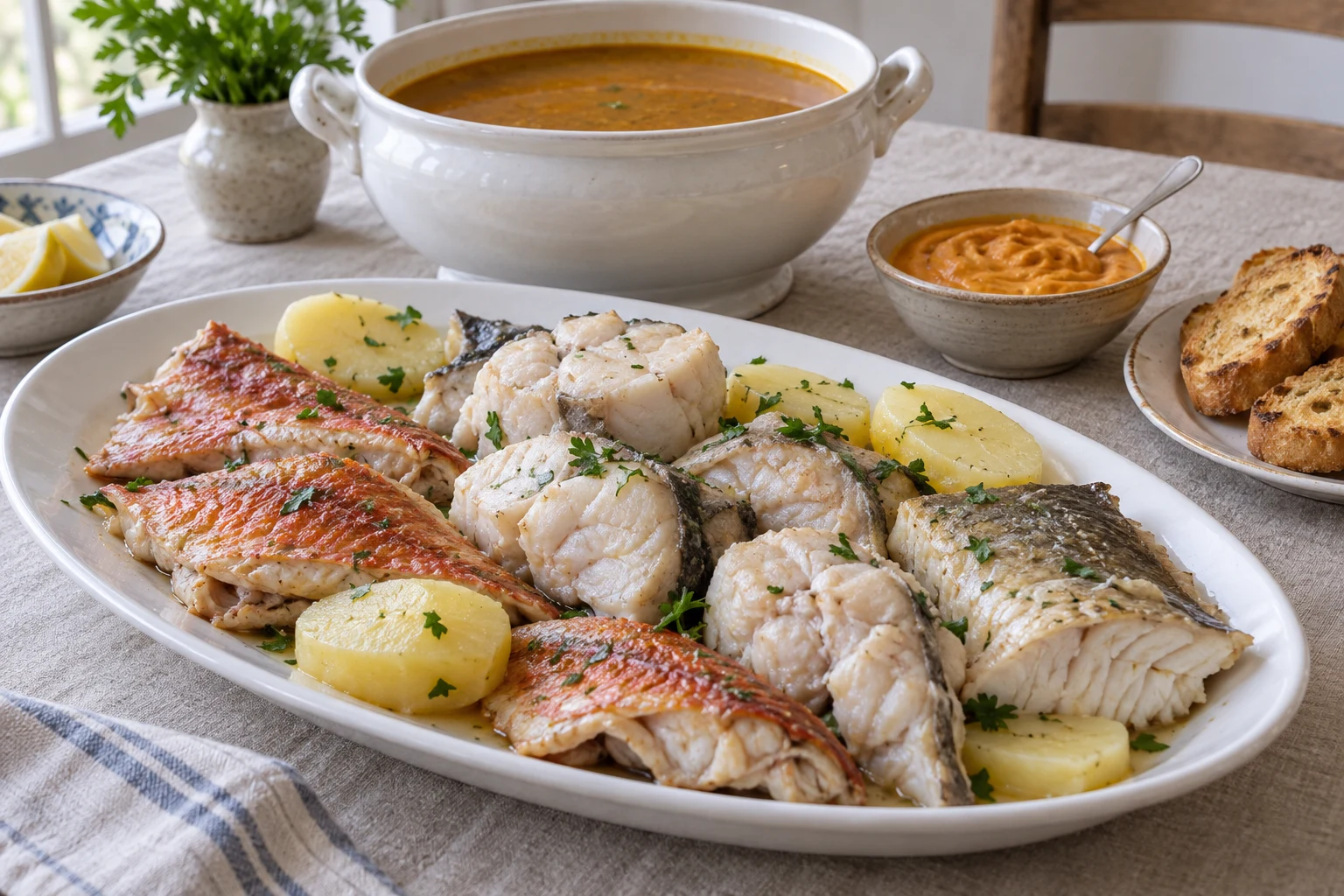
Bouillabaisse is easier to understand when you stop treating the filled soup bowl as the whole dish. There is fish to eat, broth to taste and bread with rouille to bring them together. The pleasure lies partly in deciding how those components meet: a spoonful of broth on its own, a toast softened at the edges, then a piece of fish with some of both.
Marseille’s tourism office describes a familiar arrangement in two serving dishes, one holding fish and the other broth. Diners may combine them in a deep plate or keep them separate. That gives the meal a different pace from a stew ladled fully assembled from one pot.
Three things to look for
- Fish
- The centre of the meal
- Broth
- A preparation in its own right
- Rouille and bread
- An adjustable finish
Ask what varieties are being served, rather than judging the dish by the size of a shellfish garnish.
Taste it before adding the condiment: its flavour and body carry the rest of the meal.
A little spread on toast is a different experience from stirring a generous spoonful through the soup.
The fish list belongs to the place
The tourism office sets out a Marseille specification with at least four varieties selected from its list, including rascasse, monkfish, conger and John Dory. It also explains that arrivals and the number of diners influence the choice. This is a regional frame for the meal, rather than a shopping list every distant kitchen can reproduce.
For a restaurant meal, the useful conversation is concrete: which fish are available, whether they arrive whole or portioned, and how they will be presented. A menu that says only “seafood” leaves you with less information. Fish names also tell you more about the dinner than a photograph of a bowl crowded with decorative shells.
Broth first, eating fish later
Daniel Gritzer’s Serious Eats method separates fish used to make the broth from fish saved for eating. He gives the base an initial vigorous boil to disperse fat through the liquid, then strains it before gently cooking the remaining fish. Cloudiness can therefore be intentional; a clear consommé is a different aim.
This distinction explains a common planning mistake: the long work belongs to extracting and finishing the broth, not to keeping every serving fillet in the pan for the entire preparation. When choosing a recipe, look for those two jobs to be clearly separated.
One restaurant’s sequence
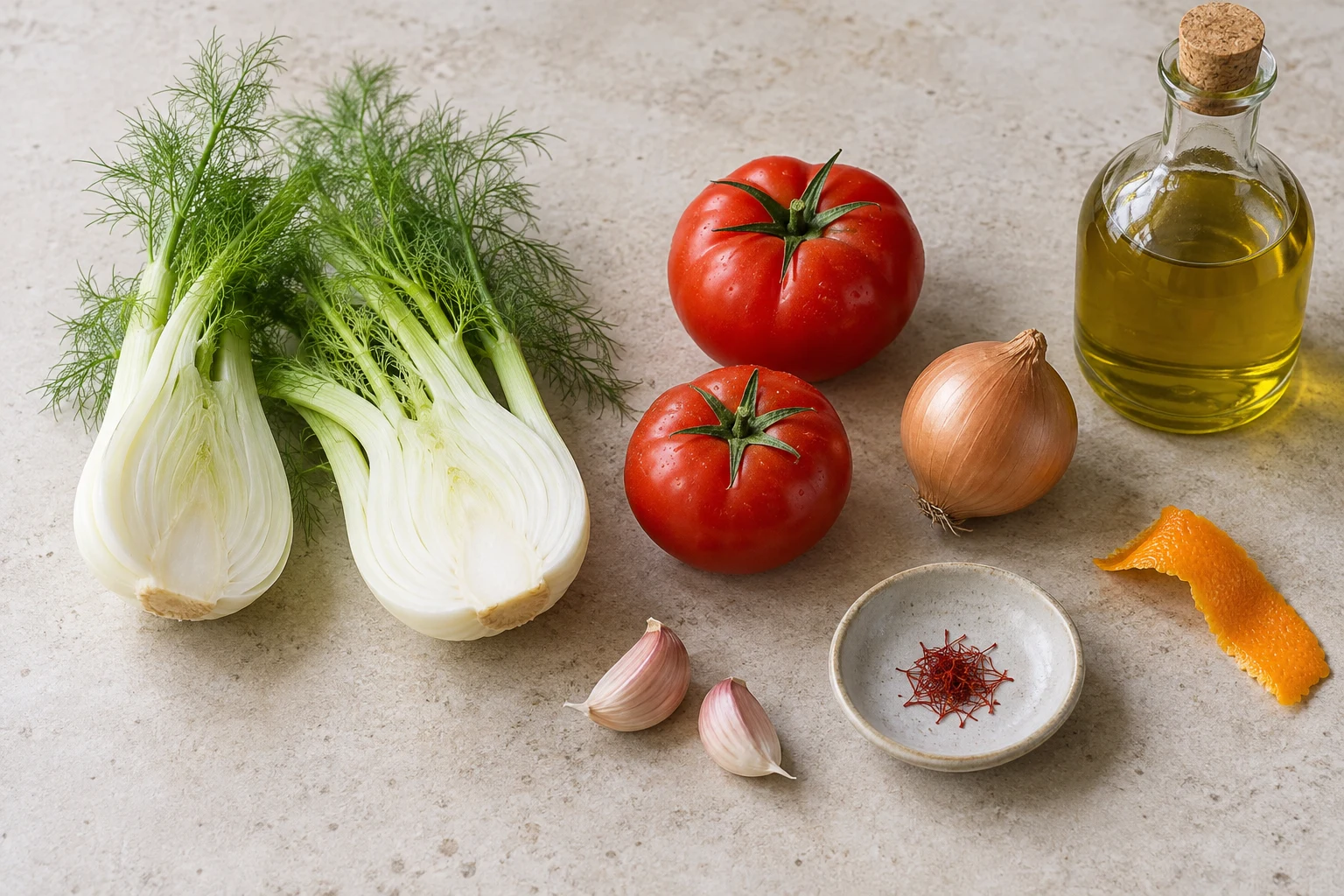
Miramar publishes a method that makes a rockfish soup, blends and strains it, then uses that base for potatoes and the serving fish. Its recipe moves from high heat to lower heat, and brings the fish to the table separately. These details show how a named kitchen organizes the meal; they are more useful than assuming that every bouillabaisse follows one identical timetable.
The timing question is also a texture question. A large piece and a small fillet do not have the same cooking needs. Plan from the recipe’s actual fish and portion sizes, and keep room to lift cooked pieces out gently. An impressive ingredient selection loses its appeal if the flesh breaks up before reaching the platter.
Rouille makes the bread part of the soup
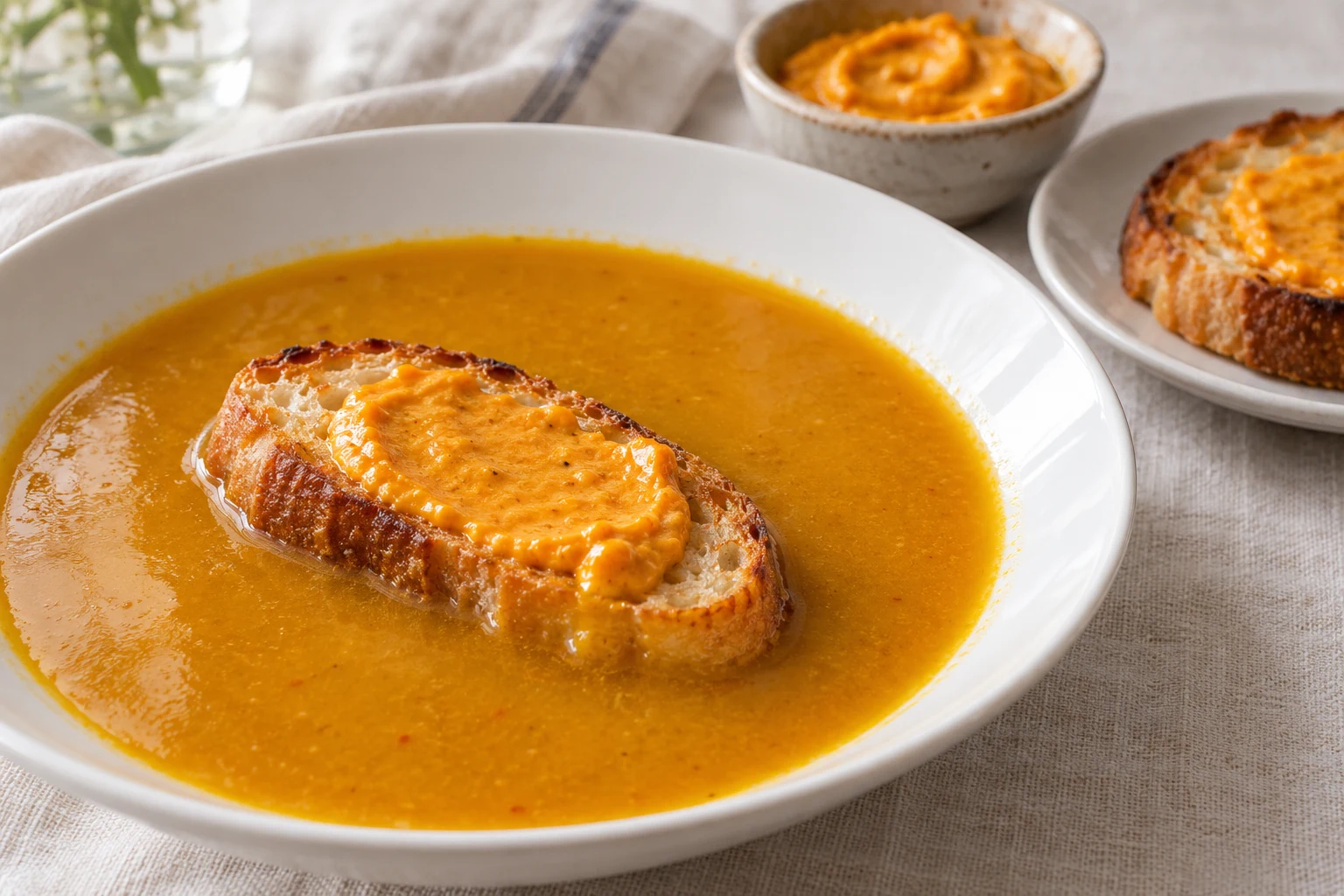
Barney Desmazery’s Good Food recipe uses potato cooked in the broth, garlic, chilli, saffron, egg yolk and olive oil for its rouille. Miramar describes a yolk-and-oil preparation with garlic and saffron. The two methods make a useful point: the condiment has variations, so its colour alone cannot tell you everything in it.
Good Food also offers a rustic broth or a blended, strained version, then cooks the denser fish before the more delicate pieces. At service, the rouille may be stirred into the broth to add body and heat. Start with a small amount if you want to taste the soup’s aromatics before the garlic-rich condiment becomes the dominant flavour.
A charter describes an approach
Marseille’s tourism office dates the restaurant charter to 1980 and notes that some cooks follow the tradition without signing it. Miramar’s own charter introduction acknowledges the chef’s individual skill while defining the dish’s ingredients and service. Read the charter as a way to make expectations explicit. It cannot replace asking what will actually arrive at your table.
Research notes
Sources and cooking references
The local service description, a restaurant’s published method and two detailed cooking references support the distinctions in this guide.
- Marseille tourism office — La bouillabaisse Regional fish specification, separate service and the 1980 charter; no origin legends repeated.
- Miramar — The Bouillabaisse First-hand restaurant recipe and charter introduction; attributed to this kitchen rather than made universal.
- Barney Desmazery for Good Food — Bouillabaisse Potato-based rouille, rustic or strained broth and staged fish cooking.
- Daniel Gritzer for Serious Eats — Bouillabaisse Marseillaise Broth fish versus serving fish, initial boiling and gentle finishing; limited use within the source word allowance.
Keep exploring
More stories for your table
French cuisine Salt-cod emulsion
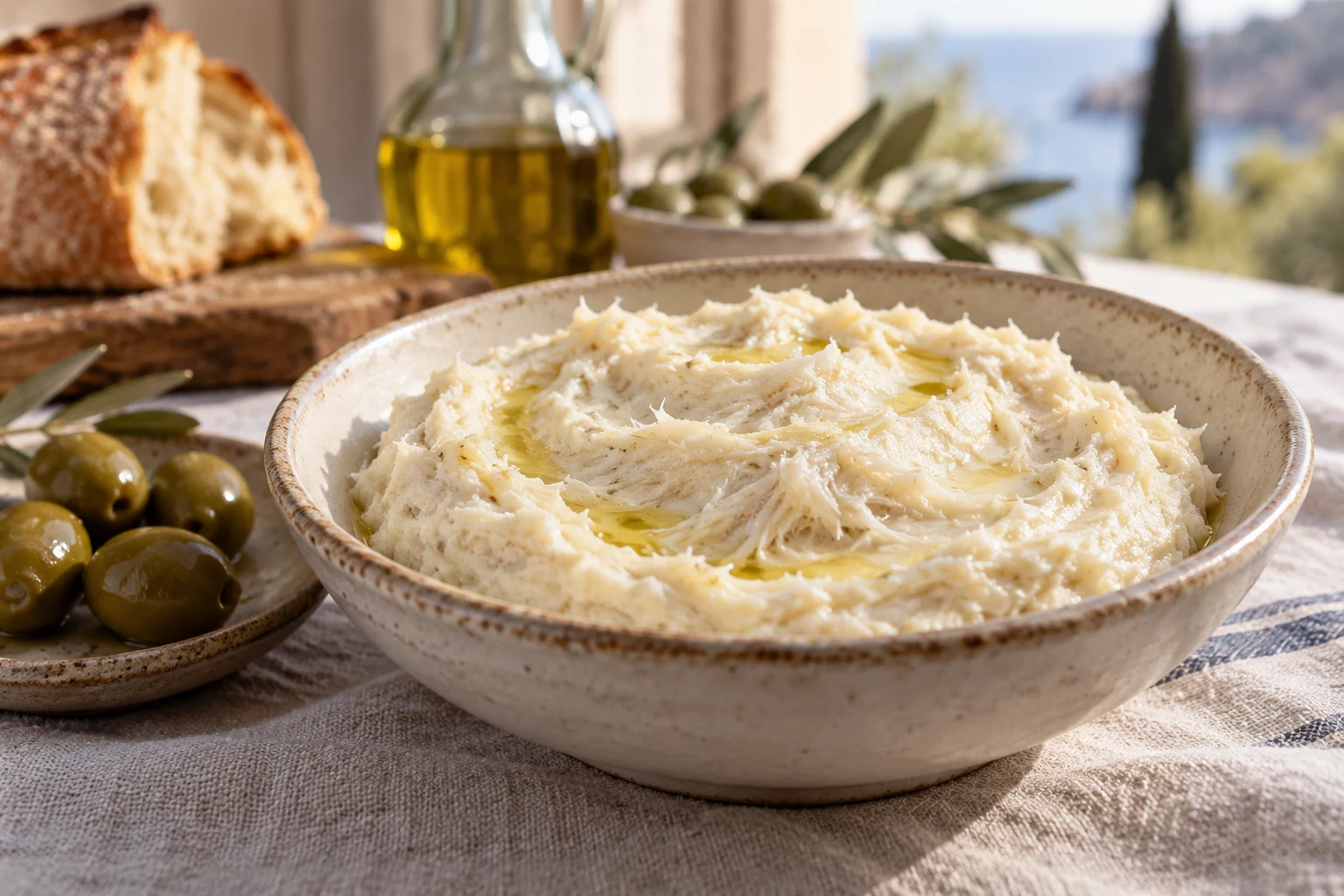
Brandade de Morue: Read the Fish, Oil and Potato
Nîmes is known for creamy salt-cod brandade, but jars and chef recipes make different choices about oil, milk and potatoes. Learn the preparation stages and read the version in front of you.
Portuguese cuisine Fish soup
Sopa de Cação: Bread Beneath the Broth
Why Alentejo’s sopa de cação arrives over plain or toasted bread, or beside fried triangles—and how its vinegar-seasoned broth holds the dish together.
Portuguese cuisine Fish and pasta
Massada de Peixe: Give the Pasta the Broth
In Portuguese massada de peixe, short pasta cooks in a tomato-rich broth. Separate the fish stages to keep both the pasta and the flakes distinct.