
Aligot: The Fresh Cheese Behind the Famous Stretch
Aligot
Aligot turns potato purée and fresh Aubrac tome into a flowing ribbon. Understand the cheese, compare regional proportions, and follow a home adaptation built around gentle heat and decisive folding.
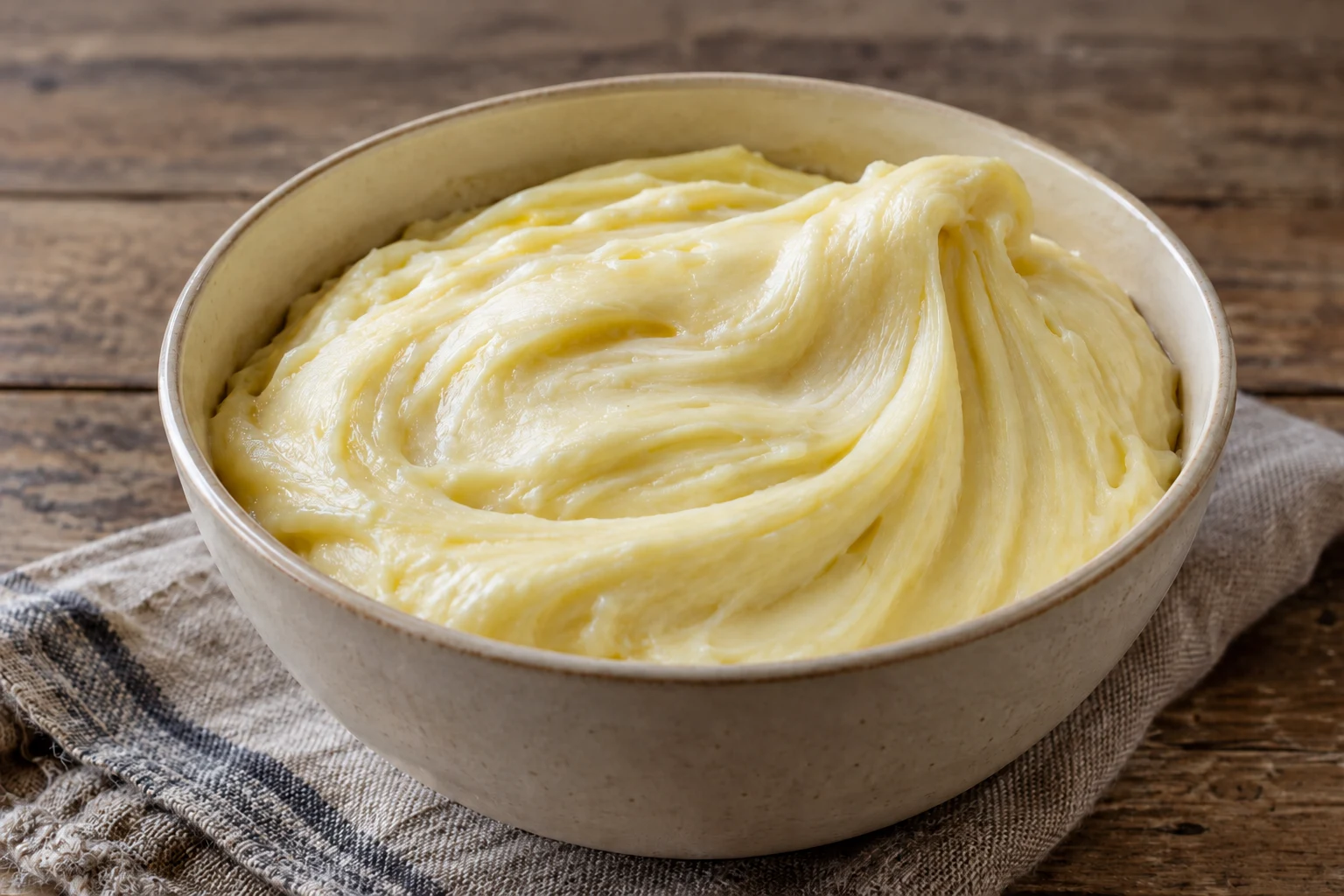
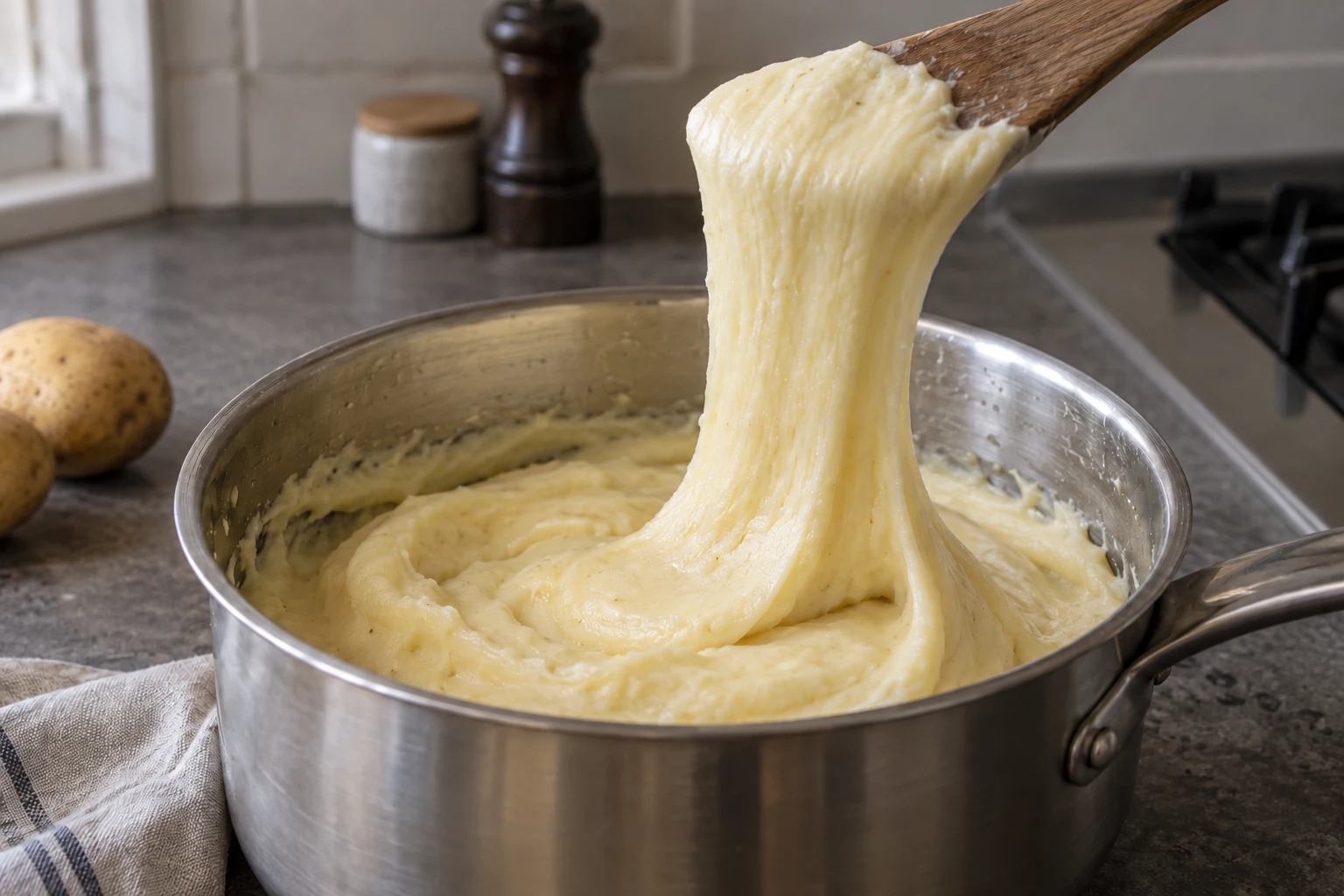
Why does this mash pull into ribbons?
The memorable moment in aligot is a lift: a spatula draws a broad ribbon out of the pot, and the potato purée moves with the cheese as one mass. A bowl of mashed potato with cheese scattered over it cannot offer the same sight. The difference begins with the cheese, then depends on the way it is incorporated.
Aligot is an emblematic preparation of Aubrac, the upland region spanning parts of Aveyron, Cantal and Lozère. The local tourism office, regional tourism authority and the aligot promotion association all describe potato purée combined with fresh tome. Their recipes vary in richness, but share a goal: a smooth, cohesive, elastic mixture that is served when it starts to form ribbons.
Three decisions before the first lift
- 01
Make a fine potato base
Cook the potatoes until thoroughly tender, drain and use a ricer or food mill. The regional methods establish the smooth purée before the cheese goes in, so that the final folding can concentrate on incorporation.
- 02
Prepare the cheese in thin pieces
Slice fresh tome while the potatoes cook. Small pieces distributed through the hot purée are easier to incorporate than a large cold block. The promotion association explicitly adds the cheese gradually.
- 03
Use heat to melt, then stop holding
Work with a wooden spatula over gentle heat, lifting and folding the whole mixture. Occitanie’s method incorporates the cheese off the heat; Aubrac’s tourism recipe warns that keeping the finished mixture on heat too long breaks the strand. Once it forms cohesive ribbons, serve.
Fresh tome is a specific ingredient
The French national quality institute, INAO, describes Tome fraîche de l’Aubrac as a cheese made from raw, whole cow’s milk, matured without being salted or aged. Its press release identifies smooth elasticity and repeatable stretch when heated as important characteristics. That description explains why an aged table cheese is not a simple like-for-like replacement, even when the names sound similar.
For the traditional direction, ask a cheesemonger for fresh tome intended for aligot. Its milk identity and stage of production matter more than a generic promise that a cheese melts. If the exact cheese is unavailable, a substitute may still make an enjoyable potato dish, but the result should be described as an adaptation rather than a demonstration of the Aubrac ingredient.
Regional recipes agree on technique, not one richness level
Aubrac tourism office
Its four-person recipe combines 1 kg potatoes, 400 g fresh tome, 250 g cream and 100 g butter. This is a butter-enriched version with substantial cream.
- Butter included
- Thin strips of fresh tome
Occitanie tourism authority
Its four-person version uses 1.2 kg potatoes, 500 g fresh tome and 200 g thick cream, with garlic and no separate butter listed. Cheese is incorporated after taking the purée off the heat.
- No separate butter listed
- Cheese folded in off heat
Aligot promotion association
Its home recipe uses 1 kg potatoes, 400 g fresh tome and 250 g thick cream, again without separate butter. It adds sliced cheese gradually to a warm fine purée.
- Foundation of the adaptation below
- Finish when ribbons form
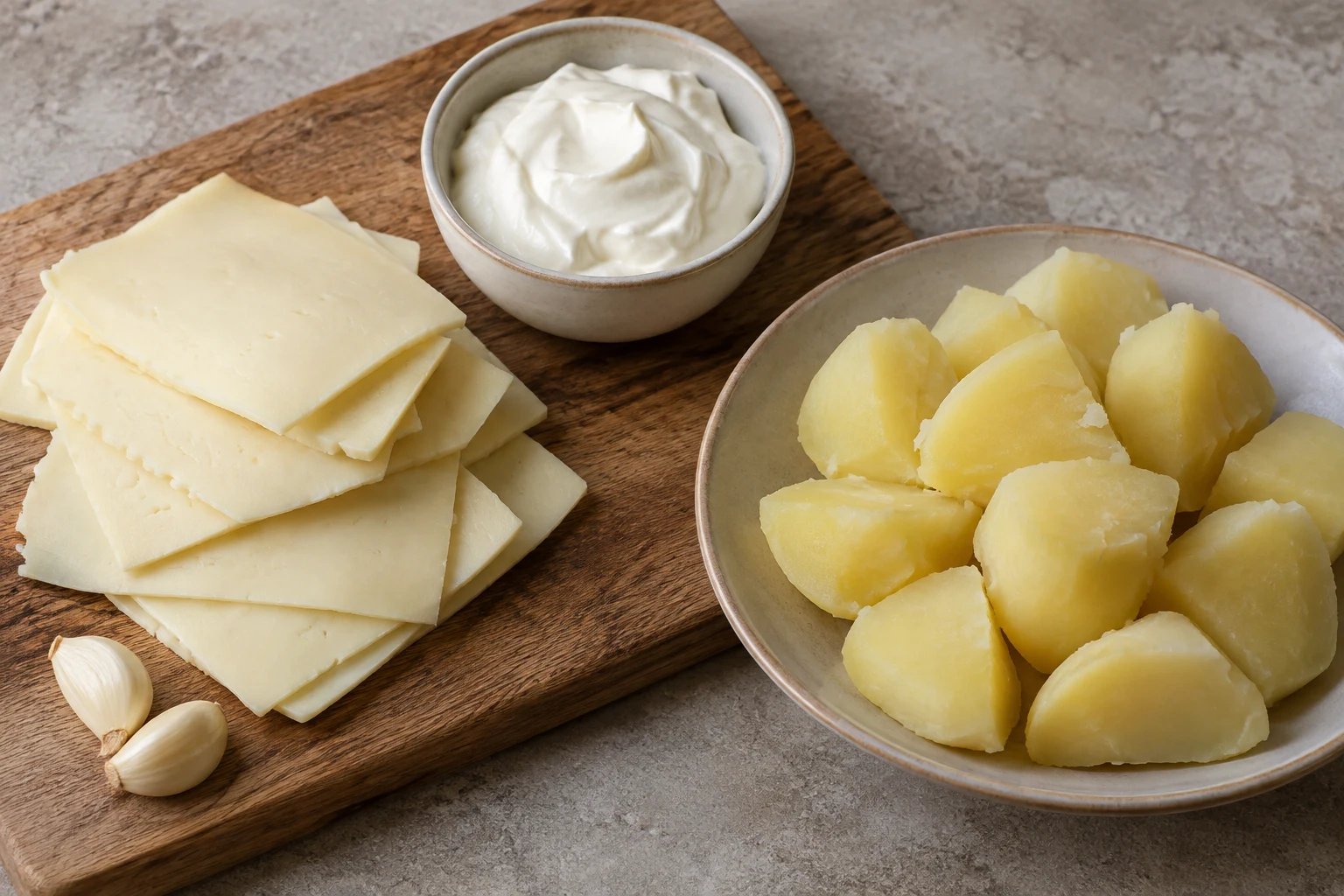
A home adaptation
Aligot with fresh tome
This editorial adaptation follows the aligot promotion association’s potato, cheese and cream proportions, with a measured garlic and seasoning plan. It is written for four generous side portions and has not been kitchen tested by SmartRestro.
Ingredients
For the purée
- 1 kg peeled floury potatoes, such as Bintje, cut into even chunks
- 400 g fresh tome for aligot, cut into thin slices
- 250 g full-fat thick crème fraîche
- 2 cloves garlic, peeled and finely crushed
- 1 tsp fine salt, plus more for the cooking water and to taste
- ¼ tsp ground black pepper
Method
- 1
Cook the potatoes.
Put the potato chunks in a saucepan, cover with cold water and salt the water lightly. Bring to a boil, then simmer for roughly 20–25 minutes, until a knife enters without resistance. Drain well.
- 2
Prepare a smooth base.
Pass the drained potatoes through a ricer or food mill into a heavy pan. Fold in the crème fraîche and crushed garlic with a wooden spatula. Warm gently until the mixture is hot throughout; avoid boiling it hard.
- 3
Incorporate the tome.
Take the pan off the heat and add the thin cheese slices in several additions, stirring and folding each addition through the purée. If pieces stop melting, return briefly to the lowest heat while continuing to work the mixture.
- 4
Read the texture and serve.
Lift the spatula to check for a smooth, cohesive ribbon. Fold in the measured salt and pepper, taste and adjust. Serve immediately when the cheese is incorporated and the mixture stretches; do not keep cooking for a taller display.
A regional story to carry to the table
Regional tourism accounts connect an earlier bread-and-cheese preparation with pilgrims passing through Aubrac on the way to Santiago de Compostela. That is best presented as the region’s historical account, rather than a precise date for inventing the modern potato dish. The present recipe tells a more immediate story: fresh cheese from a cattle-farming region is worked into an accessible staple until its texture becomes the centrepiece.
Lozère’s tourism account describes serving aligot with local sausage or Aubrac beef and links it to burons, the stone buildings used by herders for cheesemaking and shelter. A seasonal salad is also a pairing in the promotion association’s account. At home, choose the rest of the meal first and bring the finished aligot straight to the table; its best-known texture is a finish cue, not a reason to keep everyone waiting.
Research notes
Sources for the ingredient and method
The sources document the fresh cheese, regional proportions and observable finish. The recipe is an editorial adaptation; the pilgrim account is attributed to the regional tourism sources.
- Aubrac tourism office — L’Aligot Local identity, butter-enriched four-person proportions and warning against holding the finished mixture too long on heat.
- Occitanie tourism — Aligot recipe Fine purée, fresh tome and cream proportions, off-heat incorporation and the attributed pilgrimage account.
- Lozère tourism — Aligot technique and service Working with a wooden spatula, the strand cue, local meat accompaniments and the role of burons.
- Aligot de l’Aubrac association — Home recipe Potato, fresh-tome and thick-cream foundation; gradual sliced-cheese addition and seasonal salad or grilled-meat service.
- INAO — Tome fraîche de l’Aubrac recognition Official fresh-tome identity: raw whole cow’s milk, unsalted and unaged cheese, with smooth elastic stretch when heated.
Keep exploring
More stories for your table
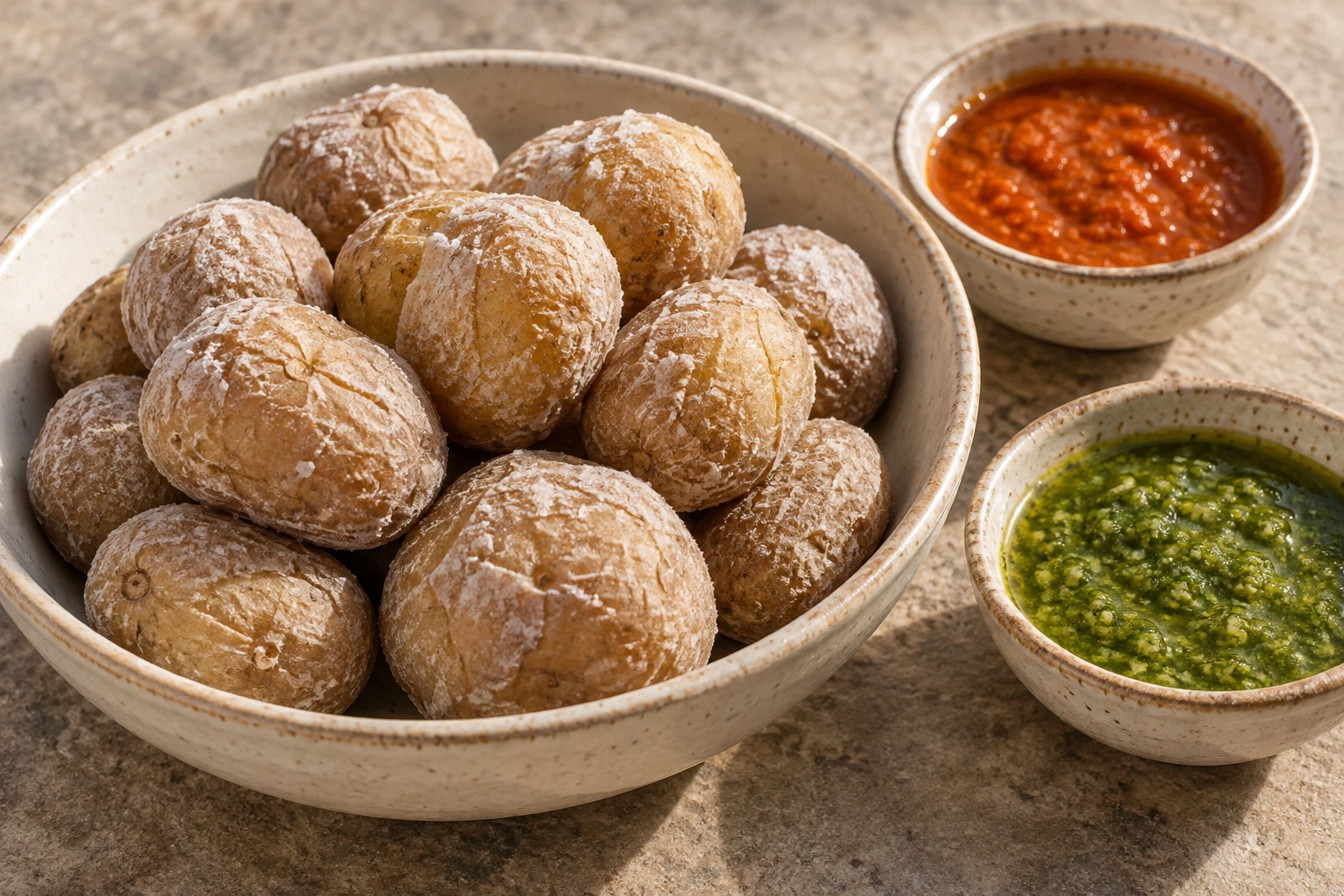
Canary Islands, SpainPotato dish
Papas Arrugadas: The Dry Finish After the Boil
Canarian wrinkled potatoes depend on two stages: cooking the whole potatoes, then drying their salted skins. Learn how potato choice, the dry finish and red or green mojo shape the dish.
SwitzerlandGrated potato cake
Bacon Rösti: Choose the Potato Before the Crust
Bacon adds savor to Swiss rösti, but the potato and the pan build its shape. Compare raw and cooked potatoes, regional additions and the technique behind a crisp connected cake.

PortugalSeafood
Polvo à Lagareiro: The Olive Oil Is the Sauce
Tender octopus, lightly cracked potatoes and a garlic-and-olive-oil finish: understand the separate cooking jobs behind Portuguese polvo à lagareiro.