
Adobong pusit: finish the sauce without losing the squid
Adobong pusit
Squid adobo varies in ink, seasoning and vegetables. Compare the ways Filipino cooks finish its sauce while keeping the squid’s texture in view.
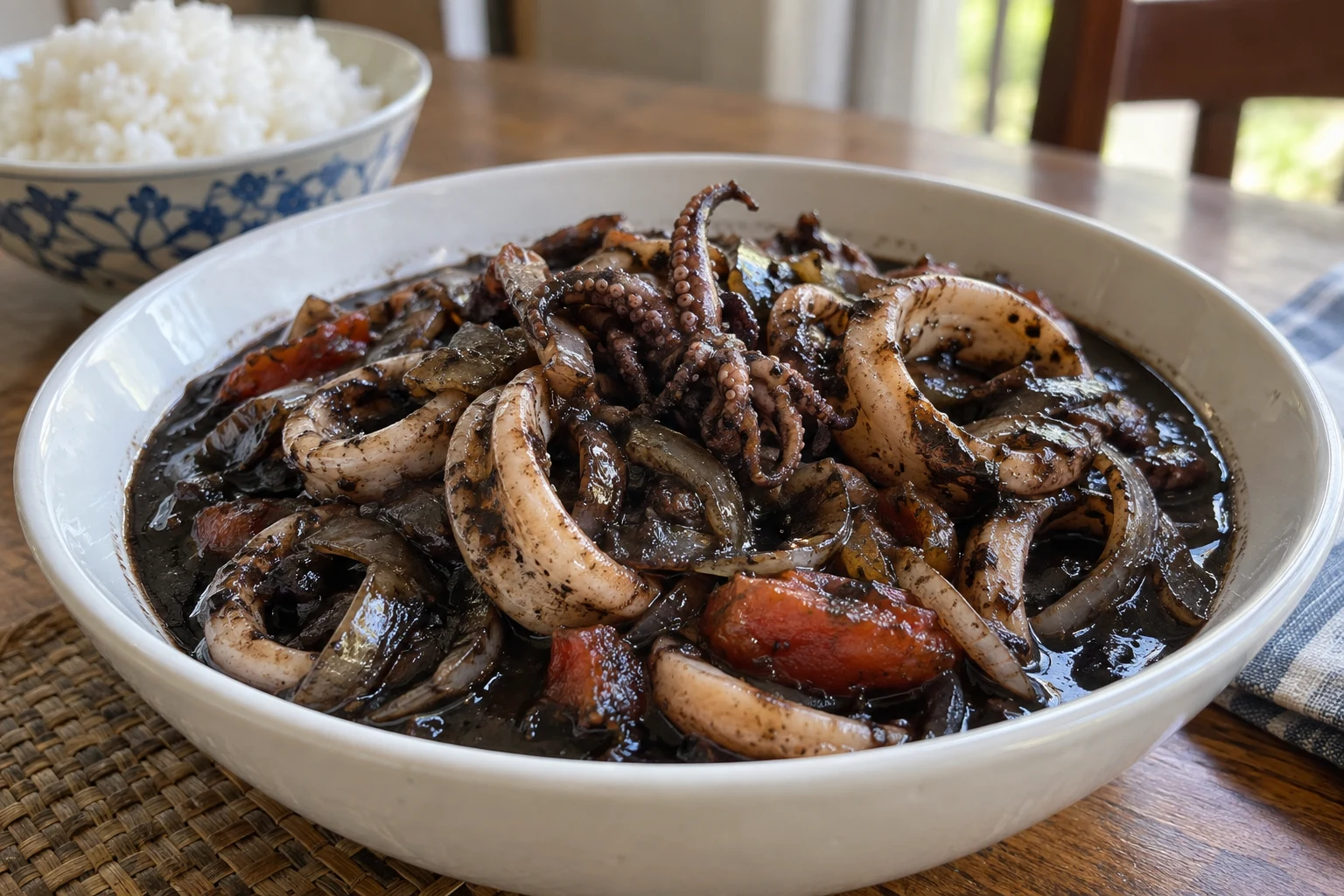
A dark sauce can make adobong pusit look mysterious until you look at what the cook is doing. Squid, vinegar and aromatics form the centre of this Filipino dish. Ink can deepen the colour, but it is not the same ingredient as soy sauce. Behind that glossy surface is another practical question: how does the sauce reach the desired consistency while the squid still has a pleasant bite?
Yummy.ph introduces squid adobo as an ulam, a dish to eat as part of a meal, and describes a soy-and-vinegar version. Other Filipino recipe writers make different choices. Comparing those choices is more useful than expecting every bowl to contain an identical set of vegetables or an identical amount of ink.
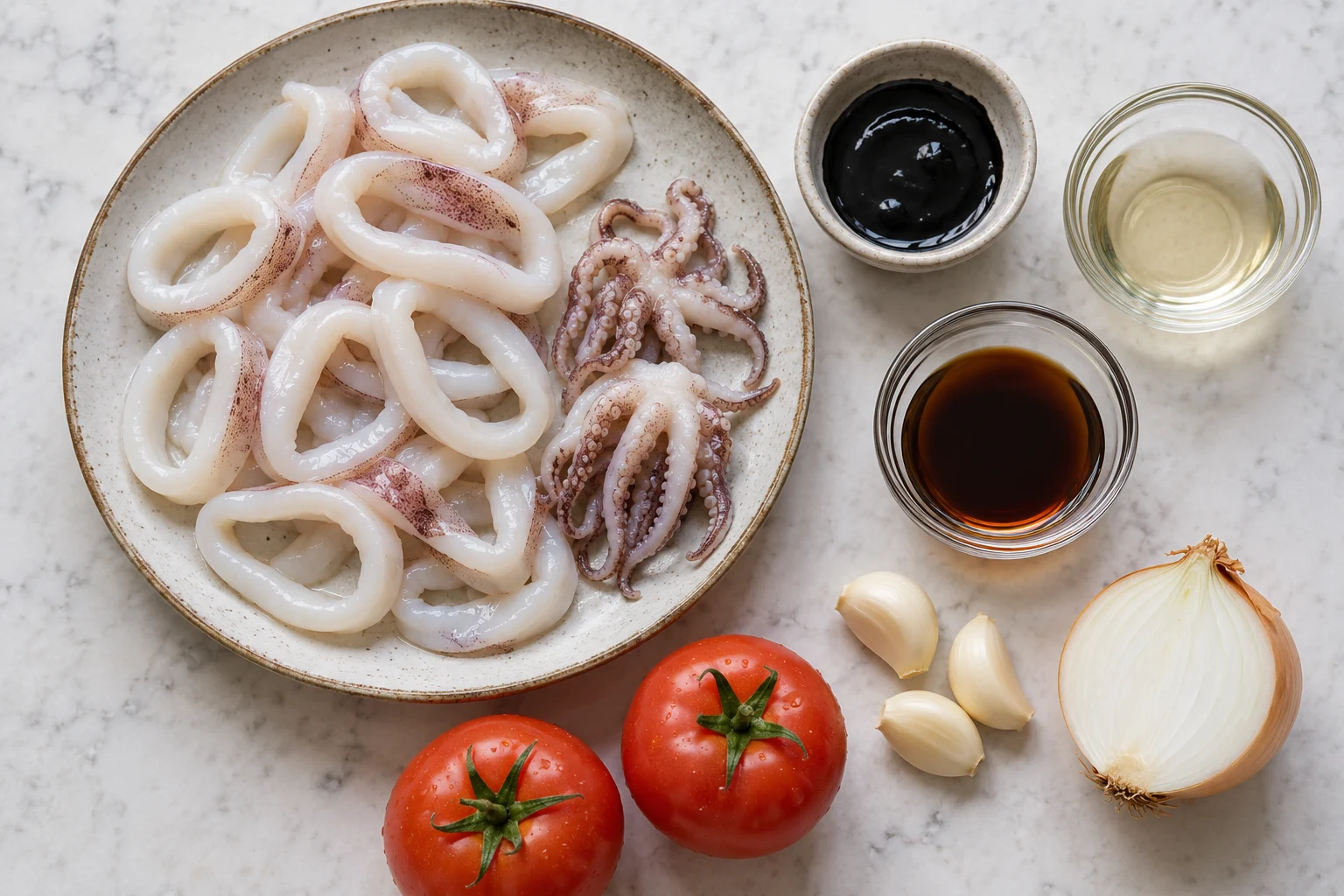
Dark colour does not tell you the whole seasoning
Soy sauce and ink together
Vanjo Merano’s Panlasang Pinoy recipe uses soy sauce and vinegar, then adds ink later in the cooking. The two ingredients are present together; neither is simply a visual substitute for the other.
Ink with fish sauce
Bebs at Foxy Folksy uses ink and fish sauce, with no soy sauce in her ingredient list. Her version also includes tomatoes and celery. The same dish name covers a different seasoning arrangement.
Tomatoes belong to a version, rather than a rule
Merano identifies tomatoes as an optional ingredient in his family’s approach. Bebs uses them too, together with celery. Manny Montala’s Dampa-inspired recipe instead lists ginger and green chillies among its aromatics. These are concrete differences you can look for in a recipe or ask about when ordering.
If you are trying to recreate a bowl you enjoyed, start by recalling what surrounded the squid. Were there softened tomato pieces, a ginger note or visible celery? A recipe with the right supporting ingredients is a better starting point than choosing solely because its photograph is equally dark. You can then compare how that recipe handles the sauce.
Check what form of squid the recipe expects
Both Panlasang Pinoy and Foxy Folksy favour small to medium squid, though they allow other sizes. Foxy Folksy cuts larger squid into pieces and also allows frozen rings; she notes that those rings will not come with an ink sac. That is a shopping detail with consequences for the finished sauce.
Ask the fishmonger what has already been removed and whether ink is supplied separately. A tray of cleaned rings and a purchase of whole squid involve different preparation work. Choose the recipe after that detail is clear, so its cleaning stage and ingredient list match what you actually bring home.
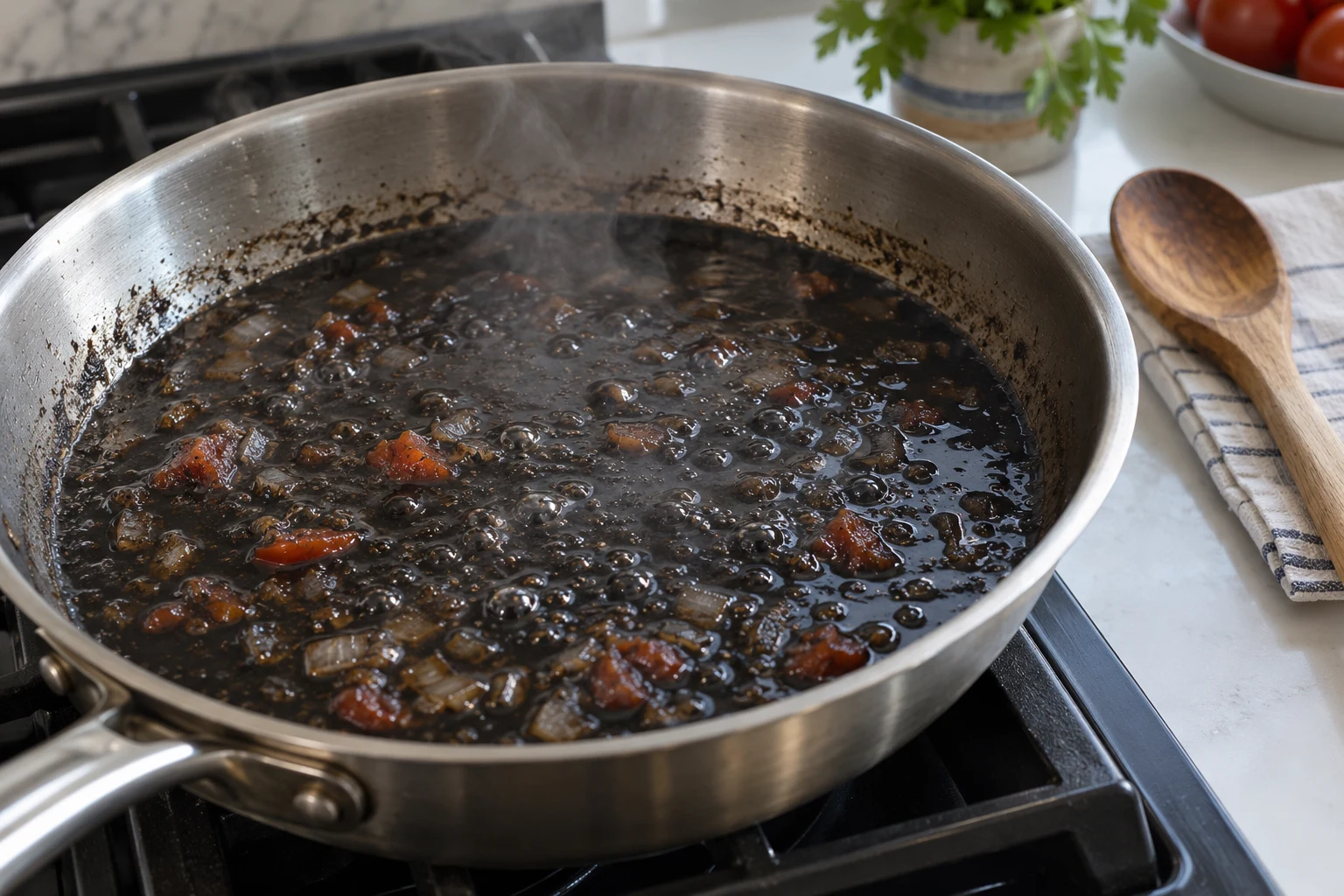
Two approaches to a thicker finish
The referenced cooks address the sauce’s consistency explicitly. Their methods offer a useful choice before you begin.
- 01
Give the sauce its own time
Merano advises removing the squid if the sauce needs further reduction, then pouring the finished sauce over it. Montala likewise removes the squid, reduces the liquid with sugar, and returns the squid for a brief final toss. Sauce concentration is a separate stage.
- 02
Use a short thickening stage
Bebs adds a cornstarch slurry near the end of her method. She describes this as a way to thicken the sauce without prolonging the squid’s cooking. It is a deliberately different finish from relying only on evaporation.
Read the whole sequence before heating the pan
A recipe may heat the squid more than once: an initial cooking stage, a return to the aromatics, and a finishing stage. Count those stages together when following it. Do not borrow an early timing from one writer and a later sauce reduction from another without noticing that the squid would remain in the pan for both.
The useful lesson is to identify where the chosen recipe separates the seafood from the sauce. Set out the bowl or plate needed for that pause before cooking. It makes a small but consequential instruction easier to follow when the liquid is already bubbling.
Rice makes the sauce part of the meal
Montala suggests steamed white rice with his squid adobo. That gives the sauce somewhere to go beyond the squid itself. Serve the squid with some sauce, then add more to the rice as you eat; you can appreciate its vinegar, seasoning and any vegetables without covering the entire plate at once.
When ordering, a useful question is whether the sauce includes squid ink and whether the kitchen uses soy sauce, fish sauce or both. Follow with a question about vegetables if you have a particular version in mind. The answer explains more than the colour alone.
Research notes
Sources for the different approaches
These separately published Filipino food references support the dish’s identity and the specific choices compared here.
- Panlasang Pinoy — Vanjo Merano’s adobong pusit Soy sauce, vinegar and ink; optional tomatoes and a separate sauce-reduction instruction.
- Foxy Folksy — Bebs’s adobong pusit Fish sauce, ink, tomatoes and celery; frozen-ring option and cornstarch finish.
- Yummy.ph — Mira Angeles’s squid adobo Filipino squid adobo presented as an ulam and described through soy sauce and vinegar.
- Panlasang Pinoy Meaty Recipes — Manny Montala’s Dampa-inspired version Recipe-specific ginger, green chillies, sugar and removal of the squid while reducing its sauce.
Keep exploring
More stories for your table
Filipino cuisine Pork stew
Lechon Paksiw: Let the Roast Become a Stew
Roast pork takes a second form in lechon paksiw. Compare sauce timing, softened skin and the sweetness already in a bottle of lechon sauce.
Filipino cuisine Grilled pork
Inihaw na liempo: three liquids, three different jobs
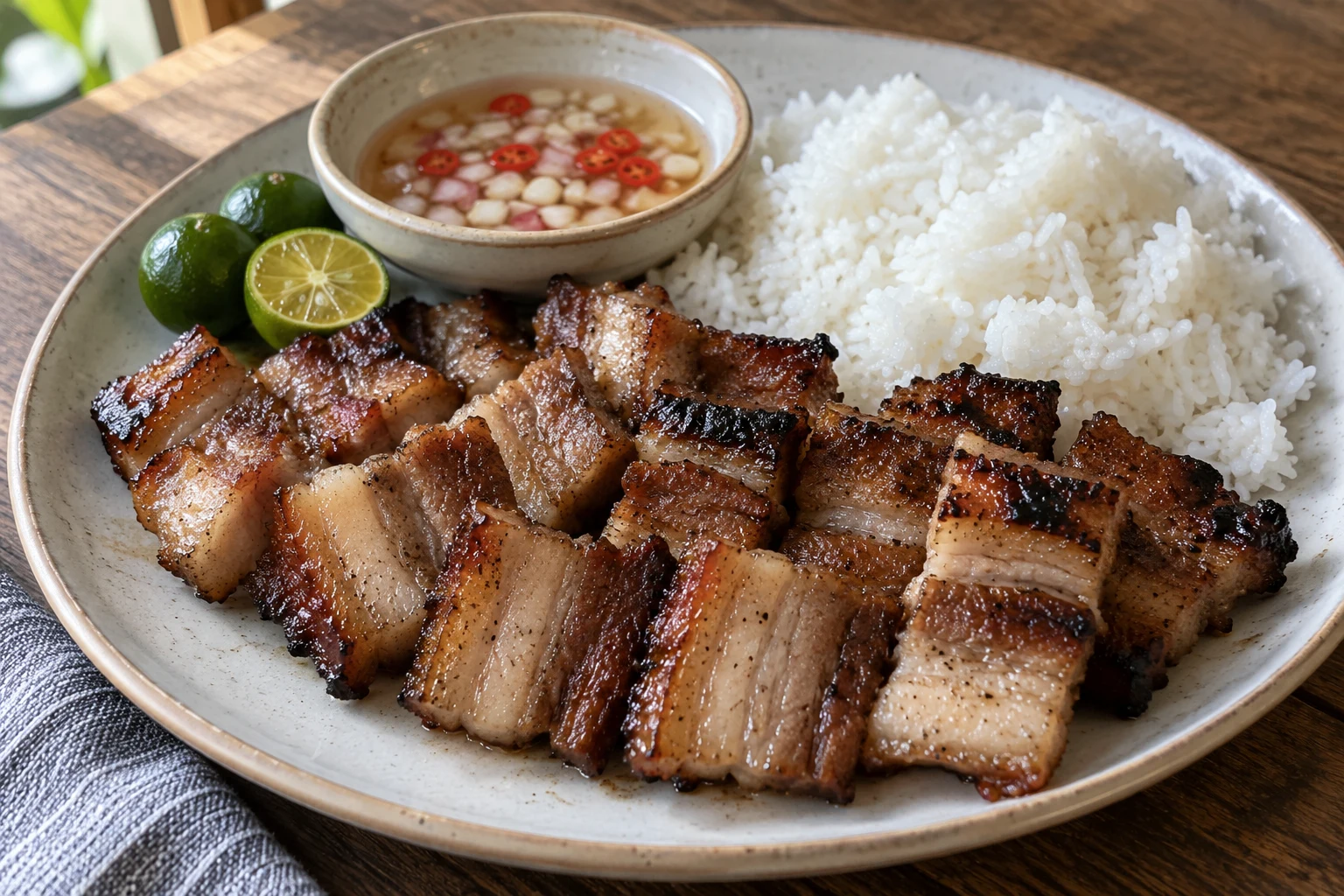
A useful way to understand Filipino grilled pork belly: choose a marinade, manage the sweet basting sauce, and keep the vinegar dip fresh.

Thai cuisine Pork braise
Moo Hong: Tender Pork Before a Rich Sauce
Phuket’s soy-braised pork rewards a patient simmer. Learn how to manage the liquid, understand its spice variations and cook a pepper-focused home adaptation.