
Dinuguan: Tender Pork in Dark, Tangy Gravy
Dinuguan
Tender pork, vinegar and a dark gravy give dinuguan its character. Sauce texture depends on the cooking sequence as well as the ingredients.
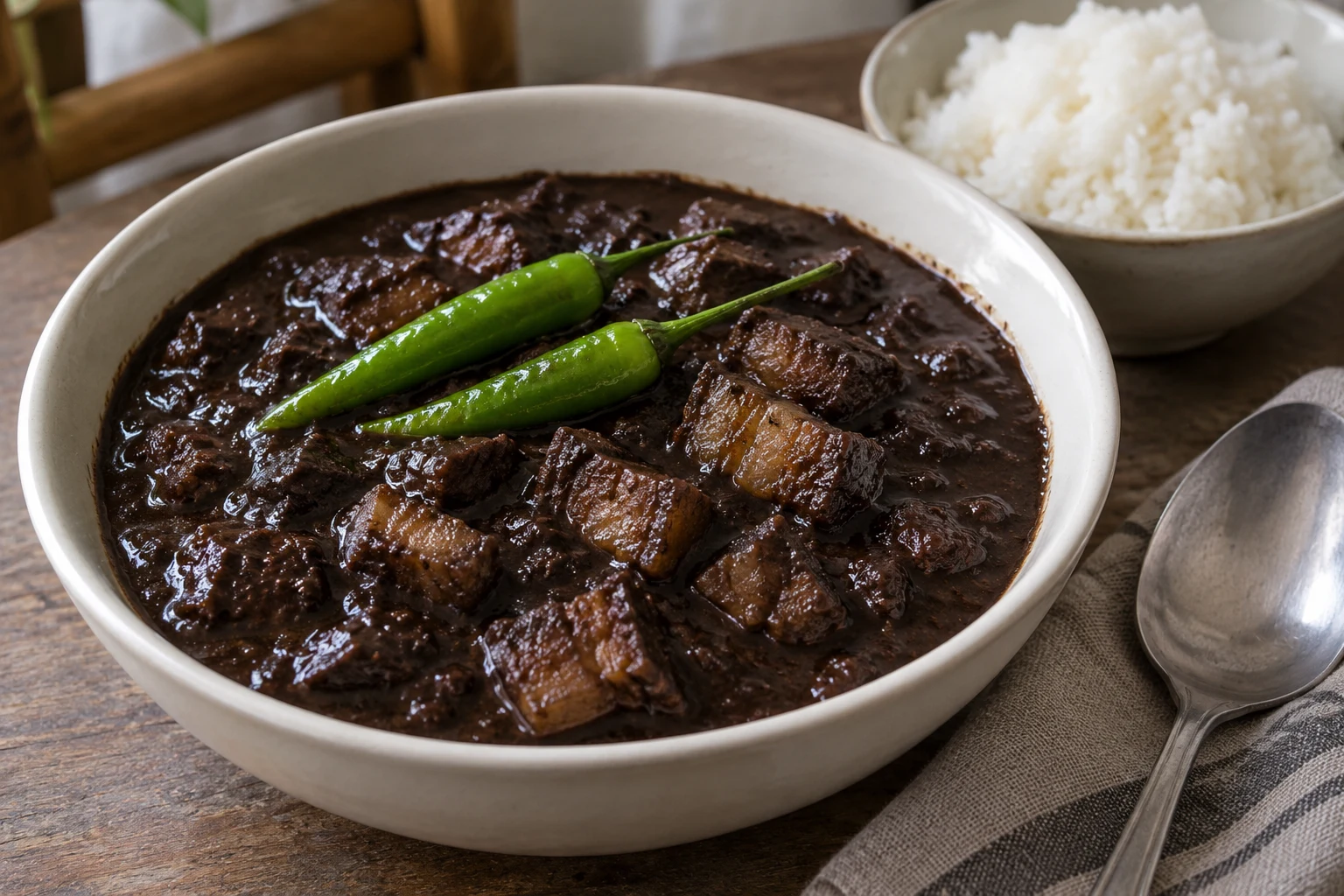
The stew's defining ingredient
Blood becomes part of the gravy
Dinuguan is a Filipino stew of pork cooked with pork blood, vinegar and aromatics. The blood supplies both its dark brown color and its body: heating changes its proteins and thickens the cooking liquid. Garlic, onion and green chilies give the gravy a savory, aromatic edge.
The nickname “chocolate meat” refers to appearance; there is no need to add chocolate. Nor does dinuguan require one fixed assortment of organs. Cooks use belly, shoulder or a mixture of cuts, and those choices change the bite of the finished stew.
Choose the pork texture first
These published preparations illustrate different routes, rather than a ranking of authenticity.
Belly
Lalaine Manalo and Bebs both publish pork-belly versions. Pieces contain fat and meat, giving a rich bite without needing a separate assortment of offal.
Shoulder and ears
Vanjo Merano combines shoulder with prepared pork ears. The shoulder becomes tender while the ears contribute another texture; they need their own preparation.
Crispy pork
Raymund’s home interpretation, inspired by Kanin Club, combines separately prepared crisp pork with a cooked dinuguan sauce. It is a deliberate variation, rather than a substitute name for every dinuguan.
Follow one complete sequence
Manalo tenderizes the pork before stirring in the blood. Bebs adds blood earlier and continues cooking until the meat is tender. Merano also uses a late addition after the pork has simmered. Each sequence belongs with its recipe’s quantities and cooking stages.
Choose a complete method that suits the cut you bought. Moving the blood step from one recipe into another without considering the remaining liquid and cooking time makes the result harder to judge. A thick gravy does not mean a tough piece of pork has finished tenderizing.
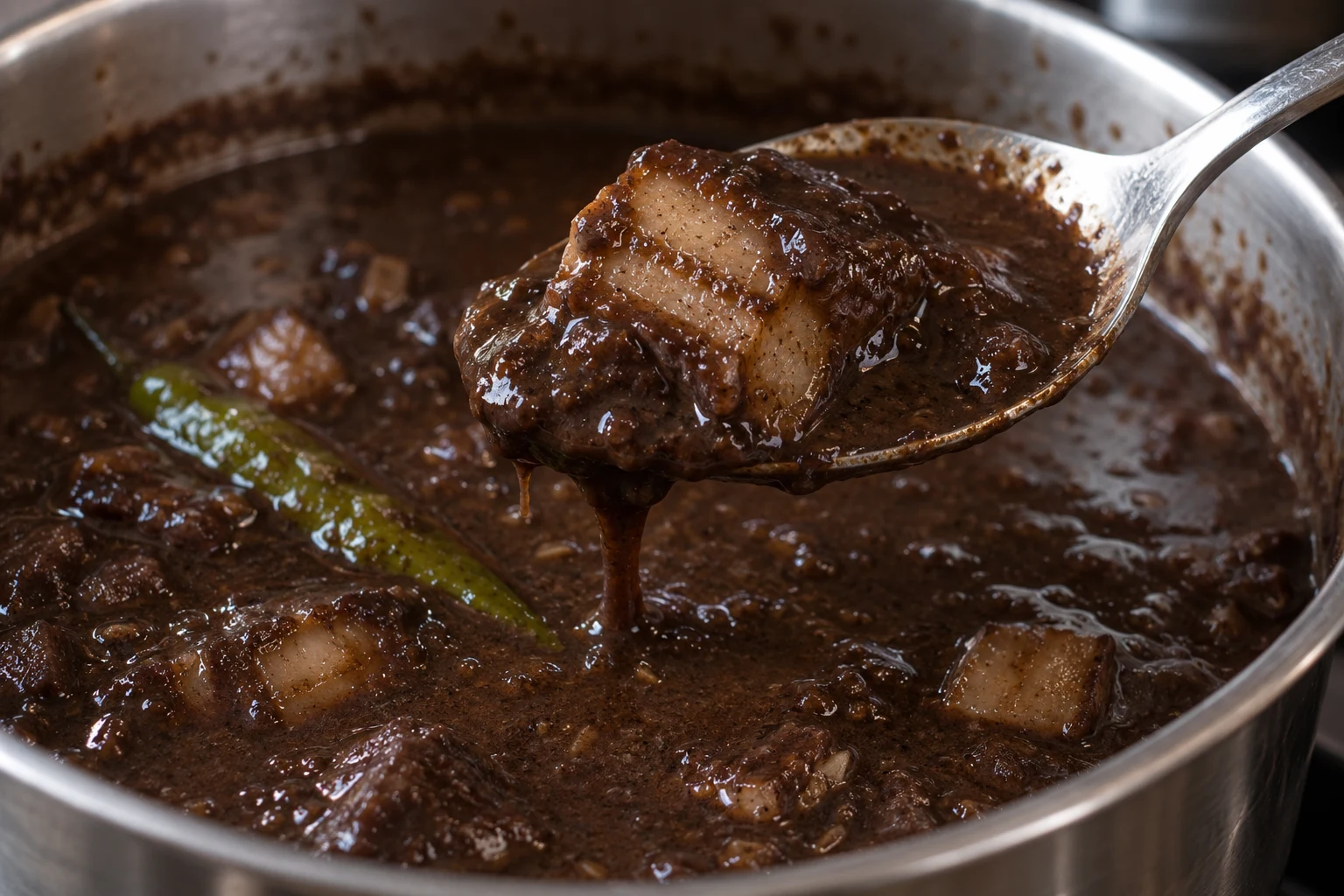
Read the texture
Smoothness is a cooking choice
- 01
Disperse the blood
For a smooth gravy, add it gradually while stirring, as Merano describes. The aim is to spread the ingredient through the hot liquid instead of letting it set into large isolated pieces.
- 02
Watch the heat and the pan
Gentle, attentive simmering helps control the texture. Bebs notes that some cooks allow chunkier pieces to form; that is a different preference. Stir across the bottom so thickening gravy does not catch.
- 03
Balance the sour edge
Vinegar gives contrast to the rich meat. A small sugar addition appears in some recipes to round out the finished flavor. Assess the cooked stew before adding more salt, especially when fish sauce or seasoned stock is already present.
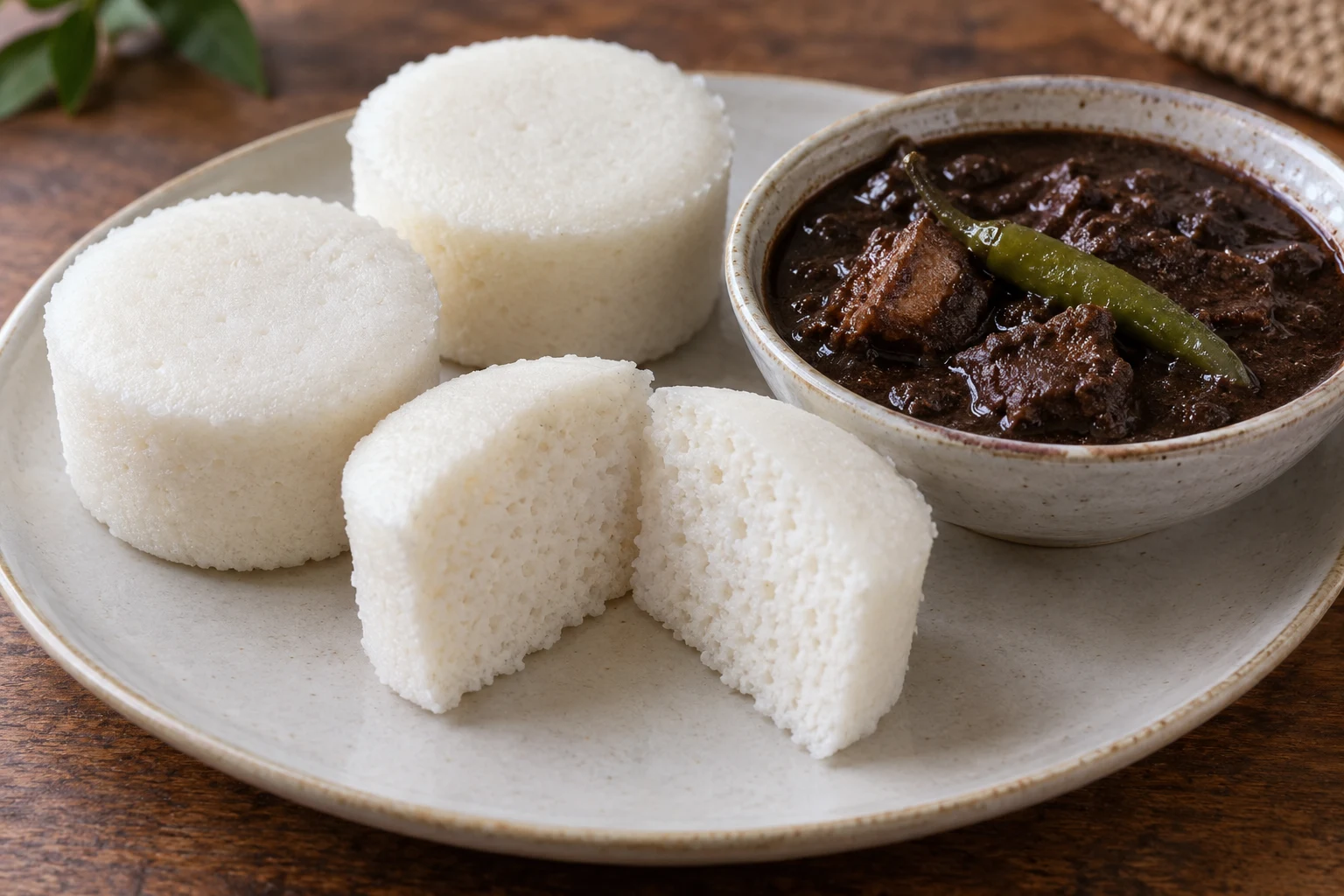
Rice for a meal, puto for dipping
Plain steamed rice leaves room for the gravy’s flavor. Puto, the small steamed cakes often served alongside dinuguan, offers another texture: soft crumb that takes up sauce, with a little sweetness against the vinegar. Keep the serving simple enough to taste the stew itself.
Check ingredients when serving others. Fish sauce can add a fish allergen; soy sauce in a crispy variation may bring soy and wheat. Puto recipes also differ in flour, dairy and egg. Keep cooked food cold at 4°C or below when it is not being served, as the food-safety guidance recommends, and heat leftovers thoroughly.
Research notes
Sources and complete recipes
Four independently authored Filipino preparations show the range of cuts and cooking sequences. Official guidance supports the temperature advice.
- Kawaling Pinoy: Dinuguan Lalaine Manalo’s belly preparation, late blood addition, natural thickening and serving guidance.
- Panlasang Pinoy: Pork dinuguan Vanjo Merano’s shoulder-and-ears preparation and gradual stirring advice.
- Foxy Folksy: Dinuguan Bebs’ belly preparation with an earlier blood addition and discussion of smooth or chunky texture.
- Ang Sarap: Crispy dinuguan Raymund’s explicitly identified home interpretation inspired by Kanin Club.
- Centre for Food Safety: Cooking Official thermometer, thorough cooking and cold-storage guidance.
Keep exploring
More stories for your table
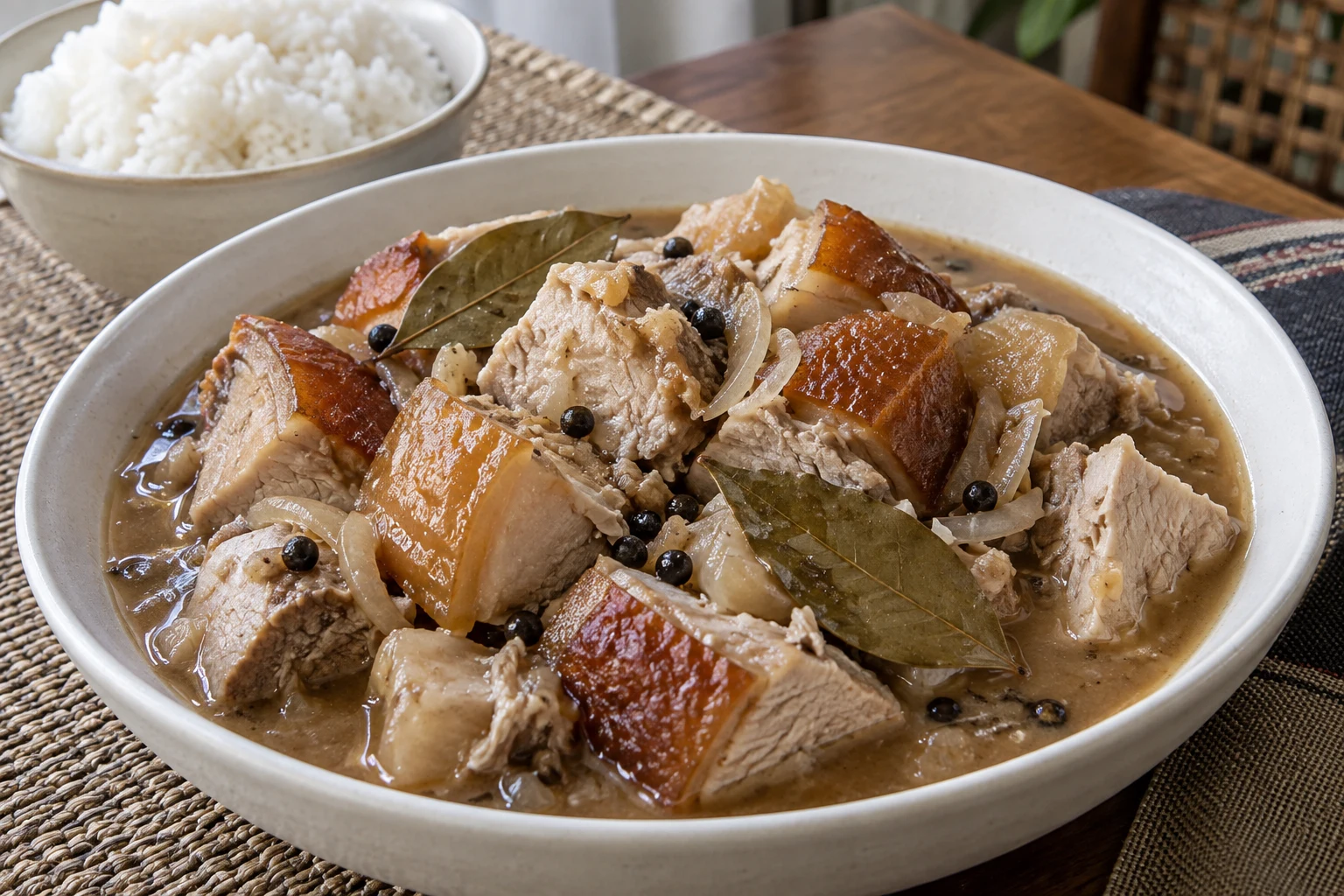
Filipino cuisine Pork stew
Lechon Paksiw: Let the Roast Become a Stew
Roast pork takes a second form in lechon paksiw. Compare sauce timing, softened skin and the sweetness already in a bottle of lechon sauce.
Filipino cuisine Grilled pork
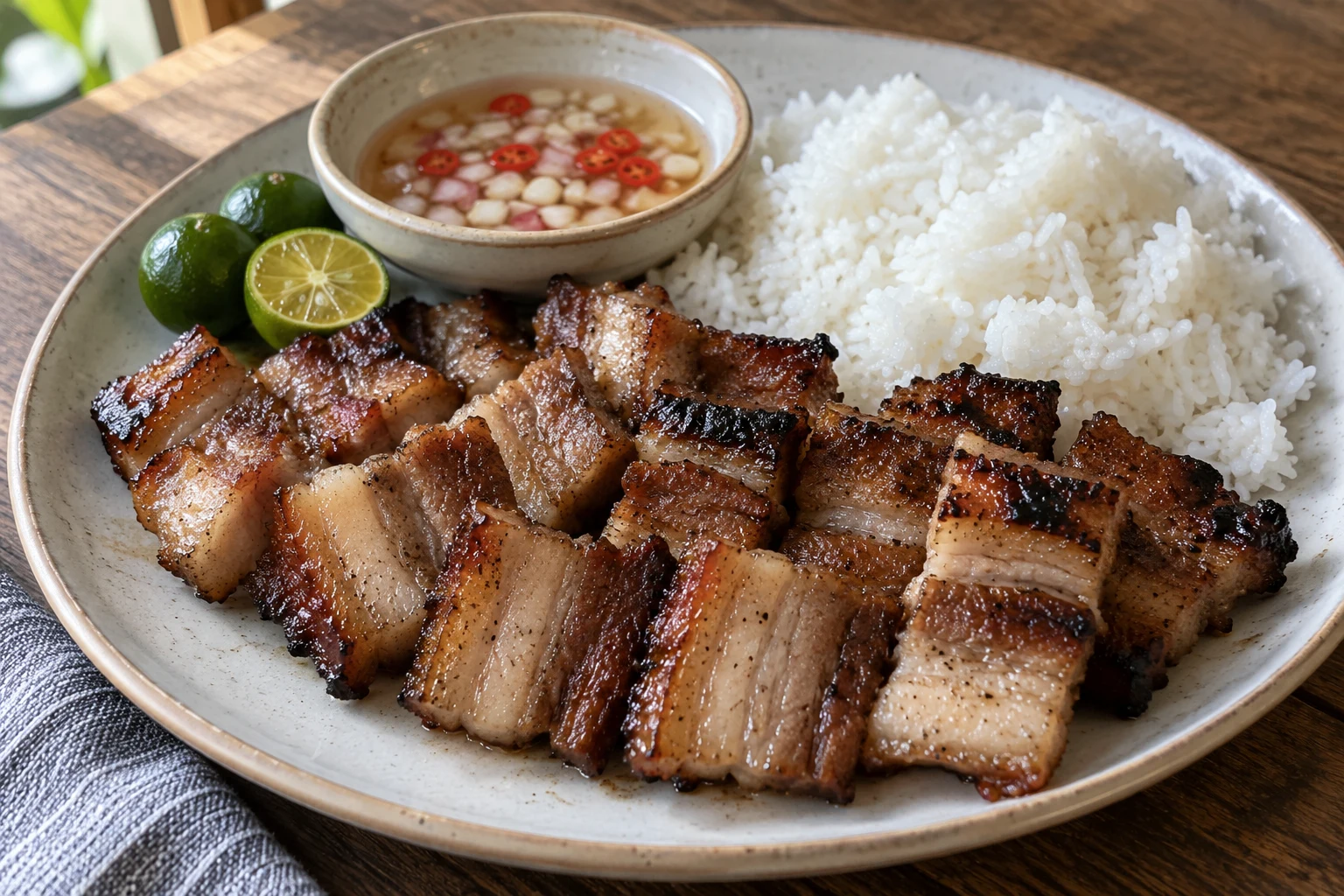
Inihaw na liempo: three liquids, three different jobs
A useful way to understand Filipino grilled pork belly: choose a marinade, manage the sweet basting sauce, and keep the vinegar dip fresh.

Thai cuisine Pork braise
Moo Hong: Tender Pork Before a Rich Sauce
Phuket’s soy-braised pork rewards a patient simmer. Learn how to manage the liquid, understand its spice variations and cook a pepper-focused home adaptation.