
Lechon Paksiw: Let the Roast Become a Stew
Lechon paksiw
Roast pork takes a second form in lechon paksiw. Compare sauce timing, softened skin and the sweetness already in a bottle of lechon sauce.
The crackling has another job
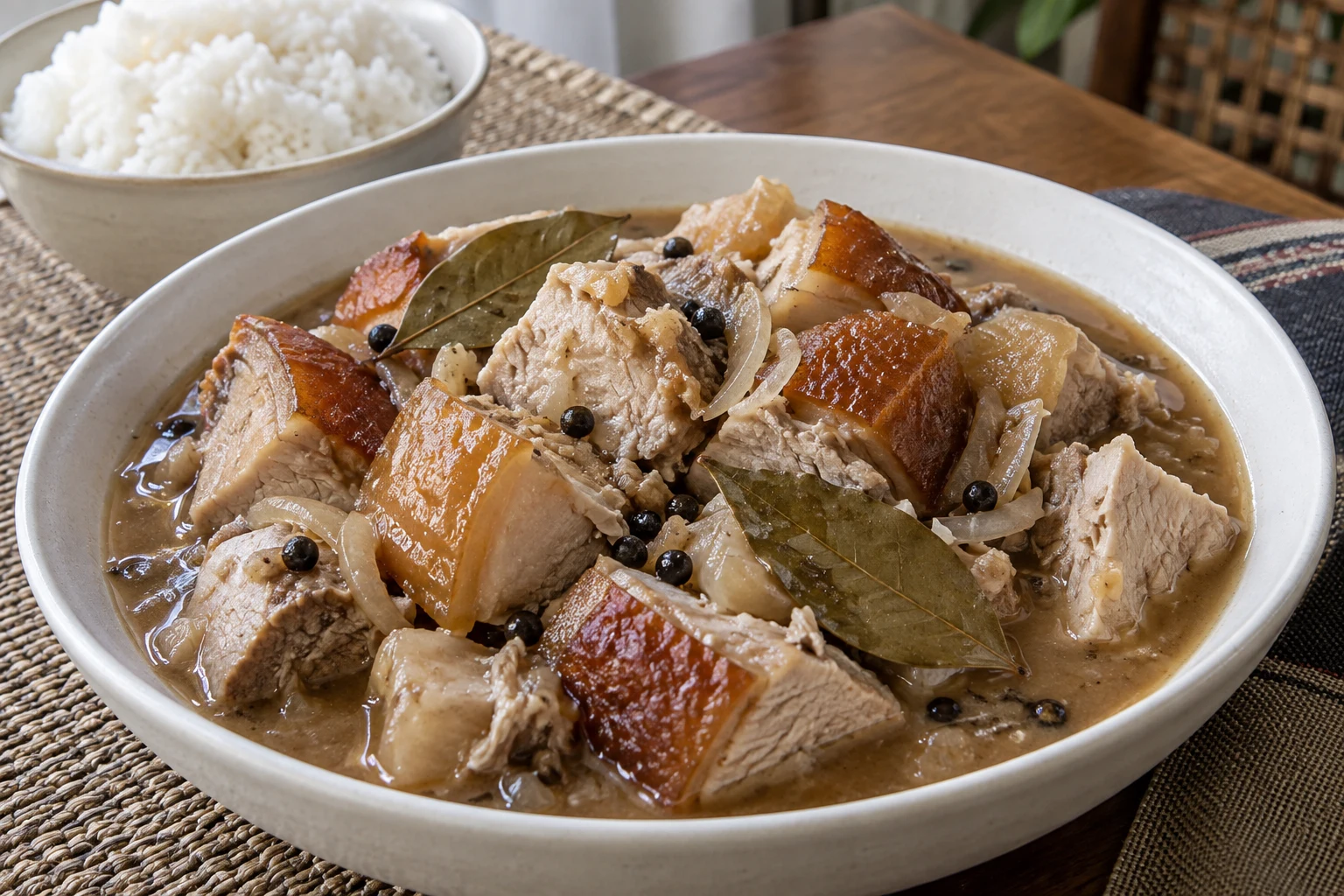
A lechon feast leaves pieces with different proportions of meat, fat and skin. Paksiw puts those pieces into a vinegar-based sauce rather than trying to return every scrap to the texture it had beside the roast. Lalaine Manalo's version starts with chopped cooked pork and the lechon sauce that may have accompanied it, then brings garlic, onion and bay into the pot.
The change is easiest to see in the skin. Manny Montala's recipe asks for it to become very soft during the simmer. A piece that was once valued for crackle now belongs to a spoonful of sauce and tender meat. Choosing paksiw means choosing that second texture.
Check the roast before the sauce
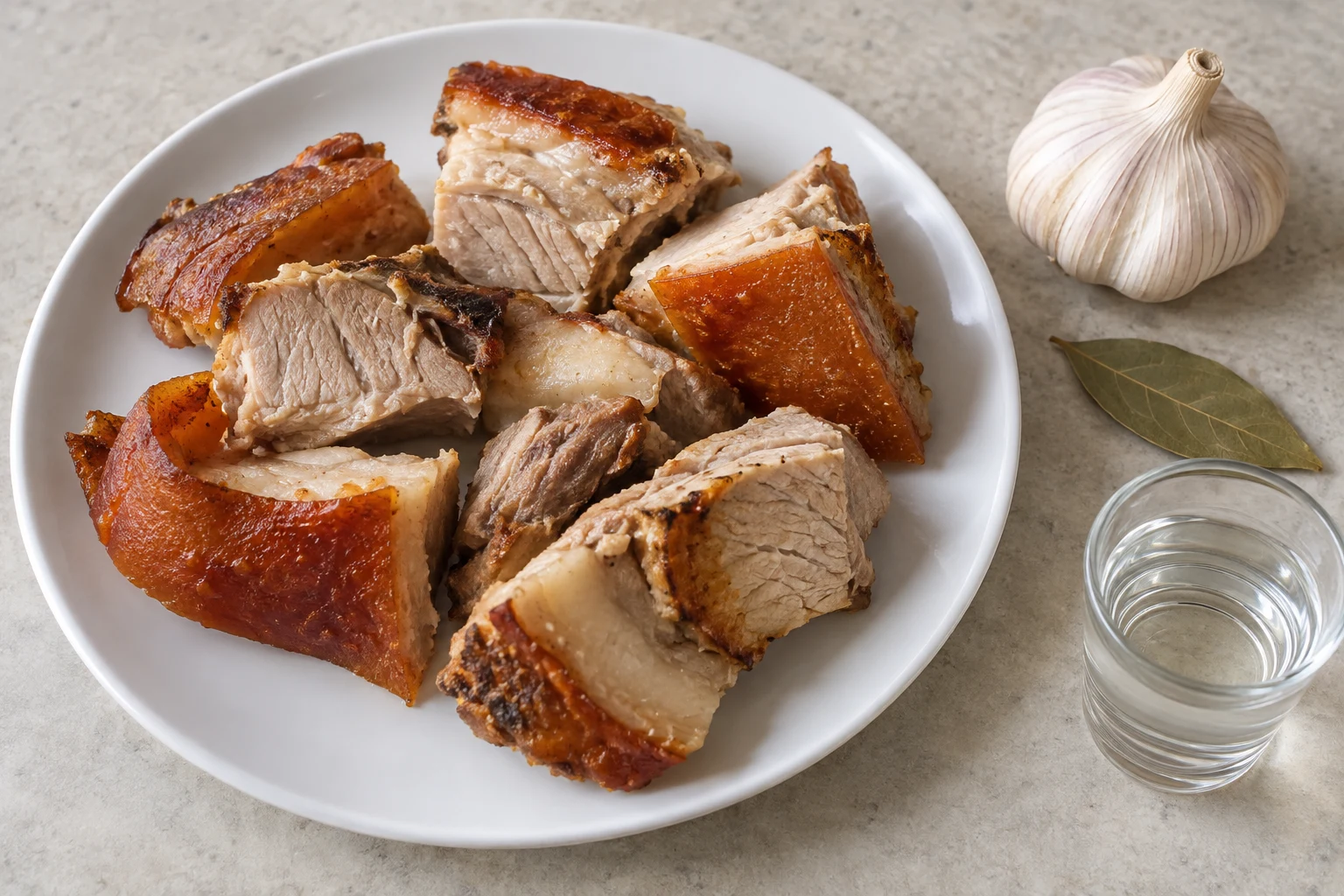
Whole-pig lechon is one starting point, but the published recipes also use lechon belly or cooked lechon kawali. Vanjo Merano distinguishes those cooked pieces from fresh pork: a stew begun with raw meat has a different starting texture and requires a different cooking plan. A quick simmer written for leftovers is not a raw-pork cooking time.
Look through the cooked pieces for bones before putting them in the pot, and cut very large chunks down so they are easier to serve. Think about the mix rather than chasing uniform cubes: a spoonful of lean meat, a little skin and sauce is different from a bowl made entirely of fatty belly.
Three ways the sauce enters the pot
Sauce through the simmer
Manalo boils the vinegar with water after softening the aromatics, then adds lechon sauce and pork. Her later addition of liver spread adds another savory element and body.
Sauce toward the finish
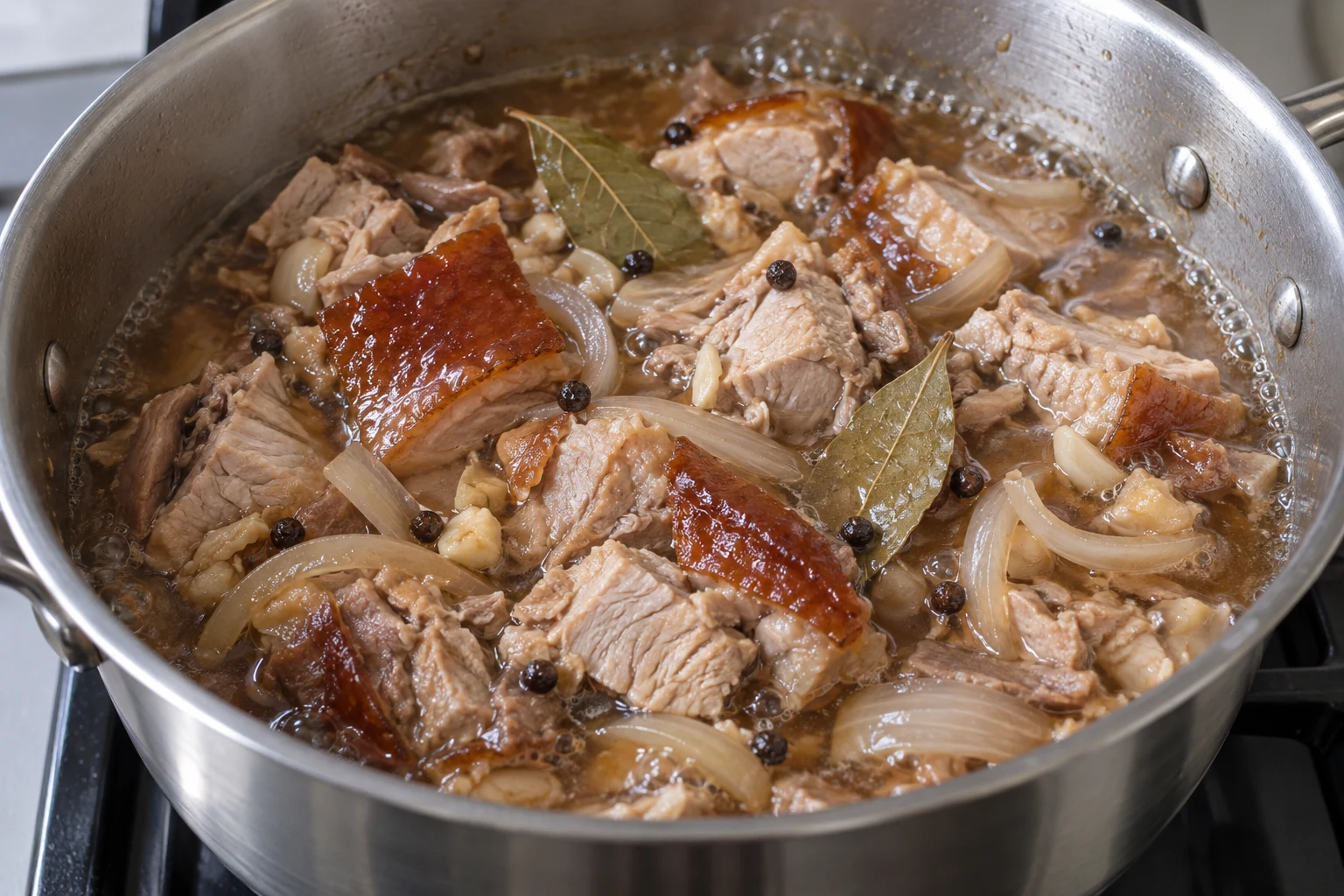
Merano first simmers the cooked pork with vinegar, water, bay and peppercorns, then adds homemade lechon sauce. Bebs at Foxy Folksy also puts the sauce in later, after the vinegar stage.
A pot assembled together
Montala combines the chopped roast with sauce or liver spread and the other ingredients before simmering. His recipe includes dried oregano and uses softness of the skin as a finishing cue.
Taste the bottle before adding sugar
Foxy Folksy's practical distinction is that extra brown sugar is optional: the lechon sauce may already be sweet. That matters more than copying a sugar amount from a different pot. Roast seasoning, sauce brand and the amount of water all affect the next spoonful. Read a commercial sauce's ingredients and allergen label rather than assuming every product sold as lechon sauce has the same composition.
The published methods favor a sauce that has some body, but it must still travel across the rice. If it has tightened before the pieces are ready, Foxy Folksy suggests hot water and another simmer. A thick coating that sticks in clumps and a loose sauce that can be spooned are different finishes. Choose the latter for a bowl meant to share its sauce.
Rice gets the final say
Manalo and Merano both serve the stew with steamed rice. Put a little sauce and pork on a plain spoonful before deciding it needs more sweetness or salt. The useful finishing question is how the stew eats with its companion, after the meat is hot and the skin has reached the texture you wanted.
Research notes
Sources and further cooking
Four Filipino recipe authors provide the cooking comparison; the storage and reheating guidance comes from FoodSafety.gov. Their methods differ, so the article keeps those choices attached to their sources.
- Kawaling Pinoy — Lalaine Manalo's paksiw na lechon Cooked-roast starting point, early sauce addition, later liver spread and rice serving.
- Panlasang Pinoy — Vanjo Merano's lechon paksiw Vinegar simmer before homemade sauce; distinction between leftovers and fresh pork.
- Foxy Folksy — Bebs's lechon paksiw Optional extra sugar, late sauce addition and hot water to loosen thick sauce.
- Panlasang Pinoy Meaty Recipes — Manny Montala's lechon paksiw Separate author's one-pot method, oregano and softened-skin cue; historical claims are not used.
- FoodSafety.gov — Four steps to food safety Prompt shallow-container refrigeration and cold storage temperatures.
- FoodSafety.gov — Safe minimum internal temperatures Leftover reheating target of 74°C / 165°F, checked with a thermometer.
Keep exploring
More stories for your table
Filipino cuisine Squid dishes
Adobong pusit: finish the sauce without losing the squid
Squid adobo varies in ink, seasoning and vegetables. Compare the ways Filipino cooks finish its sauce while keeping the squid’s texture in view.
Filipino cuisine Grilled pork
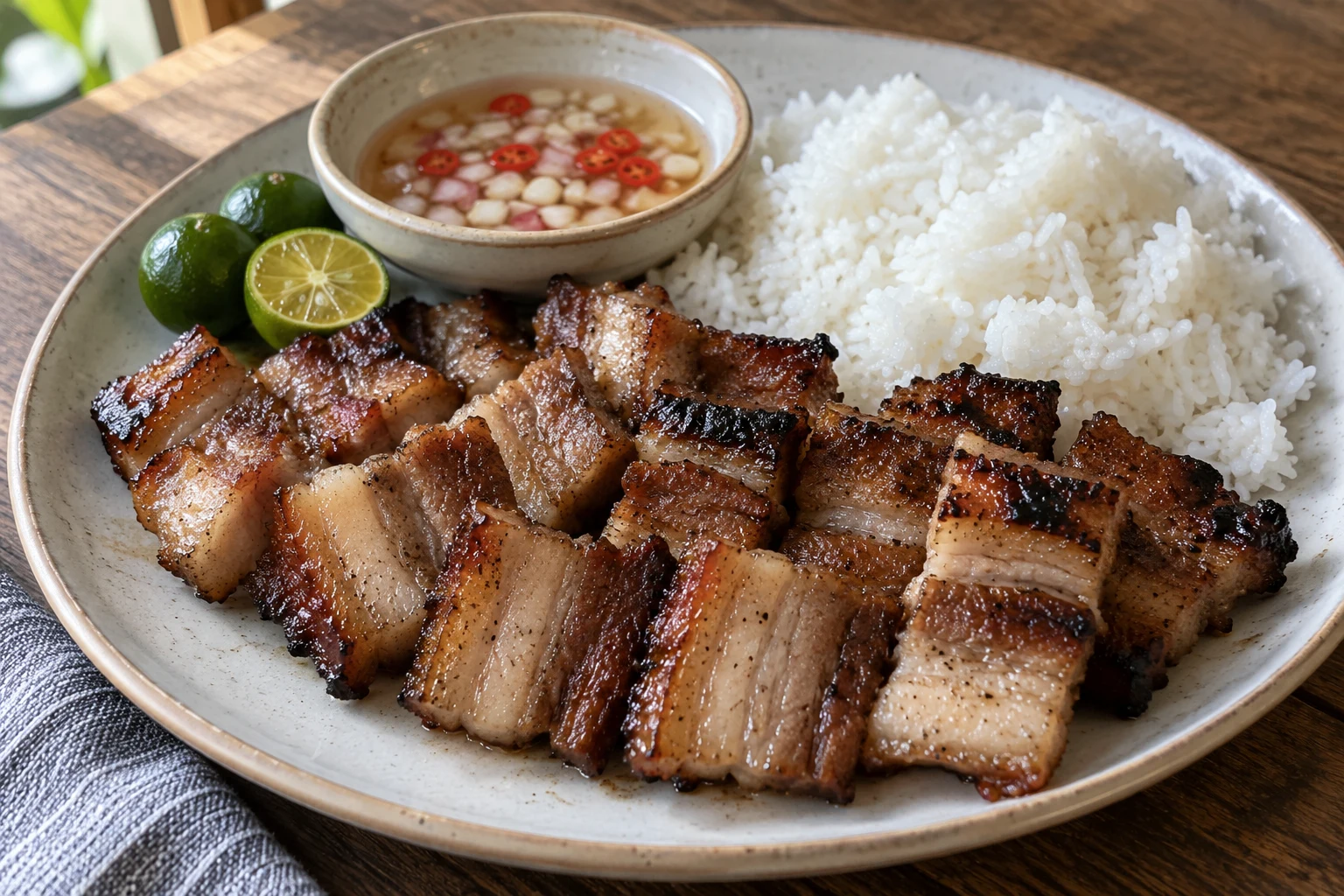
Inihaw na liempo: three liquids, three different jobs
A useful way to understand Filipino grilled pork belly: choose a marinade, manage the sweet basting sauce, and keep the vinegar dip fresh.
Malaysian cuisine Beef-bone soup
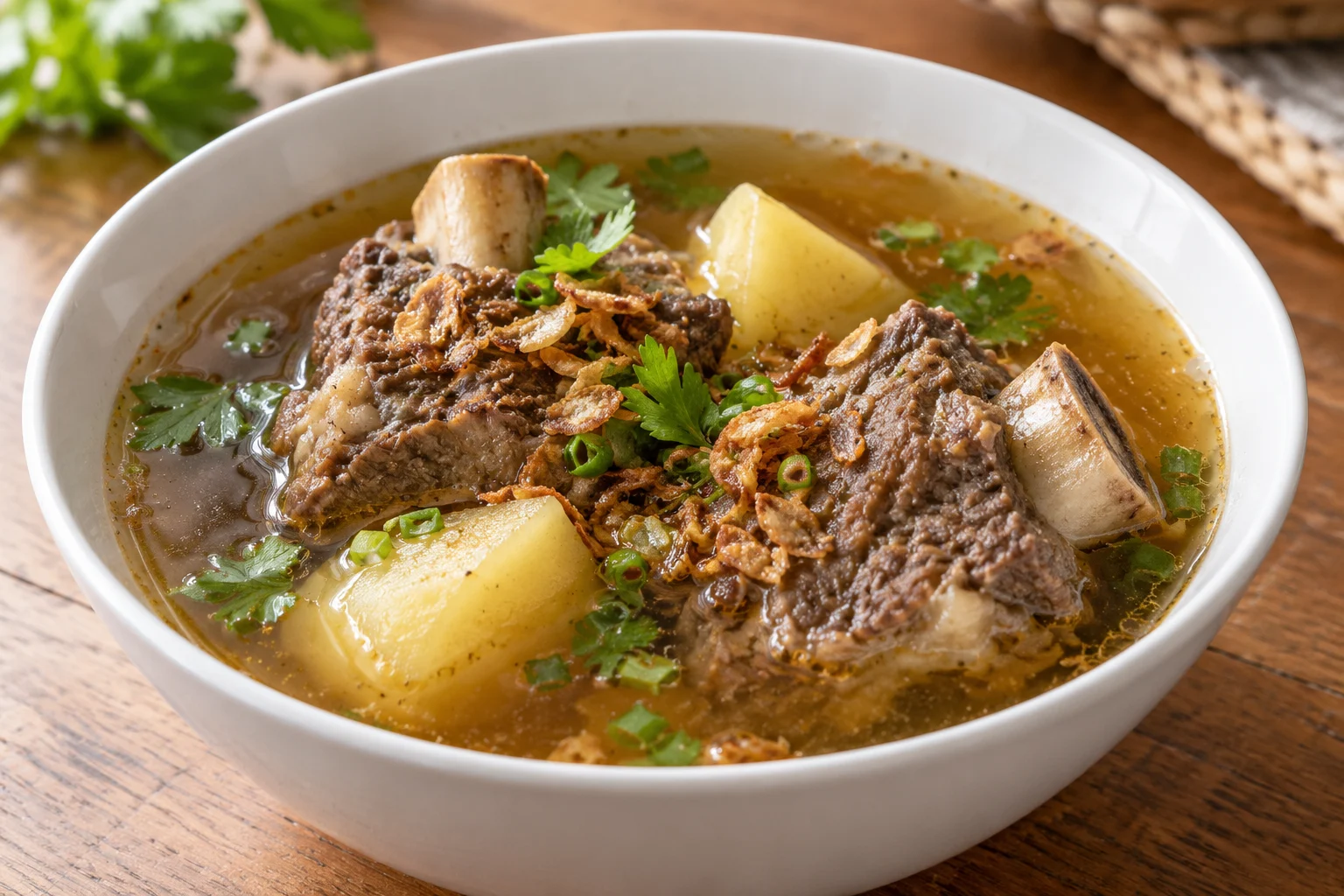
Sup Tulang: The Broth and the Last Spoonful
Compare Malaysian sup tulang preparations through aromatic bases, tender bone-in beef and the final seasonings that make each bowl distinctive.