
Sapin-sapin: flavour in every steamed layer
Sapin-sapin
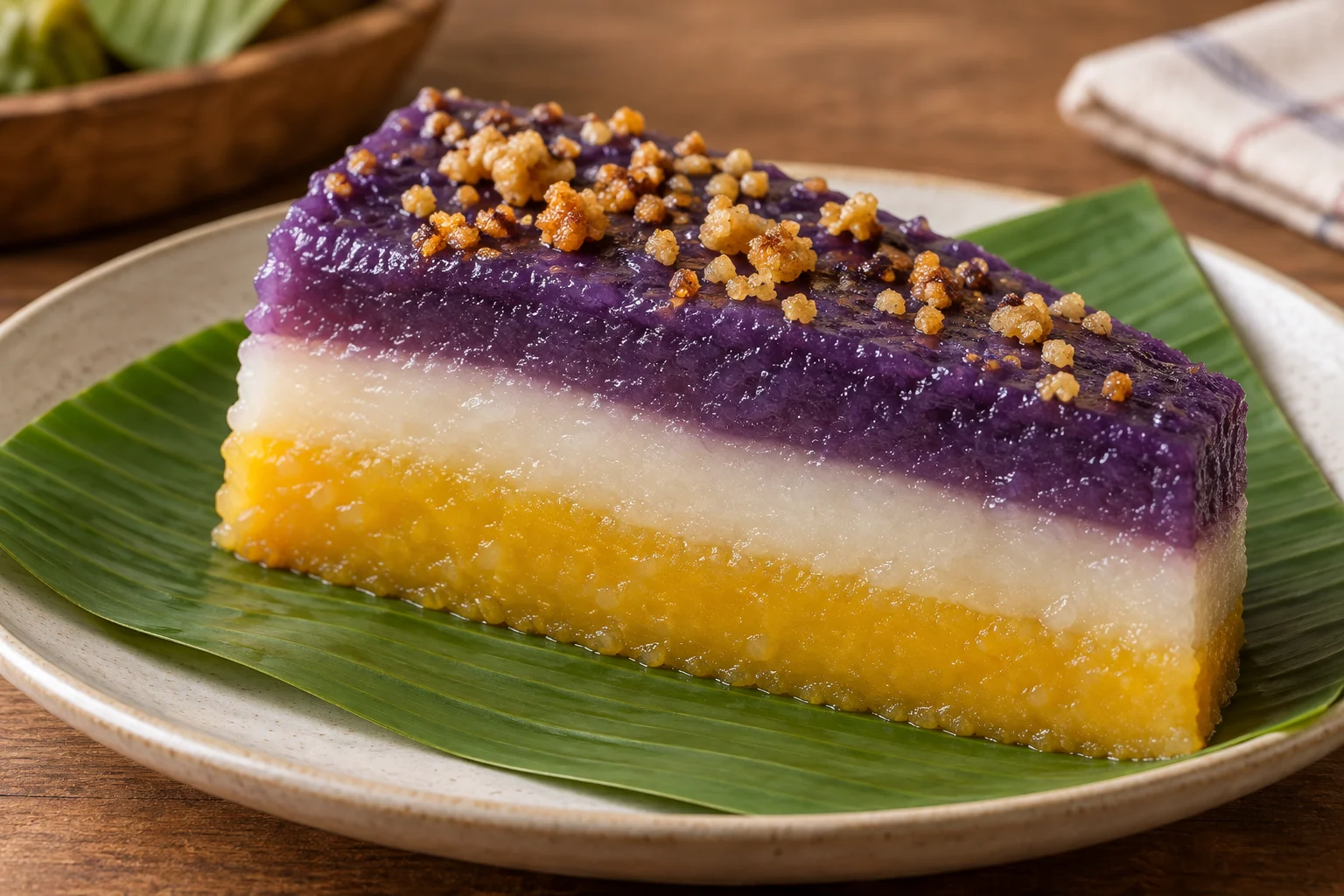
Three colours make sapin-sapin easy to recognise. Its soft chew, distinct layer flavours and golden coconut curds make it worth looking beyond the stripes.
Filipino kakanin
The stripes belong to the cake
Sapin-sapin is a steamed Filipino rice cake built a layer at a time. Glutinous rice flour gives it a soft, sticky chew, and coconut milk runs through the batter. The colours commonly signal ube, coconut and jackfruit. Golden latik curds add a different texture on top: small browned coconut pieces against a dense, tender cake.
The name refers to layers, as both Lalaine Manalo and Bebs explain. The layers should remain attached when sliced, with clear boundaries between them. They are parts of one cake, rather than separate sheets stacked after cooking. Colour makes those boundaries visible, but the ingredients behind each colour decide its flavour.
Three common layer flavours
- Purple
- Ube
- White
- Coconut
- Yellow
- Langka
Cooked purple yam, ube halaya or a measured flavour extract can supply the yam character.
The base coconut flavour may be joined by macapuno coconut strings in some versions.
Ripe jackfruit, jackfruit syrup or an extract appears in different recipes.
Colouring and flavouring have different jobs
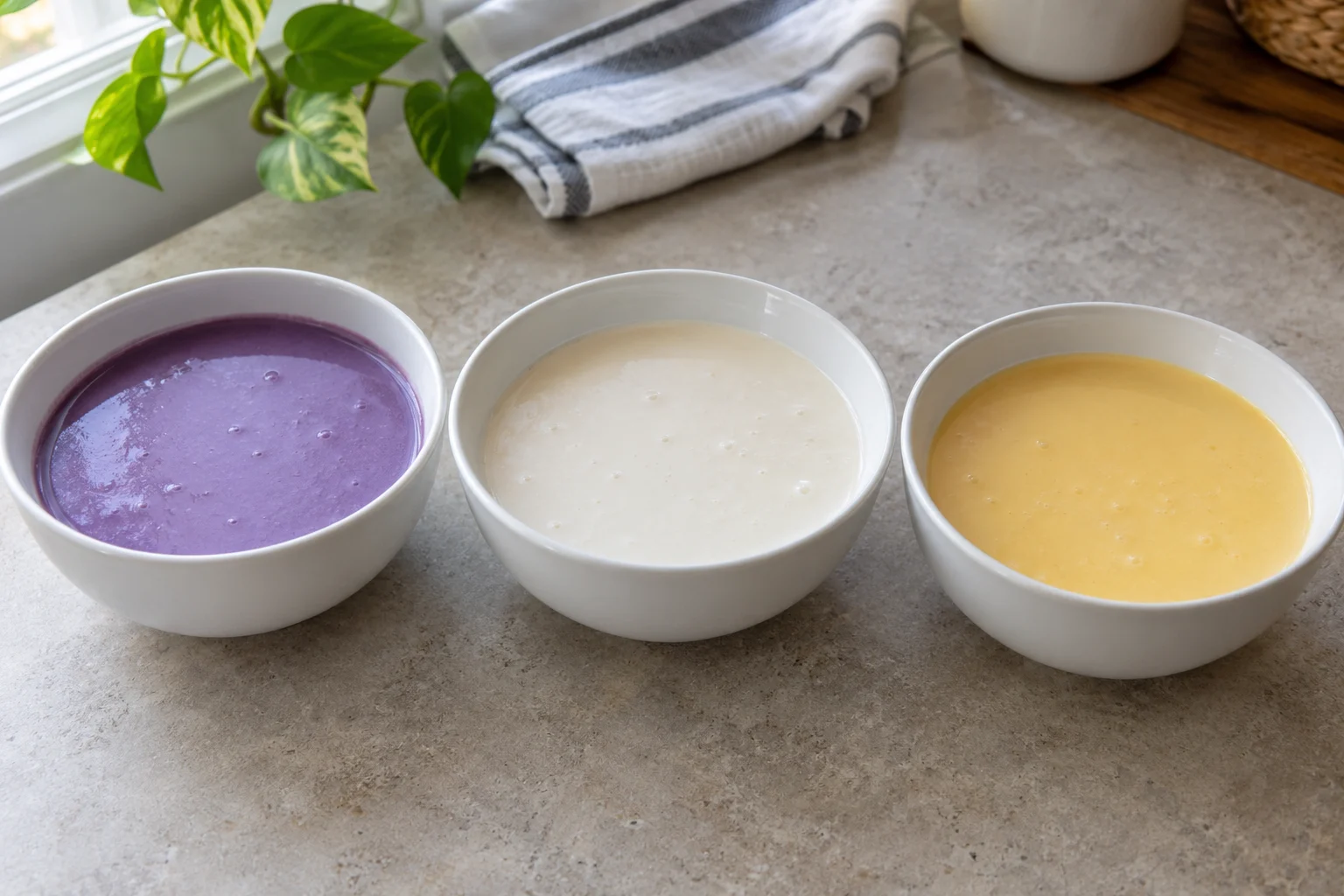
Vanjo Merano uses mashed purple yam and ripe jackfruit as well as colouring in his recipe. Manalo offers an extract-led batter with cooked ube, jackfruit and macapuno as optional additions. Janette’s PinoyCookingRecipes version uses colouring and an optional jackfruit syrup. These are distinct approaches; a yellow colour alone does not add jackfruit flavour.
Bebs uses ube halaya, jackfruit and macapuno, and cautions against increasing the jackfruit freely. More fruit changes the batter, not just its aroma. When choosing a recipe, keep its additions and base quantities together. Halaya and sweetened macapuno also bring their own sugar, while syrup brings liquid. Substituting spoon for spoon without considering those differences can change how a layer sets.
Make each boundary deliberate
Use the pan size, quantities and steaming times from one complete recipe, then check what happens in the pan.
- 01
Portion before flavouring
Mix a smooth base and divide it evenly among the bowls before adding flavour ingredients. Manalo strains her batter to remove lumps. Stir each bowl again before pouring so settled flour rejoins the liquid. Similar amounts make it easier to produce similar layer depths.
- 02
Let the surface set
The first layer must support the next pour. Bebs checks for a surface that is tacky but no longer runny; the finished cake also needs its centre cooked. Follow the recipe’s stick or toothpick check. A thick layer in a smaller pan will take longer than a shallow one.
- 03
Add the next layer gently
Pour slowly over the set surface, spreading without scraping into it. Return the pan to the steamer promptly and manage condensation according to the recipe. Vanjo and Janette use a cloth cover to keep drips off the batter. A water puddle on top is a different problem from uncooked batter inside.
- 04
Plan the serving order
Inversion changes which layer faces upward. Purple poured first can become the top when the pan is turned onto a plate. If serving upright from the pan, the last layer stays on top. Sketch the intended sequence before steaming; the colour order varies among these recipes.
Choose the flour formula as a whole
Glutinous rice flour base
Manalo, Vanjo and Bebs build their batters with glutinous rice flour. Their coconut milk, sugar and flavour additions differ, so their quantities and cooking schedules still belong to their individual recipes.
Two-flour base
Janette combines glutinous rice flour with ordinary rice flour. That formula should be followed with its own liquid proportions. The two flours are separately named ingredients, rather than interchangeable labels on the shopping list.
Finish with curds, then a clean cut
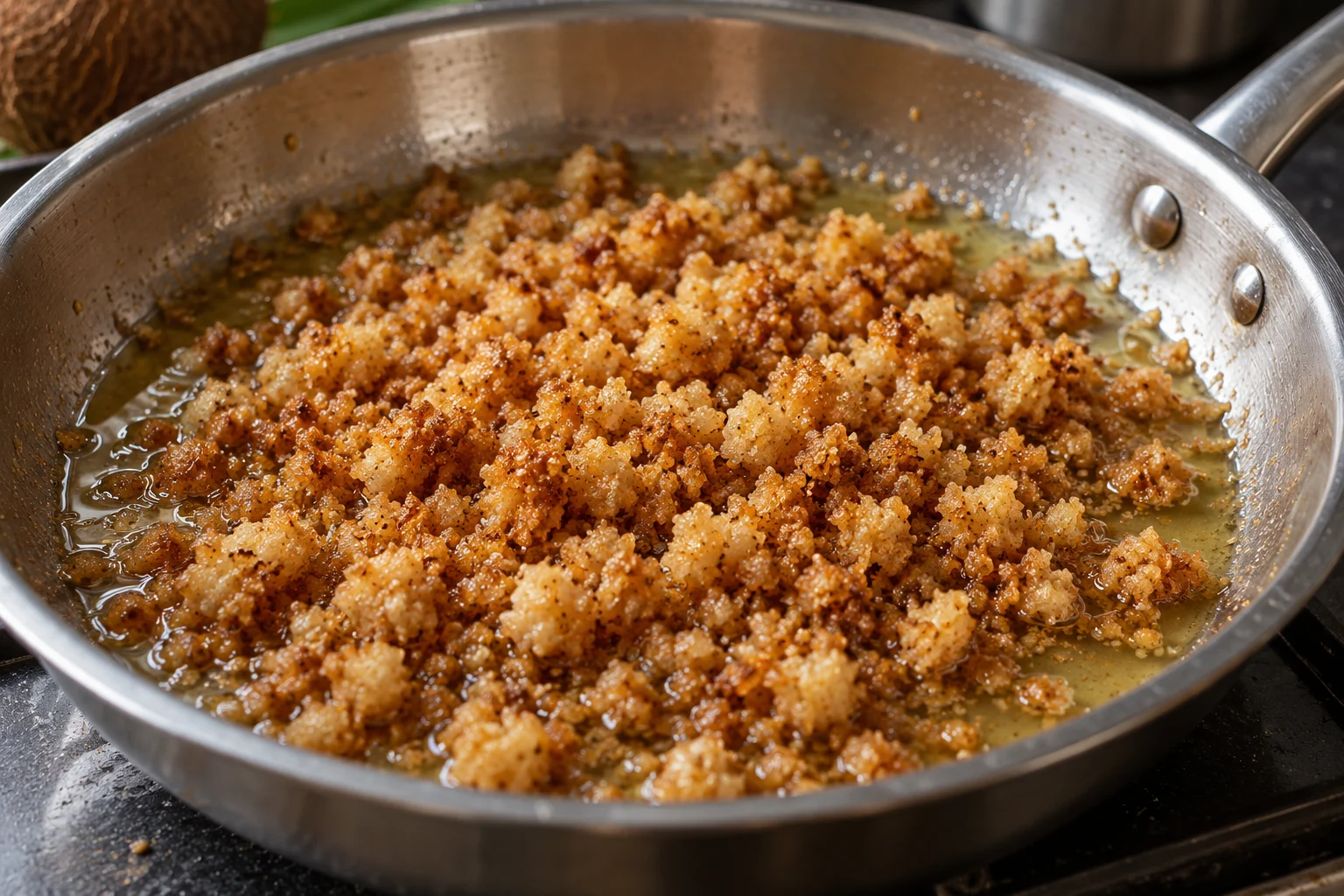
For this topping, coconut cream or thick coconut milk is reduced until oil separates and the solids brown. Manalo lowers the heat as the curds develop and drains them from the oil. Bebs notes that the curds keep browning as they cool, so take them off the heat before they become too dark. Toasted coconut shreds are an alternative topping, with a different shape and texture.
Let the cake cool before releasing it, and avoid trapping steam beneath a cover. Janette uses an oiled knife to cut the sticky cake; wiping and lightly oiling the blade between slices can help keep the layer faces neat. Add latik for serving. Refrigerate portions kept for later rather than leaving the coconut-rich cake out indefinitely. Small wedges suit a snack with coffee or tea.
Research notes
Four cooks, four complete formulas
These independent recipes document the layer flavours, flour choices and steaming methods discussed here.
- Lalaine Manalo, Kawaling Pinoy: Sapin-Sapin Flour and coconut base, straining, optional additions, latik and cooling.
- Vanjo Merano, Panlasang Pinoy: Sapin Sapin Recipe Cooked ube, ripe jackfruit, cloth cover and inversion.
- Janette, PinoyCookingRecipes: Sapin-Sapin Mixed rice flours, syrup option, layer-order variation and oiled knife.
- Bebs, Foxy Folksy: Special Sapin-Sapin Halaya, macapuno and jackfruit; layer-set checks and latik browning.
Keep exploring
More stories for your table
Filipino cuisine Stews
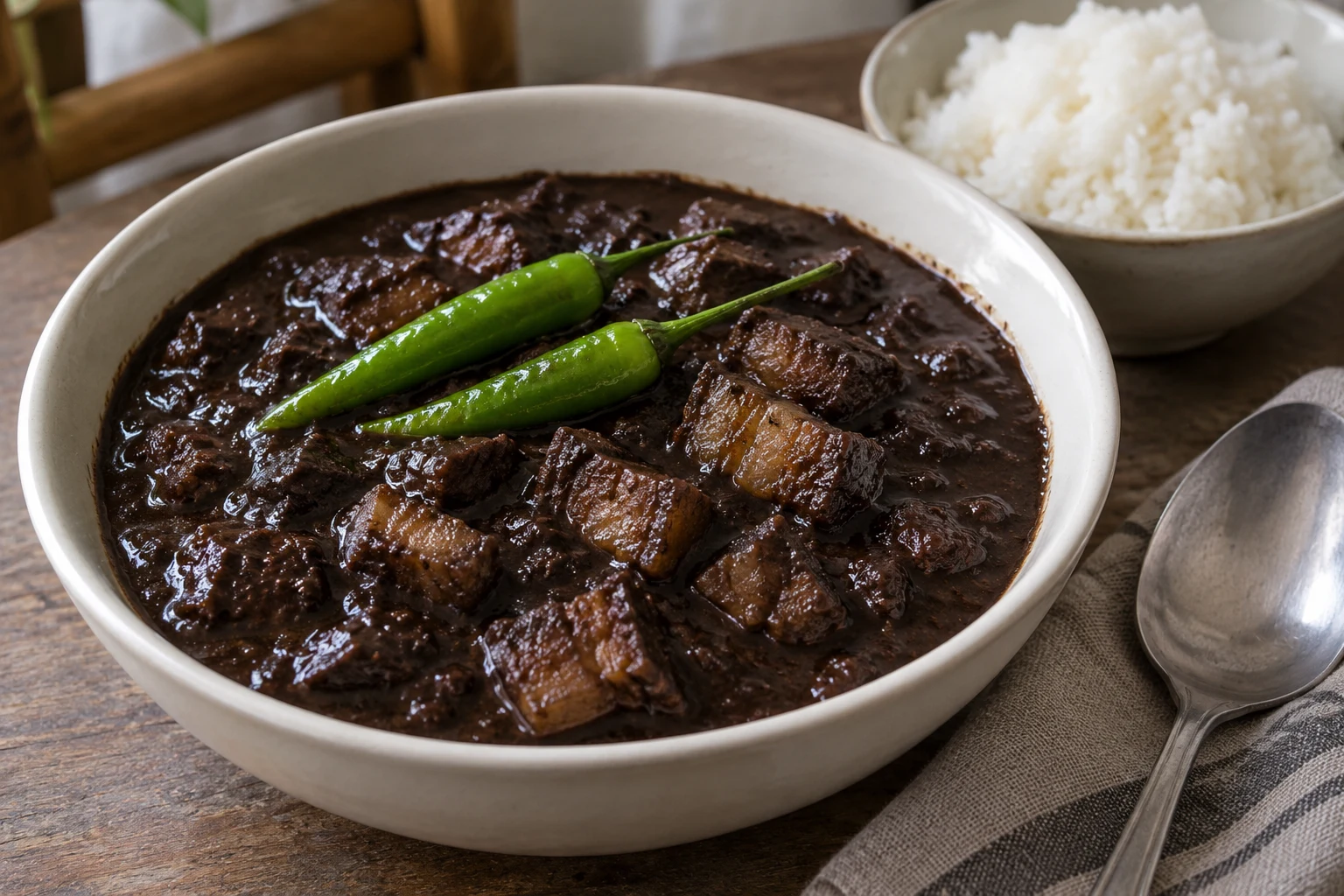
Dinuguan: Tender Pork in Dark, Tangy Gravy
Understand dinuguan’s dark pork-blood gravy, the differences between pork cuts and cooking sequences, and its pairing with rice or puto.
Filipino cuisine Squid dishes
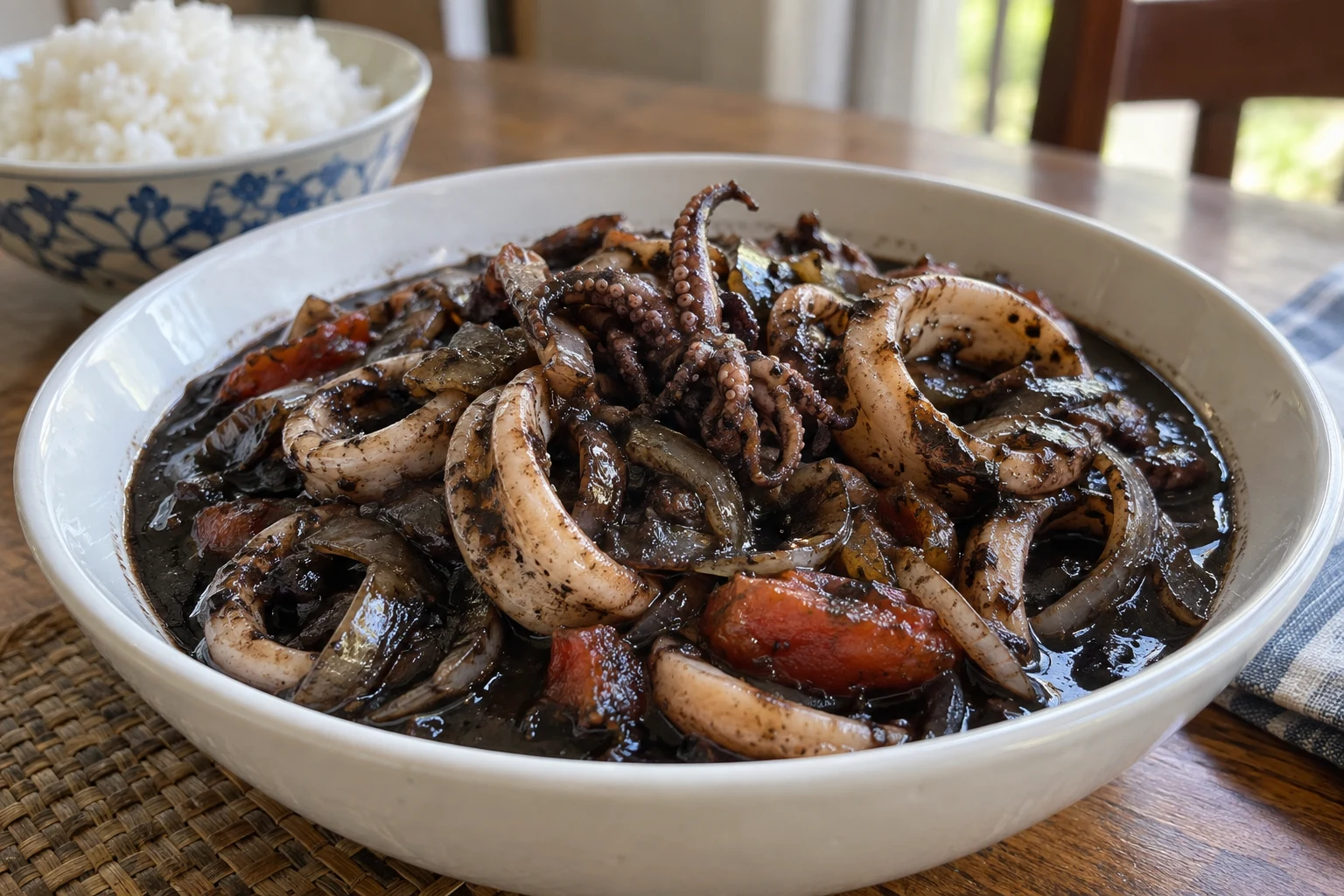
Adobong pusit: finish the sauce without losing the squid
Squid adobo varies in ink, seasoning and vegetables. Compare the ways Filipino cooks finish its sauce while keeping the squid’s texture in view.
Sri Lankan cuisine Coconut curries
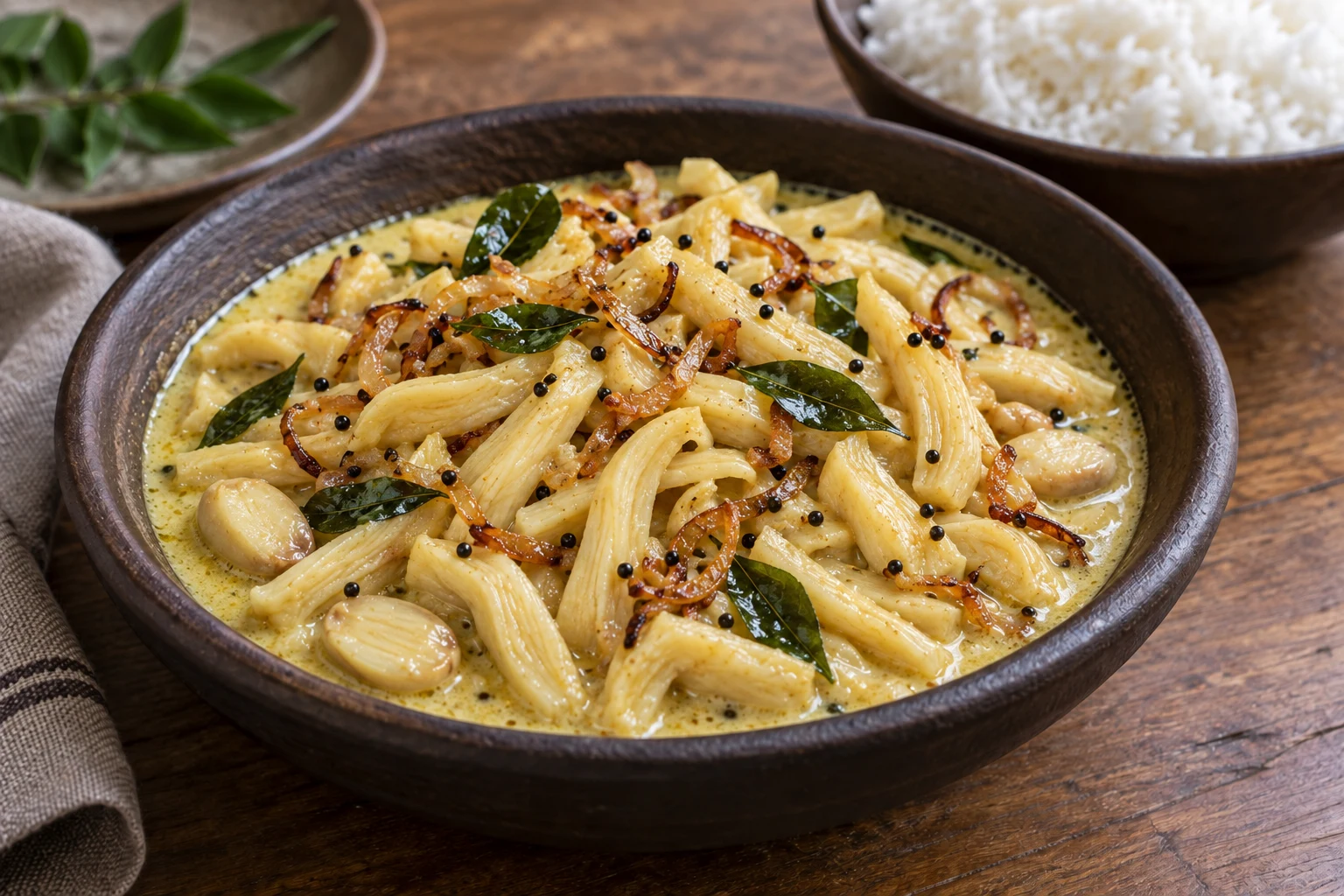
Kiri Kos: Choose the Jackfruit Before the Spice
Sri Lankan kiri kos uses mature, unripe jackfruit bulbs and seeds in coconut milk. Compare it with young polos, then follow the milk and tempering stages.