
Shiro: Three Ways to Turn Flour into Stew
Shiro
A smooth Ethiopian shiro begins with finely milled legumes. The flour may arrive already seasoned—and cooks have more than one good way to turn it into a stew. Understanding the powder makes those different instructions easier to follow.
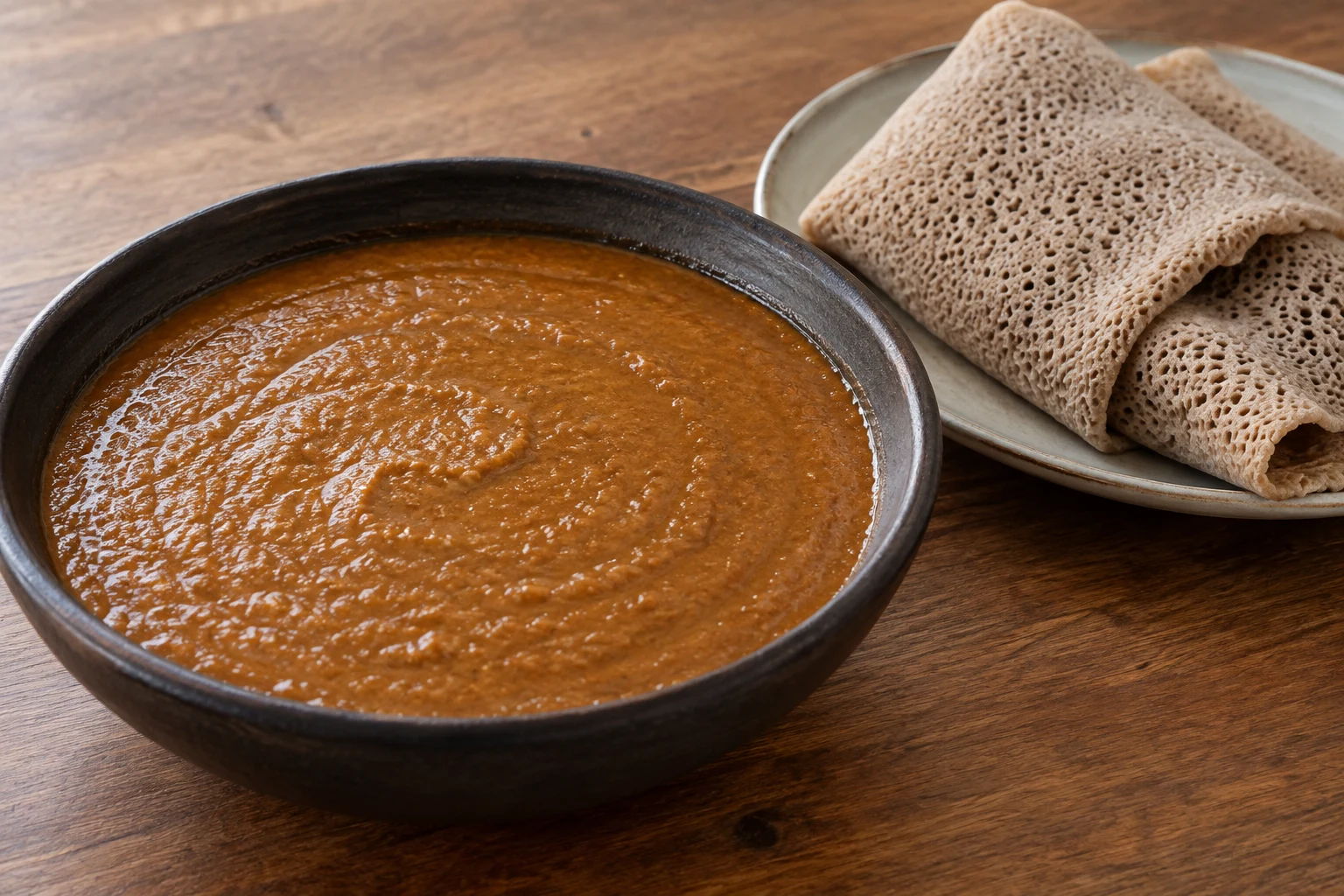
Before the saucepan
The flour carries more than thickness
Shiro is often introduced as chickpea stew, but that description leaves out both its texture and its range. The legumes are ground into flour; they do not remain as whole chickpeas in the bowl. In the OWSD members’ cookbook, Ethiopian contributor Amsale Zelalem describes a powder made from roasted chickpeas, beans and peas. Other mixes differ.
Seasoning can already be part of that flour. Chef Genet Agonafer’s recipe uses mitin shiro, a roasted, milled and spiced legume mixture. Buying this blend means that some of the flavor-building work has happened before you open the packet. Plain chickpea flour and a seasoned shiro mix therefore cannot share an identical seasoning list.
Harry Kloman’s interviews with shiro maker Menkir Tamrat show why color alone is an unreliable shopping guide: a pale blend can still contain seasonings even when it lacks berbere. Read the ingredients or ask the seller what the mix contains. For the recipe below, choose seasoned mitin shiro; its own blend determines much of the heat and aroma.
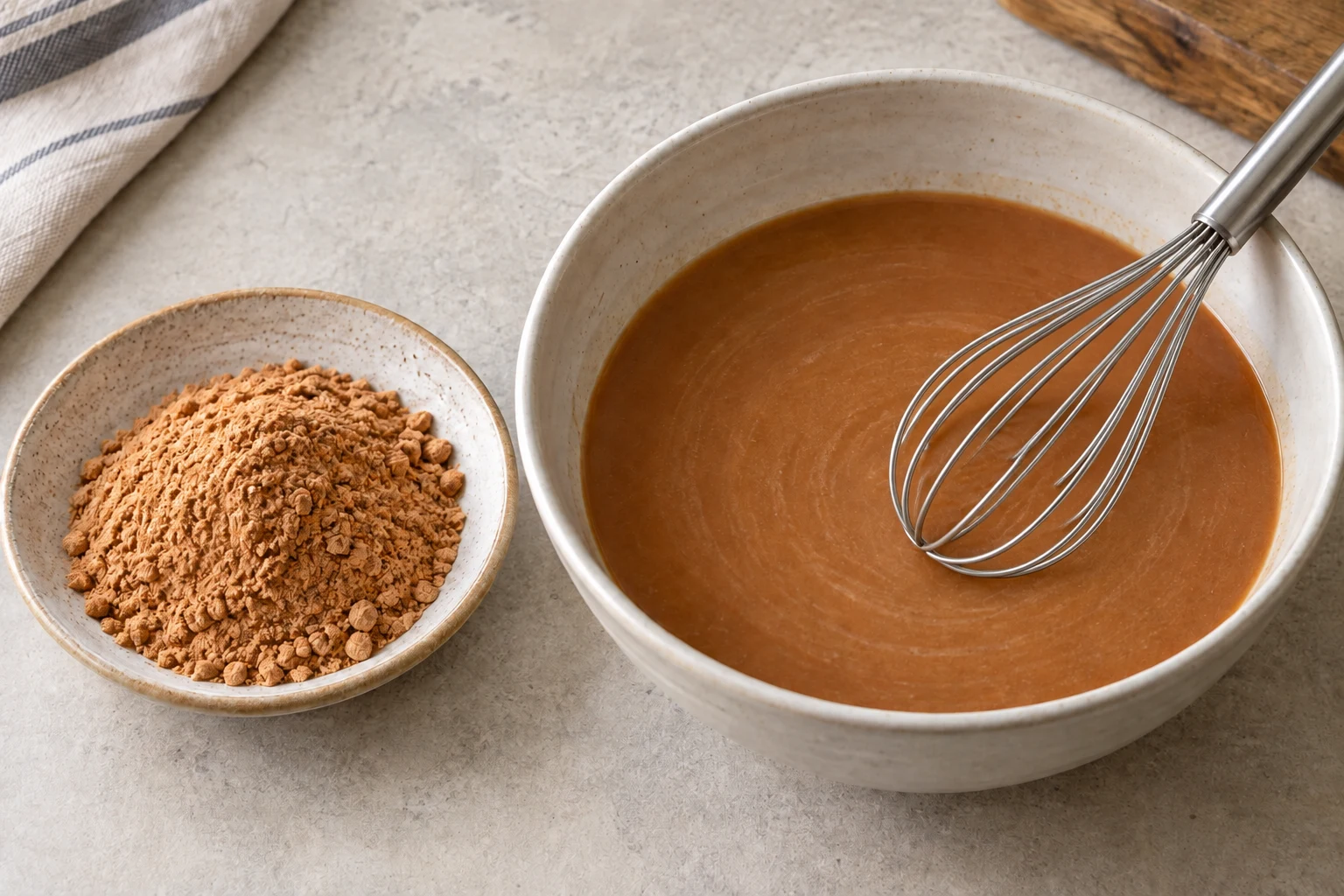
Different orders, shared aim
When does the water enter?
Each cook combines liquid, flour and aromatics in a different order while working toward a smooth result.
Powder into the aromatic base
In the recipe recorded while Genet Agonafer cooked, shiro flour first makes a dense paste with the softened onion mixture. Boiling water follows in stages, with vigorous stirring to break up lumps.
Water before powder
Amsale Zelalem cooks onion, pepper, garlic and tomato, adds water and brings it to a boil. The shiro powder then goes in gradually, with mixing to remove lumps before a low simmer.
A slurry before the pot
Tammie Teclemariam’s TASTE adaptation of Yohanis Gebreyesus mixes the flour with hot water separately. That smooth slurry joins the aromatics. It lets the cook deal with dry pockets before simmering the stew.
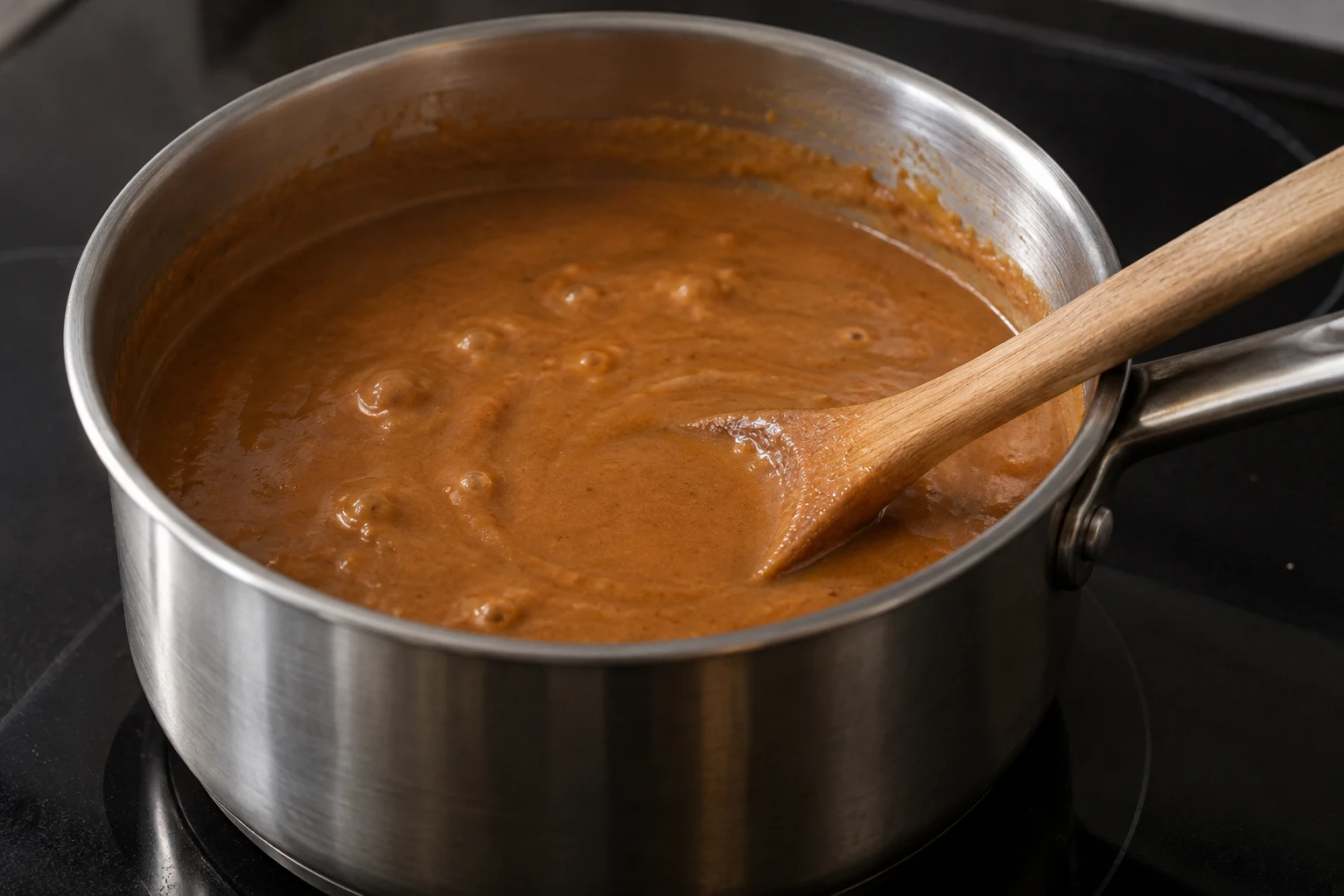
Cook the slurry method
Shiro with seasoned mitin flour
Serves 4 with injera. Allow about 50 minutes: 10 minutes prep and 40 minutes cooking. This untested home adaptation follows the slurry approach in Tammie Teclemariam’s TASTE recipe, at double its flour-and-water quantity. It uses oil throughout and omits her butter finish. Choose a plant-based seasoned mitin shiro; plain chickpea flour needs a different seasoning recipe.
Ingredients
For the stew and serving
- 1 US cup seasoned mitin shiro powder, spooned loosely into a 240 ml cup and leveled
- 960 ml / 4 US cups hot water for the slurry
- Up to 240 ml / 1 US cup additional hot water, only as needed
- 60 ml / ¼ US cup neutral vegetable oil
- 100 g peeled onion, finely grated
- 20 g peeled garlic, finely minced
- 10 g peeled fresh ginger, finely grated
- To taste salt, added after cooking because the powder may already contain it
- 4 injera, for serving
Method
- 1
Soften the aromatics.
In a heavy 2–3 litre saucepan, warm the oil over low heat. Add onion, garlic and ginger; stir for 5–7 minutes until softened and fragrant, without browning.
- 2
Make a smooth slurry.
In a large heatproof bowl, gradually whisk the shiro powder into the 960 ml hot water. Break up dry pockets before adding the mixture to the saucepan.
- 3
Cook gently.
Stir the slurry into the aromatics and bring to a gentle simmer. Cover and cook over low heat for 20–25 minutes, stirring every few minutes and scraping the base. Avoid a vigorous boil.
- 4
Adjust the finish.
Aim for a smooth, spoonable sauce that spreads easily. If it becomes too stiff during cooking, stir in the reserved hot water a little at a time; you may not need it all. If still very thin, simmer uncovered briefly. Once cooked, taste and add salt as needed, then simmer for 2 minutes.
- 5
Serve with injera.
Spoon the hot shiro into serving bowls. Divide the injera among four people, tearing pieces to scoop the stew. Serve promptly while the sauce is loose and warm.
Research notes
Sources and the cooks behind the methods
Four independent accounts support the powder choice, method comparison and serving context. The home recipe above is an adaptation, not a transcript of any one cook’s preparation.
- Immigrant Women Chefs — Shiro from Genet Agonafer Clay Hickson’s observed preparation: seasoned flour, aromatic paste, staged boiling water and injera.
- TASTE — Mitten Shiro, by Tammie Teclemariam Her adaptation of Yohanis Gebreyesus supplies the slurry method and flour-to-water starting ratio.
- OWSD — A World of Flavor PDF page 40: Amsale Zelalem’s Ethiopian shiro, including a mixed-legume powder and water-first sequence.
- Harry Kloman — Sure As Shiro Interviews with Menkir Tamrat and other Ethiopian food specialists on flour blends and preparation.
Keep exploring
More stories for your table
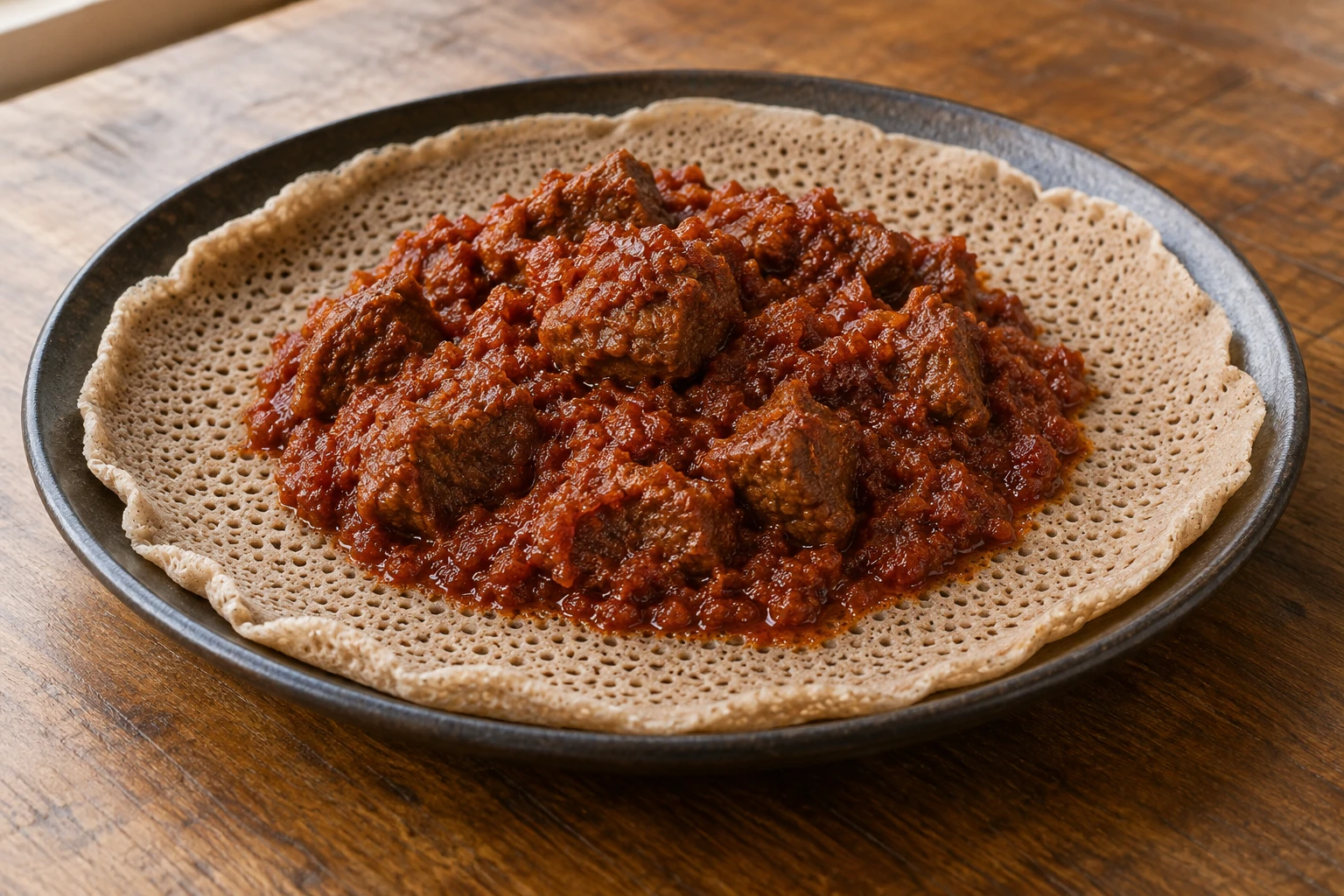
EthiopiaBeef stew
Sega Wot: Build the Sauce Before the Beef
Learn how cooked onions, gently heated berbere and a patient simmer build sega wot, with a home adaptation of Ethiopia’s spicy beef stew.
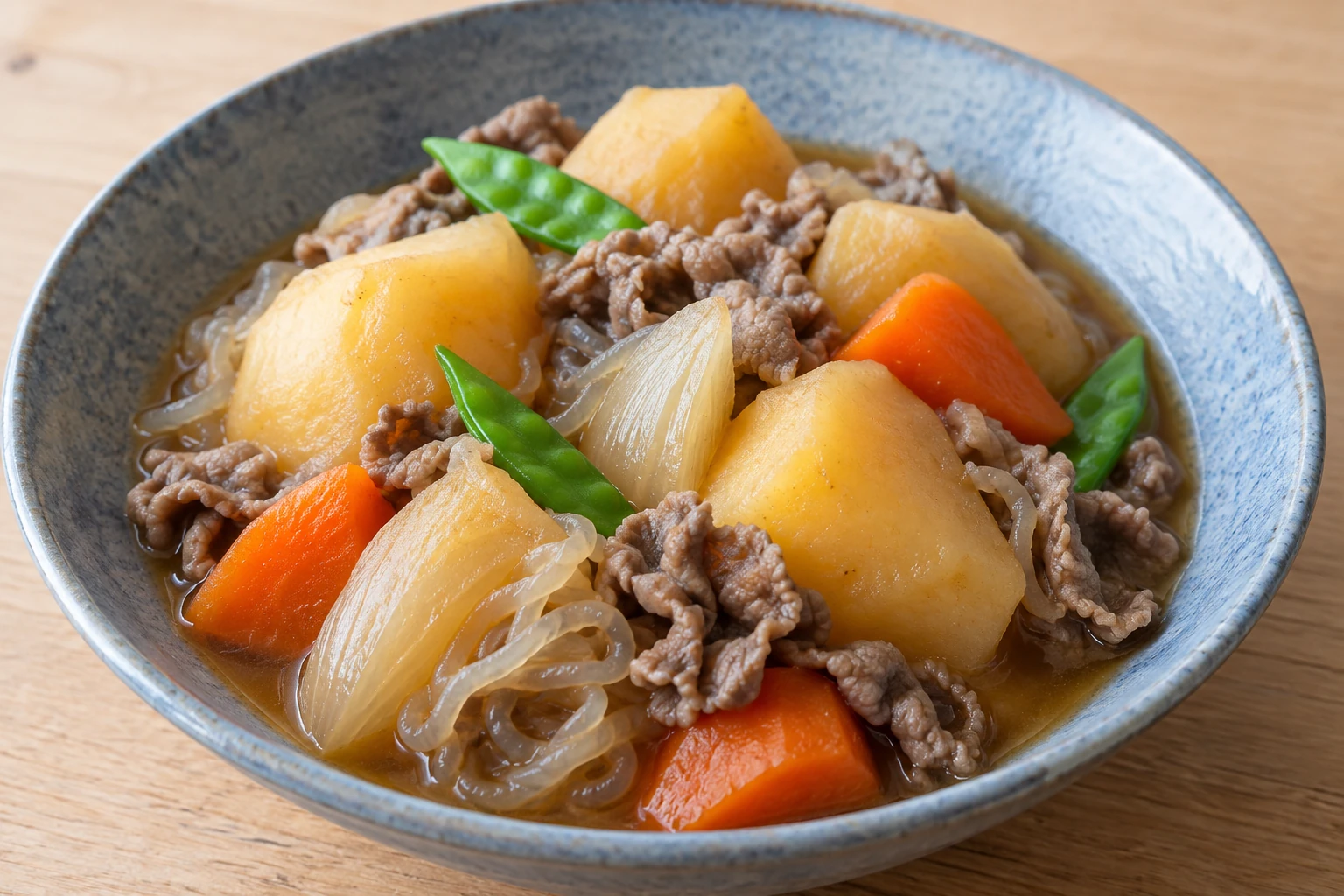
JapanMeat & potato simmer
Nikujaga: Keep the Potatoes in One Piece
A gentle simmer, thin beef and a lid resting on the food help nikujaga’s potatoes stay intact. Learn the technique and make a complete four-serving home adaptation.

ThailandPork braise
Moo Hong: Tender Pork Before a Rich Sauce
Phuket’s soy-braised pork rewards a patient simmer. Learn how to manage the liquid, understand its spice variations and cook a pepper-focused home adaptation.