
Injera firfir: sauce first, torn bread last
እንጀራ ፍርፍር
A tomato-and-berbere injera firfir adaptation for two, with clear guidance on bread texture, moisture and reheating leftovers.
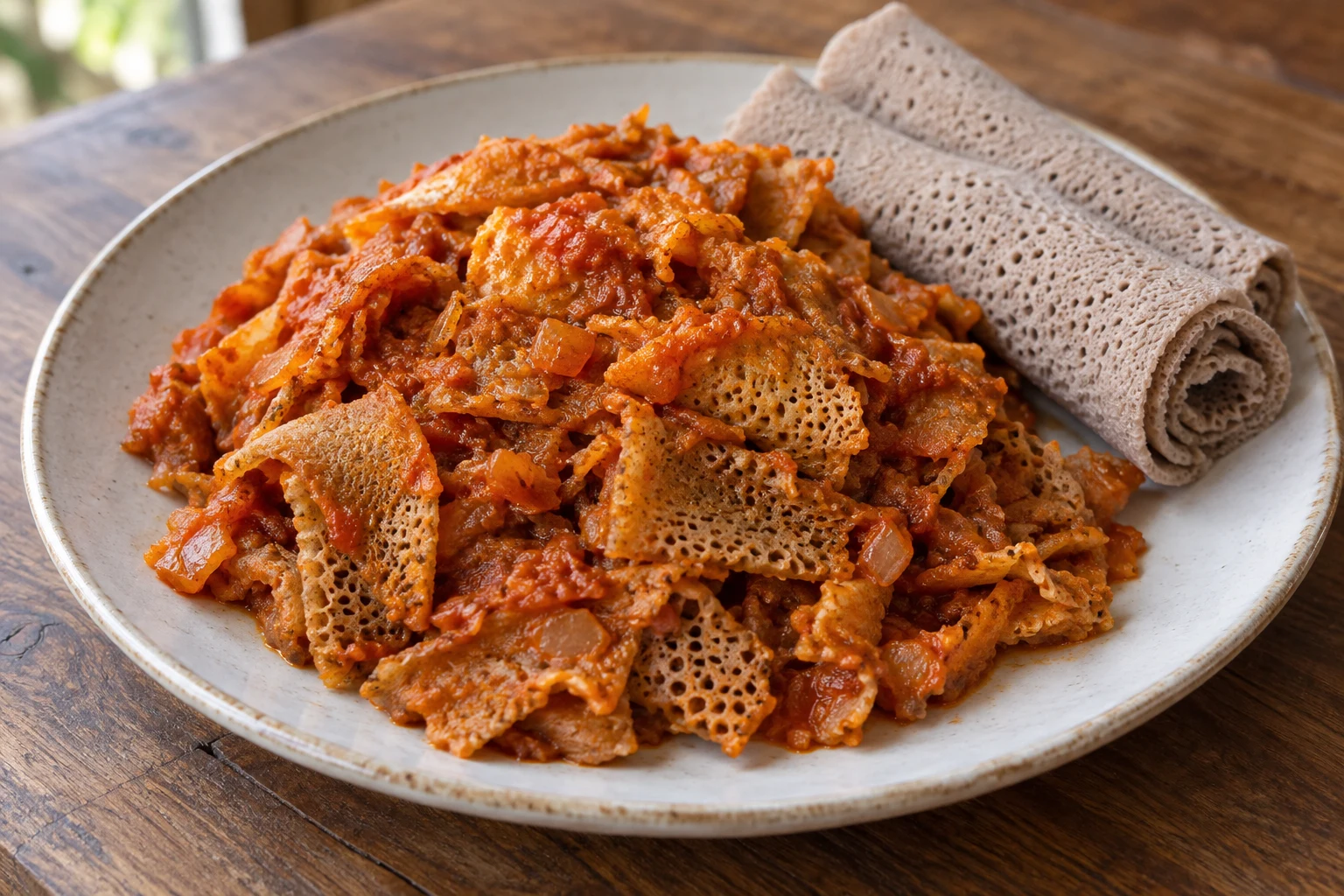
Injera becomes the meal
In injera firfir, the bread goes into the sauce. It is more than an accompaniment waiting beside the plate. The Ethiopian food preparation manual published by CIMMYT and Sasakawa describes the usual dish as sauce mixed with injera, eaten for breakfast or a snack.
The two home-cooking accounts below make that idea practical. Tsige Gidey uses torn injera with onion, tomato and berbere; Hannah Kaminsky also builds a tomato-based sauce before adding the bread. Their measured versions differ, leaving room to choose a coherent preparation for the injera you have.
Three choices before you cook
- Bread
- Ready-cooked injera
- Seasoning
- Berbere
- Fat
- Vegetable oil
Gidey allows fresh or leftover injera. Weighing it makes the recipe easier to repeat when the size of each round varies.
This recipe starts with a modest measured amount. Taste the cooked sauce before adding the bread, when seasoning is still easy to distribute.
The adaptation uses oil and omits meat, eggs and dairy. Check the purchased injera and spice ingredients to keep those choices consistent.
Recognise the bread you are adding
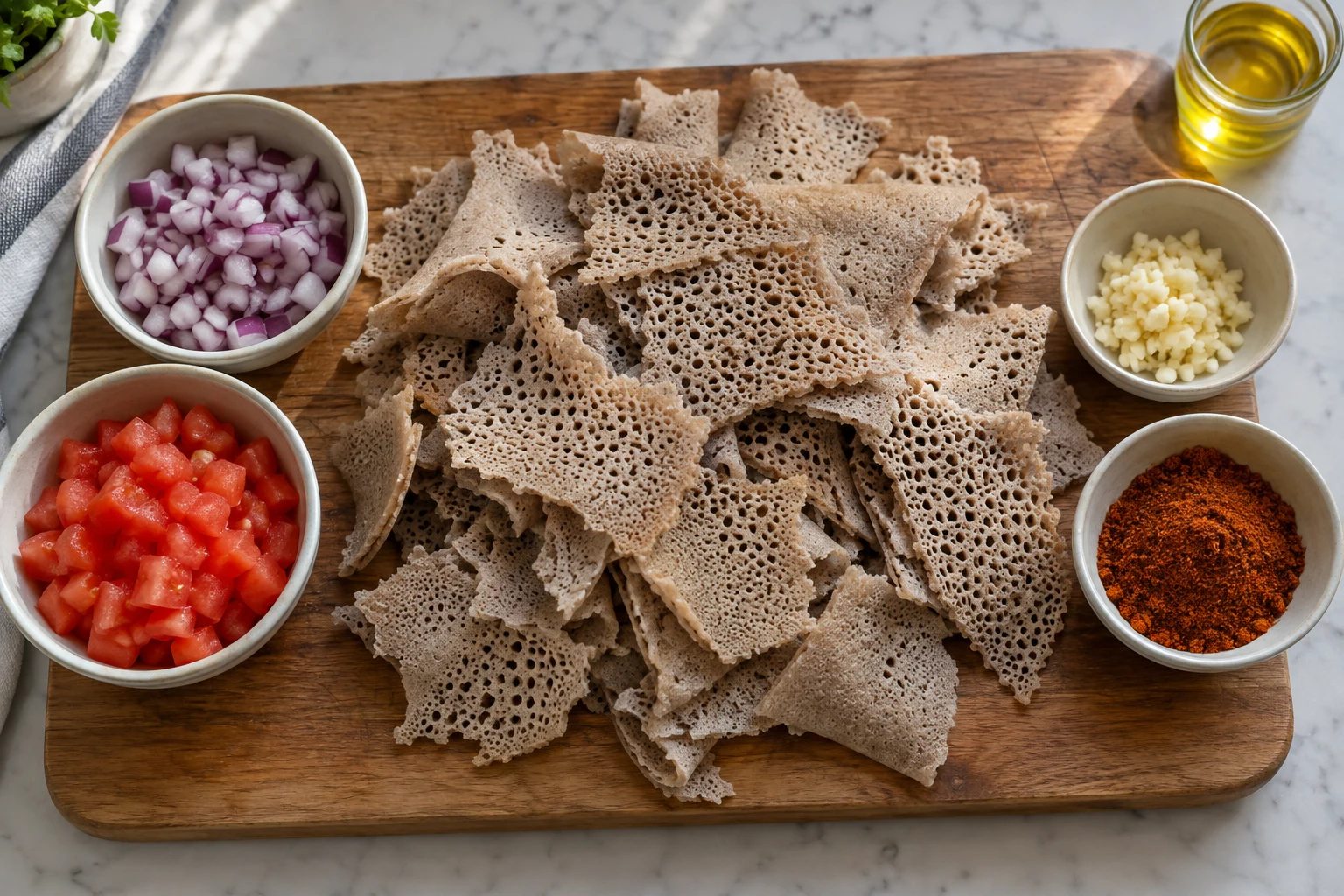
The Exploratorium describes injera as a sour, spongy flatbread whose bubbles develop during fermentation and cooking. Those small holes and soft folded pieces are visible in the ingredient photograph. They help distinguish prepared injera from a handful of flour or an ordinary firm loaf.
Its own example combines teff and wheat flour. A product labelled injera therefore needs an ingredient check if wheat is a concern; the dish name alone is insufficient.
Cook it at home
Tomato-and-berbere injera firfir
An original editorial adaptation for two small meal portions, using purchased ready-cooked injera. Cooking times are estimates; follow the texture and temperature checks.
Ingredients
For two portions
- 180 g ready-cooked injera, torn into bite-size pieces
- 100 g red onion, finely diced
- 200 g ripe tomatoes, diced
- 2 cloves garlic, minced
- 1 tbsp vegetable oil
- 2 tsp berbere spice blend
- 120 ml water, plus more if needed
- ¼ tsp salt, then adjust to taste
Method
- 1
Soften the onion
Heat oil in a wide pan over medium heat. Cook onion, stirring, for 6–8 minutes until softened. Add garlic and stir for 30 seconds.
- 2
Finish the sauce
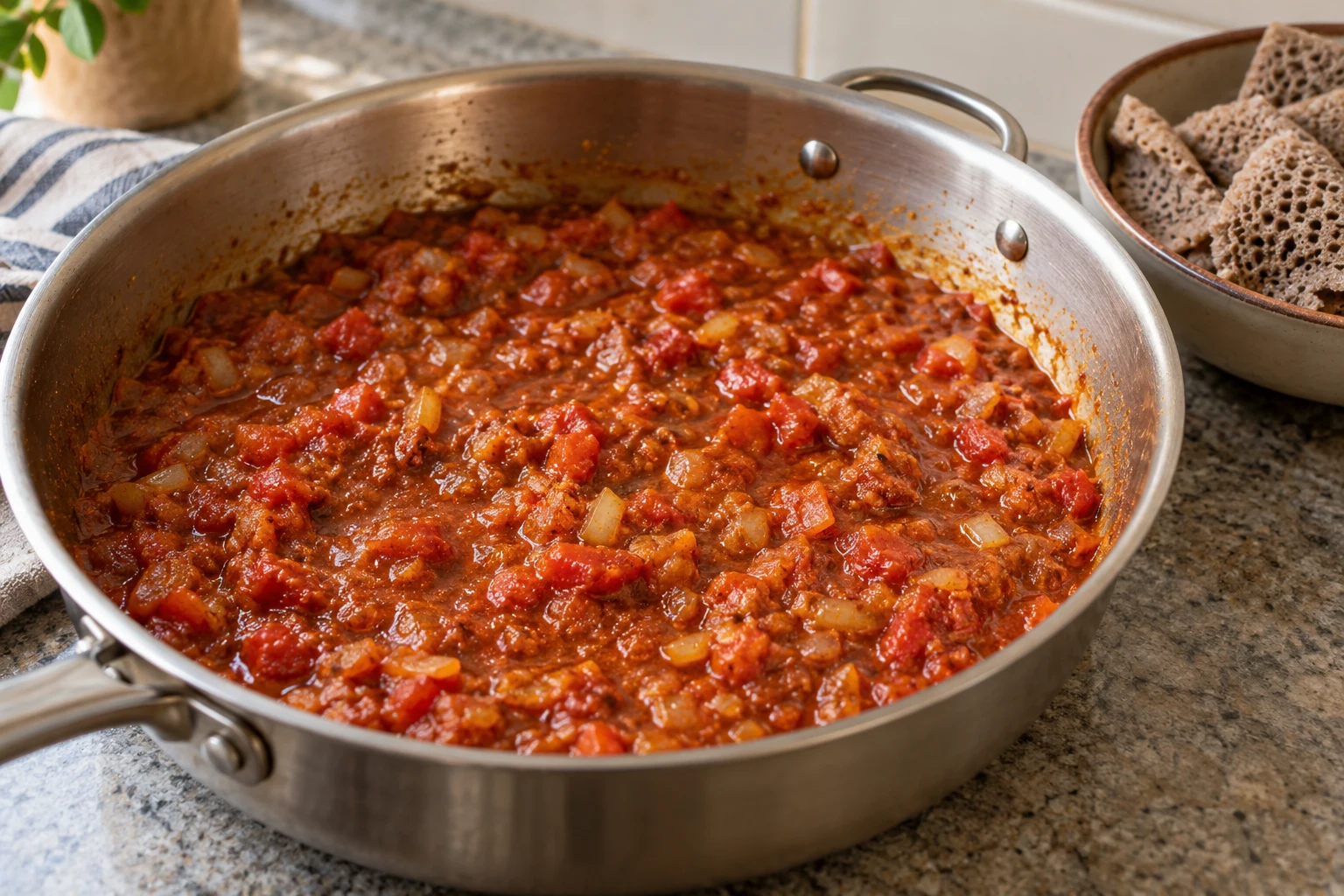
Add tomatoes and berbere; cook for 6–8 minutes, stirring until tomatoes soften. Add 120 ml water and salt. Simmer for 2 minutes, then taste.
- 3
Fold in the bread
Lower heat and fold in injera. Cook for about 2–4 minutes until coated and softened; add water 1 tablespoon at a time if dry. When using leftovers, heat the mixture to 165°F (74°C), checked with a food thermometer.
- 4
Serve
Divide between two plates and serve hot. The pieces should be moist and sauced, with some torn edges still visible.
Adjust moisture while the pieces are visible
Kaminsky’s recipe starts with a sauce that is visibly looser than the finished bread mixture. It then cooks briefly after the injera goes in. That sequence is a useful reminder to judge the sauce and the bread at different stages.
The adaptation uses fresh tomato and measured water. If the pan dries before the pieces are coated, a small splash of water helps distribute the sauce. Add it gradually and fold the pieces from the bottom. Stop adding liquid when they are moistened; the aim is a sauced bread dish with a recognizable texture.
Specify the bread when choosing a recipe
The CIMMYT and Sasakawa manual also includes a deliberately different firfir preparation made from quality protein maize flour. Its directions cook flour into the seasoned vegetables; that is a separate formulation from the ready-cooked injera version here.
This distinction makes recipe titles useful shopping information. Choose an injera recipe when your starting ingredient is finished bread. A maize-flour method requires a different ingredient and cooking sequence, so its quantities cannot simply be transferred to torn injera.
Research notes
Sources behind this article
- Tsige Gidey — Injera Firfir Original oil-based method using fresh or leftover torn injera.
- Hannah Kaminsky — Firfir For Real Original tomato-sauce preparation and brief final bread cooking.
- CIMMYT and Sasakawa — Ethiopian food preparation manual Usual injera-and-sauce definition and separate maize-flour version, pages 40–42.
- FoodSafety.gov — temperature chart Official reheating temperature for leftovers of any type.
- Exploratorium — Ethiopian injera Spongy bread texture and a teff-and-wheat formulation.
Keep exploring
More stories for your table
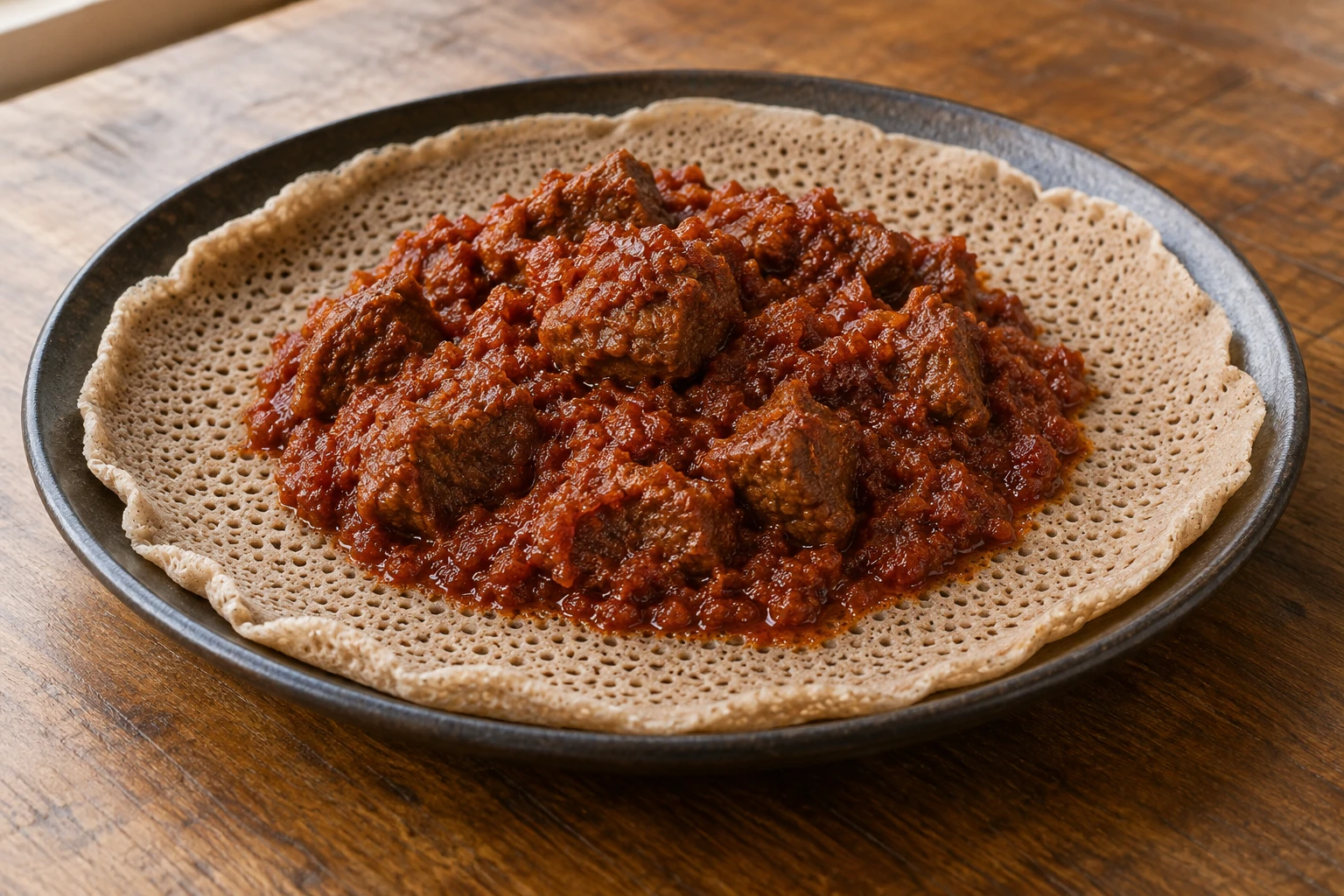
Ethiopian cuisine Beef sauté
Derek Tibs: Brown the Beef First
A beef-first home adaptation of Ethiopian derek tibs, with a guide to dry finishing, choosing a steak cut and serving injera with a separate awaze dip.
Ethiopian cuisine Beef stew
Sega Wot: Build the Sauce Before the Beef
Learn how cooked onions, gently heated berbere and a patient simmer build sega wot, with a home adaptation of Ethiopia’s spicy beef stew.
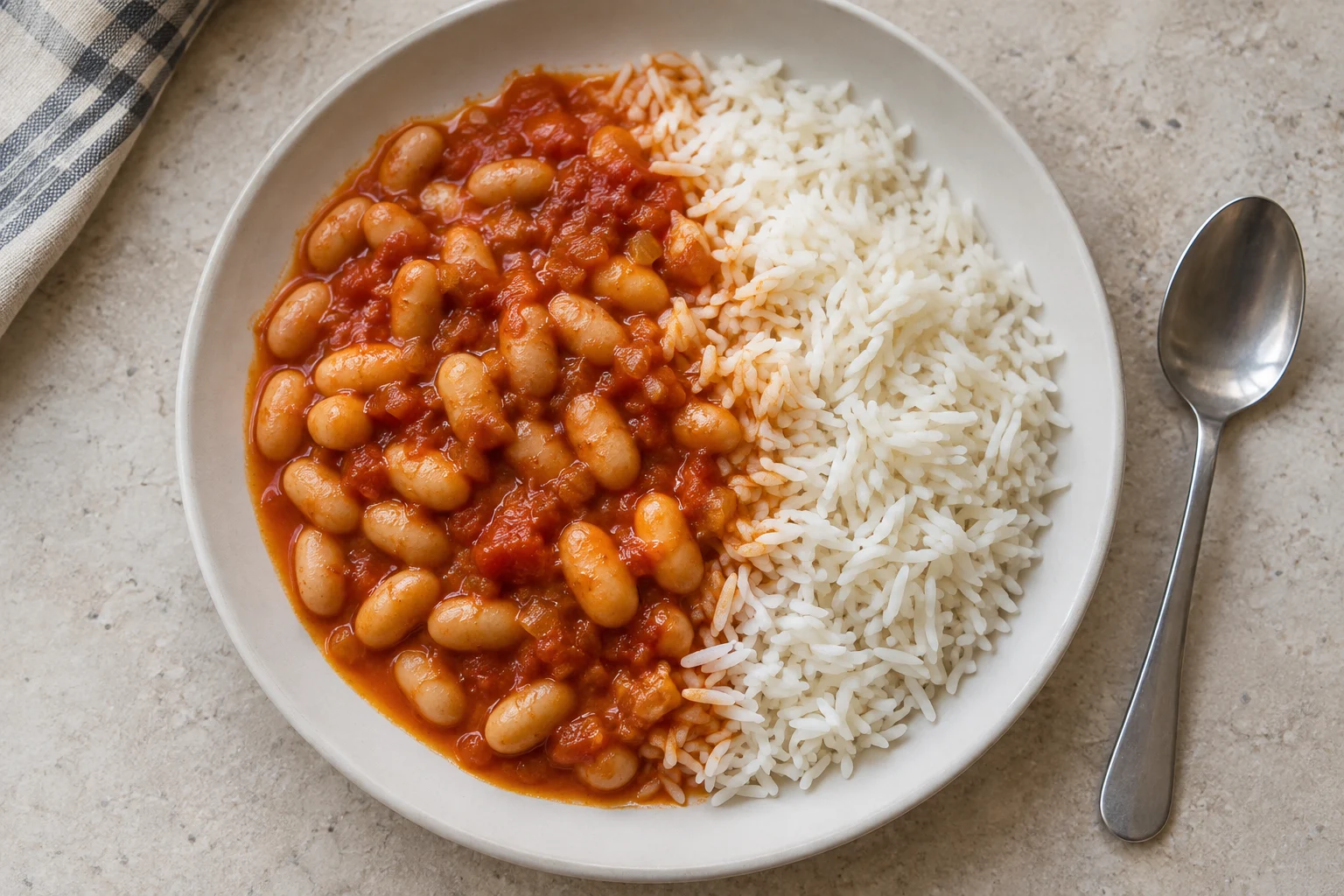
Israeli cuisine Rice and legumes
Orez ve-shu’it: rice and beans, two pots and one plate
White beans in tomato sauce meet separately cooked rice in orez ve-shu’it. Make a canned-bean adaptation and learn how to balance sauce and grains.