
Injera: read the grain, the eyes and the soft fold
እንጀራ
A guide to Ethiopian injera: teff colours and flour blends, the cooked batter called absit, one-sided covered cooking, and serving a soft porous bread.
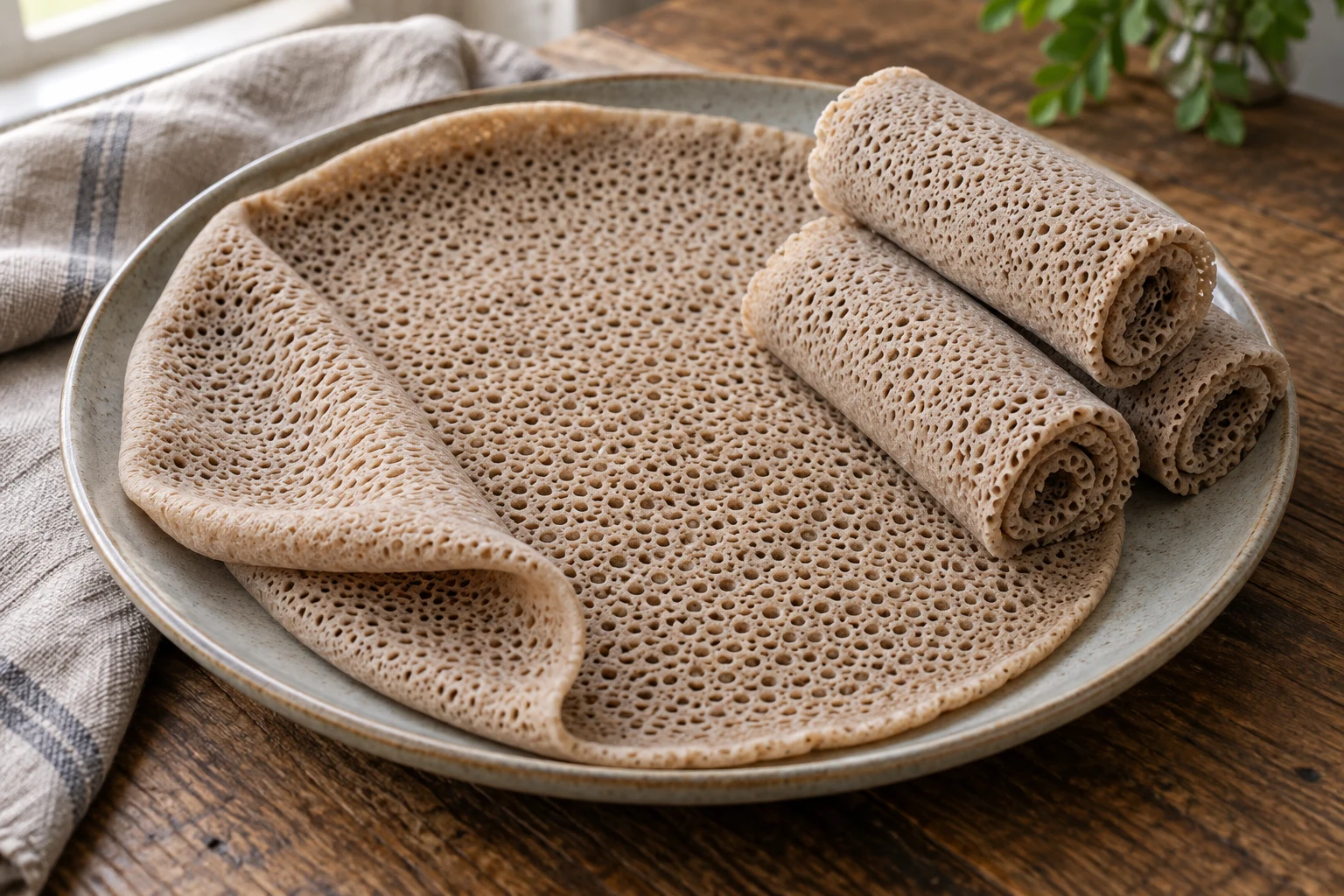
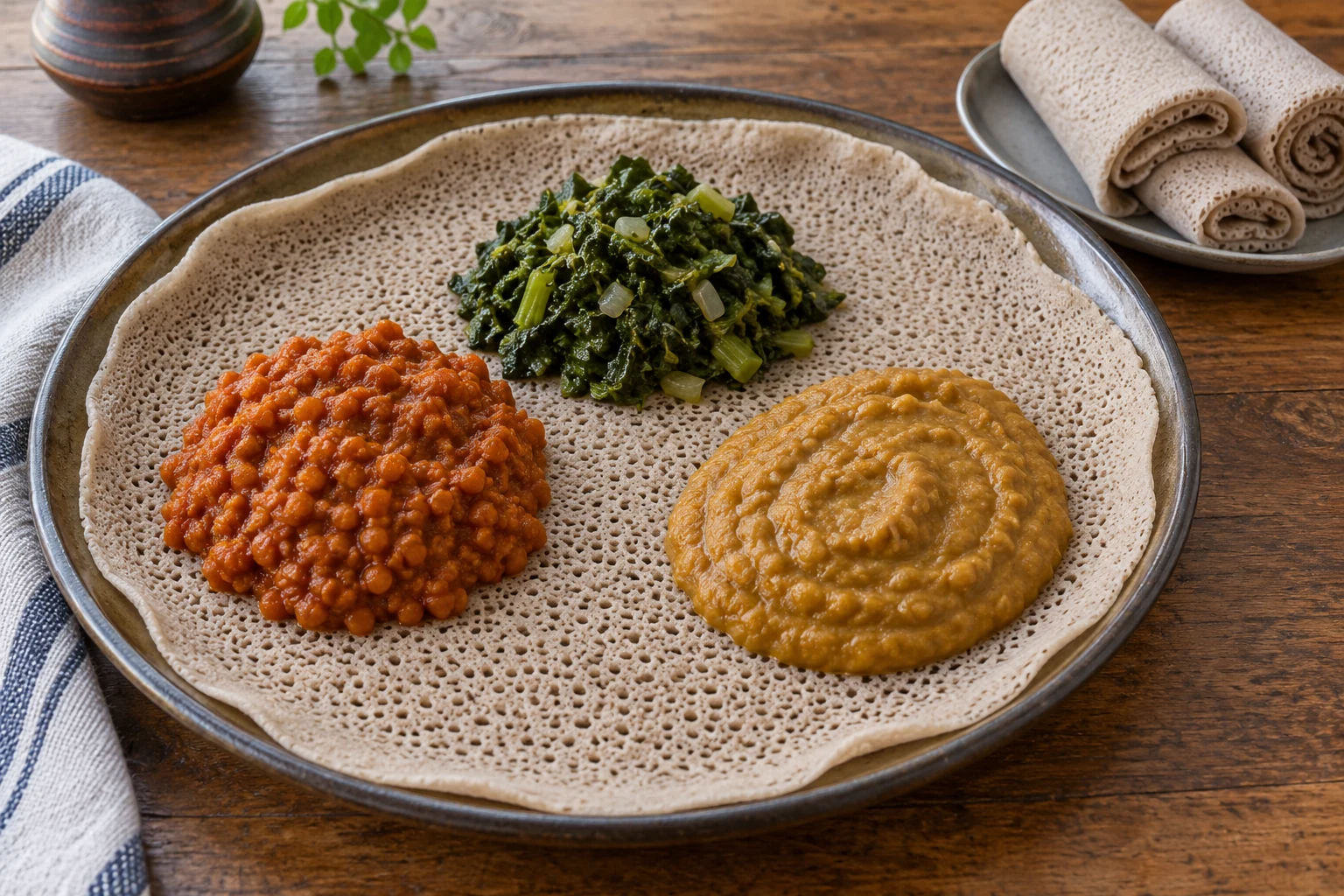
Injera earns its place at a meal through texture. The thin fermented bread has a smooth underside and a porous upper face, with enough flexibility to fold around a mouthful. It is closely associated with Ethiopian and Eritrean cooking. A round can support several dishes, while a torn piece lifts food and absorbs the sauce that would otherwise remain on a plate.
The small openings are often called eyes. They make the surface look quite different from a flatbread cooked to a crisp crust. Judge a piece by how it bends as well as how it looks: it should work with the food placed on it. Rolled extra portions are useful when a large round is already carrying the meal.
Colour and composition answer different questions
Brown or ivory teff
Teff comes in darker and lighter varieties. Maskal Teff describes brown flour as earthier and nuttier, and ivory flour as subtler. Kimberly Killebrew's dark-teff bread illustrates how deep the colour can become. A darker round is not evidence that the upper surface was toasted.
- Ask which teff flour was used.
- Compare colour without treating it as a quality ranking.
Pure teff or a blend
Some injera contains wheat or barley alongside teff; other methods use rice flour. Azlin Bloor gives a teff-and-rice version, while Elazar Tamano specifies teff. These choices change the batter and finished texture. A familiar-looking round does not reveal its whole ingredient list.
- Check the blend before substituting flour.
- Choose a complete method for that blend.
Why a small saucepan may appear
Absit is a cooked portion of batter that returns to the larger mixture. In Bloor's method, batter is stirred into boiling water to make a thick porridge, cooled, combined with the remaining batter and rested again. Maskal Teff also cooks and cools a portion before a further fermentation stage. This is part of building the bread's structure, rather than a topping or a sauce.
The published methods do not all follow one timetable. Tamano uses a teff starter with added yeast and a later addition of boiling water; Killebrew describes a different sequence. Their quantities and rests belong to their own systems. Keep the flour, starter and hydration instructions together when choosing a recipe instead of assembling a new formula from convenient parts.
Watch the surface through four stages
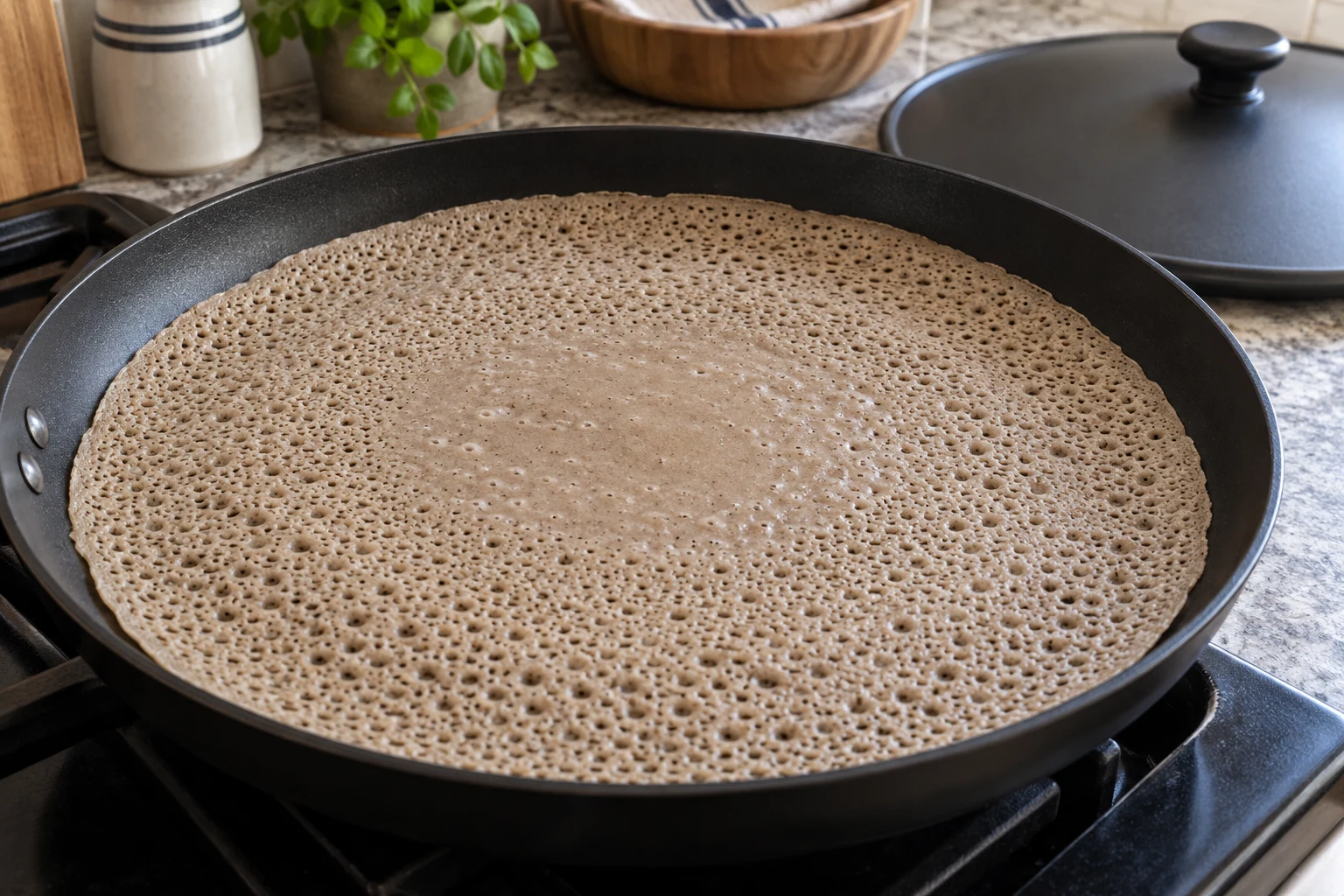
These observations explain the cooking stage; they accompany a complete batter recipe.
- 01
Prepare an even cooking surface
A broad, smooth nonstick pan is a practical home alternative to a mitad. Bloor identifies a damaged pan, insufficient heat and an overly thin batter as possible sticking problems. More oil is not the only adjustment to consider.
- 02
Pour a continuous round
Tamano and Maskal Teff pour from the outer area toward the centre in a spiral. The aim is an even thin layer with room to form pores, not a thick mound of batter. Work with the pan size specified by the method.
- 03
Let the eyes appear
The upper surface bubbles and begins to set. The bread stays on the same side while a lid traps steam to finish cooking the top. There is no need to turn it over to create a second browned face.
- 04
Lift with support
Use the wide support recommended by the recipe, handling the soft round gently. Maskal Teff cools individual breads before stacking so they do not stick together. A bread that tears during lifting may need a cooking or batter adjustment, rather than a more forceful pull.
Research notes
Sources behind this article
- Elazar Tamano at Asif A chef's teff-starter method, inward spiral pour and tahini pan grease.
- Kimberly Killebrew, Daring Gourmet Dark-teff texture, flour-blend differences and a cooked-batter stage.
- Azlin Bloor, LinsFood A teff-and-rice method with absit, cooking observations and sticking checks.
- Maskal Teff: traditional injera Teff varieties, absit, surface eyes, covered cooking and cooling before stacking.
Keep exploring
More stories for your table
Ethiopian cuisine Sautéed meat
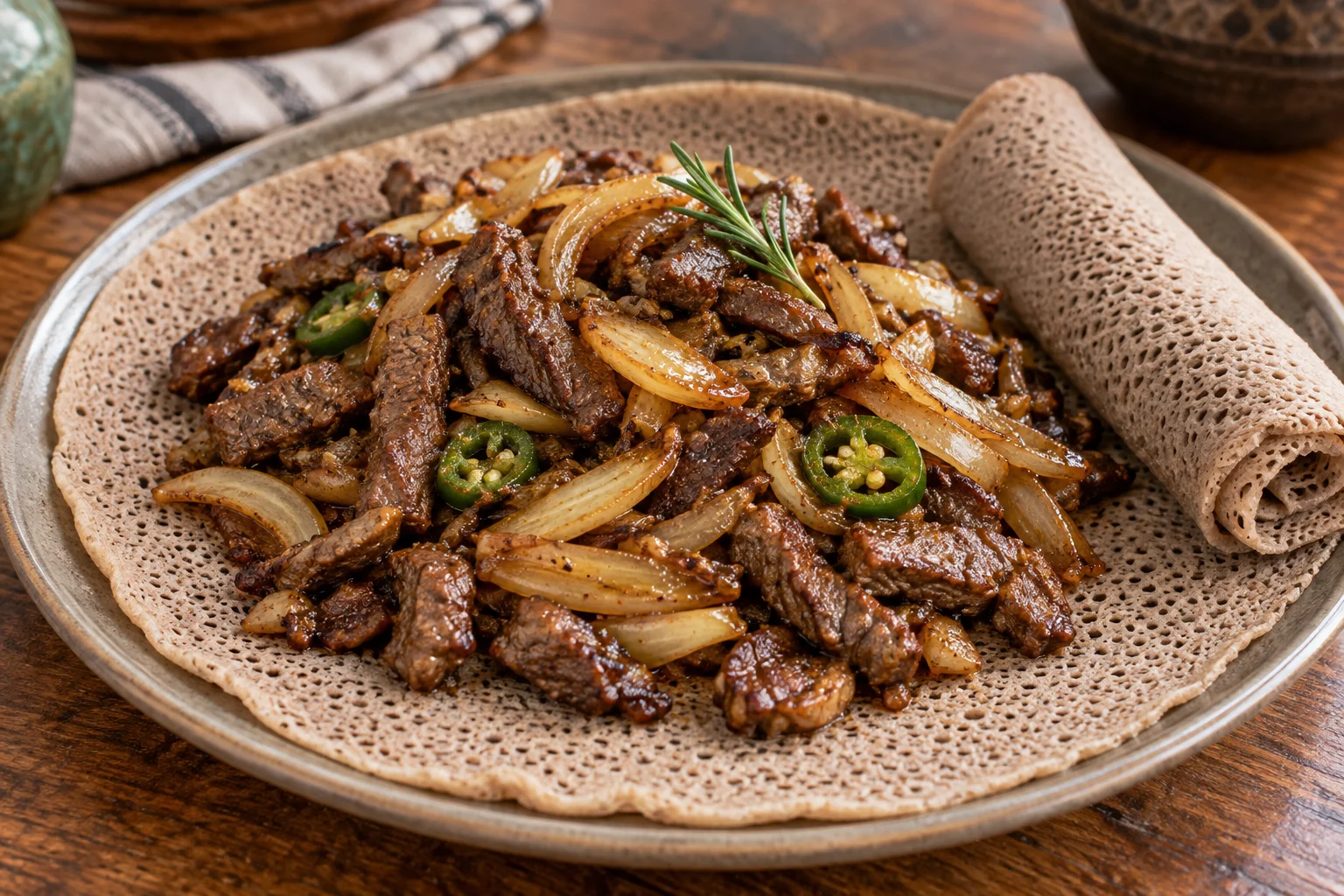
Tibs: Give the Meat Its Own Moment
Understand Ethiopian tibs through pan space, meat cuts, onion stages and awaze. Compare named cooks’ methods without treating one spice formula as universal.
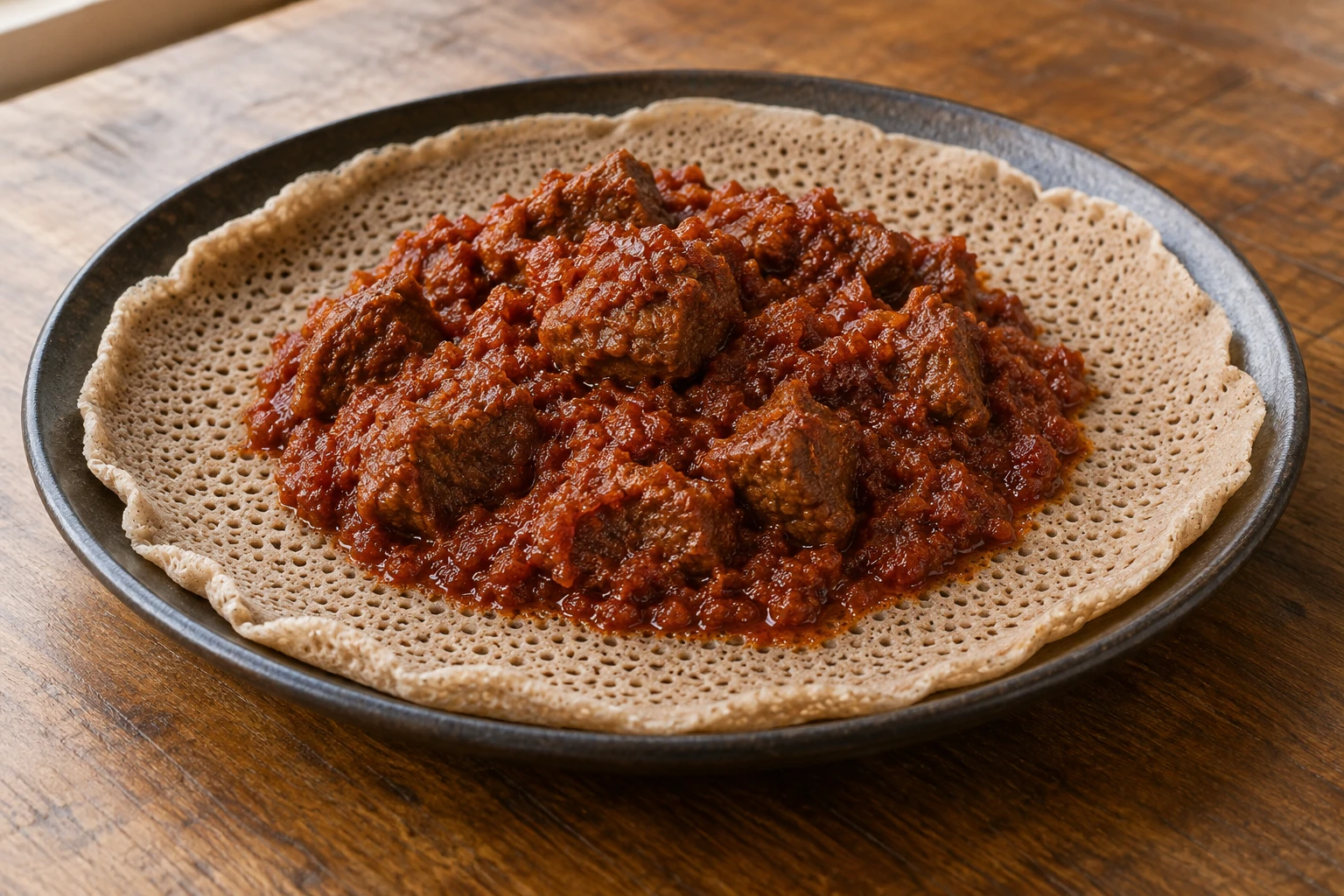
Ethiopian cuisine Beef stew
Sega Wot: Build the Sauce Before the Beef
Learn how cooked onions, gently heated berbere and a patient simmer build sega wot, with a home adaptation of Ethiopia’s spicy beef stew.
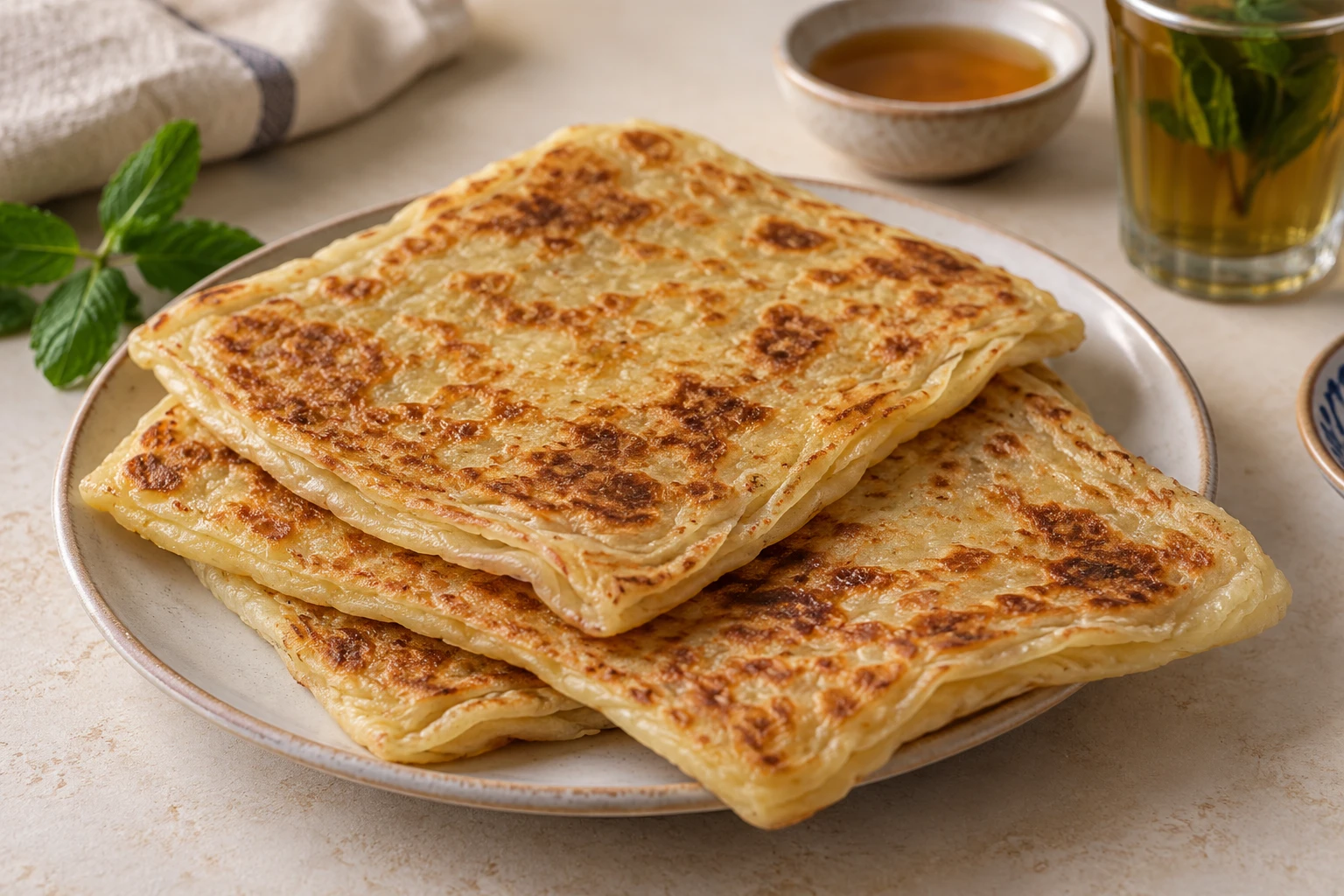
Moroccan cuisine Flatbreads
Msemen: The Layers Before the Pan
A plain msemen recipe with soft dough, thin folds and two covered rests, plus the differences between flour blends and filled versions.