
Egyptian Sweet Couscous: Loose Grains Before the Sugar
كسكسي بالسكر
The pleasure is in a spoonful that stays loose: tender wheat grains, a little buttery richness, and the sweetness and crunch added at the table.
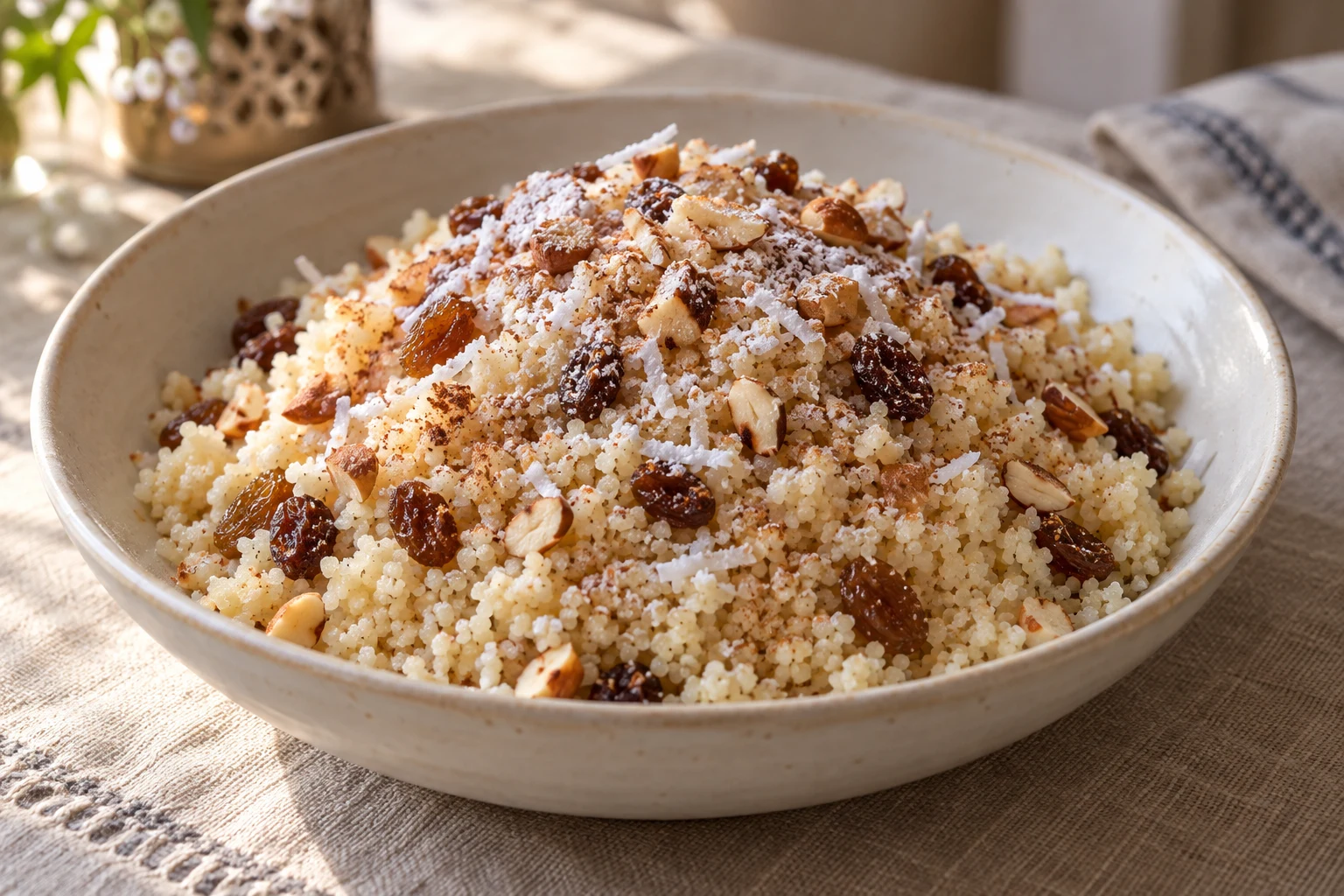
A sweet bowl, with room for variation
Egyptian sweet couscous takes a small-grained wheat preparation toward butter or ghee, sugar, dried fruit, and nuts. It can be served simply, with the grains visible beneath a pale dusting of sugar, rather than turned into a smooth pudding.
In a 2018 Cairo bakery interview, Mohamed Sobhi described couscous made from flour, oil, and ghee, with sugar and nuts offered for the sweet version. That account shows a baker's practice at the time; it does not establish one formula for every Egyptian kitchen.
Home recipes also differ. Shima's Couscous with Sugar uses water to soften the grains and finishes with butter, sugar, nuts, and cinnamon. Israa Mostafa's version cooks couscous gently in milk after it meets ghee and sugar. Both belong in the conversation, but their liquids and cooking sequences should stay separate.
Choose the route before the liquid
Made from flour
On CBC Sofra, Naglaa Elshershaby moistens flour in stages, processes the small particles, and steams them before adding ghee. This begins with forming the grains, so it is a different task from opening a packet of ready-made couscous.
Hydrated, then buttered
Shima softens couscous with water before moving it to a pan with butter. Use a suitable packaged product and follow its directions for liquid and resting time; quick-cooking products do not all need the same treatment.
Cooked with milk
Israa's recipe adds milk to a sweetened, ghee-coated base and cooks it gently. Expect a different finish from a water-hydrated bowl. A milk ratio from this method is not a universal instruction for steaming handmade grains.
Aim for tender particles, not a pressed mass
Couscous is a wheat preparation, not a tiny variety of rice. Its small particles should be tender enough to eat but still easy to separate. Large pearl couscous is a different product and will not produce the same fine-grained texture in these methods.
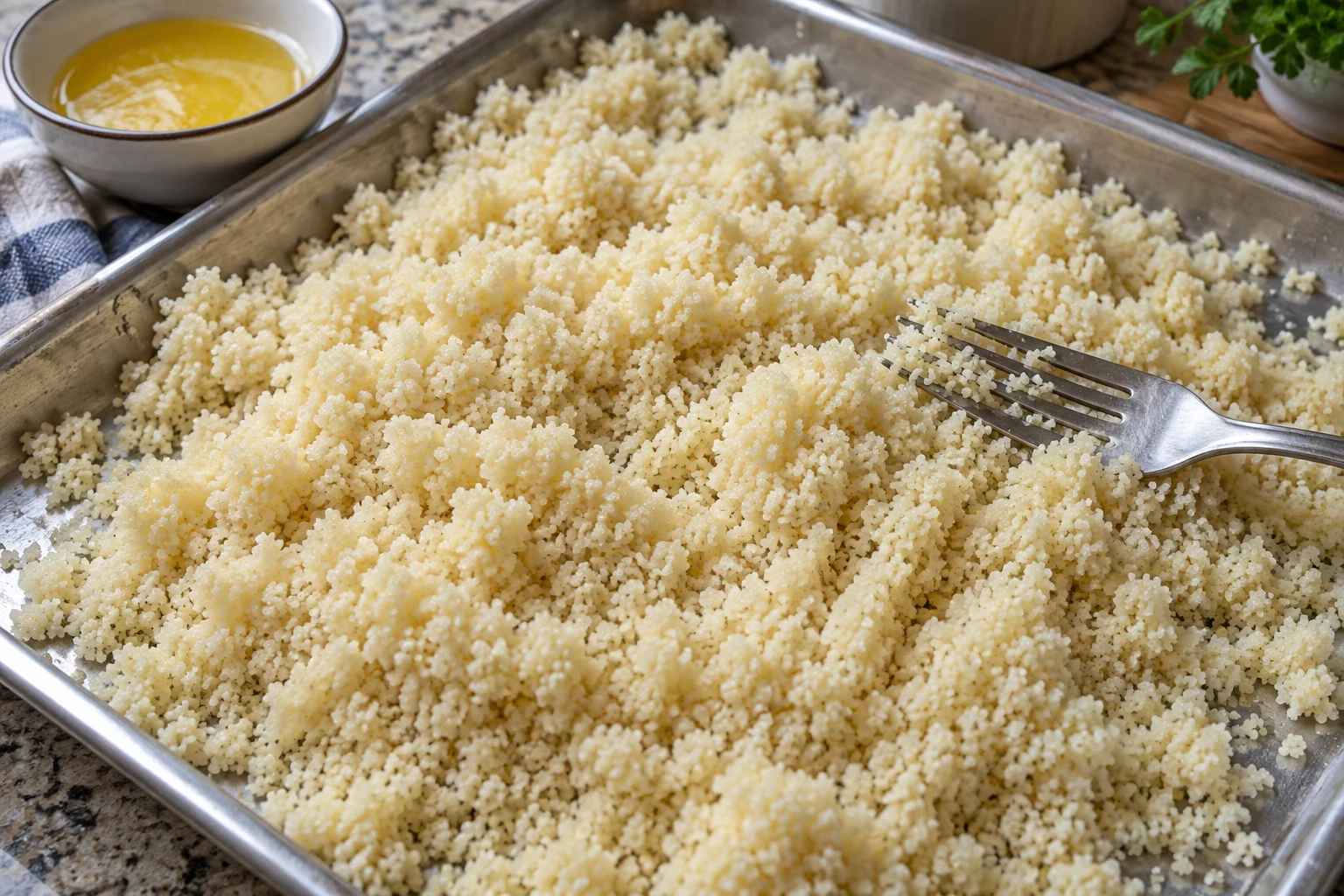
Choose one complete preparation for the grains you have. A handmade flour method needs enough cooking to remove the raw, floury character. A precooked packaged product needs the hydration its maker specifies. Adding more liquid simply because the surface looks dry can produce a heavy, sticky bowl.
Once the grains are cooked, loosen them gently with a fork. Work through the small clumps without compressing the whole batch against the pan. Butter or ghee contributes richness, but adding fat cannot fix a center that remains uncooked.
Give the toppings different jobs
Powdered sugar provides sweetness without the coarse crunch of large sugar crystals. Cinnamon adds a separate aroma. Raisins give chewy, sweet bites; chopped nuts add firmer pieces. Coconut appears in both Elshershaby's and Israa's ingredient lists, but it is an option rather than a requirement.
A light first finish leaves room to adjust at the table. Keep extra sugar in a separate bowl, particularly if raisins already make the serving sweet enough. Avoid treating every garnish you have as necessary: a short combination is easier to taste than a thick cover of toppings.
Fatafeat documents another sweet couscous preparation with steamed grains, toasted nuts, raisins, and milk alongside. That wider comparison is useful for serving ideas, without making it evidence that every Egyptian version uses its rosewater, nuts, or steaming schedule.
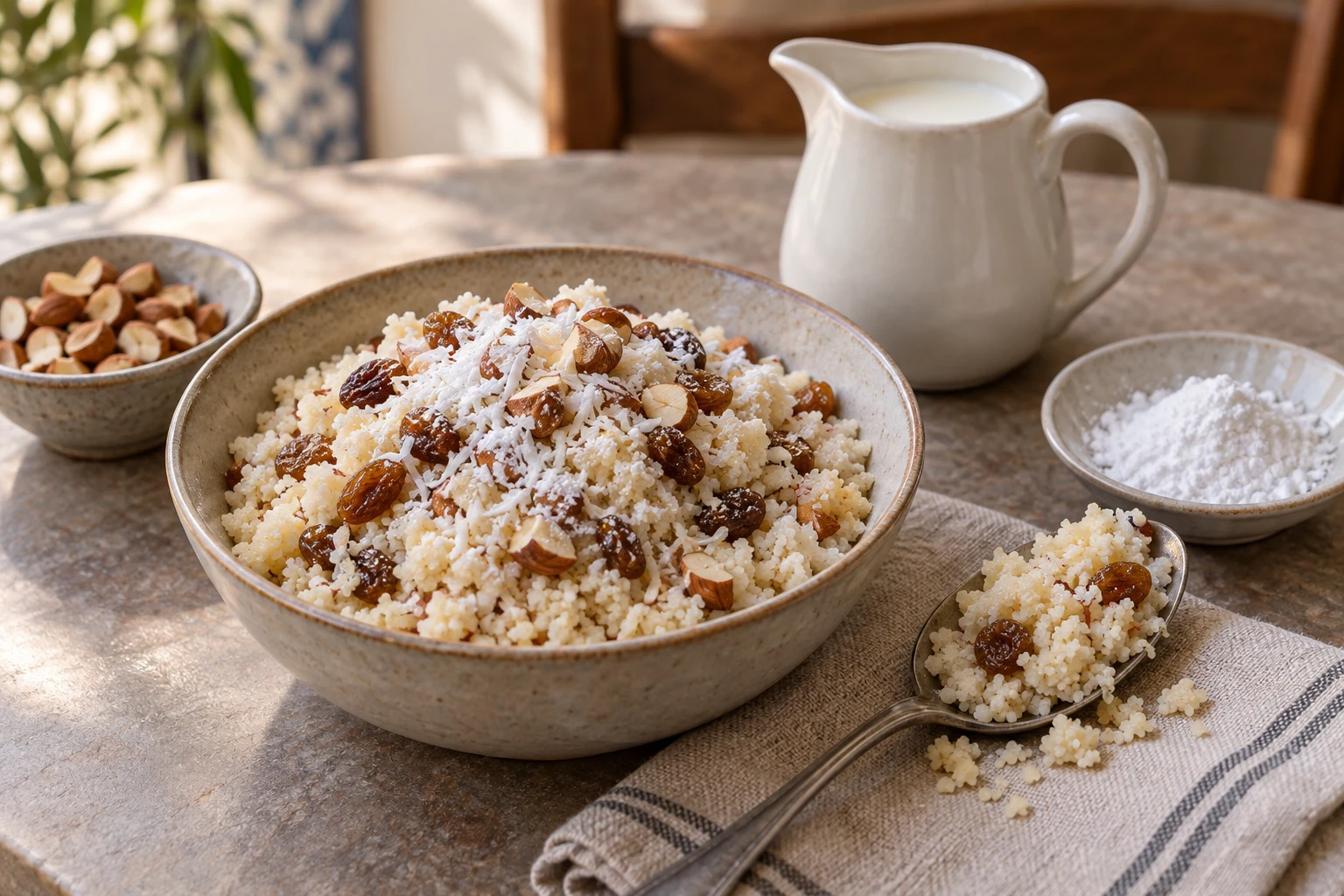
Serve in small bowls
Small portions let each spoonful carry grains and garnish together. Put milk alongside when the chosen recipe calls for it; a small addition changes the texture, while a large pour takes the bowl in a wetter direction. There is no need to hide the wheat completely under sugar.
This dish contains wheat, and butter, ghee, or milk bring dairy. Nut toppings need to be identified when serving other people. Omitting nuts changes the garnish, but does not remove wheat or dairy from the underlying preparation.
Serve freshly prepared couscous promptly. Refrigerate leftovers in small, shallow containers within two hours, or within one hour if the room or outdoor temperature exceeds 90°F/32°C. Keep the refrigerator at 40°F/4°C or colder; a milk-based bowl should not spend the afternoon on the table.
Research notes
Recipes and first-hand accounts
These sources document flour-made, hydrated, and milk-cooked approaches. Follow one complete method for quantities; the bakery account adds context without turning a single shop's practice into a national rule.
- CBC Sofra: Naglaa Elshershaby's couscous The chef's original flour-made, steamed method, finished with ghee and offered with sugar, raisins, coconut, and milk.
- Egyptian Cuisine and Recipes: Shima's Couscous with Sugar A named contributor's water-hydrated version, with butter and a sugar, nut, and cinnamon finish.
- Cookpad: Israa Mostafa's sweet couscous Egyptian contributor's ghee, sugar, and milk method, with nuts and raisins for serving.
- Sada El Balad: Cairo couscous baker interview First-hand reporting from 2018 with bakery owner Mohamed Sobhi; useful for flour-made couscous and sweet serving context.
- Fatafeat: Sweet couscous with nuts A broader sweet-couscous comparison for separating grains, nut toppings, and milk served alongside; not an Egyptian origin claim.
- FoodSafety.gov: Four steps to food safety Official guidance on prompt refrigeration, shallow containers, and refrigerator temperature.
Keep exploring
More stories for your table
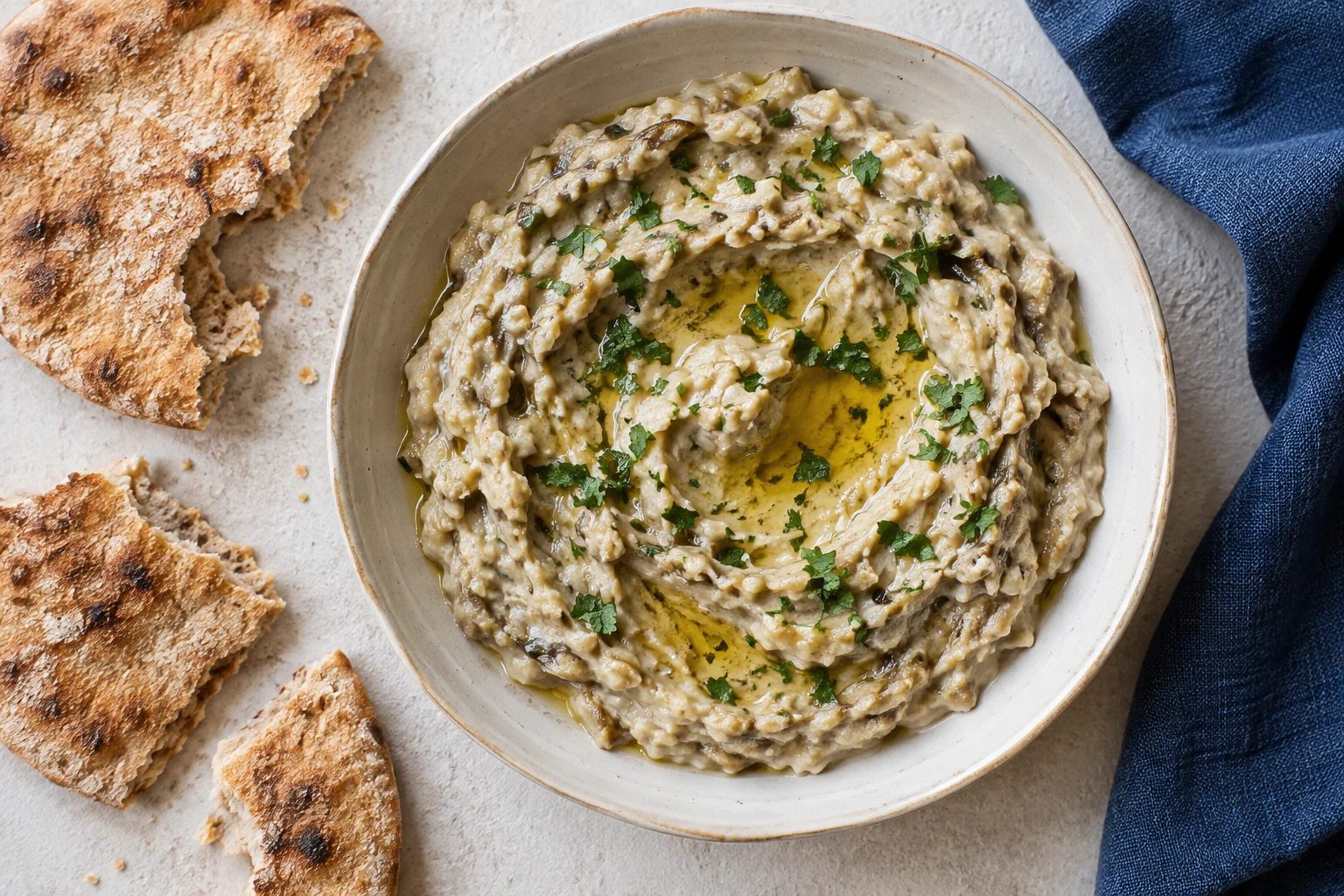
Egyptian cuisine Eggplant dip
Baba ghanoug: Egyptian eggplant with tahina
Roast until the eggplant collapses, drain its flesh, then fold in tahina, lemon and garlic. A practical oven adaptation of Egyptian baba ghanoug.
Egyptian cuisine Chilled desserts
Egyptian milk pudding: a quiet base with room for contrast
Mehalabeya turns milk into a cool, spoonable dessert. Its character comes from the thickener, a restrained aroma, and what you add at the surface.
German cuisineAustrian cuisine Sweet pancake
Kaiserschmarrn: Bake First, Tear Later
Understand Kaiserschmarrn through its three transformations: a lofty batter, a set pancake, and tender torn pieces finished with butter and sugar.