
Egyptian Molokhia: Minced Leaves and a Golden Garlic Finish
ملوخية
A finely chopped green leaf thickens the broth, while golden garlic brings the aroma. Add liquid gradually to find the texture you like.
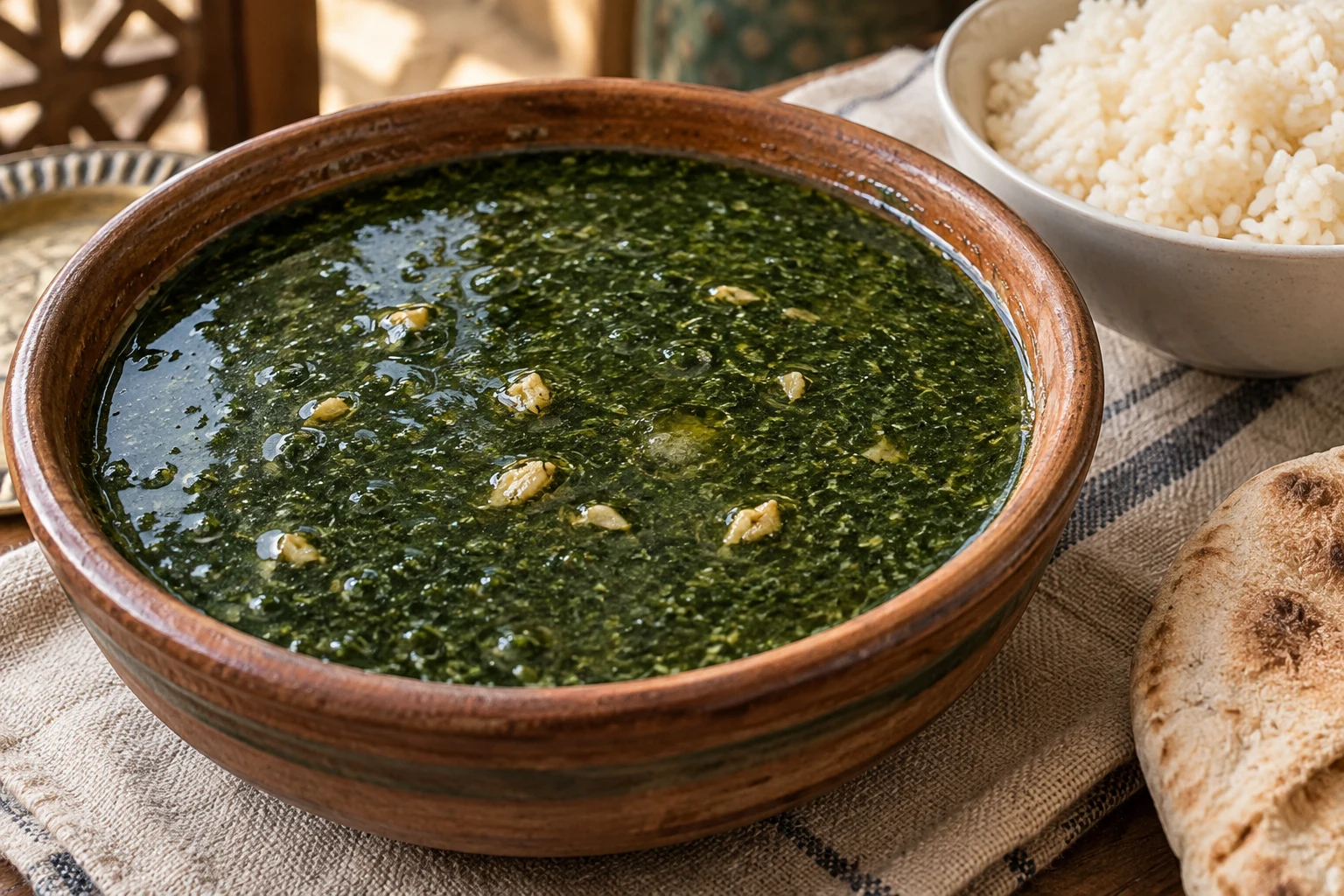
A leaf and a dish
Begin with the minced form
Molokhia names both the jute-leaf ingredient and dishes made with it. In the Egyptian preparation explored here, the leaves are finely minced and cooked in broth. The result is green, savory and naturally viscous, with tiny leaf pieces distributed through the liquid.
Fresh leaves need washing, draining and careful mincing after the stems are removed. A packet of frozen minced molokhia offers a convenient starting point. Read the description closely: a bag of whole leaves gives a different texture, and dried leaves need a method designed for them.
Three choices shape the bowl
- Broth
- Flavor before leaves
- Consistency
- Loosen gradually
- Finish
- Golden garlic
Taste it first; the mild greens do not disguise a weak or oversalted base.
Hold some hot broth back instead of adding all the liquid at once.
Cook the aromatic finish attentively so it stays fragrant and avoids bitterness.
Cook it at home
Easy minced-leaf molokhia
An original four-serving vegetarian home adaptation using frozen minced leaves and vegetable broth. Many Egyptian preparations use chicken or rabbit broth; choose a flavorful vegetable broth for this version. Rice or bread is prepared separately.
Ingredients
Leaves and broth
- 400 g frozen minced molokhia
- 750 ml good vegetable broth, with up to 250 ml extra held hot
- To taste salt
Aromatic finish
- 2 tablespoons butter
- 5 cloves garlic, finely minced or crushed
- 2 teaspoons ground coriander seeds
- To serve prepared rice or flatbread
Method
- 1
Warm and taste the broth
Bring 750 ml broth to a simmer in a medium heavy saucepan. Taste it before adding salt, particularly if it is commercially prepared. Keep the extra broth hot beside the stove.
- 2
Cook the minced leaves
Prepare the frozen molokhia according to its packet directions and add to the broth. Stir gently until fully dispersed, with no frozen lumps. Cook through at a gentle simmer following the packet’s time; this commonly fits within about 15–20 minutes for the soup stage. Keep the mixture moving gently rather than boiling it aggressively.
- 3
Find the consistency
Lift a spoonful: the soup should pour in a steady flow, with leaves suspended through it. If it is too dense, add reserved hot broth in small splashes, stirring between additions. Stop when it flows comfortably; do not dilute it automatically.
- 4
Make the garlic finish
Near the end of cooking, melt the butter in a small pan over medium-low heat. Add the garlic and stir until fragrant and pale gold, watching closely. Stir in the ground coriander for about 20–30 seconds, then remove the pan from the heat before the garlic darkens.
- 5
Combine and serve
Carefully stir the hot garlic mixture into the cooked molokhia. Taste for salt once more and serve hot, with the prepared rice or bread. Spoon the soup over rice at the table if you like that combination.
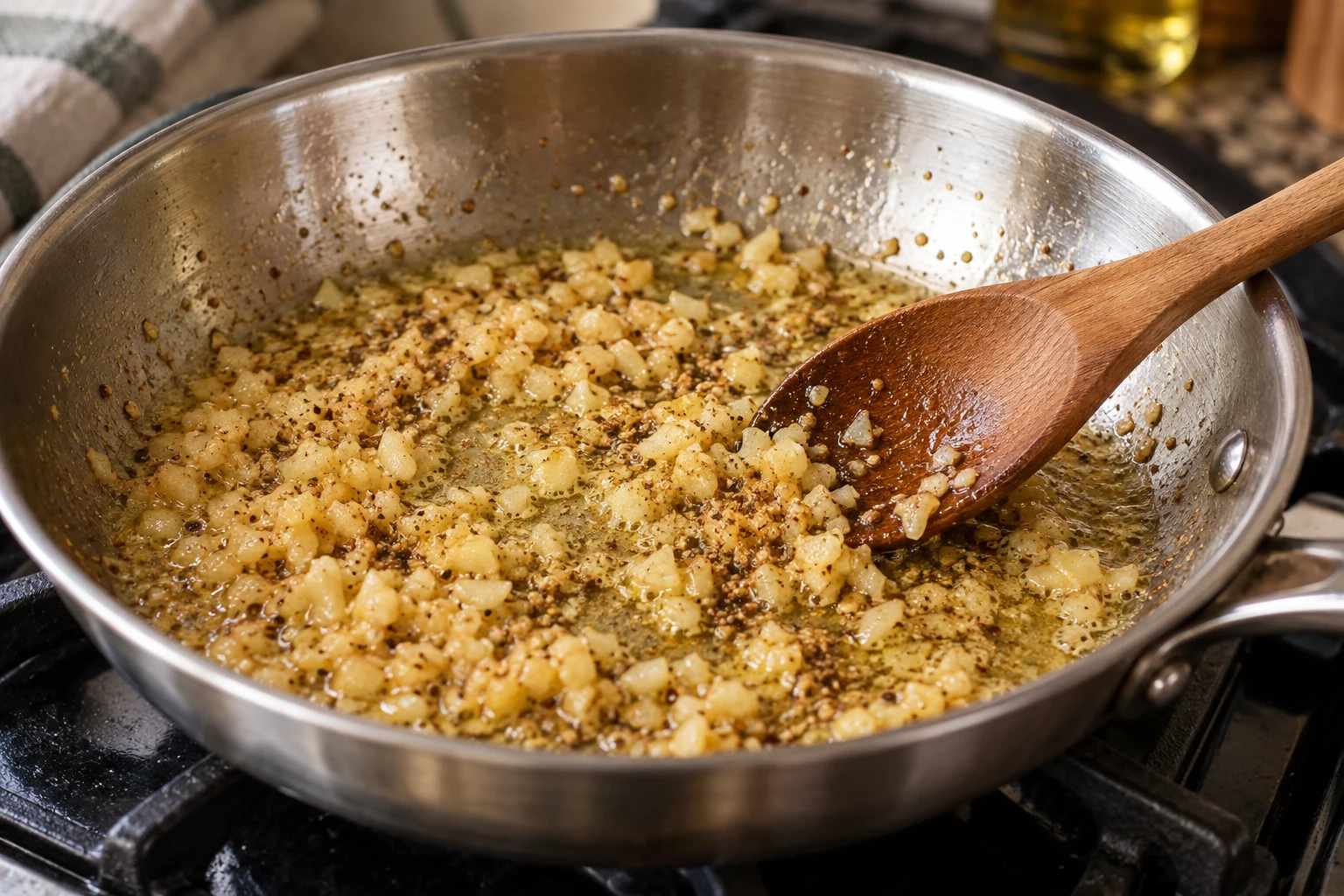
The finish has more than one family method
Amira Ibrahim describes both a separate garlic-coriander finish from her family’s earlier method and a convenient one-pot approach. She identifies tomato sauce and baking soda as optional choices, rather than ingredients every Egyptian cook uses.
Marc Matsumoto also uses garlic and ground coriander in an aromatic taqliya. Mary Sherif’s Teta Loula guide, meanwhile, describes a garlic tasha without coriander or lemon in her family’s pot. The recipe above chooses a garlic-coriander finish; it does not turn that preference into a rule for every household.
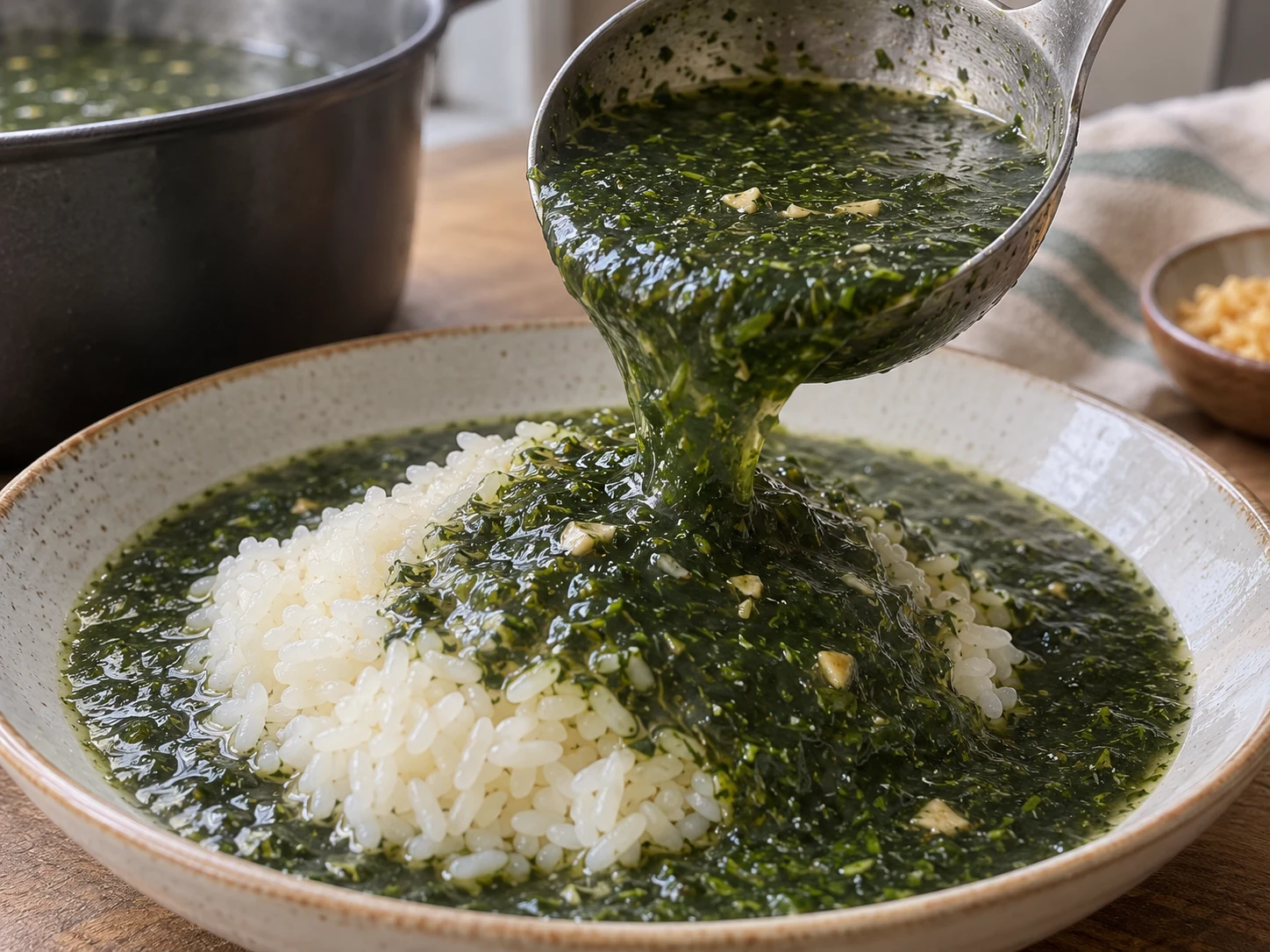
Let the rice take up the soup
Arwa at OfRecipes serves molokhia with Egyptian vermicelli rice, salad and a chosen protein, or with bread. Plain rice also makes the soup’s texture easy to appreciate: the grains catch a little liquid while the glossy greens remain visible around them.
Expect some natural slipperiness from the leaves. The goal is not to eliminate that characteristic with extra starch, cream or prolonged reduction. Adjust the broth, keep the garlic aromatic, and let the dish retain the leaf texture that defines this preparation.
Research notes
Sources and household variations
Four independent cooks informed the ingredient handling, texture guidance and clearly identified family variations.
- Amira’s Pantry: Egyptian molokhia Amira Ibrahim’s frozen-leaf preparation, earlier family method and notes on optional ingredients.
- No Recipes: Egyptian-style molokhia Marc Matsumoto’s fresh minced-leaf preparation and garlic-coriander taqliya.
- Teta Loula: Texture, tasha and troubleshooting Mary Sherif’s family guide to gradual broth adjustment and a garlic finish without coriander.
- OfRecipes: Egyptian molokhia Arwa’s separate garlic-finish method and serving choices with rice, bread and salad.
Keep exploring
More stories for your table
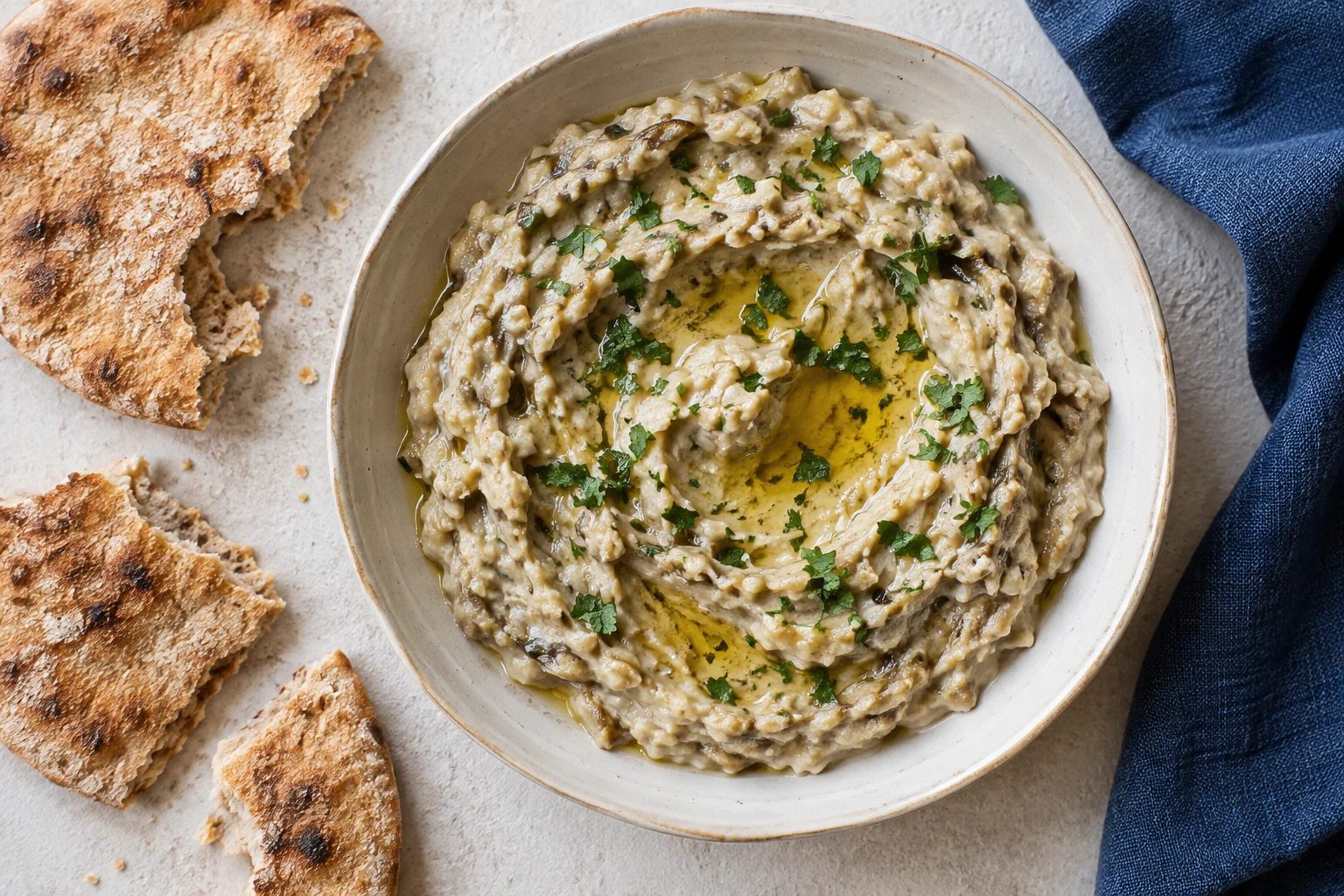
Egyptian cuisine Eggplant dip
Baba ghanoug: Egyptian eggplant with tahina
Roast until the eggplant collapses, drain its flesh, then fold in tahina, lemon and garlic. A practical oven adaptation of Egyptian baba ghanoug.
Egyptian cuisine Sweet couscous
Egyptian Sweet Couscous: Loose Grains Before the Sugar
Butter, powdered sugar, raisins, and nuts turn couscous into an Egyptian sweet dish. Choose a cooking route that matches the grains and finish each serving lightly.
Moroccan cuisine Soups
Berkoukech: Moroccan Mhamsa Soup
A Moroccan soup built around round mhamsa pasta, with a complete vegetable-and-chickpea adaptation and advice for keeping plenty of broth.