
Mahshi kromb: preparing cabbage for rice and herbs
محشي الكرنب
A guide to Egyptian mahshi kromb: prepare pliable cabbage pieces, choose an aromatic rice filling, and match the stock and fat to the meal you want.
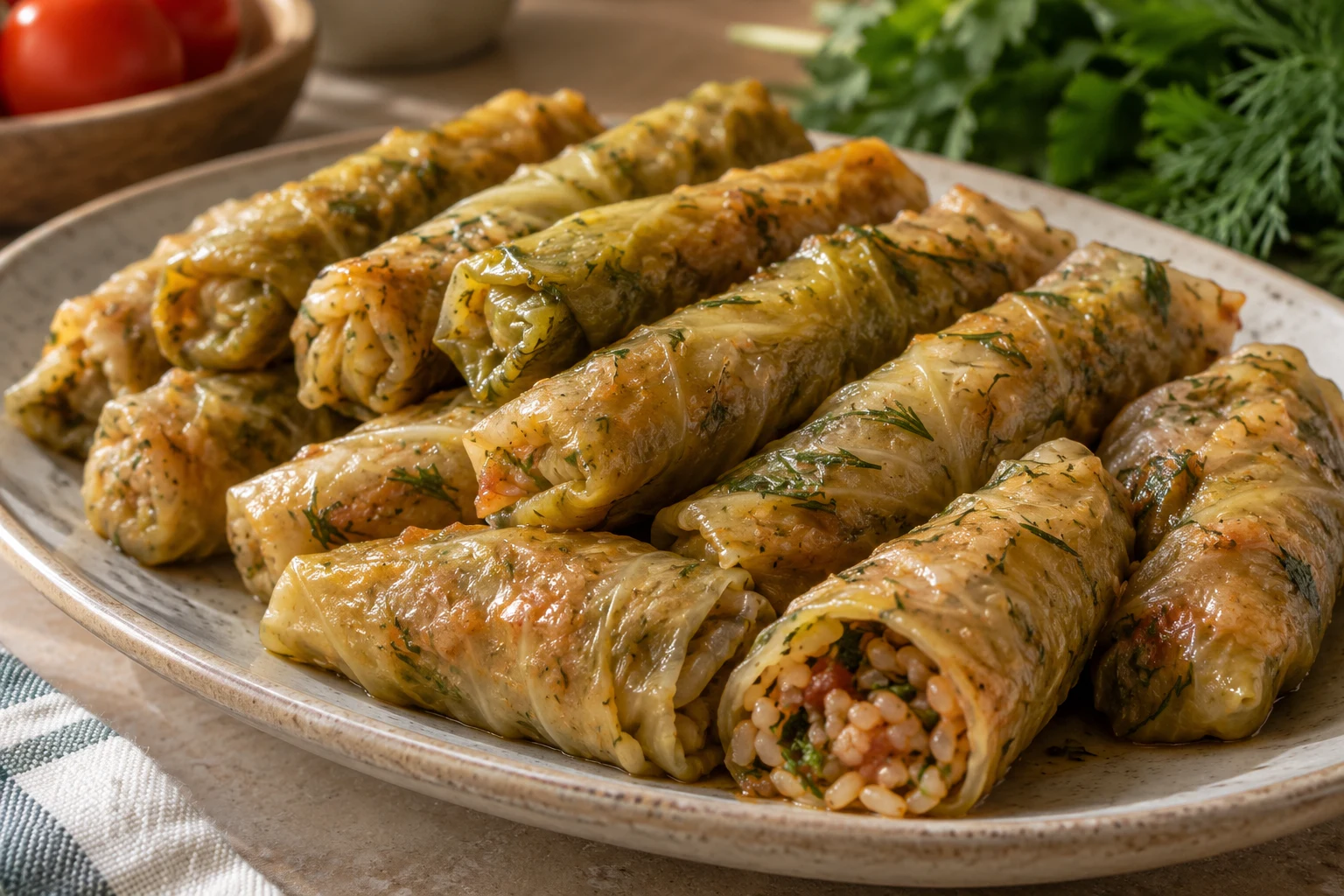
A family dish with a practical starting point
In an interview with the American University in Cairo Press, cookbook author Dyna Eldaief names mahshi kromb among the Egyptian dishes she wanted to learn from her mother before leaving home. She describes the dish as cabbage rolls with dill. That personal account gives the name a concrete place in a family kitchen, rather than requiring an elaborate origin legend.
For the rice-filled versions considered here, the practical starting point is the cabbage leaf. A flexible piece with its thick rib removed is easier to turn into a small roll. Prepare those pieces first, then decide which complete filling and cooking method to follow.
Three jobs before the rolling begins
- 01
Soften the leaves
Amira Ibrahim removes the core and boils the whole head, lifting the softened leaves away with tongs. Obi of Middle Eats separates the leaves first and boils a few at a time. Both approaches lead to leaves that can bend around the filling.
- 02
Let them cool, then remove the ribs
Ibrahim cools the leaves before handling and cuts away the thick ribs. Keep suitable flat leaf sections for wrapping and reserve the ribs and torn pieces for lining the pot.
- 03
Cut pieces for small rolls
Obi cuts the prepared leaves into squares. Ibrahim cuts strips into smaller sections according to the desired roll size. In both methods, a large whole leaf becomes several manageable wrappers instead of one oversized parcel.
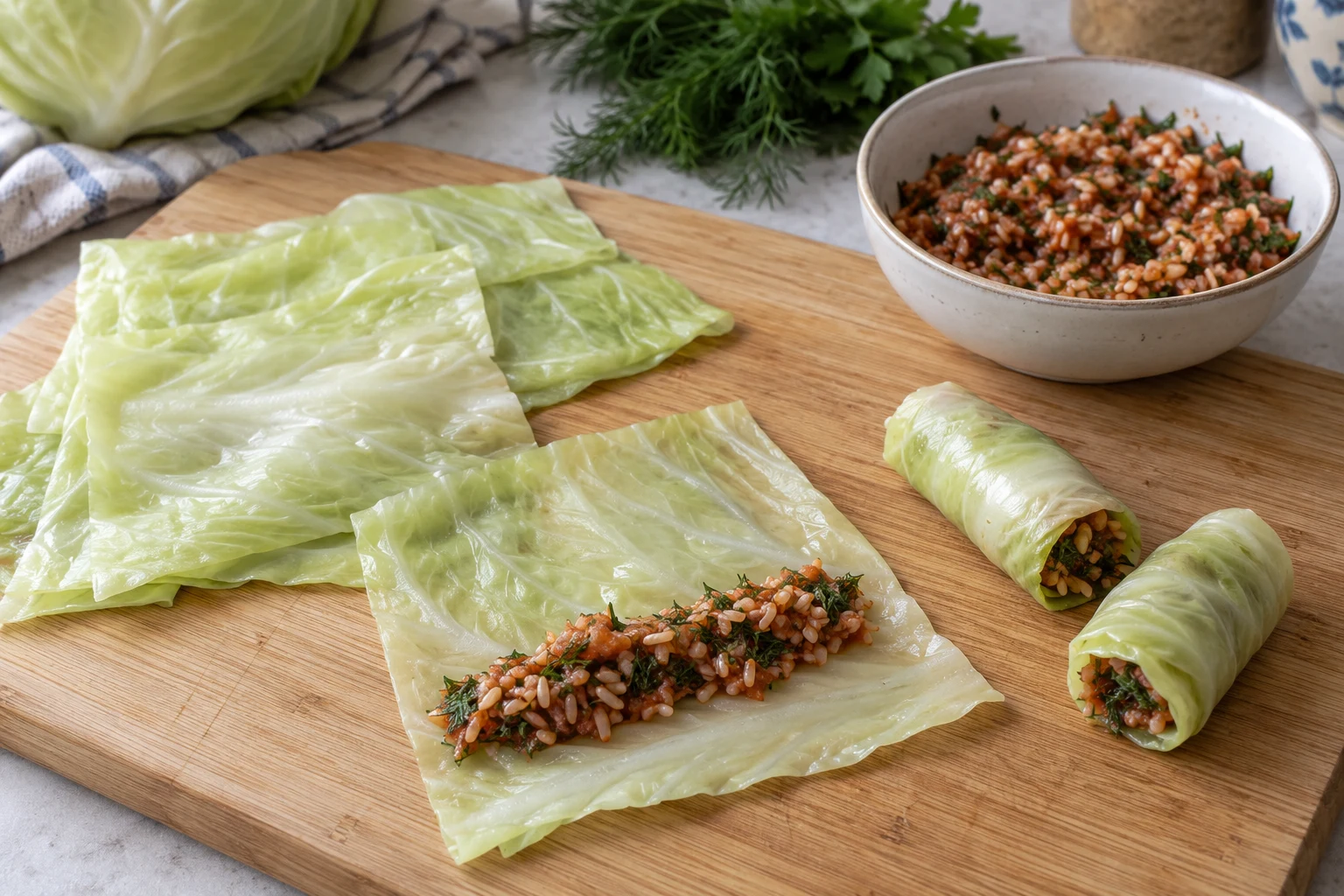
Fresh herbs are part of the filling
Obi's Egyptian recipe combines uncooked medium-grain rice with onion, tomato, parsley and dill. The mixture is spread in a small line and enclosed by the leaf. This makes the herbs part of the interior of each roll, rather than a finishing decoration scattered over the platter.
An Egyptian newspaper account of Naglaa El Shershaby's method also includes dill and parsley, alongside fresh coriander. It adds grated carrot and courgette to the rice mixture. Those extra vegetables belong to that particular recipe; they are not requirements for every version of mahshi kromb.
El Shershaby's reported method cuts the cabbage into lengthwise strips and rolls them around the filling. Its shared structure is easy to recognize even with a different mixture: softened cabbage around aromatic rice, then a lined pot and broth. Choose the filling for the flavors you want, and keep the rest of its instructions with it.
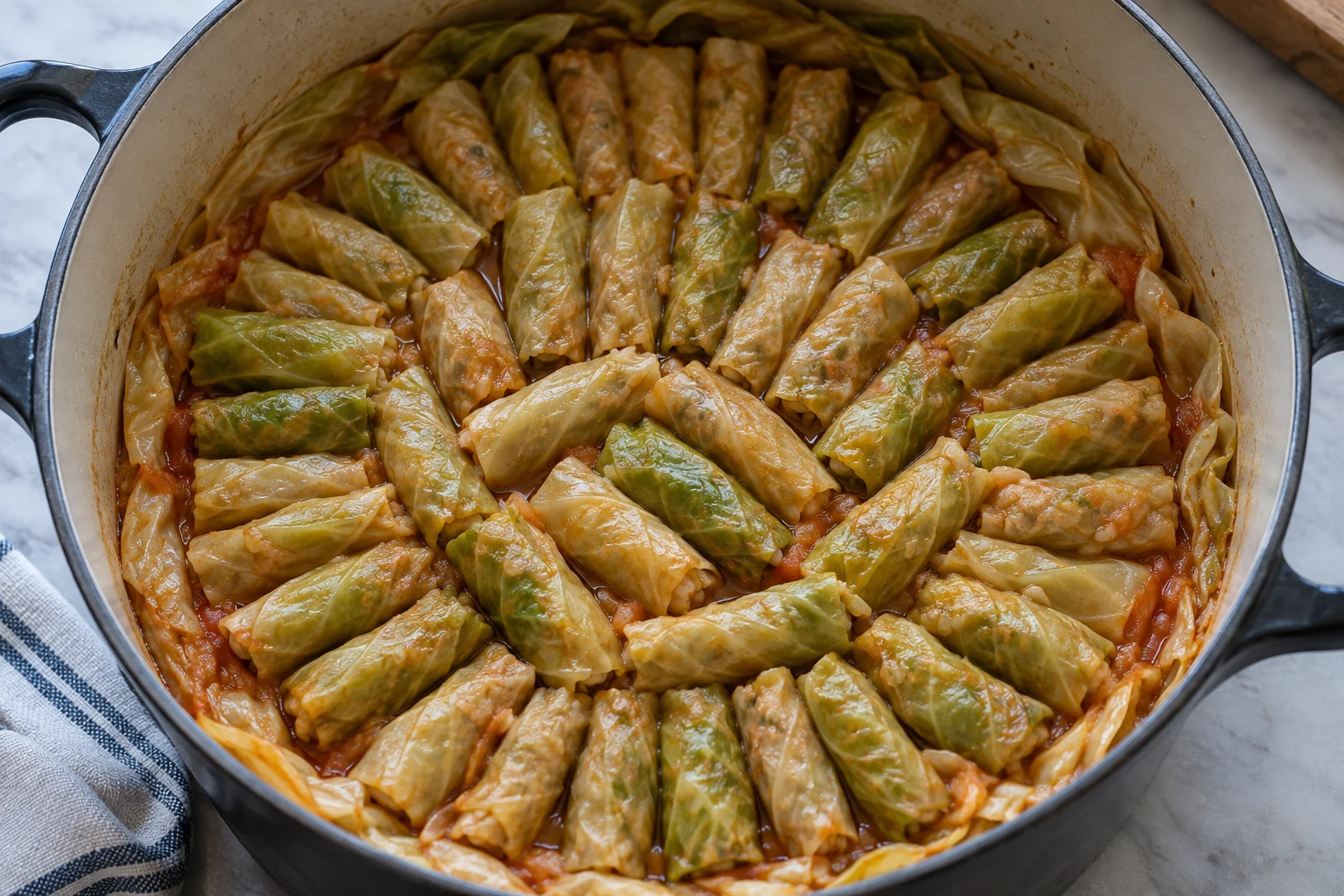
A small roll becomes part of a larger arrangement
Obi places cabbage scraps in the bottom of the pot, then arranges the rolls in a spiral and builds further layers. His method adds vegetable stock or water during cooking and keeps the pot covered for the final gentle stage. The arrangement is part of the recipe, alongside the filling and liquid.
Ibrahim's rolls do not require their ends to be tucked in like her stuffed grape leaves. Close packing in the pot is another deliberate step. Follow the chosen recipe's quantities and cooking guidance, rather than borrowing a liquid level or timing from a different rice mixture.
A meatless filling still leaves two decisions
- Cooking liquid
- Check the stock
- Added fat
- Choose it deliberately
Ibrahim lists chicken broth with vegetable broth as an alternative. Obi uses vegetable stock or water in his method.
Ibrahim's cooking liquid includes ghee or butter, with oil suggested for a vegan version. The leaf and rice do not determine the whole dish's dietary classification.
Preserve a method as well as a flavor
Eldaief describes learning and writing down the home dishes she wanted her own family to know. She also recalls seeking local ingredients after growing up in Australia. Her account is a reminder that documenting a family recipe involves practical decisions about what is available and how a cook measures and works.
Use that approach when choosing a mahshi method: record the cabbage preparation, the rice and herbs, and the stock and fat together. A platter of small rolls can look much the same across recipes while carrying different choices inside. Understanding those choices makes the links below more useful than treating all cabbage rolls as interchangeable.
Research notes
Sources and family methods
The practical guidance comes from three independent Egyptian cooking methods, with family context from Dyna Eldaief's original interview. Each full recipe keeps its own quantities and timing.
- Amira Ibrahim: Meatless Cabbage Rolls Leaf preparation, small open-ended rolls, stock and fat choices.
- Middle Eats: Herby Egyptian Cabbage Rolls Obi's attributed recipe: raw rice, parsley and dill, leaf squares and pot arrangement.
- Sada El Balad: Naglaa El Shershaby's cabbage method Arabic name, herb mixture, added carrot and courgette, and rolling in strips.
- AUC Press: A conversation with Dyna Eldaief Mahshi kromb with dill in her family food memories and the practice of recording recipes.
Keep exploring
More stories for your table
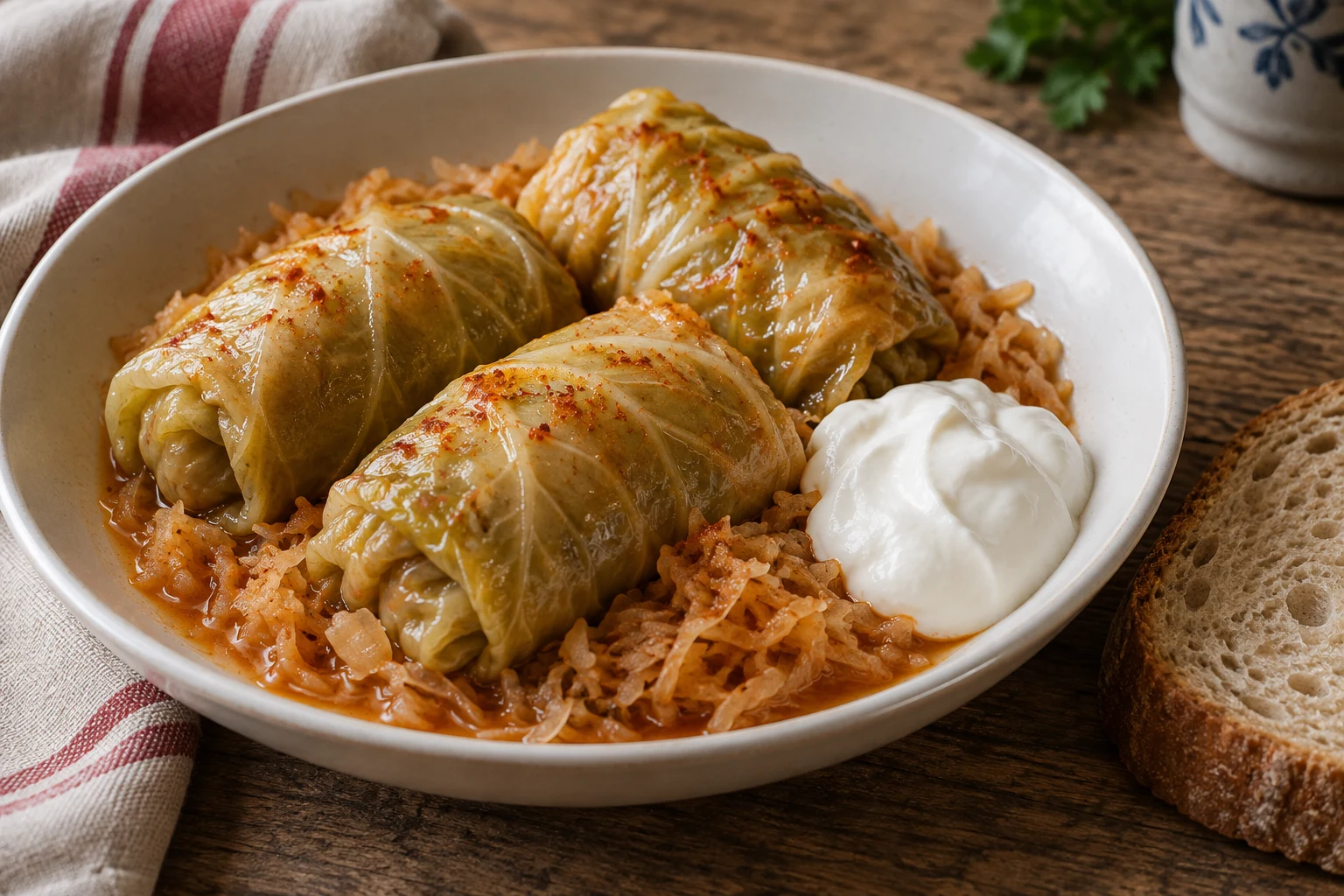
Hungarian cuisine Stuffed cabbage
Töltött Káposzta: Cabbage in Two Roles
Hungarian stuffed cabbage combines a leaf-wrapped filling with cabbage in the cooking pot. Explore sour and fresh leaves, a Szabolcs tomato variation, and the dish’s place at festive tables.
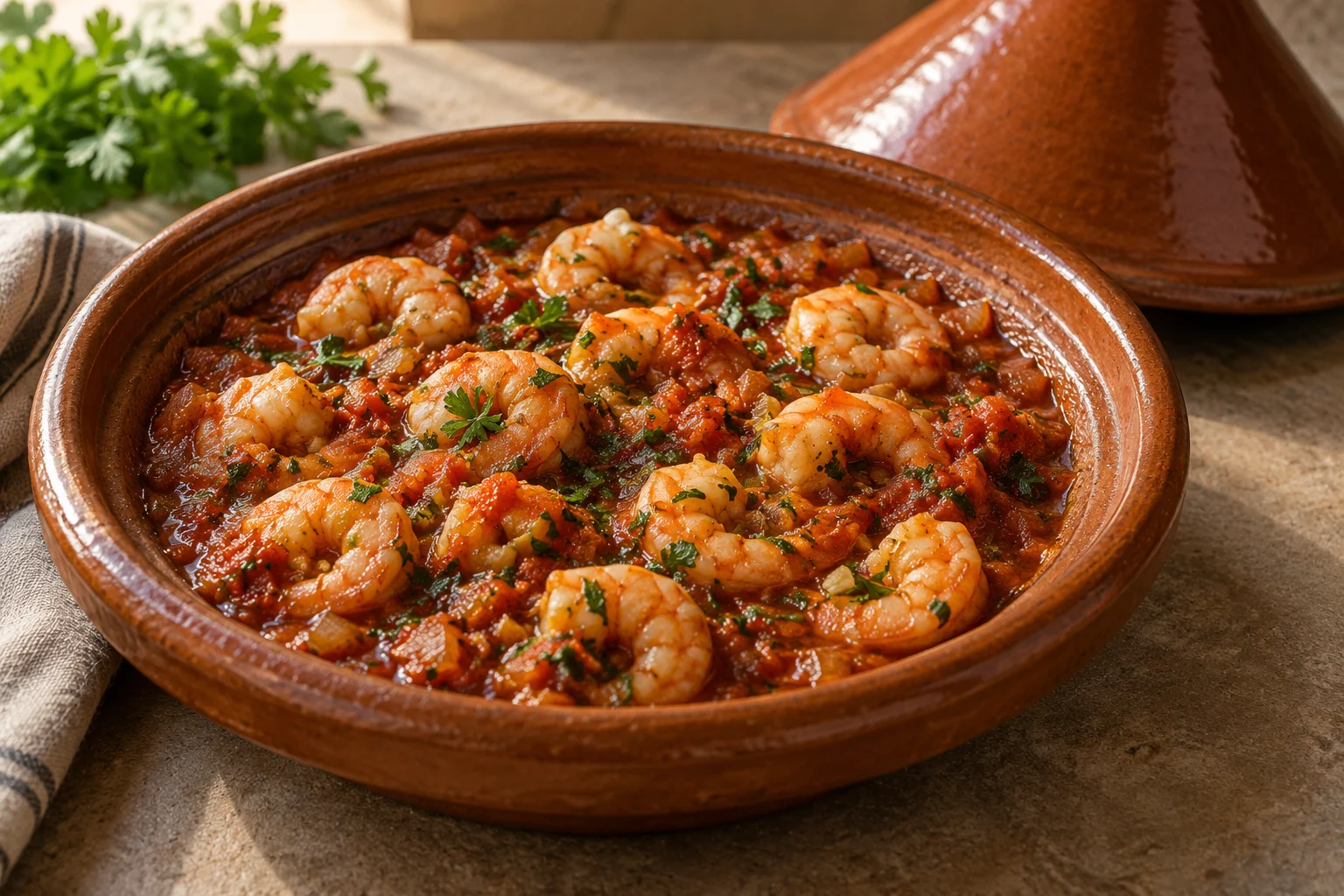
Moroccan cuisine Seafood tagine
Shrimp Tagine: Give the Tomatoes a Head Start
Build a Moroccan shrimp tagine by developing the tomato sauce first, then adding shellfish. Learn chermoula choices and a complete skillet adaptation.
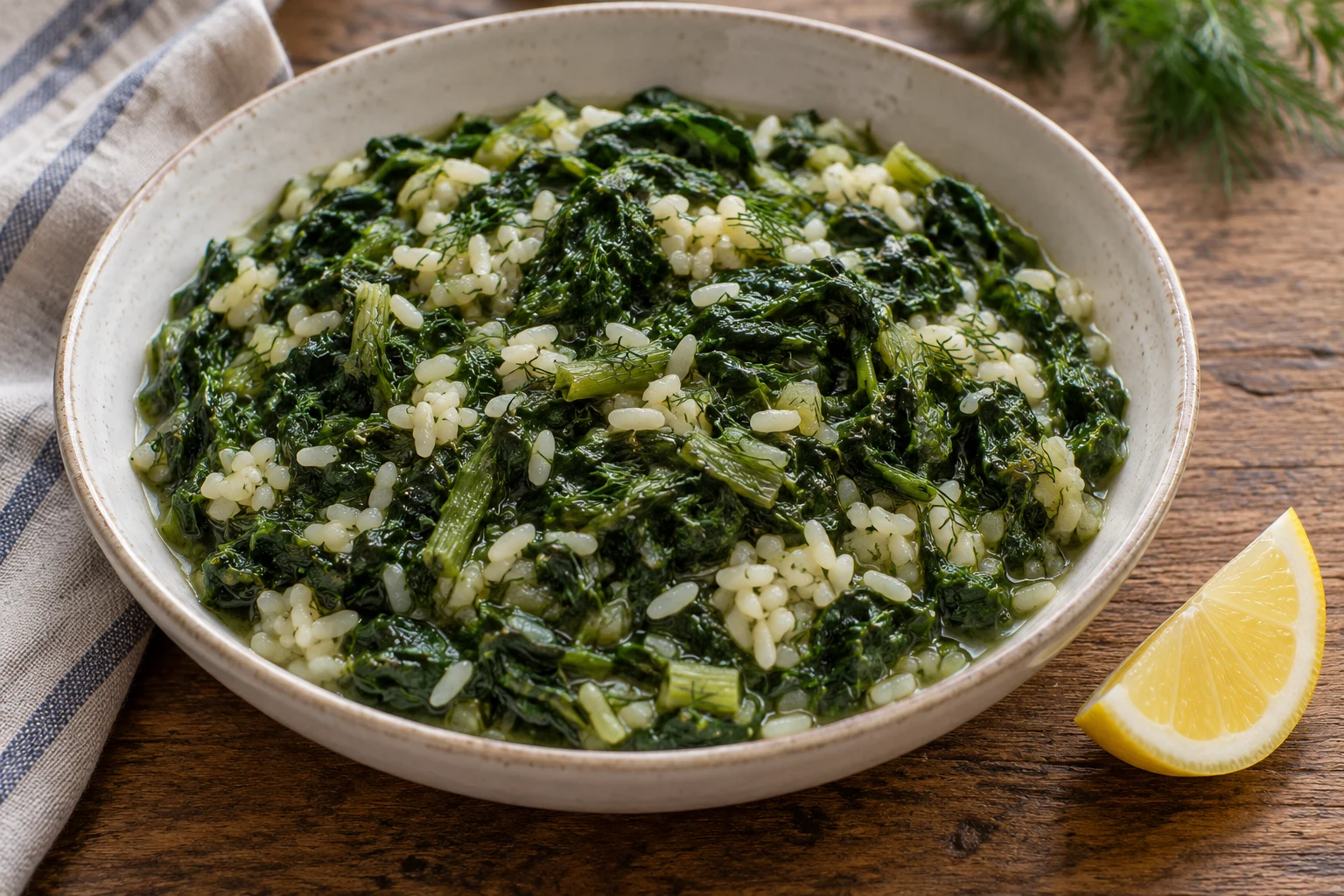
Greek cuisine Vegetable and rice dish
Spanakorizo: Let the Spinach Lead
Greek spinach rice depends on the water in its leaves, the choice of grain and a lemony finish. Compare the decisions behind its soft, vegetable-forward texture.