
Egyptian milk pudding: a quiet base with room for contrast
مهلبية
Mehalabeya turns milk into a cool, spoonable dessert. Its character comes from the thickener, a restrained aroma, and what you add at the surface.
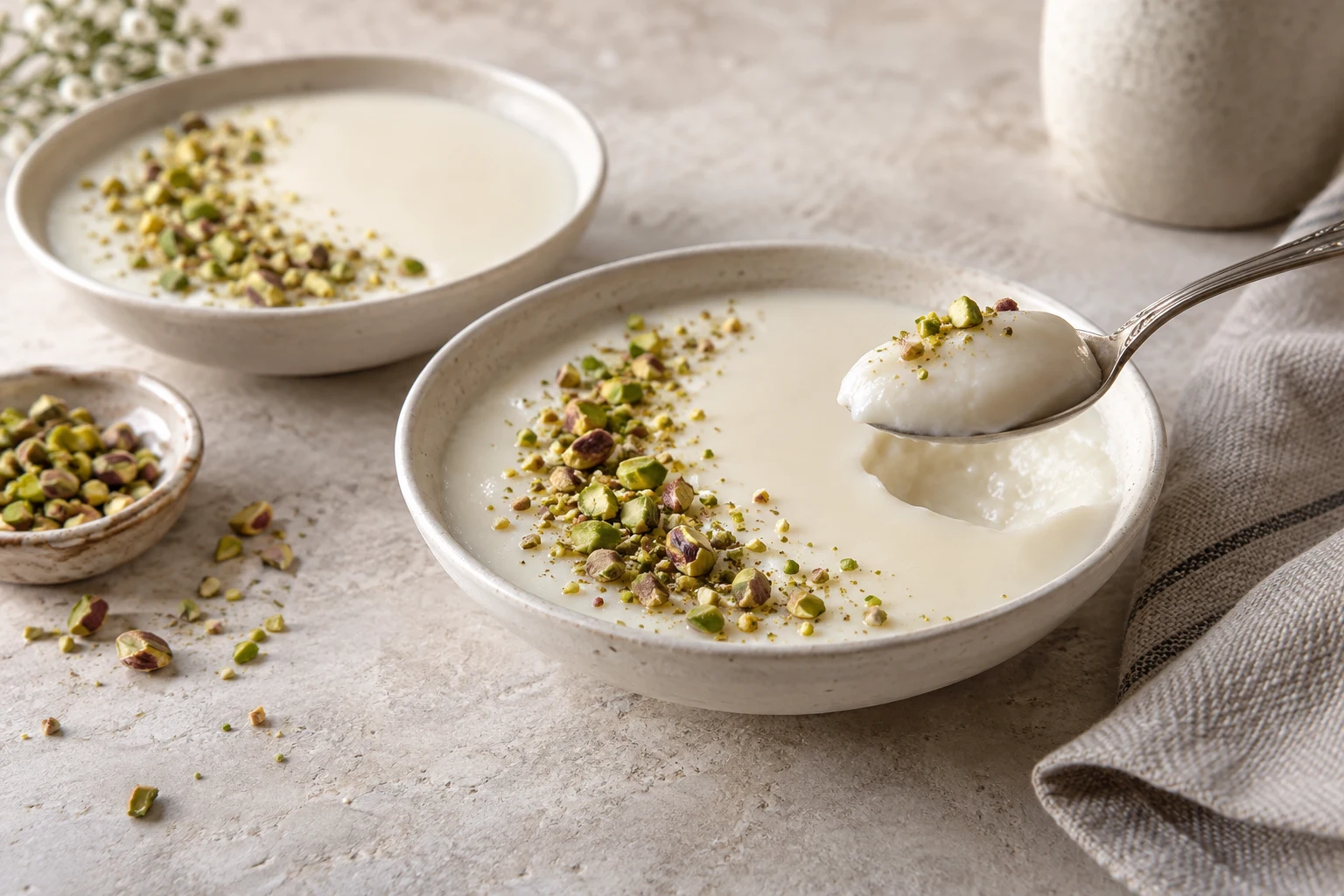
A small set of decisions
Egyptian mehalabeya is a milk pudding whose pleasures are modest and specific: a cool spoonful, a smooth set, and an aroma that does not need a heavy batter to carry it. Simona Afifi's Egyptian version uses vanilla and pistachios. Egyptian baker Tasbih at Cleobuttera offers a more elaborate interpretation with floral flavoring, a rose syrup surface, and caramelized nuts. These are useful examples of the dessert's range, rather than a contest to find one mandatory finish.
The milk base does most of the work. Once you understand how it thickens and how it will be served, the other choices become easier: a plain bowl can stay restrained, a glass can show a contrasting layer, and a garnish can supply the texture the pudding deliberately lacks. Decide which of those effects you want before adding every appealing ingredient.
Build the bowl in three parts
- Base
- A smooth, chilled set
- Aroma
- Choose a leading flavor
- Surface
- Contrast at the last moment
Milk and a measured thickener establish the texture. Cream appears in both Egyptian recipes reviewed here.
Vanilla, floral waters, and mastic appear in different published versions. They need not all appear together.
Nuts contribute crunch; a syrup layer gives a separate sweet accent and a visible boundary.
The thickener is a structural choice
Cornstarch is the thickener in Afifi's recipe and in Cleobuttera's rose version. Culinary teacher Azlin Bloor also uses it, describing a smooth pudding and contrasting it with the texture of rice flour. Ghillie Basan's BBC recipe takes that second route, using rice flour and mastic. That broader comparison helps explain the family resemblance between puddings whose names may be spelled mahalabia, muhallabia, or mehalabeya.
It does not establish a universal substitution ratio. If you want to change thickeners, choose a complete recipe written for the ingredient you intend to use. A different starch, dairy mixture, or portion depth can change how the result behaves. The helpful question is whether the recipe is meant to give you a soft spoonable bowl or a firmer set, rather than whether both powders happen to look white.
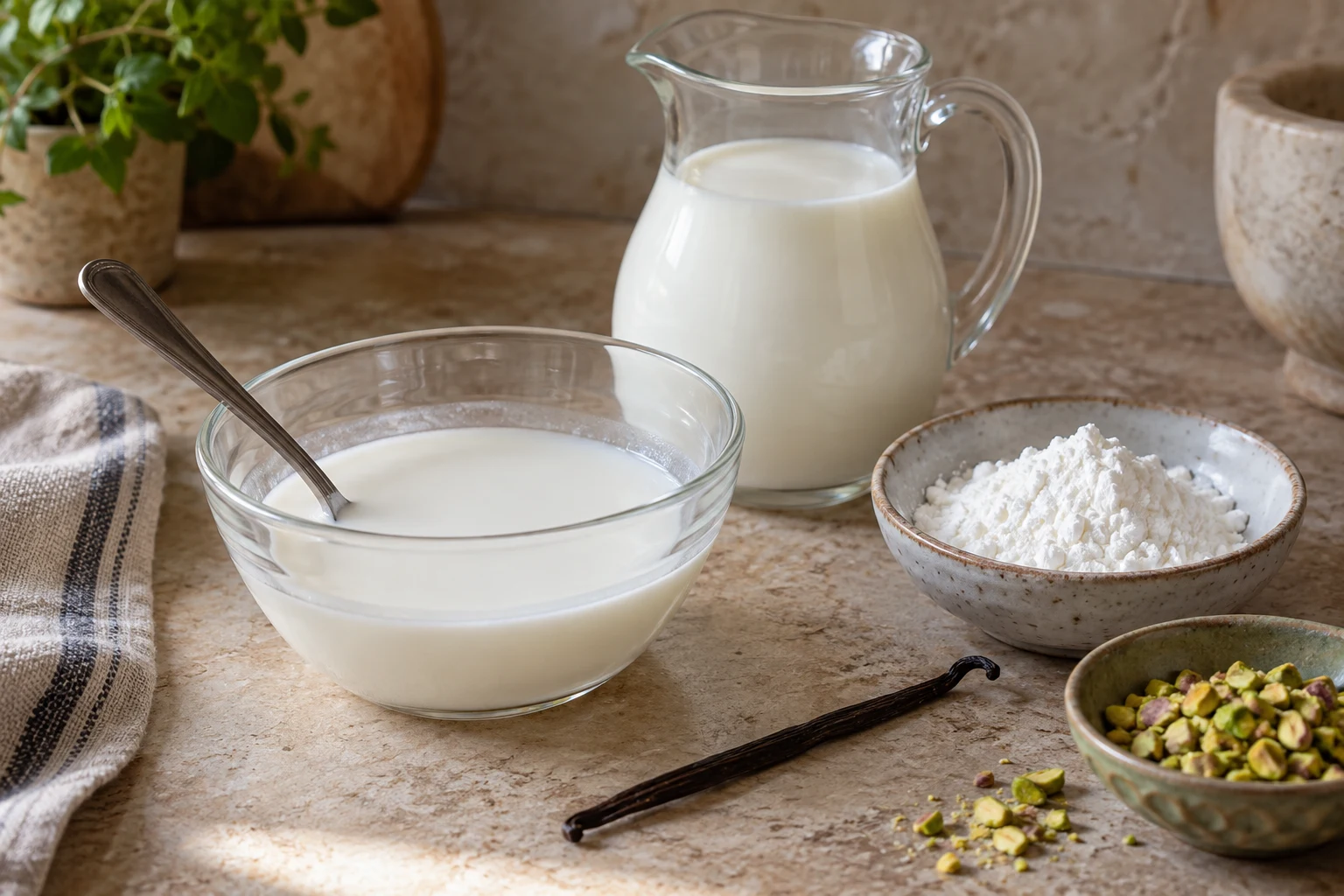
Read the recipe as a sequence
These checkpoints explain the method; use your chosen recipe for its quantities and cooking cues.
- 01
Disperse the starch before heating
Afifi dissolves cornstarch in milk. Bloor likewise starts with a cold slurry; Cleobuttera mixes her base off the heat. The common goal is a smooth mixture without dry pockets.
- 02
Stay with the pan
Bloor's troubleshooting connects lumps and scorching to how the mixture is combined and heated. Follow the specified heat and stirring method, reaching the recipe's thickening cue before portioning.
- 03
Treat chilling as part of the method
A warm mixture is not the final serving texture. The reviewed recipes include a cold setting stage, so plan the dessert ahead instead of judging it immediately after it leaves the stove.
Two useful flavor directions
Vanilla and pistachios
Afifi's version offers a straightforward Egyptian example: a vanilla milk base with a pistachio finish. It is a clear starting point when you want the dairy flavor to remain easy to recognize.
Floral or resinous accents
Cleobuttera combines rose and orange blossom waters; Basan uses mastic. These belong to different formulas. Choose a recipe whose leading aroma appeals to you, and follow its amounts instead of accumulating several strong flavorings.
The surface changes the eating experience
A syrup topping asks for another stage of attention. In Cleobuttera's version, the milk pudding begins to set before a separately thickened rose syrup is spooned over it. That sequence matters to the clean division between the pale base and its colored surface. Pouring a topping into a still-fluid base would be a different presentation.
A skin is another deliberate choice. Basan's recipe allows one to form; Bloor discusses covering the pudding for a longer chill. The useful distinction is the texture you want at the first spoonful. Treat that choice as part of serving the dessert, rather than assuming every exposed or covered surface will feel the same.
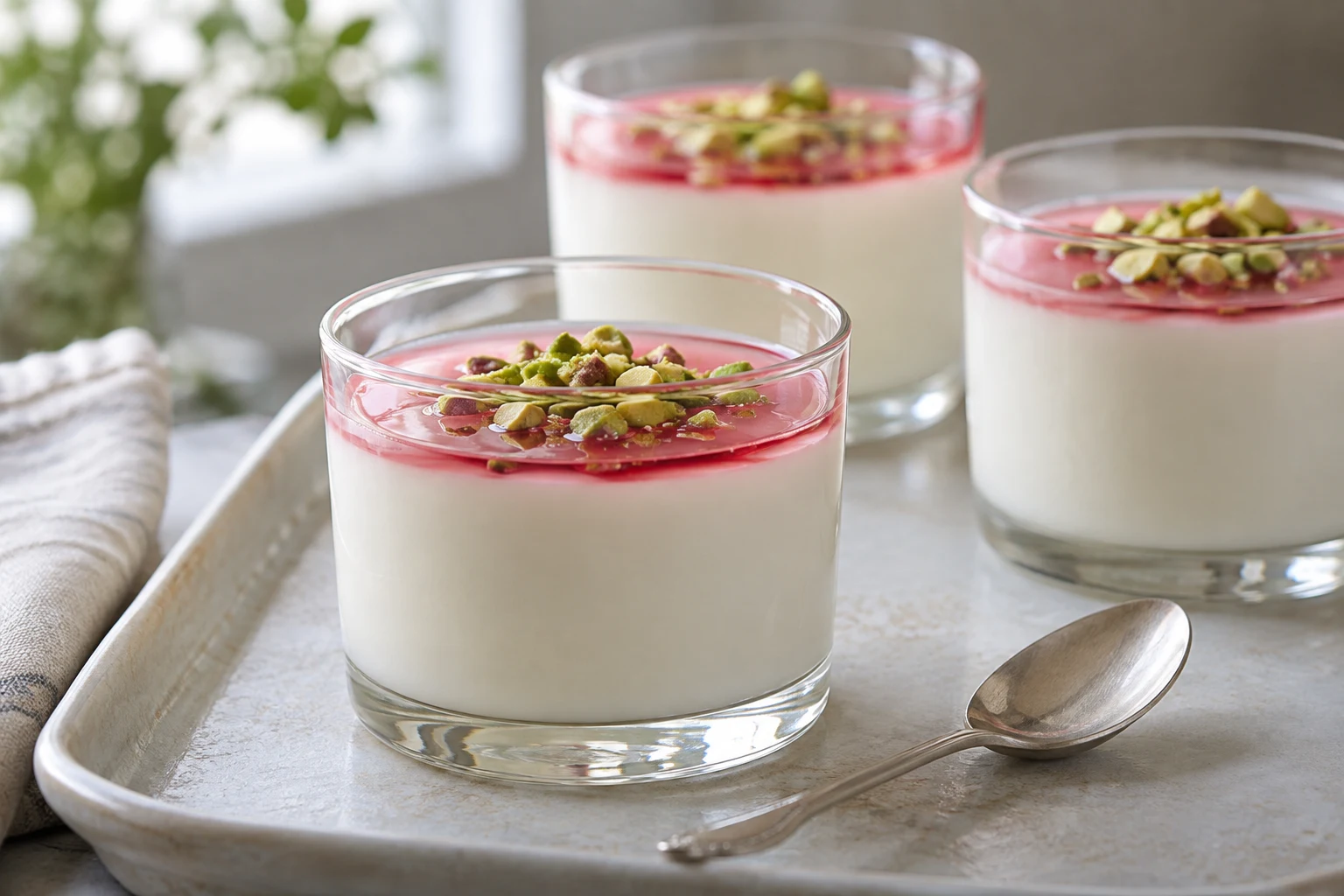
Choose the vessel for the dessert you want
Individual cups make a layered pudding easy to see and give each person the same arrangement. A family bowl makes a simpler shared dessert. Cleobuttera explicitly offers both formats. Neither requires a towering garnish: the pudding's identity remains in its cool milk base, with additions supplying emphasis.
For a first attempt, settle on one complete formula, one leading aroma, and one surface treatment. That gives you a result you can evaluate. If you later want more richness, a different thickener, or a rose layer, change the recipe with that particular goal in mind. Mehalabeya's simplicity makes those choices unusually visible.
Research notes
Sources and recipe comparisons
Two Egyptian cooks anchor the discussion, with two additional recipes used to compare thickening, flavoring, and setting methods.
- Tasbih, Cleobuttera: rose mehalabya Egyptian author's cream-enriched base, separate rose syrup layer, cooled pistachio garnish, and serving formats.
- Simona Afifi, Scarf Gal Food: Egyptian milk custard Egyptian recipe using milk, cream, cornstarch, vanilla, and pistachios; author's reply confirms cold serving.
- Azlin Bloor, LinsFood: mahalabia Cornstarch method, cold-slurry explanation, texture troubleshooting, and garnish timing.
- Ghillie Basan, BBC Radio Scotland: muhallabia Rice-flour and mastic variation, with a deliberate surface skin and chilled service.
Keep exploring
More stories for your table
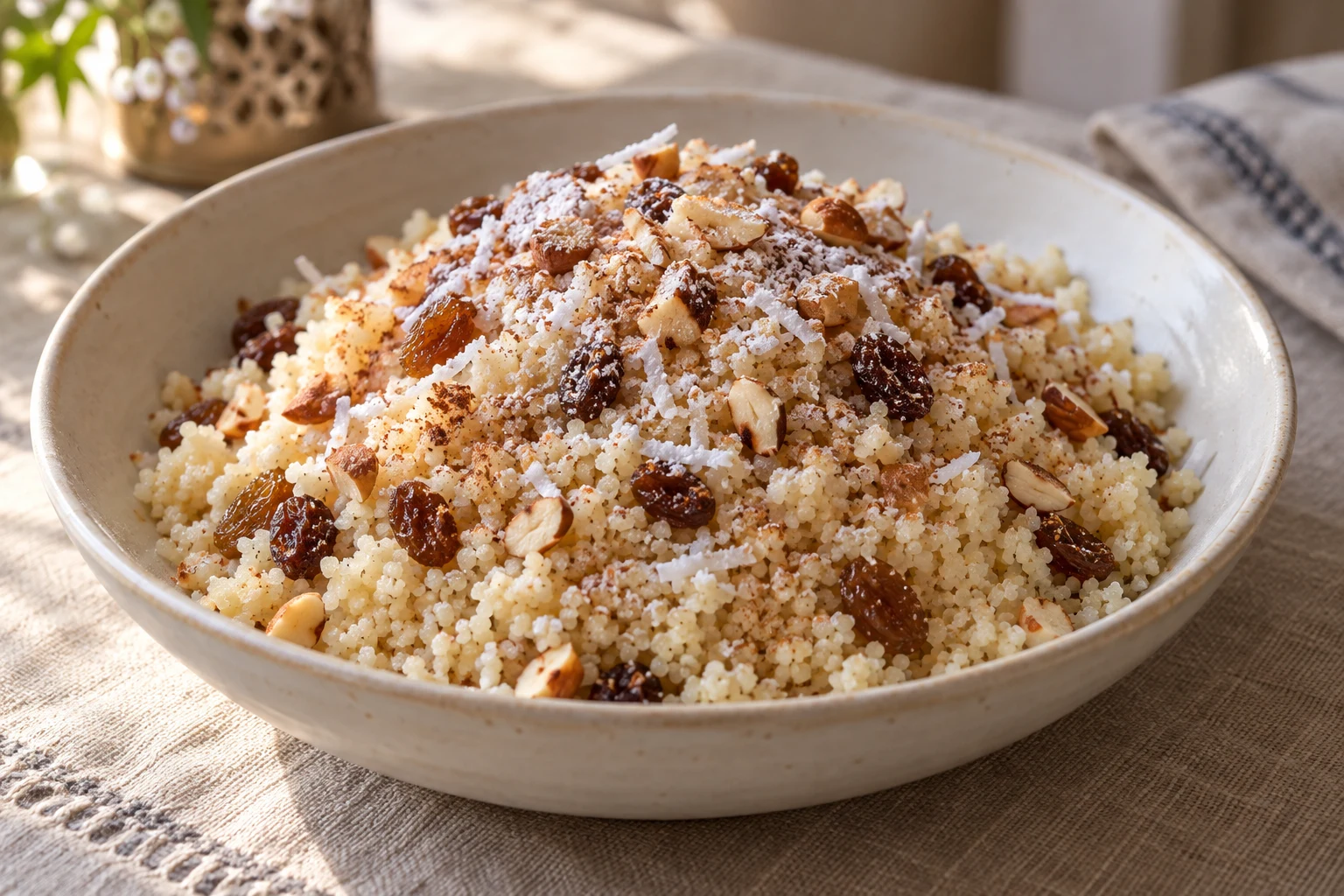
Egyptian cuisine Sweet couscous
Egyptian Sweet Couscous: Loose Grains Before the Sugar
Butter, powdered sugar, raisins, and nuts turn couscous into an Egyptian sweet dish. Choose a cooking route that matches the grains and finish each serving lightly.
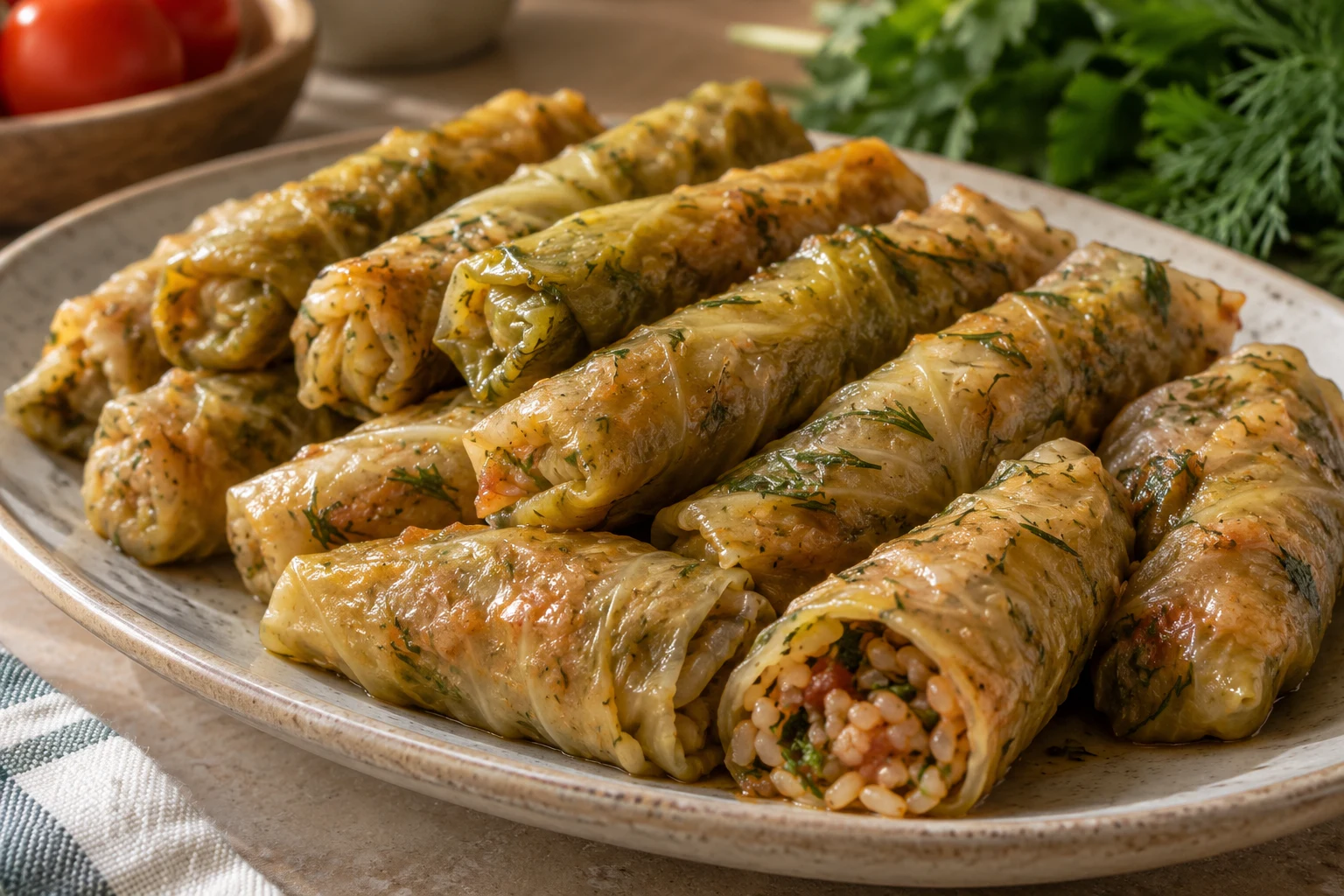
Egyptian cuisine Stuffed cabbage
Mahshi kromb: preparing cabbage for rice and herbs
A guide to Egyptian mahshi kromb: prepare pliable cabbage pieces, choose an aromatic rice filling, and match the stock and fat to the meal you want.
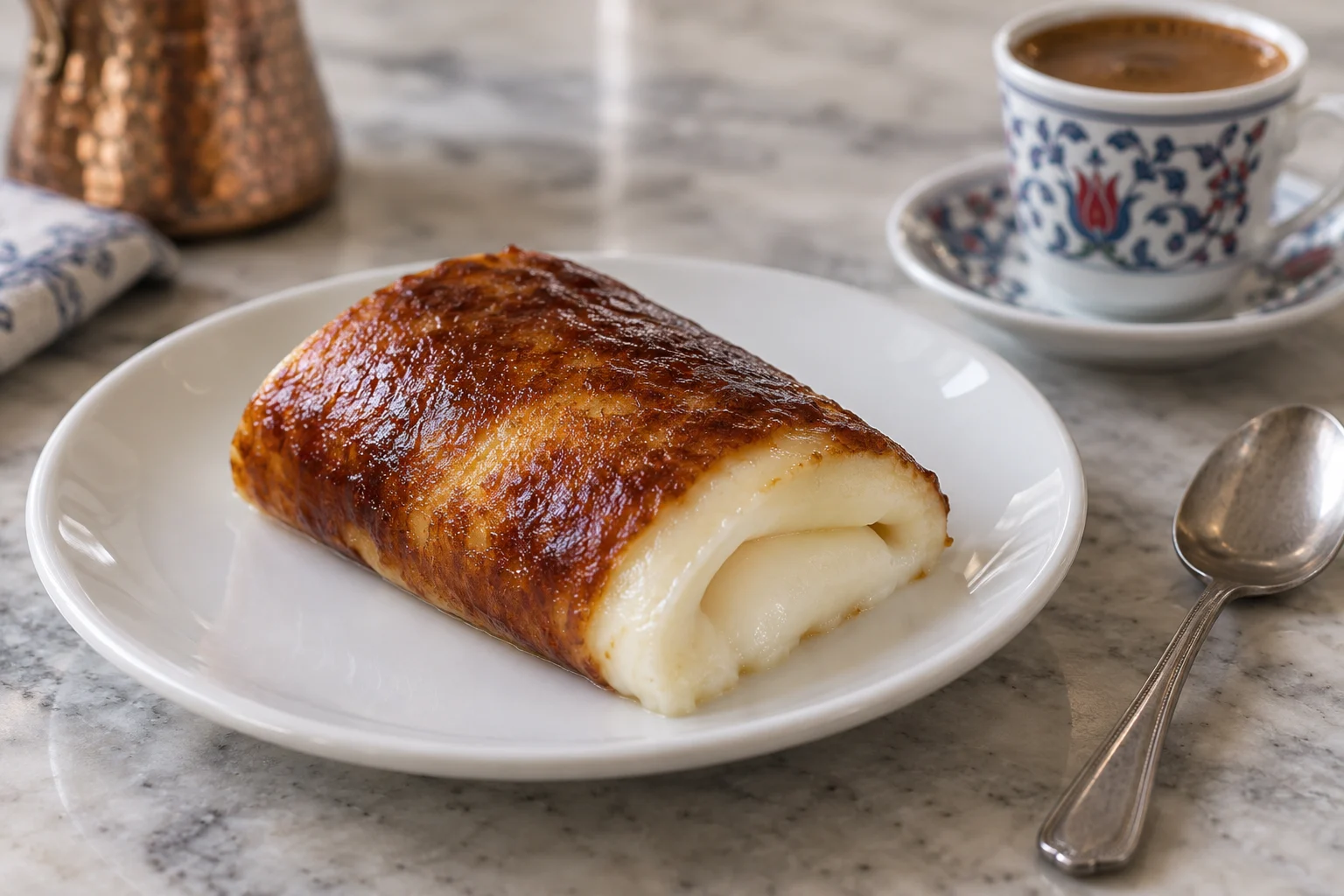
Turkish cuisine Caramelized milk pudding
Kazandibi: Let the Bottom Become the Serving Face
Kazandibi separates smooth pudding from deliberate surface browning. Choose the pan and method together, chill fully, then lift the brown underside into view.