
Ta’ameya: fava beans and herbs beneath a fried crust
طعمية
Read Egyptian ta’ameya through its fava beans, green herbs and fried crust, with named recipe differences and a flatbread serving that keeps the fritter visible.
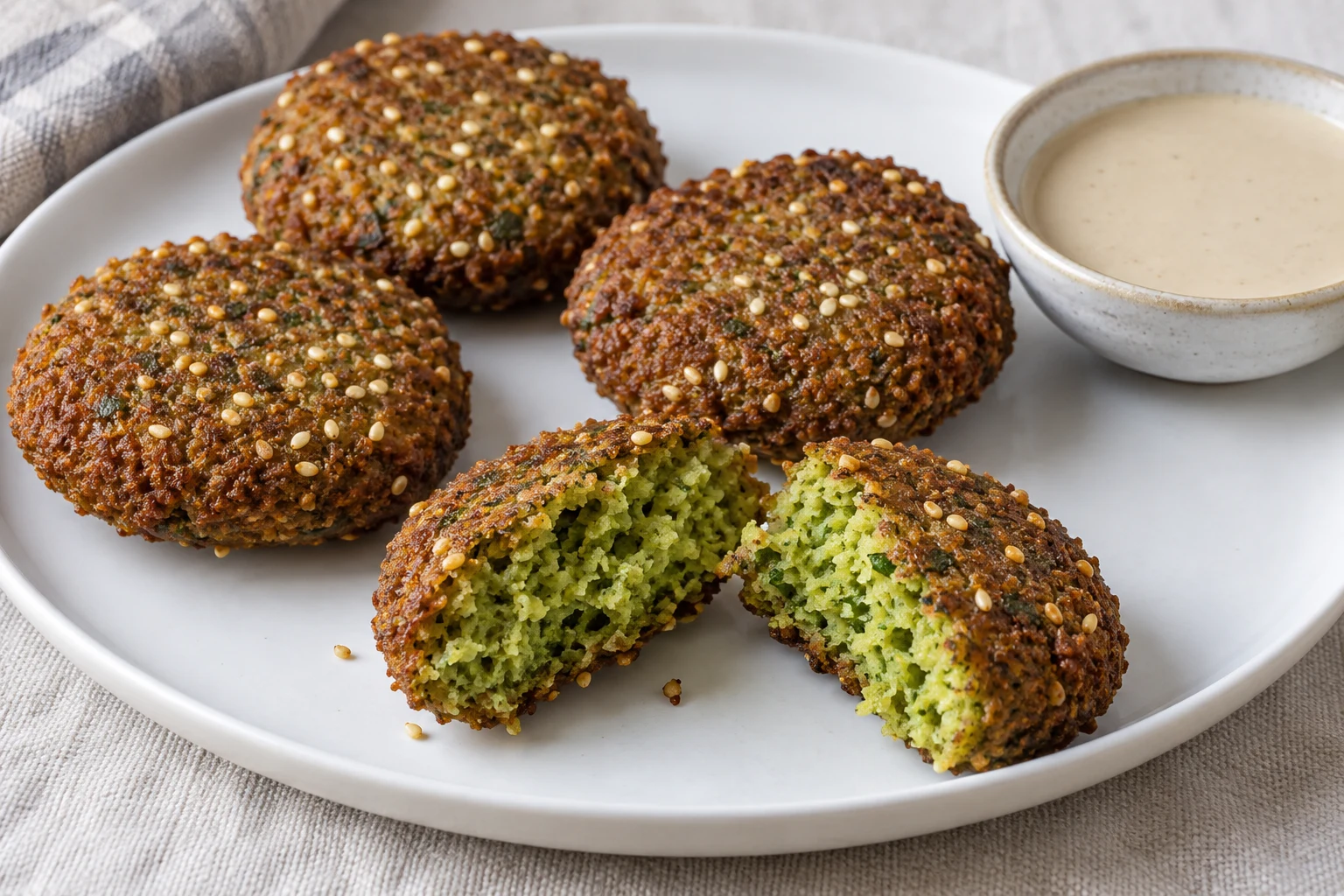
Break a patty before building the sandwich
Ta’ameya is an Egyptian fritter with fava beans and green herbs at its centre. The World Tourism Organization's Egypt booklet describes a fried exterior and a fluffy interior, then places the patties in the country's street-food table. A broken piece shows why the inside deserves attention alongside the crust.
For a first taste, try a small piece plain before adding sauce or bread. Look at how finely the centre is ground and how the browned surface differs from it. This is a useful way to notice the fritter itself before other ingredients join the bite. The green interior comes into view when the patty is opened, not when it is hidden inside a sandwich.
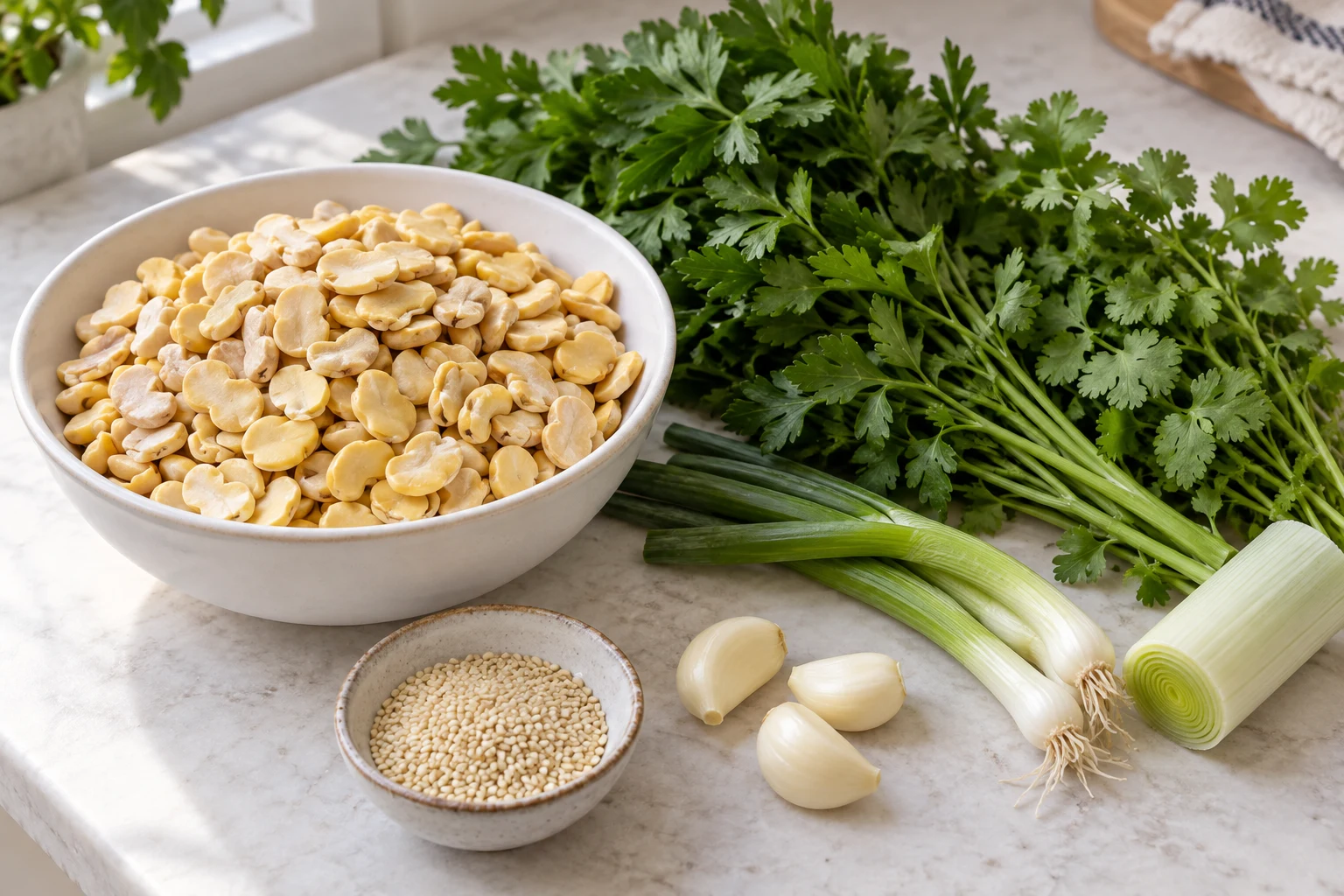
Read the bean's form as carefully as its name
Hawa Hassan's recipe, published by Epicurious from Setting a Place for Us, specifies dried split fava beans. It pairs parsley and cilantro with onion, garlic, coriander and cumin, and coats the patties with sesame before frying. Those details identify a particular bean form and a particular surface treatment.
Middle Eats' recipe, published under the cook's byline by Book Recipes, also begins with split favas. They are soaked, drained and ground with herbs and alliums before the mixture is shaped and fried. The preparation starts with the dried ingredient; a packet of fresh green broad beans or a tin of cooked beans is a different starting point.
Before following a recipe, check whether it asks for shelled, peeled or split beans, and read the preparation sequence all the way through. The form of an ingredient is part of the method. A broad label such as 'beans' does not tell you enough to substitute it confidently.
Two published mixtures show where variation enters
Middle Eats
This fava-based batter includes spring onions and leeks along with fresh coriander and parsley. The alliums join the green herbs inside the patty.
Silk Road Recipes
Kevin's version, adapted from chef Ahmed Reda, uses a mix of dried favas and chickpeas and adds arugula to parsley and cilantro. The author also calls his version a hybrid.
The herbs are inside the food
Silk Road Recipes explicitly links its green colour to the arugula, parsley and cilantro. The World Tourism Organization's chef feature likewise attributes a vivid green centre to fresh herbs mixed with shelled favas. This is an ingredient effect to understand, rather than evidence that the finished fritter must match one exact shade in a photograph.
A darker or lighter centre alone cannot identify every ingredient. For a menu or a home recipe, ask about the bean base and the herb mixture. The answer is more informative than assuming that all patties described as Egyptian falafel use an identical formula.
Texture involves more than one final frying step
Middle Eats adds a separate whipping stage to its ground batter and directs the cook to use that whipped portion promptly. It also describes an optional onion-and-harissa filling and a coriander-seed-and-sesame topping. These are choices within one author's method, not obligations for every ta’ameya.
That sequence makes the preparation worth reading before any frying begins. Grinding, handling and shaping occur before the crust forms. If you want to try the method, follow the complete source for its formula and timing; selecting the whipping step alone does not recreate the rest of the recipe.
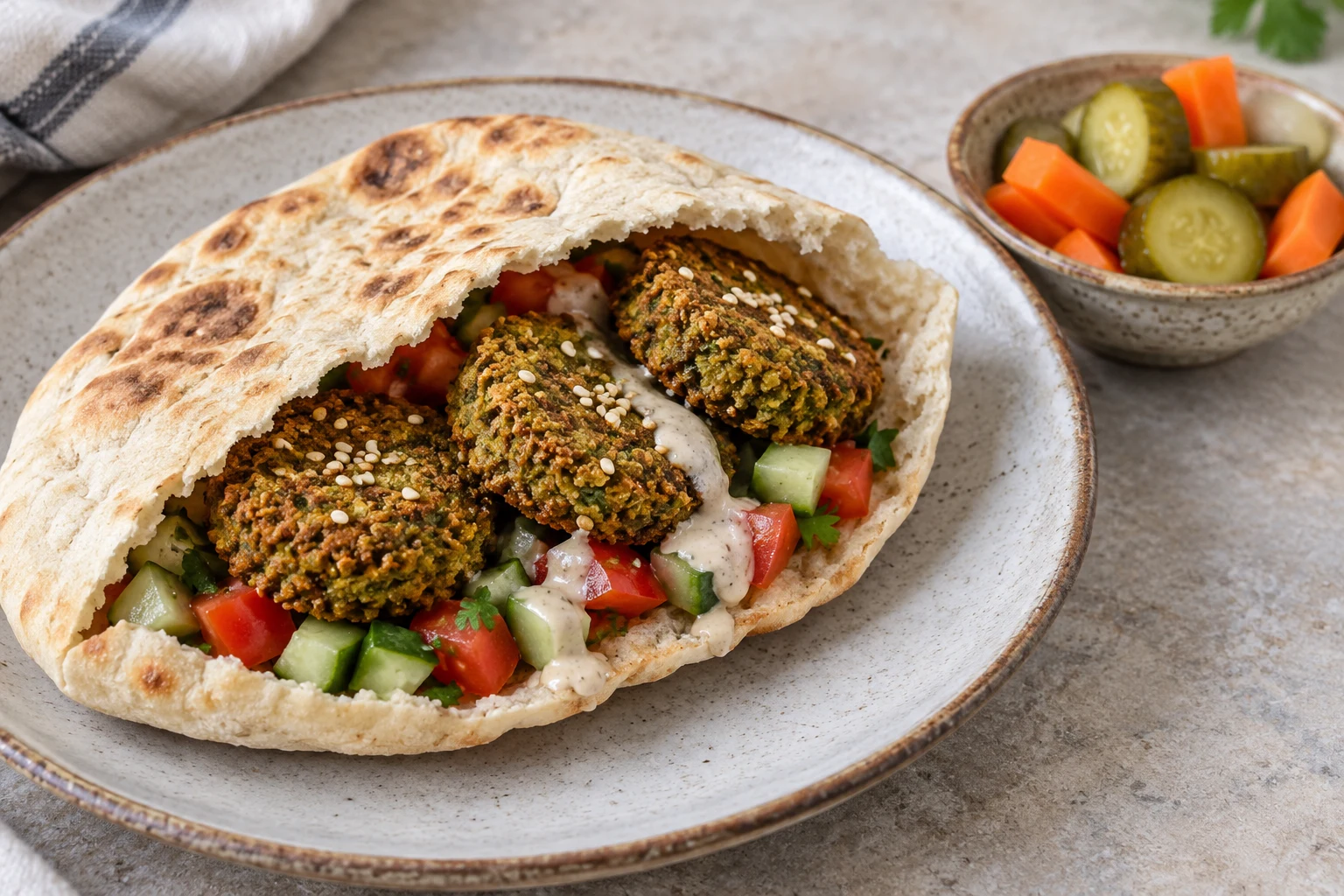
Flatbread and ful offer two different companions
The World Tourism Organization's booklet presents ful and ta’ameya together or separately, with flatbread, pickles, salad and tahini. Ful is described as a stewed fava-bean dish, whereas ta’ameya is shaped and fried. A meal can therefore put the same broad bean ingredient into two visibly different preparations.
The booklet includes chef Moustafa Elrefaey's own fava-patty recipe and situates the food at breakfast, lunch or as a filling snack. Those documented settings give more room than a single sandwich image suggests. The fritter can be one part of a meal without disappearing into the other components.
Read the particular serving
Bean mixture, herbs, topping and handling give you four concrete details to ask about. A plain patty lets you inspect the crust and centre; a filled flatbread brings vegetables and sauce into the same mouthful. Decide which encounter you want before choosing the serving.
Whether reading a recipe or choosing a serving, start with the beans, the herbs and the crust. Then consider the flatbread and accompaniments. Those questions make ta’ameya more legible while leaving space for the cooks who prepare it differently.
Research notes
Sources and named recipe differences
Four opened sources supply a chef's Egyptian context, a cookbook fritter, a fava-based method and a clearly attributed mixed-bean adaptation. The photographs are generated illustrations.
- World Tourism Organization — Egypt gastronomy booklet 2021 booklet's ful-and-ta’ameya serving context and chef Moustafa Elrefaey's shelled-fava recipe.
- Hawa Hassan — Ta’ameya, via Epicurious Cookbook recipe specifying split dried favas, herbs and a sesame coating.
- Middle Eats — Ta’ameya, via Book Recipes Named cook's split-fava method, alliums, batter whipping and optional harissa filling.
- Kevin at Silk Road Recipes — Egyptian Falafel The author's attributed Ahmed Reda adaptation uses mixed beans and arugula; it is not treated as a universal formula.
Keep exploring
More stories for your table
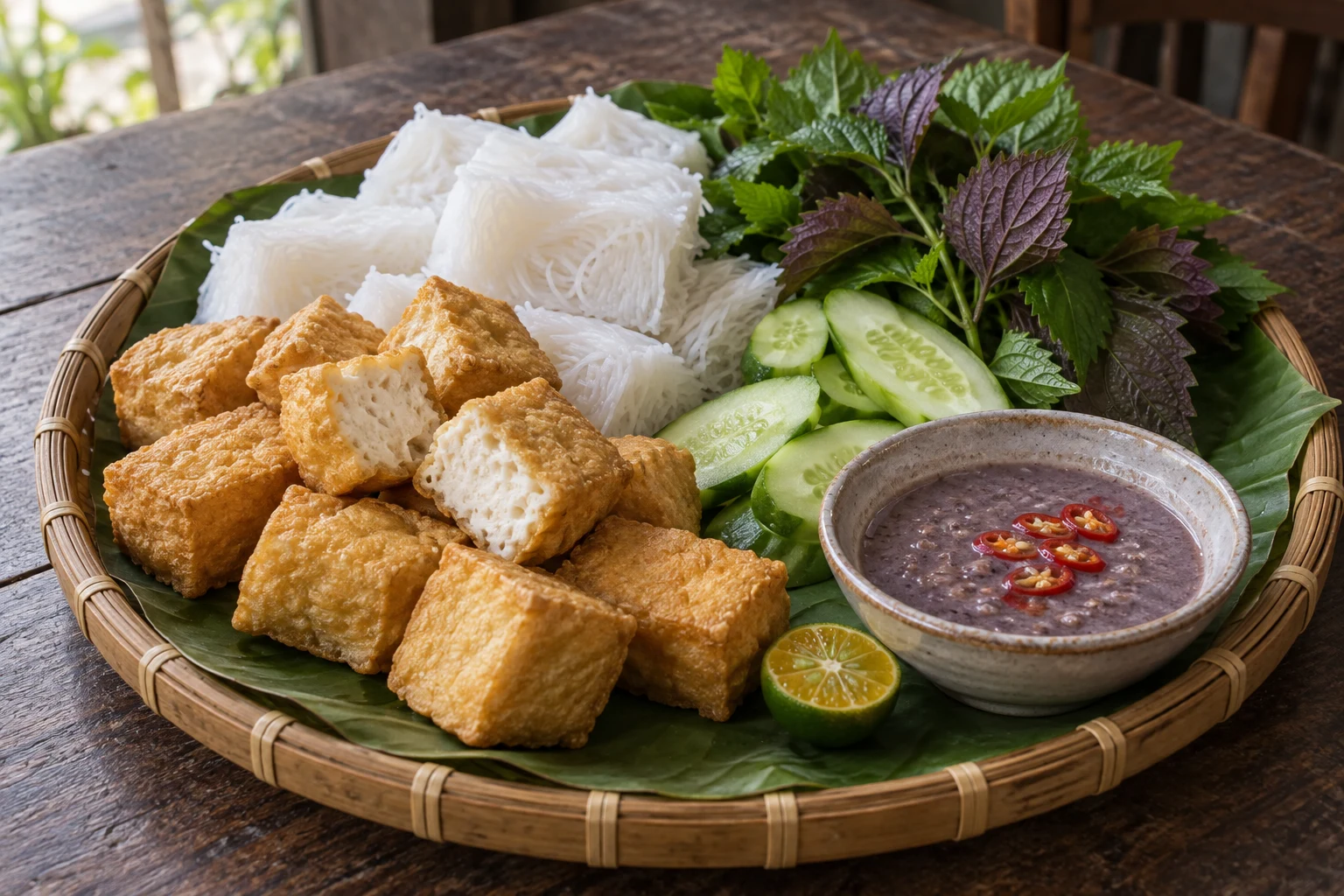
Vietnamese cuisine Noodles
Bún Đậu Mắm Tôm: Keep the Dip at the Center
Hot fried tofu, plain rice noodles and fresh herbs make room for a powerful fermented-shrimp dip. Read the Hanoi plate before adding more to it.
Egyptian cuisine Chilled desserts
Egyptian milk pudding: a quiet base with room for contrast
Mehalabeya turns milk into a cool, spoonable dessert. Its character comes from the thickener, a restrained aroma, and what you add at the surface.
Portuguese cuisine Fish soup
Sopa de Cação: Bread Beneath the Broth
Why Alentejo’s sopa de cação arrives over plain or toasted bread, or beside fried triangles—and how its vinegar-seasoned broth holds the dish together.