
Baba ghanoug: Egyptian eggplant with tahina
بابا غنوج
Soft eggplant and sesame paste make a generous dip. The most useful work happens before mixing: cook the flesh fully and let its excess liquid drain.
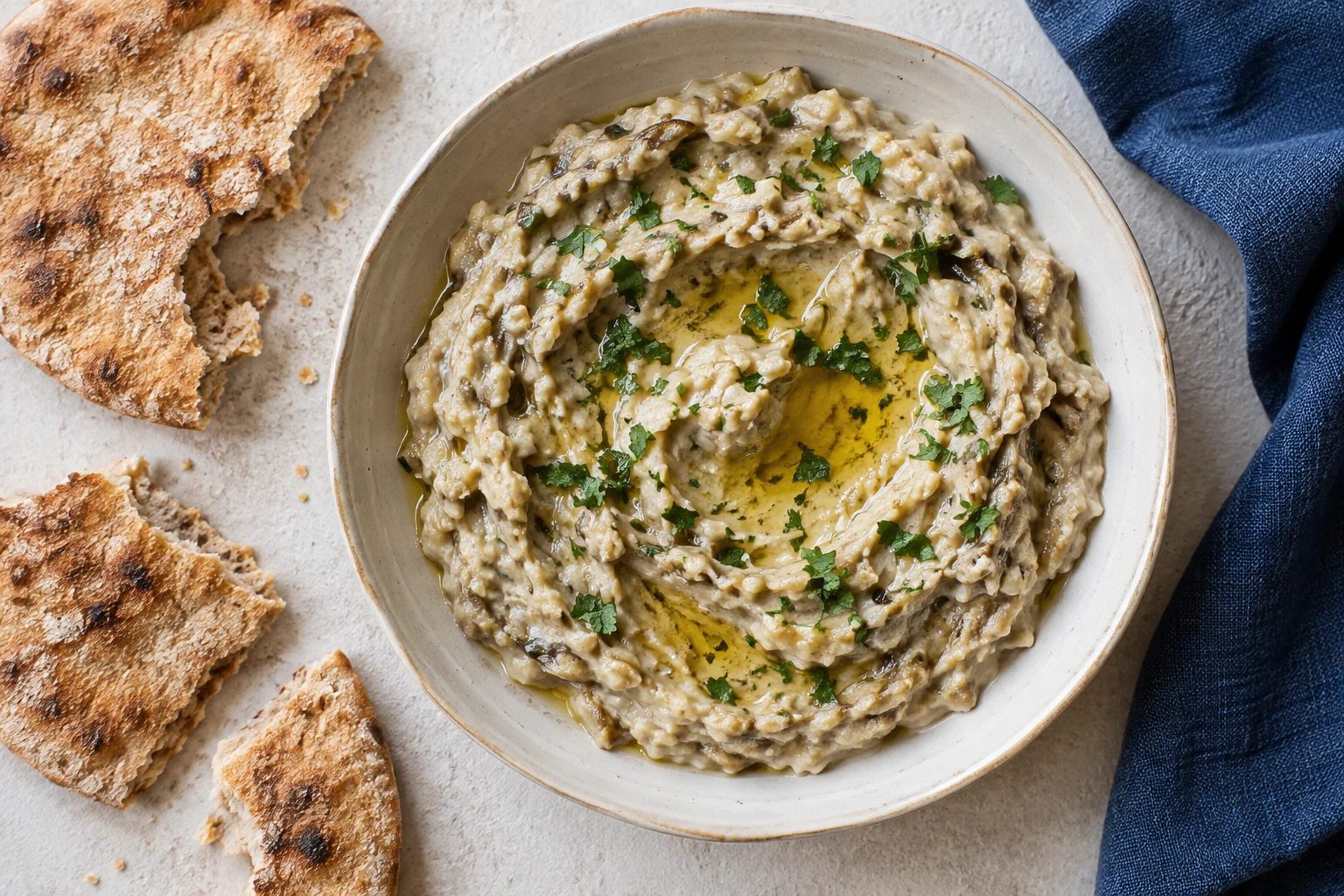
An Egyptian mezze
Begin with the eggplant
Baba ghanoug, بابا غنوج, brings cooked eggplant together with tahina, lemon and garlic. Tahina is sesame paste: it supplies body and a nutty flavour, while the eggplant keeps its soft, fibrous character. In a shallow dish, the dip gives bread something substantial to scoop. A few spooned ridges hold the olive oil on top.
Colette Rossant’s Egyptian memoir describes roasting eggplant over hot coals and also gives an oven option. The oven adaptation below aims for fully soft flesh; it will have a gentler roasted flavour than flame-charred eggplant. Claudia Roden places this preparation within a wider Arab mezze tradition, so its presence on an Egyptian table does not make it exclusively Egyptian.
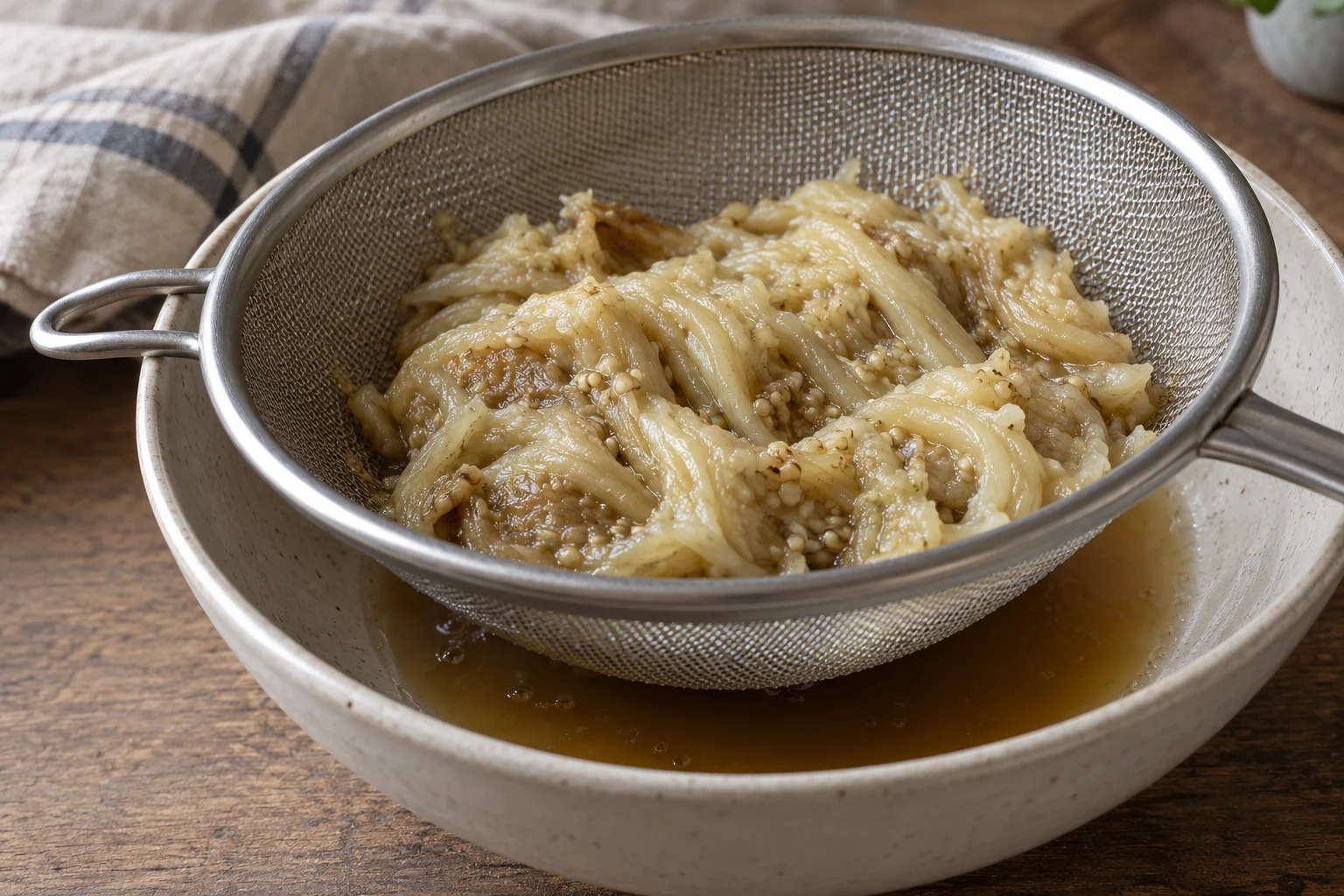
The eggplant needs to collapse before it meets the sesame paste. A dark skin can cover a firm centre, especially on a large fruit. Pierce the skin before roasting, and check the thickest part at the end. It should offer almost no resistance. Give the cooked flesh time in a sieve: adding tahina to a pool of vegetable liquid makes the seasoning harder to judge.
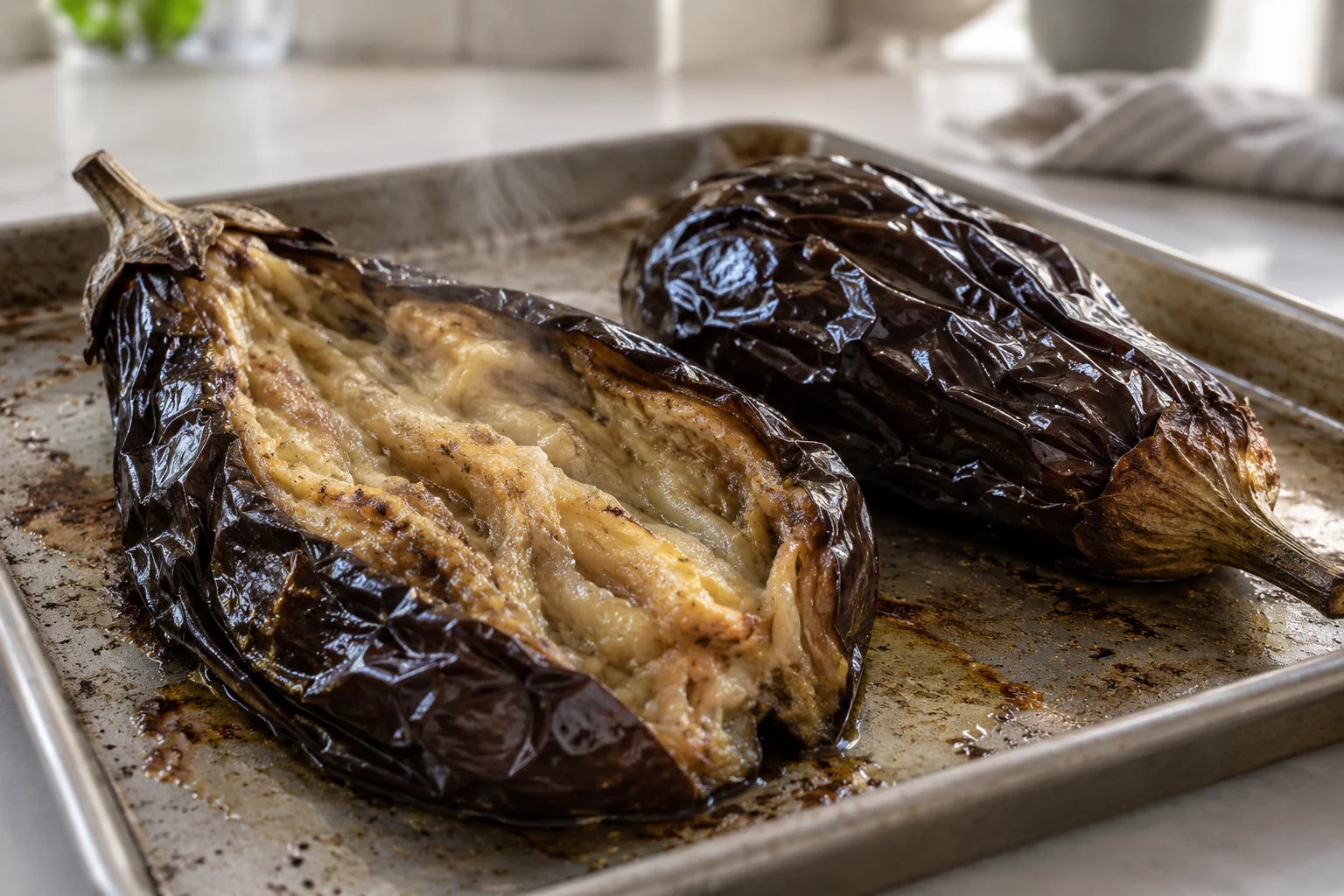
Our oven adaptation
Hand-mashed baba ghanoug
Makes six small appetizer portions. Allow about 95 minutes including cooling and draining; most of that time is unattended. Roasting varies with eggplant size.
Ingredients
Dip
- 800 g eggplants, preferably two of similar size
- 60 g tahina / tahini, stirred thoroughly in its jar
- 2 tablespoons fresh lemon juice, plus more to taste
- 1 small clove garlic, finely grated
- ¼ teaspoon ground cumin
- ½ teaspoon fine salt, with more to taste
- 1–2 tablespoons cool water, only as needed
To finish
- 1 tablespoon olive oil
- 1 tablespoon finely chopped flat-leaf parsley
- wheat flatbread or vegetable sticks, for serving
Method
- 1
Roast until fully soft
Heat the oven to 220°C / 425°F. Wash the eggplants, dry them and prick each several times with a fork. Put them whole on a rimmed baking tray. Roast for about 50–65 minutes, turning once, until the bodies sag and a skewer enters the thickest part with almost no resistance. Continue roasting if the centre is firm.
- 2
Cool and drain
Cool for about 10 minutes, until safe to handle. Split the eggplants and scoop the flesh into a fine sieve over a bowl, leaving the skins and stems behind. Let drain for 15 minutes, turning the flesh once with a spoon. Discard the collected liquid.
- 3
Mix the sesame base
In a separate bowl, stir the tahina with the lemon juice, garlic, cumin and salt. It may become quite stiff. Add cool water a teaspoon at a time only until the mixture can be stirred easily; you may not need the full amount.
- 4
Mash and fold
Chop the drained eggplant flesh roughly, then mash it with a fork. Fold it into the sesame base. Leave small soft pieces if you enjoy texture. Taste a little on the bread or vegetable you will serve with it, then add more lemon or salt in small amounts if needed.
- 5
Spoon into a shallow dish
Spread the dip in a shallow bowl, drawing a few broad grooves with the back of a spoon. Drizzle with the olive oil and scatter the parsley. Serve with flatbread or vegetable sticks. If preparing ahead, cover and refrigerate promptly.
Two textures that need different corrections
Decide where the problem began before adding another spoonful of liquid.
A stiff sesame mixture
Tahina mixed with lemon can thicken before it loosens again with water. Add water by teaspoons while stirring. Stop as soon as the base is easy to fold into the eggplant; the cooked flesh will bring moisture too.
- Stir the tahina jar first.
- Small water additions give more control.
A watery finished dip
If liquid gathers around the mashed eggplant before mixing, drain it longer. More oil will not remove that water. After mixing, extra tahina may thicken the dip but also strengthens the sesame flavour; that is a different adjustment from draining the flesh.
- Drain before seasoning.
- Taste after each adjustment.
Leave room for the cook’s version
Dahlia’s Am What I Eat version adds pomegranate molasses and keeps plenty of eggplant texture. Shima’s Egyptian Cuisine and Recipes version includes onion and allows lemon or vinegar. Those choices show why neither a perfectly smooth texture nor one acid belongs to every preparation bearing this name. The recipe here stays with lemon and a modest amount of cumin.
SAVEUR’s recipe offers a useful distinction between softening the eggplant and removing excess moisture, then adjusts the sesame mixture with water. Take that order seriously. Once the basic dip tastes balanced, parsley and oil can finish it simply; a crowded garnish cannot repair firm eggplant or a diluted base.
Research notes
Egyptian accounts and shared technique
Independent cookbook authors and home cooks document the name, flavour variations and methods used for this eggplant-and-sesame preparation.
- Colette Rossant: Babaghanou An Egyptian memoir recipe, with coal roasting and an oven option.
- Claudia Roden: Baba Ghanouj or Moutabal Wider mezze context and hand-mashed texture.
- Dahlia, Am What I Eat: Smoky, tangy baba ghanouj An original textured version with pomegranate molasses.
- SAVEUR: Baba Ghannouj With Tahineh Fully cooked eggplant, moisture removal and sesame-paste consistency.
- Shima, Egyptian Cuisine and Recipes: Baba Ghanoug بابا غنوج Native name and an onion-containing household version.
Keep exploring
More stories for your table
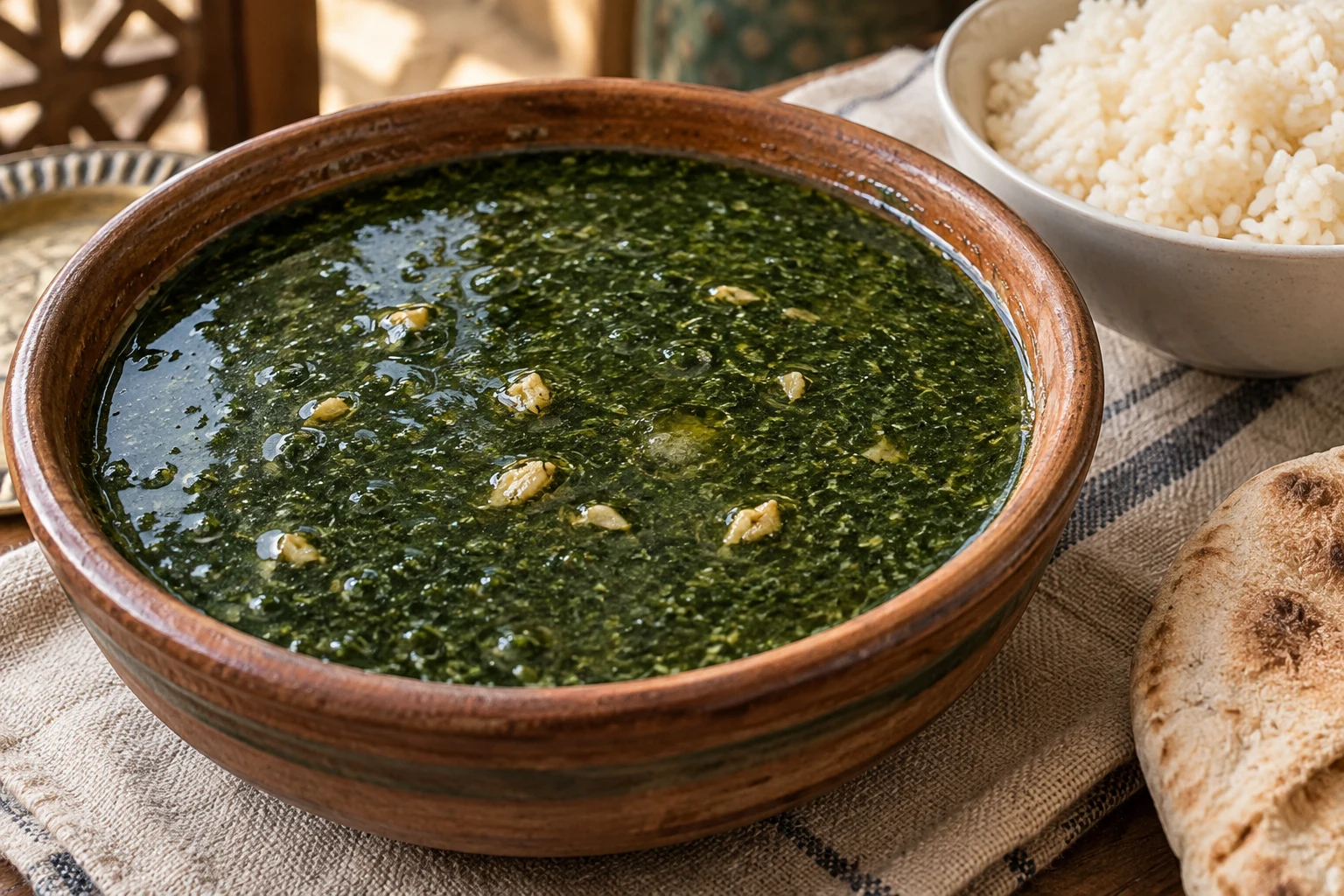
Egyptian cuisine Soups
Egyptian Molokhia: Minced Leaves and a Golden Garlic Finish
Make a minced-leaf Egyptian molokhia with frozen jute leaves, a fragrant garlic-coriander finish and a complete vegetarian home adaptation.
Egyptian cuisine Sweets & Fritters
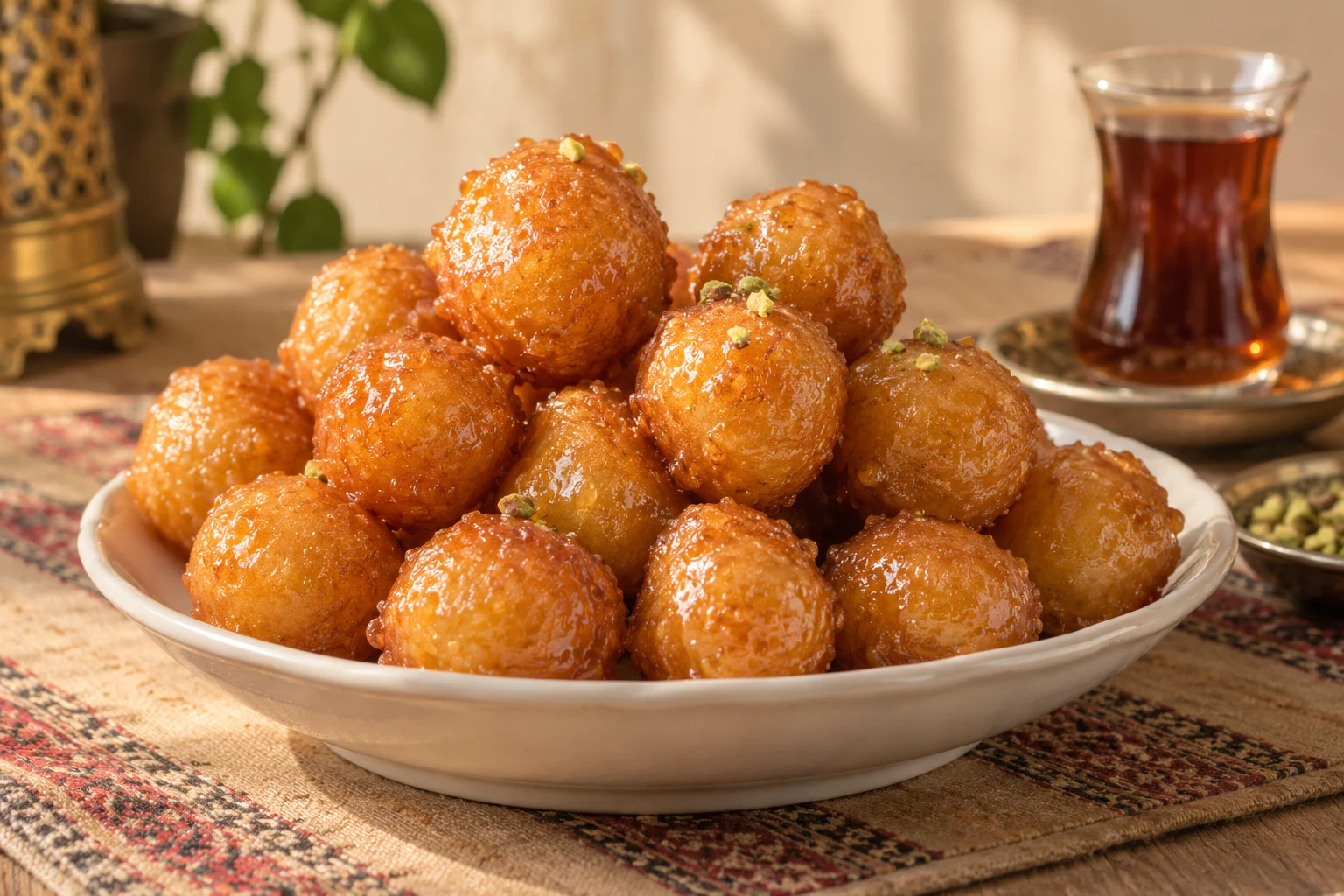
Egyptian Zalabia: A Crisp Shell and an Airy Center
A texture guide to Egyptian zalabia: sticky yeasted batter, small golden fritters, cooled syrup, and the choice between glossy and powdered finishes.
Persian cuisine Eggplant and yogurt
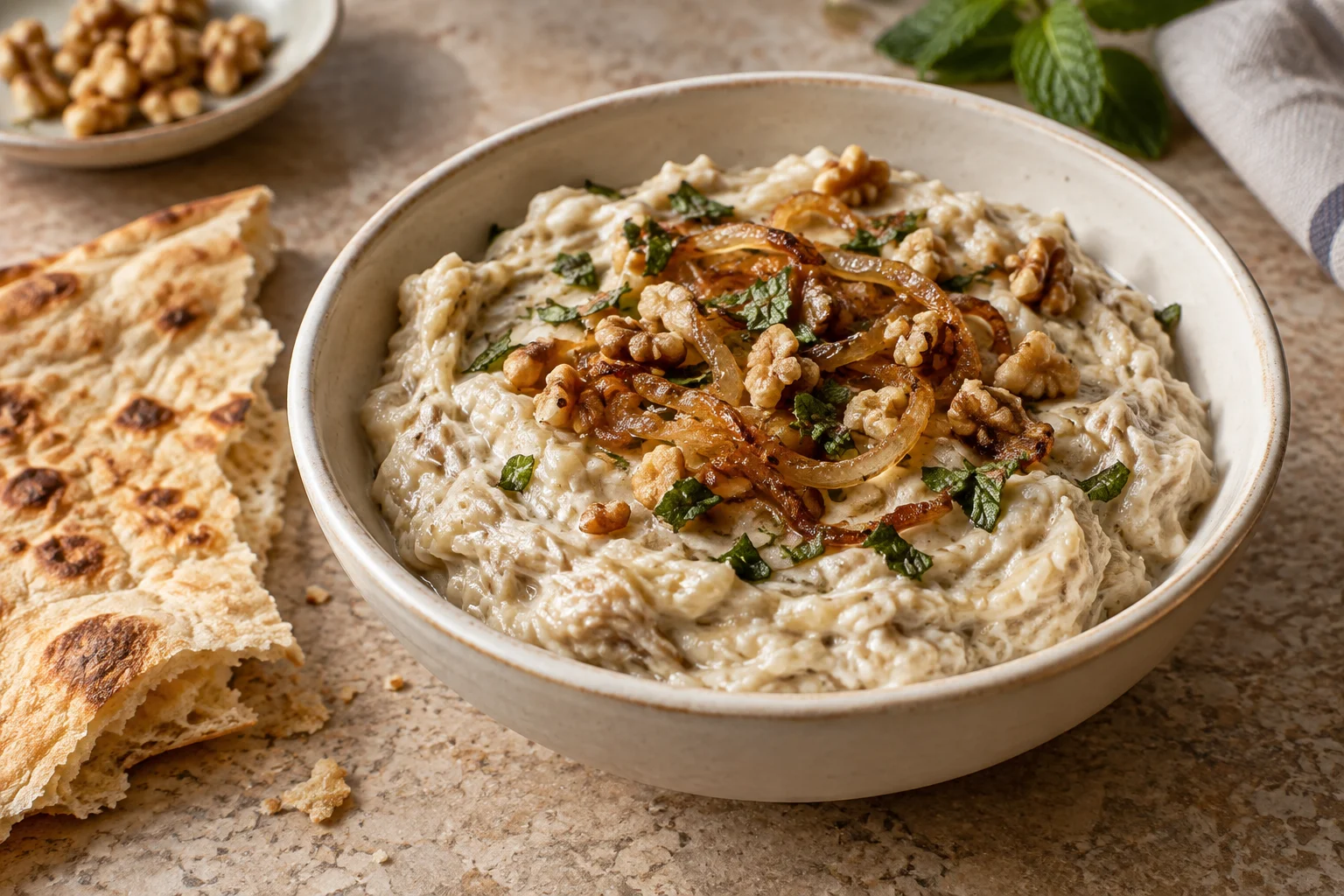
Borani Bademjan: Prepare the Eggplant for Yogurt
Persian eggplant borani can be blended with yogurt or topped with it. Tender flesh and managed moisture help either finish keep its intended texture.