
Arroz Amarillo: The Sofrito Before the Color
Arroz amarillo
The yellow grains catch the eye. Softened onion, pepper and garlic explain why the rice belongs beside a meal.
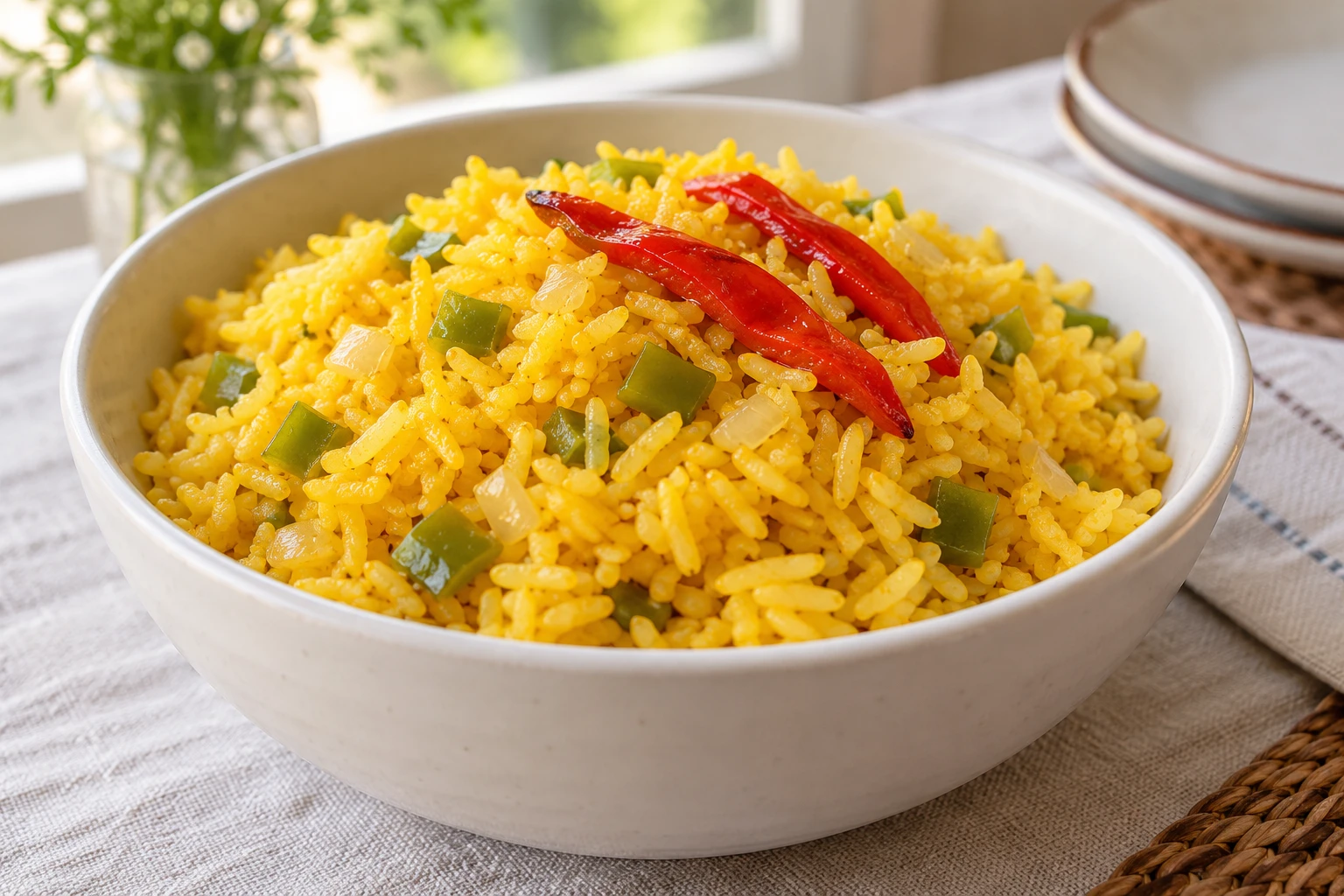
Yellow is the name; sofrito is the base
Arroz amarillo means yellow rice. In the Cuban preparations gathered here, long-grain rice takes its seasoning from a sofrito of onion, pepper and garlic, with a little coloring added as it cooks. The grains become a flavorful side in their own right, ready to accompany beans, vegetables or a separately cooked main dish.
The recipes also show room for household choices. Jamie Silva includes tomato sauce and roasted pimientos. Nathan records his grandmother's simpler version without tomato, cooked in a rice cooker after the vegetables are sautéed separately. Chef Douglas Rudd Vilá uses a more substantial pork-and-pea preparation, with cumin, bay and oregano. The shared color does not require an identical ingredient list.
Bijol is a familiar coloring choice in these accounts. The classic product's manufacturer lists corn flour, cumin, annatto and added yellow and red food colors. It is a blend, so calling it pure annatto loses useful information. A small amount is enough; check the current jar and distinguish the coloring product from a broader seasoning mix. Pure annatto, turmeric and saffron each bring their own flavor and coloring strength.
Three jobs in one pot
- Sofrito
- Flavor
- Coloring
- A small dose
- Lid and rest
- Texture
Soften the onion and pepper before adding liquid. Finely chopped garlic joins briefly so it becomes fragrant without scorching.
Color the measured liquid and rice together. More powder will not repair an underseasoned sofrito, and the shade may deepen toward orange.
A tight lid retains cooking steam. After the simmer, a short covered rest gives the grains time to settle before they are loosened.
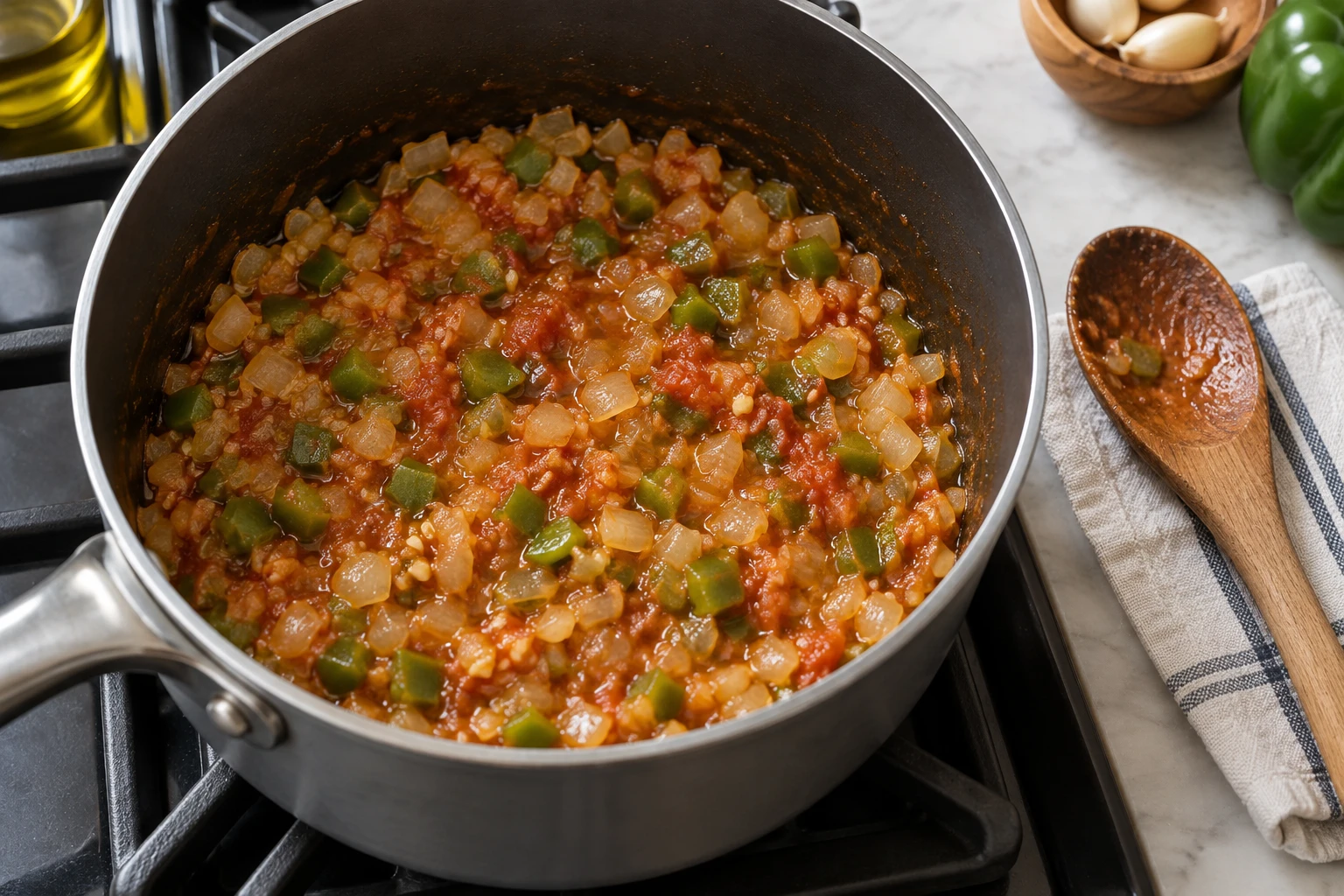
Household interpretation
Simple Cuban-style yellow rice
Serves 4 as a side. Allow about 15 minutes to prepare and 35 minutes to cook and rest; these are estimates. Use ordinary long-grain white rice. Brown rice, short-grain rice and some aromatic varieties need different liquid and timing.
Ingredients
For a saucepan with a tight lid
- 300 g long-grain white rice
- 2 tbsp olive oil
- 1 small onion, finely diced
- ½ green bell pepper, finely diced
- 3 cloves garlic, minced
- 60 g plain tomato sauce
- 540 ml low-salt vegetable stock
- ⅛ tsp classic Bijol coloring seasoning
- ¼ tsp ground cumin
- 1 bay leaf
- ¼ tsp to start salt, adjusted to the stock
- A little black pepper
- 2 tbsp, optional drained roasted red sweet pepper strips
Method
- 1
Rinse and drain
Rinse the rice in a sieve under cold water, then drain thoroughly. Have the stock measured and the vegetables cut before heating the pan.
- 2
Soften the vegetables
Warm the oil over medium heat. Cook onion and green pepper for about 6–8 minutes, stirring, until softened. Add garlic and cumin for 30 seconds, then tomato sauce for another minute.
- 3
Add the rice and liquid
Stir the drained rice into the vegetables. Add stock, Bijol, bay, salt and pepper, and stir to distribute the coloring. Bring to a steady boil, then reduce to a low simmer and cover tightly.
- 4
Simmer, then check
Cook about 18–20 minutes without repeatedly lifting the lid. Check once near the end: the grains should be tender and the liquid absorbed. If still firm and dry, add 2 tablespoons hot water and cover for another 3–5 minutes. If wet, allow a little more covered cooking time.
- 5
Rest and serve
Remove from the heat and leave covered for 8 minutes. Remove the bay leaf, gently loosen the rice with a fork and add the optional red pepper. Serve promptly.
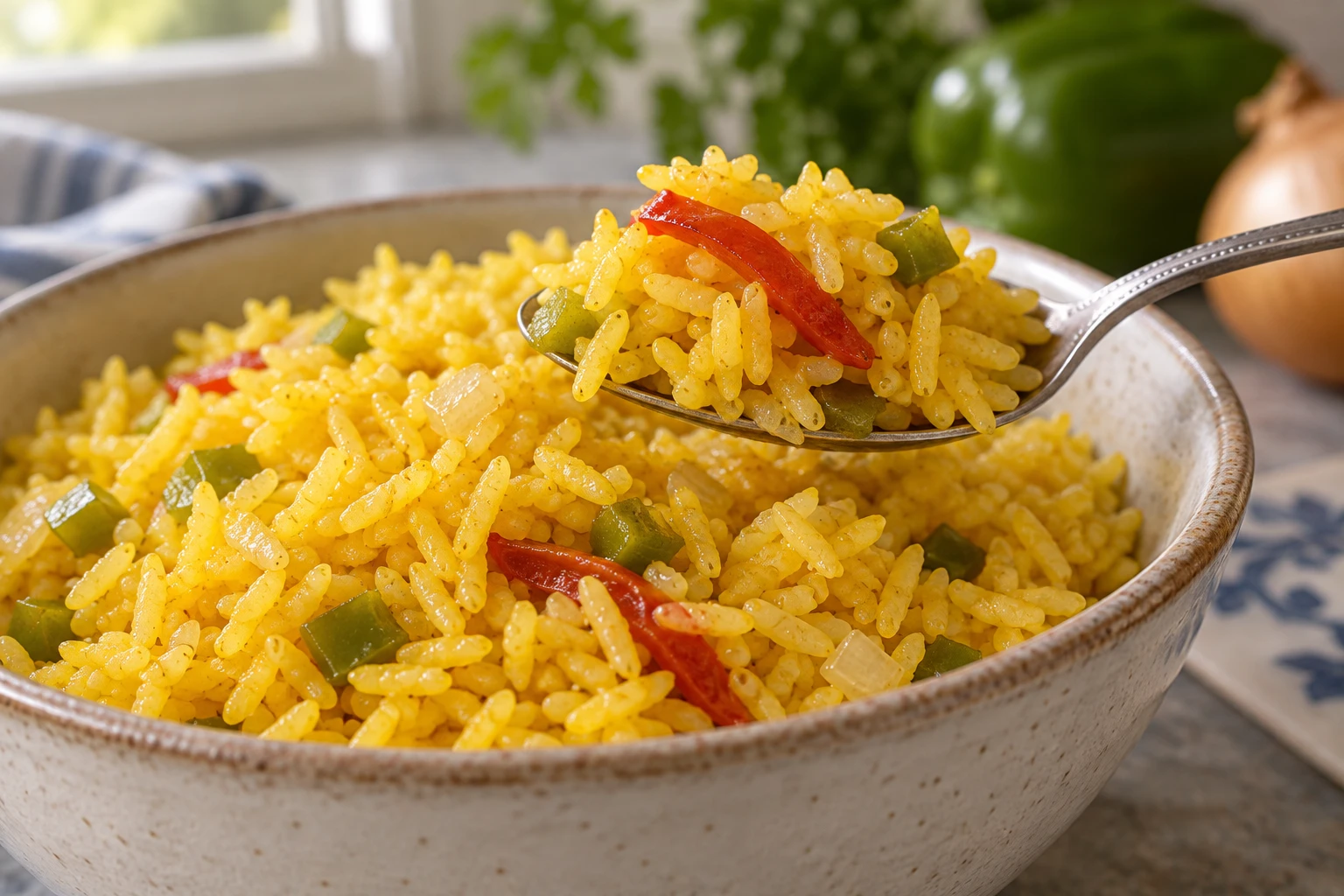
Keep the first pot simple
Tomato adds flavor and liquid, so measure it along with the stock. The recipe uses a modest amount; a generous pour changes both the shade and the moisture. Begin with this simple side before turning it into a meat, seafood or vegetable rice dish, since each addition affects how the pot cooks.
The sources describe several approaches to the same broad dish. Bijol's recipe first reduces the liquid uncovered, then finishes under a lid; Silva uses a covered simmer followed by a rest. Follow one complete method and judge the grains at the end. Mixing the liquid quantity from one approach with the timing of another is a poor shortcut.
Research notes
Sources behind this article
- Jamie Silva, A Sassy Spoon — Arroz Amarillo Original Cuban American household recipe with tomato sofrito, a small coloring dose, covered simmer and rest.
- La Cocina de Nathan — Arroz Amarillo Cubano A grandmother's simpler tomato-free preparation, rice-cooker method and descriptions of household variations.
- Bijol — Yellow Rice The manufacturer's complete sofrito recipe and its uncovered-then-covered cooking method.
- Bijol — Product ingredient FAQ Lists the classic coloring blend's ingredients; this is the same source lineage as the manufacturer's recipe.
- Douglas Rudd Vilá, Cocina con Cuba — Arroz amarillo con carne de cerdo The Cuban-born chef's own pork-and-pea version shows further seasoning and ingredient choices.
- Food Standards Agency — Home food fact checker Current rice-specific cooling, storage and reheating guidance.
Keep exploring
More stories for your table
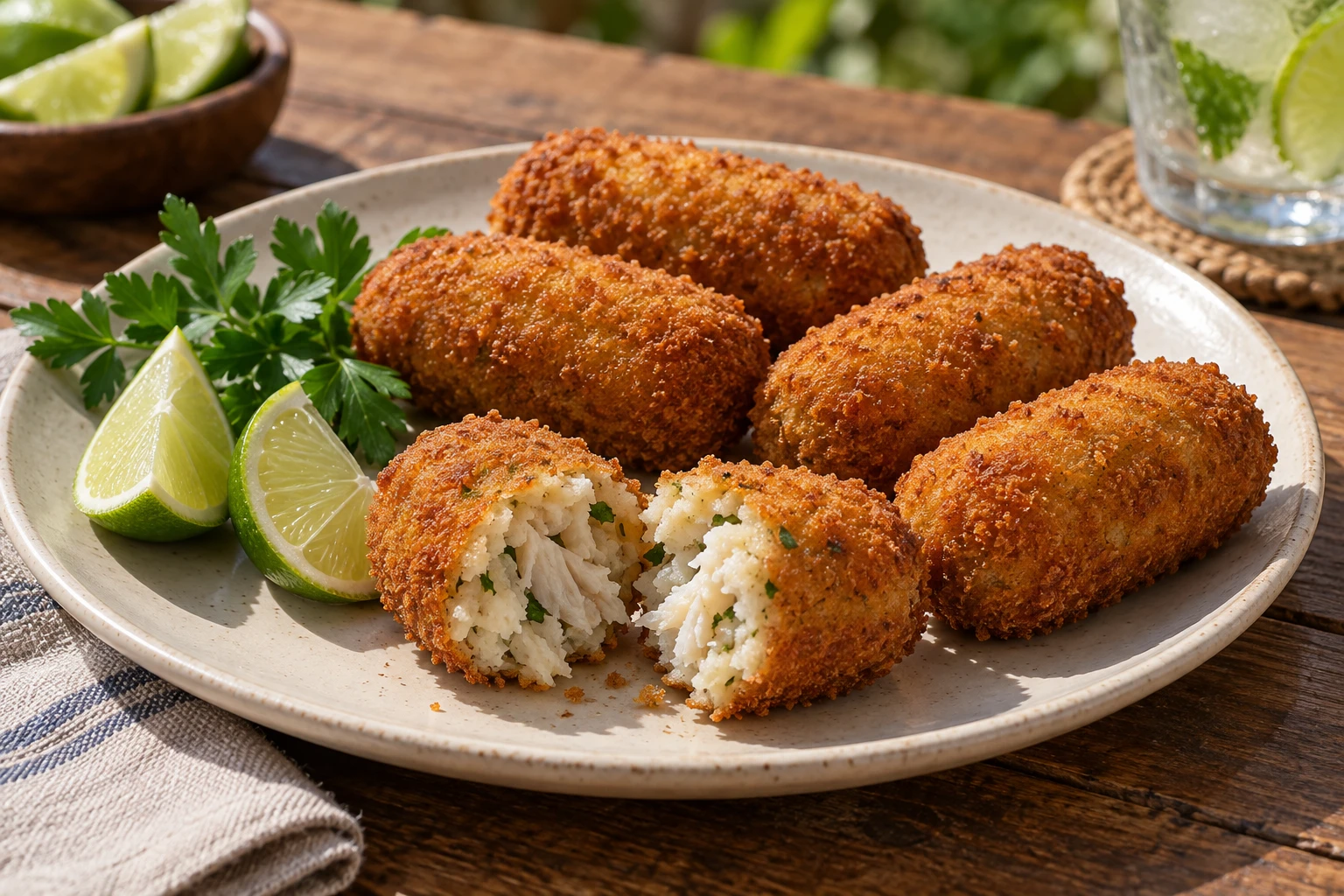
Cuban cuisine Appetizer
Fish Croquetas: Choose the Binder First
Cuban fish croquetas can be bound with fish-stock paste, milk-based paste or potato. Read the filling before choosing the shape and coating.
Cuban cuisine Bread
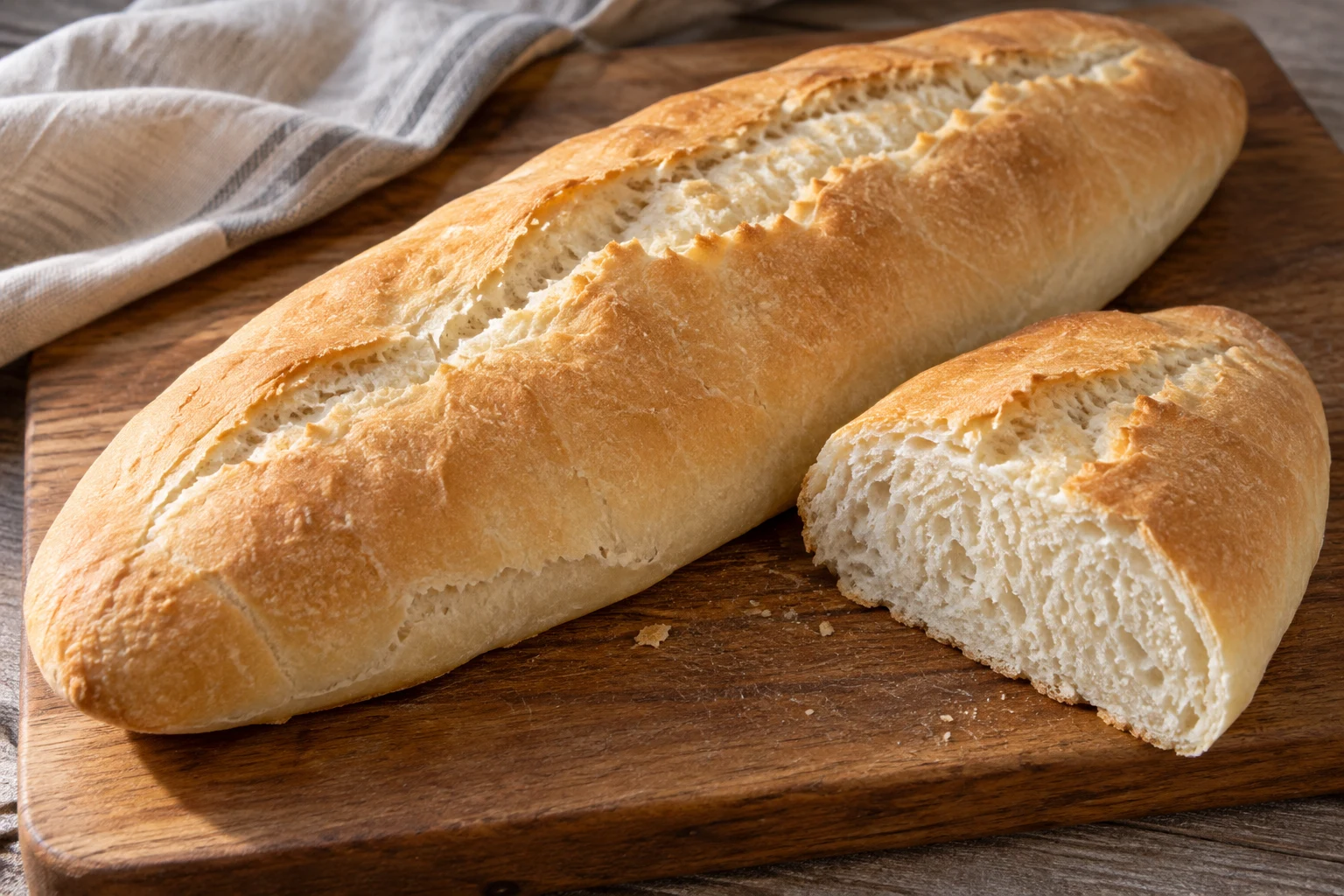
Pan Cubano: The Crust, the Crumb and the Line on Top
Cuban bread pairs a crisp, flaky exterior with a soft white interior. Follow the lengthwise split from Tampa’s palmetto leaves to practical home shaping.
Argentinian cuisine Vegetable salad
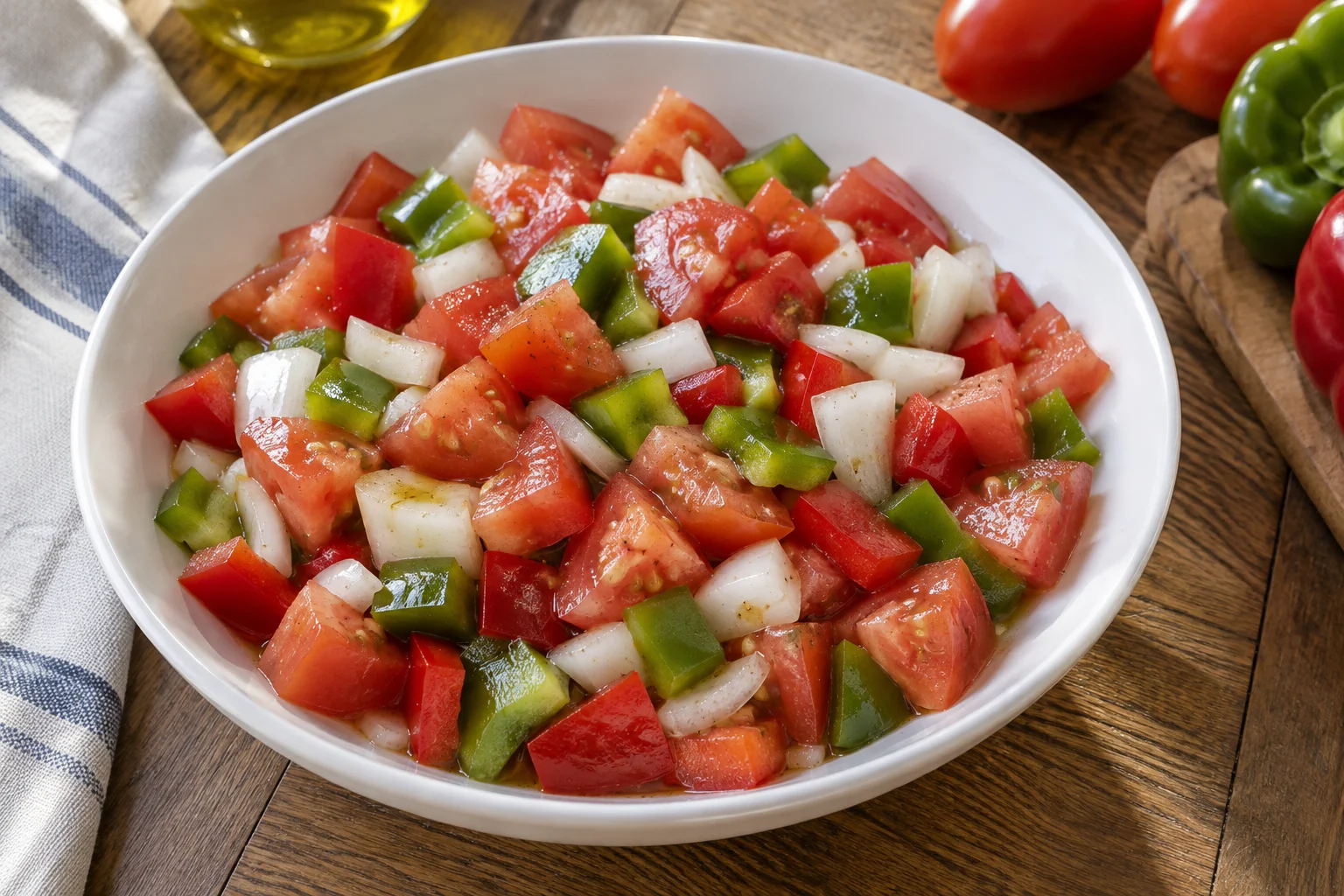
Ensalada Criolla: Let the Pieces Share a Fork
Make a lightly dressed Argentine ensalada criolla with matched vegetable pieces, and understand how it differs from finer salsa criolla preparations.