
Fish Croquetas: Choose the Binder First
Croquetas de pescado
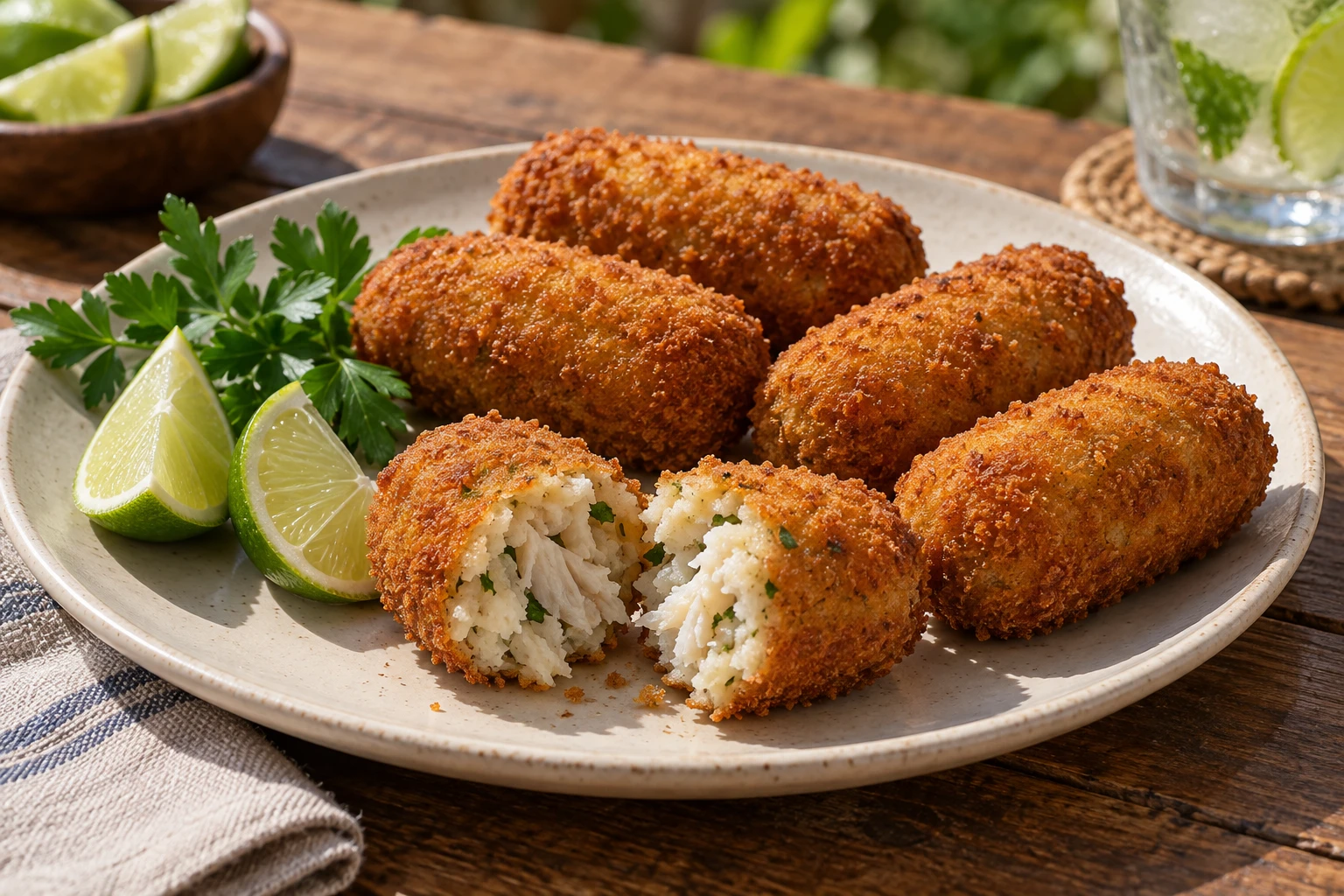
The golden crust tells you that a croqueta has been breaded and fried. It tells you much less about the filling: fish stock, milk and potato lead to different methods.
A family of fillings under one crust
Roger Besu's Cuban-American family cookbook describes croquetas at gatherings and in Miami cafés, naming ham, chicken and fish varieties. CiberCuba's fish version describes the dish as useful in Cuban cooking while explicitly acknowledging that it is not exclusive to Cuba.
The useful distinction is therefore inside the croqueta. A flour-thickened fish-stock mixture, a milk-based paste and a potato-bound salt-cod mixture can all arrive at a crisp breaded exterior. They do not begin with interchangeable ingredient lists.
Three published approaches
Fish stock and flour
CiberCuba combines already cooked, boneless fish with onion, garlic and parsley, then incorporates it into a flour-thickened fish-stock base. Tomato is optional. The method asks for a dense fish mixture rather than a loose sauce.
Milk-based family method
Besu's basic croqueta uses butter, flour and milk. His fish variation replaces ham with ground white fish; he favors cod. This family method does not establish a requirement for milk in every Cuban fish croqueta.
Potato and salt cod
Chef Tatiana Rosana's Cuban-family-inspired bacalao croquetas, shared with food writer Michelle Tchea, use mashed potato and egg yolks. They are round, seasoned with paprika and cayenne, and coated in panko. The potato is the binder, not an extra spoonful casually added to the flour-based versions.
Inspect the fish before mixing
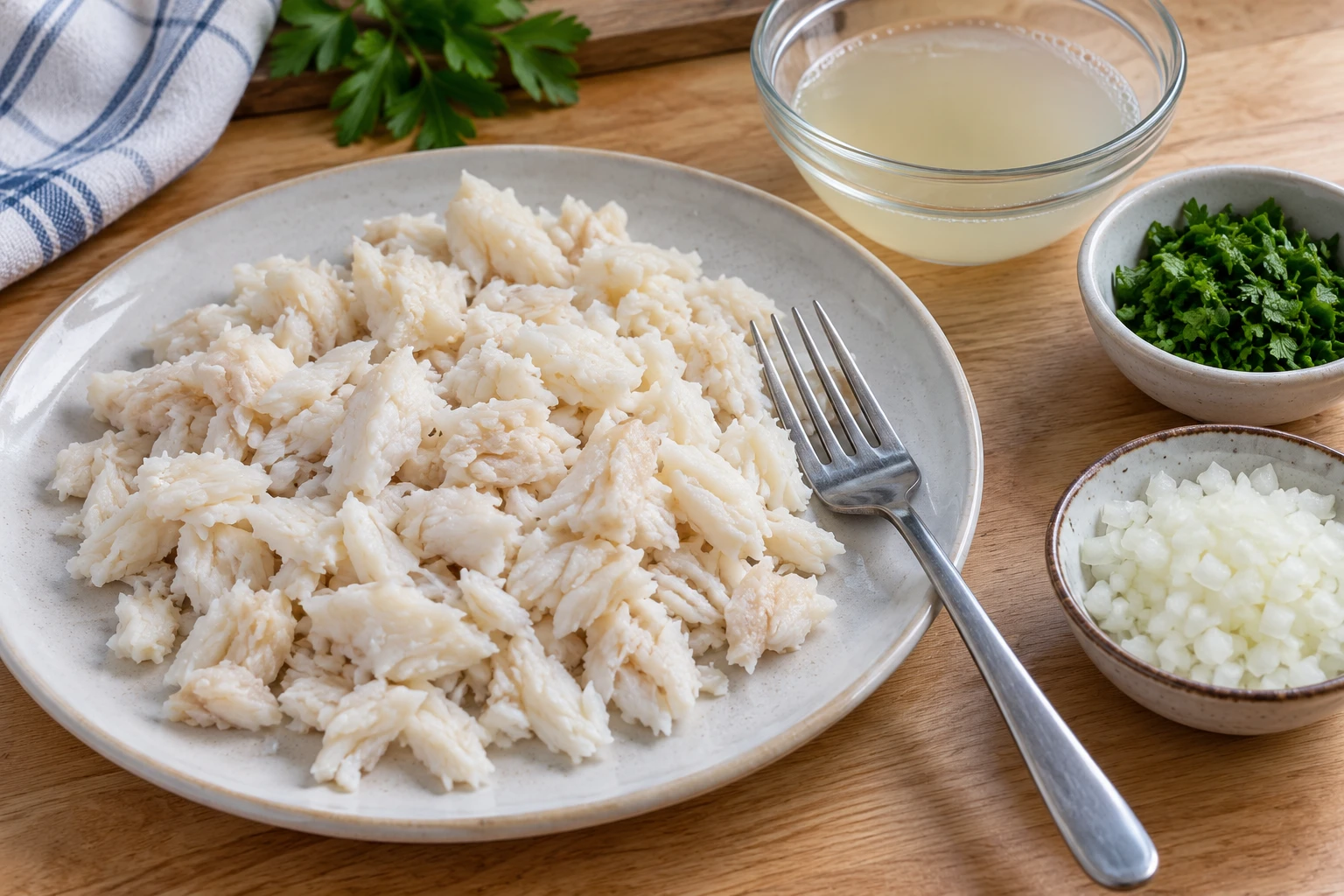
CiberCuba specifies cooked fish with no bones and strained cooking stock. Spread out the flakes and check the strained liquid before mixing: both are harder to inspect once dispersed through a thick filling.
Salt cod has another preparation history. Rosana's recipe treats it before mixing and warns that its saltiness affects seasoning. Follow her complete desalting method if making that version; do not substitute salt cod directly into a fresh-fish recipe.
Let the filling become shapeable
The cooling stage connects otherwise different croqueta methods, but each recipe reaches it in its own way.
- 01
Finish the cooked paste
CiberCuba works its combined fish and flour mixture until it pulls away from the pan. That is a texture cue for its particular base. It is not an instruction to keep adding flour to a potato filling until the mixtures look identical.
- 02
Cool in a sensible shape
The chicken-croqueta recipe in the Cuban nutrition guide hosted by UNICEF spreads its cooked mixture on a flat plate or tray and refrigerates it before shaping. It illustrates the same paste-to-firm-mixture transition, while remaining a chicken recipe rather than a substitute fish formula.
- 03
Preserve the chosen shape
Rosana chills her potato-and-cod mixture before rolling balls and chills the breaded pieces before frying. Besu forms short cylinders. Use the shape and cooling sequence belonging to your selected recipe rather than making a larger shape and assuming the cooking will be unchanged.
Read the coating as well as the filling
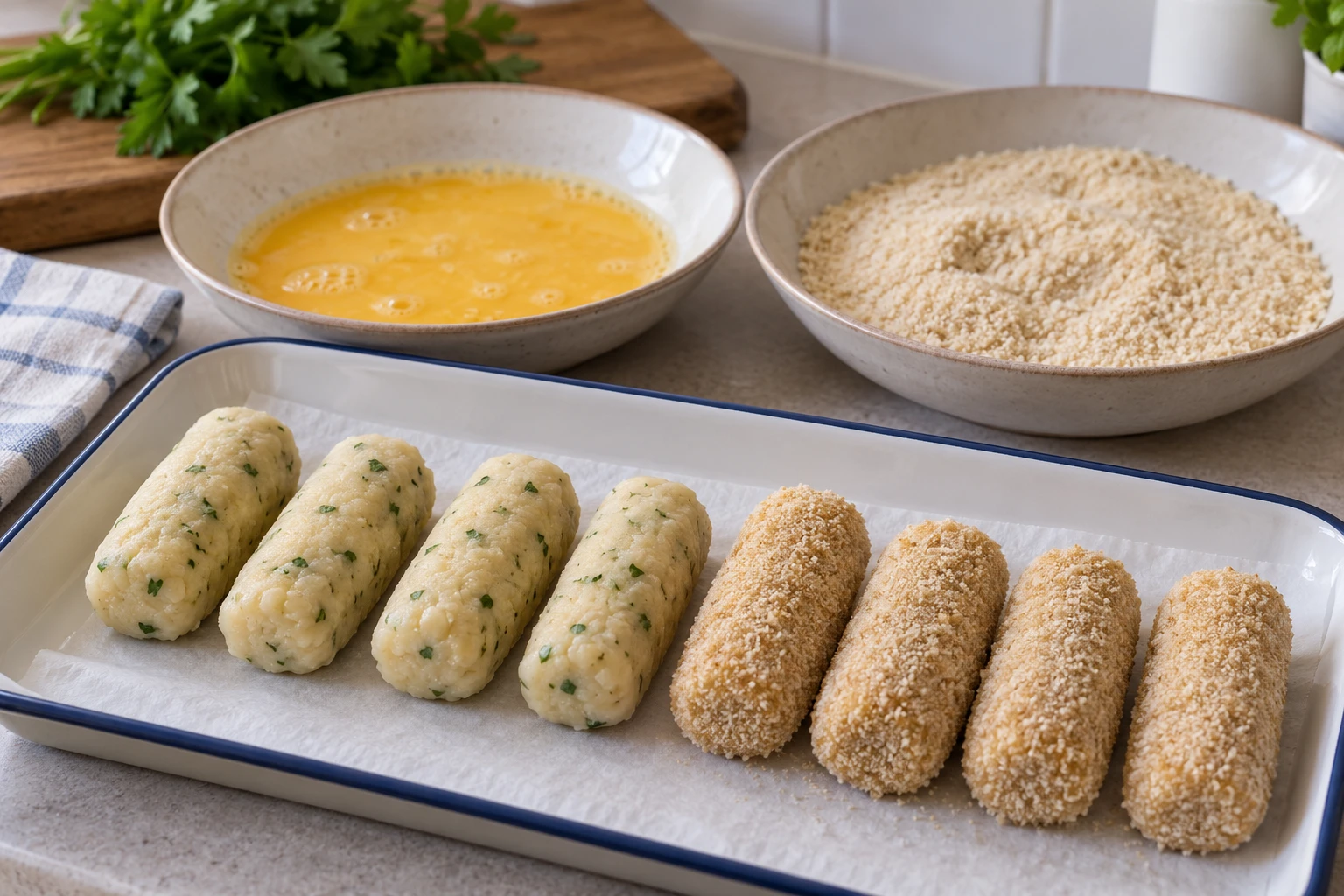
Besu's cylinders pass through beaten egg and a crumb coating. Rosana's round pieces go through flour, egg and panko. Those are two deliberate systems. A visible crumb shell is not evidence that the recipes use the same breading sequence, nor that the interior is simply loose fish.
Besu fries small batches with space between the pieces to keep the oil hot. Preserve your chosen recipe's frying instructions: size, coating and oil temperature belong to the same method.
Serve a croqueta, not a puddle of sauce
Rosana pairs her bacalao version with saffron-garlic aioli. Keeping a dip alongside the croquetas lets the crisp coating stay visible and gives the eater control of each bite. The sauce is an accompaniment, not the material that holds the fish together.
Break one open to understand the dish: look for fish distributed through a coherent filling, surrounded by a distinct crust. That small cross-section reveals more about the method than the color of the plate or the shape of the garnish.
Research notes
Sources
Cuban and Cuban-American recipes are distinguished by their binders; the nutrition guide supports the cooling comparison.
- CiberCuba: Croquetas de pescado Cooked boneless fish, strained stock and a dense flour-bound mixture.
- Roger Besu: Cuban Cooking 101 Publisher's authorized excerpt, page 6: milk-based croquetas and fish variation.
- Tatiana Rosana's bacalao croquetas Chef's first-person Cuban-family recipe, published by Michelle Tchea.
- Cuban nutrition guide hosted by UNICEF Page 76's chicken croquetas illustrate spreading and chilling a cooked paste.
- FoodSafety.gov: Safe internal temperatures Distinct cooking-fish and reheating-leftover endpoints.
Keep exploring
More stories for your table
Cuban cuisine Bread
Pan Cubano: The Crust, the Crumb and the Line on Top
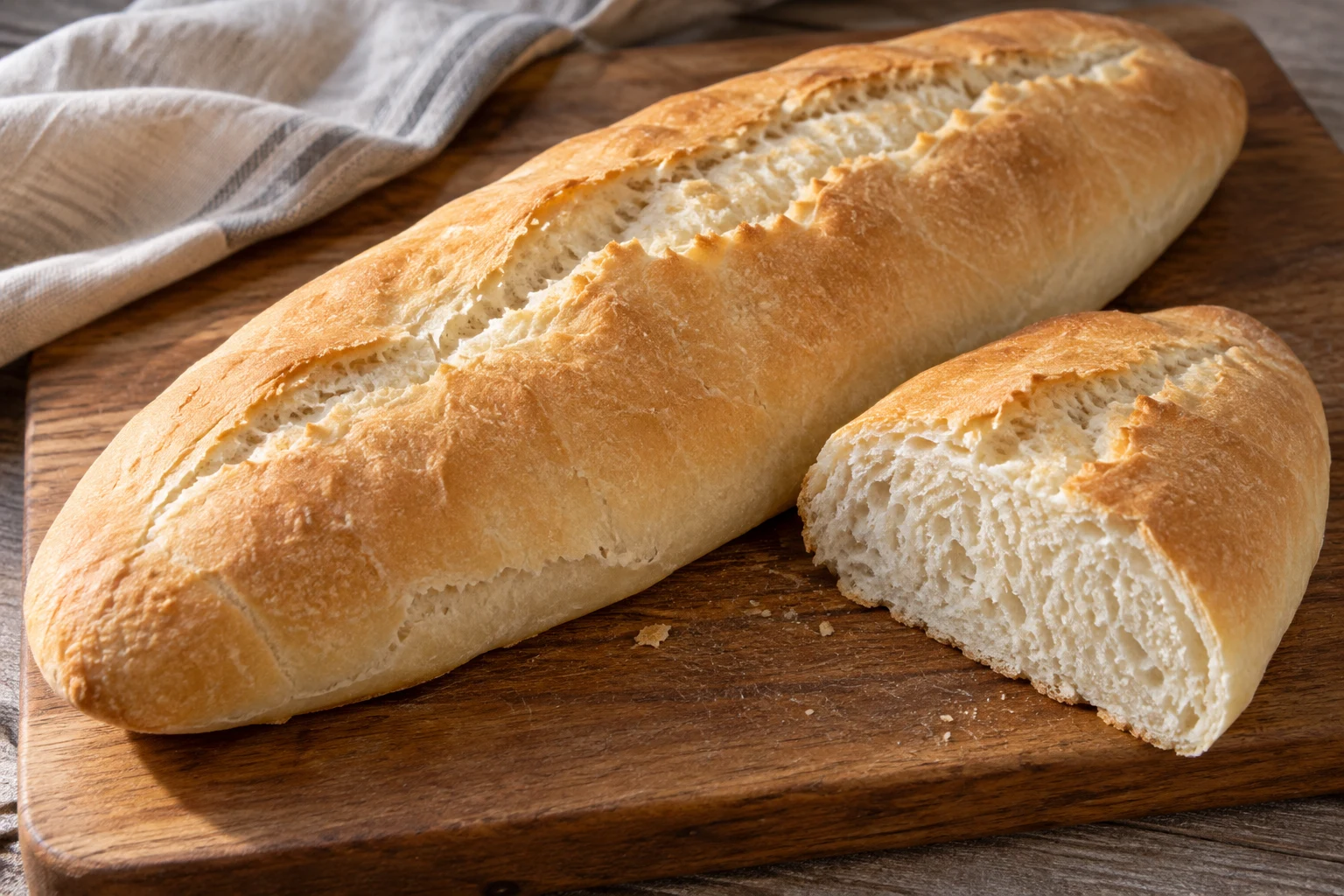
Cuban bread pairs a crisp, flaky exterior with a soft white interior. Follow the lengthwise split from Tampa’s palmetto leaves to practical home shaping.
Moroccan cuisine Savory pastries
Fish Briouats: Three Fillings Behind the Fold
Compare three documented Moroccan fish-briouat fillings: sardines, white fish with olives, and fish with vermicelli and vegetables.
Russian cuisine Savory pie
Fish Pirog: Decide What Goes Under the Lid
A closed yeast-dough fish pirog can begin with fillet, poached fish or a tin. Compare its filling, rice and steam vent before choosing a recipe.